Unit 1: Basic Economic Concepts
0.0(0)
Studied by 13 people0%Unit 1 Mastery
0%Exam Mastery
Build your Mastery score
 AP Practice
Supplemental Materials Call Kai
Call KaiCard Sorting
1/42

Earn XP
Description and Tags
Last updated 3:45 AM on 9/5/23
Name | Mastery | Learn | Test | Matching | Spaced | Call with Kai |
|---|
No analytics yet
Send a link to your students to track their progress
43 Terms
1
New cards
Scarcity
the gap between limited resources and unlimited wants requires decisions about how to allocate resources efficiently to satisfy our needs and wants. (**unlimited wants and needs vs. limited resources.)**
2
New cards
What are the four factors of production?
Land (Rent), Labor, Capital, Entrepreneurship
3
New cards
Land
natural resources and raw materials used to make products. Ex: water, vegetation, oil, minerals, and animal
4
New cards
Labor
the skills and abilities that individuals devote to a task for which they get paid
5
New cards
Capital
types of resources can be divided into two types, physical capital and human capital. Physical capital is money, property, etc. Human capital are human skills. This can also be considered investments, which can lead to a greater economic growth in the future.
6
New cards
Entrepreneurship
the ability of an individual to coordinate the other categories of resources to invent or produce a good or service.
7
New cards
Trade-offs
each of the alternative choices that you gave up when making a decision. For example, you walk into the cafeteria for lunch at school and you have the option of pizza, a cheeseburger, or chicken sandwich for lunch. If you choose to have pizza, then **the cheeseburger and chicken sandwich** are your trade-offs
8
New cards
Opportunity cost
this is the value of the next best alternative or the given up alternative when making a choice.
9
New cards
What does the Production Possibilities Curve show?
All the possible production combinations for producing two goods given a fixed amount of resources.
10
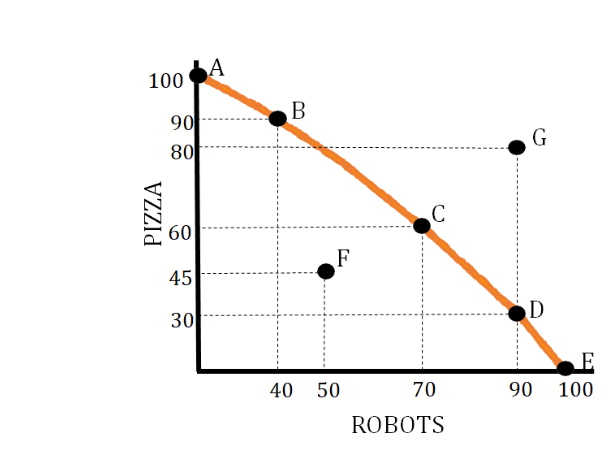
New cards
If a point is on the curve of the PPC it is…
at full employment of the resources available.
11
New cards
If a point is inside of the curve of the PPC it is…
producing at an attainable point given the resources available but is not utilizing said resources at their maximum potential.
12
New cards
How is allocative efficiency applied in the PPC?
This efficiency means that we are producing at a point that is ideal for society. This is represented by a point on the PPC that meets the desires and needs of a society. (Ex. If a society needs an equal amount of wheat and sugar, allocative efficiency would be represented by a point where this is true.)
13
New cards
How is productive efficiency applied in the PPC?
This efficiency means that we are producing at a combination that minimizes costs. This is represented by any point on the curve.
14
New cards
If a point is outside of the PPC then?
The point represents an example of production that is unattainable because there aren’t enough resources available.
15
New cards
Opportunity cost/Per-Unit Opportunity cost on the PPC
We use this when we are trying to see what we are losing when we change our production combination. For example, if we have point A where we are producing 100 sugar and 0 wheat and move it downward so that we are producing 90 sugar and 40 wheat at point B, we need to calculate the opportunity cost. We are losing a total of 10 sugar in order to gain 40 sugar, so we need to divide 10 sugar/40 wheat, which gives us 1/4. This 1/4 is the per-unit opportunity cost. (What is lost/What is gained)
16
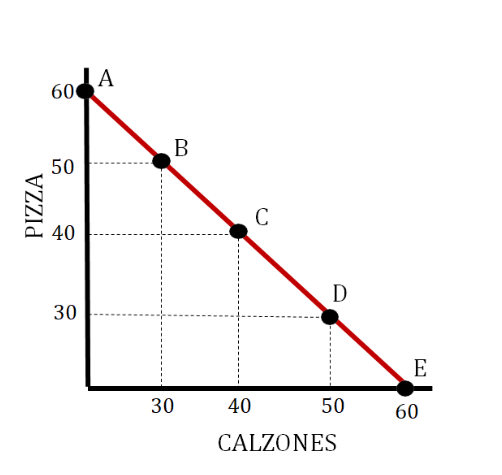
New cards
Constant Opportunity Cost in the PPC
When the opportunity cost per unit remains the same you produce more of one good and lose more of the other good. This indicates that resources are more adaptable as you produce from one good to another. (Linear slope)
17
New cards
Increasing Opportunity Cost in the PPC
When the opportunity cost per unit increases as you produce more of one good and give up even more of the other. Resources are less adaptable. (Curve)
18
New cards
Absolute Advantage
the ability to produce more of a good or service with a given amount of resources than someone else.
19
New cards
Comparative advantage
the ability to produce a good at the lowest opportunity cost of another.
20
New cards
Terms of trade
the rate at which one good can be exchanged for another. This is determined by looking at the two opportunity costs and choosing a number that falls between the opportunity costs in order for it to be beneficial to both countries.
21
New cards
Output problems regarding trade
focus on data associated with what each party can produce with a given set of resources and who can specialize in which good.
22
New cards
Input problems regarding trade
focus on how much of a resource is needed to produce one unit of a particular good or service.
23
New cards
In output problems, how do you determine absolute and comparative advantage?
In output problems, you just need to look at which country can produce a higher amount of a good or service. For comparative advantage, you have to determine the opportunity cost of the second good given what you do with the first good. Meaning, if Canada can produce 1000 million tons of steel and 500 million tons of coal, you have to divide 500/1000 to find the per unit opportunity cost for steel in Canada. Likewise, you divide 1000/500 to calculate the opportunity cost of coal for Canada. This shows you the opportunity cost for Canada's production of steel and coal, which you can compare with the second country.
24
New cards
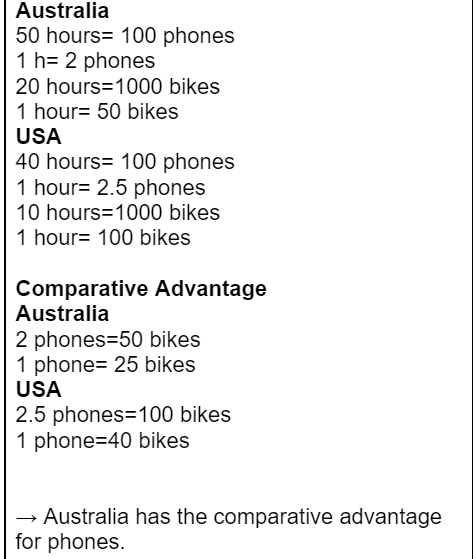
In input problems, how do you determine absolute and comparative advantage?
To determine absolute advantage, you are looking for the country that uses the least amount of resources to produce the good. For comparative advantage, you need to see how much resources it takes to produce the amount of goods the problem is giving you. Then you divide it to find the opportunity cost. (Ex. if Australia can produce 100 phones in 50 hours, you need to divide 100/50 to find that in 1 hour Australia can produce 2 phones. If the USA can produce 100 phones in 40 hours, you do the same and divide 100/40 to find that the USA can produce 2.5 phones in 1 hour. You do the same thing with the second resource and then calculate the opportunity cost of how much of each good can be produced in one hour (or another resource).
25
New cards
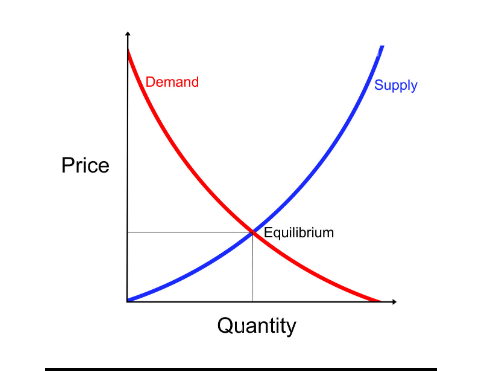
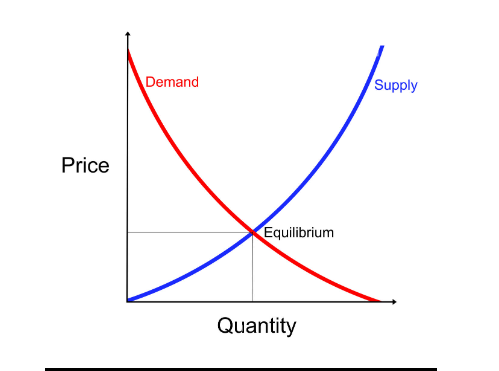
Demand
Defined as the different quantities of goods and services that consumers are willing and able to purchase at various price levels.
26
New cards
Quantity Demanded
is the amount of a good or service that is desired at a particular price level.
27
New cards
Law of Demand
*Ceteris paribus*, there is an inverse relationship between price and quantity demanded. (If price goes up, then Q.D goes down; If price goes down, then Q.D goes up)
28
New cards
When there is an increase in demand, the graph will…
shift to the right.
29
New cards
When there is a decrease in demand, the graph will…
shift to the left.
30
New cards
Demand will increase if…
Income increases, the number of consumers increases, the substitute's prices increases, expectation of a future price increases, complements' price decreases, and tastes and preferences for that good increase. (**INSECT)**
31
New cards
Demand will decrease if…
Income decreases, number of consumers decreases, substitute's price decreases, expectation of a future price decreases, complements' prices increases, tastes and preferences for that good decrease.
32
New cards
Supply
the different quantities of goods and services that firms are willing and able to produce at various price levels.
33
New cards
Quantity supplied
is the amount of goods or service that is produced at a particular price level.
34
New cards
Law of Supply
*Ceteris paribus,* there is a direct relationship between price and quantity supplied. (If price increases, so does the quantity supplied.)
35
New cards
When there is an increase in supply the graph will go…
shift to the right.
36
New cards
When there is a decrease in supply the graph will go…
shift to the left.
37
New cards
Determinants of Demand
Income, number of consumers, substitutes, expectations for a future price, complements to the product, tastes for that product (**I.N.S.E.C.T)**
38
New cards
Determinants of Supply
Resources, other good prices, taxes, technology, expectations of the supplier, number of competitors (R.O.T.T.E.N)
39
New cards
If supply increases then…
Resources increase, other good prices' decrease, taxes decrease, technology increases, expectations of the supplier increase, number of competitors decrease.
40
New cards
If supply decreases then…
resources decrease, other good prices’ increase, taxes increase, technology decreases, expectations of the supplier decrease, number of competitors increase.
41
New cards
Equilibrium
when the quantity of goods supplied is equal to the quantity of goods demanded.
42
New cards
Surplus
Quantity supplied > Quantity demanded (Above equilibrium)
43
New cards
Shortage
Quantity demanded > Quantity supplied (Below equilibrium)