TOC
 Studied by 0 people
 Call with Kai
 Learn
Learn Practice Test
 Spaced Repetition
 Match
Match Flashcards
 Knowt Play
1/22

There's no tags or description
Looks like no tags are added yet.
Name | Mastery | Learn | Test | Matching | Spaced | Call with Kai |
|---|
No study sessions yet.
23 Terms
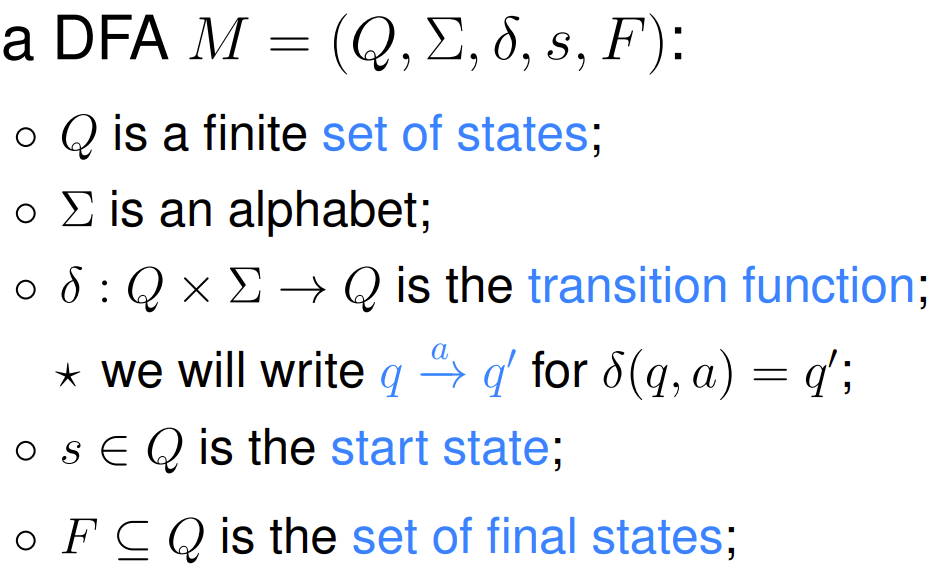
DFA formally
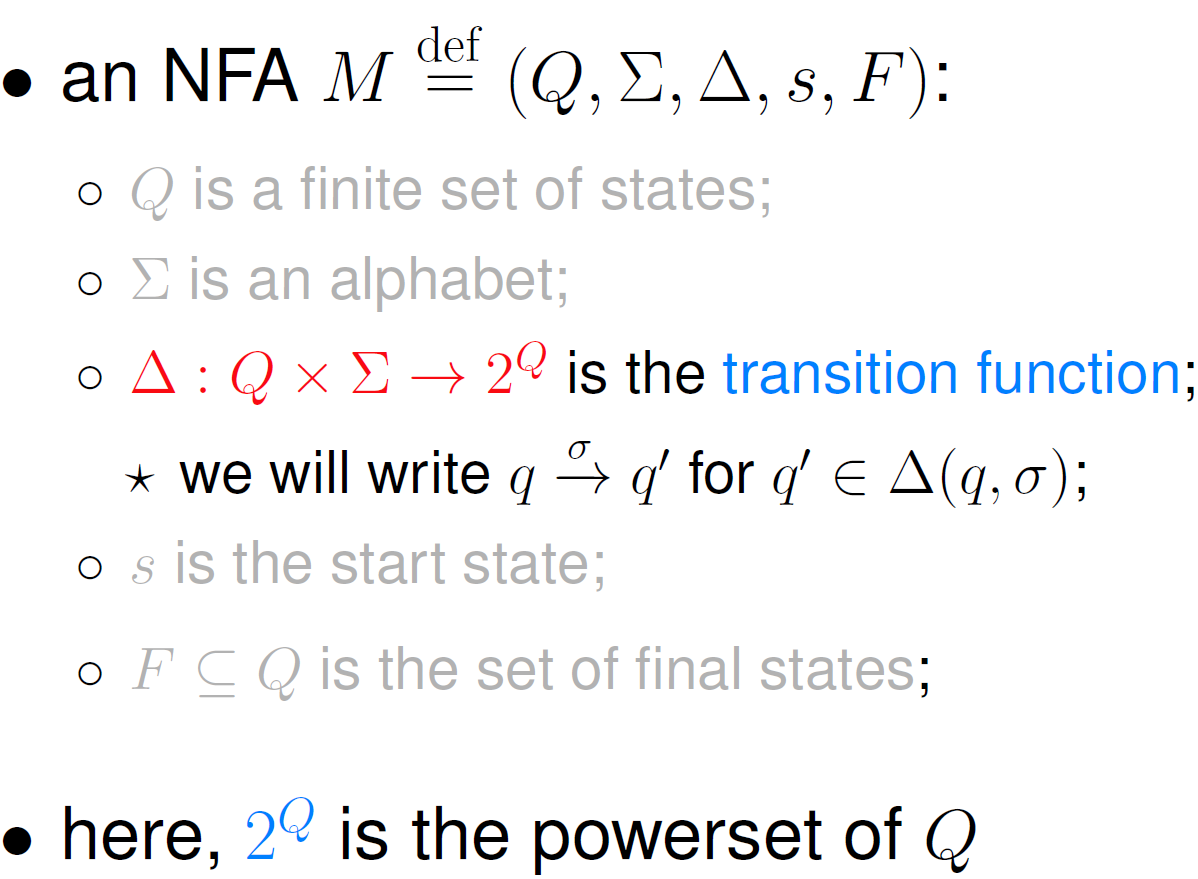
NFA Formally
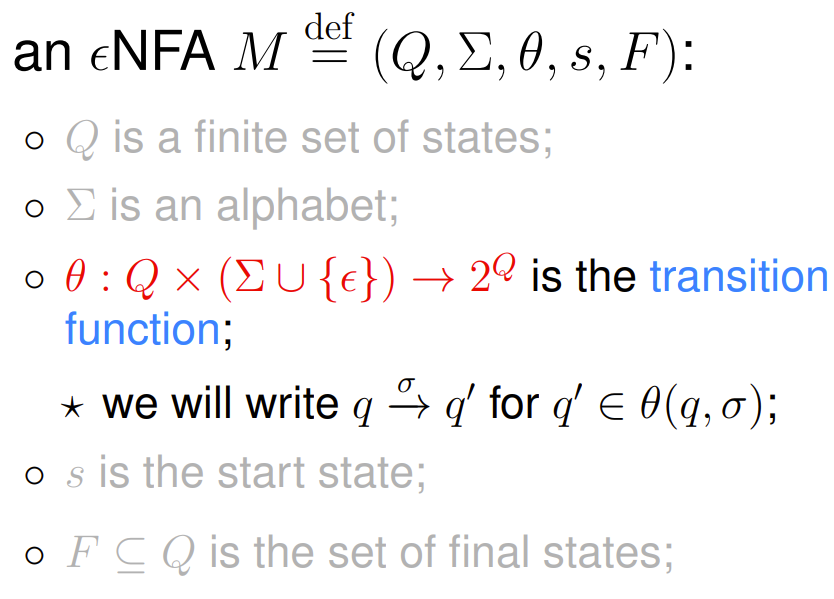
eNFA Formally
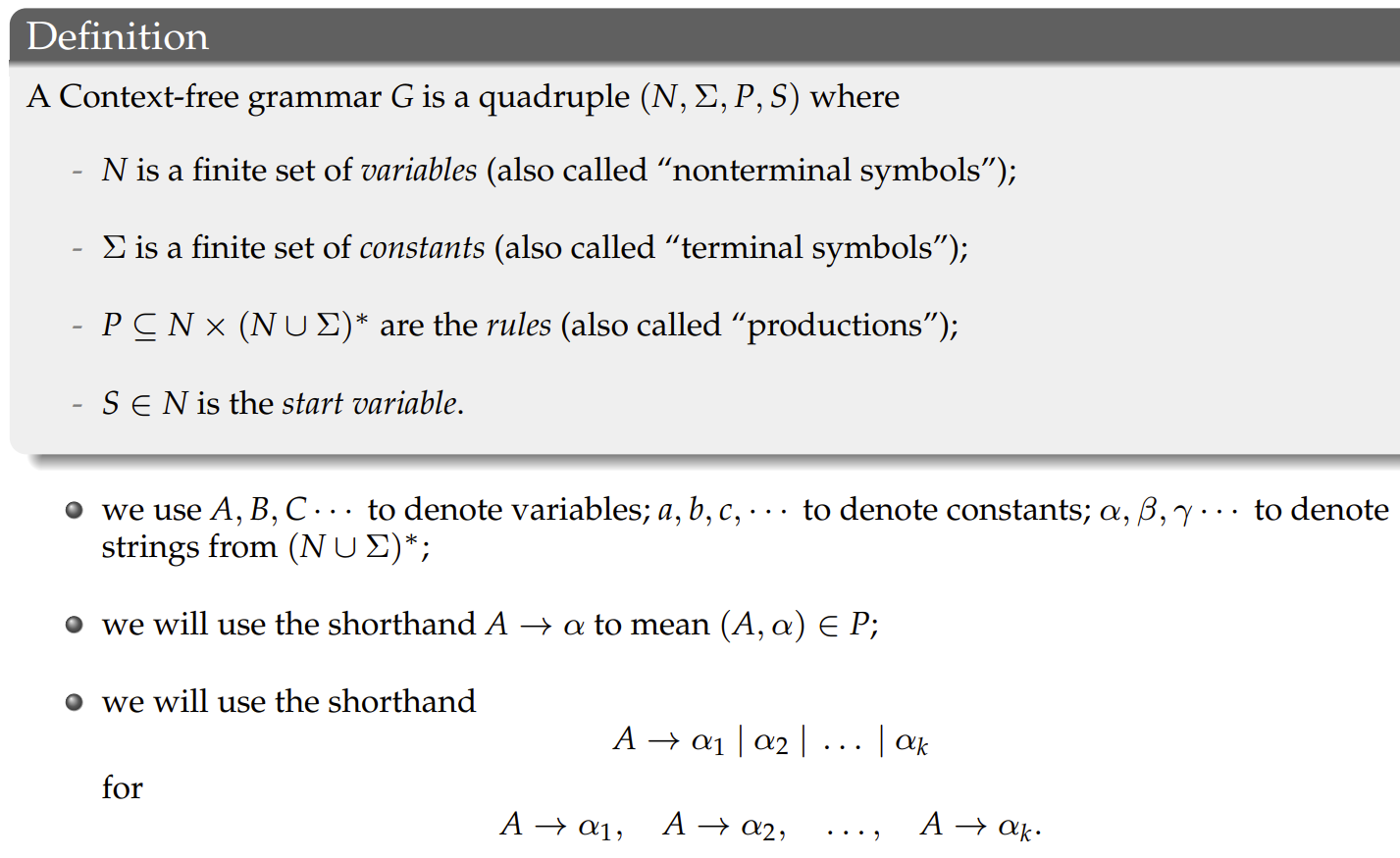
CFG
Chomsky Normal Form

Greibach Normal Form

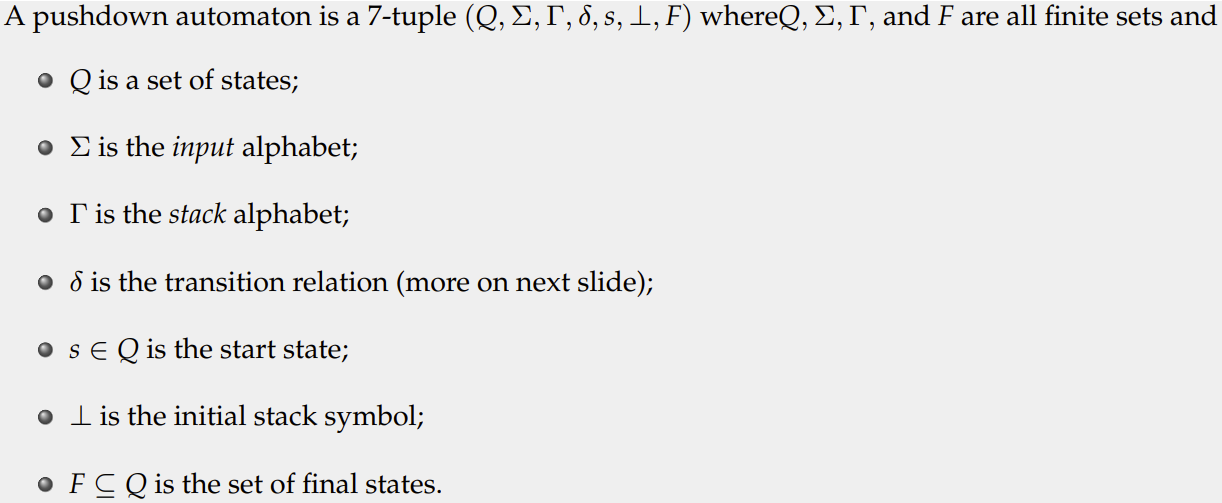
PDA formally
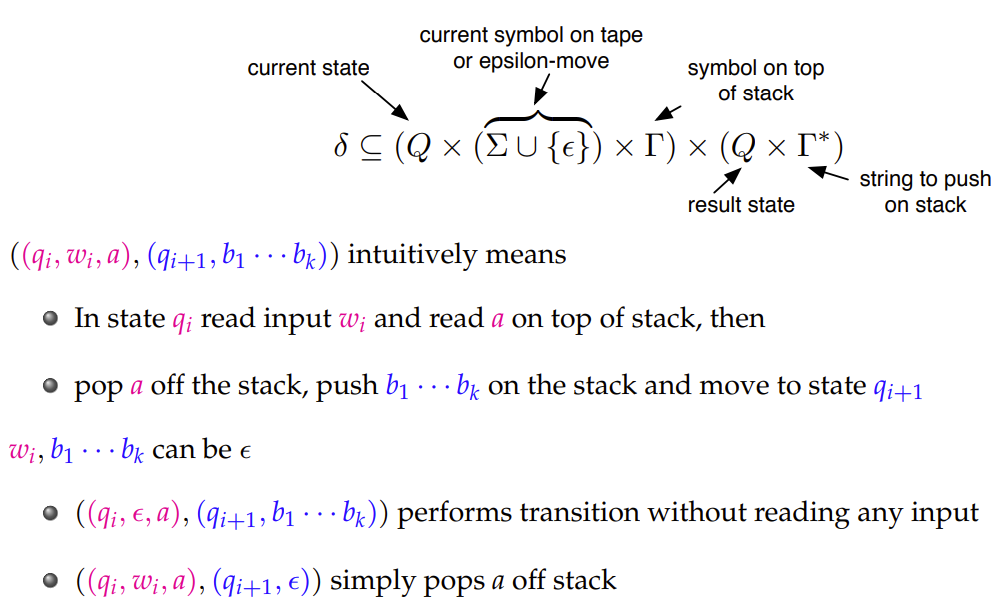
PDA Transitions
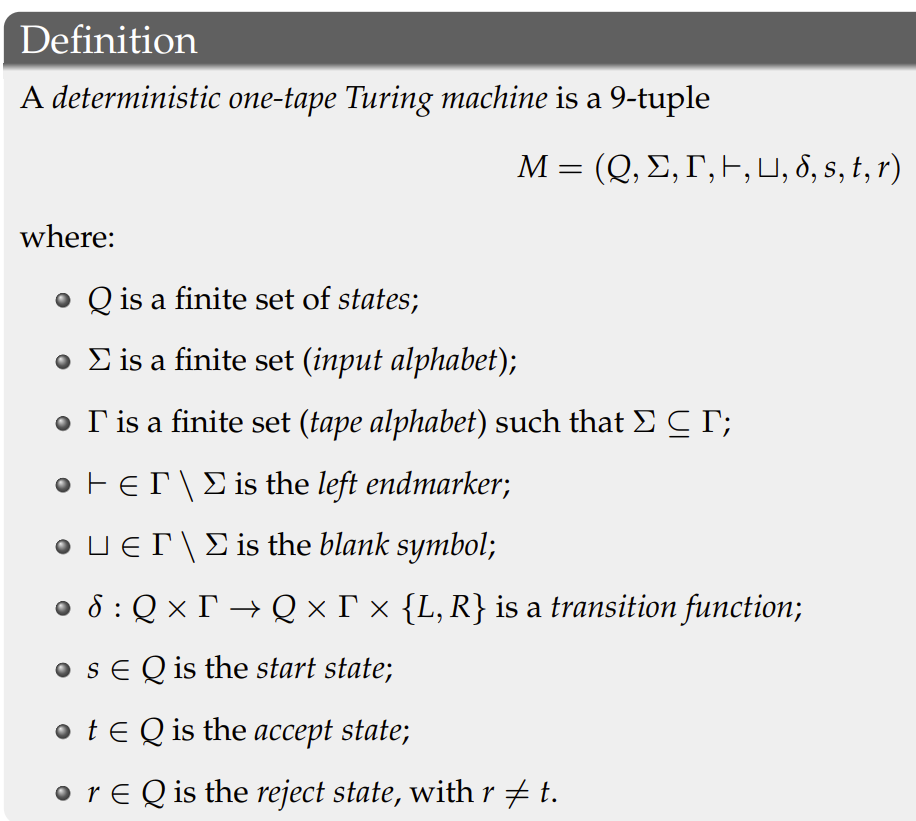
One-tape TM
Multi-Tape to Single-Tape TM

NTM to DTM

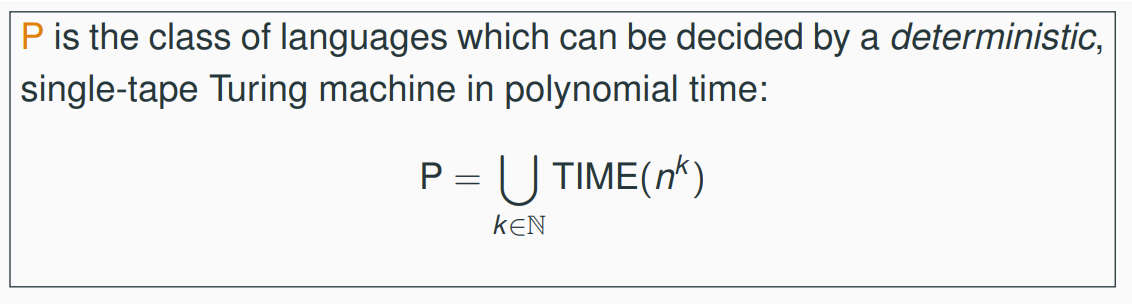
The Class P (formally)
Informally, the set of all decision problems solvable in poly time by a deterministic machine
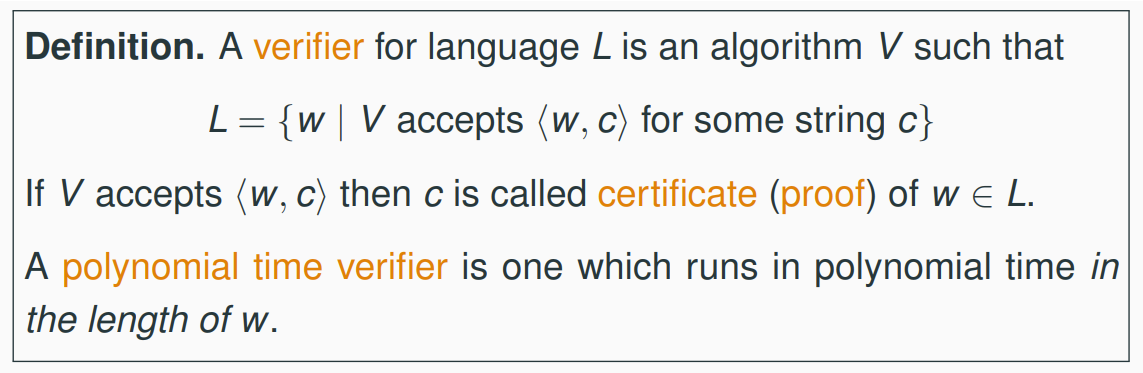
Verifiers
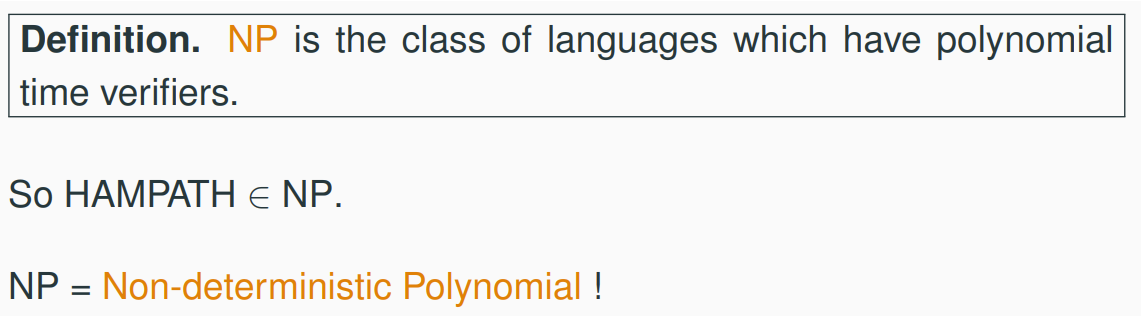
The Class NP
Alternatively: NP is the class of languages that can be decided by a non-deterministic TM in poly time
NTIME

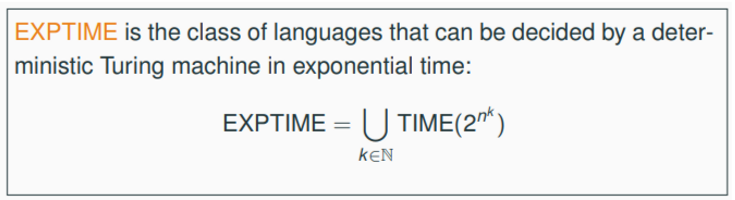
EXPTIME
TIME

SPACE

NSPACE

Relating time and space complexity
If a TM runs in f(n) TIME, it uses at most f(n) SPACE
If a TM runs in f(n) SPACE, it uses at most 2^(f(n)) TIME
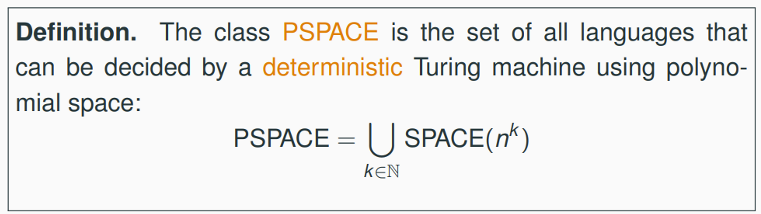
PSPACE
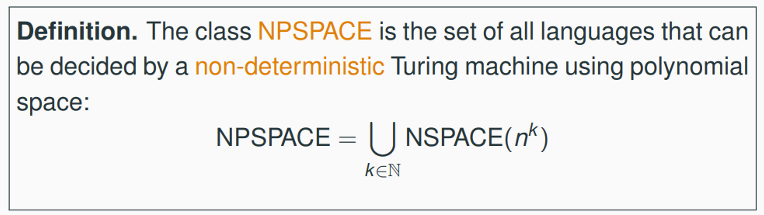
NPSPACE
Relationships between complexity classes
PSPACE = NPSACE (every f(n) space NTM has an equivalent f(n)² space DTM)
P subset PSPACE (If a TM runs in f(n) TIME, it uses at most f(n) SPACE)
NP subset NPSPACE (If a TM runs in f(n) TIME, it uses at most f(n) SPACE)
Hence, NP subset PSPACE (PSPACE = NPSPACE)
PSPACE subset EXPTIME