L14 Glycans (carbohydrates)
 Call Kai
 Learn
Learn Practice Test
 Spaced Repetition
 Match
Match Flashcards
 Knowt Play
1/16

There's no tags or description
Looks like no tags are added yet.
Name | Mastery | Learn | Test | Matching | Spaced | Call with Kai | Chat |
|---|
No analytics yet
Send a link to your students to track their progress
17 Terms
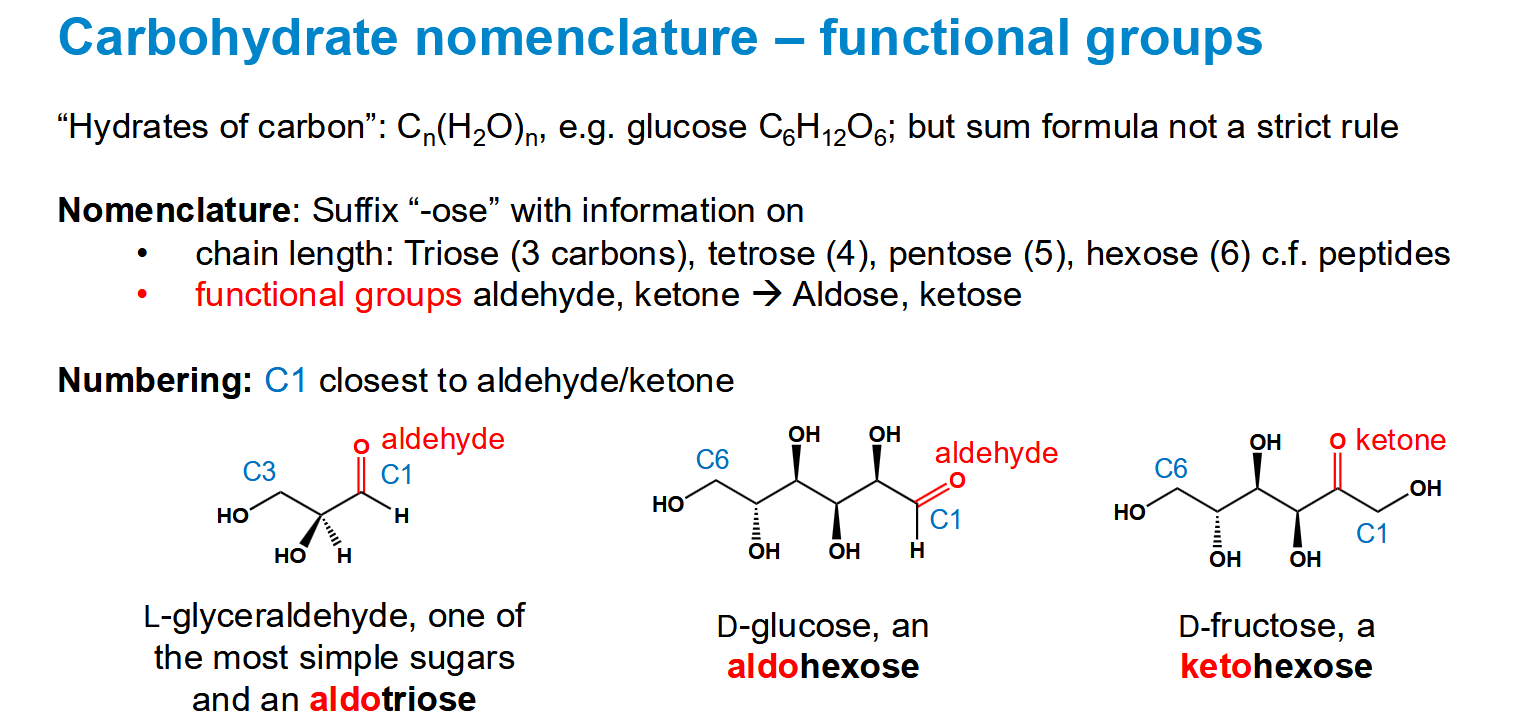
Carbohydrate nomenclature and functional groups
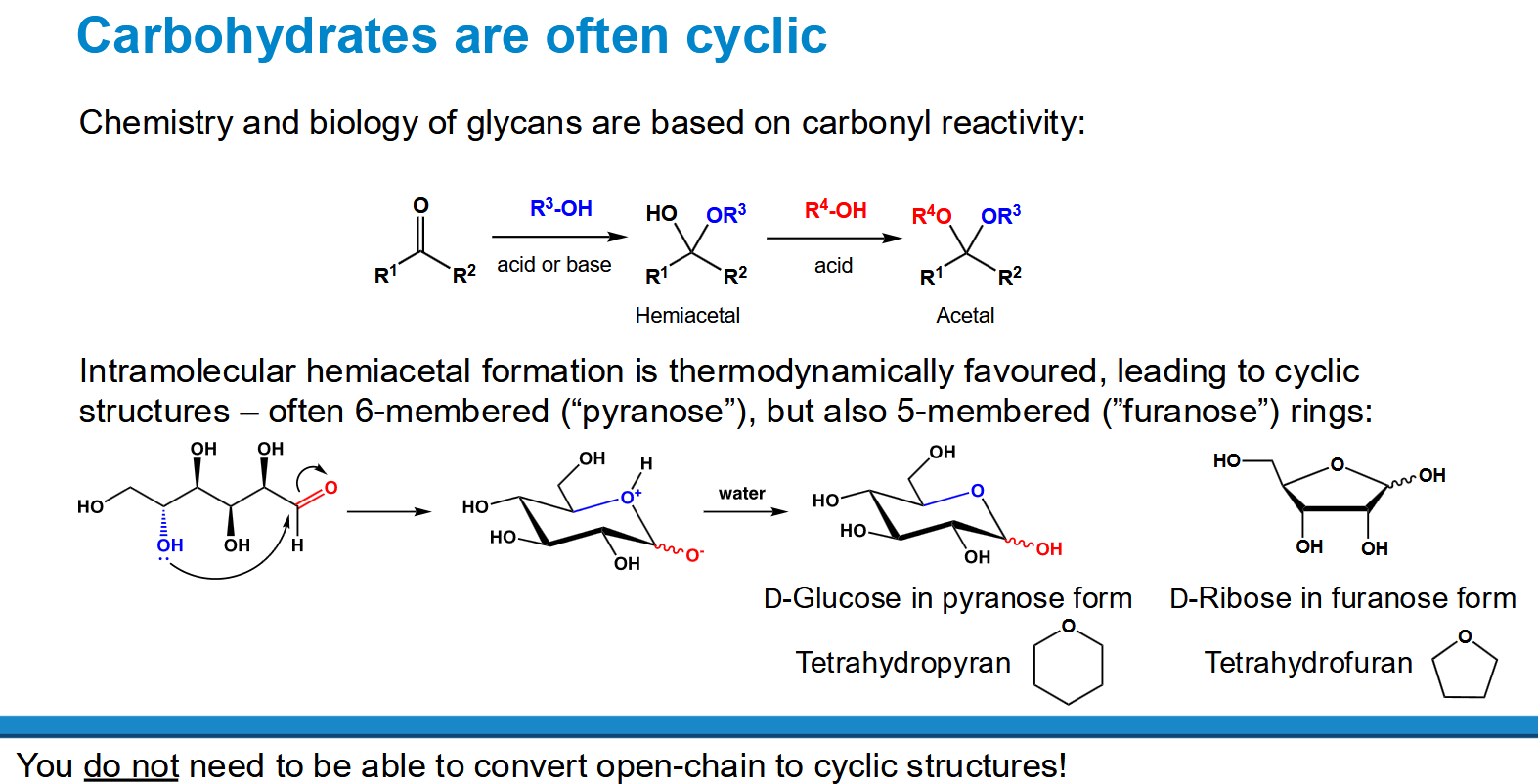
Formation of cyclic carbohydrates
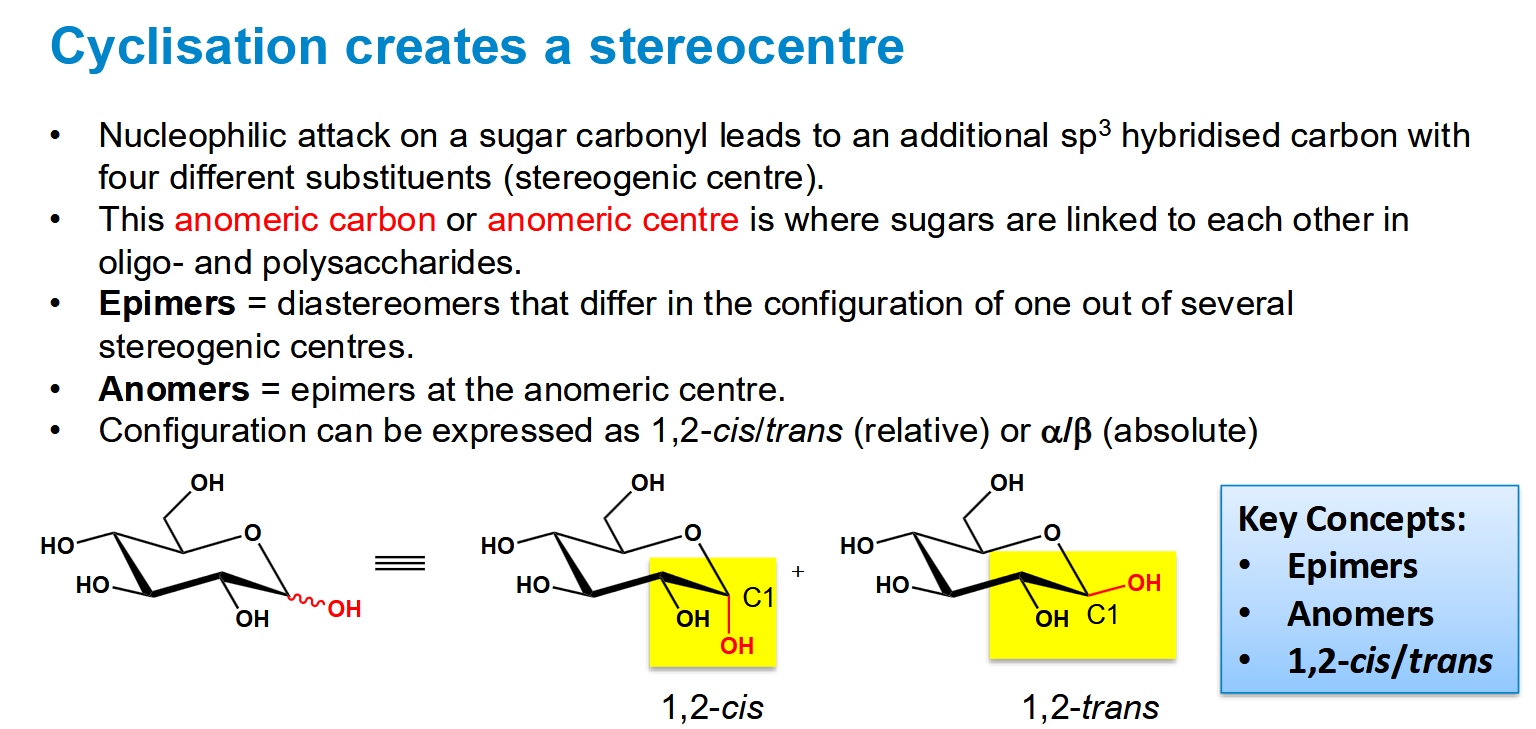
Anomeric centres and anomers - what brings them about
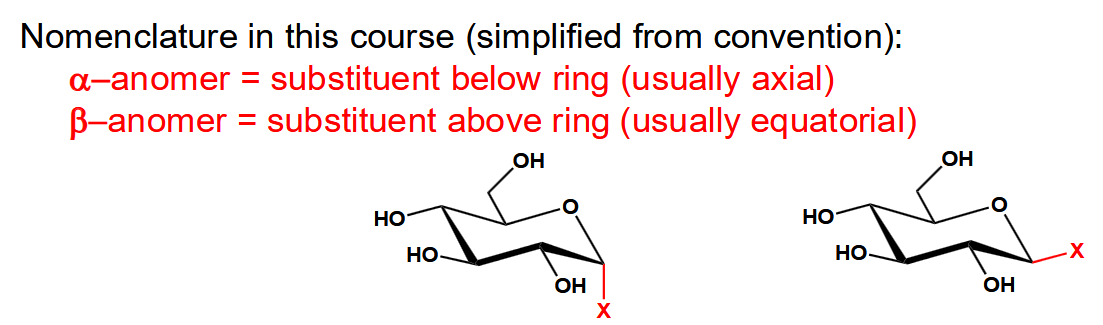
Which of these would you expect to be preferentially formed
Despite the usual reasoning of steric clash disfavouring axial substituents, the alpha position is the most stable form with electronegative substituents
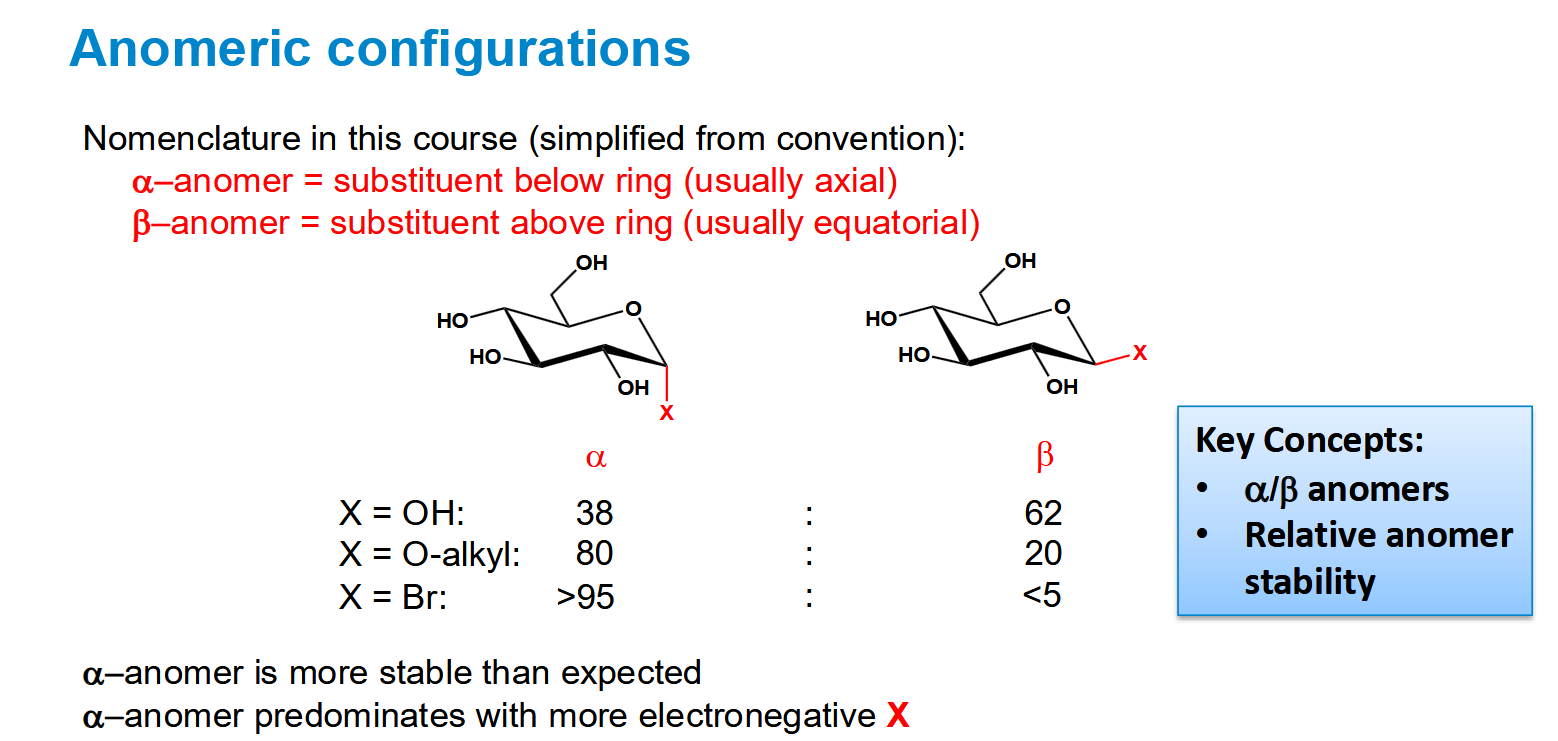
The anomeric effect - favouring alpha isomers
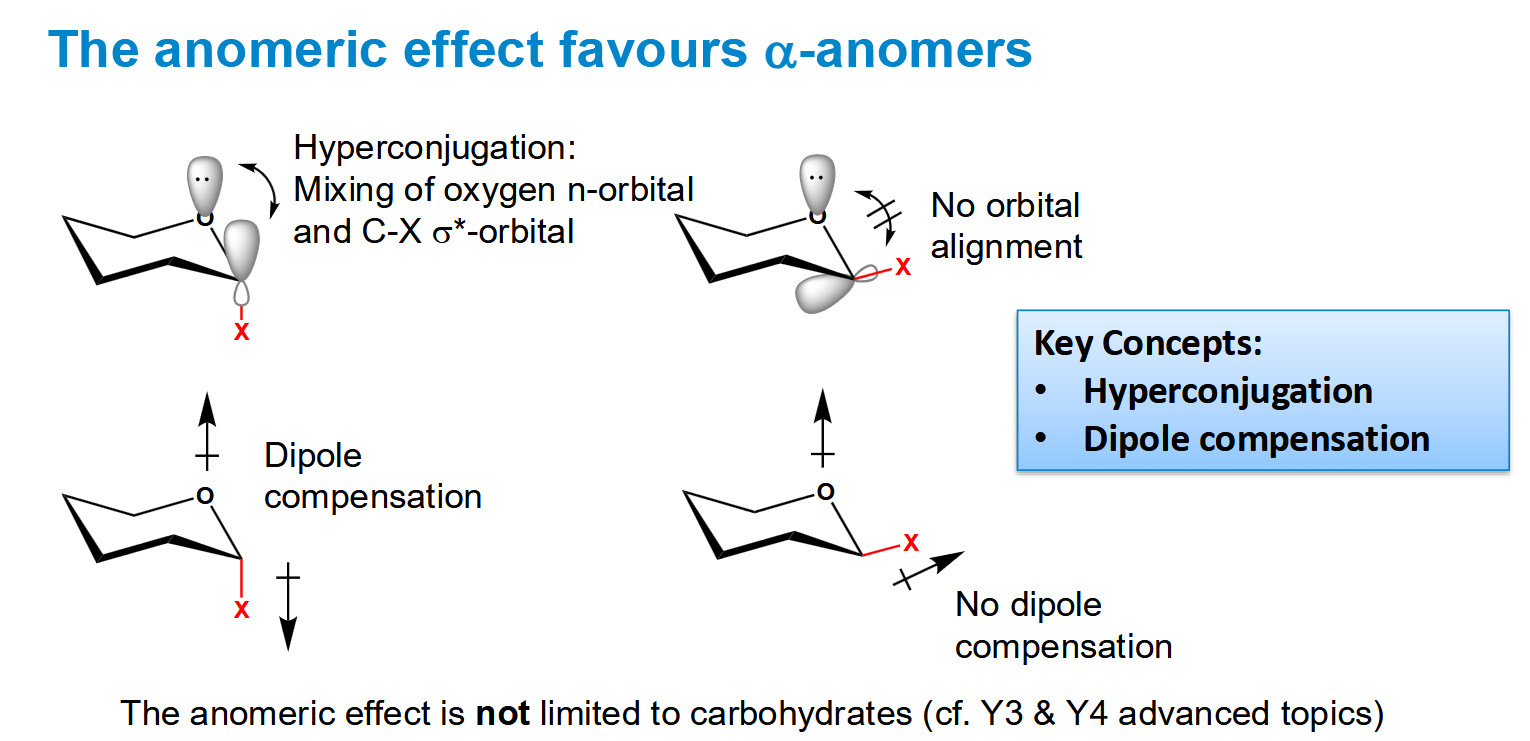
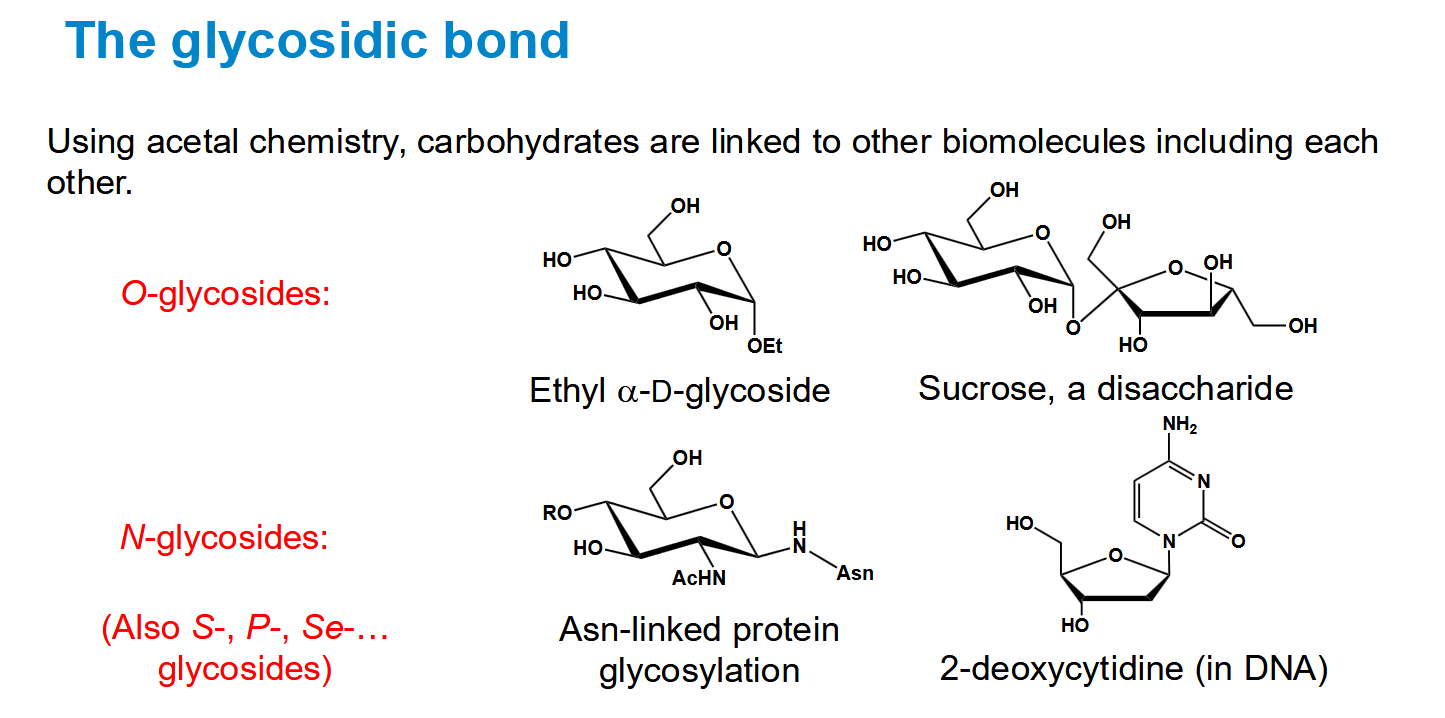
Glycosidic bonds overview
Can be O-glycosides or some other element
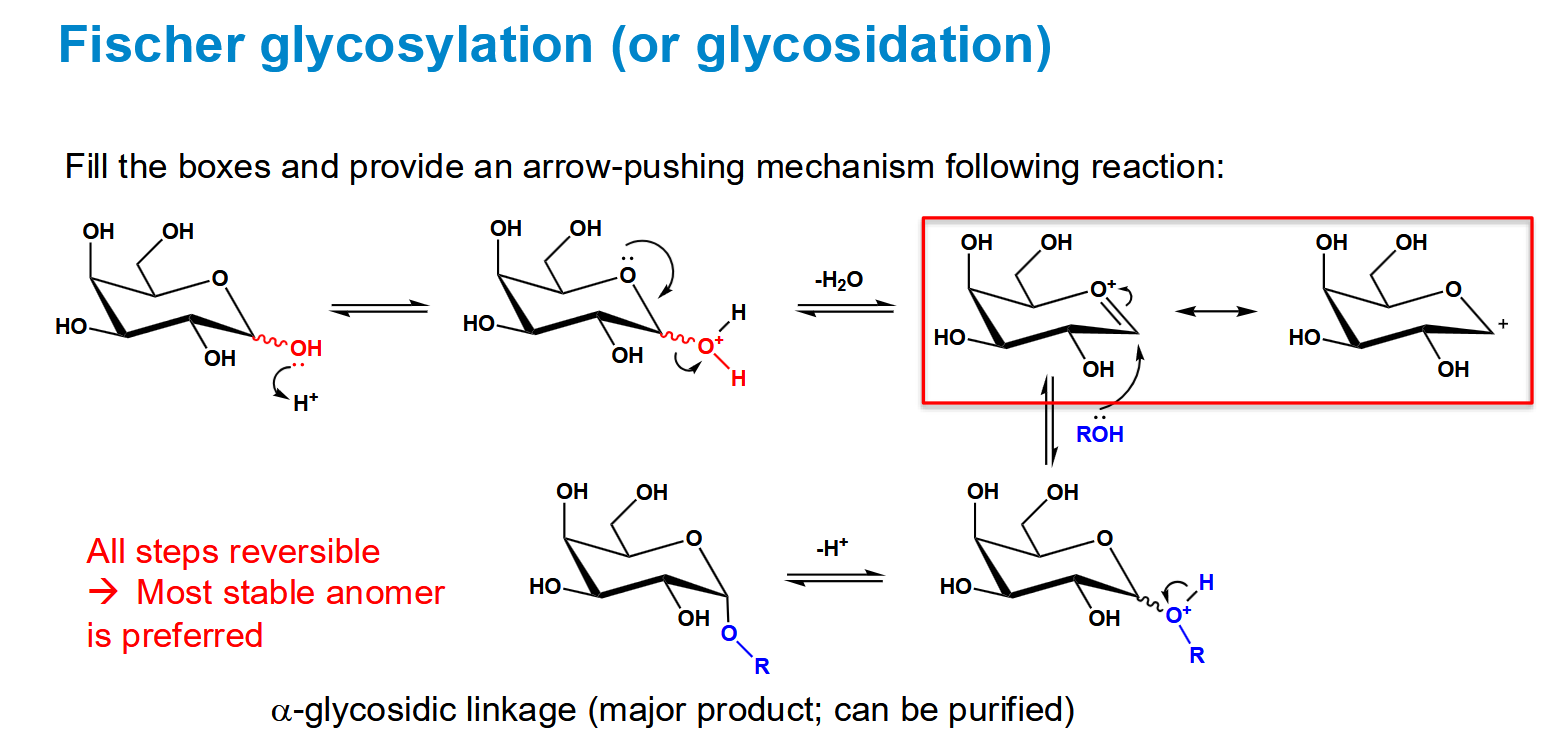
Fischer glycosylation mechanism
Requires quite concentrated acid and is not the most common synthesis method anymore
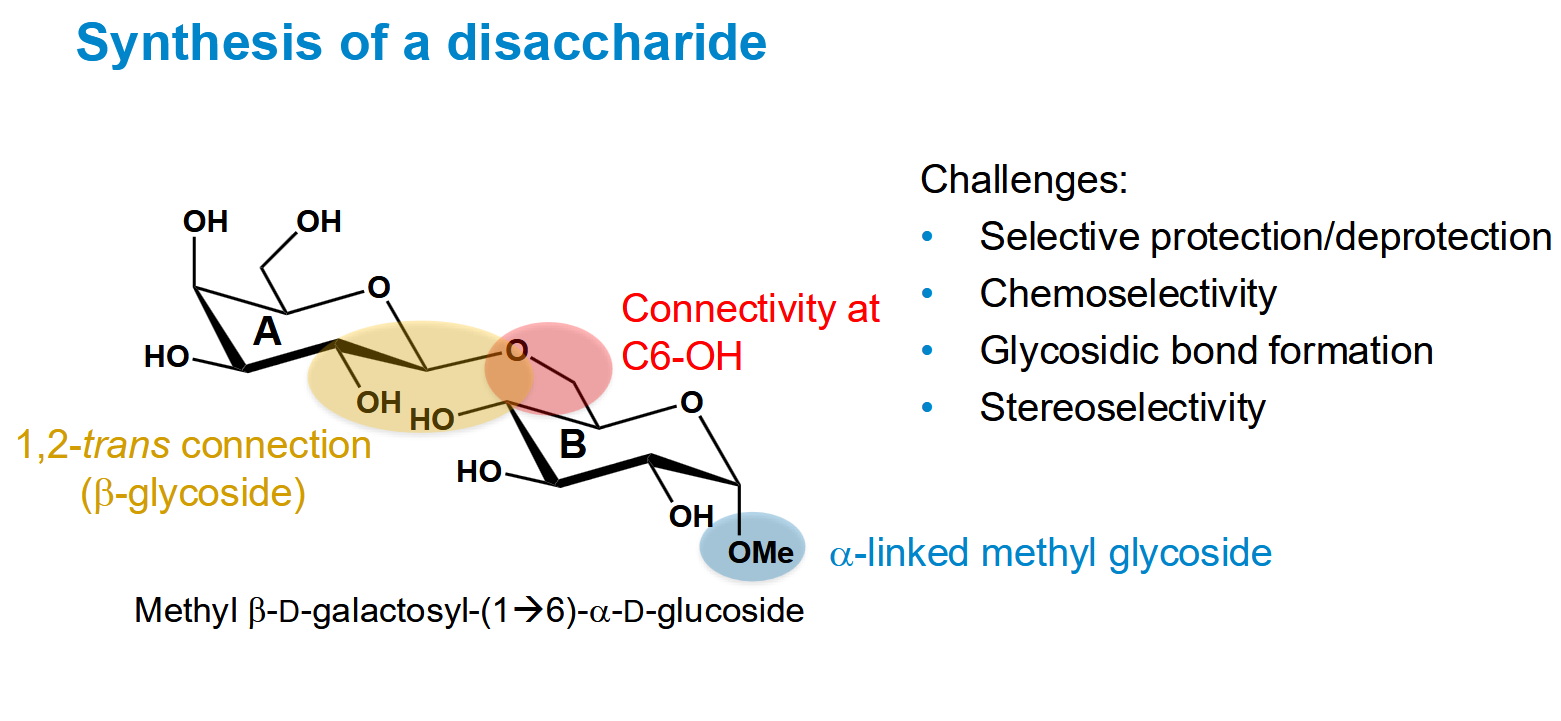
Challenges of disaccharide synthesis
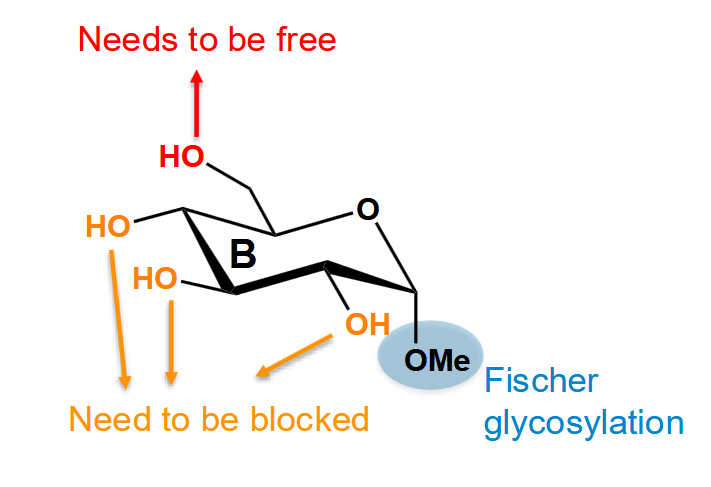
Protection of the secondary alcohols only
Requires protecting the primary alcohol first separately
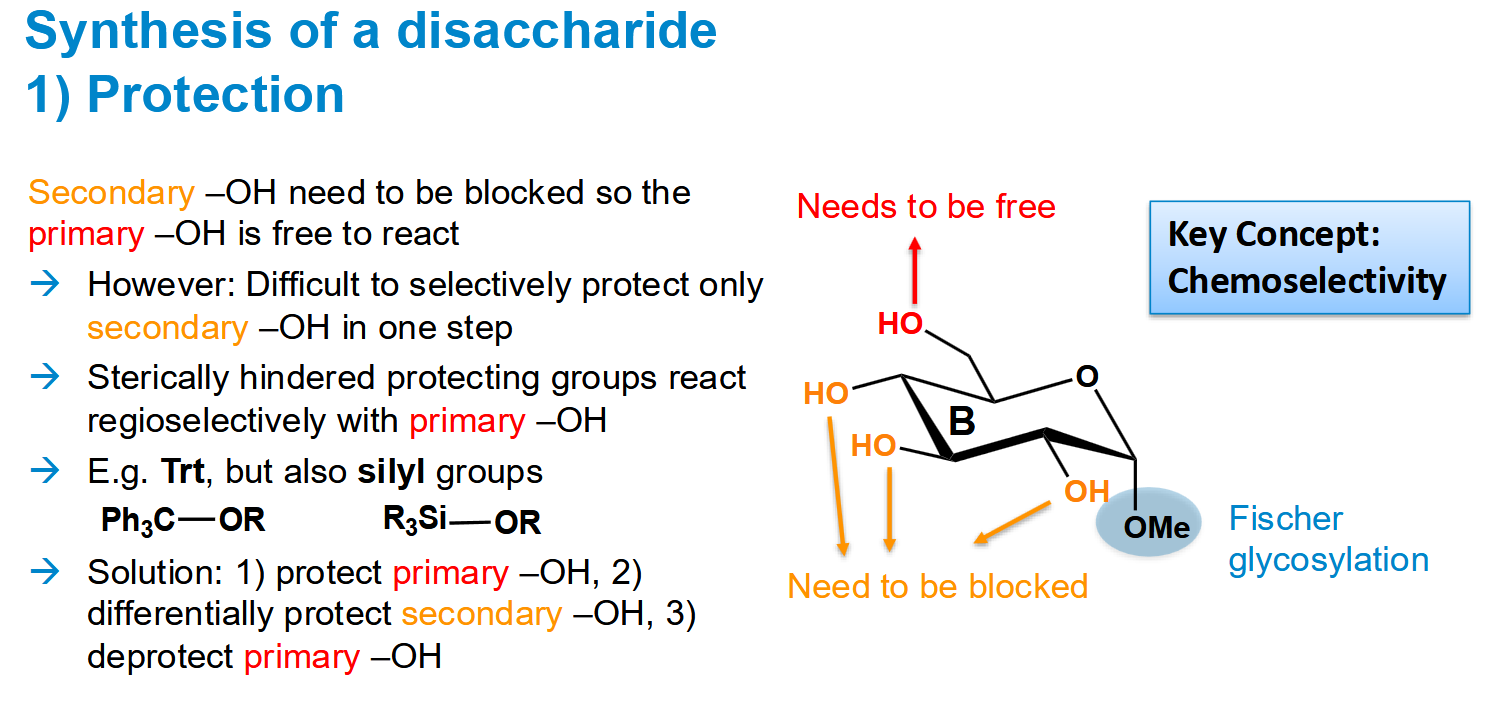
Silyl ether protecting groups
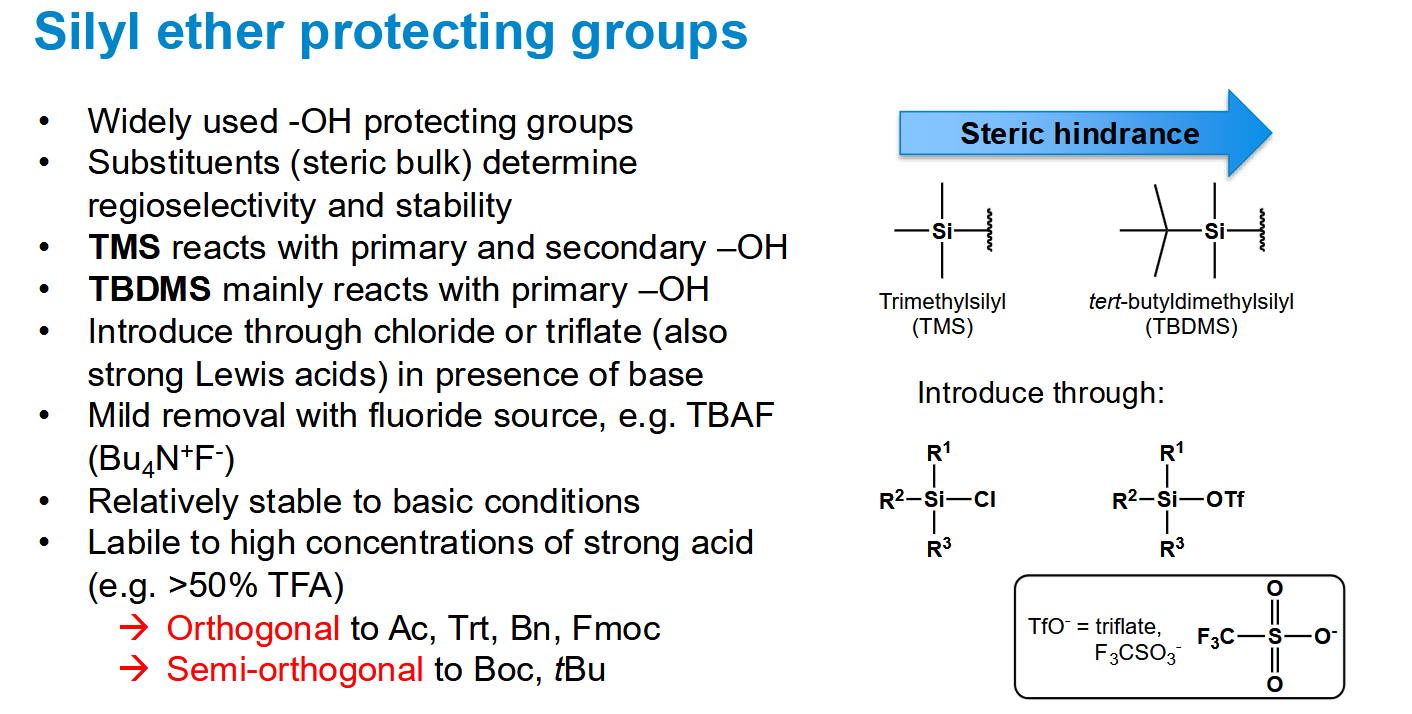
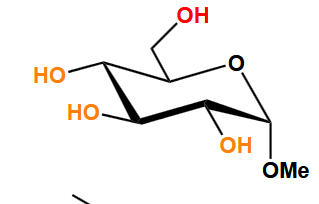
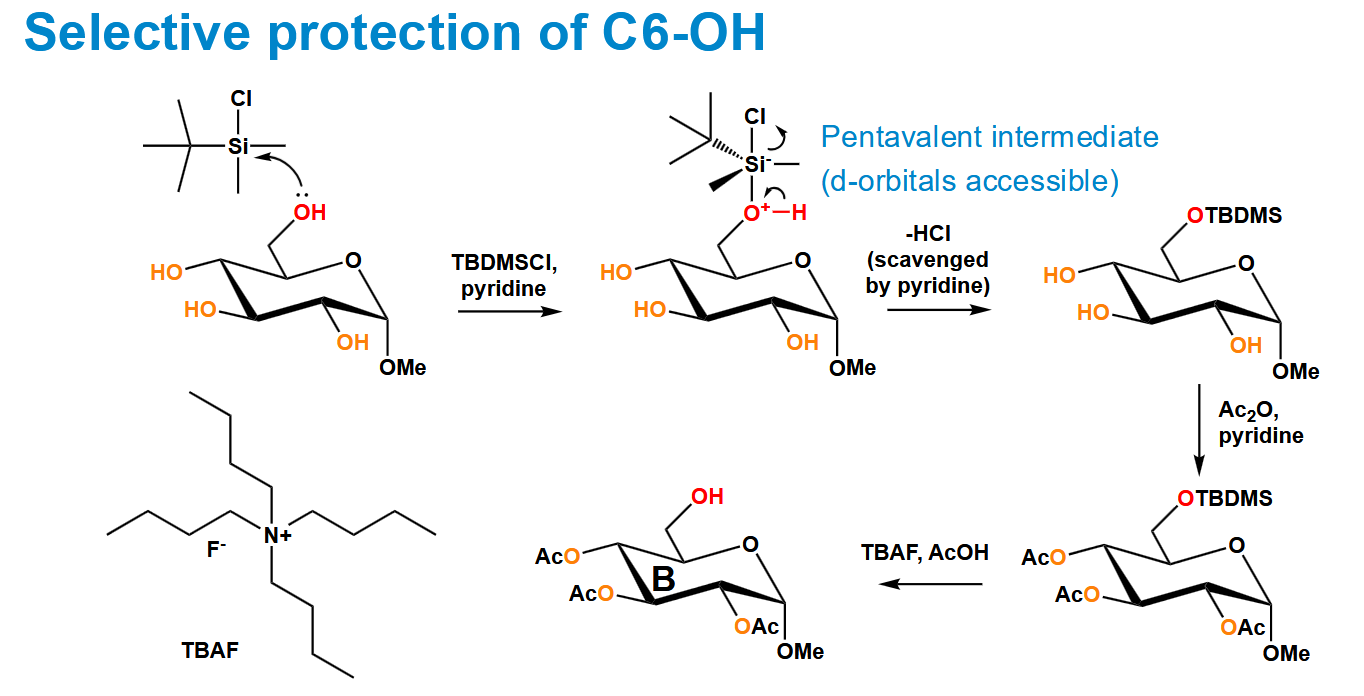
Selective protection and deprotection of C6-OH using silyl ethers
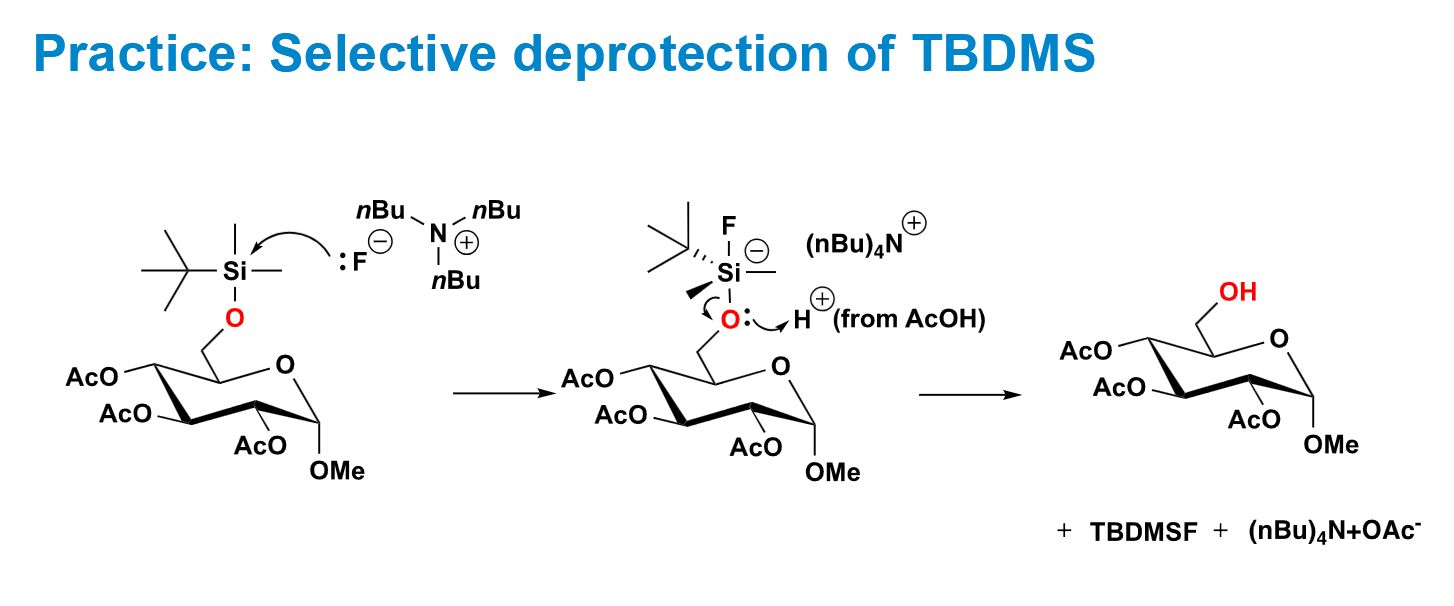
Selective deprotection of TBDMS using F- mechanism
Glycosylation - why is it always SN1
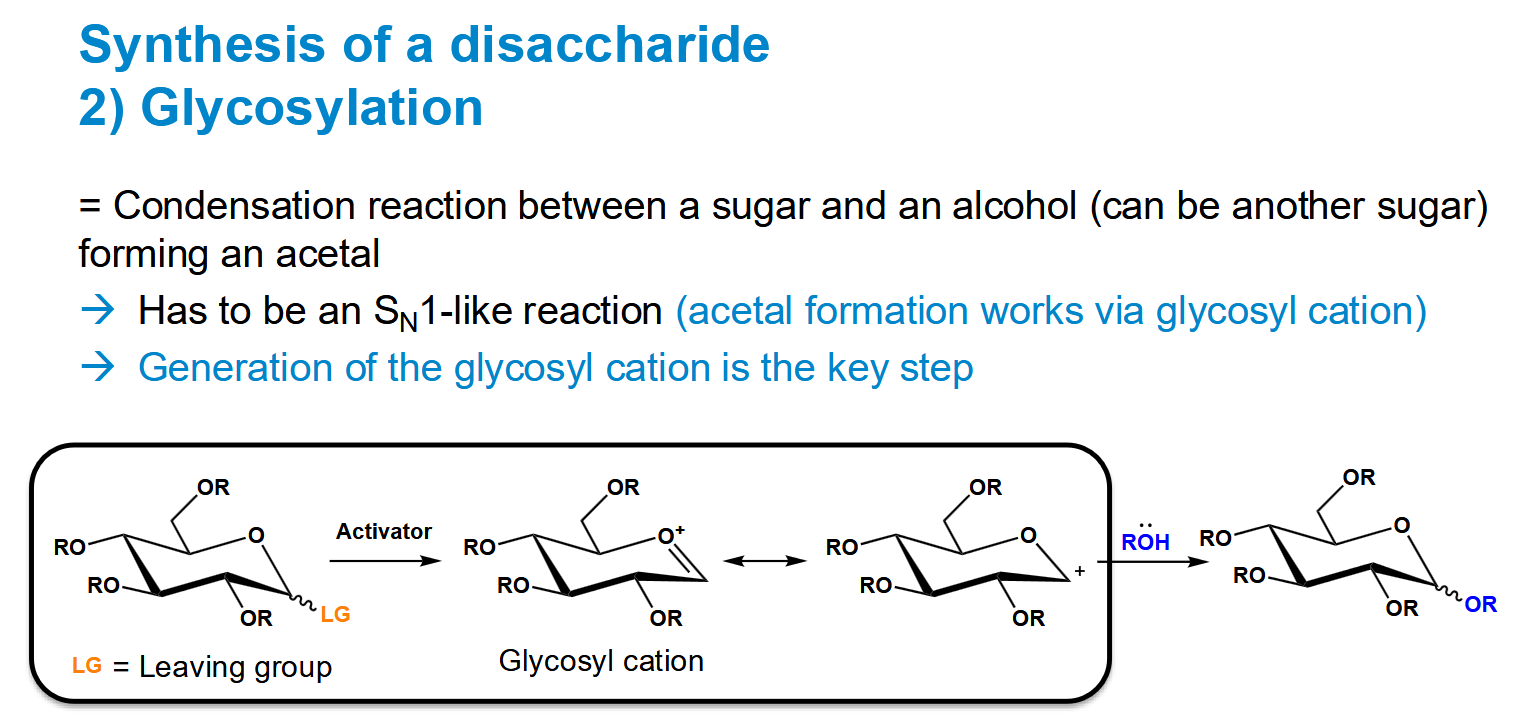
Activators and leaving groups for glycosidic bond formation
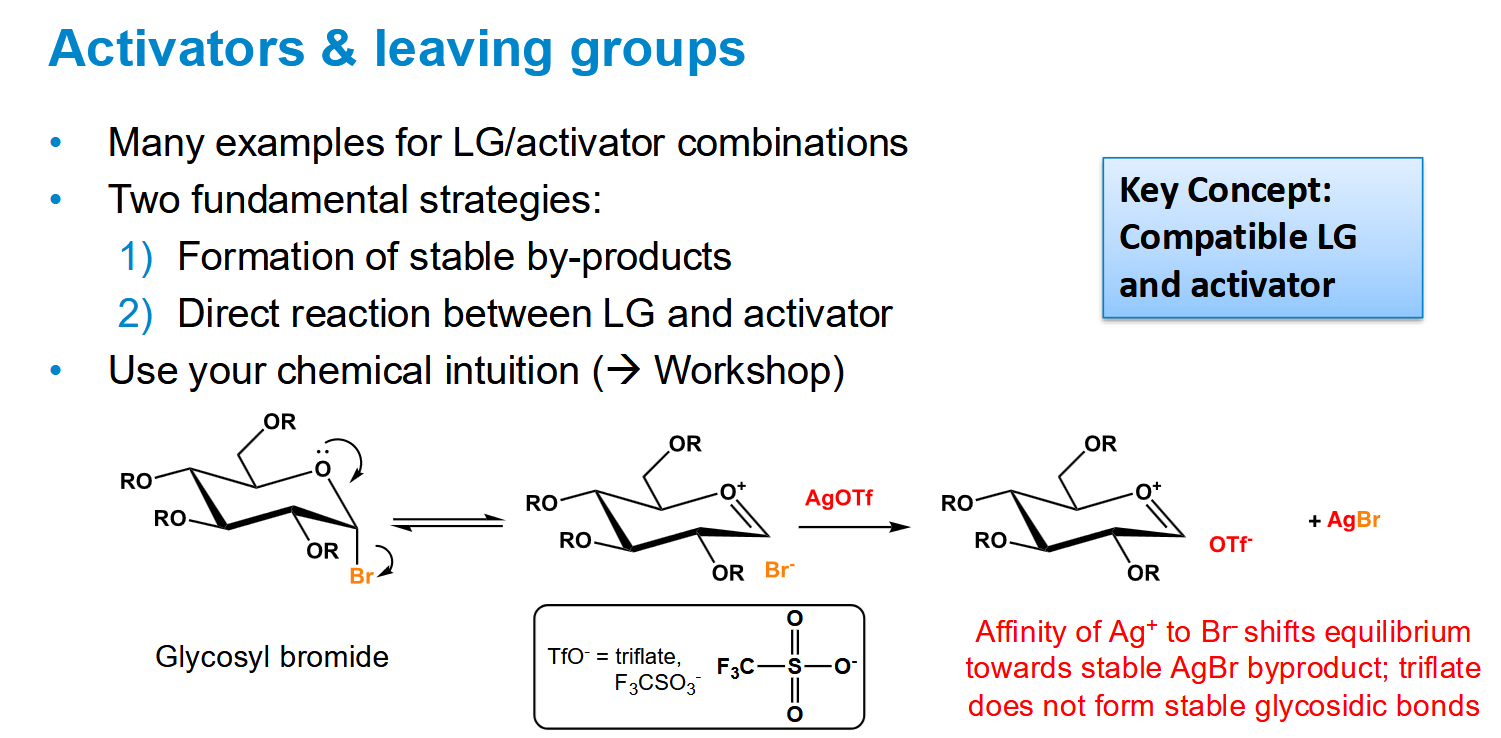
n-Pentenyl glycoside activation
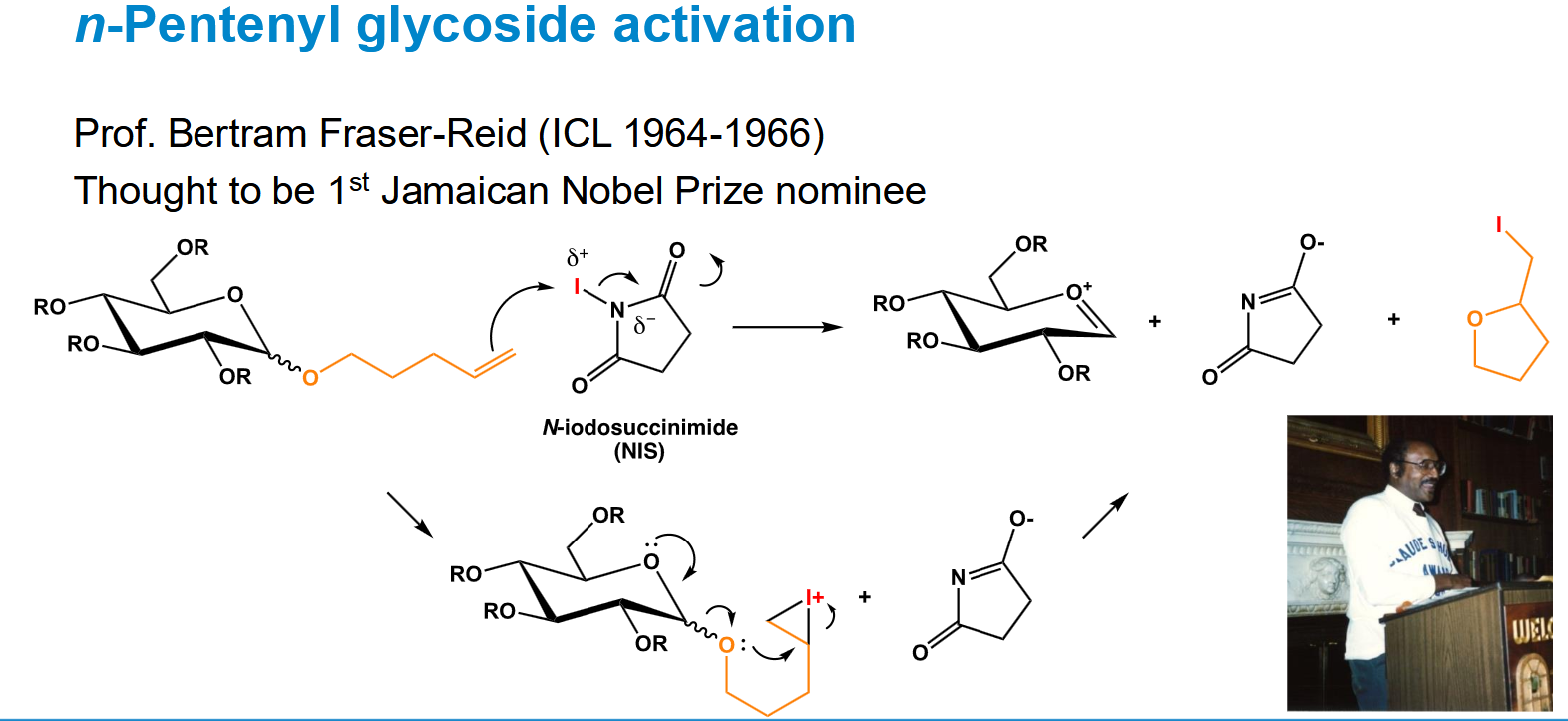
Why is glycosylation difficult to control the stereoselectivity of
How can you rectify this
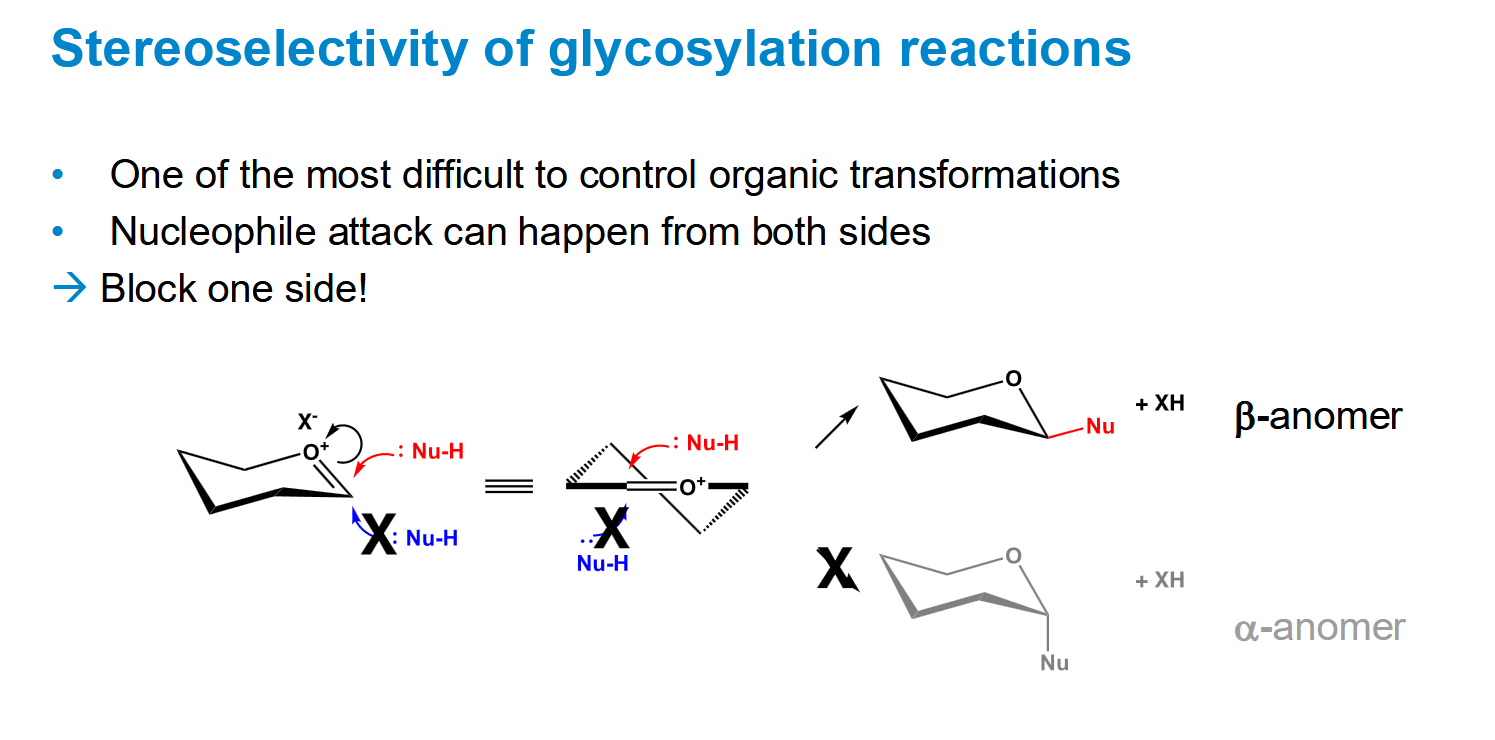
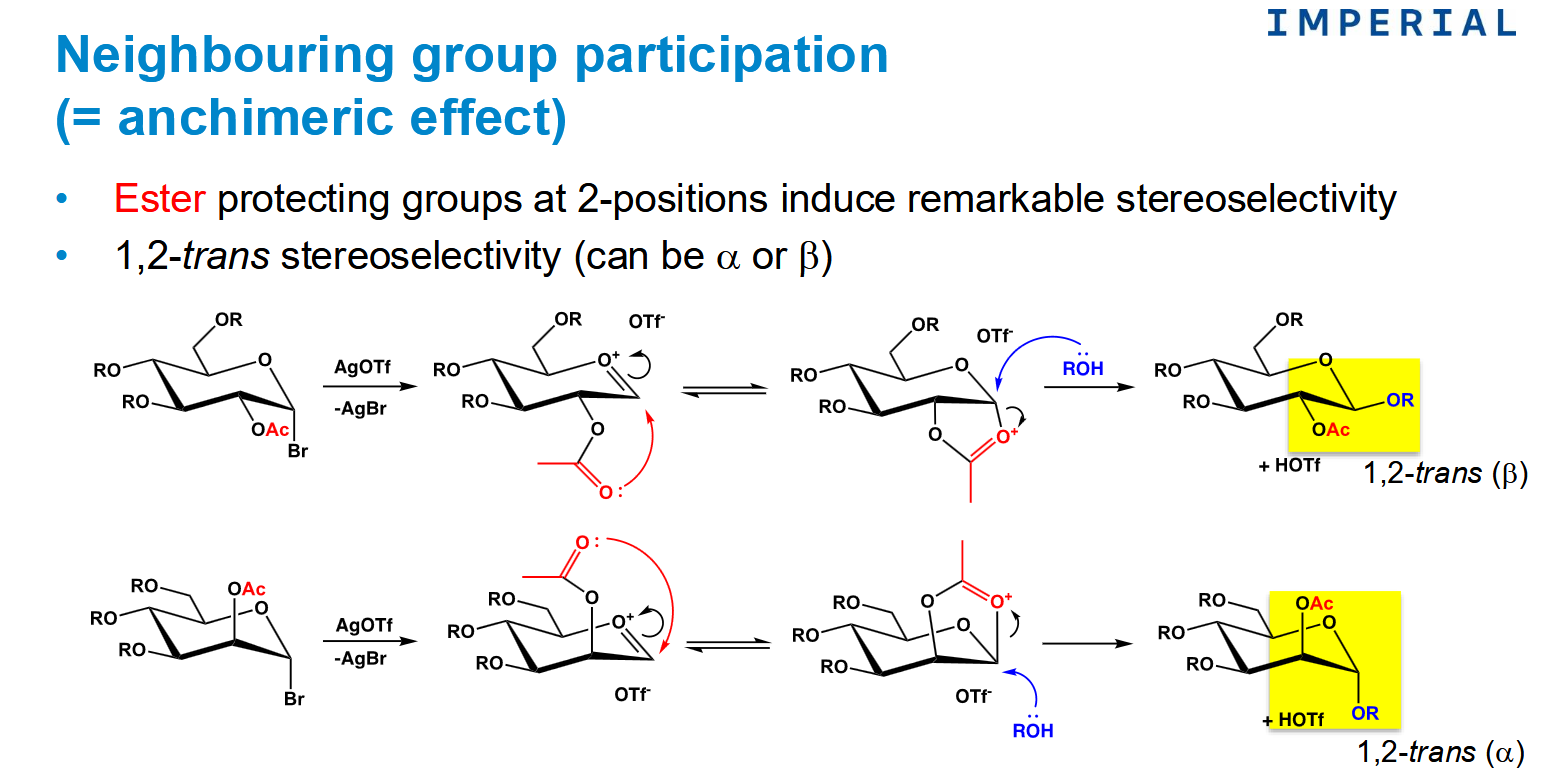
Using ester protecting groups to drive both chemoselectivity and stereselectivity
Depending on the side of the ring the ester is on, it will block nucleophilic attack on that side, essentially locking the sterics of the product.