Aus flora and fauna
 Call Kai
 Learn
Learn Practice Test
 Spaced Repetition
 Match
Match Flashcards
 Knowt Play
1/42

There's no tags or description
Looks like no tags are added yet.
Name | Mastery | Learn | Test | Matching | Spaced | Call with Kai | Chat |
|---|
No analytics yet
Send a link to your students to track their progress
43 Terms
Determinants of climate
Temperature
Precipitation
Ocean and air currents
Atmospheric chemistry
Topography
Latitude
Gondwana separations from Antarctica
NZ 80 mya
Australia 35 mya
S America 30 mya
Ratites
Large flightless brids such as emu, moa, kiwi, cassowary
Root adaptations
Shallow root bed: absorbs nutrients higher due to fast nutrient breakdown
Wide root bed: for stability, given strong winds and shallow roots
Buttress roots: stabilise soil, channel water
Prop roots: support wide-spreading branches
Thorns/spines vs prickles
Have own vascular system vs don’t, usually epidermal cells
Cauliflory
Flowering on the woody stem
Hemiparasitism
Parasitic plant that does photosynthesise on its own
Holaparasitism
Parasite that doesn’t photosynthesise on its own
Mutualism
Symbiotic relationship where both organisms benefit
Commensalism
Symbiotic relationship where one organism benefits and the other is not negatively impacted
Myrmecophyte
Plant mutualist with a colony of ants which hollow it out
Angiosperm
Flowering plant
Gymnosperm
Non-flowering plant
Bryophyte
Moss, liverwort, hornwort
Ferns range
Wet areas, sheltered dry microhabitats
Cycad
Palm-like, produce cones, dioecious, some have root water storage
Cycads range
All tropical/subtropical; fossils show range used to be larger
Cycas genus: no fossil history, likely colonised from Sunda
Dioecious
Separate male and female plants
Monoecious
Separate male and female cones/flowers present on same plant
Australia conifers range
Gondwanan, including S America and some Africa
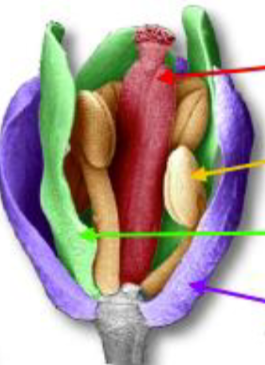
RED
Carpels (female)
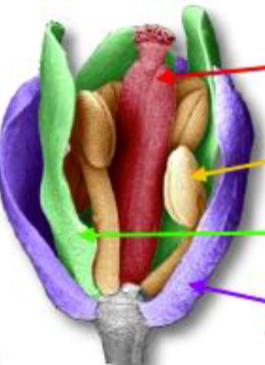
YELLOW
Stamens (male)
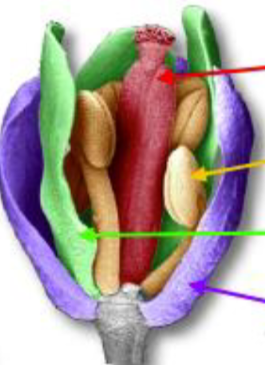
GREEN
Petals
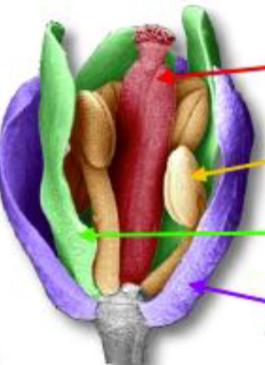
PURPLE
Sepals
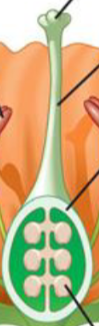
TOP
Stigma - catches pollen
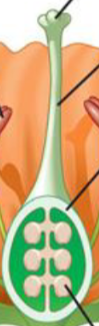
MIDDLE
Style - connects stigma to ovary
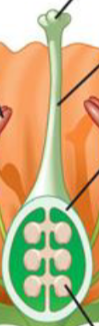
BOTTOM
Ovary - hold ovules (unfertilised seeds)
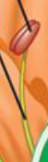
TOP
Anther - produces pollen
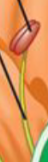
BOTTOM
Filament - holds anther up
Proteaceae examples
Banksia, Hakea, Grevillea, Macadamia
Proteaceae range
Gondwanan distribution in forests, woodlands, heathlands - low nutrient soils
Proteaceae flower structure
Long style presents pollen to pollinators in male phase then receives pollen in female phase
Proteaceae pollinators
Birds, insects, some non-flying mammals
Legume family
Fabaceae
Legume characteristics
Can fix nitrogen, using nodules of root hairs with bacteria
Hard dry fruit with two side seams
2 keel, 2 wing, 1 flag petals
Mostly insect pollinated
Acacia range
Rainforests, wet eucalypt forests, arid, semi-arid
Acacia leaf types
Bipinnate: pinnate with pinnate leaflets
Phyllodes: flattened photosynthetic stems, look like long simple leaves
Elaiosome
Fatty, protein-rich, fleshy structure attached to seeds (esp. in Acacia) which attracts ants, who carry the seeds underground where they are protected
Myrtaceae examples
Eucalypt, tea tree (Leptospermum), bottlebrush, lilly pilly
Myrtaceae secondary metabolite
Oils from oil glands visible in leaves; bitter taste protects against predation, and some can prevent competitor seeds from germinating
Myrtaceae fruit types
Dry, woody, open by splitting at top of ovary; e.g. eucalyptus capsules
Fleshy, berry-like, rarer; e.g. lilly pilly
Eucalypt range
Forest, arid, and alpine, a few rainforest
Australia, NZ, PNG; formerly S America (50+ mya)
Key characteristics to ID/describe eucalypts
Fruit shape, valve and ovary location, pedicellate (individual stem) or sessile (fused directly to group stem)
Bark type
Dorsiventral (different top and bottom) and rounded (juvenile) or isobilateral, longer, and vertical leaves (adult)