IB Biology - Ecology
 Call Kai
 Learn
Learn Practice Test
 Spaced Repetition
 Match
Match Flashcards
 Knowt Play
1/114

There's no tags or description
Looks like no tags are added yet.
Name | Mastery | Learn | Test | Matching | Spaced | Call with Kai | Chat |
|---|
No analytics yet
Send a link to your students to track their progress
115 Terms
Biodiversity
the variety of life in all its forms, levels + combinations
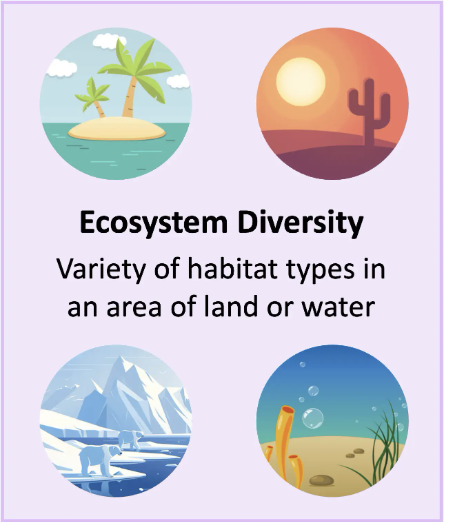
Ecosystem diversity
variety of habitat types or ecological niches within a given area
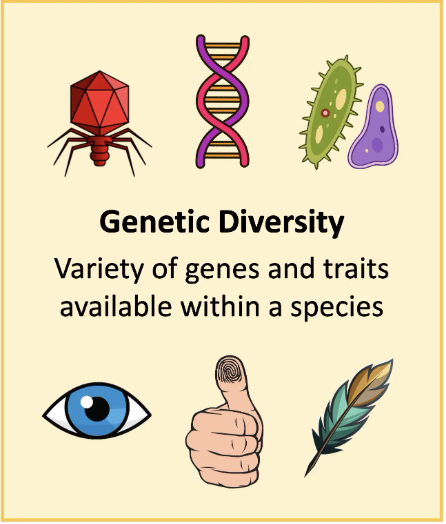
Genetic diversity
Variety of genes + characteristics that are present within a population of a species
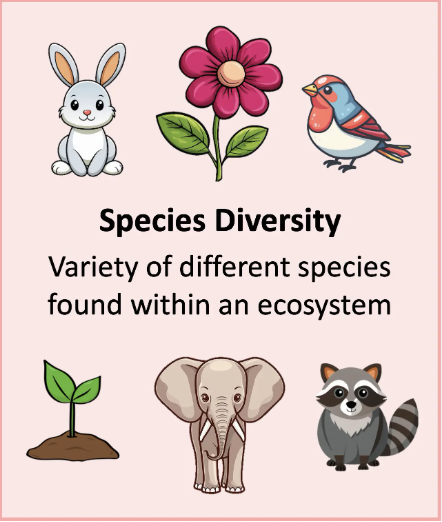
Species diversity
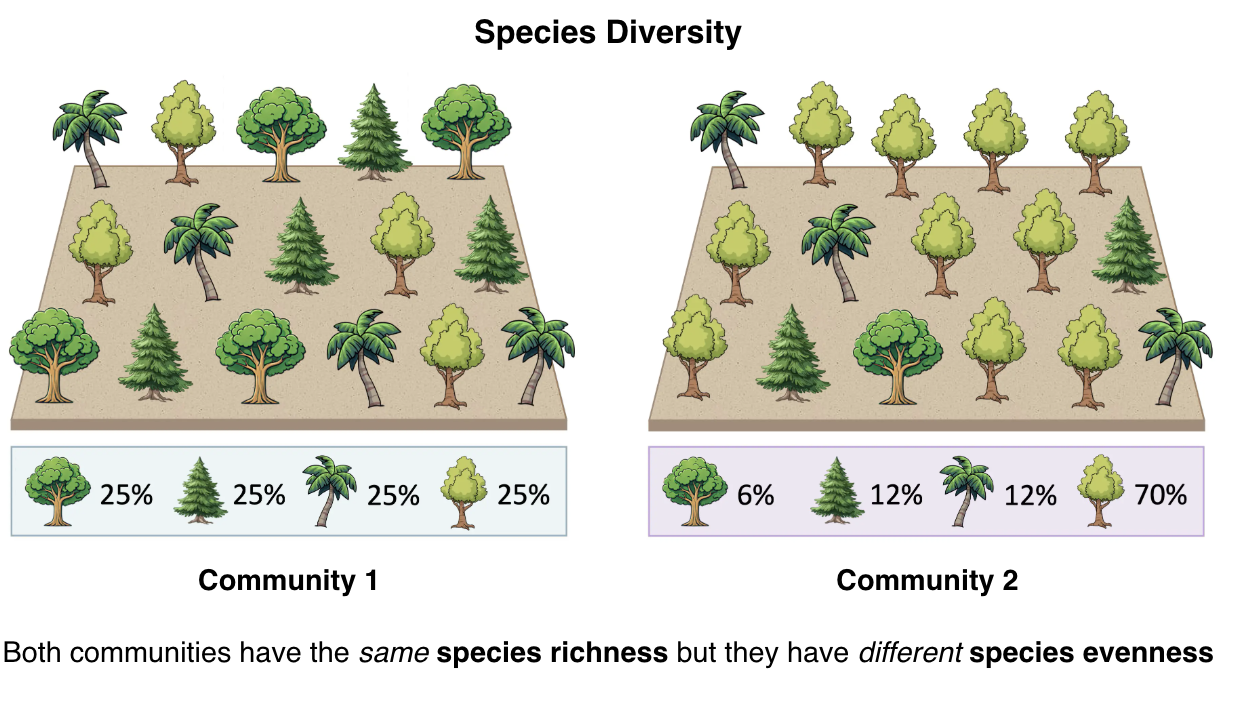
range of different species that are found within a particular habitat or ecosystem → measured in terms of species richness (number of different species) and species evenness (number of individuals in a species)
Comparisons no. of species on Earth VS past levels of biodiversity
Biodiversity is constantly changing due to:
speciation → new species evolves, increasing biodiversity
extinction → decreases biodiversity
Fossils
Evidence from fossils suggests that there are currently more species alive than at any point in the past
How to classify species
Lumpers
Splitters
Lumping
Lumpers group similar organisms together through shared similarities → fewer species recognised
Splitting
Splitters separate organisms based on differences → more species recognised
Anthropogenic species extinction
the permanent loss of a species caused directly or indirectly by human activities
North Island Giant Moa
The giant moa was a flightless bird → before the arrival of humans, the moa’s only predator was the massive Haast’s eagle → after polynesian settlers came, the giant moa was quickly driven to extinction by overhunting + habitat destruction
Caribbean Monk Seal
The Caribbean monk seal lived in the oceans around the gulf of Mexica + the Caribbean → their docile nature made them easy prey to humans, who hunted them for their oil + blubber → overfishing of their food source led to starvation
Tasmanian Tiger
The Tasmanian tiger was native to the Australian mainland and the island of Tasmania → died out on the mainland due to competition with dingoes → the arrival of European settlers, the Tasmanian tiger was intensively hunted
Examples of ecosystem loss
Mixed dipterocarp forest
Great barrier reef
Mixed dipterocarp forest
Dipterocarps are in the rainforest in South East Asia → provides an important habitat for native species, nutritional support via fruits, pollen + nectar → being lost in order to provide timber + clear the land for agriculture → excessive deforestation is endangering native species + threatening the water security + food of the indigenous populations
Great barrier reef
Coral species form connected reefs that are impacted by changes in oceanic temperature/pH → coral polyps receive nutrition from photosynthetic zooxanthellae (algae) that live within the polyp’s endodermis → changes in ocean temp/pH may cause zooxanthellae to leave the coral tissue, leading to coral bleaching → greenhouse gas emissions are increasing oceanic temp. + decreasing pH (ocean acidification) → mass bleaching of the Great Barrier Reef
Species richness
no. of different species present in an area (more species = greater richness)
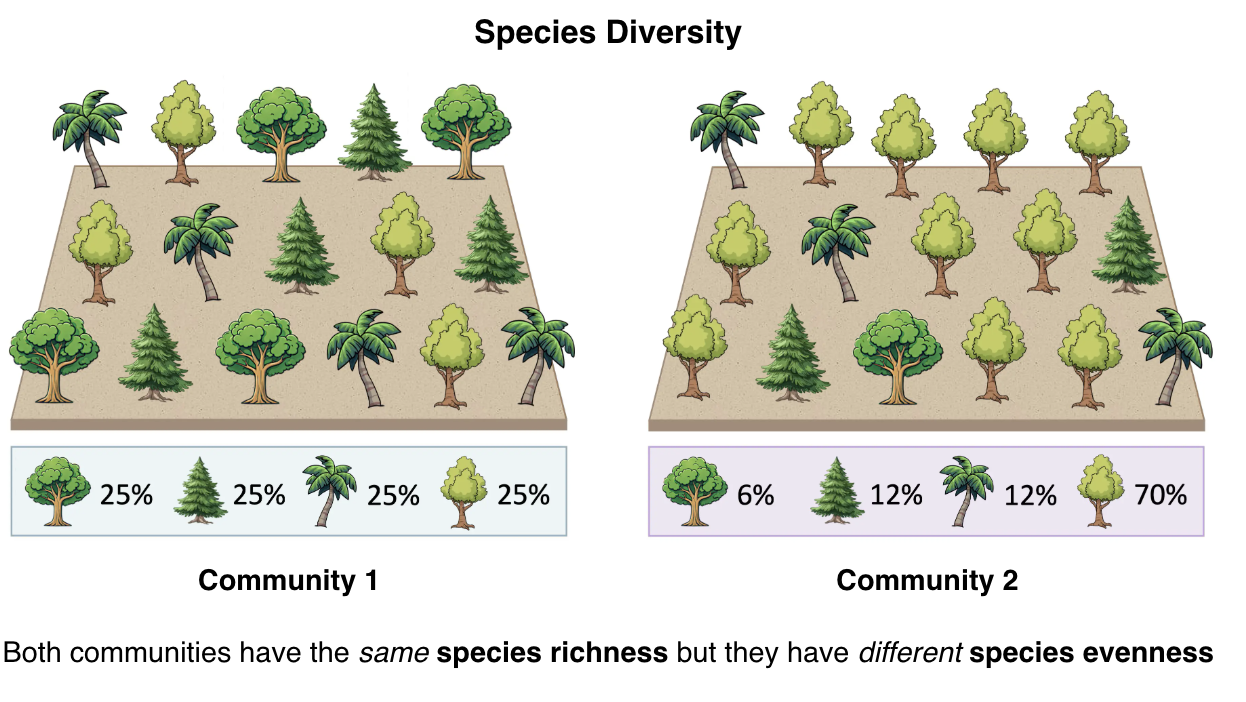
Species evenness
relative abundance of the different species in an area (similar abundance = more evenness)
Ecosystem stability
requires a high level of both species richness + evenness in order to resist environmental change
Evidence for biodiversity crisis
assessments are based on repeated surveys + may rely on contributions from both expert scientists + members of the public (citizen scientists)
Causes of the biodiversity crisis
Overexploitation
Urbanisation
Deforestation
Pollution
Climate change
Global transport
Overexploitation
Overfishing + excessive or unnecessary hunting may reduce population numbers below sustainable levels
Urbanisation
Human construction can lead to a direct loss/fragmentation of habitats → increased competition between native species
Deforestation
The clearing of land for industry or agriculture → consequent loss of native habitat
Pollution
Microplastics, fertilisers + organic waste products → causes ongoing damage to natural environments
Climate change
Greenhouse gases released via industrial processes are changing climate conditions + increasing ocean acidification
Global transport
Globalisation is increasing the spread of pests, pathogens + invasive species
Conservation
protection + maintenance of natural resources → e.g trees, water + wildlife in order to preserve biodiversity
In-situ conservation
preservation of a species within their natural habitat (on-site)
In-situ conservation methods
ecological monitoring
legislation
rewilding
reclamation
Ecological monitoring
monitoring of species to ensure viable population levels are maintained
Legislation
ensures adequate funding for policing (no hunting) + education
Rewilding
active or passive restoration of damaged ecosystems to the point where they become sustainable
Reclamation
the repurposing of an area that has been utilised for human activity in order to restore previously existing ecosystems
Pros of in-situ conservation
access to natural habitat → develop natural behaviour
protects many species at once
less expensive
Cons of in-situ conservation
controlling exploitation is difficult
needs extensive restoration
population may drop during restoration
Ex-situ conservation
preservation of species outside their natural habitats (off-site)
Ex-situ conservation methods
captive breeding
botanical gardens
seed/tissue bank
Captive breeding
animals being raised + bred in containment (e.g. zoos) to ensure survival prospects
Botanical gardens
areas devoted to the collection, cultivation + display of a wide variety of plant species
Seed/tissue bank
secure sites that store + catalogue seeds/tissue samples to preserve the genetic diversity of species
Pros of ex-situ conservation
greater controlled environment
improves chances of successful breeding with artificial methods
Cons of ex-situ conservation
does not prevent damage of natural habitats
species less likely to be reintroduced to the while
increase in inbreeding
How to prioritise conservation
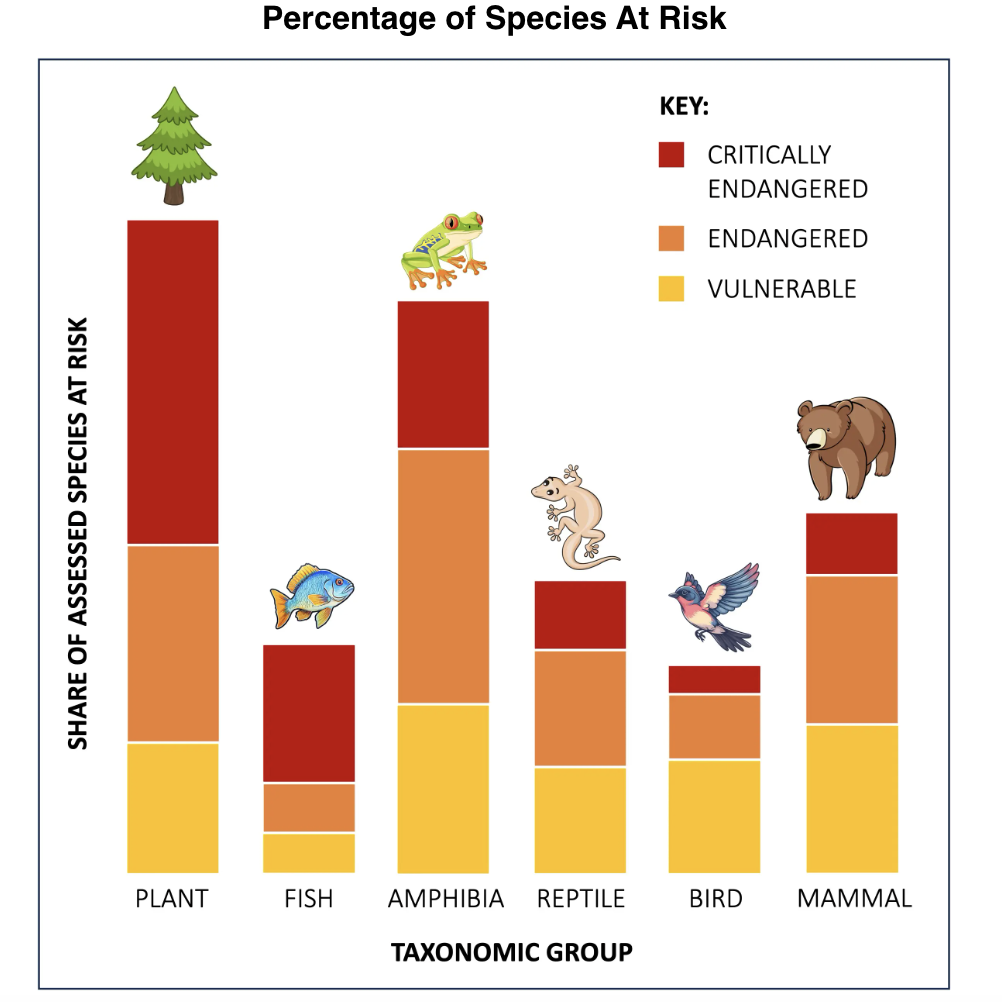
EDGE of existence selects highly endangers species (who satisfy both ED and GE)
Evolutionary distinct (ED)
species who have few close relatives and have unique phylogenic branches
Globally endangered (GE)
species at high risk of extinction according to the IUCN Red List
Ecosystem
a community of organisms interacting with each other and with their abiotic environment
Habitat
the place in which a community, species, population or organism lives
Geographical locations
where it is geographically → e.g. tropical environments exist at the equator
Types of habitats
the type of habitat → e.g. grassland environments are found at diverse locations
Challenges in a sand dune
shifting sands
lack of water
exposure to wind + heat
high levels of salt
How marram grass is adapted to sand dunes
Feature | Function |
curled leaves | decreases stomata’s exposure to external air → reduces transpiration |
deep tap roots | improves anchorage + access to deeper water reservoirs |
stomata are sunk in pits | better traps water vapour → reduces transpiration |
grass’s low growing | reduces exposure to wind + improves anchorage |
horizontal underground stems (rhizomes) | maximises root penetration + stabilizes plant |
Challenges in a mangrove
high salt environment
water logged soil
low amount of oxygen available
How mangrove tress are adapted
Feature | Function |
pneumatophores | roots 25-30cm above surface → obtains oxygen as they have spongy tissue within the many air spaces → oxygen enters through lenticles (pit) in the root |
suberin coating on root cells | excludes majority of salt from the water taken up by roots |
prop roots | provides stability |
cable roots from the trunk | below surface → provides stability with fine-feeding tubes |
propagule | developed for seedlings adapted in water dispersal |
Limiting factor
component of an ecosystem which limits the distribution or numbers of a population
Abiotic factors that affect plants
light intensity
soil pH + mineral ions → affects plants ability to grow + reproduces
wind speed + humidity → water loss + desiccation (complete removal of moisture)
CO2 + O2 concentrations → rate of photosynthesis + aerobic cell respiration
temp → influences rate of enzymes-catalyse reactions
Abiotic factors that affect animals
wind speed + humidity → water loss + desiccation (complete removal of moisture)
CO2 + O2 concentrations → rate of photosynthesis + aerobic cell respiration
temp → influences rate of enzymes-catalyse reactions
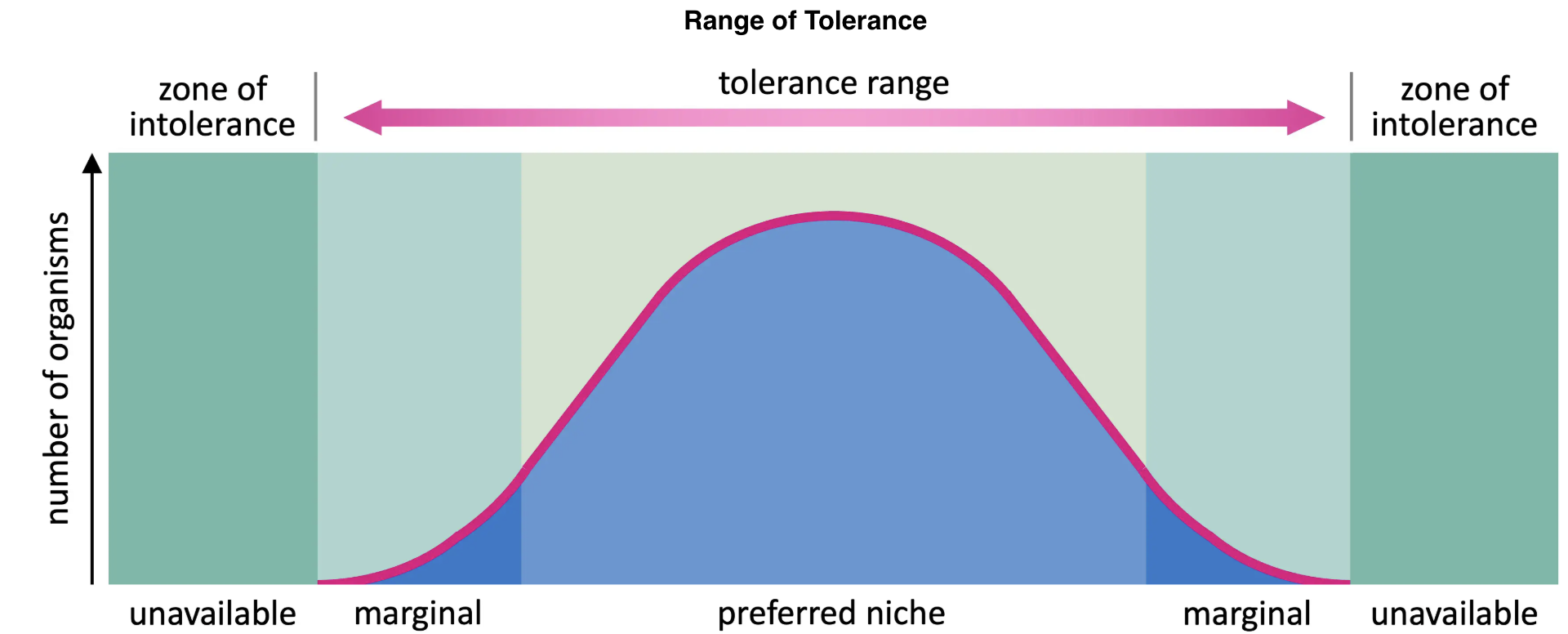
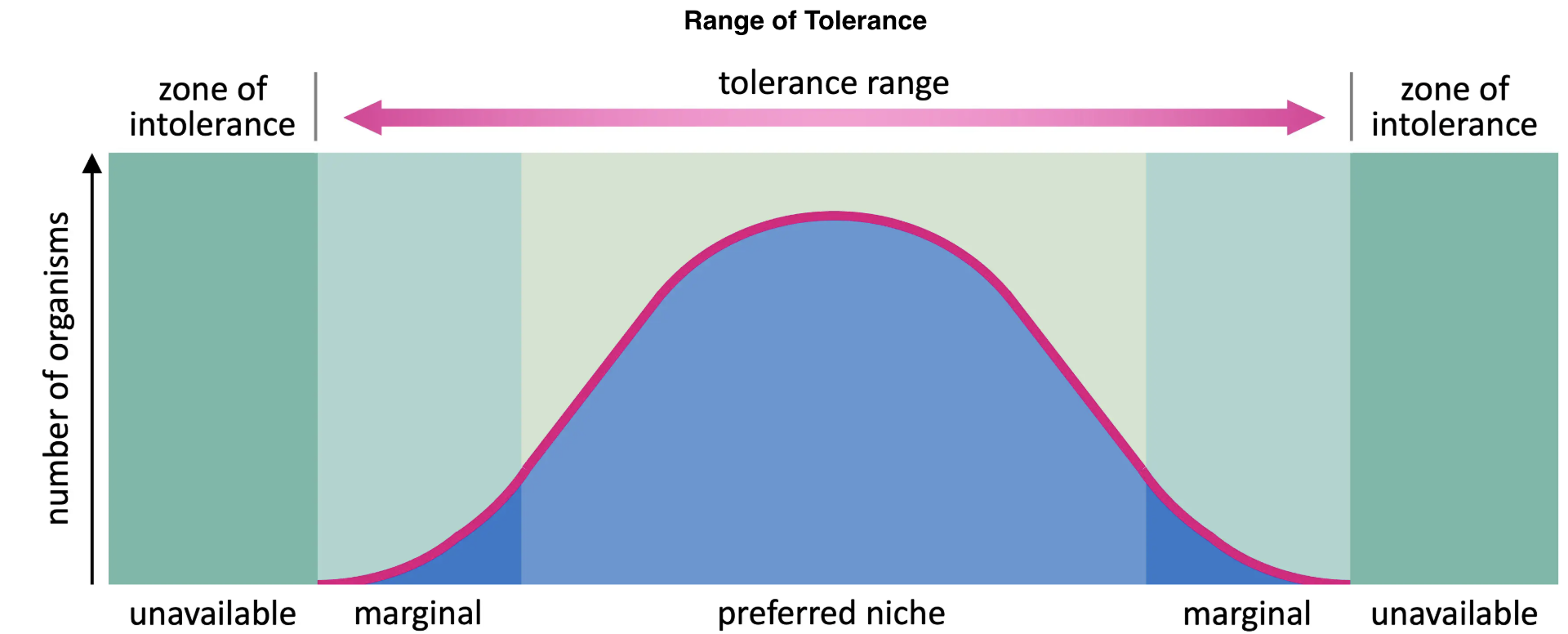
Law of tolerance
populations have optimal survival conditions within critical minimal + maximal thresholds
Optimal zone
Central portion of curve which has conditions that favour maximal reproductive success + survivability
Zone of stress
Regions flanking the optimal zone, where organisms can survive but with reduced reproductive success
Zone of intolerance
Outermost regions in which organisms cannot survive (represents extremes of the limiting factor)
How to measure a specie’s abundance
transect
kite
Transect
straight line along an abiotic gradient from which population data can be recorded (using quadrats) to determine a pattern
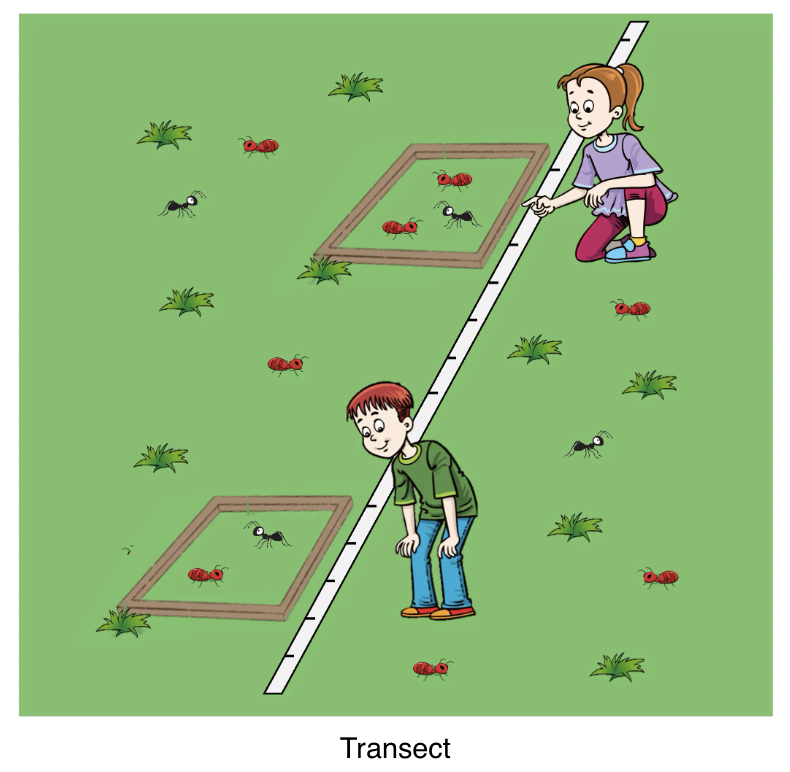
How to analyse transect data
Measure an abiotic factor (e.g. temperature, light intensity or soil pH) at intervals along a transect + compare it with species abundance/distribution to identify correlations
When is transect used
assess species distribution in correlation with any abiotic factor that varies across a measurable distance
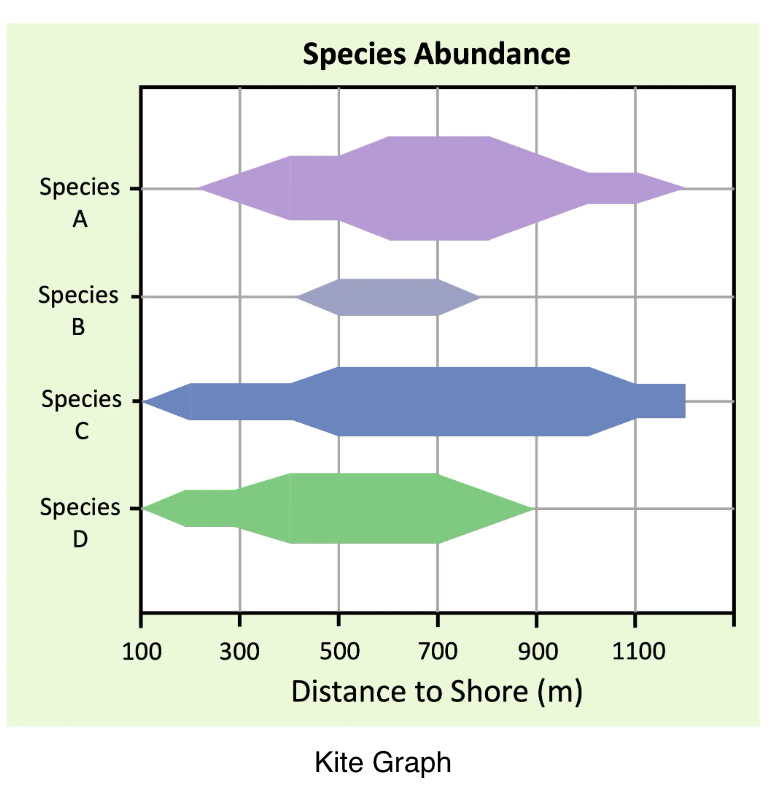
Kite graphs
relative width of each ‘kite’ represents the abundance of an organism at a particular point along a transect
When are kite graphs used
used to represent changes in species distribution in a clear + effective fashion
Conditions required for coral formation
water depth
pH
salinity
clarity
temperature
water depth
shallow waters (60m) where they have light
pH
slightly alkaline (8pH)
salinity
salty water (23-42 ppt)
clarity
clear enough for light to penetrate
temperature
20-28C
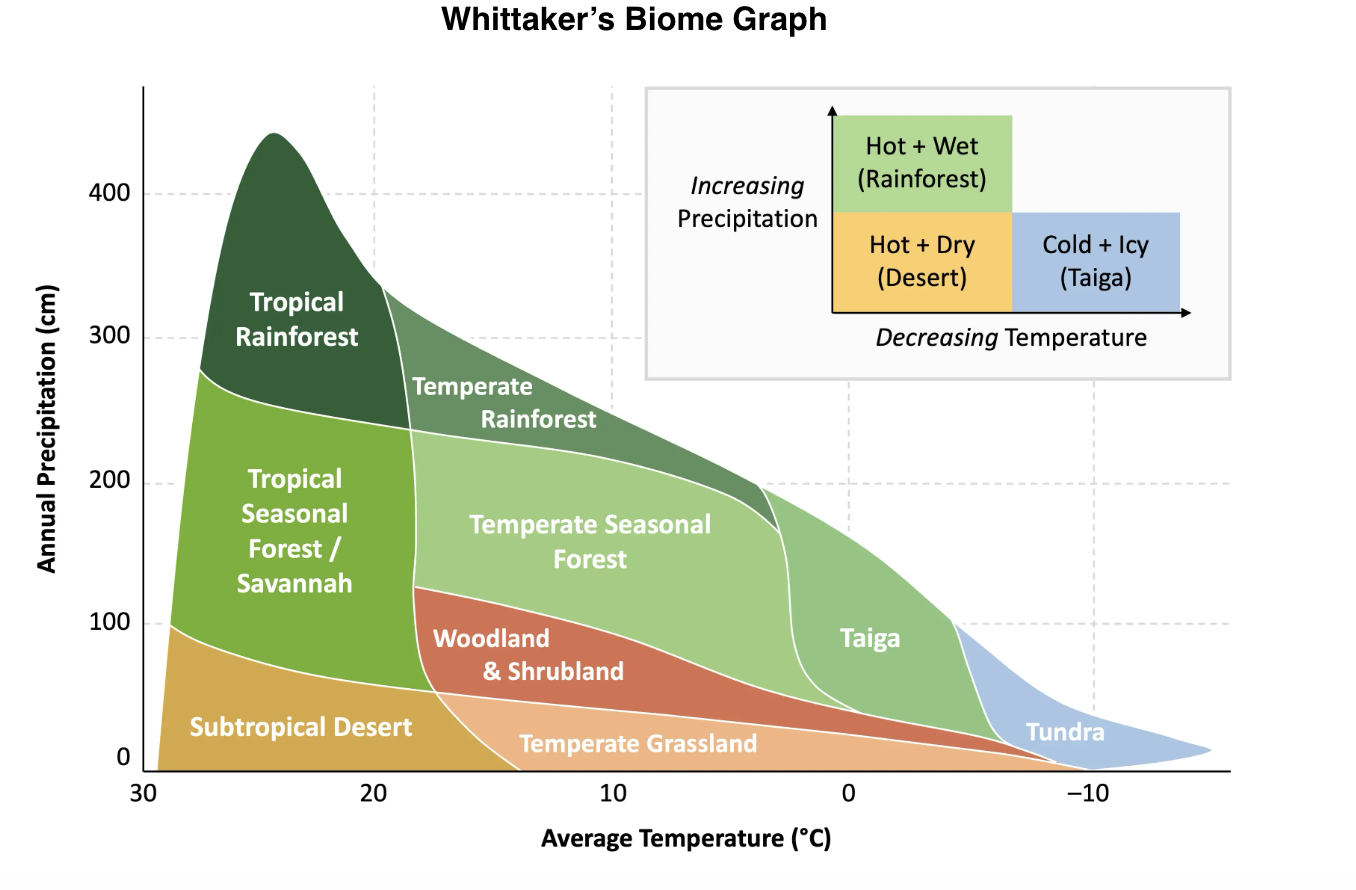
What are the factors affecting the distribution of biomes
temperature + precipitation
Whittaker graph
Biomes
groups of ecosystems with similar communities due to similar abiotic conditions + convergent evolution
Characteristics of a tropical forest
hot climate
very high levels of precipitation
very high levels of diversity in animal + plant species
Characteristics of a temperate forest
moderate temperatures
clear seasonal changes
Deciduous trees are dominant → fertile soil
high level of biodiversity
Characteristics of a taiga
cold + icy
small amount of precipitation (but high snow fall)
dominated by coniferous trees
little variation in species
Characteristics of a grassland
moderate temperatures with wet + dry seasons
consist of grazing animals + some predators
Characteristics of a tundra
freezing temperatures
very little precipitation
Vegetation consists of low growing plants
low levels of hibernating/migrating animal species
Characteristics of a hot desert
experience extreme temperatures
very low precipitation m
minimal rainfall
Kapok tree adaptations
Feature | Function |
buttress roots | spreads from the tree’s base → supports height as trees grow rapidly for sunlight |
drip tip leaves | excess rainwater falls off quickly → prevents mold from growing in humid climate |
waxy leaves | reduces transpiration loss → reflects sunlight |
Spider monkey’s adaptations
Feature | Function |
prehensile tail | acts a limb → allows it to grip branches whilst climbing and hanging |
long strong limbs + flexible joints | swings easily between trees → moves quickly without touching forest floor |
Saguaro’s adaptations
Feature | Function |
widespread shallow roots | extend far near surface to absorb water quickly after rain |
spines instead of leaves | reduce water loss through transpiration → protect against herbivores |
succulent stem | stores large amounts of water during rare rainfalls → survival through dry periods |
Fennec foc’s adaptations
Feature | Function |
large ears | radiate heat to cool body → improve hearing to detect prey underground |
light coloured fur | reflects sunlight and → provides camouflage against sand |
burrow system | cools body → offers protection from predators + sun |
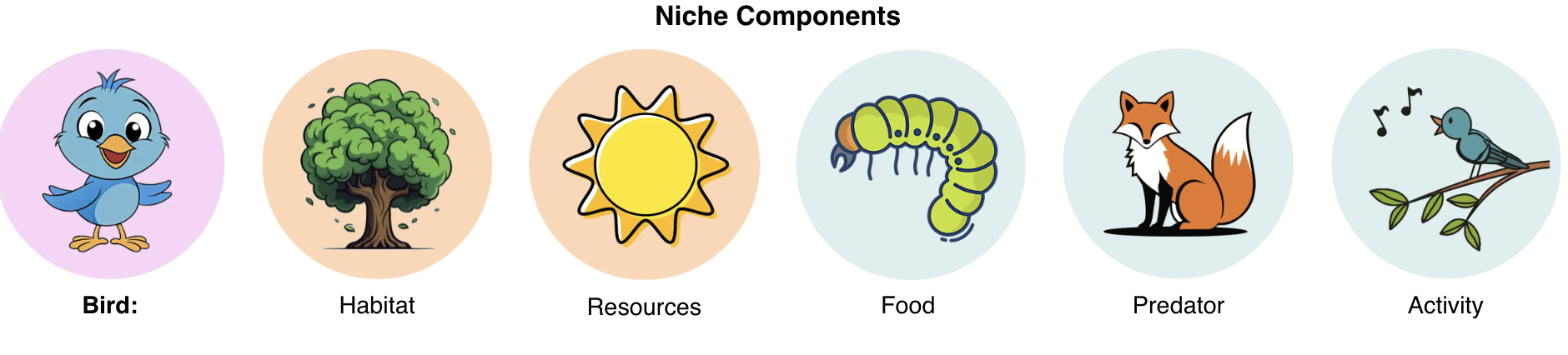
Ecological niche
the role of a species or abiotic or biotic factors in an ecosystem
Abiotic factors
habitat in which an organism lives + the resources within the environment → e.g. light, temperature
Biotic factors
activity patterns of the organism + its interactions with other species → competition, predation
Examples of a bird’s niche componenets
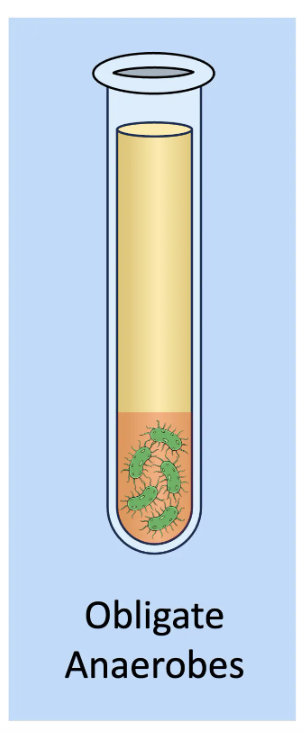
Different forms of cells respiration that organisms may carry
obligate anaerobes
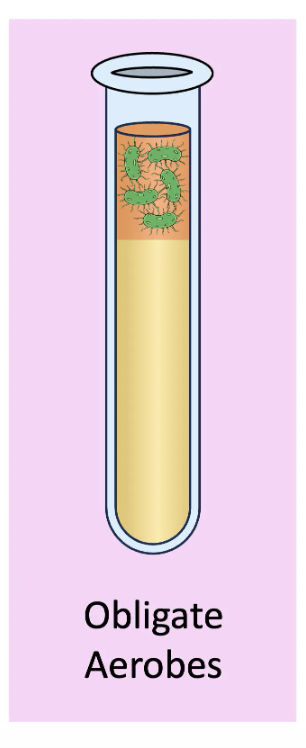
obligate aerobes
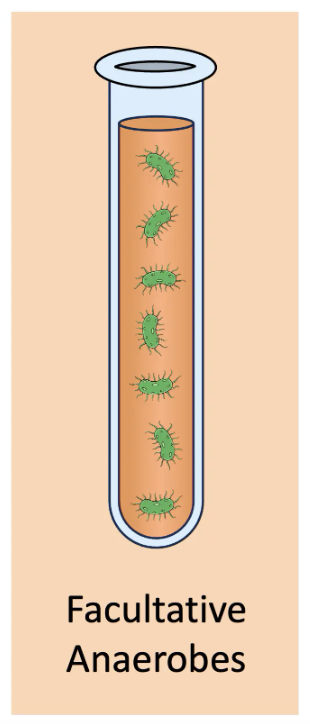
facultative anaerobes
Obligate anaerobes
single celled organisms that only carry out anaerobic respiration → they cannot survive in the presence of oxygen
Obligate aerobes
organisms that cannot survive in the absence of oxygen → they rely on aerobic respiration to produce ATP → may be able to carry out anaerobic respiration in conjunction with aerobic respiration, but cannot survive on anaerobic respiration alone
Facultative anaerobes
normally respire aerobically, but can fully switch to anaerobic respiration in the absence of oxygen → can tolerate oxygen but also experience no long-term negative effects from its absence
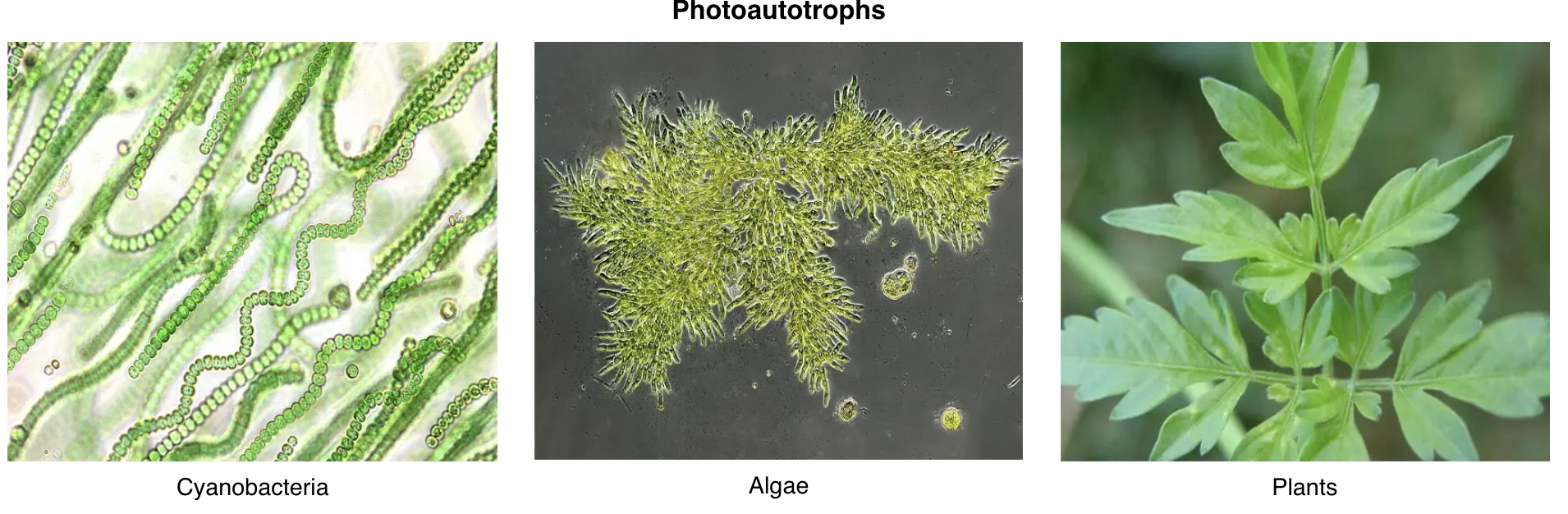
Autotrophs
producers → make organic molecules from simple inorganic molecules
How do autotrophs get energy
Through photosynthesis → e.g. of organisms: plants, algae, several groups of photosynthetic prokaryotes
Heterotrophs
Consumers
How do heterotrophs get energy
they obtain their organic molecules from other organisms via:
holozoic
saprotrophic
Holozoic nutrition
organic matter is ingested and then digested internally, before being absorbed and assimilated
Ingestion
The taking of food into the digestive system through the mouth