ASTR EXAM 2 REVIEW
 Studied by 0 people
 Call Kai
 Learn
Learn Practice Test
 Spaced Repetition
 Match
Match Flashcards
 Knowt Play
1/102

There's no tags or description
Looks like no tags are added yet.
Name | Mastery | Learn | Test | Matching | Spaced |
|---|
No study sessions yet.
103 Terms
Accretion
The process by which small particles come together to form larger particles.
Snow Line
The distance in the solar system beyond which water ice can exist as a solid, typically around 3 AU, where it becomes a stable solid.
Volatility
The tendency of a substance to vaporize or change from solid to gas; relates to materials' state based on distance from the sun.
Density
The mass per unit volume of a substance, which varies in different parts of the solar system.
Reflective Spectroscopy
A method of determining the composition of surfaces by analyzing light reflected off them.
Crater Population
A count of different sized craters on a planetary surface used to assess age and surface history.
Tectonics
The processes involved in the movement and interaction of the Earth's crust, also applicable to other planetary bodies.
Gas Giant
A planet that is mostly composed of gases, such as Jupiter and Saturn.
Geological Activity
Processes that shape the surface of a planetary body, influenced by internal and external forces.
Planetary Migration
The process by which planets move from their original formation positions due to gravitational interactions; for example, giants like Jupiter and Saturn can cause other planets (e.g., Uranus and Neptune) to migrate.
Dominant Object in Solar System
The Sun, with Jupiter being the most massive planet (ranked 100).
Solar System Composition Variation
Changes with distance from the Sun (density, volatility, atmosphere composition).
Planetary Formation Process
Accretion: small particles combine to form larger ones.
Main Solids in Solar System
Ice, rock, iron; ice is more abundant.
Phase Change and Composition
Different materials solidify at varying temperatures, affecting solar system density and composition.
Inner Solar System Composition
Dominated by rock and iron (high density).
Outer Solar System Composition
Dominated by water ice and lower density materials.
Density Variation in Solar System
Decreases as distance from the Sun increases (more ice vs. rock).
Inner Solar System Surfaces
Primarily rocky due to high temperatures preventing volatile ice from solidifying.
Outer Solar System Surfaces
Dominated by ices, where temperatures are low enough for water ice to be stable.
Inner Solar System Atmospheres
Dominated by carbon dioxide and water, e.g., Venus's atmosphere from melting rock.
Outer Solar System Atmospheres
Primarily methane and nitrogen, e.g., Titan's atmosphere from melting ice.
Determining Surface Composition in Absence of Samples
Use of reflected spectroscopy to infer materials, especially for outer solar system moons.
Inner Solar System Crater Populations
Similar populations found on Mercury, Mars, and the Moon are used as age indicators.
Outer Solar System Crater Characteristics
Shows more small craters, indicating volatile surfaces that change easily upon impact.
Geological Activity in Icy Worlds
Outer solar system objects show diversity, modified by weathering, tidal heating, and sunlight interactions.
Planet Formation Efficiency and Distance
Distance from the Sun drastically affects accretion efficiency; farther objects take longer to form.
Jupiter's Formation
Formed massive size due to abundant material crossing the snow line.
Discovery of Exoplanets
Signifies that planetary systems are not unique, with planets existing around other stars.
Transit Method
Observational technique used to detect exoplanets (size with change in brightness and distance with period) by observing a star's periodic dimming as a planet passes in front of it.
Transit Method Observational Bias
Larger and closer planets are easier to detect than smaller, distant ones.
Jupiter's Gravitational Influence
Greatly influences orbits, maintains the asteroid belt, changes trajectories of comets/debris, and delivered water to Earth (allowing life on Earth).
Comets Origin
Formed in the outer solar system.
Active Comets
Transient phenomena that disintegrate upon passing the snow line.
Liquid Water in Solar System
Abundant in subsurface oceans of outer solar system bodies (e.g., Europa, Pluto), due to increased temp and pressure as you go down to the core.
Earth's Water Origin
Likely from external sources due to geological and gravitational influences of larger planets like Jupiter.
Geological Activity and Planetary Size
Larger planetary bodies retain heat and geological activity longer due to the balance of internal energy sources and size.
Earth's Unique Conditions for Life
Attributes like a stable moon, magnetic field, (influenced by random events like asteroid collisions) paved the way for complex life.
Earth's Magnetic Field Role
Crucial unique attribute protecting Earth's atmosphere from solar winds, enabling complex life.
Earth's Stable Moon Role
A unique attribute that influences tides and stabilizes Earth's axial tilt, vital for complex life.
How is the geological complexity in the outer SS similar to the inner SS?
Both are affected by processes such as volcanism and tectonics, shaping planetary surfaces.
Where does the formation of Jupiter-sized planets occur?
Just outside the snow line, where there is enough material to build them.
How is Jupiter able to deliver material to Earth's surface in the form of meteorites?
Jupiter's resonances with other objects in the SS stir up the asteroid belt. This displaces asteroids, sending some toward Earth, resulting in meteorite impacts.
What changes with distance from the Sun?
Density, volatility, composition, atmospheric composition.
Most common material in all the Solar System
Ice
Atmospheric source in inner SS
Outgassing (volcanoes)
Atmospheric source in outer SS
Evaporation of ices
Crater density of Mars Tharsis Region
N(10) < 8
Crater density of Mercury Highlands
N(10) = 200 - 450
Crater density of Venus
N(10) = 1.4
Crater density of North America
N (10) = 1.2
Different crater populations = …
Different surface materials
Characteristics of geologically complex worlds
Impact processes, tectonics, volcanism, weathering, solar interaction.
Accretion time
Transits: Change in brightness and period
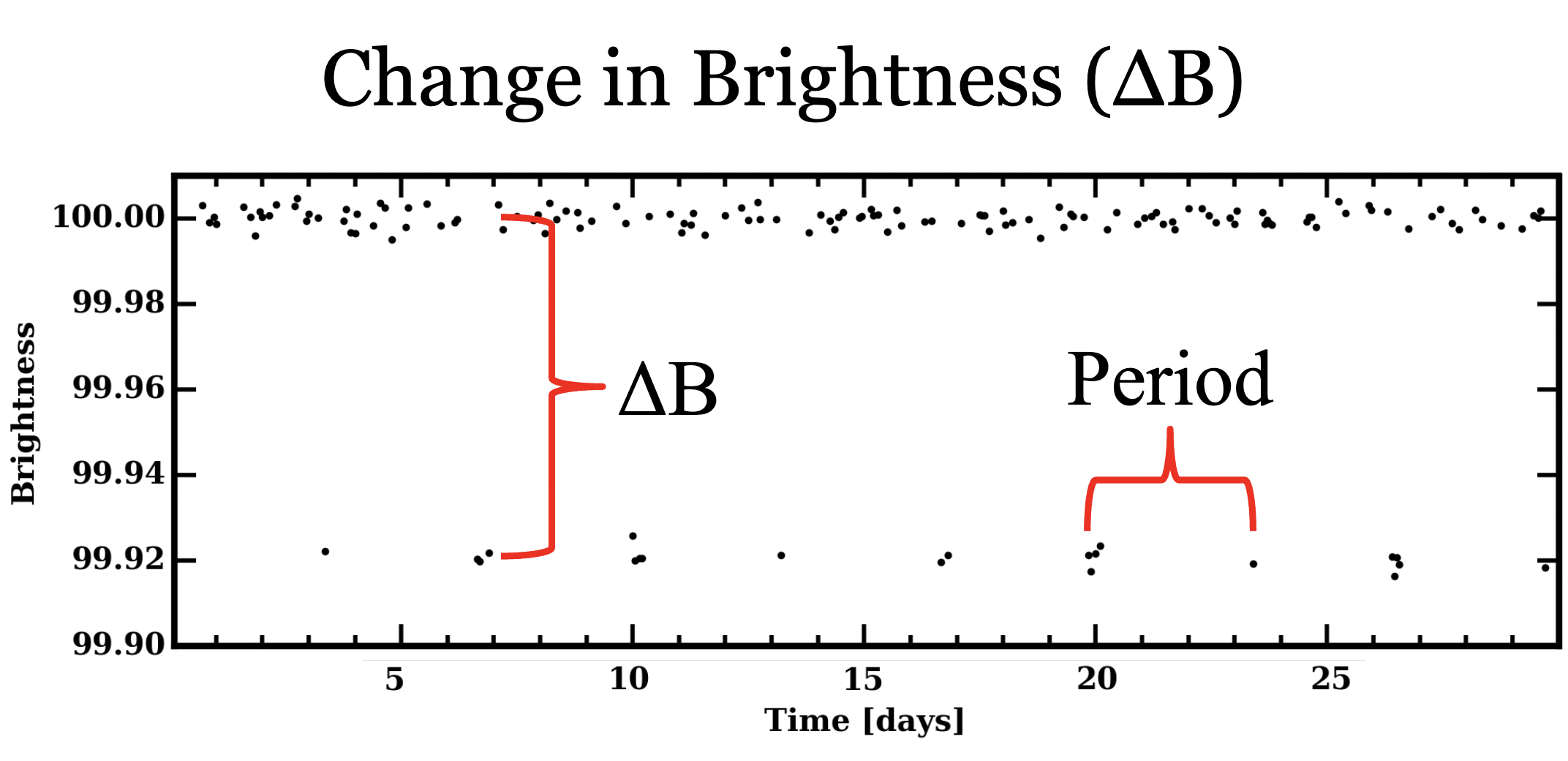
[blank] change in brightness are easier to observe
Larger
[blank] periods are easier to observe
Shorter
Age of SS
~4.5 Byrs
Jupiter is [blank] x the mass of Saturn, but not [blank] x the size of Saturn
3
What is the biggest a planet can be?
About the size of Jupiter. If a planet gets bigger than Jupiter, it will actually become smaller, due to the pressure in the center that is overcome with the strength of the material.
What happened ~65 Myrs ago?
An asteroid landed on Earth, wiping out the dinosaurs.
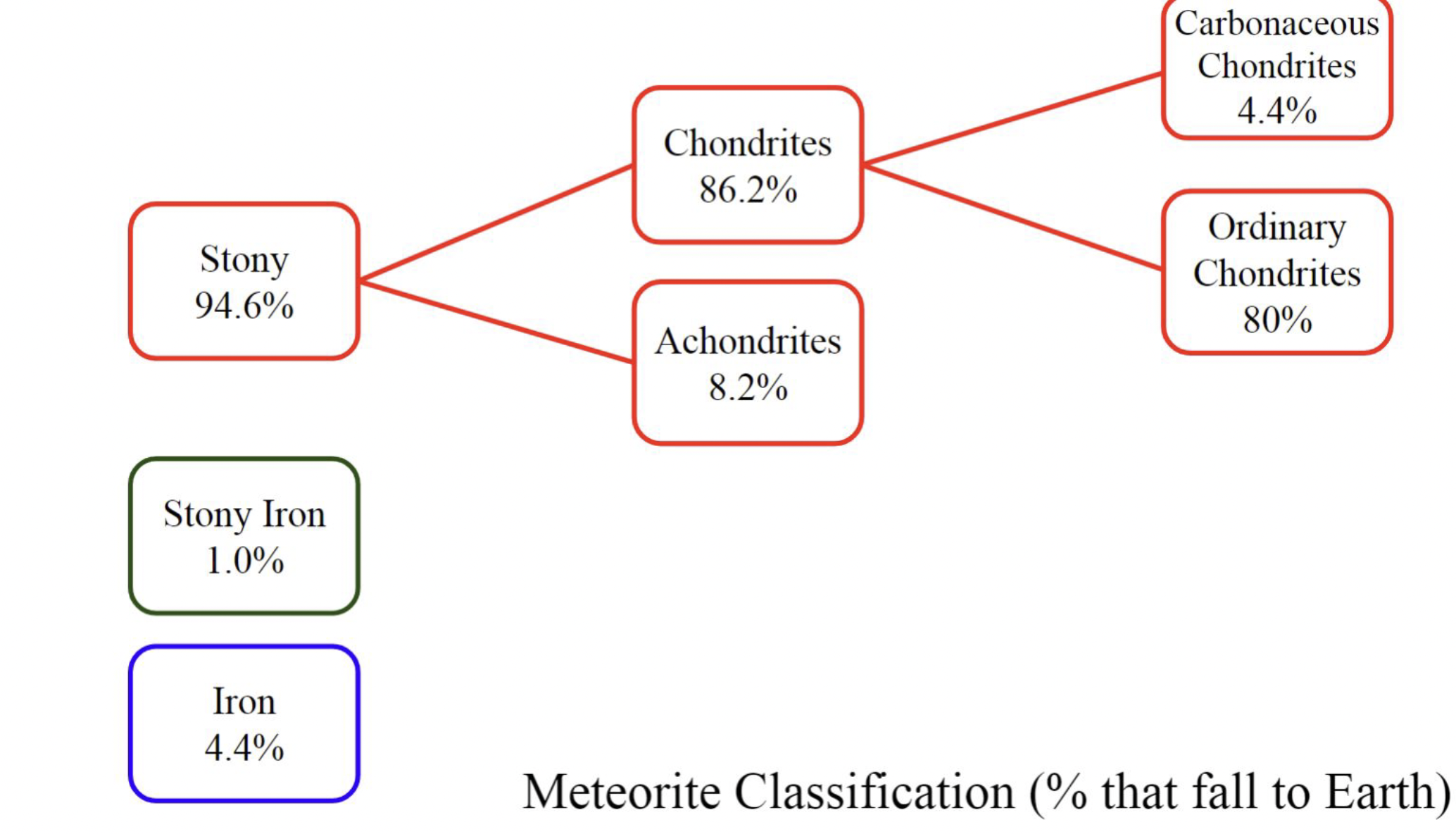
% of stony meteorites
94.6% - most meteorites in asteroid belt are made of rock.
Age of meteorites
~ 4.5 Byrs (age of solar system), tiny (lose heat fast).
Planetary magnetic field requirements
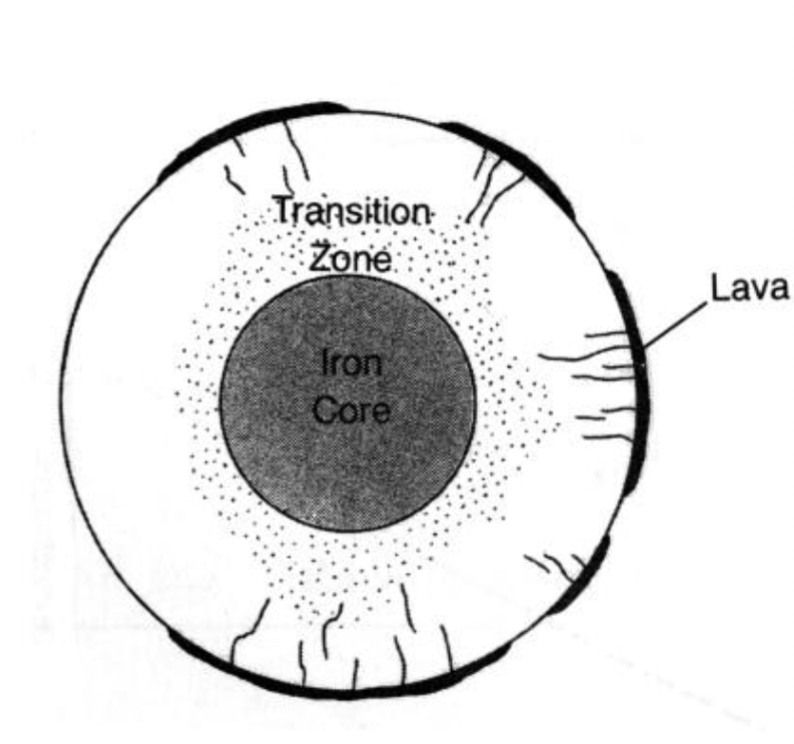
A region of electrically conducting fluid (core - differentiation) , an internal energy source to drive the motion of fluid (internal heating - geological activity), rapid planetary rotation (ex. 24 hrs/day).
Roche limit
The minimum distance within which a celestial body held together by its own gravity will disintegrate due to the tidal forces of a larger celestial body.
Distance (Sun-Earth)
1 AU
Density of water
1 g/cm^3
Density of rock
3 g/cm^3
Density of iron
8 g/cm^3
Room temp and pressure
Temp - 20 C (70 F)
Pressure - 1 atm
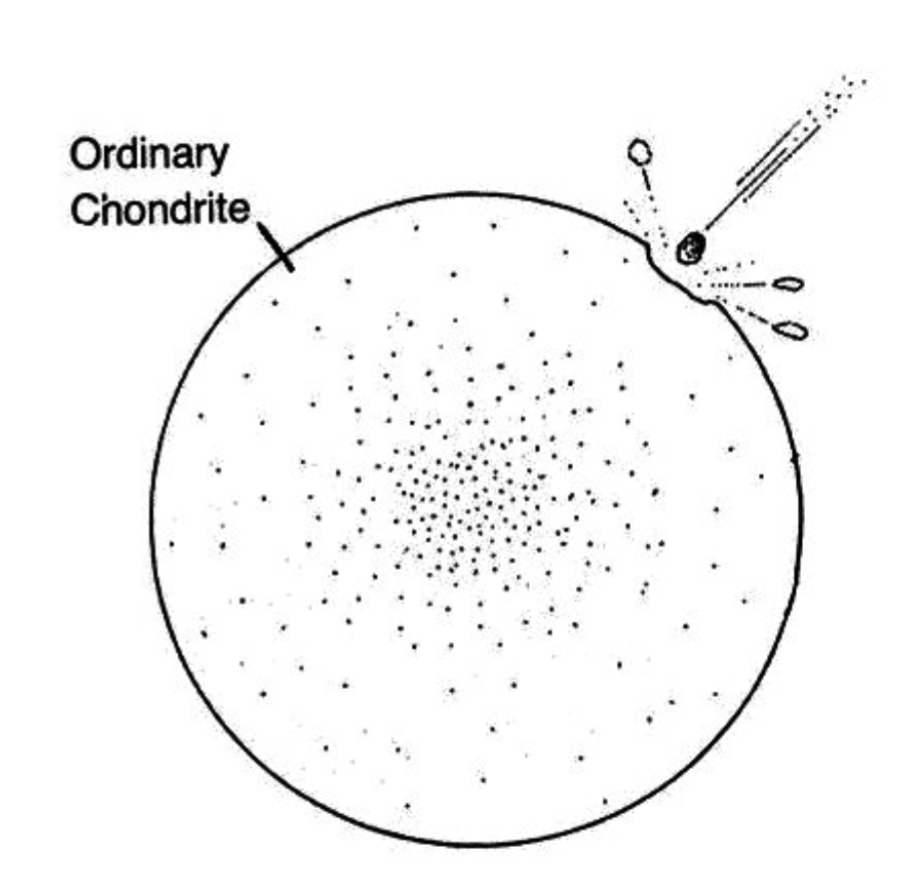
Ordinary chondrites
The most common type of meteorite, which has been partially heated and lacks volatile elements. ~4.5 Byrs
Carbonaceous Chondrites
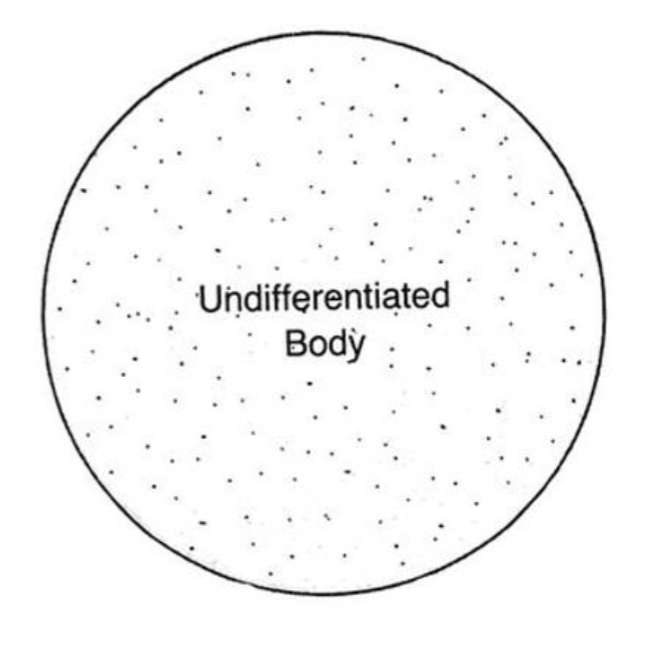
A type of chondrite rich in carbon and organic compounds, important for understanding the early solar system. Unheated (undifferentiated). ~4.56 Byrs
What planets are easiest to detect through transits?
Gas giants
Reflectance spectroscopy graph for Titan

Reflectance spectroscopy graph for ice (light grey)
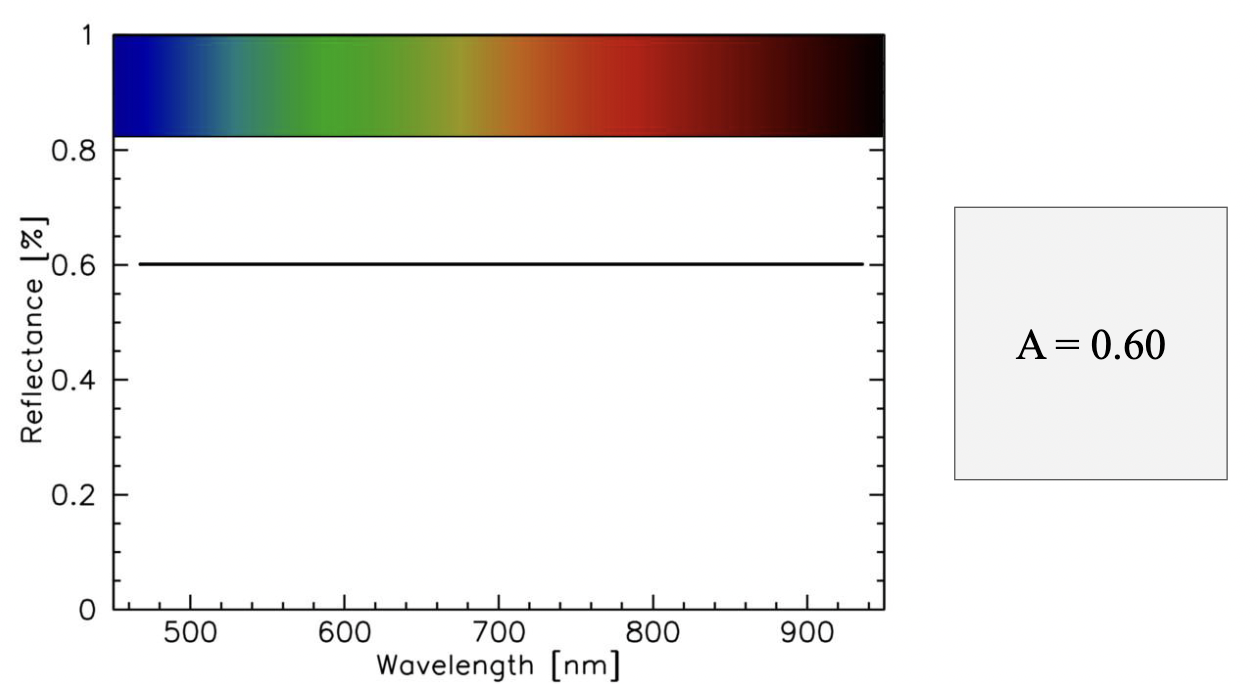
Reflectance spectroscopy graph for dark grey
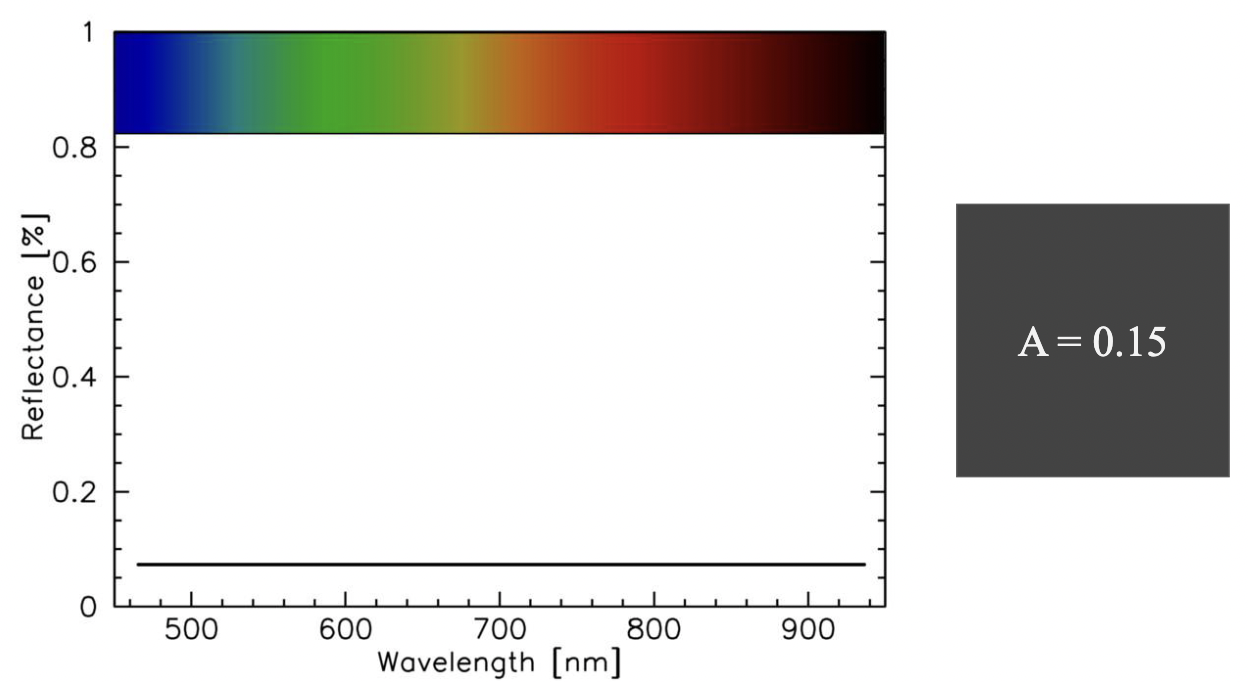
Reflectance spectroscopy graph for grey
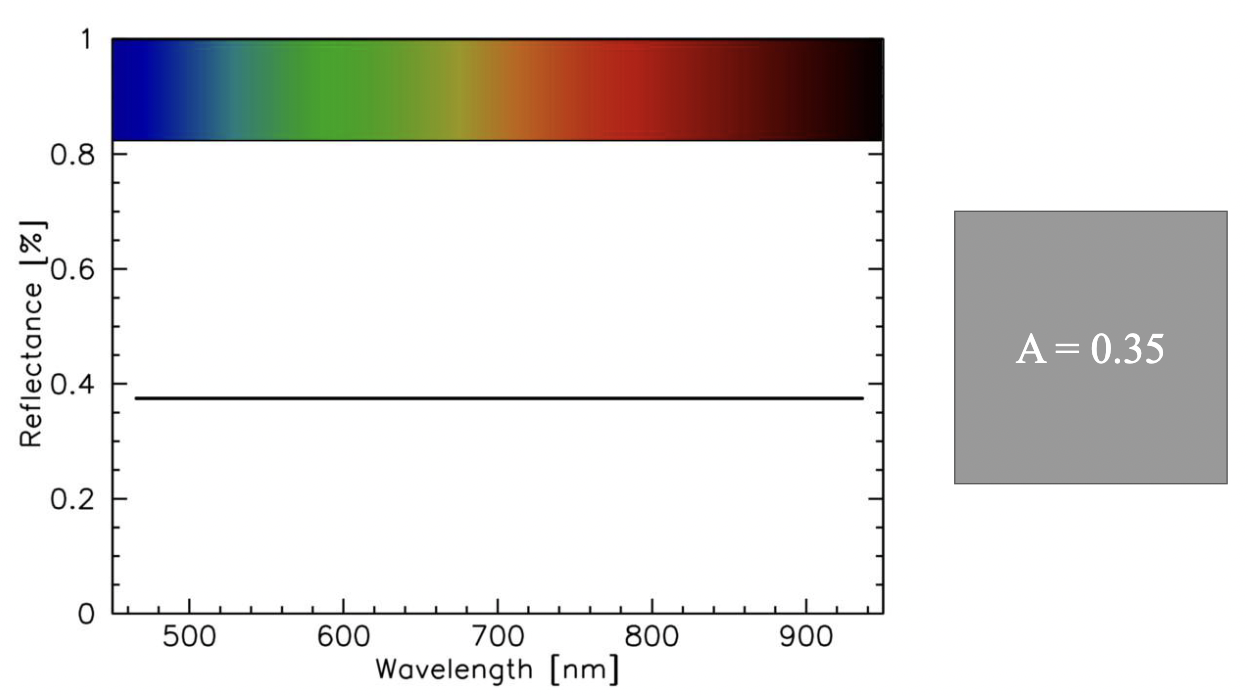
Reflectance spectroscopy graph for red
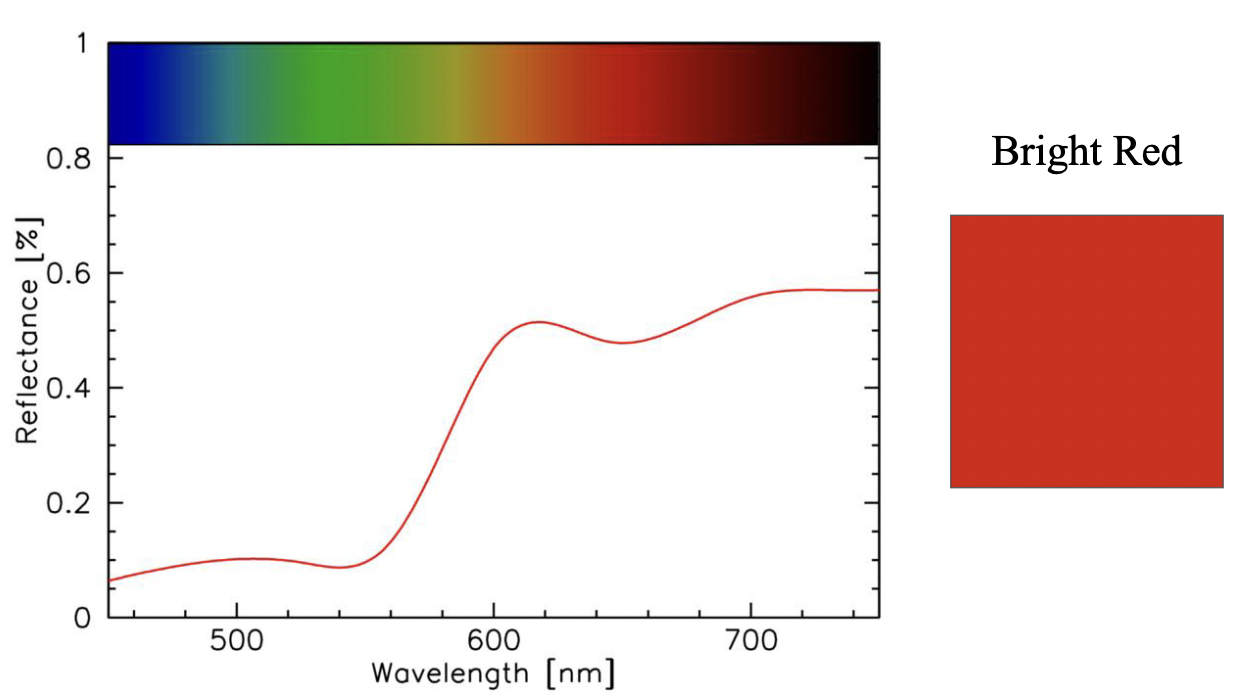
Reflectance spectroscopy graph for snow
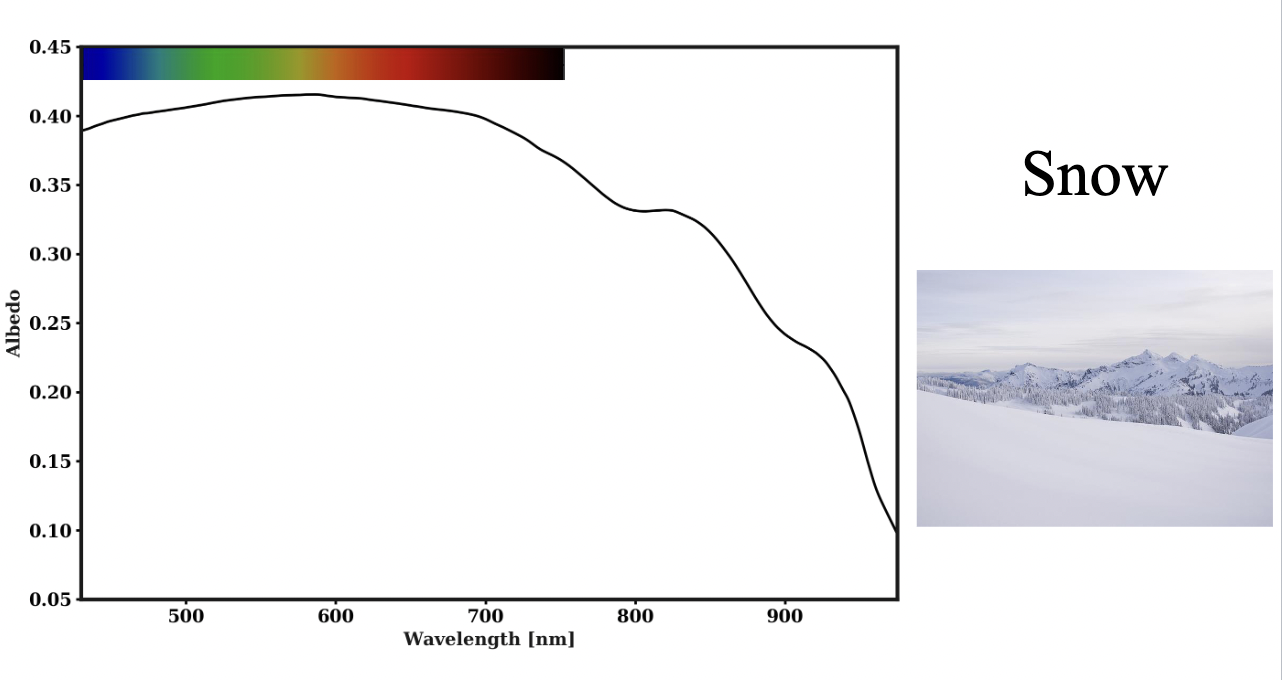
Filters
The albedo (reflectance) of a sample in a narrow range of color (wavelength). Put filters where wavelengths are most different.
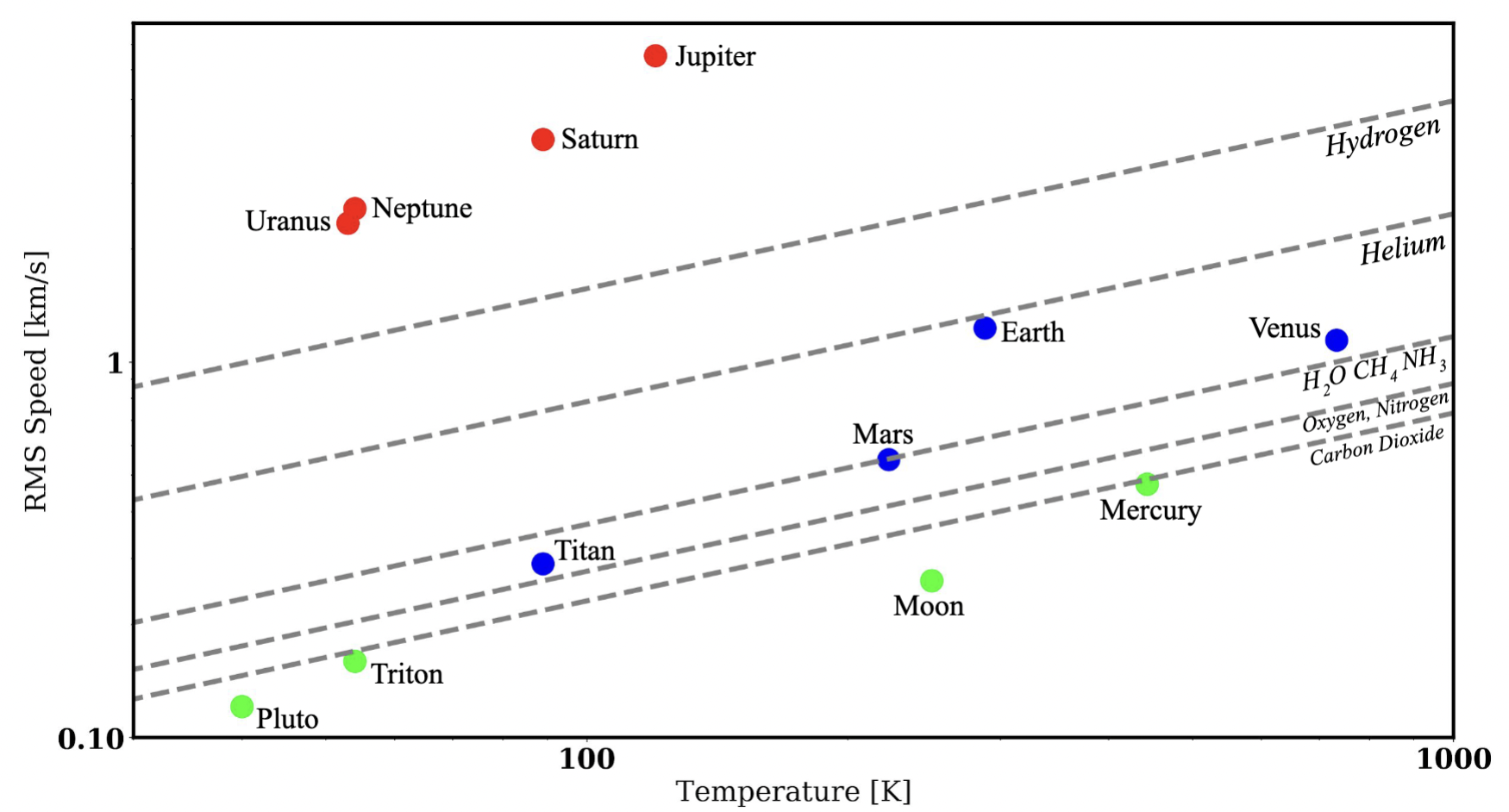
Escape velocity
The minimum speed needed for an object to escape from the gravitational influence of a world. Depends on temp (distance from Sun) and mass of a planet.
The ability for a world to hold onto an atmosphere depends on what?
Temperature (distance from Sun) and Escape velocity (Gravity).
Escape velocity chart
Tidal heating
The process by which a celestial body generates heat due to the gravitational interactions with another body, causing internal friction and heating. (drives geological activity in planets like Io).
How does distance (AU) affect orbital periods of planets?
The farther away a planet is, the longer its orbital period (“year”) will be.
Roche limit
The minimum distance from a planet at which a celestial body (satellites), held together by its own gravity, can safely orbit without being torn apart by tidal forces. If it enters the Roche Limit, it becomes rings (ex. Saturn).
What does a low/high crater population (N(10)) number indicate?
Low - young surface (tens)
High - old surface (hundreds)
Primitive Meteorites
Meteorites that have not undergone significant alteration or differentiation (heating) since their formation, preserving the original material of the solar system. They provide insights into the early solar system and the processes that formed planets.
Why do iron meteorites and ordinary chondrite meteorites have the same age even though they come from very different parent bodies?
Because they formed around the same time during the early solar system's evolution, reflecting similar timing in the solidification of materials. Geological activity scales with size (meteorites are very small).
Carbonaceous chondrite parent bodies size
Smaller than ~ 10 km
Ordinary chondrite parent body size
~10-100 km
Achondrite parent body size
Larger than 100’s km
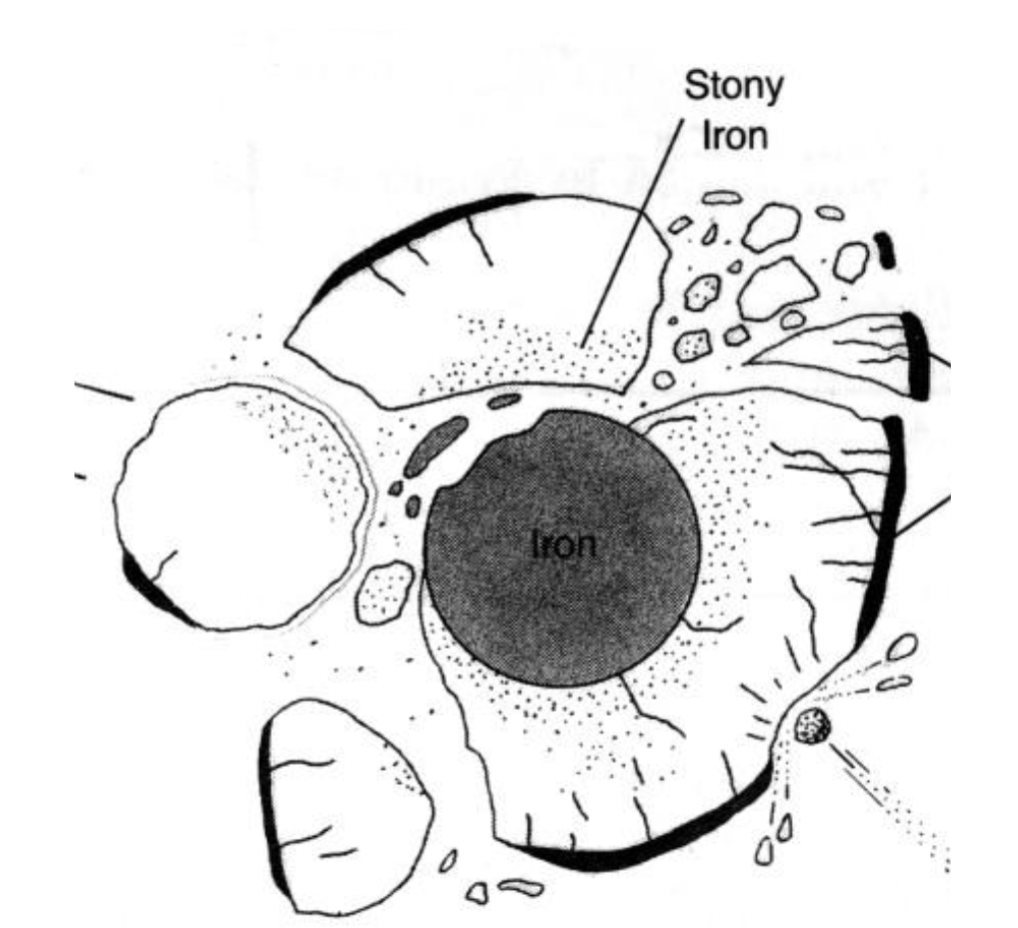
Iron/stony-iron parent body size
Larger than 100’s km
Why are comets short-lived once they enter the SS?
The sun’s heat and radiation causes them to disintegrate and lose their volatiles rapidly, leading to a shorter lifespan.
Meteorite classification (% that fall to Earth)
When did the LHB occur?
~ 3.8 - 4 Byrs ago
Surface age of surface N(10) ~10
3 - 3.5 Byrs
Surface age of surface N(10) ~ < 10
1 - 2.5 Byrs
Surface age of surface N(10) ~100
3.8 Byrs
Surface age of surface N(10) ~200 - 300
4.0 Byrs