Mouth Mirror and Grasp
 Call Kai
 Learn
Learn Practice Test
 Spaced Repetition
 Match
Match Flashcards
 Knowt Play
1/22

There's no tags or description
Looks like no tags are added yet.
Name | Mastery | Learn | Test | Matching | Spaced | Call with Kai | Chat |
|---|
No analytics yet
Send a link to your students to track their progress
23 Terms
What are the different types of mirror surfaces?
front surface, concave, plane (flat), double sided
What are the different ways you can use a mirror?
Indirect vision, illumination, transillumination, and retraction
What is indirect vision?
View a tooth surface that can’t be seen directly
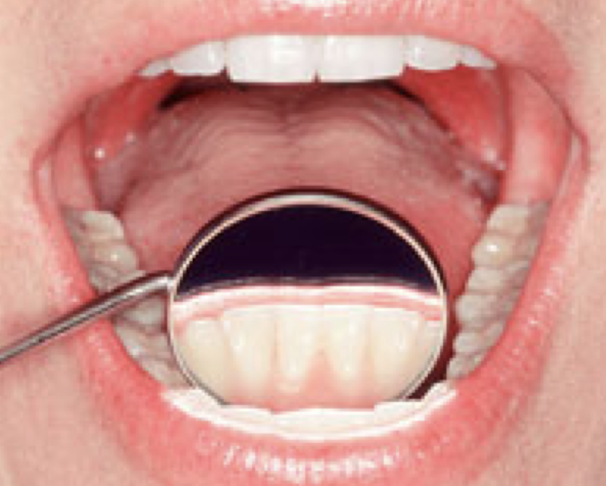
What is indirect illumination?
Reflect light from dental light into mouth
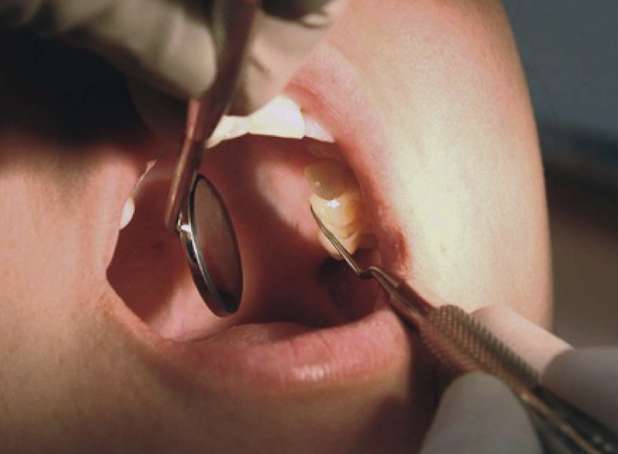
What is retraction?
Hold patient’s tongue, cheek or lip to prevent interference or protection
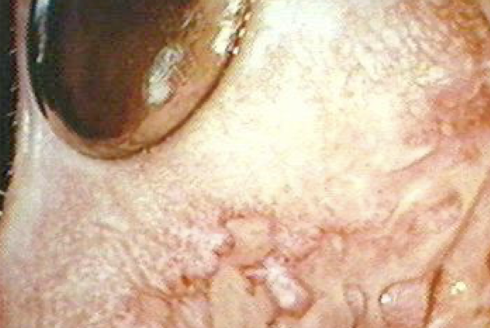
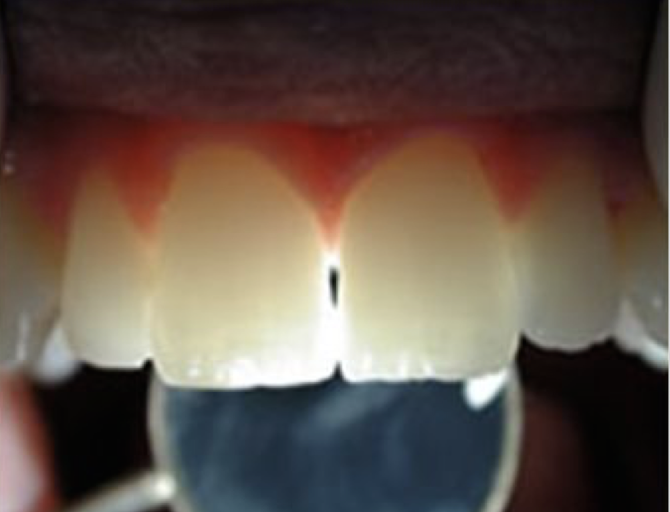
What is transillumination?
Directing light off the mirror surface through the anterior teeth
What are some de-fogging techniques?
Patient can nose breathe, swipe with buccal mucosa, wipe with gauze moistened with mouthwash, or dip into mouthwash or commercial defogging product
Which hand will you use to hold your mirror 99% of the time?
In your non-dominant hand
What should you do when are not using your mirror?
Palm it or put in back on bracket tray
What should you not do when using your mirror?
Rest you mirror hand on your thigh
How do you place the mirror in a patient’s mouth?
Place it between dental arches, like in a “frisbee-position,” and then turn it to where it is parallel to the buccal mucosa of the cheek
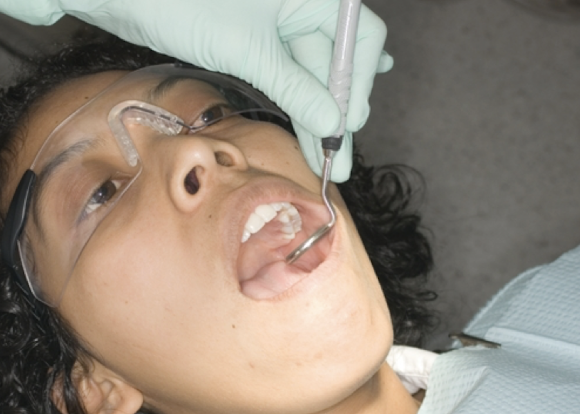
What do you do once the mirror is placed in the patient’s mouth?
Establish an extraoral finger rest and use arm muscles to retract the cheek
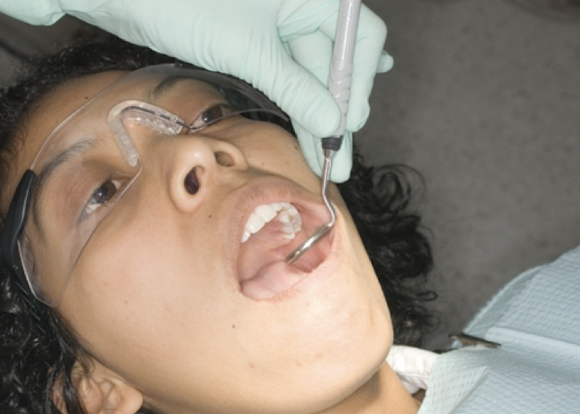
What is the handle of an instrument?
The longest part of the instrument where we hold
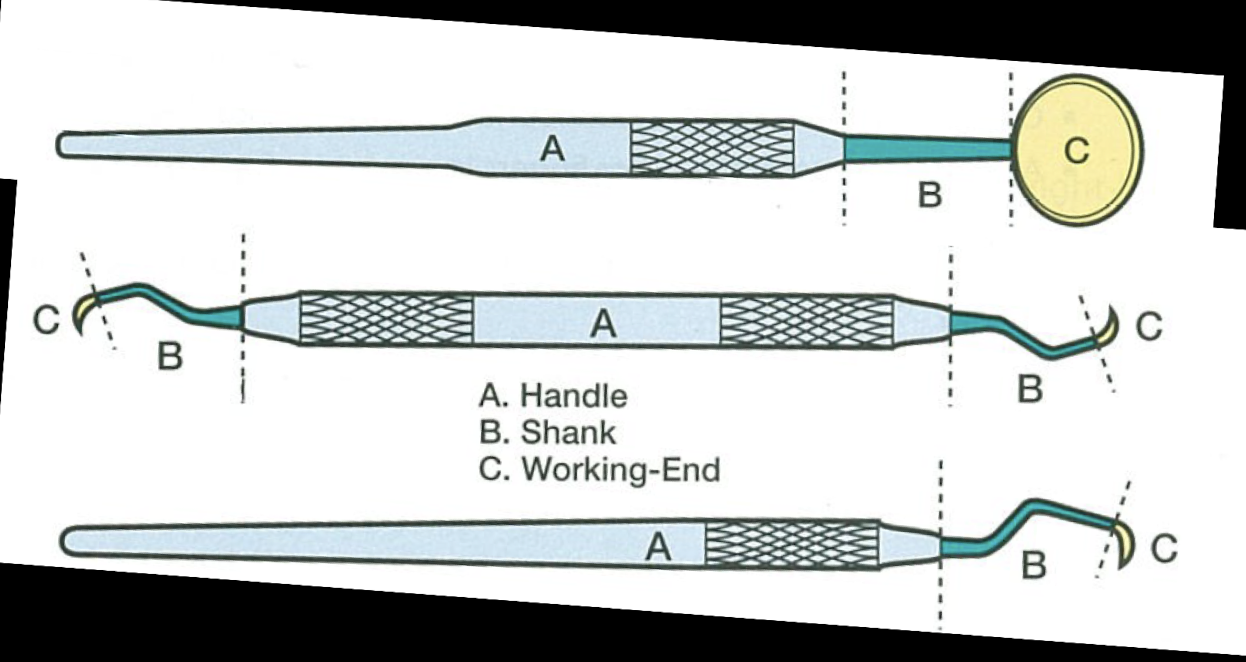
What is the shank of the instrument?
Middle part that connects the handle to the working end
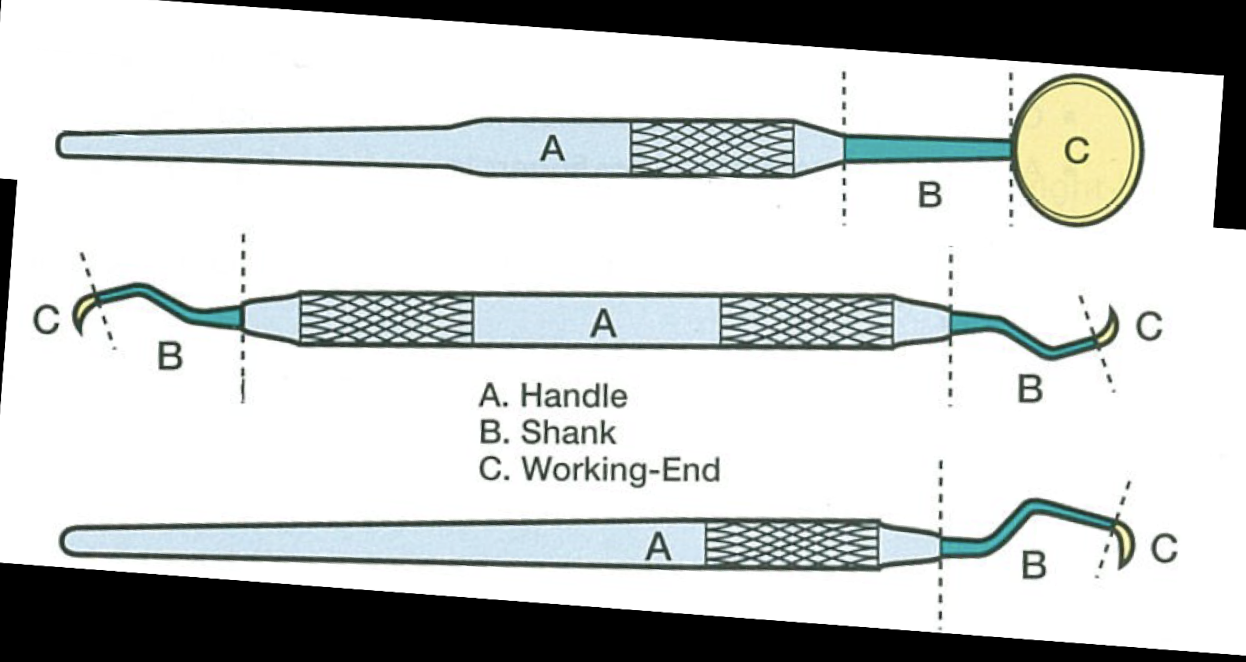
What is the working end of an instrument?
The specific part that performs the actual clinical task
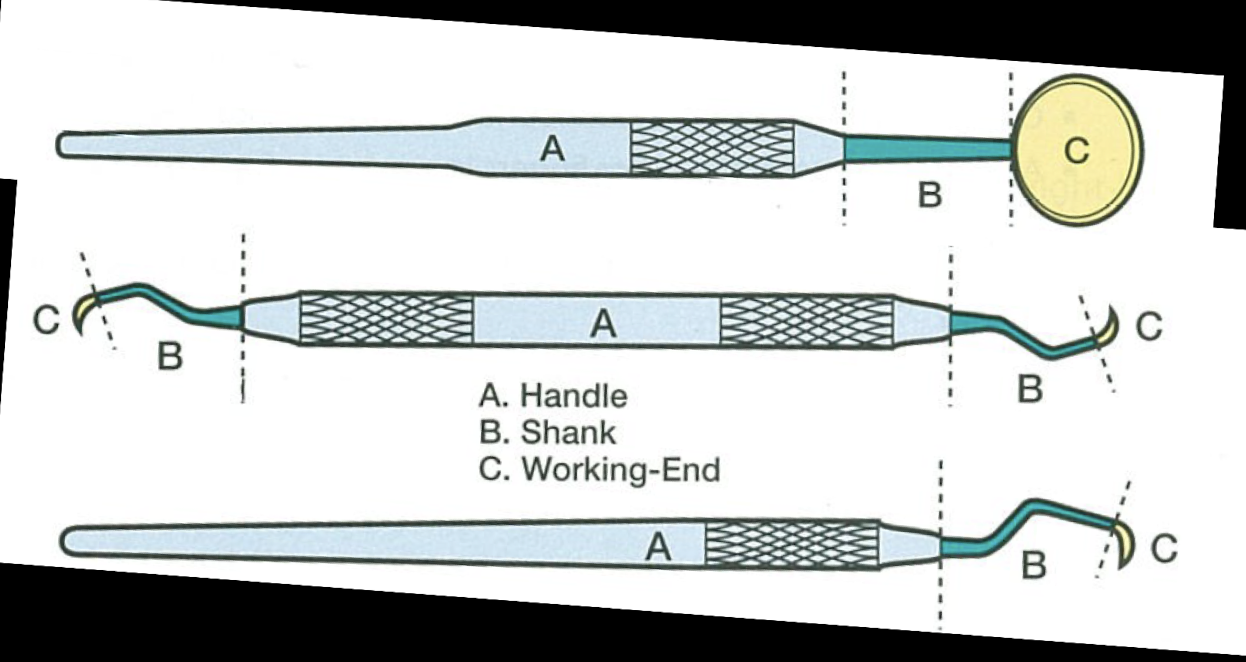
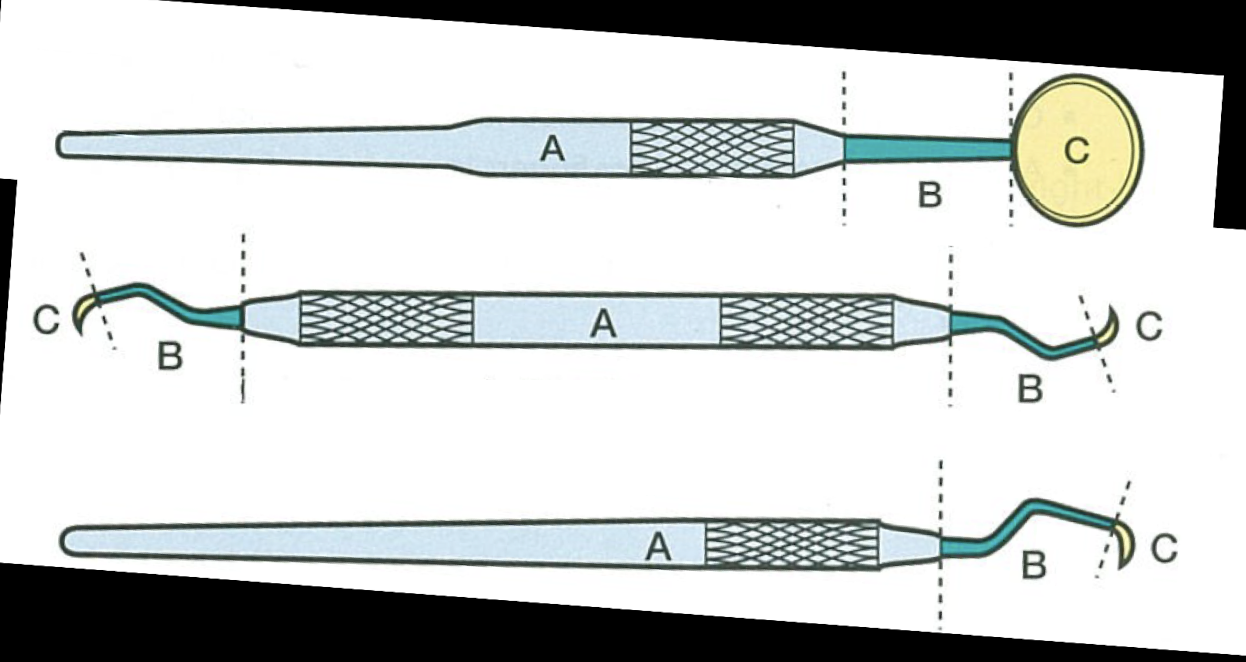
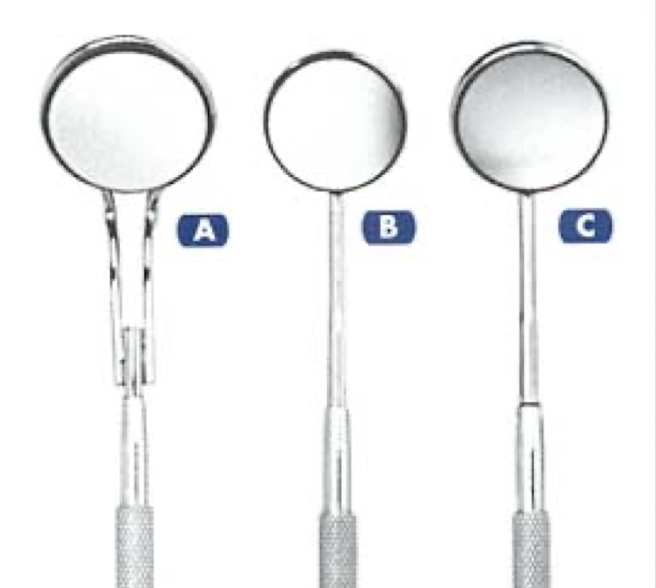
What is C labeling?
Working-end
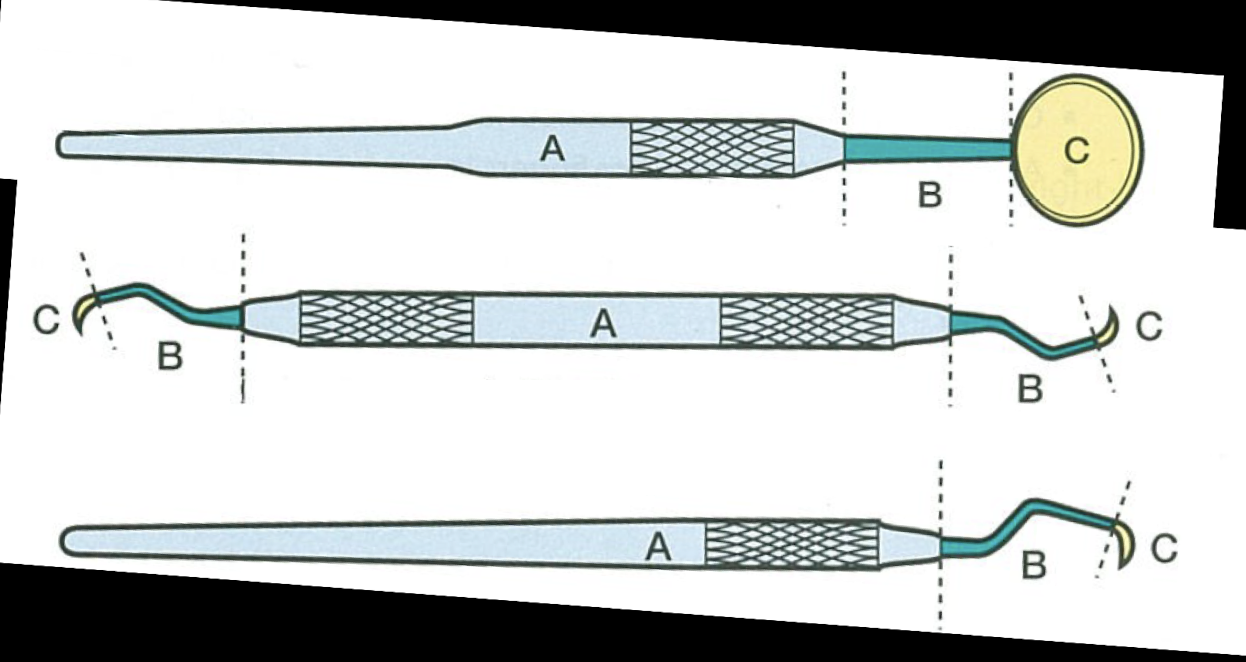
What is B labeling?
Shank
What is A labeling?
Handle
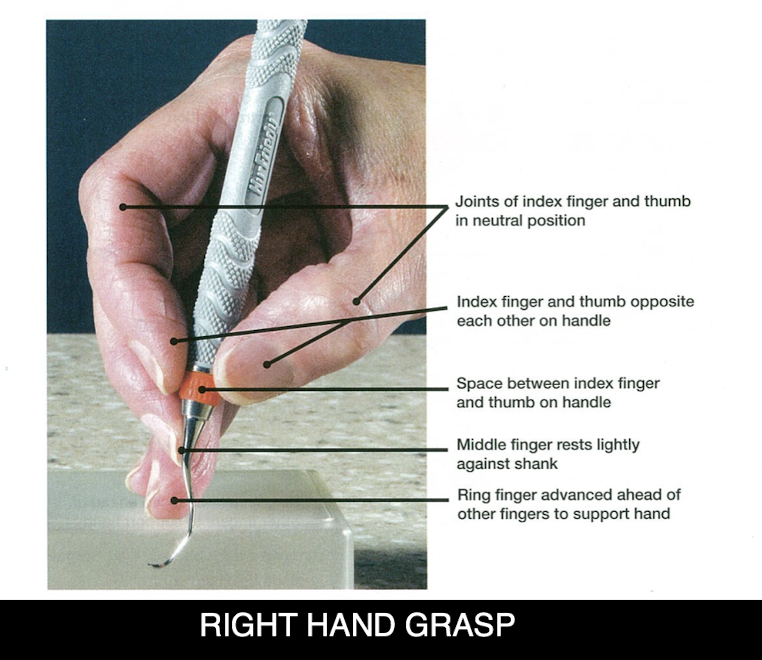
How do you do a modified pen grasp?
Joints of the index finger and thumb are neutral; the index and thumb are opposite on the handle, and there is a space between them.
The middle finger rests lightly on the shank; the ring finger is ahead of the other fingers to support the hand on a fulcrum
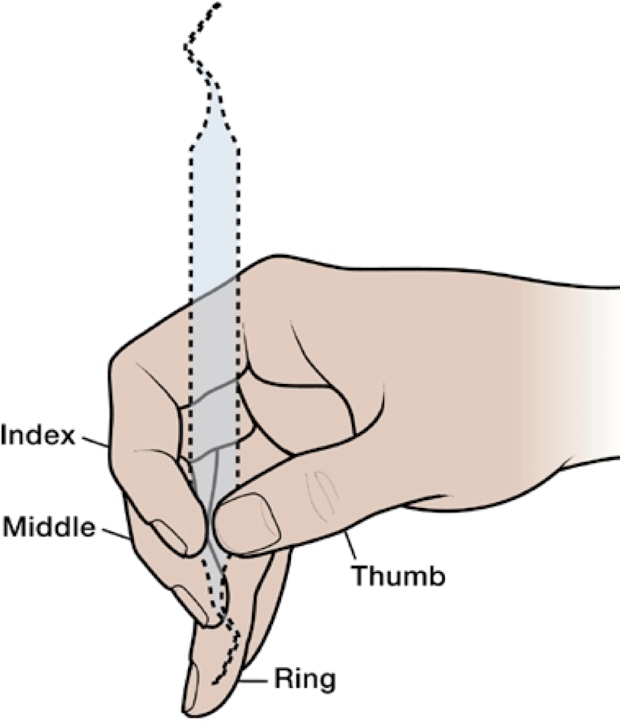
What is this?
modified pen grasp
What should your fulcrum location be?
As close to the working area as possible, like 1-4 teeth away from the working place, on the incisal edge, occlusal surface or other embrasure spaces
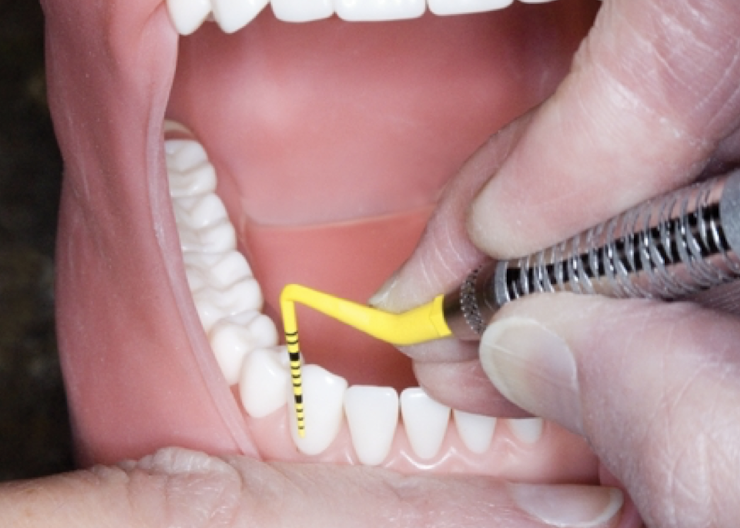
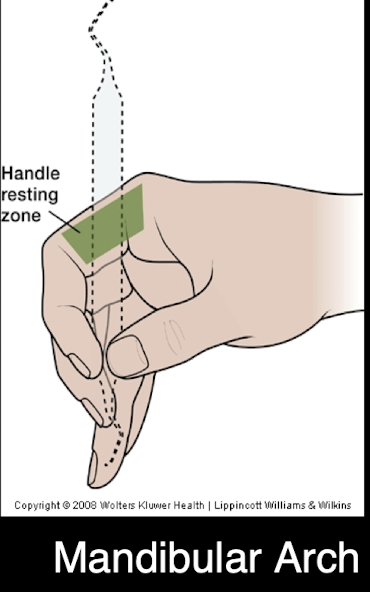
How should you have your handle and palm positioned when cleaning the mandibular arch?
Palm down, rest handle against your hand somewhere between your first finger’s top joint
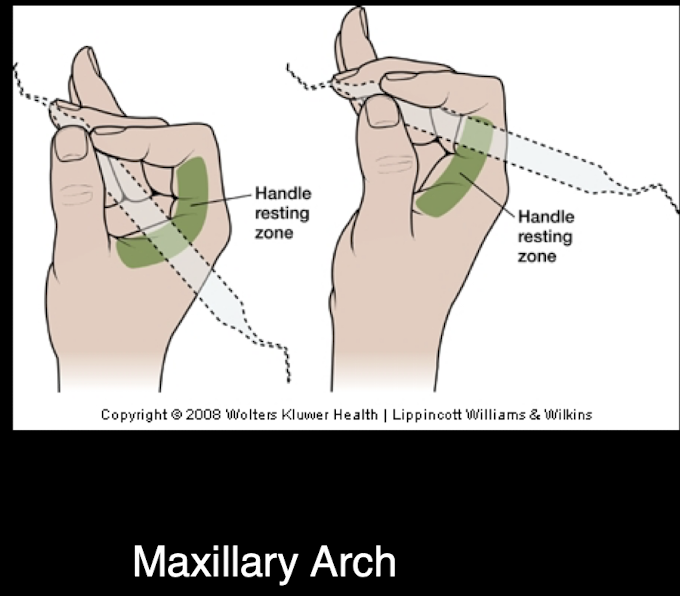
How should you have your handle and palm positioned when cleaning the maxillary arch?
Palm up, rest the handle against your hand somewhere between your first finger’s top joint and the space between your thumb and first finger.