Networking Chapter 5
0.0(0)
Studied by 15 people Call Kai
 Learn
Learn Practice Test
 Spaced Repetition
 Match
Match Flashcards
 Knowt Play
Card Sorting
1/173

Earn XP
Description and Tags
Last updated 5:00 PM on 10/29/22
Name | Mastery | Learn | Test | Matching | Spaced | Call with Kai |
|---|
No analytics yet
Send a link to your students to track their progress
174 Terms
1
New cards
What does the transport layer do?
Uses the source and destination port addresses to link the application layer software to the network. TCP is also responsible for segmenting --- breaking large messages into smaller segments for transmission and reassembling them at the receiver's end.
2
New cards
What does the network layer do?
The TCP segments ad IP packets are created by the sending computer and never change until the message reaches its final destination. The IP packet contains the original source and ultimate destination address for the packet. The sending computer also creates a data link layer frame for each message, which contains the data link layer address of the current computer sending packet and the data link layer address of the next computer in the route.
3
New cards
Compare and contrast the three types of addresses used in a network
Application layer address - when a user types an Internet address into a Web browser, the request is passed to the network as part of an application layer packet formatted using the HTTP protocol.
Network Layer Address - it is IP for example (www.indiana.edu) is translated into an IP address that is 4 bytes long when using IPv4.
Data link Layer Address - with Ethernet the IP addresses are 6 bytes in length. They are only needed on multipoint circuits which have more than one computer on them.
Network Layer Address - it is IP for example (www.indiana.edu) is translated into an IP address that is 4 bytes long when using IPv4.
Data link Layer Address - with Ethernet the IP addresses are 6 bytes in length. They are only needed on multipoint circuits which have more than one computer on them.
4
New cards
How is TCP different from UDP
The UDP packet is much smaller than the TCP packet only 8 bytes. HTTP always uses TCP. UDP is most commonly used for control messages such as addressing, routing control messages and network management.
5
New cards
What is a subnet?
Group of computers on the same LAN with IP numbers using the same prefix
Assigned addresses that are 8 bits in length
Assigned addresses that are 8 bits in length
6
New cards
Subnet Mask
Used to make it easier to separate the subnet part of the address from the host part.
7
New cards
How does dynamic Addressing work?
an approach in which a server is designated to supply a network layer address to a computer each time the computer connects to the network
8
New cards
Benefits of Dynamic Addressing
Greatly simplifies network management in non dial up networks too.
Changes need to be made only to the DHCP server not to each individual computer.
Changes need to be made only to the DHCP server not to each individual computer.
9
New cards
Address Resolution
to send a message, the sender must be able to translate the application layer address of the destination into a network layer address and in turn translate that into a data link address.
10
New cards
DHCP
Dynamic Host Configuration Protocol - most common standard for dynamic addressing, instead of a network address layer, there is a special software package installed on the client that instructs it to contact a DHCP server to obtain an address.
11
New cards
Autonomous System
- a network operated by one organization that runs part of the internet.
12
New cards
How are packets sent from one Autonomous system to another?
Computers within each system know bout other computers in the system and exchange information. Packets can be sent within the 5 protocols. Each system has a border router that connects it to the adjacent autonomous systems and exchanges route information.
13
New cards
How a computer determines where to send a packet to another computer that is on its own subnet?
Computer determines where to send a packet to another computer on its own subnet by using address resolution. Computer must know correct data link layer address and sends broadcast message. Request using Address Resolution Protocol.
14
New cards
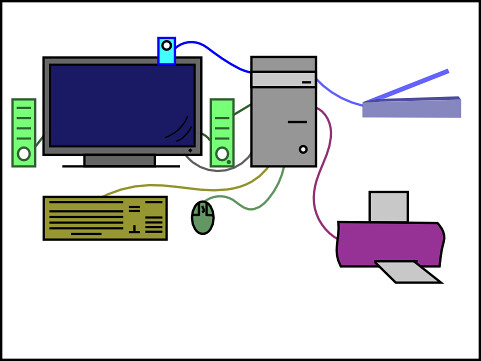
Host
any device that sends or receives information
15
New cards
Peripheral
any device connected to a host
16
New cards
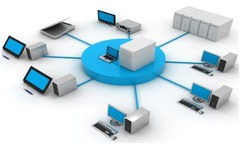
LAN
group of computers under one administrative control
17
New cards
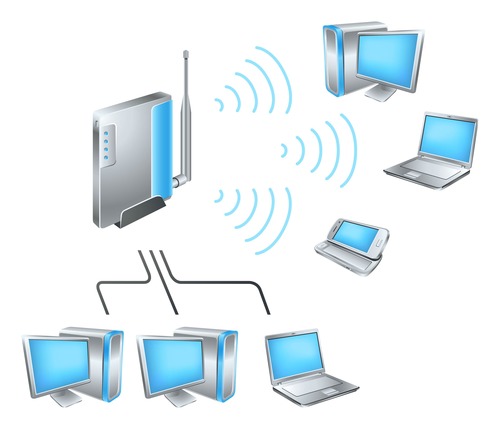
WLAN
group of wireless devices that connect to access points
18
New cards
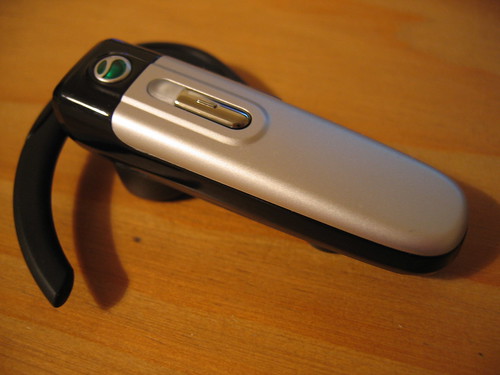
PAN
bluetooth technology
19
New cards
MAN
network that spans across of large campus or city
20
New cards
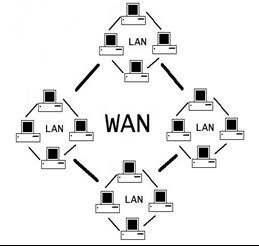
WAN
the Internet
21
New cards
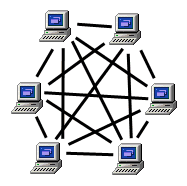
peer-to-peer
devices connected together with no central administration
22
New cards
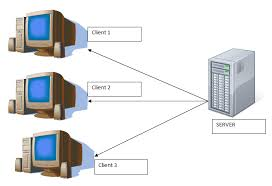
client-server
central administration provided for a network
23
New cards
share resources
primary benefit of a computer network
24
New cards
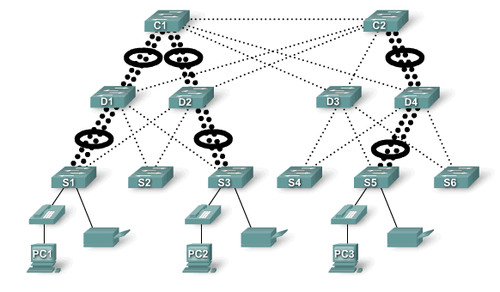
bandwidth
amount of data that can be transmitted
25
New cards
binary
0 or 1
26
New cards
latency
delay
27
New cards
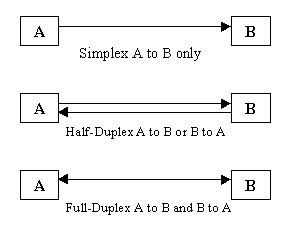
half-duplex
data flows in one direction at a time
28
New cards
full-duplex
data flows in both directions at the same time
29
New cards
TCP/IP
defines how computers talk to each other
30
New cards
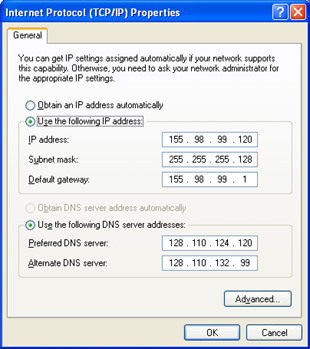
IP address
logical address
31
New cards
subnet mask
indicates the network portion of an IP address
32
New cards
IPv6
128 bits long
33
New cards
IPv4
32 bits long
34
New cards
8 bits
one BYTE
35
New cards
Class A range
1-126
36
New cards
Class B range
128-191
37
New cards
Class C range
192-223:
38
New cards
:
separates the block in an IPv6 address
39
New cards
global prefix
first 3 block of an IPv6 address
40
New cards
static
manual configuration of an IP address
41
New cards
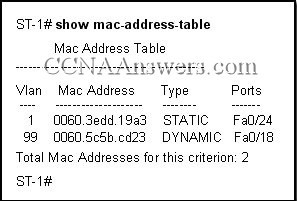
MAC address
physical address
42
New cards
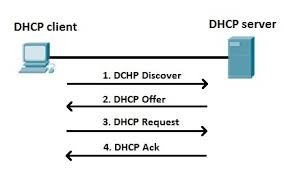
DHCP
automatic configuration of an IP address
43
New cards
169.254.x.x
means there is no DHCP server available for use
44
New cards
Private addresses
not seen by the public
45
New cards
4
number of pings to test connectivity
46
New cards
octet
groups of addresses in an IPv4 address
47
New cards
ping
tests connectivity between devices
48
New cards
ICMP
protocol used to send control and error message to computers
49
New cards
32
number of bits in an IPv4 address
50
New cards
3
number of parts in an IPv6 address
51
New cards
port number
keeps track of conversations on a network
52
New cards
modem
converts digital to analog signals and vice versa
53
New cards
media
cabling
54
New cards
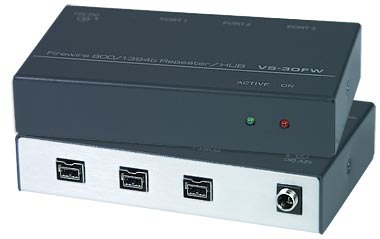
hub
send out traffic to all ports
55
New cards
multiport bridge
switch
56
New cards
switch
builds a MAC table ; sends out traffic to specified ports
57
New cards
PoE
Power over Ethernet-provides current to certain devices on the network
58
New cards
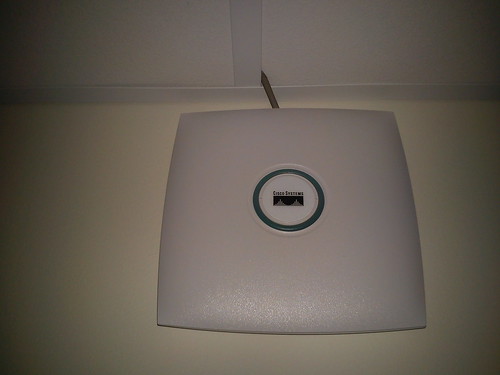
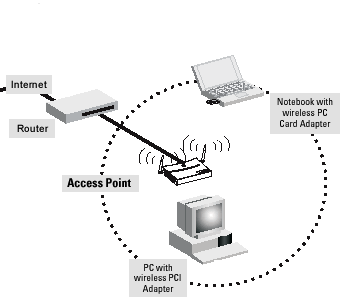
access point
uses radio waves to provide access to wireless devices
59
New cards
ISR
multipurpose device; combines functionality of router, AP, and switch
60
New cards
UDP
lower overhead responsibilities
61
New cards
physical topology
physical layout of network components
62
New cards
logical topology
how hots access the medium to talk on the network
63
New cards
VoIP
telephone calls made over data networks
64
New cards
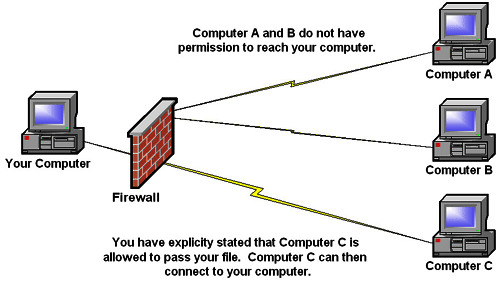
Firewall
determines what is permitted or denied on a network
65
New cards
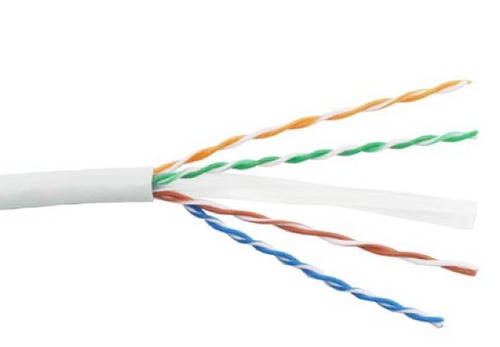
UTP
most common cable used in networks
66
New cards
STP
wire pairs wrapped in metallic foil to shield wires from electrical noise
67
New cards
Fiber optic
use of light to transmit data

68
New cards
Straight through
cable type used to connect unlike devices
69
New cards
Crossover
cable type used to connect like devices
70
New cards
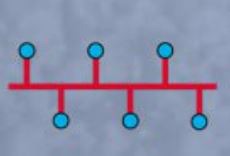
Bus topology
each computer connects to a common cable
71
New cards
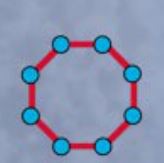
Ring topology
hosts are connected in a physical ring or circle; no collisions
72
New cards
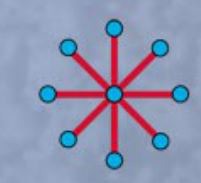
Star topology
hosts connect to a central connection point
73
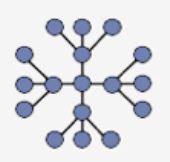
New cards
Extended star topology
a star network with additional network devices connected to the main central device
74
New cards
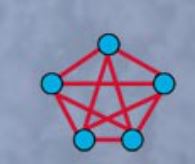
Mesh topology
all devices connected to each other
75
New cards
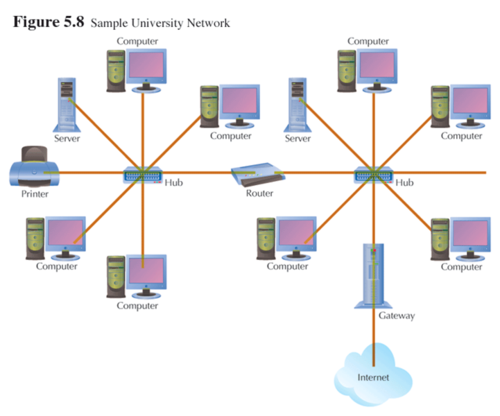
Hybrid topology
combination of two or more basic network topologies
76
New cards
Broadcast logical topology
first come, first serve on the network
77
New cards
Token passing logical topology
network access controlled by passing an electronic token
78
New cards
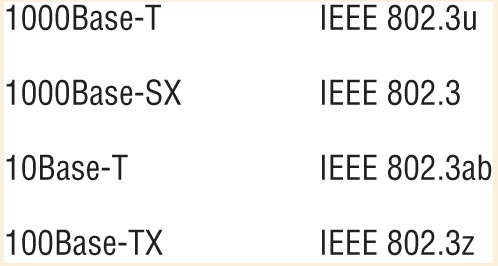
802.3 standard
ethernet standard
79
New cards
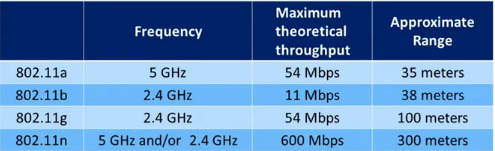
802.11 standard
wireless devices standard
80
New cards
CSMA/CD
used by Ethernet networks to control media access
81
New cards
Computer network benefit
ability to share resources
82
New cards
IP address 169.254.x.x
unable to find DHCP server; IP address automatically assigned by Windows OS
83
New cards
NIC configuration components
Protocol
IP address
MAC address
IP address
MAC address
84
New cards
SSID
Name of the wireless network
85
New cards
Wireless encryption methods
WEP
WPA
WPA2
WPA
WPA2
86
New cards
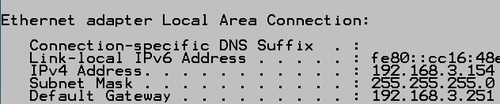
ipconfig
command to display basic network adapter configurations
87
New cards
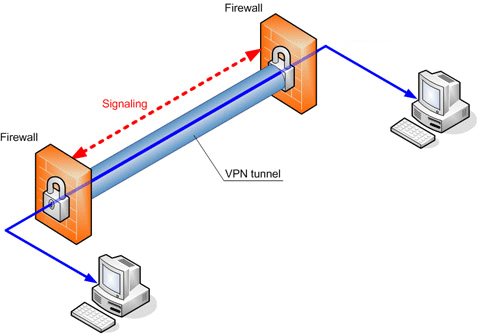
VPN
private network that connects remote sites over the public network (Internet)
88
New cards
Dialup
connection over a phone line
89
New cards
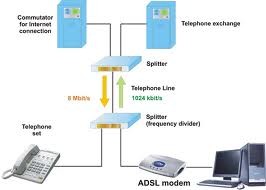
DSL
uses existing phone lines to provide high speed communication
90
New cards
Broadband
transmit and receive multiple frequencies over one cable

91
New cards
Access VPN
Enables employees to access an organization's networks from a remote location. Employees have access to the network and all the resources on it in the same way as employees physically located on the network.
92
New cards
Asynchronous Transfer Mode (ATM)
A communication switch that handles interface speeds ranging from 25 million to 622 million bps. It multiplexes data streams onto the same BN by using cell relay techniques. ATM switches can handle multimedia traffic, such as data, graphics, voice, and video.
93
New cards
Basic Rate Interface (BRI)
In ISDN, two 64,000-bps B circuits for data transmission and one 16,000-bps D circuit for signaling (2 B+D). Also called basic rate access.
94
New cards
Canadian Radio-Television and Telecommunications Commission (CRTC)
Federal government agency in Canada that regulates data and voice communications.
95
New cards
Channel Service Unit/Data Service Unit (CSU/DSU)
Transforms digital data between telephone company lines and local equipment. Converts the signals into a format compatible with the data terminal equipment.
96
New cards
Circuit-Switched Services
A method of communications whereby an electrical connection between calling and called stations is established on demand for exclusive use of the circuit until the connection is terminated.
97
New cards
Cloud
Computers connected through a communication network, such as the Internet.
98
New cards
Cloud Architecture
Users lease connection points into the common carrier's network (the cloud)
99
New cards
Committed Information Rate (CIR)
Data rate the PVC must guarantee to transmit. If the network accepts the connection, it guarantees to provide that level of service.
100
New cards
Common Carrier
An organization in the business of providing regulating telephone, telegraph, telex, and data communications services, such as AT&T, MCI, Bell-South, and NYNEX. This term is applied most often to U.S. and Canadian commercial organizations, but sometimes it is used to refer to telecommunications entities, such as government-operated suppliers of communication services in other countries (see also PTT)