Mobility Module 22 review
 Call Kai
 Learn
Learn Practice Test
 Spaced Repetition
 Match
Match Flashcards
 Knowt Play
1/68

There's no tags or description
Looks like no tags are added yet.
Name | Mastery | Learn | Test | Matching | Spaced | Call with Kai | Chat |
|---|
No analytics yet
Send a link to your students to track their progress
69 Terms
What systems are involved in providing and regulating movement?
The musculoskeletal and neurological systems.
What is the nursing goal regarding mobility?
To assist in preserving, maintaining, and restoring as much mobility and function as possible.
What is ambulation?
The ability to walk from place to place independently.
What does the term 'musculoskeletal' refer to?
It refers to the muscles and the skeleton.
How many muscles are in the human body?
More than 600 muscles.
What is the primary function of muscles?
To provide the motor power or force for movement.
What do tendons connect?
Tendons attach muscles to bone.
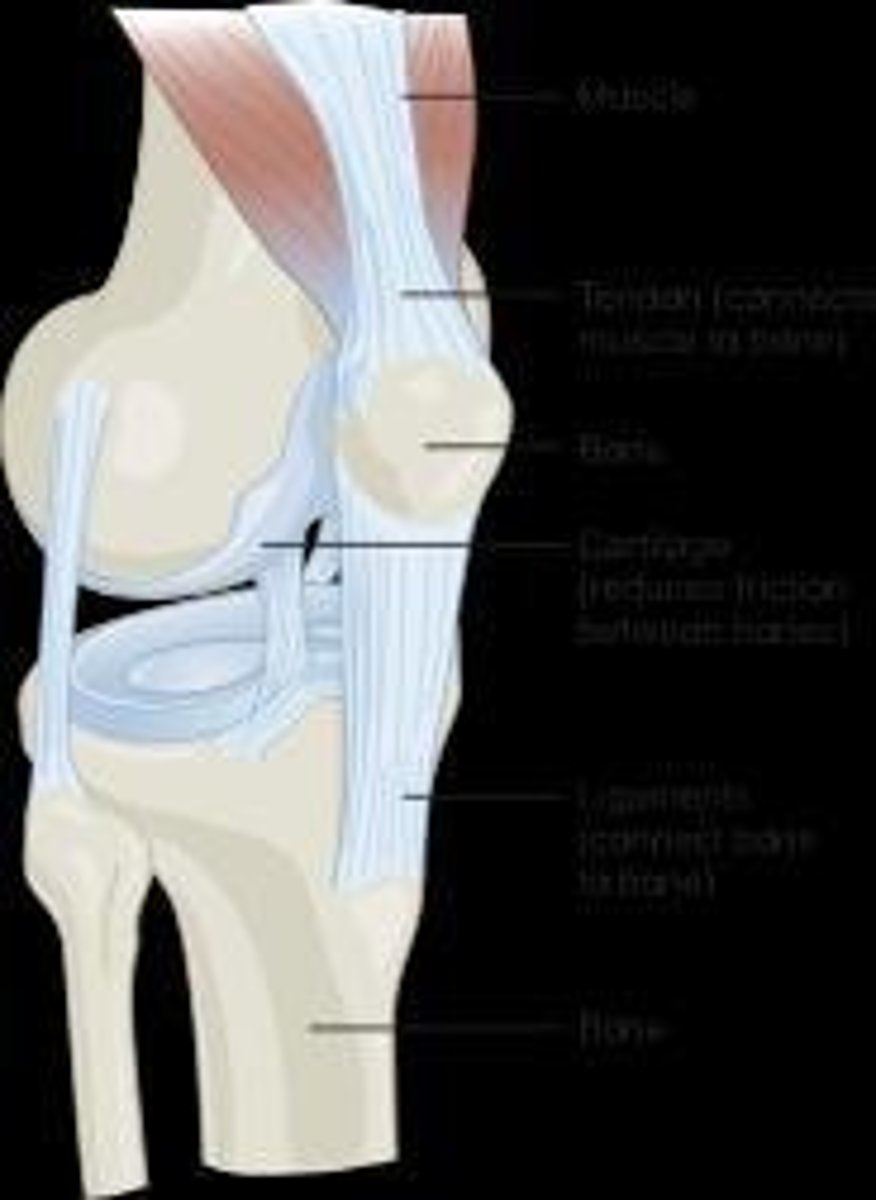
What do ligaments connect?
Ligaments attach bone to bone.
What are the four properties of a muscle?
Contractibility, Excitability, Extensibility, Elasticity.
What type of muscle is found only in the heart?
Cardiac muscle.
What type of muscle functions involuntarily and is found in blood vessels?
Smooth muscle.
What type of muscle is attached to the skeleton and functions voluntarily?
Skeletal muscle.
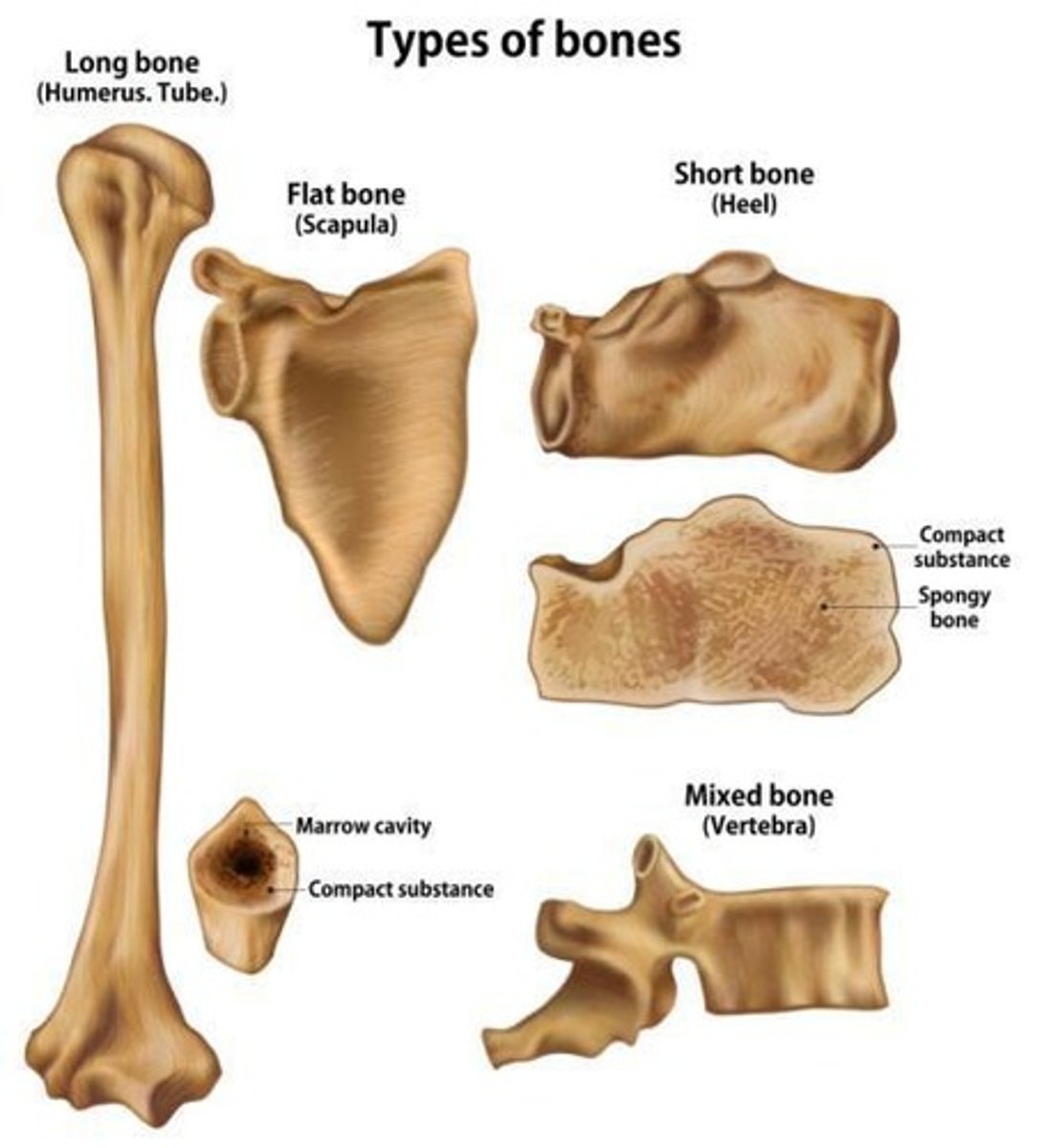
What are the classifications of bones?
Long, Short, Flat, Irregular, Sesamoid.
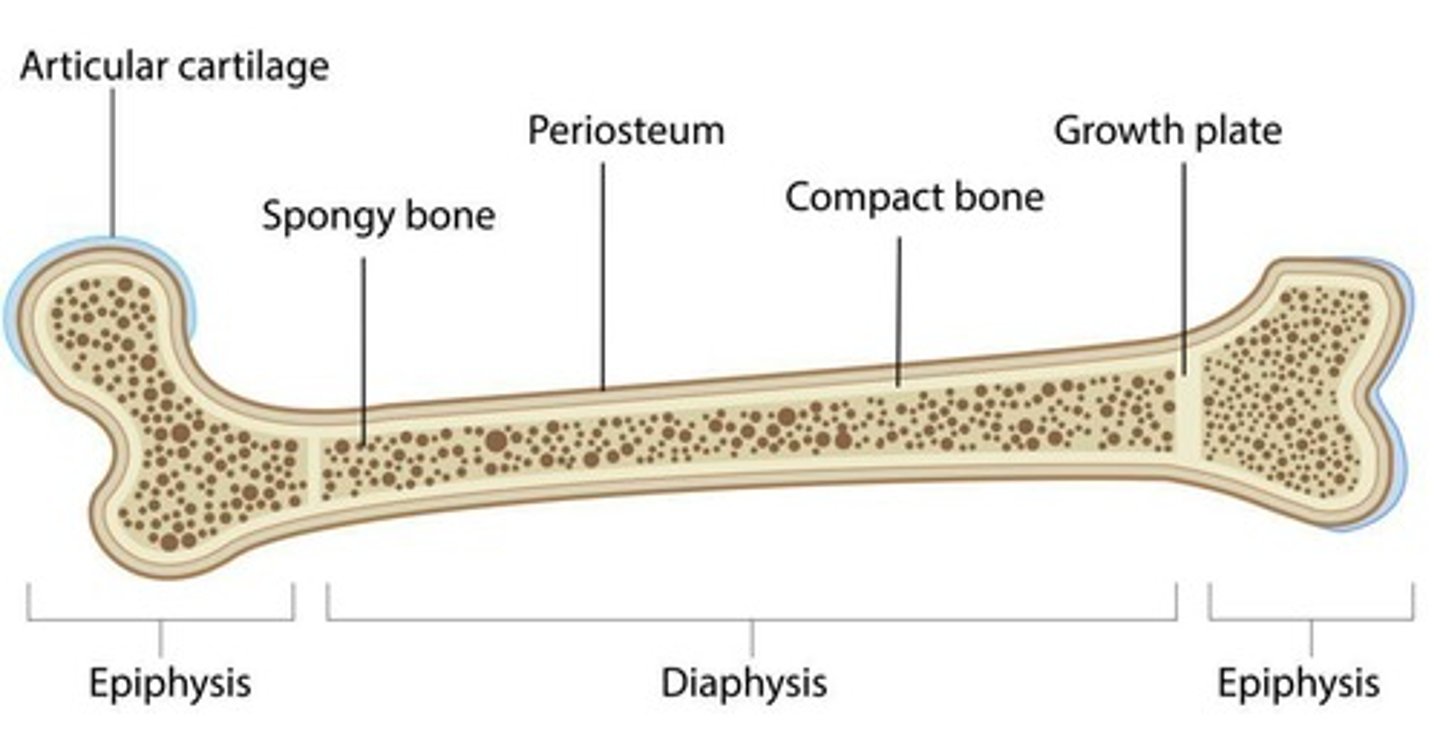
What is the process of remodeling in bones?
Old bone is constantly being replaced with new bone.
What is cartilage?
A firm, yet flexible connective tissue found in various areas such as the ears and joints.
What is flexion in terms of body movement?
Bending that reduces the angle between the bones.
What is extension in terms of body movement?
Straightening the limb.
What is the definition of body mechanics?
The combined effort from the musculoskeletal and nervous systems to maintain posture, alignment, and balance.
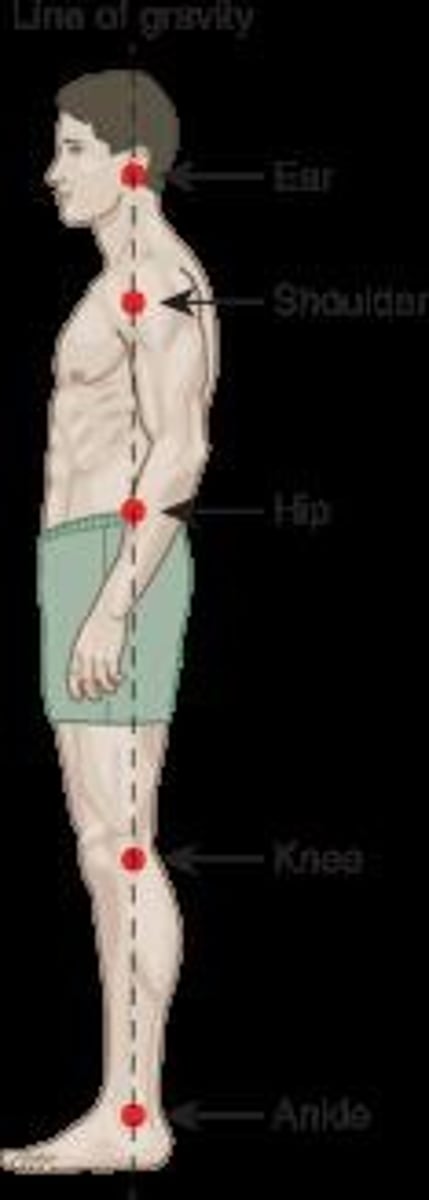
What does good body alignment support?
It supports the spine, muscles, and joints, increasing strength and reducing fatigue.
What is balance in relation to body mechanics?
The center of gravity is the central point of weight for an object or the body.
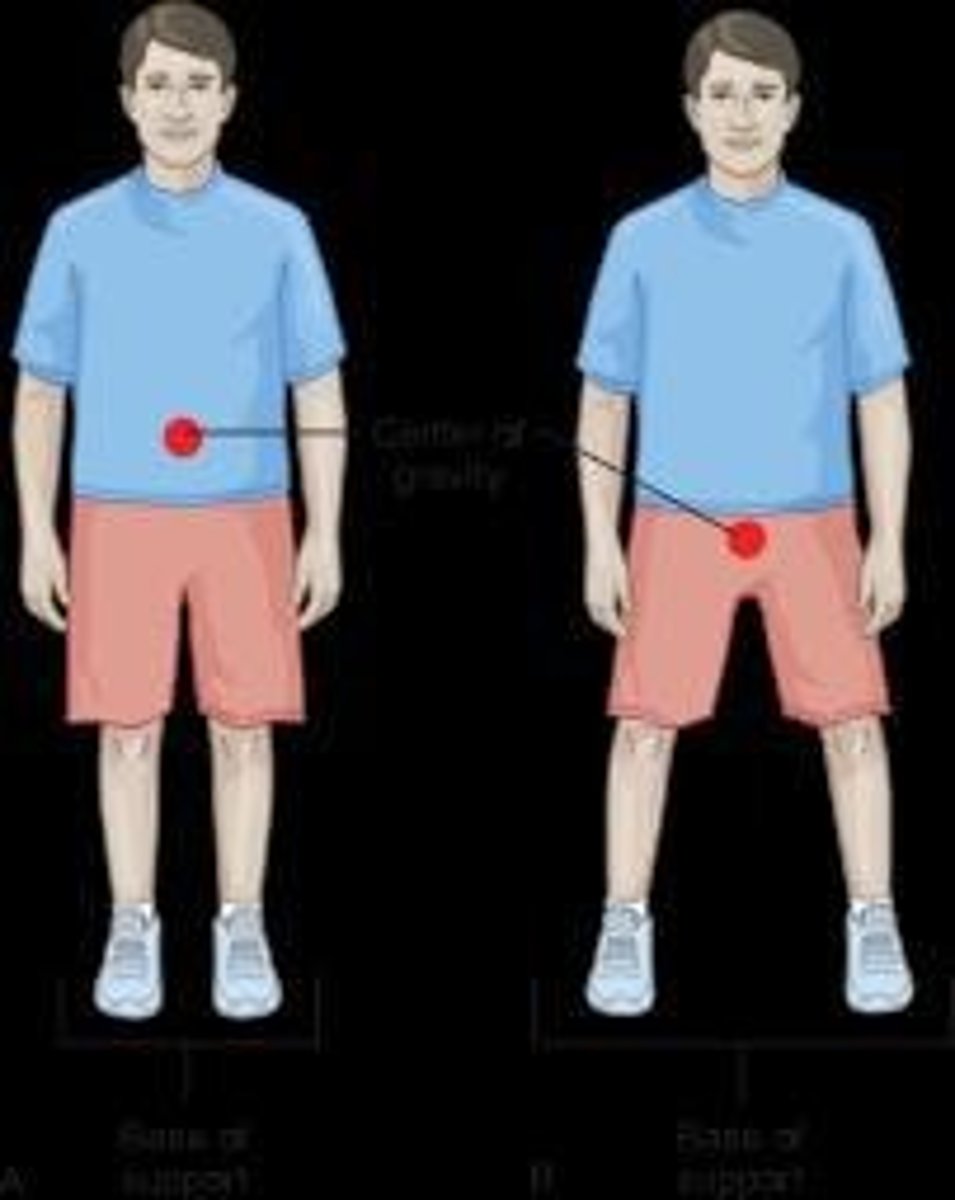
How can reaching, bending, and twisting motions affect the body?
They can increase the risk of muscle strain and injury.
What is ergonomics?
The study of body mechanics in relation to the demand and design of the work environment.
What can poor ergonomics lead to?
Frustration, stress, workarounds, and exposure to dangerous situations.
What is immobility?
Immobility is an inability to move one or more body parts.
What are the initial impacts of immobility on joints?
Stiffness, pain, and limited range of motion, especially in shoulders, elbows, hips, knees, and ankles.
What are the consequences of prolonged immobility?
Formation of fibrofatty connective tissue and abnormal adhesions, restricting nourishment to joints.
What condition increases the risk for blood clots due to immobility?
Venous stasis caused by slowed blood flow.
What is the goal of proper positioning in nursing?
To promote alignment and prevent pressure points, hyperextension, or lateral rotation.
What are the musculoskeletal effects of decreased mobility?
Disuse osteoporosis, atrophy, joint contractures, and fragility fractures.
What respiratory complications can arise from decreased mobility?
Atelectasis and pneumonia.
What gastrointestinal issues can result from immobility?
Malnutrition, constipation, and fecal impaction.
What are the stages of pressure injury?
Stage 1: Intact skin with nonblanchable redness. Stage 2: Partial-thickness skin loss. Stage 3: Full-thickness skin loss without exposure of underlying structures. Stage 4: Full-thickness loss with exposed fascia, muscle, or bone.
What is an unstageable pressure injury?
An injury where slough and eschar conceal the extent of tissue loss.
What is activity intolerance?
The inadequate amount of physical or psychological energy to undergo or complete a necessary activity.
What factors contribute to activity intolerance?
Prolonged bed rest, decreased mobility, balance difficulties, or weakness due to illness or hospitalization.
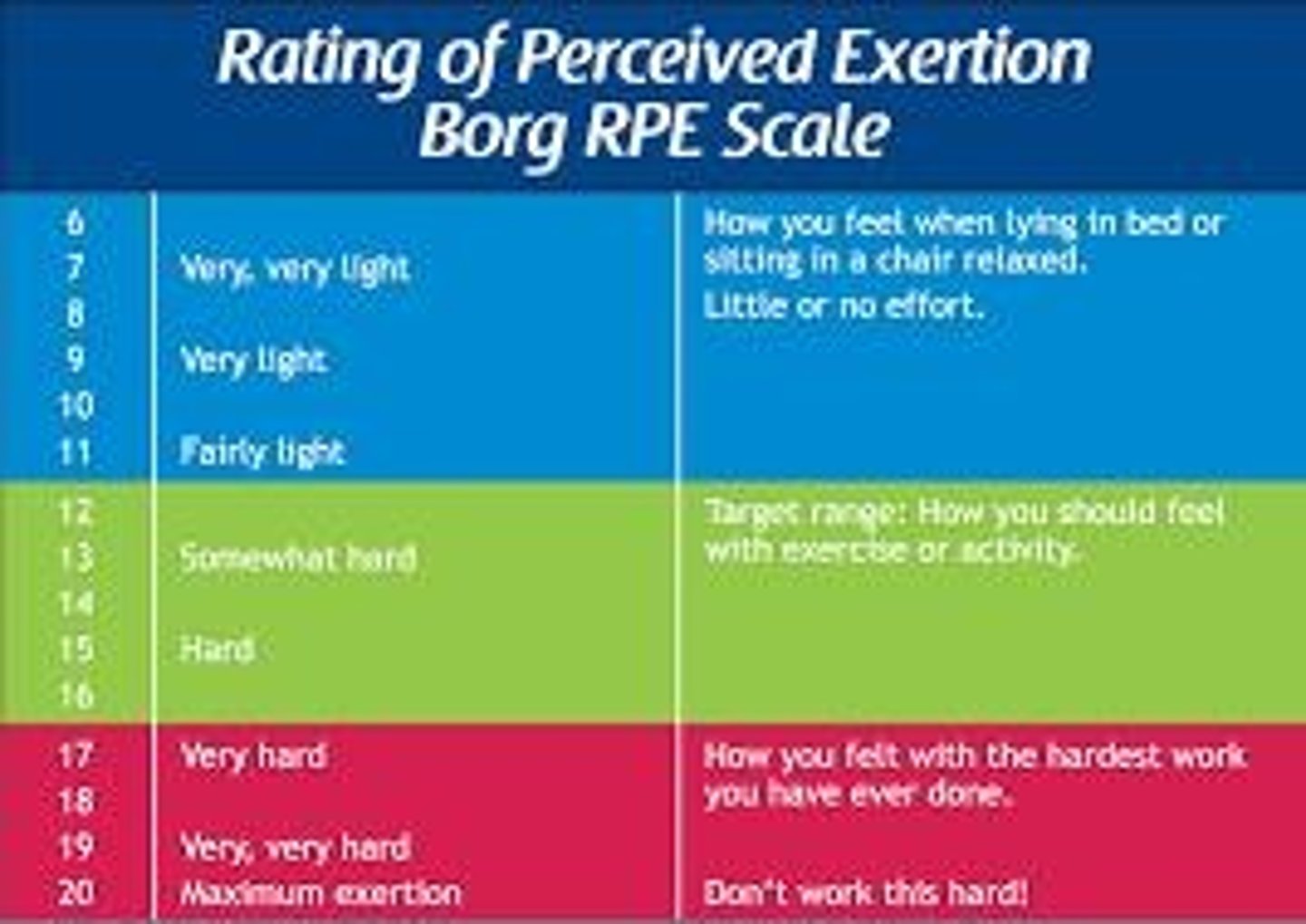
What is the Borg Rating of Perceived Exertion (RPE) scale?
A scale to measure perceived exertion during activity, ranging from 6 (resting) to 20 (maximal effort).
What are Activities of Daily Living (ADLs)?
Basic essential skills related to personal care, such as dressing, bathing, toileting, and feeding oneself.
What are common types of postural misalignments?
Lordosis, kyphosis, flat back, sway back, and scoliosis.
What is the significance of assessing mobility in nursing?
To recognize and address complications associated with reduced mobility.
What nursing interventions can prevent complications associated with immobility?
System-specific assessments and interventions tailored to the client's needs.
What is the impact of immobility on psychological health?
It can lead to decreased self-concept and increased feelings of dependency.
What is the role of the nurse in caring for immobilized clients?
To assess, recognize, and implement interventions to minimize complications from immobility.
What are the normal mobility statuses assessed?
Ability to sit, stand, walk, use or need for assistance, degree of mobility and immobility, condition of the skin.
What is the maximum assistance level in mobility assessment?
The client cannot bear weight, assist, or maintain a seated position; requires a total mechanical lift or sling.
What tasks are performed at the moderate assistance level?
The client can maintain a seated position and has some upper extremity strength but lacks enough lower extremity strength to transfer safely.
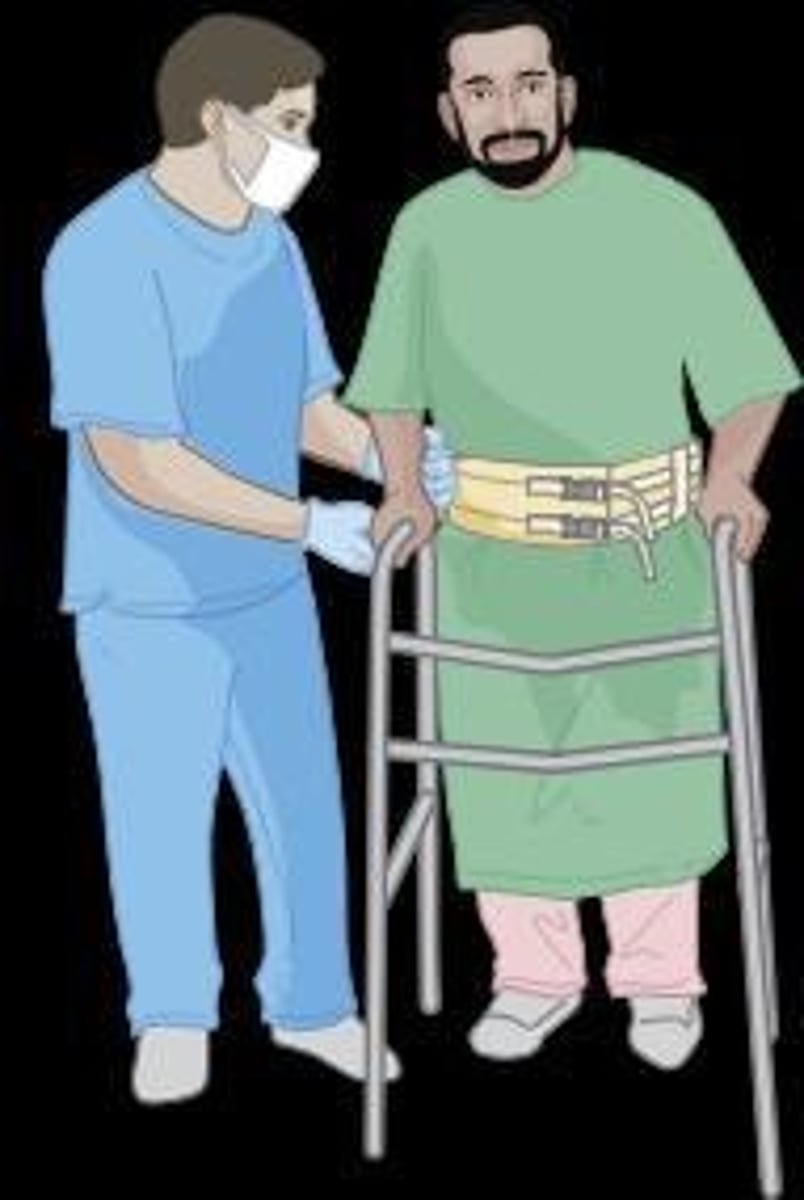
What is required for minimal assistance in mobility?
The client can rise from a seated position and sustain a steady stand using a gait belt and ambulation assistive devices.
What characterizes the no assistance level in mobility?
The client can stand, march or step in place, and walk without any help.
What are some assistive devices for ambulation?
Gait belt, cane, walker, crutches.
What is the prone position in client positioning?
Lying on abdomen with the head turned to one side; hips are unflexed.
What are the advantages of the supine position?
Enables visualization of the client for examination, promotes spinal alignment, reduces pressure on the sacrum and heels.
What is the lateral position in client positioning?
Side-lying with hips and knees flexed, promotes lung expansion.
What is the Fowler position?
Semi-seated or reclined position with the head of the bed elevated 45 degrees; knees may be flexed.
What is the Trendelenburg position?
Lying flat on the back, with the foot of the bed above the head of the bed.
What is range of motion (ROM)?
Manipulation of a joint within its range of flexion and extension.
What are the benefits of range of motion exercises?
Increased joint function and flexibility, improved posture, reduced stiffness, and lower risk of injury.
What is passive range of motion?
Movement of a joint by another individual without the client's assistance.
What is active range of motion?
Voluntary movement of a joint by the client without any type of assistance.
What are the health benefits of physical exercise?
Improves health outcomes, strengthens bones and muscles, reduces risk of chronic diseases.
What is the current recommendation for adult aerobic activity?
At least 150 minutes of moderate-intensity aerobic activities per week.
What factors affect mobility in aging individuals?
Bone loss, degeneration of vertebral discs, posture changes, reflexes, joint mobility, muscle mass, and vision.
What is the effect of decreased muscle mass on mobility?
Less endurance and decreased strength, leading to increased fatigue with ambulation.
What assistive devices are used for transferring a client?
Slide or transfer board, pivot disc, mechanical sit-to-stand lift, mechanical lift.
What is the impact of poor vision on mobility?
Reduced tone of eye muscles and increased risk of tripping and falling.
What are age-related changes that affect mobility?
Alterations in muscle mass, posture, joint mobility, reflexes, and vision.
What is the significance of maintaining a standing position for at least 5 seconds?
Indicates the client has minimal assistance in mobility.
What is the role of assistive devices in ambulation?
To aid clients in walking and maintaining balance.
What is the purpose of the lateral semi-prone recumbent position?
Promotes venous return and drainage of the lower lobes of the lungs.
What is the effect of increased thoracic spinal curvature on mobility?
Leads to forward leaning posture and unsteady ambulation.
What is the role of assistive devices in transferring clients?
To facilitate safe movement and reduce the risk of injury for both client and caregiver.