Ch. 4 - Movement of Solutes and Water Across Cell Membranes
 Call Kai
 Learn
Learn Practice Test
 Spaced Repetition
 Match
Match Flashcards
 Knowt Play
1/47

There's no tags or description
Looks like no tags are added yet.
Name | Mastery | Learn | Test | Matching | Spaced | Call with Kai | Chat |
|---|
No analytics yet
Send a link to your students to track their progress
48 Terms
Simple diffusion
Movement of solutes down a concentration gradient without a transporter or ATP hydrolysis
Flux
Net flux
Difference between two one-way fluxes

Diffusion equilibrium
State during which diffusion fluxes in opposite directions are equal; net flux = zero
Fick’s 1st law of diffusion
Describes the rate of diffusion of a solute as a function of concentration gradient, area across which the solute diffuses, and other factors
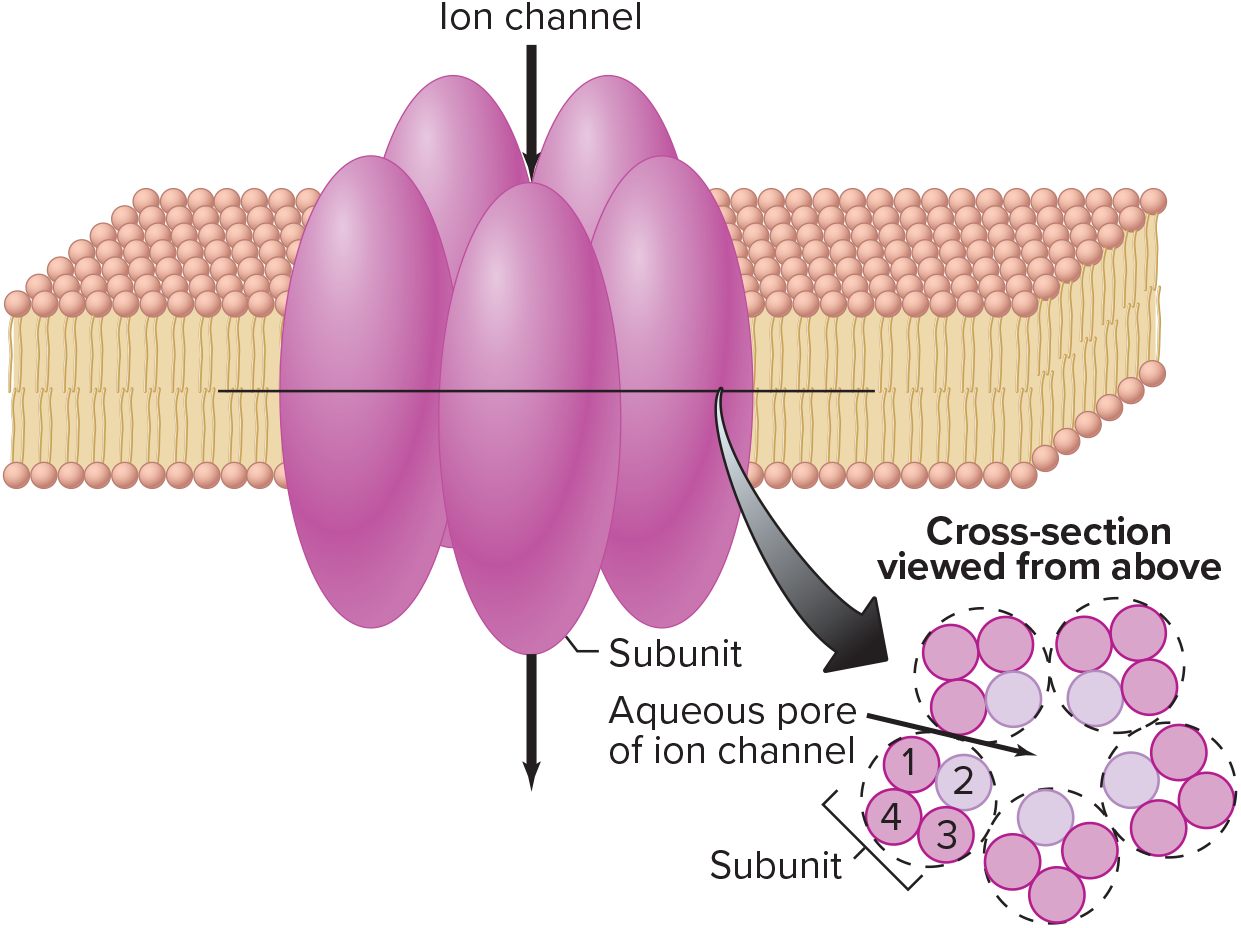
Ion channels
Small passages in plasma membrane formed by integral membrane proteins and through which certain small-diameter molecules and ions can diffuse
Membrane potential
Voltage difference between inside and outside of cell
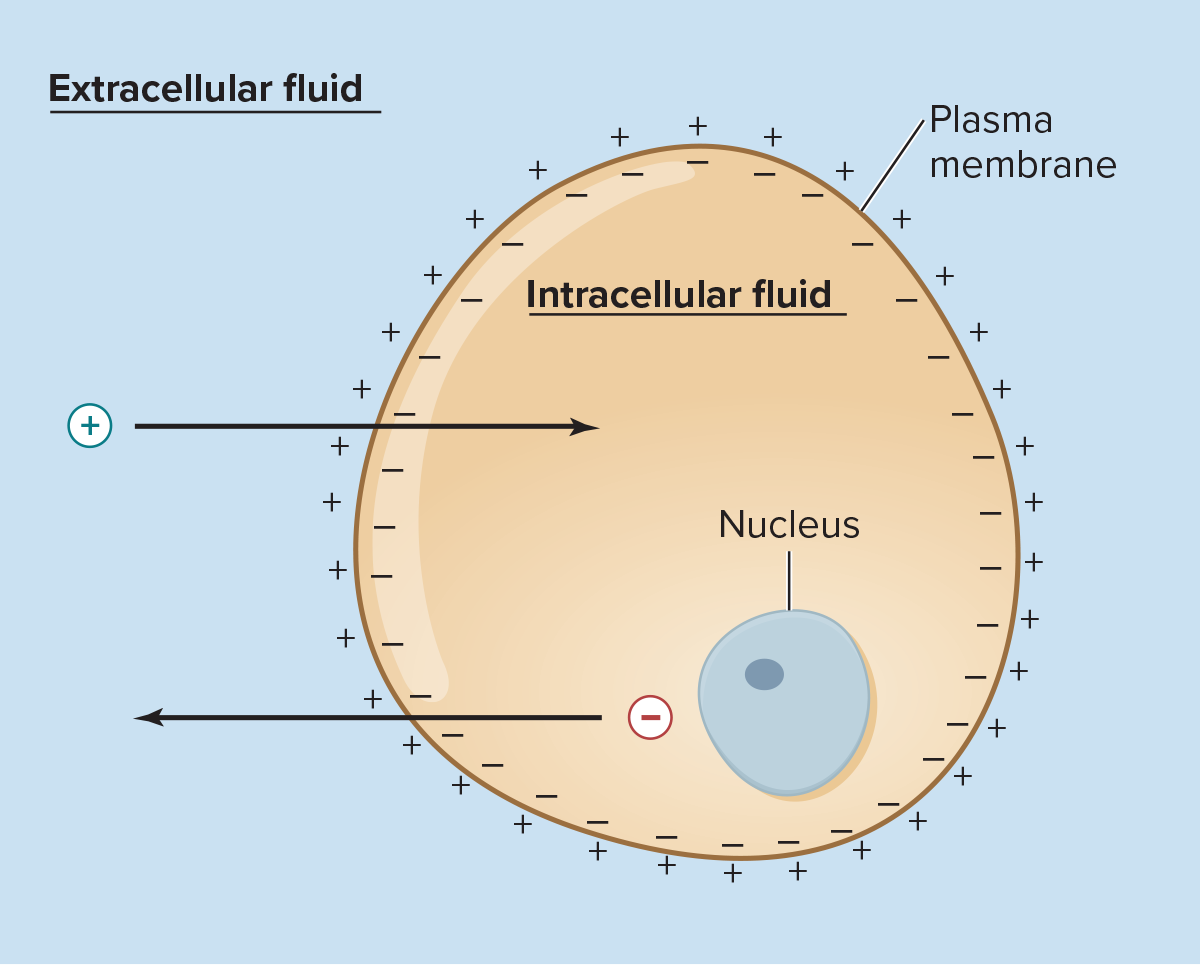
Electrochemical gradient
The driving force across a plasma membrane that dictates whether an ion will move into or out of a cell; established by both the concentration difference and the electrical charge difference between the cytosolic and extracellular surfaces of the membrane
Channel gating
Process of opening and closing ion channels
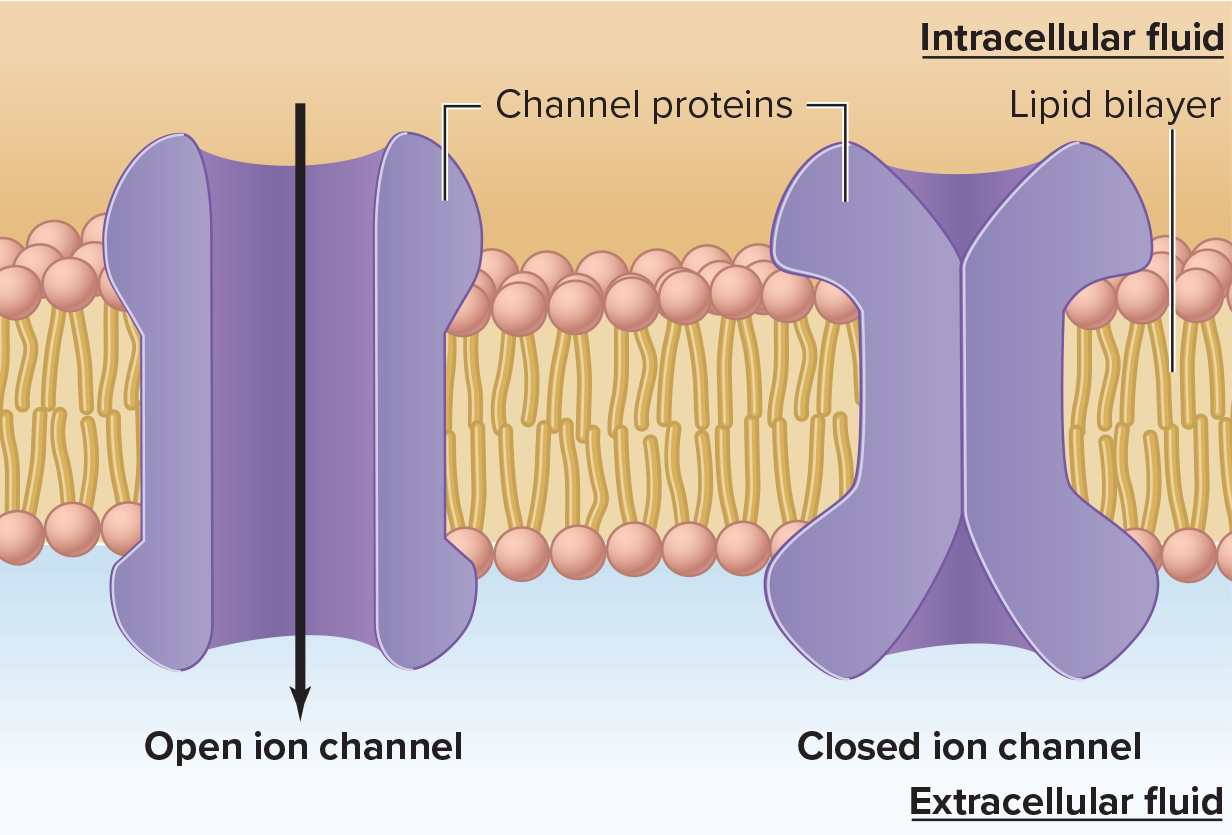
Ligand-gated ion channel
Membrane ion channels operated by the binding of specific molecules to channel proteins
Voltage-gated ion channels
Channels cell membrane ion channels opened or closed by changes in membrane potential
Mechanically-gated ion channels
Membrane ion channels that are opened or closed by deformation or stretch of the plasma membrane
Transporters
Integral membrane proteins that mediate passage of molecules through membrane; also called carrier
Mediated transport
Movement of molecules across membrane by binding to protein transporter; characterized by specificity, competition, and saturation; includes facilitated diffusion and active transport

Facilitated diffusion
System using a transporter to move molecules from high to low concentration across a membrane; energy not required
Active transport
Energy-requiring system that uses transporters to move ions or molecules across a membrane against an electrochemical difference
Primary active transport
Active transport in which chemical energy is transferred directly from ATP to transporter protein
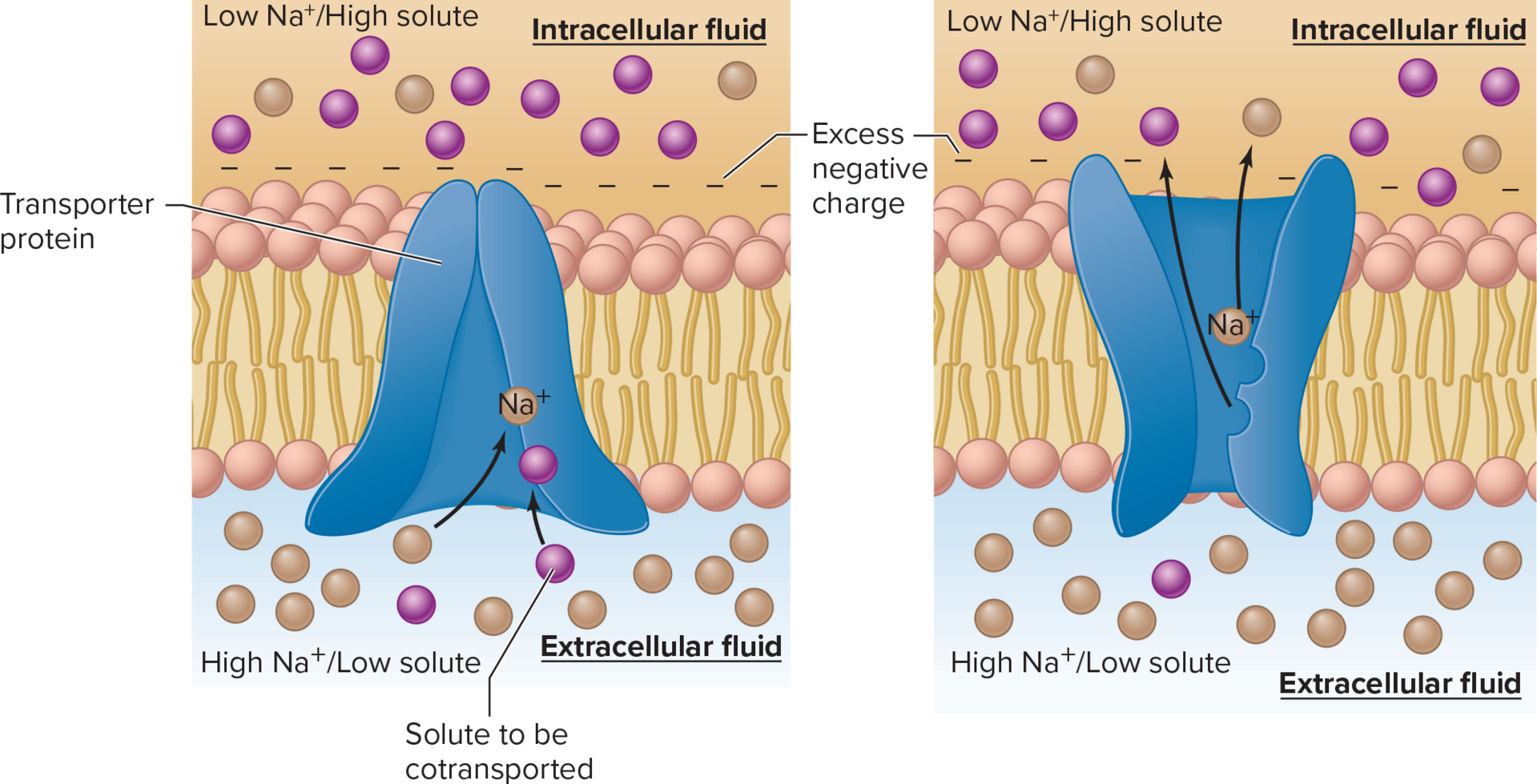
Secondary active transport
Active transport in which energy released during transmembrane movement of one substance from higher to lower concentration is transferred to the simultaneous movement of another substance from lower to higher concentration
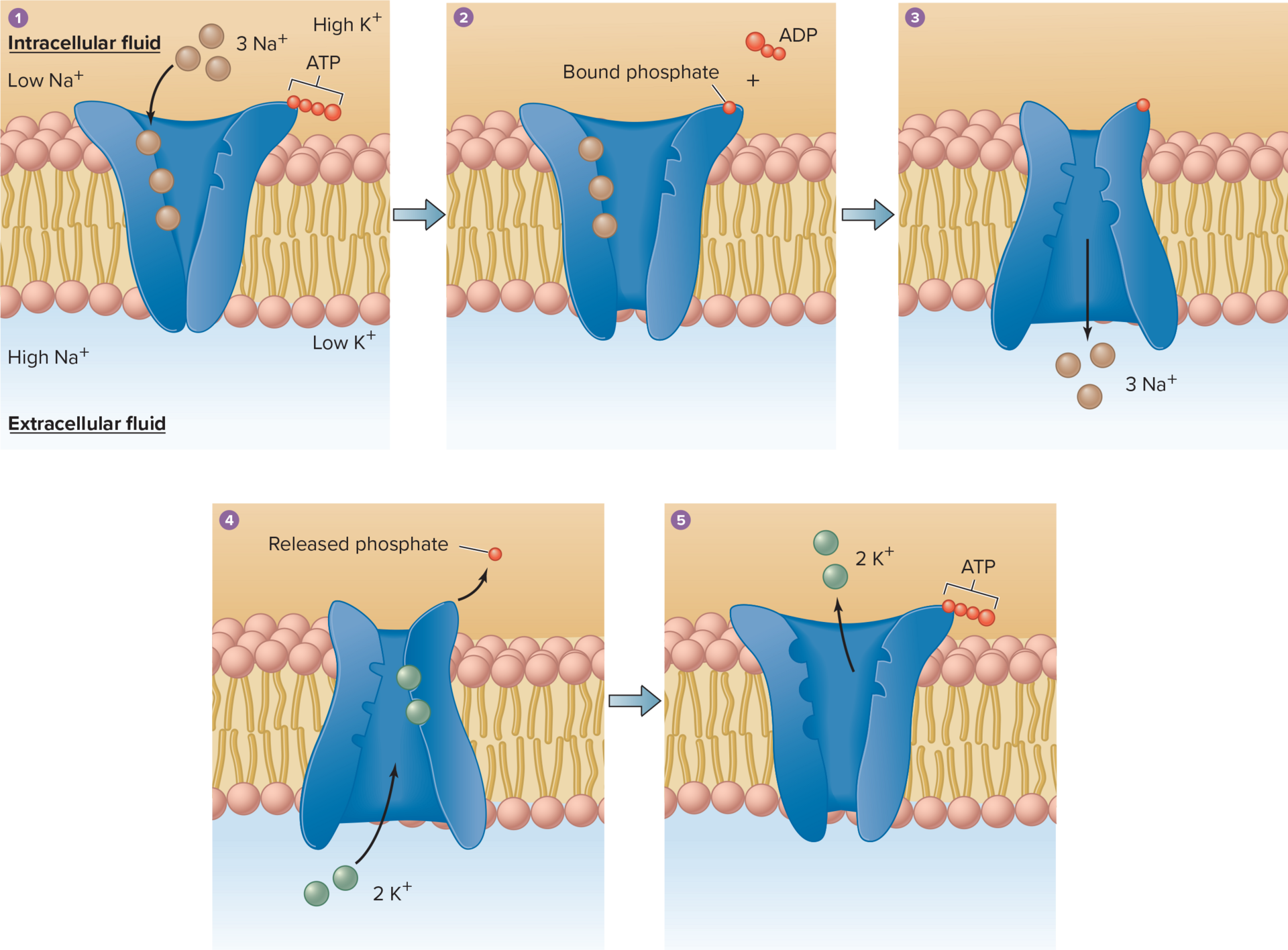
Na+/K+-ATPase pump
Primary active-transport protein that hydrolyzes ATP and releases energy used to transport sodium ions out of cell and potassium ions in
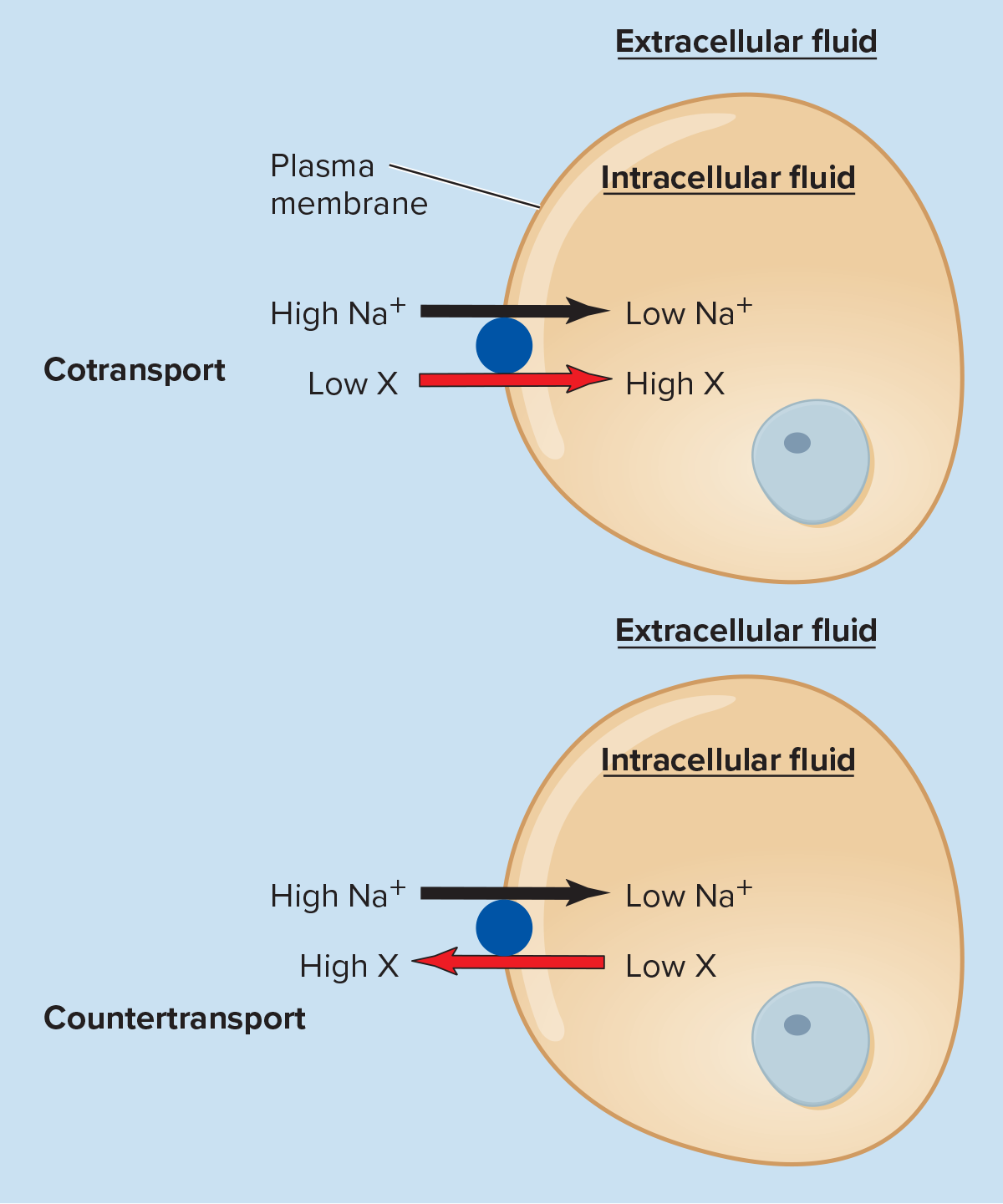
Cotransport
Form of secondary active transport in which net movement of actively transported substance and “downhill” movement of molecule supplying the energy are in the same direction
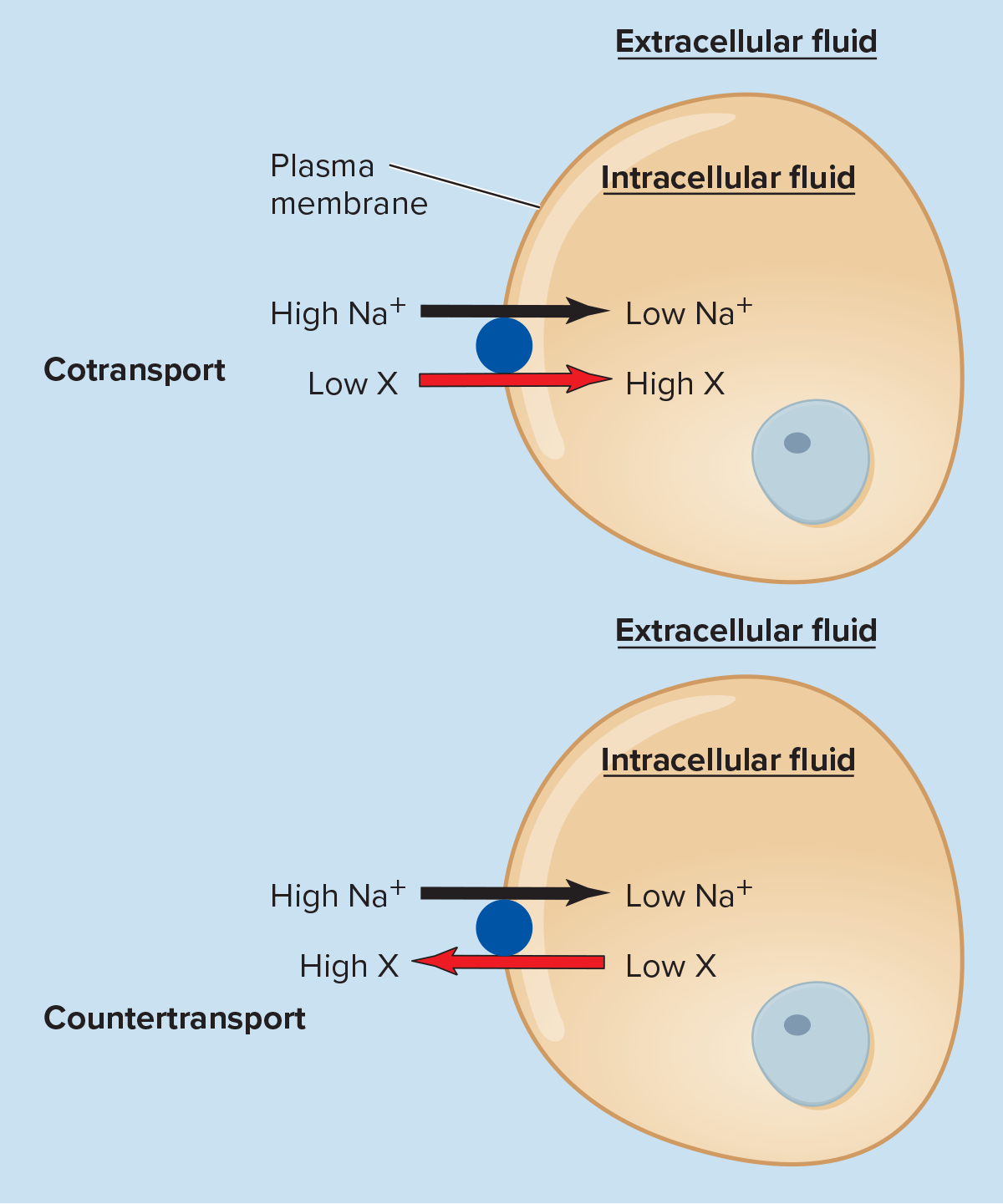
Countertransport
Form of secondary active transport in which net movement of actively transported molecule is in direction opposite “downhill” movement of molecule supplying the energy
Aquaporins
Protein membrane channels through which water can diffuse
Osmosis
Net diffusion of water across a selective barrier from region of higher water concentration (lower solute concentration) to region of lower water concentration (higher solute concentration)
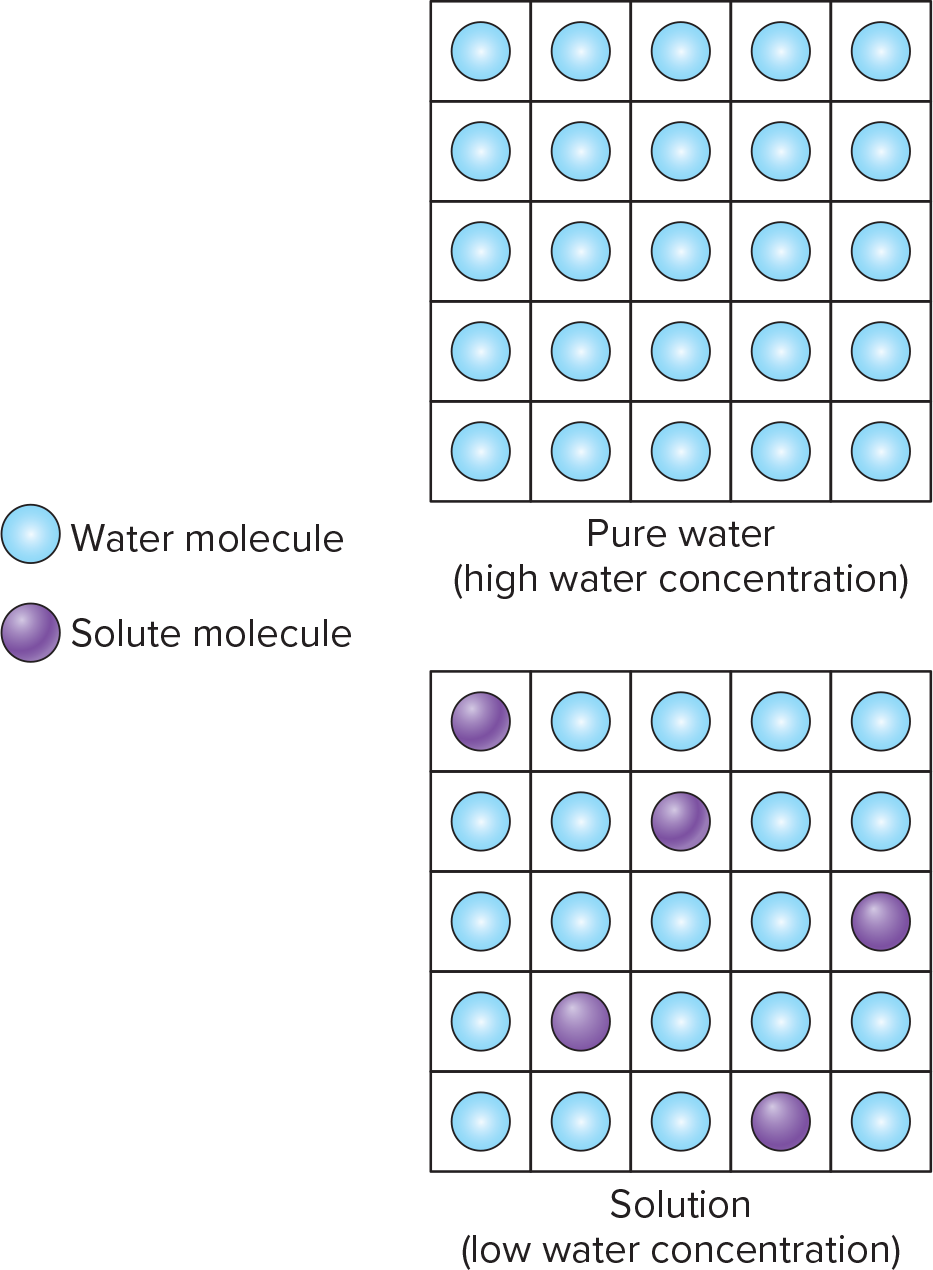
Osmolarity
Total solute concentration of a solution; measure of water concentration in that the higher the solution osmolarity, the lower the water concentration
Osmol
1 mole of solute ions and molecules
Semipermeable membrane
Membrane permeable to some substances (usually water) but not to others (some solutes)
Osmotic pressure
Pressure that must be applied to a solution on one side of a membrane to prevent osmotic flow of water across the membrane from a compartment of pure water; a measure of the solution’s osmolarity
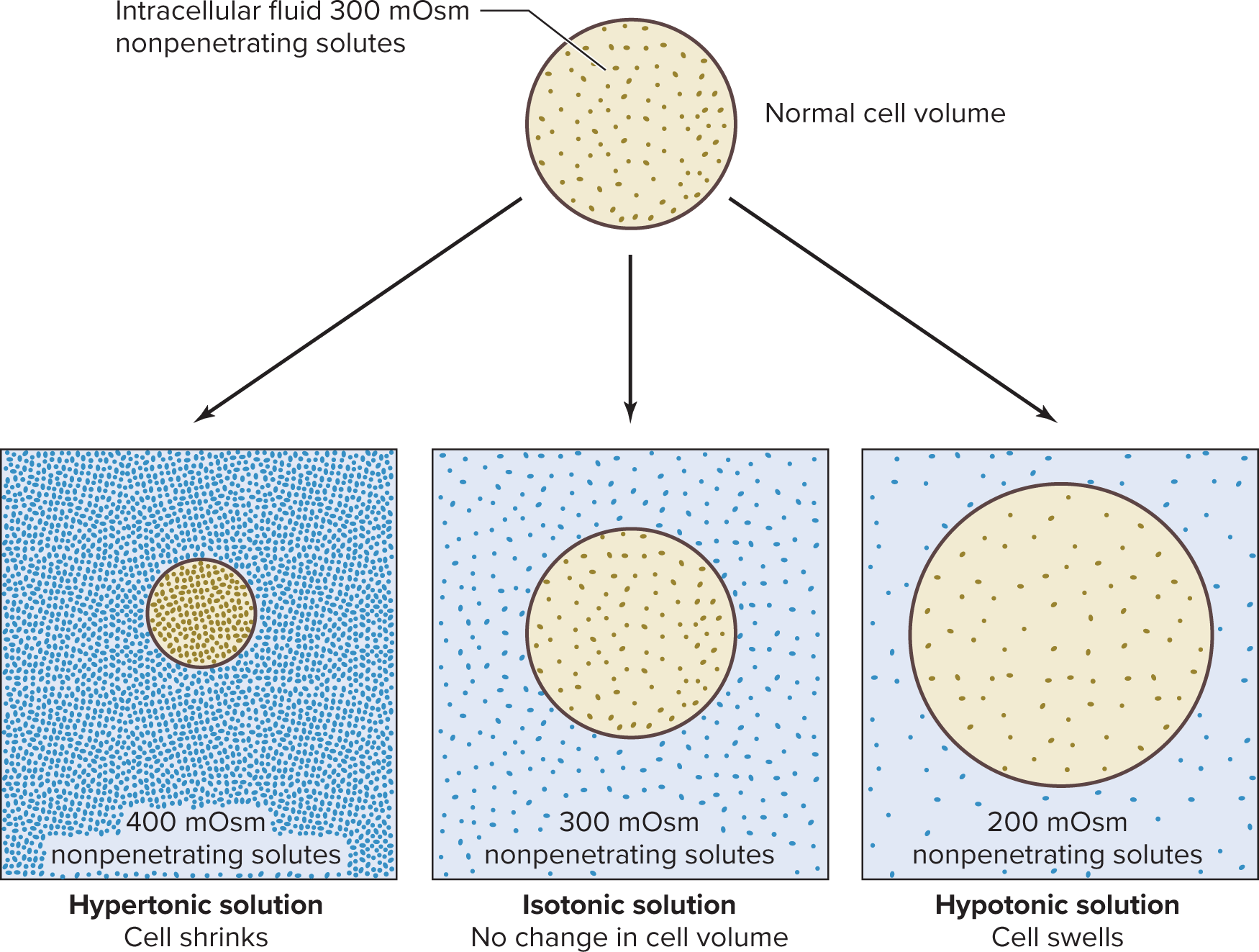
Nonpenetrating solutes
Dissolved substances that do not passively diffuse across a plasma membrane
Isotonic
Containing the same number of effectively nonpenetrating solute particles as normal extracellular fluid
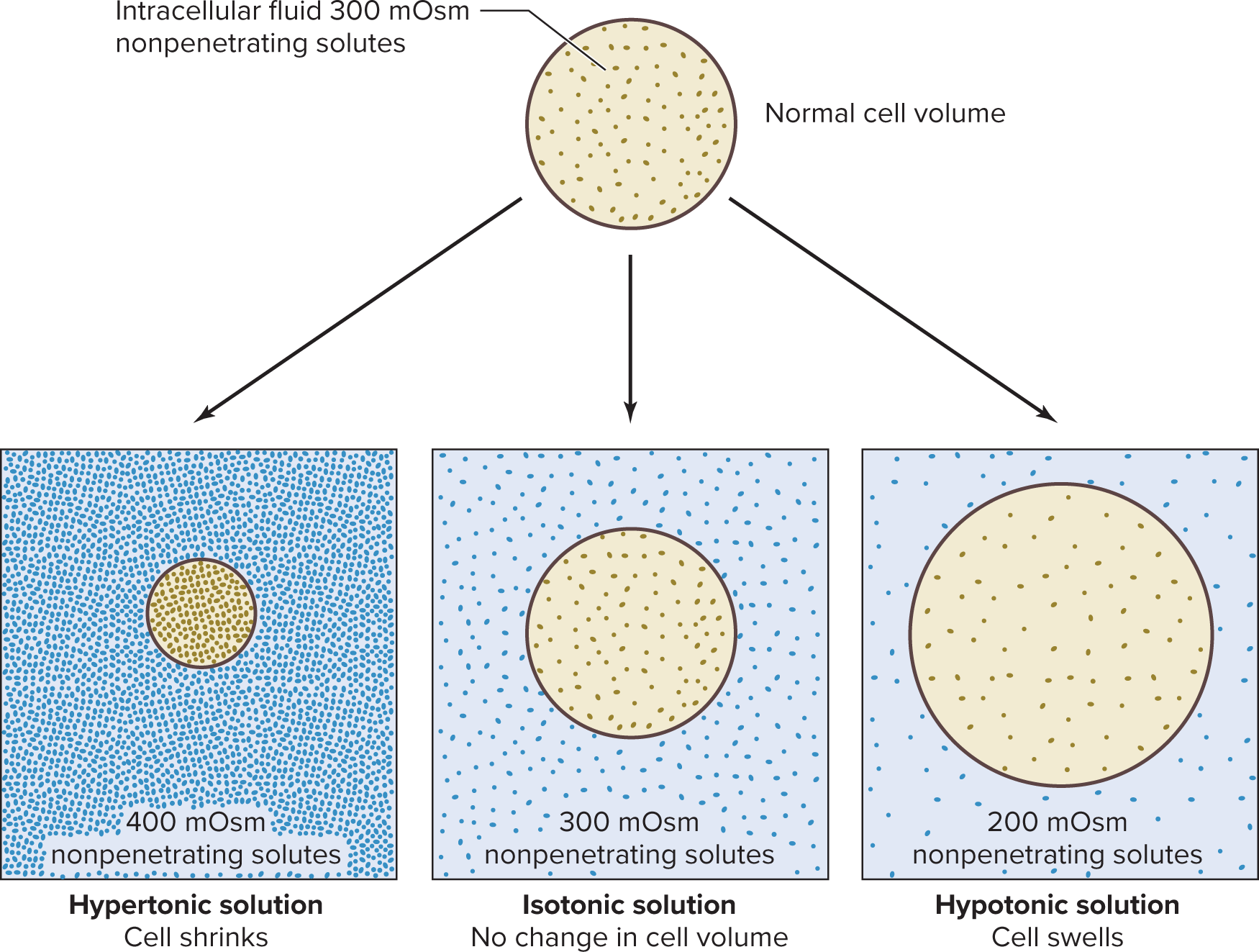
Hypotonic solutions
Solutions containing a lower concentration of effectively nonpenetrating solute particles than normal (isotonic) extracellular fluid
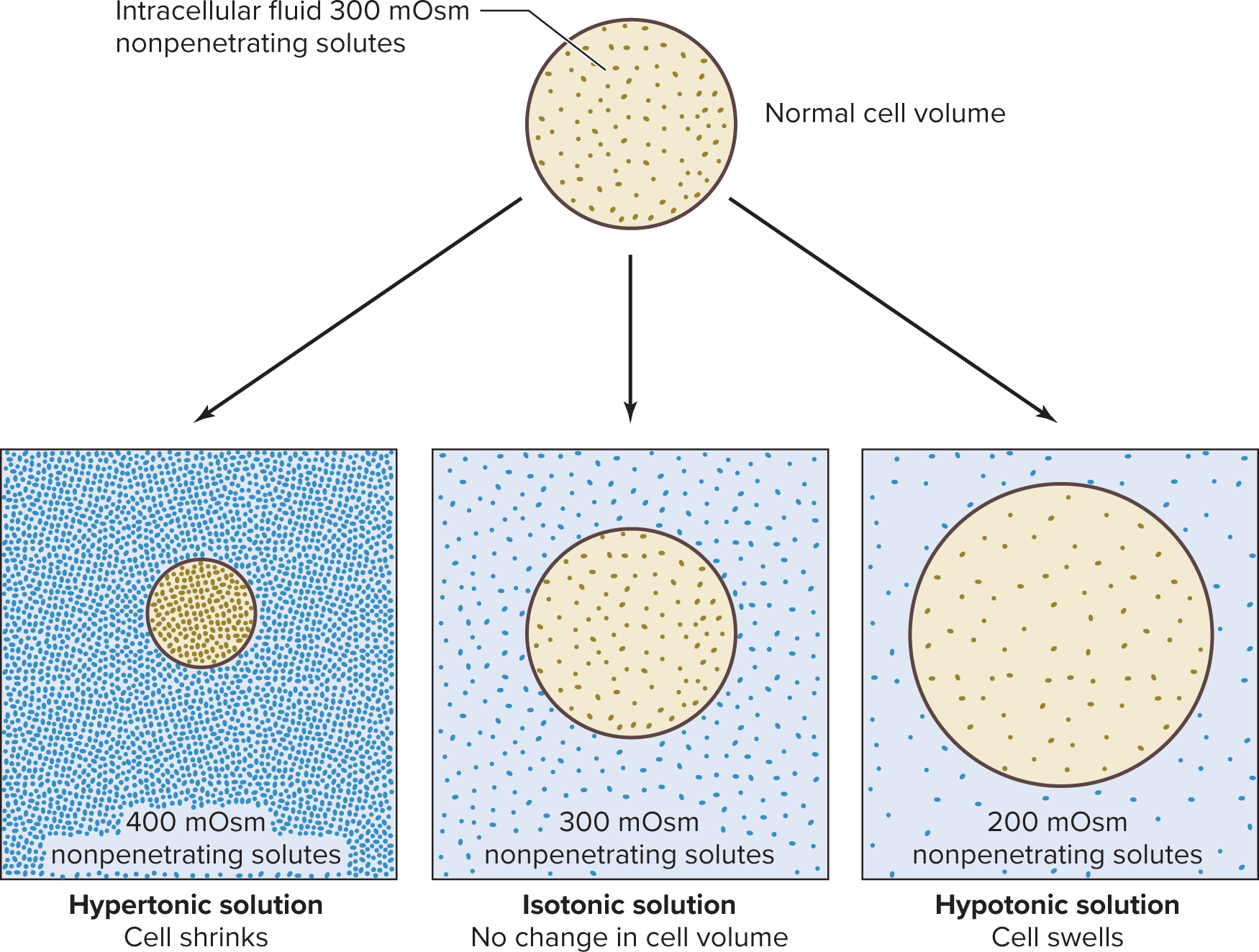
Hypertonic solutions
Solutions containing a higher concentration of effectively membrane-impermeable solute particles than normal (isotonic) extracellular fluid
Penetrating solutes
Solute that can freely diffuse across the lipid bilayer of a plasma membrane
Isoosmotic
Having the same total solute concentration as extracellular fluid
Hypoosmotic
Having total solute concentration less than that of normal extracellular fluid
Hyperosmotic
Having total solute concentration greater than normal extracellular fluid
Endocytosis
Process in which plasma membrane folds into the cell forming small pockets that pinch off to produce intracellular, membrane-bound vesicles

Exocytosis
Process in which intracellular vesicle fuses with plasma membrane, the vesicle opens, and its contents are liberated into the extracellular fluid
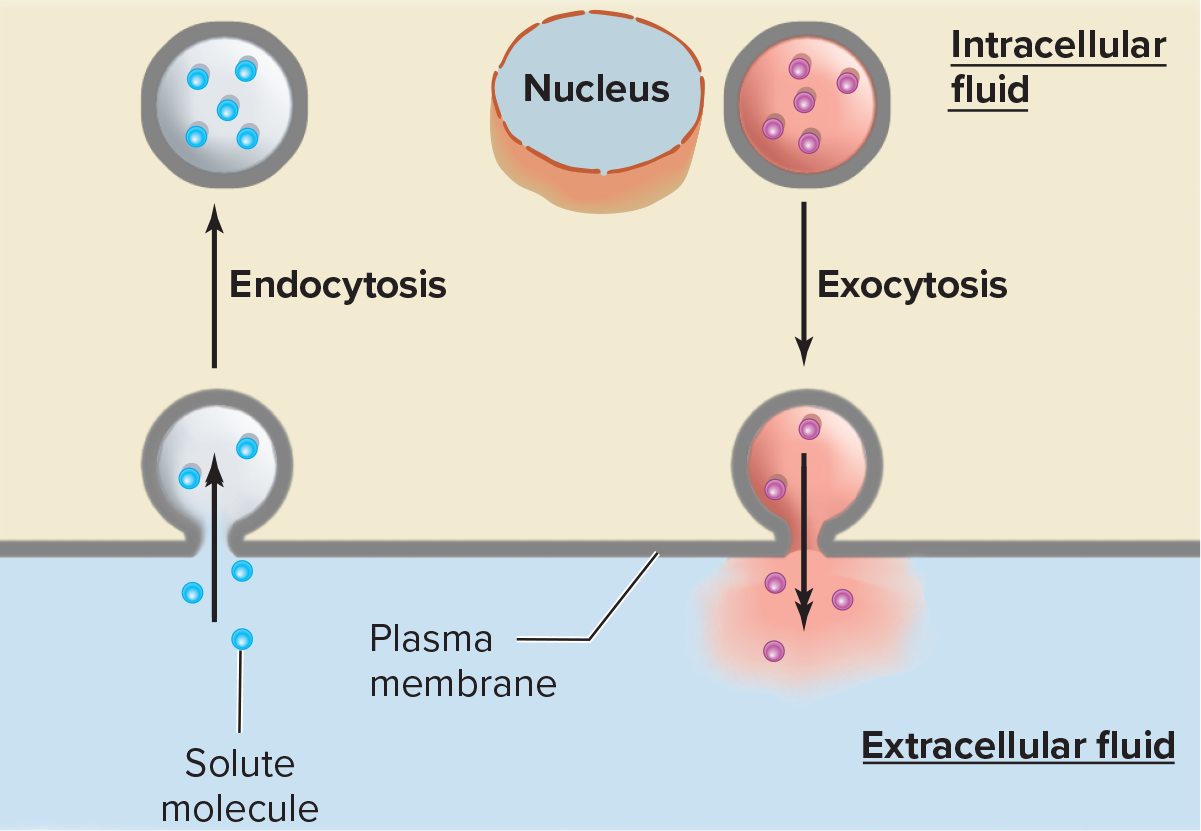
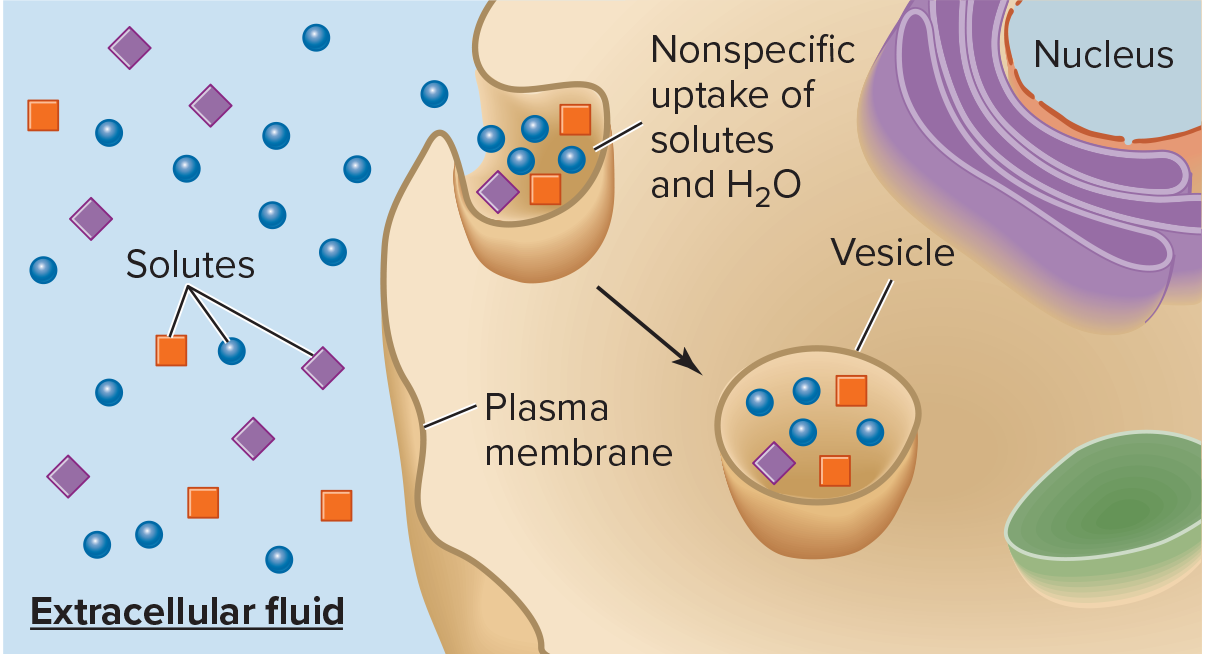
Pinocytosis / fluid endocytosis
cell drinking; endocytosis when the vesicle encloses extracellular fluid or specific molecules in the extracellular fluid that have bound to proteins on the extracellular surface of the plasma membrane
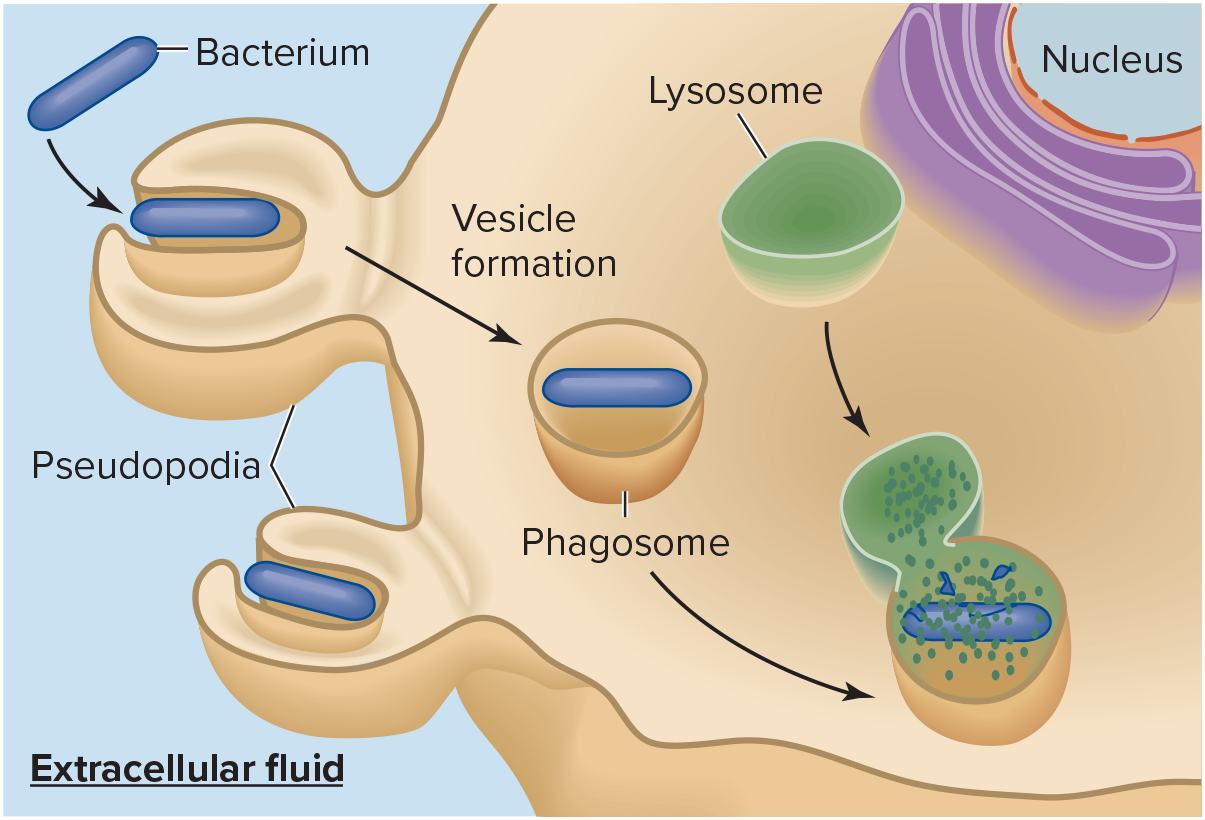
Phagocytosis
cell eating; engulfment of particles by a cell
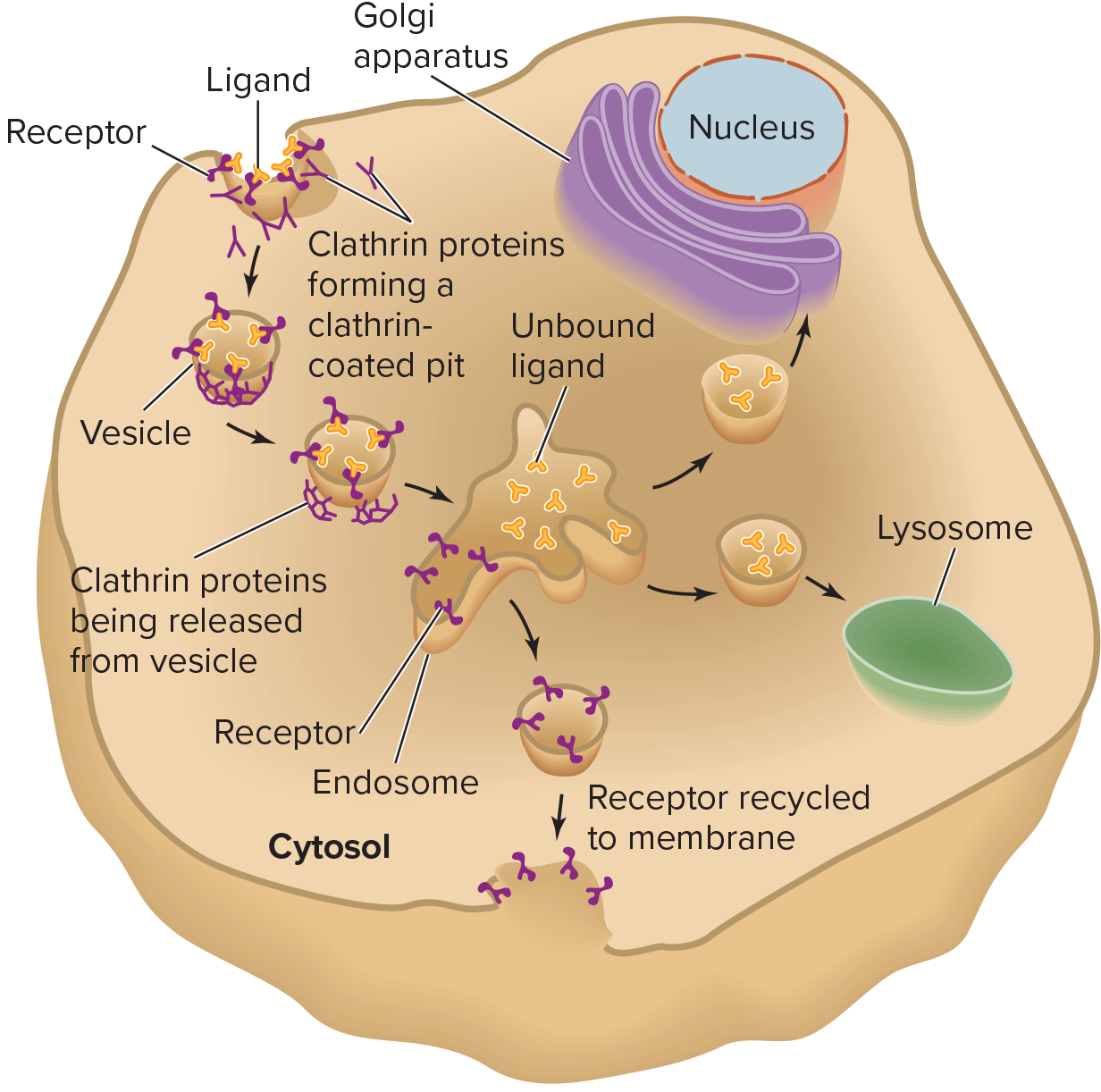
Receptor-mediated endocytosis
The specific uptake of ligands in the extracellular fluid by regions of the plasma membrane that invaginate and form intracellular vesicles
Phagosomes
Plasma-membrane-bound, intracellular sacs formed when a phagocyte engulfs a microbe
Receptors
(for messengers) protein either on cell surface, in the cytosol, or in the nucleus that binds a chemical messenger such as a hormone or neurotransmitter and mediates its actions
(in sensory system) specialized peripheral ending of afferent neuron, or separate cell intimately associated with it, that detects changes in some aspect of environment
Clathrin
A cytosolic protein that binds to regions of the plasma membrane and helps initiate receptor-mediated endocytosis
Clathrin-coated pit
Aggregation of ligand-bound receptors on a cell membrane that pinches off and is internalized into the cell
Apical membrane
The surface of an epithelial cell that faces a lumen, such as that of the intestines; also known as luminal membrane
Basolateral membrane
Sides of epithelial cell other than luminal surface; also called serosal or blood side of cell
Paracellular pathway
The space between adjacent cells of an epithelium through which some molecules diffuse as they cross the epithelium
Transcellular pathway
Crossing an epithelium by movement into an epithelial cell, diffusion through the cytosol of that cell, and exit across the opposite membrane