combined asci 112 and 229 gastrointestinal flashcards
 Call Kai
 Learn
Learn Practice Test
 Spaced Repetition
 Match
Match Flashcards
 Knowt Play
1/102

There's no tags or description
Looks like no tags are added yet.
Name | Mastery | Learn | Test | Matching | Spaced | Call with Kai | Chat |
|---|
No analytics yet
Send a link to your students to track their progress
103 Terms
goal of digestion
to reduce macromolecules into simple monomers that can be absorbed by the body
mechanical digestion
mastication
mixing
rumination
chemical digestion
the enzymatic breakdown of food molecules into smaller units
autoenzymatic digestion
endogeneous enzymes
pepsin
lipase
amylase
alloenzymatic digestion (fermentation)
exogeneous enzymes
cellulase
hemicellulase
microbiome
bacteria
absorption
the process by which nutrients from digested food are taken up into the bloodstream or cells
oral cavity
significant mechanical reduction
chemical: initiate carbohydrate and lipid reduction
salivary amylase: carbohydrates
salivary lipase: lipids
water
electrolytes
mucus
buffers (bicarbonate, phosphate buffers)
pharynx
common passage for food and air
lined by mucus membrane
surrounded by muscle - plays a role in swallowing
esophagus
muscular tube extending from the pharynx to the cardia (cardiac sphincter) of the stomach
stomach
minor mechanical digestion
chemical: initiate protein digestion
gastric lipase → lipids
pepsin → proteins
HCL → activate protein digesting enzymes
cells that line the stomach
chief cells and parietal cells
chief cells
release pepsinogen
parietal cells
release HCL
the release of HCL is a catalyst to break down pepsinogen into pepsin
a precursor is always needed for protein digesting enzymes
small intestine
major organ of digestion and absorption
chemical digestion
digestive enzymes
absorption through lining
over 6 meters
has a large SA
3 sections of small intestine
duodenum
jejunum
ileum
duodenum
most digestion
acid and food from stomach mixes with digestive juices from:
pancreas
liver
gallblader
accessory organs
pancreas
liver
gallbladder
absorption by SI
through villi & microvilli
finger-like projections
increase SA
carbohydrate - digestion
______________ → pancreatic amylase → maltase → glucose → blood capillary
protein - digestion
__________ → trypsin → peptides → peptidase → amino acids → blood capillary
fat - digestion
bile salts + ___ globules → emulsification droplets → lipase → monoglycerides and free fatty acids → chylomicron → lymphatic capillary
pancreatic enzymes
pancreatic amylase
trypsin
lipase
bile
digestive fluid produced by liver
stored in gallblader
disperses fat droplets
large intestine
little to no mechanical reduction
no secretions to aid in chemical digestion
major site of water absorption (monogastrics)
site of fermentation
accessory glands
salivary
pancreas
liver
salivary gland
parotid
mandibular
sublingual
secretion of saliva is a reflex stimulated by presence of food or anticipation of food
under neural control
saliva contains
water
electrolytes
mucus
bicarbonate
phosphate buffers
enzymes
salivary enzymes
amylase → carbohydrates
lipase → lipids
pancreas
secretes pancreatic juice from acinar cells filled w/ enzymes for nutrient digestion into SI
amylase: CHO
lipase: lipids
trypsinogen: inactive enzyme for protein digestion
secretes sodium bicarbonate from duct cells
buffers acid from stomach
acinar cells
pancreatic secretion cells
hormones that signal to pancreas
secretin → bicarbonate digestion
CCK → enzyme and bile secretion
hormones produced by cells lining duodenum
digestive process
food flows: stomach → duodenum
acidic
triggers cells in duodenum to produce secretin and CCK into blood
hormones go to pancreas
signals pancreas to release enzymes and sodium bicarbonate
liver
glandular organ in abdomen
regulates glycogen storage
detoxification of metabolites
protein synthesis
produces bile
gluconeogenesis
dual blood supply
hepatic portal system: collects blood
hepatic artery system: provides O2
hepatic portal system
collects blood from GI
¾ of total blood flow
hepatic artery system
provides 30-40% of O2 needed for liver
¼ of total blood flow
bile ducts
collect bile produced by liver cells → sends to gallbladder
critical to fat digestion
gallbladder
organ that stores bile
emulsification
the mixing of contents of the stomach for digestion
chylomicron
package of absorbed lipids that pass into lymphatic system
emulsified fat droplets
bile salts will embed their heads in the fat droplets, repulsive action of the tail breaks droplet into smaller pieces
salivary glands
parotid, mandibular, sublingual
pancreatic enzymes
amylase, lipase, trypsinogen
sodium bicarbonate
comes from pancreatic duct cells
the liver
organ that produces bile
site of gluconeogenesis
prehension
grasping or ripping or tearing the food with the lips and teeth
mechanical digestion
mastication: chewing and grinding with the teeth
mixing and breaking up via muscular contractions
chemical digestion
enzymatic and fermentation
mouth
prehension
taste
chewing: teeth
carnivores
large canine teeth; for tearing rather than chewing
herbivores
molars and premolars flattened for grinding plant material
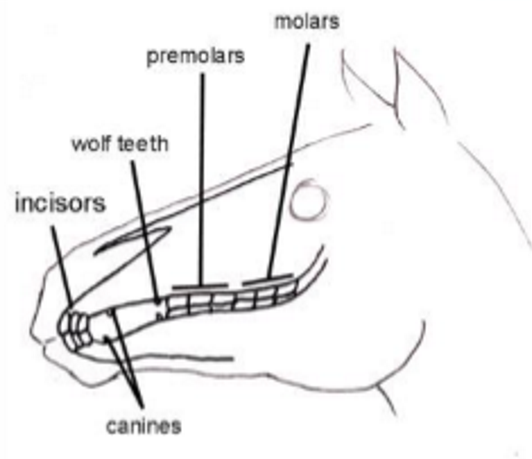
location of teeth
hypsodont
teeth that are continuously erupting
in horses and cows, not growing continuously
fully formed but emerging from gumline over time
brachydont
once tooth is fully erupted, will not emerge any further
functions of oral cavity
first steps in digestion
prehension of food
picking it up
mastication
increases surface area of food for chemical digestion
mixes food with saliva
saliva production
lubricates food
contains digestive enzymes
amylase: breaks down starch
layers of GI tract
mucosa, submucosa, muscularis layer, serosa
mucosa
innermost layer
subdivided into 3 layers
simple columnar epithelium
lamina propria
muscularis mucosae
submucosa
2nd innermost layer
muscularis layer
two layers of smooth muscle
layers run perpendicular to each other
serosa
connective tissue
outermost layer
esophagus
long, muscular tube
moves food from mouth → stomach
lined with non-cornified stratified squamous epithelium
enters stomach at cardiac sphincter
goblet cells
choke
esophageal obstruction
cattle and horses
esophagus is blocked by something
dry feed
large, chunky food items
masses of grass
monogastric stomach
horses, pigs, humans, dogs, cats, etc. are monogastric
single chamber stomach
subdivided into regions
cardia
fundus
body
pyloric antrum
pylorus
lesser curvature
greater curvature
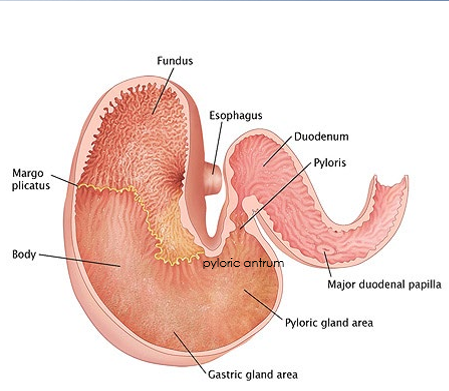
margo plicatus
in horses, visible dividing line between fundus and body
absorption
in monogastric stomachs:
limited _________ compared to intestines
water and some small molecules absorbed
gastric glands
epithelium invaginates, creating gastric pits
lead into ______ _____
comprised of several cell types
each cell type secretes something different
parietal cells
secrete hydrogen ions (H+) and chloride ions (Cl-)
via an active pump
together form hydrochloric acid
functions of HCl
killing of pathogens
protein digestion: denatures proteins
H+ converts pepsinogen to pepsin
chief cells
secrete pepsinogen
precursor to pepsin
pepsinogen → pepsin in presence of H+
breaks down protein
gastric function
food (ingesta) passes from esophagus through cardiac sphincter into stomach
muscular action of stomach mixes food with gastric secretions
mucus
pepsin and HCl begin process of protein digestion
when mixing, turns into chyme
pylorus acts to keep ingesta in stomach
when chyme is liquid enough, pyloric antrum contracts
chyme is squirted through pylorus into duodenum
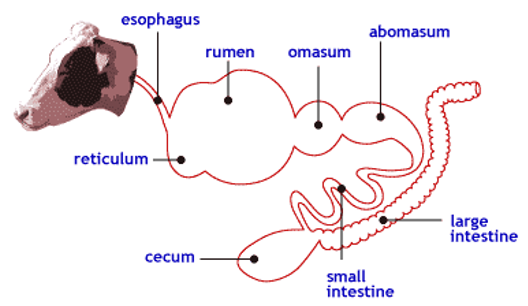
ruminant stomachs
rumen
reticulum
omasum
abomasum
true stomach
don’t secrete digestive enzymes/ HCl
rumen
the largest compartment
fills up majority of the LEFT side of the abdomen, from diaphragm to pelvis
may hold up to 40 gallons in adult cow
fermentation via microbes
break down cellulose
bacteria, protozoa, and fungi
convert cellulose → simple carbohydrates → volatile fatty acids (VFAs)
convert proteins → peptides and amino acids
the microbes use some
convert others to ammonia and VFAs
types of VFAs
propionic acid, butyric acid, acetic acid
VFAs are
absorbed across rumen wall
transported to liver
propionic acid → glucose
butyric + propionic → used for energy in tissues
70% of cow’s total energy requirement
reticulum
located between rumen and heart
fermentation occurs here as well
honeycomb appearance increases surface area
receives denser materials
hardware disease
heavy items that are ingested go to reticulum
reticulum is in close contact w/ heart
curious eaters
metals can end up sitting in reticulum
can pierce wall of reticulum and into pericardium
infection/ abscess around the heart
omasum
ingesta travels from rumen to omasum
muscular and filled with leaf-like folds
breaks down particulate matter further
continues to absorb VFAs
leaves allow absorption of large quantities of H2O
abomasum
“true” stomach
highly acidic
normal cow rumen pH is between 5.5-7 (depending on if grain or grass fed)
abomasum pH is normally around 2
rugal folds like the monogastric stomach
contents flow through pylorus into small intestine
esophageal groove
rumen not a good destination for milk
fermentation won’t occur until microflora have established
rumen doesn’t have appropriate enzymes for milk digestion
esophageal groove: fold of tissue between esophagus and omasum
creates a tube
conveys milk directly into omasum so it can be digested in abomasum and small intestine
intestinal segments
small intestine
duodenum
jejunum
ileum
large intestine
cecum
large colon (ascending, transverse, and descending segments)
rectum
duodenum
receives contents from stomach
cholecystokinin (CCK)
increases release of digestive enzymes
triggers gallbladder contraction (bile release)
multitude of other functions
bicarbonate is secreted into lumen to neutralize chyme
jejunum = largest portion
ileum = shortest portion at end
absorption in SI
maximized SA
mucosal folds
villi
microvilli: hairlike extensions
each villus contains arterial vessel, venous vessel, and a lacteal
most nutrients taken up into venous vessel
facts go into the lacteal
pancreatic enzymes
amylase: breaks down starch
lipase: breaks down fat
protease: breaks down protein/ peptides
bile
released into duodenum from gallbladder
breaks down fat into smaller droplets
columnar
once nutrients have been broken down into component parts, transport proteins move them into _________ epithelial cells that line the small intestine
then taken to liver via blood vessels
large intestine
ileum deposits digesta into large colon (most species) or cecum (horse)
cecum is a sac-like structure
opens into colon
highly enlarged in horses
ruminants and pigs: spiral colon
water absorption occurs throughout _____ _________
electrolytes
vitamins
mesentery
suspends intestines in abdominal cavity
veins and arteries supplying the GI tract run through it in a spider-web like pattern
pancreas
secretes digestive enzymes
exocrine function
also has endocrine functions (insulin)
located between duodenum and stomach
lipase, amylase, protease, bicarbonate
liver
all blood that went to GI tract goes to liver
through portal vein
liver “cleans” blood and modifies nutrients for use
produces bile
cleaning function
filters toxins
infectious agents
metabolism function
turns glucose → glycogen
synthesizes proteins from AAs
bile production
hepatocytes
stored in gallbladder
balloon like structure attached to liver
drains into duodenum
bile salts emulsify fat
break into smaller droplets
surround each droplet with hydrophilic layer
increases surface area for digestion
mucin
highly viscous glycoprotein secretion
produced in cardiac + pyloric regions
protects mucosa
gastrin
released from pyloric cells
due to stomach distension/ presence of proteins
stimulates HCl and pepsinogen release, gastric motility
rennin
proteolytic enzyme produced by gastric region cells
only produced in young mammals
coagulates milk to reduce rate of passage
causes casein protein to curd
pancreatic juice
clear, watery
enters duodenum via pancreatic duct
contains digestive enzymes (ex. trypsin + amylase)
stimulated by secretin and CCK
gastric inhibitory protein
from duodenum wall cells
released in response to lipid + protein in duodenum
decrease stomach acid, decrease motility
secretin
produced from walls of duodenum
(+) production of pancreatic juice
succus entericus
intestinal juice
secreted from glands between villi
made of:
sucrase
maltase
lactase
enzymes active to epithelial membrane absorption site
continues digestion of enzymes that escaped pancreatic digestion
coprophagy/ cecatrophy
consumption of one’s own feces
80
horses get __% of energy from VFAs
microbes produce
protein
vitamin K
production of heat
detoxify
batch reactor
discontinuous input
well mixed, uniform
composition changes with time
discontinuous output
ex:
glandular stomach (carnivores)
ceca (birds, rabbits)