AP Microeconomics Chapter 2 Key Terms

0.0(0)
Studied by 0 people
call kaiCall Kai
Locked
learnLearn
examPractice Test
spaced repetitionSpaced Repetition
heart puzzleMatch
flashcardsFlashcards
GameKnowt Play
Card Sorting

1/20

encourage image

There's no tags or description

Looks like no tags are added yet.

Last updated 8:58 AM on 9/1/26
Name
Mastery
Learn
Test
Matching
Spaced
Call with Kai
Chat

No analytics yet

Send a link to your students to track their progress

21 Terms

1
New cards

Chapter 2

Card #1

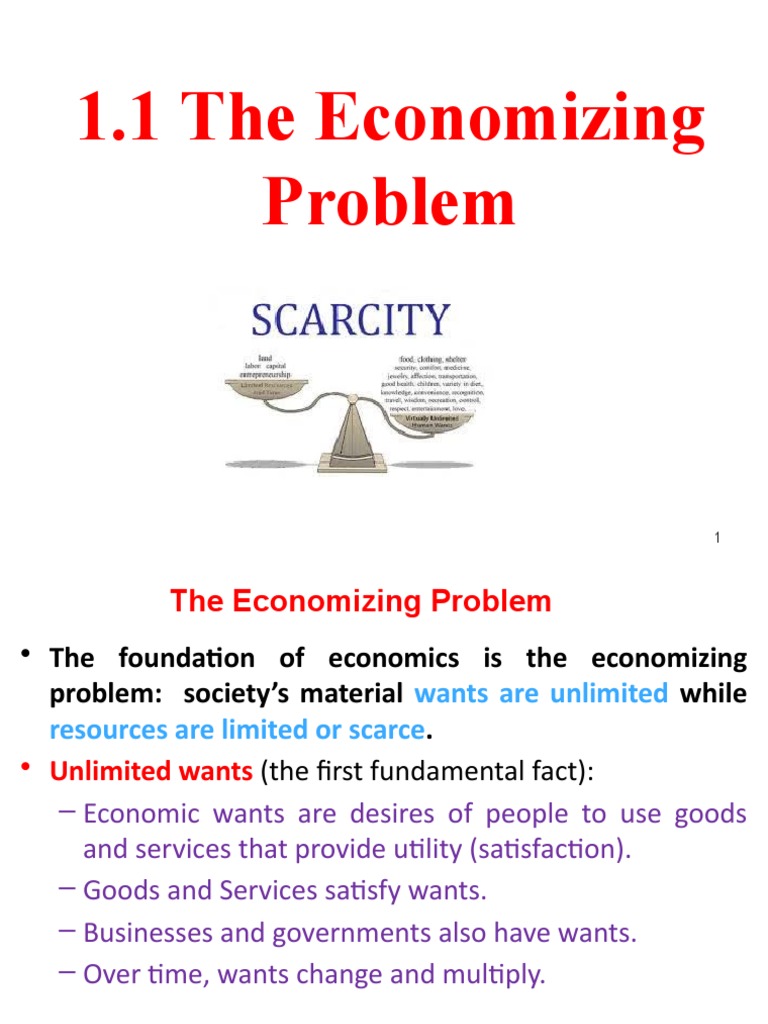
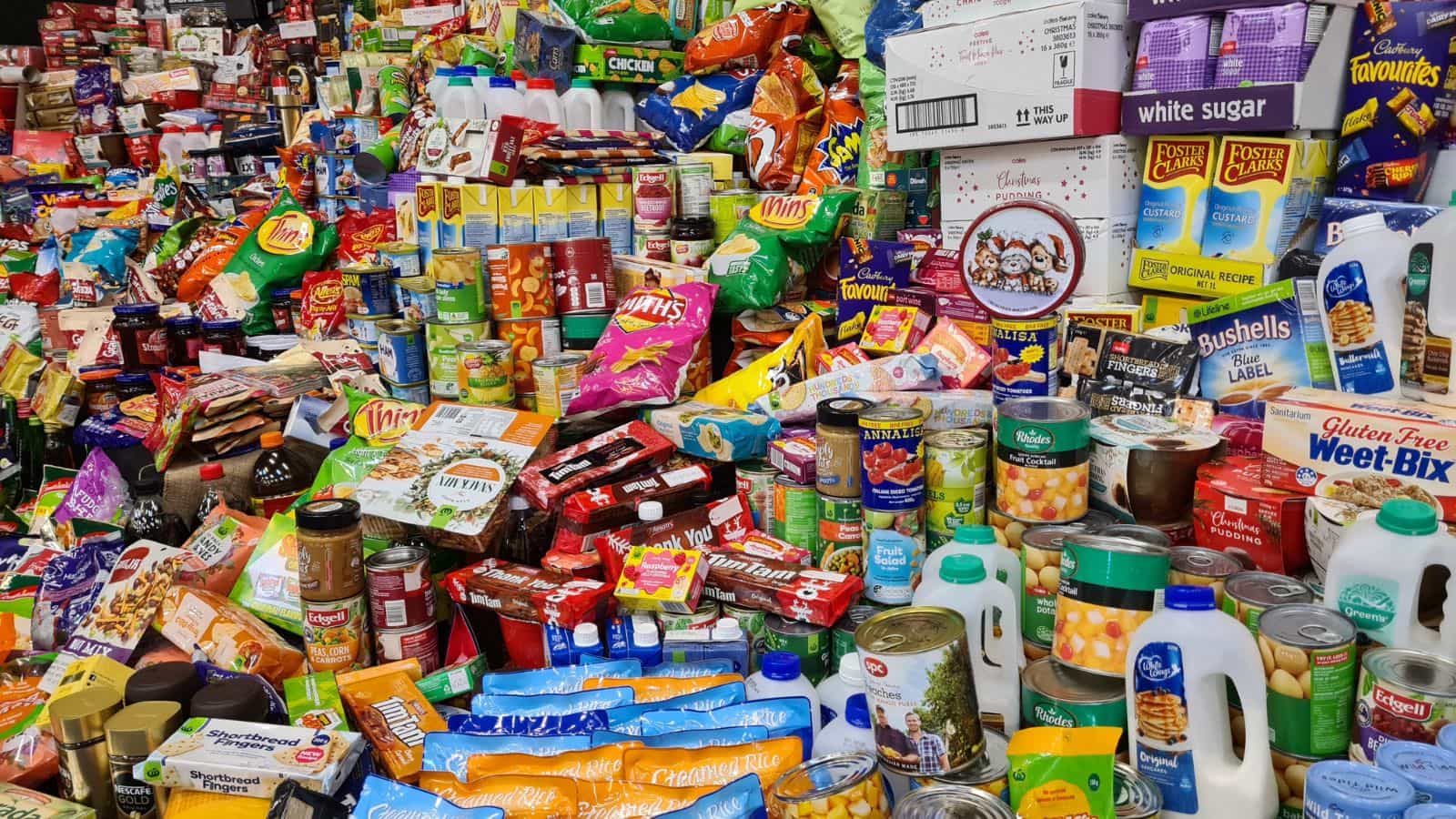
economizing problem

The choices necessitated because society's economic wants for goods and service are unlimited, but the resources available to satisfy these wants are limited. 

  • scarcity

  • economic resources


<p><span>The choices necessitated because society's economic wants for goods and service are unlimited, but the resources available to satisfy these wants are limited.&nbsp;</span></p><ul><li><p>scarcity</p></li><li><p>economic resources</p></li></ul><p></p>
2
New cards

Chapter 2

Card #2

economic resources

the land, labor, capital, and entrepreneurial ability that are used to produce goods and services

  • factors of production

  • land


<p>the land, labor, capital, and entrepreneurial ability that are used to produce goods and services</p><ul><li><p>factors of production</p></li><li><p>land</p></li></ul><p></p>
3
New cards

Chapter 2

Card #3

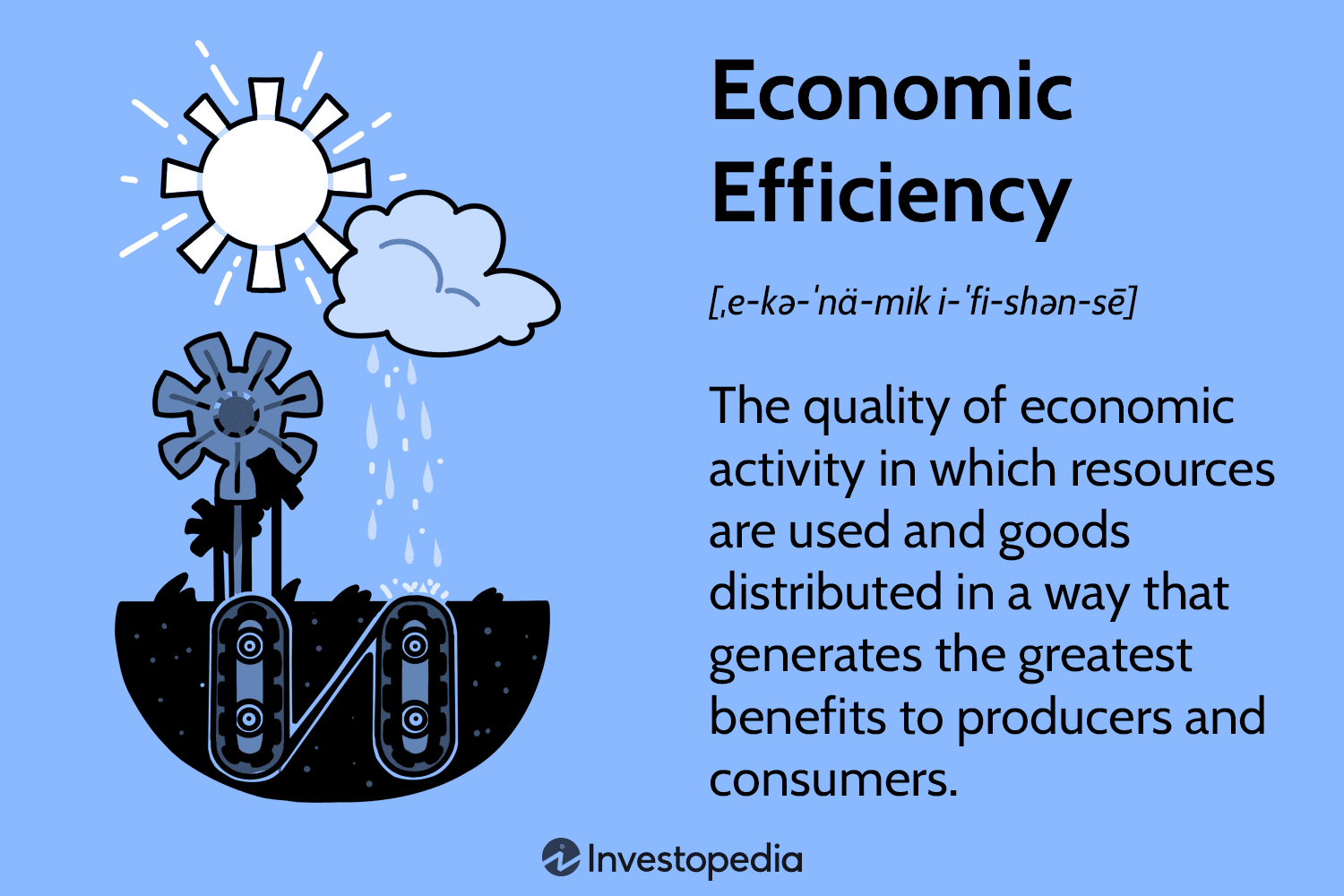
economic efficiency

the use of the minimum necessary resources--the 4 factors of production-- to obtain the socially optimal amounts of goods snd services produced--entails both productive and allocative efficiency

  • allocative efficiency

  • productive efficiency


<p><span>the use of the minimum necessary resources--the 4 factors of production-- to obtain the socially optimal amounts of goods snd services produced--entails both productive and allocative efficiency</span></p><ul><li><p>allocative efficiency</p></li><li><p>productive efficiency</p></li></ul><p></p>
4
New cards

Chapter 2

Card #4

full employment

The economy is employing all of its available resources--4 factors of production--land, labor, capital, and entrepreneurship

  • factors of production

  • economizing problem


<p>The economy is employing all of its available resources--4 factors of production--land, labor, capital, and entrepreneurship</p><ul><li><p>factors of production</p></li><li><p>economizing problem</p></li></ul><p></p>
5
New cards

Chapter 2

Card #5

full production

Employment(use) of all available resources so that the maximum amount of (or total value) goods and services is produced; occurs when both productive efficiency and allocative efficiency are realized.

  • economic efficiency

  • productive efficiency


<p>Employment(use) of all available resources so that the maximum amount of (or total value) goods and services is produced; occurs when both productive efficiency and allocative efficiency are realized. </p><ul><li><p>economic efficiency</p></li><li><p>productive efficiency</p></li></ul><p></p>
6
New cards

Chapter 2

Card #6

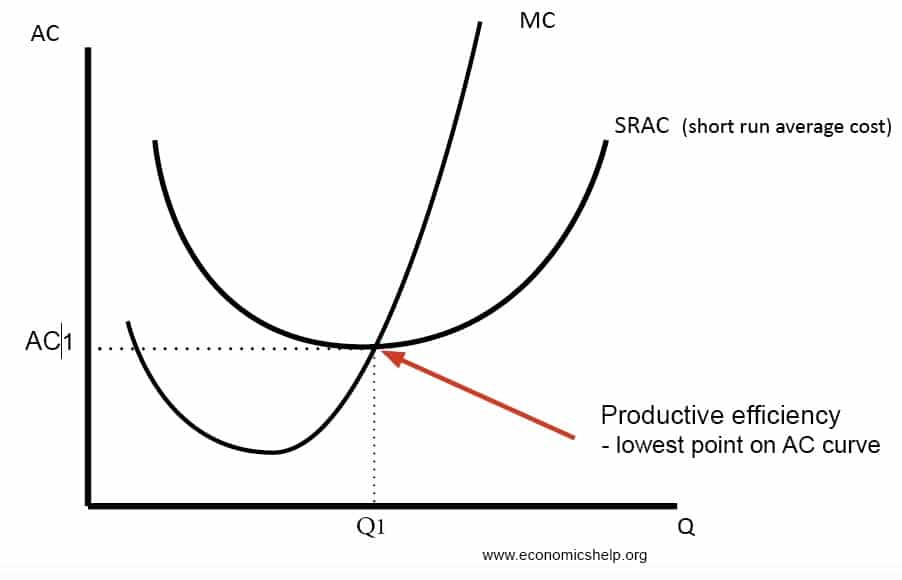
productive efficiency

The production of a good in the least costly way

  • full production

  • economic efficiency


<p>The production of a good in the least costly way</p><ul><li><p>full production</p></li><li><p>economic efficiency</p></li></ul><p></p>
7
New cards

Chapter 2

Card #7

allocative efficient

The use of resources among firms and industries to obtain the production of products most wanted by society(consumers); the output of each product at which its marginal cost and price or marginal benefit are equal.

  • marginal benefit

  • marginal cost


<p>The use of resources among firms and industries to obtain the production of products most wanted by society(consumers); the output of each product  at which its marginal cost and price or marginal benefit are equal. </p><ul><li><p>marginal benefit</p></li><li><p>marginal cost</p></li></ul><p></p>
8
New cards

Chapter 2

Card #8

consumer goods

products and services that satisfy human wants directly

  • economizing problem

  • scarcity


<p>products and services that satisfy human wants directly</p><ul><li><p>economizing problem</p></li><li><p>scarcity</p></li></ul><p></p>
9
New cards

Chapter 2

Card #9

production possibilities table

a table that shows the different combinations of two goods or serviced that can be produced in a full-employment, full production economy where the available supplies of resources and technology are fixed.

  • full employment

  • full production


<p>a table that shows the different combinations of two goods or serviced that can be produced in a full-employment, full production economy where the available supplies of resources and technology are fixed. </p><ul><li><p>full employment</p></li><li><p>full production</p></li></ul><p></p>
10
New cards

Chapter 2

Card #10

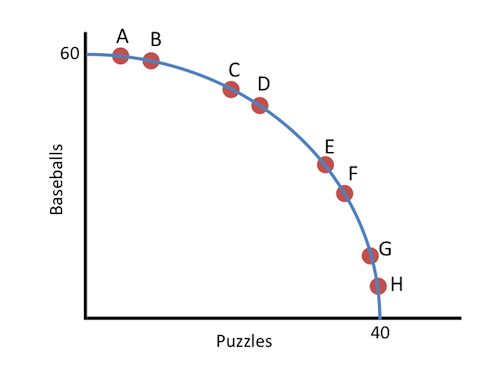
production possibilities curve

a curve showing the different combinations of two goods or services that can be produced in a full-employment, full-production economy where the available supplies of resources and technology are fixed

  • full employment

  • full production


<p>a curve showing the different combinations of two goods or services that can be produced in a full-employment, full-production economy where the available supplies of resources and technology are fixed</p><ul><li><p>full employment</p></li><li><p>full production</p></li></ul><p></p>
11
New cards

Chapter 2

Card #11

law of increasing opportunity cost

the principle that as the production of a good increases, the opportunity cost of producing an additional unit rises

  • opportunity cost

  • factors of production


<p>the principle that as the production of a good increases, the opportunity cost of producing an additional unit rises</p><ul><li><p>opportunity cost</p></li><li><p>factors of production</p></li></ul><p></p>
12
New cards

Chapter 2

Card #12

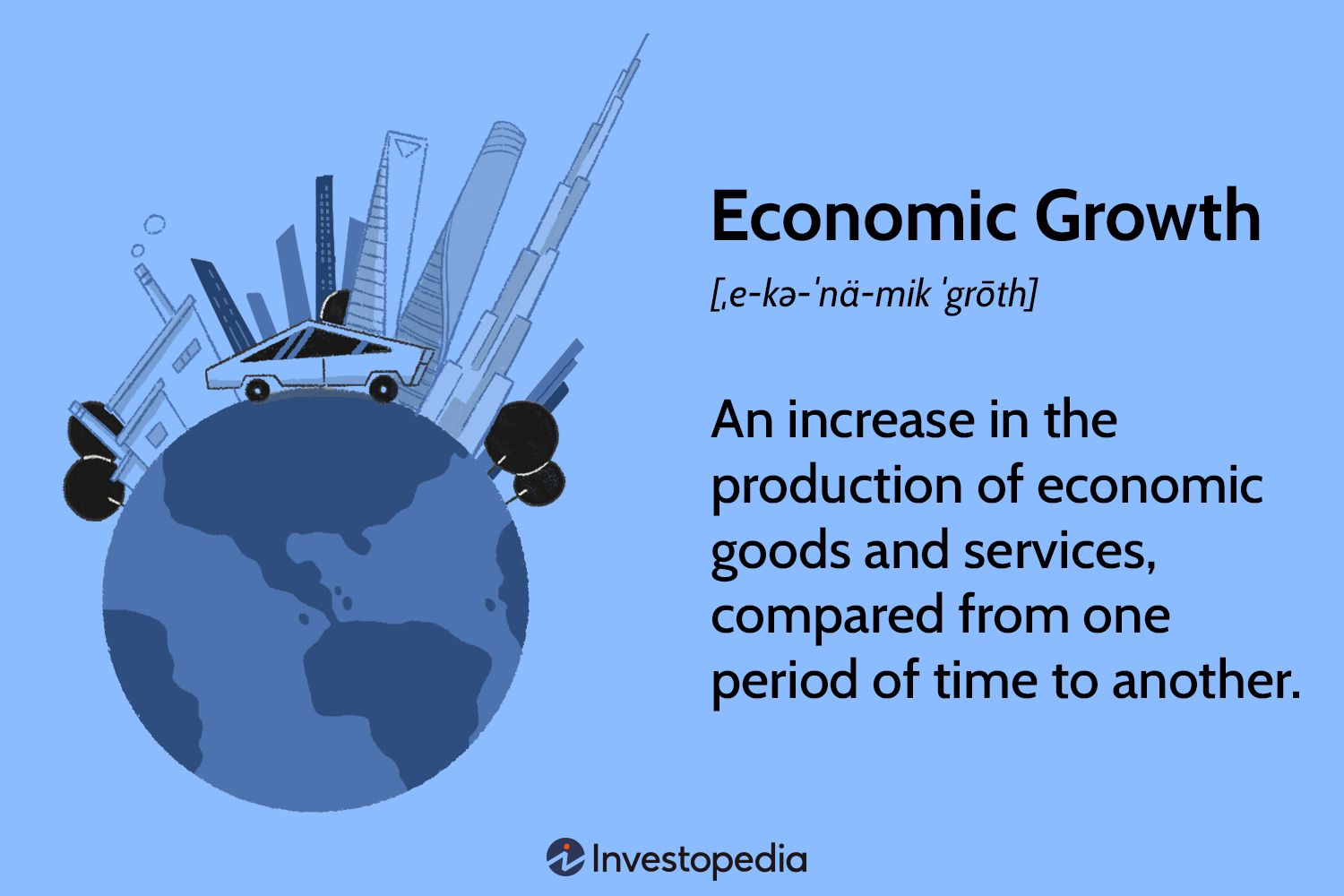
economic growth

  1. an outward shift in the production possibilities curve that results from an increase in resource supplies or quality or an improvement in technology

  2. an increase of real output (gross domestic product) or real output per capita

  • production possibilities curve

  • economic resources


<ol><li><p>an outward shift in the production possibilities curve that results from an increase in resource supplies or quality or an improvement in technology</p></li><li><p>an increase of real output (gross domestic product) or real output per capita</p></li></ol><ul><li><p>production possibilities curve</p></li><li><p>economic resources</p></li></ul><p></p>
13
New cards

Chapter 2

Card #13

trade

the voluntary exchange of goods, services, or assets between two or more parties

  • terms of trade

  • consumer goods


<p>the voluntary exchange of goods, services, or assets between two or more parties</p><ul><li><p>terms of trade</p></li><li><p>consumer goods</p></li></ul><p></p>
14
New cards

Chapter 2

Card #14

labor-intensive growth

products requiring relatively large amounts of labor to produce

  • labor

  • production


<p>products requiring relatively large amounts of labor to produce</p><ul><li><p>labor</p></li><li><p>production</p></li></ul><p></p>
15
New cards

Chapter 2

Card #15

land-intensive growth

products requiring relatively large amounts of land to produce

  • land

  • production


<p>products requiring relatively large amounts of land to produce</p><ul><li><p>land</p></li><li><p>production</p></li></ul><p></p>
16
New cards

Chapter 2

Card #16

capital-intensive growth

products that require relatively large amounts of capital to produce

  • capital

  • production


<p>products that require relatively large amounts of capital to produce</p><ul><li><p>capital</p></li><li><p>production</p></li></ul><p></p>
17
New cards

Chapter 2

Card #17

opportunity-cost ratio

an equivalency showing the number of units of two products that can be produced with the same resources

the equivalency 1 corn = 3 olives shows that the resources required to produce 3 units of olives must be shifted to corn production to produce 1 unit of corn

  • opportunity cost

  • economic resources


<p>an equivalency showing the number of units of two products that can be produced with the same resources</p><p>the equivalency 1 corn = 3 olives shows that the resources required to produce 3 units of olives must be shifted to corn production to produce 1 unit of corn</p><ul><li><p>opportunity cost</p></li><li><p>economic resources</p></li></ul><p></p>
18
New cards

Chapter 2

Card #18

principle of comparative advantage

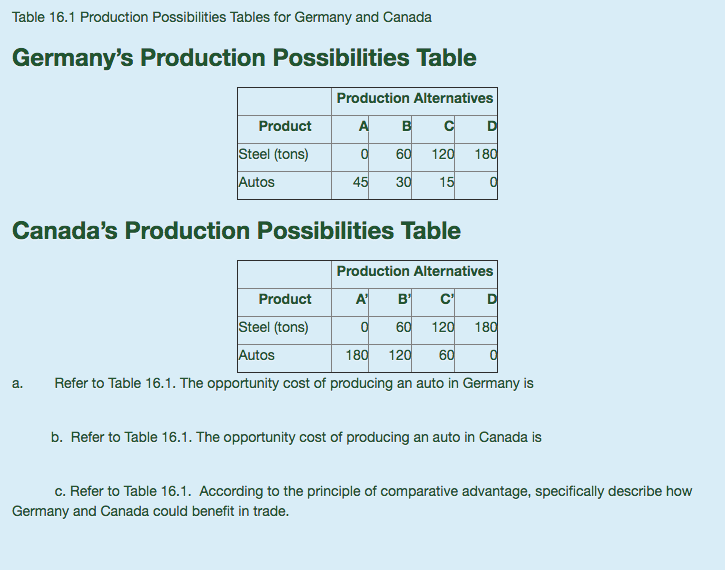
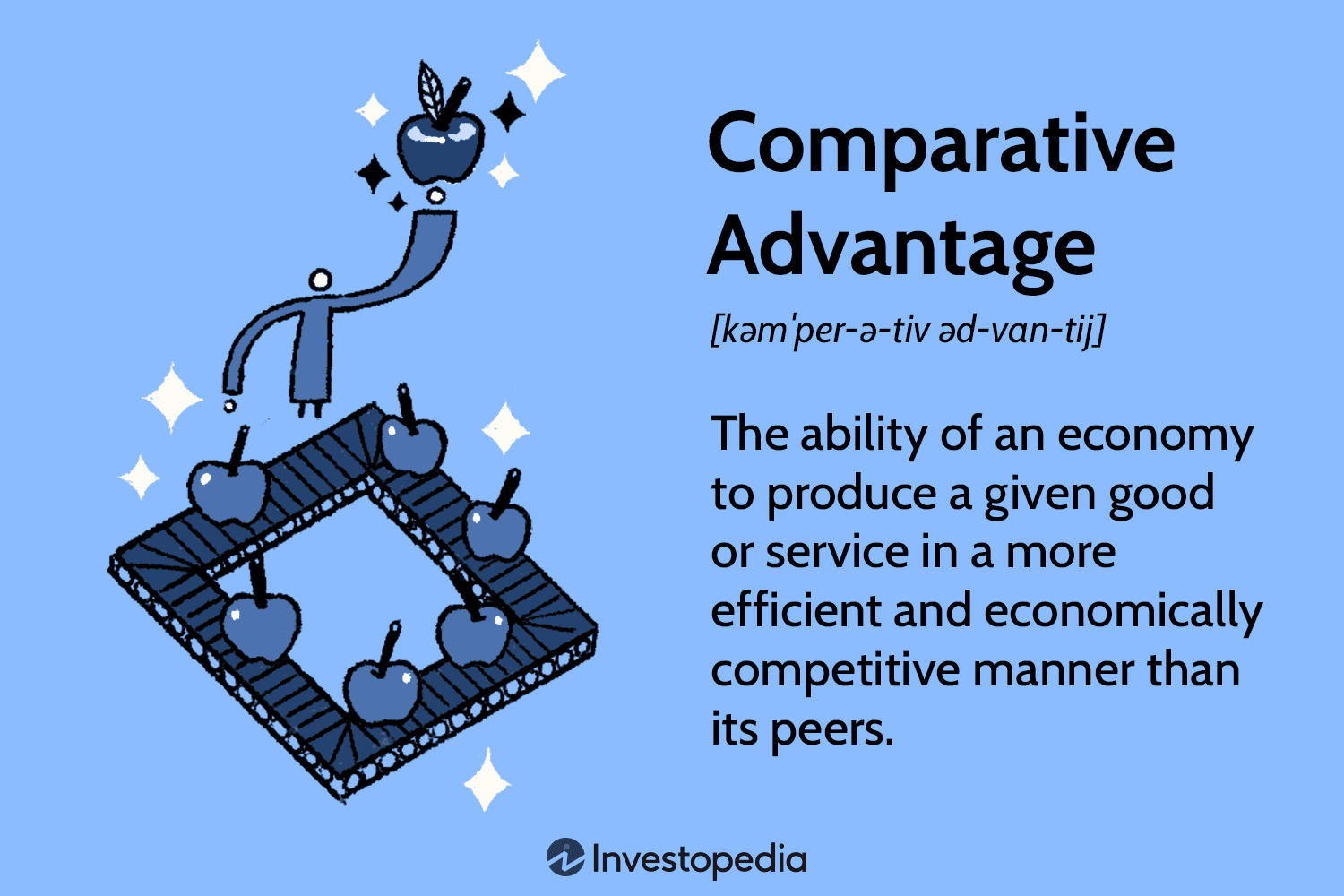
the proposition that an individual, region, or nation will benefit if it specializes in producing goods for which its own opportunity costs are lower than the opportunity costs of a trading partner, and then exchanging some of the products in which it specializes for other desired products produced by others

  • opportunity cost

  • benefit


<p>the proposition that an individual, region, or nation will benefit if it specializes in producing goods for which its own opportunity costs are lower than the opportunity costs of a trading partner, and then exchanging some of the products in which it specializes for other desired products produced by others</p><ul><li><p>opportunity cost</p></li><li><p>benefit</p></li></ul><p></p>
19
New cards

Chapter 2

Card #19

terms of trade

the rate at which which units of one product can be exchanged for units of another product

the price of a good or service

the amount of one good or service that must be given up to obtain 1 unit of another good or service

  • trade

  • opportunity cost


<p>the rate at which which units of one product can be exchanged for units of another product</p><p>the price of a good or service</p><p>the amount of one good or service that must be given up to obtain 1 unit of another good or service</p><ul><li><p>trade</p></li><li><p>opportunity cost</p></li></ul><p></p>
20
New cards

Chapter 2

Card #20

trading possibilities line

a line that shows the different combinations of two products that an economy is able to obtain (consume) when it specializes in the production of one product and trades (exports) it to obtain the other product

  • trade

  • production possibilites curve


<p>a line that shows the different combinations of two products that an economy is able to obtain (consume) when it specializes in the production of one product and trades (exports) it to obtain the other product</p><ul><li><p>trade</p></li><li><p>production possibilites curve</p></li></ul><p></p>
21
New cards

Chapter 2

Card #21

absolute advantage

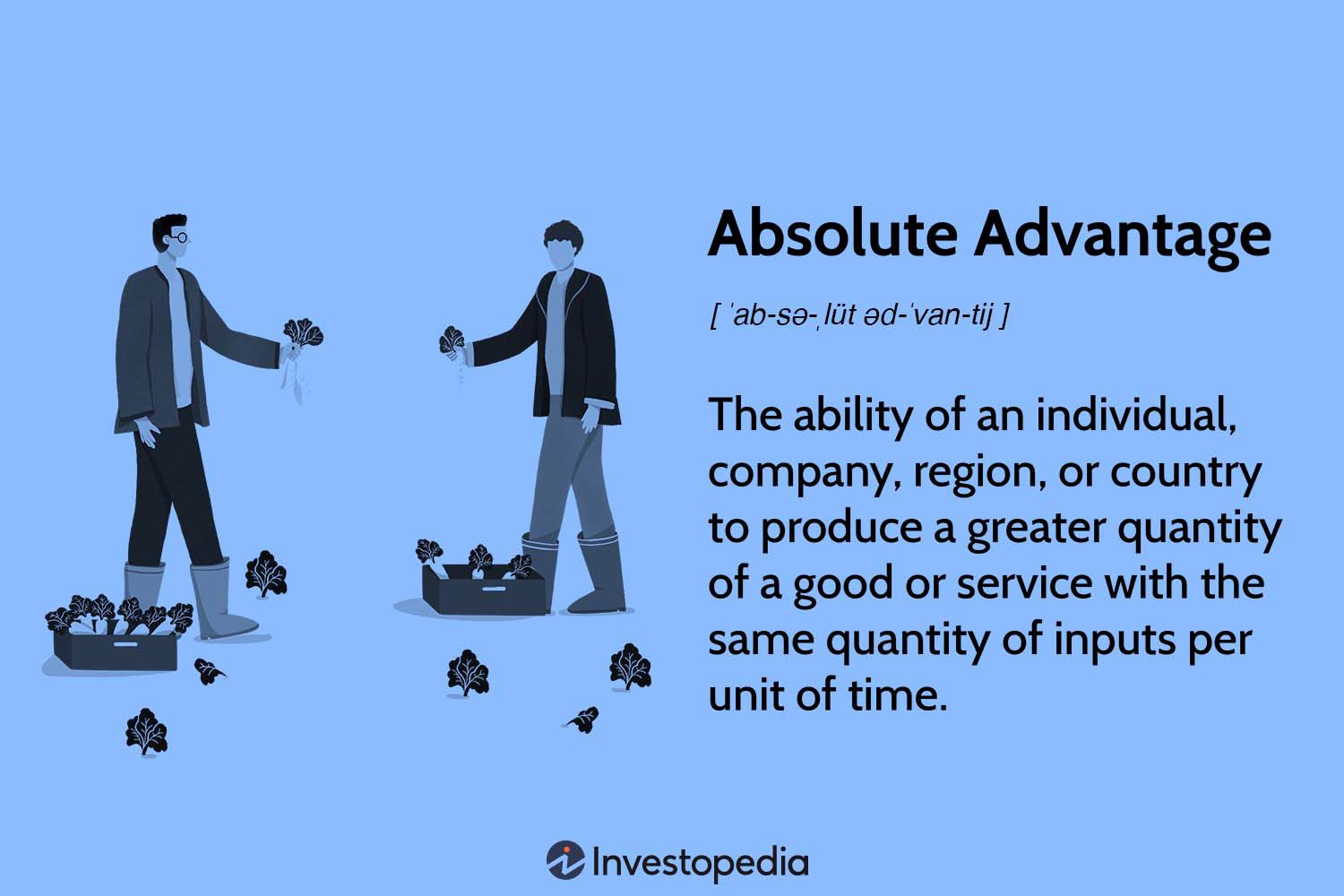
A situation where a producer or a person or a country can produce the most output of a particular product from a specific quantity of a resource OR requires the least amount of inputs (resources) to produce a product.

  • economic resources

  • comparative advantage


<p>A situation where a producer or a person or a country can produce the most output of a particular product from a specific quantity of a resource OR requires the least amount of inputs (resources) to produce a product. </p><ul><li><p>economic resources</p></li><li><p>comparative advantage</p></li></ul><p></p>