A&P Chapters 1,3,4
 Call Kai
 Learn
Learn Practice Test
 Spaced Repetition
 Match
Match Flashcards
 Knowt Play
1/214

There's no tags or description
Looks like no tags are added yet.
Name | Mastery | Learn | Test | Matching | Spaced | Call with Kai | Chat |
|---|
No analytics yet
Send a link to your students to track their progress
215 Terms
prone
on stomach, thumbs in, pinkies out
supine (anatomical position)
on back, pinkies in, thumbs out
medial/lateral
closer to/farther from the midline
proximal/distal
closer/farther from the point of attachment
anterior/posterior
front/back
superior/inferior
above/below
superficial/deep
closer to/farther from the surface of the skin
cephalic
head
occipital
back of the head
cervical
neck
sternal
sternum
thoracic
chest
vertebral/spinal
spine
lumbar
lower back
sacral
sacrum
abdominal
abdomen
pelvic
pelvis
gluteal
glutes
inguinal
groin
pubic
pubis
axillary
armpit
acromial
point of shoulder
antecubital
anterior elbow
brachial
arm (bicep)
antebrachial
forearm
carpal
wrist
pollex
thumb
digital
fingers/toes
tarsal
ankle
metacarpal
metacarpal
hallux
great toe
coxal
hip
femoral
femur
patellar
knee
popliteal
posterior knee
crural
anterior surface of leg
sural
posterior surface of leg
plantar
sole of foot
pedal
foot
manual
hand
frontal
forehead
cranial
head
ocular
eye
nasal
nose
mental
chin
otic
ear
buccal
cheek
oral
mouth

transverse plane
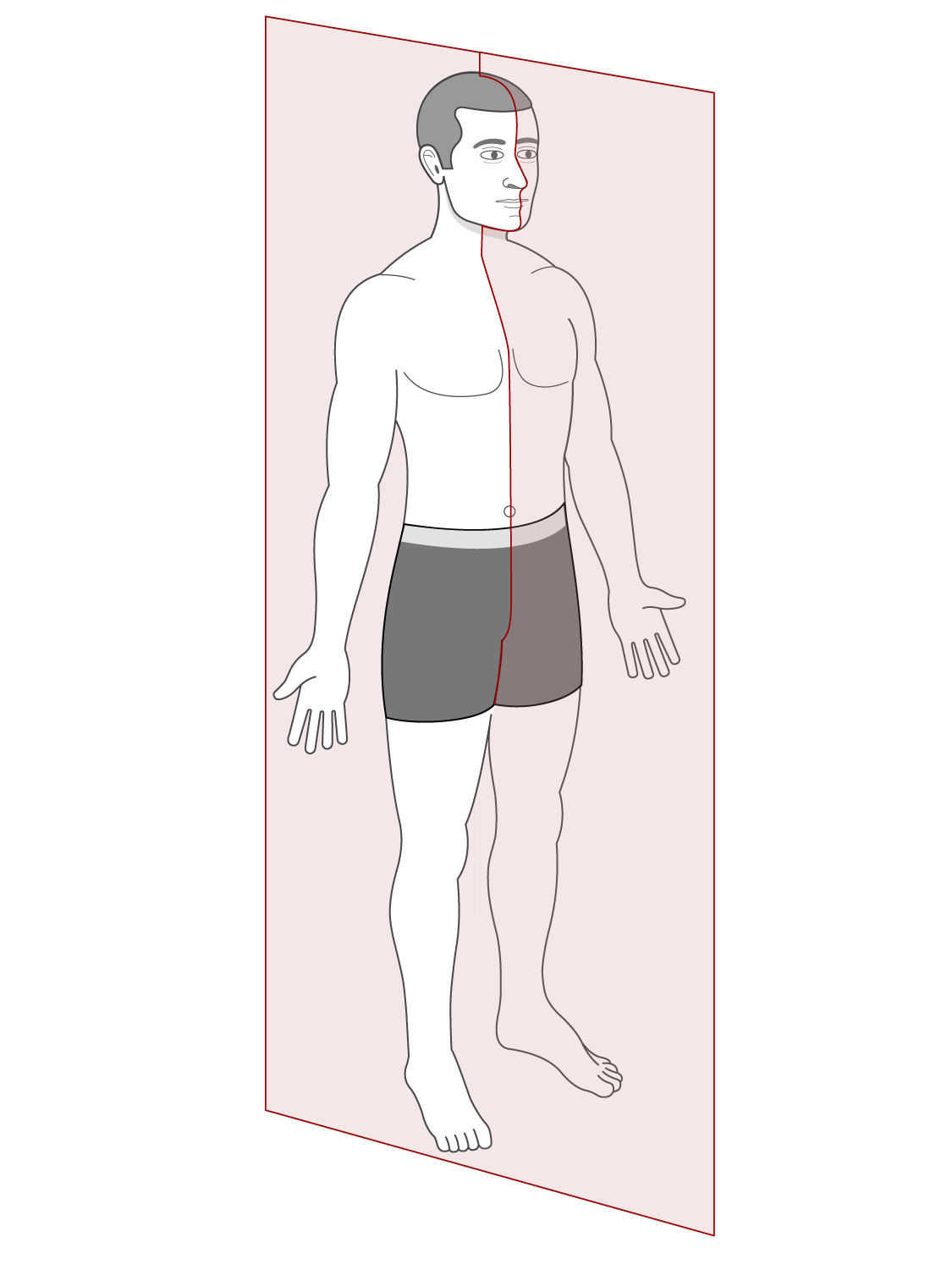
sagittal plane

coronal plane
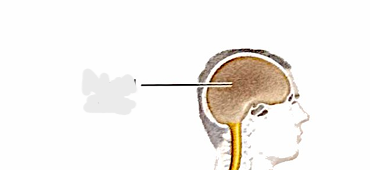
cranial cavity
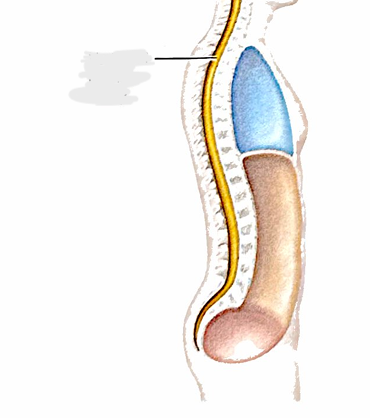
vertebral/spinal cavity

A
thoracic cavity

B
diaphragm

C
abdominopelvic cavity
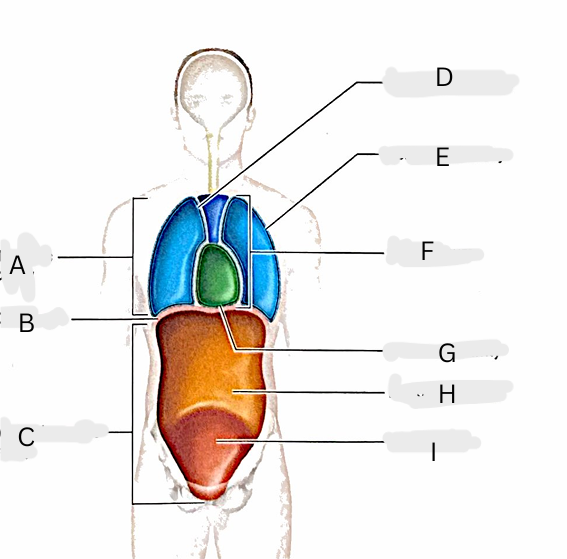
D
right pleural cavity

E
left pleural cavity

F
mediastinum
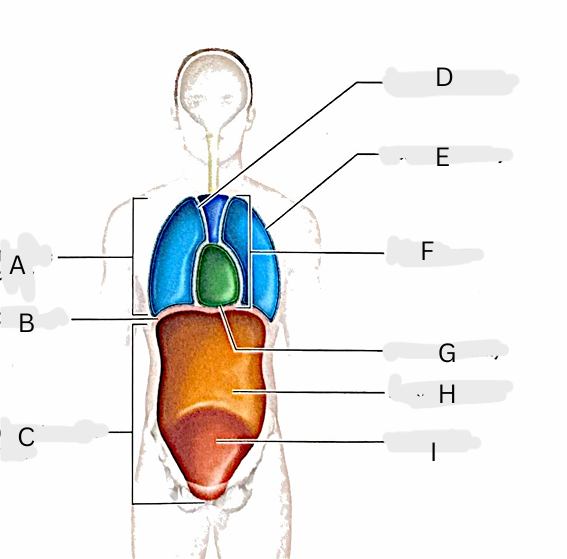
G
pericardial cavity
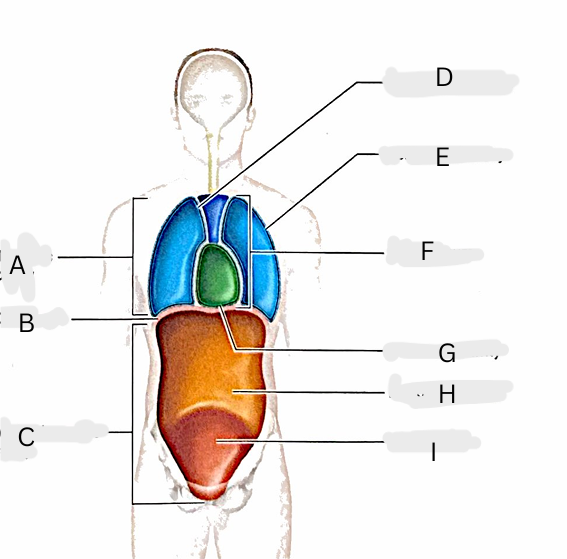
H
abdominal cavity

I
pelvic cavity
serous membrane
thin, double layered sack that surrounds the organs in the ventral body cavity, prevents friction as organs move
outer layer of serous membrane
parietal layer
inner layer of serous membrane
visceral layer
serous membrane surrounding lungs
pleura
serous membrane surrounding heart
pericardium
serous membrane surrounding abdominal organs
peritoneum

A
epigastric region
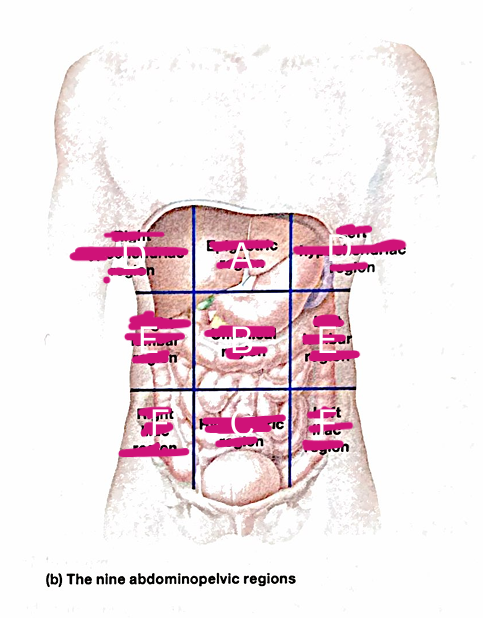
B
umbilical region

C
hypogastric region
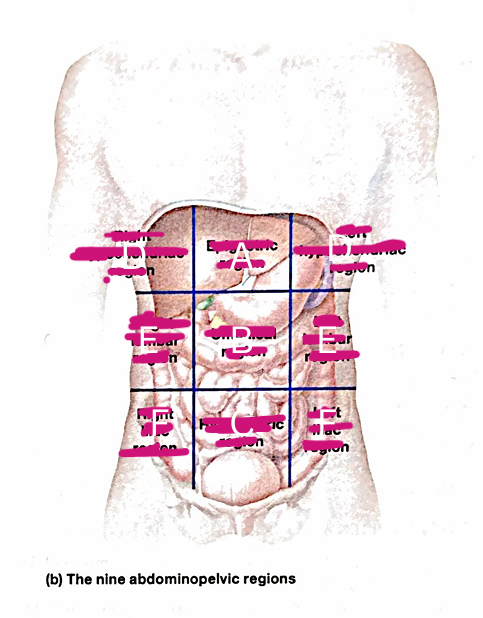
D
right/left hypochondriac region
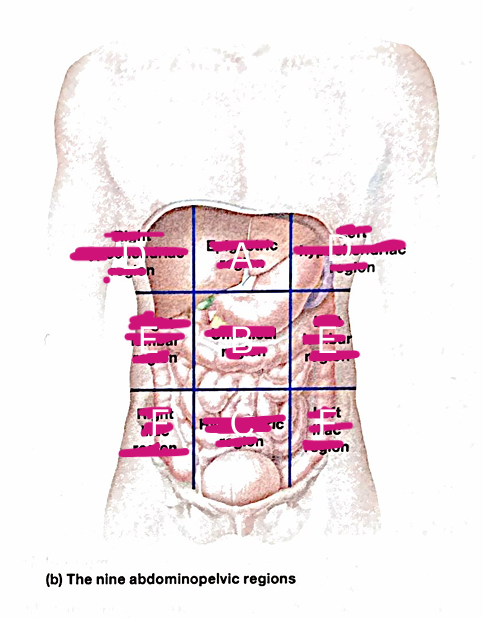
E
right/left lumbar region

F
right/left iliac region
hierarchy of body’s structural levels
chemical - cellular - tissue - organ - organ system - organism
homeostasis
the body’s actions in maintaining internal conditions within a stable physiological range
atoms
fundamental units of matter
cells
fundamental units of life, composed of macromolecules
tissue
groups of cells that function together
organ
groups of tissues that function together
organ system
groups of organs that work together
organs of the integumentary system
hair, skin, nails
function of the integumentary system
protects body from external environment, produces vitamin D, retains water, regulates body temperature
organs of the skeletal system
bones/joints
function of the skeletal system
supports the body, protects internal organs, leverage for movement, produces blood cells, stores calcium salts
function of the muscular system
produces movement, generates heat, controls body
organs of the nervous system
brain, spinal chord, nerves
function of the nervous system
regulates body functions, provides sensation, movement, automatic functions, and higher mental functions
organs of the endocrine system
ovaries, testes, pituitary gland, thyroid, pancreas, pineal gland, hypothalamus, thymus, adrenal glands
function of the endocrine system
regulates slow-acting body functions, regulates the function of various body tissues through hormone secretion
organs of the cardiovascular system
heart, blood vessels
function of the cardiovascular system
delivers oxygen rich blood to tissues, delivers oxygen poor blood to the lungs, removes waste from the tissues, transports cells, nutrients, and other substances through the body
organs of the lymphatic system
lymph nodes, lymph vessels, spleen, tonsils, thymus
function of lymphatic system
provides immunity against pathogens, returns excess tissue fluid to the cardiovascular system
organs of the respiratory system
nasal, larynx, pharynx, trachea, lungs
function of respiratory system
oxygenates the blood, removes carbon dioxide from the blood, maintains the blood’s acid-base balance
organs of the digestive system
mouth, teeth, salivary glands, esophagus, stomach, pancreas, liver, gallbladder, small/large intestine, rectum
function of digestive system
digests food, absorb nutrients into blood, removes food waste, maintain fluid balance, electrolyte, and acid-base balance
organs of the urinary system
kidneys, ureter, bladder, urethra
function of the urinary system
remove metabolic waste from blood, maintains fluid and electrolyte balance, stimulates blood cell production