FCB Internship
 Call Kai
 Learn
Learn Practice Test
 Spaced Repetition
 Match
Match Flashcards
 Knowt Play
1/94

There's no tags or description
Looks like no tags are added yet.
Name | Mastery | Learn | Test | Matching | Spaced | Call with Kai | Chat |
|---|
No analytics yet
Send a link to your students to track their progress
95 Terms
CLTL
Construction-to-Term Loan. Funds construction phase and then converts into term loan once the project hits COD.
Project Finance
method of funding long-term infrastructure and industrial projects, relying on the project's future cash flows as collateral rather than the balance sheets of its sponsors. It typically involves a special purpose entity (SPE) created for the project, which shields the sponsors' other assets from project-related risks. Lenders, often a syndicate of banks, provide non-recourse or limited-recourse loans secured by the project's assets and contracts, expecting repayment primarily from the project's revenue
TEBL
Short-term loan involving a flip structure. Lend to sponsor during construction to bridge until tax equity investor funds their capital (COD). TEI usually pays extra ($1.06 on the dollar) for the tax credit since they get cash + tax benefits. Sponsor uses that capital to repay our loan. After COD, project cash flows and tax benefits (ITC, depreciation) are allocated to tax equity investor until they hit a target IRR. Then ownership flips back to sponsor. Class A distribution listed on sheet.
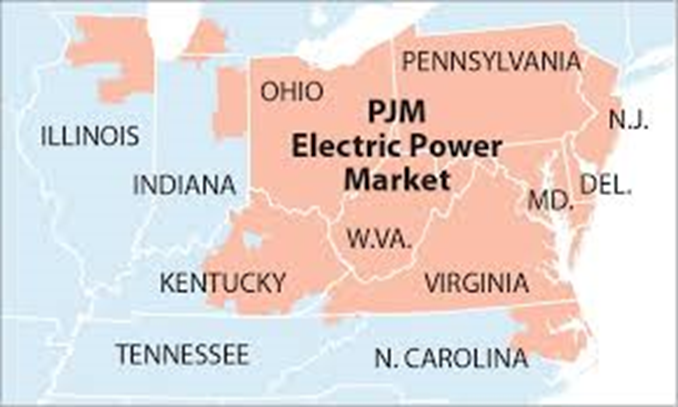
PJM
Power market. Common projects are natural gas and solar
ERCOT (Electric Reliability Council of Texas)
Manages the flow of electric power to more than 26 million Texas customers representing about 90% of the state’s electric load. Schedules power for an electric grid that connects more than 52,700 miles of transmission lines and 1,100 generation units, including private use networks. It also performs financial settlement for the competitive wholesale bulk-power market and administers retail switching for 8 million premises in competitive choice areas
CAISO (California Independent System Operator)
Manages the electric grid and power market in California, overseeing the flow of electricity and ensuring reliability.
COD
Commercial Operation Date, the official date when a power project begins to produce electricity and becomes operational.
Merchant Revenue
______ is generated by selling electricity to the wholesale power market through the system operator. This type of revenue does not have a contract associated with it and is exposed to fluctuations of the market price and demand for electricity.
Contracted Revenue
______ is generated by either selling electricity at a fixed price under an agreement with a power purchaser, or by offsetting the variability of merchant revenue by contracting with a counterparty under a hedging arrangement
Power Purchase Agreement (PPA or Offtake Agreement)
Contract between a power generator and a party that is seeking to purchase electricity. Defines all of the commercial terms for the sale of electricity between two parties, ie. price, volume, timing of delivery. The Offtaker is the purchaser of power generated from the Project
CAM
Credit Approval Memo. Used in lending, primarily by financial institutions, to assess and document the creditworthiness of a borrower and the associated risks of a loan. It essentially provides a comprehensive analysis of the loan request, the borrower, and the collateral used in lending, primarily by financial institutions, to assess and document the creditworthiness of a borrower and the associated risks of a loan. It essentially provides a comprehensive analysis of the loan request, the borrower, and the collateral. Builds off of PCA.
PD/LGD
Probability of Default/Loss Given Default; these are risk measures used to estimate the likelihood of a borrower defaulting on a loan and the potential loss in case of default. Higher = riskier
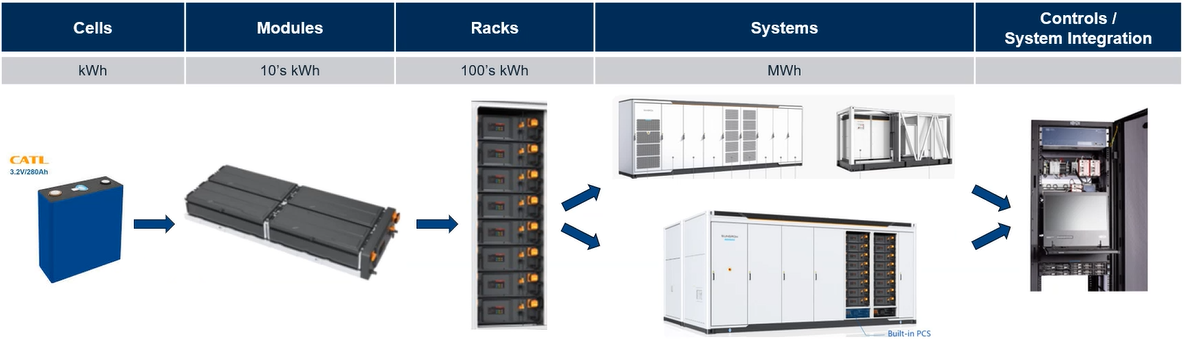
BESS (Li-ion)
(Battery Energy Storage System) stores excess energy generated during off-peak hours or when renewable sources are producing more than needed. This stored energy can then be released when demand is high or when renewable sources are not producing, ensuring a reliable and consistent power supply
Also provides grid stability (managing s&d) and backup power
SOFR
Secured Overnight Financing Rate; a broad measure of the cost of borrowing cash overnight between banks collateralized by Treasury securities
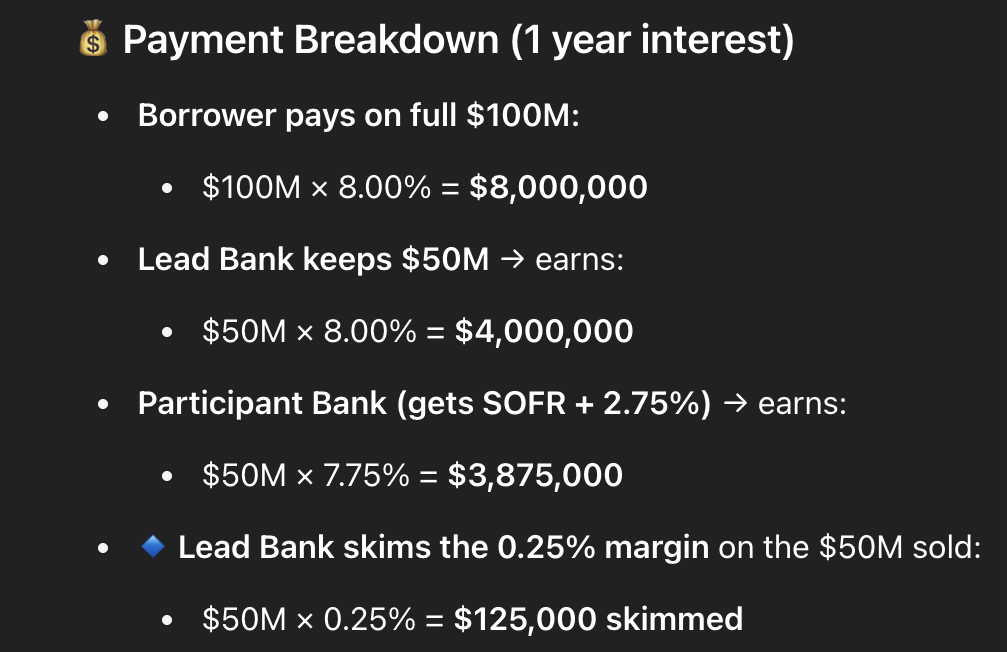
Skim
The economic benefit the lead bank retains when it sells down a portion of the loan to other lenders. The lead bank receives a higher interest rate from the borrower than it passes on to the participant bank, keeping the difference as ongoing income.
Swap Fees
A contract where the borrower pays a fixed rate and receives SOFR, used to hedge a floating-rate loan. It locks in a fixed interest cost, while the bank earns a spread embedded in the fixed rate.
Tenor
The length of time until a financial contract or instrument expires, particularly in relation to loans or swaps.
DSCR
Debt Service Coverage Ratio, a measure of a company's ability to cover its debt payments with its operating income. CFADS / (Interest + Principal)
Higher DSCR means they can cover more debt.
Debt Sizing
The mathematic process which determines the maximum amount of debt supported by a given series of cash flows.
CFADS
Cash Flow Available for Debt Service, calculated to show available cash for servicing debt obligations.
TRABL
Short-term loan we provide to bridge the gap between when a project becomes eligible for tax credit (COD) and when they can sell that credit to a third-party buyer. Loan is repaid using cash proceeds from that sale. Tax credit is claimed by the sponsor, sold to a buyer, and cash is received upfront. No flip involved. Usually pay a discount (90 cents on the dollar).
PCA
Prescreen Approval Memo. Next step after term sheet is mandated. Presented before credit committee and is first step in credit approval process.
Ancillary
services or functions that support the main battery system or the broader electrical grid. These services can include providing backup power, regulating voltage and frequency, or managing energy flow to optimize overall system performance.
45Y PTC
1.5 cents/kWh of electric produced in first 10 yrs
48E ITC
Provides credit of 30% of capital cost for a project
Traditionally Regulated Markets
Investor Owned Utilities (IOU) are vertically integrated, meaning they own and operate the infrastructure that generates and transports electricity for the end users
Restructured (Deregulated) Markets
Utilities own and operate the transmission and distribution system for delivering electricity to retail customers, but they do not typically own the electric generation facilities. Electricity is generated by IPPs
Independent Power Producers (IPP)
Private companies or cooperatives that own and operate facilities that generate electric power for sale to utilities and end users. Typically sell electricity through competitive markets (ISO & RTO)
Retail Choice Markets
End users may purchase electricity from retail suppliers aside from local utility. Commonly available in restructured (deregulated) markets
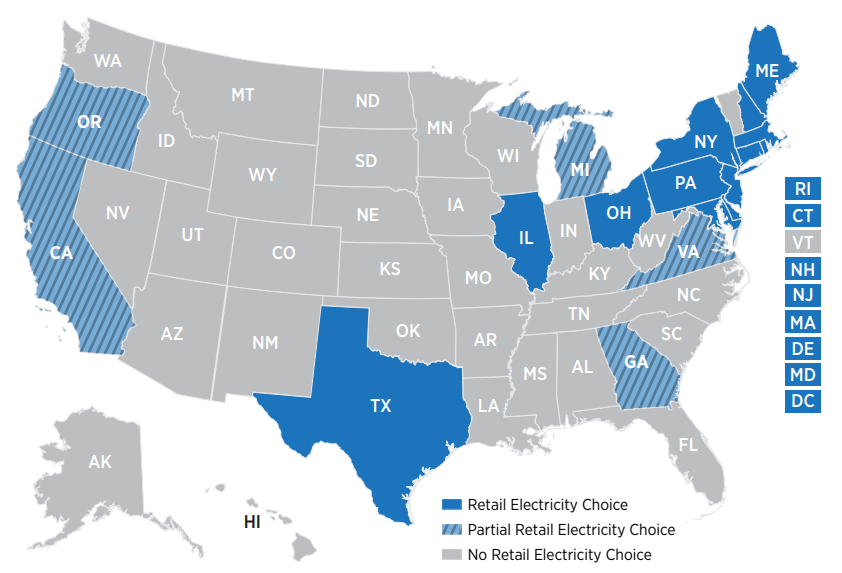
Electricity Markets
US is split into 10 transmission regions. Southeast, Southwest, and Northwest have traditionally regulated markets. Remaining 7 have deregulated markets, managed under ISOs and RTOs.
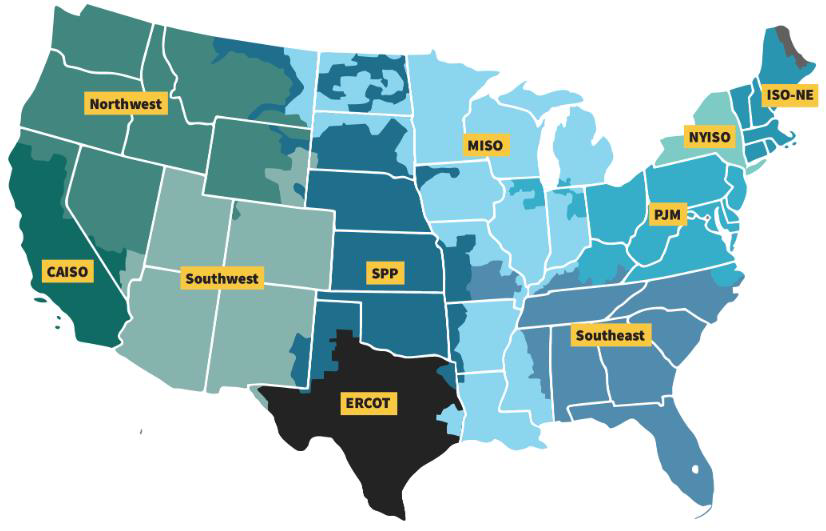
Independent System Operators (ISO) and Regional Transmission Organizations (RTO)
Independent organizations that oversee the generation and delivery of electricity to consumers in deregulated markets. Intended to foster competition, guard against market manipulation, facilitate grid planning and operations. Must operate as nonprofit and ensure non-discriminatory access to grid.
Letter of Credit
Letter from a bank guaranteeing the buyer’s payment to a seller will be received (third party) even if the borrower defaults
When is project finance appropriate?
Debt is greater than $50 million, preferably $100+ million
Revenue stream from project large enough to support
Creditworthiness of purchaser (maybe contract to support)
Is the Sponsor willing to risk the project if it fails post COD
Project Finance Agreements
O&M Agreement
Technology License Agreement
Admin Services Agreement
REC Purchase Agreement
PPA
EPC (Engineering Procurement)
Construction Loan
Utilized only for the period the project is under construction. Interest rate can be higher than a term loan. Usually converts to term loan at COD.
Term Loans
Can have lower interest rates than construction loans and have set amortization schedules.
Project Finance Lending Fees
Arranger fee
Syndication fee
Administrative agency fee
Collateral agency fee
Facility fees to each lender in syndicate
P50, P90, P99
a value that refers to the probability of an outcome. The higher the “P” factor, the more likely that a certain outcome will be met or surpassed. Commonly used in wind or solar resource studies, a P factor may represent the minimum number of kWh that WTGs or Panels of a certain nameplate rating at specified places will generate, at a probability of 99% or 50%, etc. For a P99 probability, there would be only a 1% chance that WTGs placed in those locations would generate less than the stated number of kWh
IRR
Internal Rate of Return. Discount rate at which a project's NPV equals zero. Think of it as the project's break-even point in terms of its return on investment. Often compared to hurdle rate (RRR aka project’s cost of capital).
Haircut
Percentage reduction applied to market value of an asset that is being used as a collateral for a loan. Reduction acts as a buffer for the lender, protecting them from potential losses.
Merchant Haircut
Imagine a solar power project where the developer plans to sell electricity directly to the market. Because electricity prices can fluctuate, potential lenders might not be willing to value the projected revenue at its full potential. Instead, they might apply a "haircut," valuing the expected income at a lower, more conservative figure. This haircut reflects the risk that market prices might fall, potentially impacting the project's ability to repay the debt.
Capacity Market
mechanism used by ISOs and RTOs to ensure they have sufficient generation to balance supply and demand during future peak periods. It pays power suppliers for their commitment to meet future electricity needs, rather than paying for the energy produced. Essential for maintaining reliability and ensuring the grid functions effectively
Energy Market
system where energy resources like electricity, natural gas, and oil are bought and sold. It involves various entities like generators, suppliers, and consumers, and can be structured as either regulated or deregulated markets
Congestion
Situation where transmission capacity of electricity grid is insufficient to deliver desired amount of electricity from where it’s generated to where it’s needed (traffic jam, demand > grid capacity)
Curtailment
the reduction of power generation, either from renewable sources or other power plants, to maintain grid stability and balance supply and demand. It's a mechanism used when the grid has more power than it can handle, or to prevent grid instability during times of high demand or unexpected events
Locational Marginal Pricing (LMP)
Different locations have different supply/demand. Some areas have more favorable pricing = more revenue. Based on supply and demand
Mandatory Resource Adequacy Requirement
requirement for Load Serving Entities (LSEs) to ensure sufficient electricity resources are available to meet customer demand plus reserve margin for emergencies
Renewable Energy Certificate (REC)
Are like a receipt or proof that 1 MWh of electricity was generated from a renewable energy source, such as solar, wind, or hydropower, and delivered to the power grid. This can be sold to utilities, companies, or individuals who want to claim they are using green energy or to meet government requirements for renewable energy use
SPP Fossil Fleet & Renewable Generation
Generated 50% carbon-free in 2024 and can hit 90% by 2050, replacing fossil fleet
ERCOT Installed Capacity Plans
Wind/solar capacity to reach 198 GW by 2060
Batteries to grow to 32 GW
95% increase in total capacity from 2025-2060
Confidential Information Memorandum (CIM)
Gives you overview of the project - very early stage. Includes the ask: how much debt are they looking for and the structure, key project details: asset technology, capacity, location, contracted vs. merchant, contract structure, TE structure, equipment / services providers, timeline. Use this as a base to create the discussion memo which will be presented to Energy Board.
Refinancing
Process where the borrower takes out a new loan to repay the existing loan, usually after the project is operational and de-risked. New loan usually offers better terms such as longer tenor, lower interest rate, or higher leverage, improving cash flow and allowing equity distributions.
Revolver
a type of loan that allows a borrower to draw down, repay, and draw down again up to a certain limit, similar to a credit card. It provides flexibility for managing cash flow and is often used by businesses for short-term needs. Unlike term loans with fixed repayment schedules, this allows borrowers to borrow, repay, and borrow again as needed, up to a predetermined credit limit.
Senior Secured Debt
Most common type of debt financing for PF. Highest Repayment Priority (lowest risk). Secured by a collateral (project itself). Carries low interest rates making it a cheap source of financing.
EPC (Engineering, Procurement, Construction) Contract
Contract between parties where the contractor is responsible for all the engineering, procurement, and construction activities to deliver the completed project to the Sponsor within a predefined time and cost.
O&M Agreement
Contract between parties where the contractor is responsible for the ongoing day-to-day management and operations of the project. They typically perform both proactive services (taking steps to ensure problems don’t occur in the first place) and reactive services (tending to remediate issues as they arise).
IA (Interconnection) Agreement
Contract that outlines the agreement between a generator and a transmission owner or operator that provides for the ability to inject electric energy into the transmission grid.
Basis Risk Scenario
PPA contract is settled at $75 MW/h. You inject power into the grid at 98 MW/h at the node. However, the hub price is currently $100 MW/h. You buy energy from hub to give to offtaker and the offtaker pays you the $75 MW/h PPA price. Essentially you are selling energy for $73 MW/h due to $2 basis loss.
(Scenario for VPPA)
Purpose of lender modeling
To determine the amount of debt credit we’d be comfortable lending to the project. FCB uses the Sponsor model’s projected cash flows to determine the debt quantum. We haircut the assumptions the Sponsor makes to determine a conservative debt quantum.
With this conservative value we run repayment scenarios to determine timeframe and amount of debt quantum that will be able to be repaid. If the amount is in accordance with our standards we will go to Energy Board
ROE
Return on equity. Use a calculator to determine the return on equity for the deal. We also use to determine the fee amount the project will earn.
Thought Packet
Used to present the deal to Energy Board for initial screening. Consists of transaction overview, risk / mitigants, fee opportunity, ROE, comp chart, and model output pages. Move onto Credit Committee if approved. Otherwise deal may be dead because too low of fees, risky, unknown sponsor, or lack of equity backing.
HLMT
High-Level Money Terms. Gives a snapshot of the potential financing conditions the team is pitching to the Sponsor. Presented during Energy Board screening. Created after thought packet is approved. If approved, next step is to translate those terms into a pitch for the client.
CCM
Closing Compliance Memo. Meant to document any changes between CAM and closing. Legal document which details terms both parties agreed to at closing.
Tax Equity Flip
A financing structure used in renewable energy projects where a tax equity investor (typically a bank or insurance company) contributes capital in exchange for the majority of federal tax benefits—such as ITC and accelerated depreciation—as well as a priority share of project cash flows. During the initial period, the tax equity investor is designated as the Class A member and receives Class A distributions until achieving a target return (typically 8–10% IRR). Once that return is met, the partnership “flips,” and the developer (Class B member) assumes the majority of cash flows and ownership
Why we mostly work with deregulated markets
in regulated markets the power is generated / procured / distributed all by large utilities, the utilities have access to debt thats cheaper than what we give out so there are banks that do transact in regulated markets we just arent really one of them. we like riskier bigger deals.
Inverter
device that converts direct current (DC) electricity, which is what a solar panel generates, to alternating current (AC) electricity, which the electrical grid uses. In DC, electricity is maintained at constant voltage in one direction. In AC, electricity flows in both directions in the circuit as the voltage changes from positive to negative.
PFE
Potential Future Exposure. provides the Bank an estimate of peak credit exposure over the life of the swap contract for a specified confidence level. Reflects how much one party might owe the other in a worst-case market scenario if they default.
Ex: Swap deal with borrower. Interest rate goes down in banks favor (floating rate) and the bank now gets more in the spread. This is the amount you lose if they default.
Why NPV of CFADS should be equal to total debt and implied equity
CFADS represents the cash generated by the project to service its debt and distribute to equity holders. It's the cash left after deducting operating expenses, taxes, and capital expenditures. Total debt and implied equity represent the total financing of the project. In project finance, projects are financed through a combination of debt and equity.
Capacity Factor
represents how much electricity a power plant actually produces compared to its maximum potential output. It's a crucial metric for assessing the reliability and efficiency of different energy sources. A capacity factor of 100% means the plant is operating at full capacity all the time, while a lower factor indicates it's not running at full capacity or is offline for periods
(100 MW power plant produces 50 MW on average, its capacity factor is 50%)
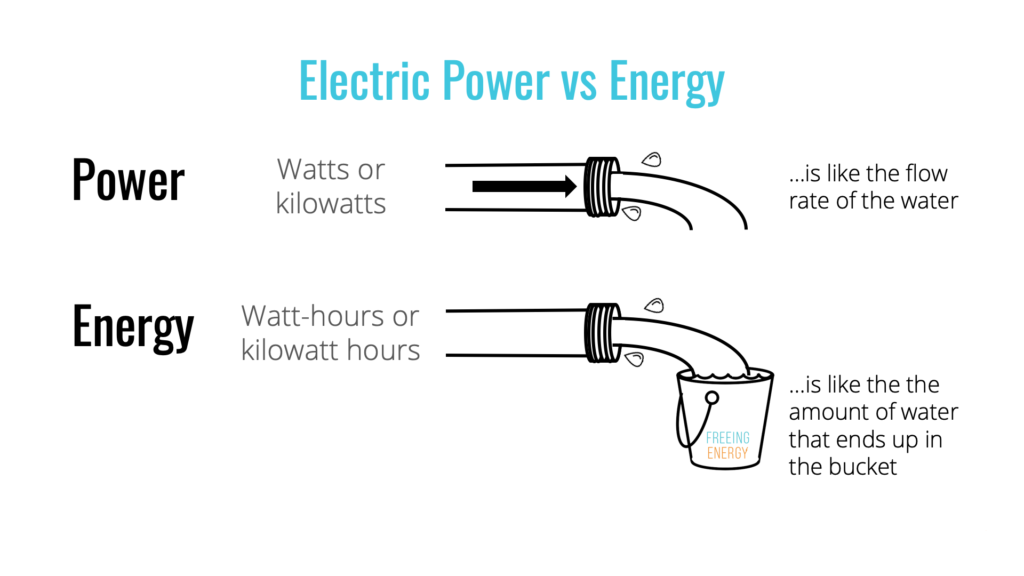
Energy vs Power
Power is flow rate of water (MW) while energy is amount of water that ends up in bucket (MWh)
Power measures capacity and energy measures delivery. We are selling MWh!
Debt / CFADs
Higher multiple = more debt compared to cash = riskier. Our deals average 8. 12 is high. Lower sometimes is 4-6.
TRABL into TEBL structure
TRABL isn’t signed yet so give conservative advance (75%) on TRABL that is being bought $.90/ITC (so two discounts). Once tax equity is committed it becomes TEBL where they are given additional proceeds. Their sponsor equity drops as they are given the loan amount.
Lenders will commit the full TEBL amount, but only make the TRABL amount available to draw, until the TE docs are signed.

Step Up
structure where something, usually interest rates or payments, increases gradually over time.
CAM Elements
Overview page showing tranches and terms
Executive Summary (Company, Transaction, Investment Thesis)
S&U and Capitalization
Risks and Mitigants
PD/LGD rating
Updates since PCA
Project Overview
Sources of Repayment
Industry Overview
Cash Flow Analysis (Model Cases)
Sponsor About
Comps
ROE
Commitment Fee
a fee in bank lending (in the context of Construction Loans and Revolving Loans) that is paid based on the average unused commitment
Base Rate
a rate of interest that usually changes just a few times a year. Often determined as the greatest of a “prime rate” plus a fixed percentage, the Federal Funds Rate plus a fixed percentage, or a SOFR rate plus a fixed percentage. The Base Rate is typically higher than the SOFR rate, so Borrowers often prefer to borrow at the SOFR rate when possible.
Debt Service Reserve (DSR)
Cash collateral held by Lenders to pay debt service in case a hiccup emerges in cash flows. Usually sized at six months’ worth of debt service.
Interest Rate Swap
Company that borrows money at a variable interest rate can enter into a swap to protect itself from rate changes. Borrower agrees to pay a fixed interest rate on loan (notional amount) while bank agrees to pay floating rate. Borrower ends up paying a fixed rate on a loan + OG sofr rate and the bank pays borrower sofr. SOFR effectively cancels out and they pay the bank the swap rate + spread.
upfront fee
the fee the Lenders get paid at closing based on a percentage of the credit facilities they have committed to provide.
Grid
the whole interlocking system of electricity delivery, from generator to customer. The three main parts of the Grid include: generation (creation of the power), transmission (high voltage), and distribution (low voltage transmission from a substation to the customers.
Transmission Network
High-voltage power lines transmit electricity over long distances from power plants to substations. Similar to the highways, carrying vehicles (electricity) at high speed (high voltage) across the country.
Distribution Network
the local roads, connecting highways with communities to help vehicles complete their journey. These are the smaller pylons (and underground cables) carrying lower voltage lines.
TCTA
Tax Credit Transfer Agreements. legally binding contracts that allow eligible entities (sellers) to sell certain federal clean energy and manufacturing tax credits to unrelated third parties (buyers) in exchange for cash. This mechanism, enabled by the Inflation Reduction Act (IRA) of 2022, provides a simplified approach to financing clean energy projects and other incentivized activities compared to traditional tax equity structures.
Amortization
the gradual reduction of the debt through the repayments we agree with the lender. Only considers the principal and doesn't include interest.
Target Debt Sizing vs. Term Loan Facility
maximum amount the project can support based on CFADS, DSCRs, tenor, etc vs. actual loan amount the lender commits (no sweeps)
NTP
Notice to proceed. signifies the formal authorization for an EPC contractor to begin full-scale construction
Underwrite vs. hold
Underwrite: bank promises to provide this full amount upfront (total risk)
hold: what we end up with after selling down (if we do)
Active Debt Scenario vs. Debt Sizing Summary
Shows actual debt cash flows for the selected scenario - updates dynamically based on switches, flags, user in put
vs.
Calculates the max debt the project could support based on CFADS and target DSCR - it’s a static reference point used for sizing, not execution
mechanical completion
the facility is physically complete, except for a few punchlist items. The plant can be turned on safely and is ready for performance testing
substantial completion
occurs when mechanical completion has occurred, the facility is ready to be put into commercial operation, the performance tests have been completed and the performance guarantees have been satisfied
Back Leverage
debt incurred by a project sponsor at a holding company level to finance its equity contributions to a project, which is often structurally subordinated, or “back-levered,” to another financing. In Renewable Energy projects it has become common for the term Loans to be back levered to a tax equity financing.
Balloon Repayment
instead of just paying the interest we also pay some principal before the maturity date of the loan. That is the final debt instalment is substantially larger than the preceding payments.
Contingency
extra money in a construction budget that is not earmarked for any particular use at the time of closing. Depending on the stage of development and construction, the certainty of various Project Costs, the experience level of the contractors, and other factors, contingency might be anywhere between 5% and 15% of the overall Project Costs.
Debt Service Reserve Account (DSRA)
is a cash account that retains money for when CADS (cash available for debt service) is too low to service debt? This account provides cash security for the lenders. It is almost always sized at six months’ worth of debt service.
waterfall (cash flow waterfall)
the order of application of revenues of a project. Think of the funds in question as a waterfall water (money) cascades from the top to the bottom and certain obligations are met in that order. The Waterfall is generally ordered: (i) operating costs; (ii) costs of administering the credit facility; (iii) interest and Interest Rate Swap payments; (iv) principal; (v) reserves; (vi) Subordinated debt or Cash Sweep to a targeted debt balance (if any); and (vii) Equity distribution