chapter 4 CVS100 ex:3
 Call Kai
 Learn
Learn Practice Test
 Spaced Repetition
 Match
Match Flashcards
 Knowt Play
1/83

There's no tags or description
Looks like no tags are added yet.
Name | Mastery | Learn | Test | Matching | Spaced | Call with Kai | Chat |
|---|
No analytics yet
Send a link to your students to track their progress
84 Terms
What is the prevalence of pain among sonographers?
Three-fourths of the sonography workforce reported experiencing pain while scanning.
What is the prevalence of career-ending injuries among sonographers?
One in four sonographers sustained career-ending injuries.
What is a major contributing cause of sonographer injuries?
Poor work conditions.
What is ergonomics?
The creation of a safe working environment.
How do musculoskeletal injuries result?
From minuscule, cumulative trauma to human tissue.
What are the causes of musculoskeletal injuries in sonographers?
- High-performance pressure (scanning in areas not designed for it)
- Heavy workloads (amount and frequency of patients)
- Poorly designed workstations (poor posture)
- Insufficient rest and recovery
- Specific postures like neck twisting, arm abduction, wrist flexion/extension, neck/body twisting/flexion, and reaching out/over things
- Static posture
- Age
- Stress
- Gender
What are common types of musculoskeletal injuries for sonographers?
- Tendonitis and tenosynovitis of the shoulder, cervical spine, neck, wrist, and lower back
- Repetitive strain injuries (RSIs)
What are the causes of Repetitive Strain Injuries (RSIs) in sonographers?
- Poorly designed ultrasound equipment and stretchers
- Improper body mechanics while scanning
- Procedure duration
- Use of inappropriate force
- Insufficient rest/breaks
- Repetition of the same type of study for long periods
What are the most common sites of injury and pain for sonographers?
Neck, back, hips, shoulder, wrist, hands, fingers, and feet.
What are the primary causes of sonographer injury and pain?
Repetition, force, awkward posture.
How does the risk of injury increase?
With the number of times and the greater length of time that a joint deviates from its natural position.
What specific postures are associated with neck (cervical spine) injury?
- Flexion/extension: Tilting head up to see the monitor
- Side bending: Reaching across the patient
What specific postures are associated with shoulder injury?
Abduction/flexion: Upper arm positioned out to the side.
What specific postures are associated with hand and wrist injury?
- Flexion/extension: Bending up and down while manipulating the transducer
- Ulnar/radial deviation: Bending wrist to the side, gripping the transducer firmly, applying excessive pressure
What specific postures are associated with low back injury?
Twisting at the waist and static postures.
What is Lower Back Pain (LBP) often found in?
Persons who sit or stand for long periods.
What are prevention methods for Lower Back Pain (LBP)?
Correct posture, physical conditioning, flexibility, and strengthening exercises.
What causes Upper Back and Neck Pain?
Result of repetitive strain on muscles and ligaments from poor, awkward, or static posture.
How can Upper Back and Neck Pain be prevented?
Adjust monitors, maintain a safe, comfortable resting position for scanning arm and shoulder.
What is Thoracic Outlet Syndrome (TOS)?
A group of disorders brought on by compression of blood vessels or nerves in the space between the clavicle and first rib.
What are the symptoms of Thoracic Outlet Syndrome (TOS)?
- Pain in the neck and shoulder area
- Numbness and weakness in the arm/hand
What causes Thoracic Outlet Syndrome (TOS)?
- Prolonged positions with arms held out or overhead
- Lack of rest periods at work to minimize fatigue
- Repetitive lifting of heavy objects
What is Neurologic TOS characterized by?
Compression of the brachial plexus nerves coming from the spinal cord.
What are the symptoms of Neurologic TOS?
- Numbness or tingling in the fingers
- Pain in the shoulder and neck
- Ache in the arm or hand
- Weakening grip
What is Vascular TOS?
Occurs when one or more subclavian vessels are compressed.
What are the symptoms of Vascular TOS?
- Cyanotic (bluish) appearance of the hand
- Subclavian vein thrombosis
- Arm pain/swelling (possible blood clots)
- Throbbing lump near clavicle
- Pallor (lack of color) in one or more fingers or the entire hand
- Tiny, black spots (infarcts) on the fingers
What causes shoulder pain in sonographers?
Joint instability arising from abduction of the arm greater than 30 degrees and by repetitive, excessive, or static force.
How can shoulder pain be prevented?
Position patients close to the edge of the scanning table and adjust the ultrasound keyboard so the sonographer’s elbow is at a 90-degree angle.
What is Bursitis?
Inflammation of the small sac of fluid (bursa) that cushions and lubricates an area between tendon and bone or around a joint.
What causes Bursitis?
Chronic overuse, repetitive motions, trauma, gradual degeneration, aging, rheumatoid arthritis, gout, infection.
What are the symptoms of Bursitis?
Joint pain, tenderness, swelling, warmth over the joint, stiffness near the affected bursa.
How is Bursitis treated?
Temporary rest or immobilization of the affected joint, applying ice, NSAIDs.
What upper extremity injuries are associated with poorly designed transducers?
Tendonitis, tenosynovitis, tunnel syndromes, damage to the elbow, epicondylitis (tennis elbow), and posterior impingement syndrome of the elbow.
What are the symptoms of Tendonitis?
Aching pain and stiffness in the local area of the tendon or a burning sensation surrounding the entire joint. Pain usually worsens during and after activity, and the tendon/joint area typically becomes stiffer the next day.
What helps manage Tendonitis?
Using cable and wrist braces.
What are the symptoms of Digital Tendonitis and Tenosynovitis?
Aching or pain at the wrist and thumb, aggravated by motion, tenderness distal to the radial styloid process.
How are mild cases of Digital Tendonitis and Tenosynovitis treated?
Rest, warm soaks, and NSAIDs.
How are severe cases of Digital Tendonitis and Tenosynovitis treated?
Local corticosteroid injections.
What is de Quervain Disease?
Painful inflammation of the tendons (tenosynovitis) on the thumb side of the wrist, related to repetitive hand or wrist motions.
What are the symptoms of de Quervain Disease?
Discomfort when turning the wrist, grasping, or making a fist; wrist pain radiating into the forearm and thumb; decreased range of motion of the lower thumb joint; swelling at the base of the thumb.
How is de Quervain Disease treated?
Splinting, heat or cold application, NSAIDs. Corticosteroid injections within the tendon sheath may also be helpful.
What is Carpal Tunnel Syndrome (CTS)?
Caused by compression of the median nerve at the wrist, leading to numbness.
What activities can increase pressure within the carpal tunnel?
Gripping, flexing, and extending of the hand and wrist tendons.
What are the common symptoms of Carpal Tunnel Syndrome (CTS)?
Numbness and burning, especially in the thumb, index, middle, or ring fingers, but not the little finger.
How is Carpal Tunnel Syndrome (CTS) treated?
Splints, NSAIDs, steroid injections, and in severe cases, surgery.
How can Carpal Tunnel Syndrome (CTS) be prevented?
Proper body mechanics, relaxing grip on transducers, reducing force, taking frequent breaks, and wearing a textured scan glove.
What is Epicondylitis?
Caused by strain on the muscles of the forearms and their tendons that attach to the humeral epicondyle.
What are the two types of Epicondylitis?
- Lateral epicondylitis: Tennis elbow
- Medial epicondylitis: Golfer’s elbow
How is Epicondylitis treated?
NSAIDs, heat, and various orthotic devices.
What is Osteoarthritis?
Degenerative joint disease, also known as 'wear and tear' arthritis.
What causes Osteoarthritis?
Repetitive movements or injuries to the joint.
Is there a cure for Osteoarthritis?
No cure; long-term management involves controlling symptoms with anti-inflammatory medications.
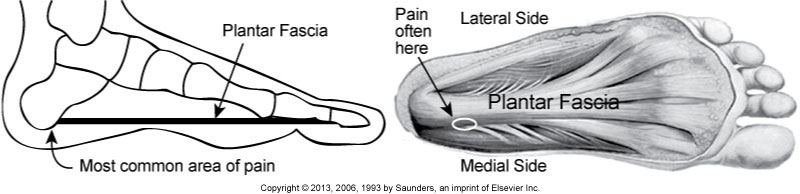
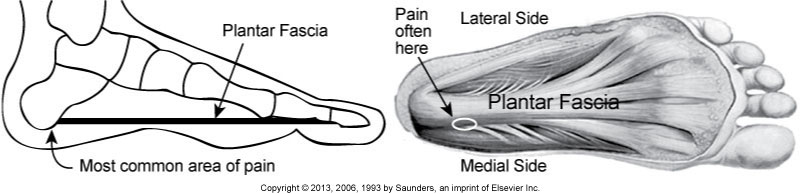
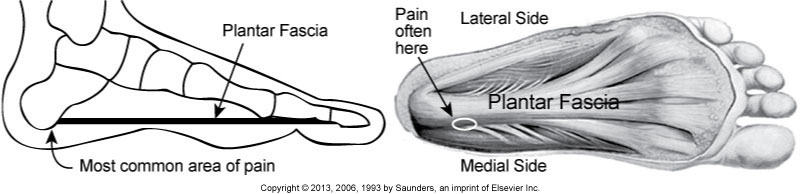
What is Plantar Fasciitis?
Results from overuse and repeated stress on the foot, typically causing heel pain with the first few steps in the morning.
How long can Plantar Fasciitis last?
A few months, be intermittent, or become permanent.
How is Plantar Fasciitis treated?
Rest, ice, taping, strengthening, flexibility exercises, and orthotic devices.
What footwear is recommended for Plantar Fasciitis prevention/management?
Shoes with good arch support, adequate cushioning, and enough flexibility to easily bend under the ball of the foot.
What is Tarsal Tunnel Syndrome?
Results from compression of the posterior tibial nerve.
What causes Tarsal Tunnel Syndrome?
Flat feet, injury, bone spur, or systemic diseases like diabetes.
What are the symptoms of Tarsal Tunnel Syndrome?
Numbness or burning sensation in and around the ankles.
How is Tarsal Tunnel Syndrome treated?
Rest, ice, cast, NSAIDs, physical therapy, and cortisone injections.
What are general strategies for preventing work-related pain?
- Frequent rest and exercise
- Sonographer exercise and stretching programs
- Correct unsound work habits (exertional force, posture, contact/static stress)
- Correct ergonomically unsound aspects in the workplace
What steps can sonographers take to avoid injury?
- Be aware of what causes injury
- Modify behavior accordingly
- Take frequent breaks
- Modify scan techniques (changing hands, posture, sitting/standing)
- See a physical therapist
How should imaging equipment, patient tables, and sonographer chairs be designed?
With maximum flexibility, height adjustability, and proper support to reduce ergonomic and environmental stress.
What are issues with improper room lighting in sonography?
High ambient lighting can produce glare and reflect off the screen, degrading image contrast and potentially leading to misinterpretation. Standard office/fluorescent lighting is often too bright.
How should lighting be managed in scanning environments?
Windowed environments need light-blocking blinds/shades. Imaging equipment should be parallel to windows. Use full-spectrum bulbs on a dimmer switch.
What vision stress issue do bifocal wearers face in sonography?
Often tilt their heads back to see the display, leading to back and neck problems.
What is the recommended solution for bifocal wearers?
Wear single-vision lenses designed for middle distance only (computer glasses) to maintain a natural head and neck position.
What is the recommended monitor position?
The top of the monitor should be at eye level so eyes look downward to see the screen.
What are OSHA recommendations for rest breaks?
10-minute rest breaks for every 2 hours of scanning.
What is the 20-20-20 Rule?
A rule for eye health, often recommending looking at something 20 feet away for 20 seconds every 20 minutes when working on a screen.
How can air quality be improved in modern buildings?
The use of negative air ionizers can counteract poor air quality and benefit human health.
What is Eustress?
Positive stress.
What is Hyperstress?
Too much stress.
What is Hypostress?
Too little stress.
What is Distress (acute or chronic)?
A negative type of stress that is a manifestation of anxiety, mental pain, or mental suffering.
What are common workplace stressors for sonographers?
- Monotony
- Conflict (values conflict with employer)
- Role ambiguity (uncertain of employer's expectations)
- Role overload (too much to do in too little time)
- Nonparticipation (no say in decisions)
- Underutilization (jobs don't tap potential)
- Resource inadequacy (lack of sufficient resources)
What are psychosocial causes of sonographer injuries?
- Reluctance to take time off when injured
- Willingness to sacrifice their bodies for the patient
- Reluctance to complain about heavy workload
- Fear of jeopardizing their job
What are the effects of being 'stressed out'?
Fatigue, chronic headaches, irritability, changes in appetite, memory loss, low self-esteem, withdrawal, teeth-grinding, cold hands, high blood pressure, shallow breathing, nervous twitches, lowered sexual drive, insomnia or other sleep pattern changes.
How can sonographers cope with workplace stress?
- Take responsibility for improving physical and emotional well-being
- Identify and avoid knee-jerk reactions, habits, and negative attitudes
- Improve communication skills with patients, superiors, and coworkers
What is internally generated stress?
Stress we cause ourselves, a major factor in sonographer burnout and compassion fatigue.
What is burnout?
A state of chronic work-related stress, prevalent in health care. Sufferers become poorly motivated, their job performance slides, and they call in 'sick' due to job dissatisfaction.
What are effective short-term ways to deal with job stress?
Have a positive attitude, speak to your employer, get extra sleep, engage in regular exercise, talk to coworkers or friends about problems.
What are symptoms of compassion fatigue?
Conflicted feelings about loyalty to patients vs. departmental policies, constantly thinking of work problems away from the job, emotional detachment, unusual reactions to daily problems, grief over loss of ideals, physical or mental exhaustion, sleep problems, cynicism, anger, frustration, feelings of isolation and hopelessness.
How can compassion fatigue be addressed?
Establish good professional boundaries, empathize but remain objective, maintain healthy habits, allow time for relaxation, discuss grievances at staff meetings, recognize triggers.