Exam 3 - Multiples
 Call Kai
 Learn
Learn Practice Test
 Spaced Repetition
 Match
Match Flashcards
 Knowt Play
1/14

There's no tags or description
Looks like no tags are added yet.
Name | Mastery | Learn | Test | Matching | Spaced | Call with Kai | Chat |
|---|
No analytics yet
Send a link to your students to track their progress
15 Terms
Multiples are at greater risk for...
Premature delivery
Low birth weights/FGR
Congenital anomalies
Fetal demise
Cord knotting
Placenta abruption/previa/vasa previa
Preeclampsia/HTN
Bleeding/post-partum hemorrhaging
Dizygotic Twins
Fraternal twins
70% of twins
2 of everything
Sonographic Appearance of Dizygotic Twins
Twin peak sign
Thick membrane
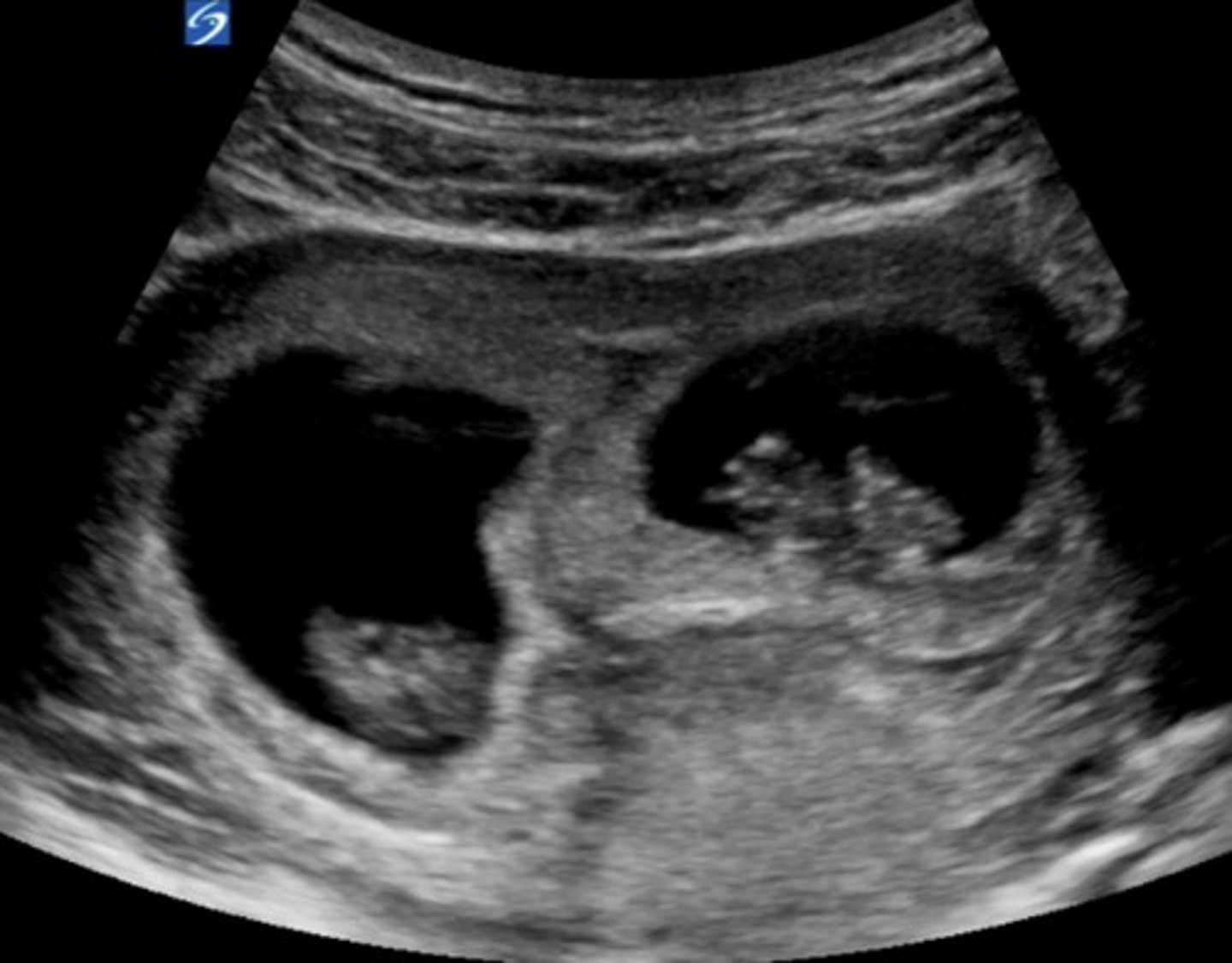
Twin Peak Sign/Lambda Sign
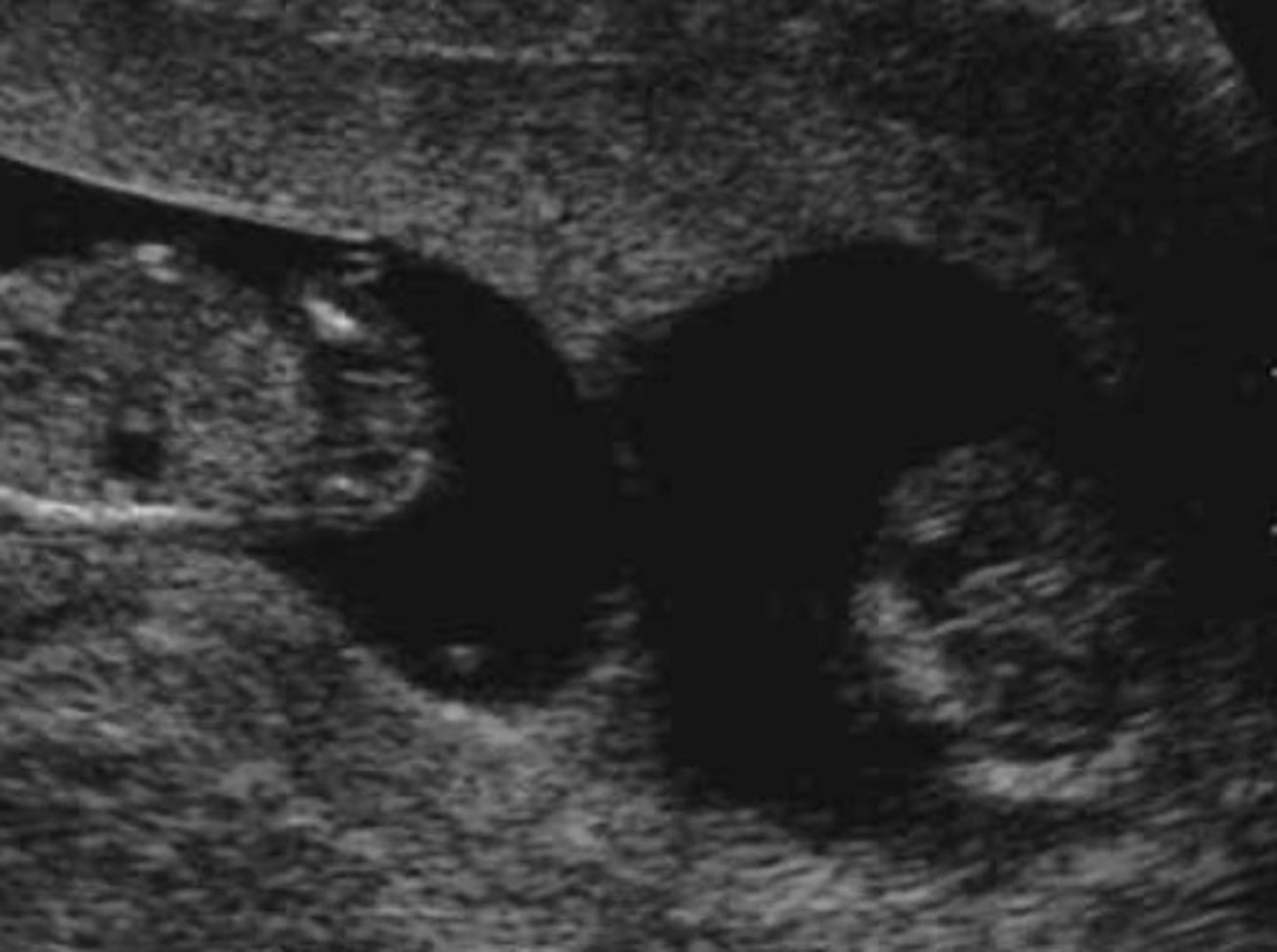
All Dizygotic Twins must be classified as...
Dichorionic diamniotic
Monozygotic Twins
Identical twins
Single ovum that divides
Dichorionic Diamniotic
25% of monozygotic twins
Divides between 0-3 days
10% mortality rate
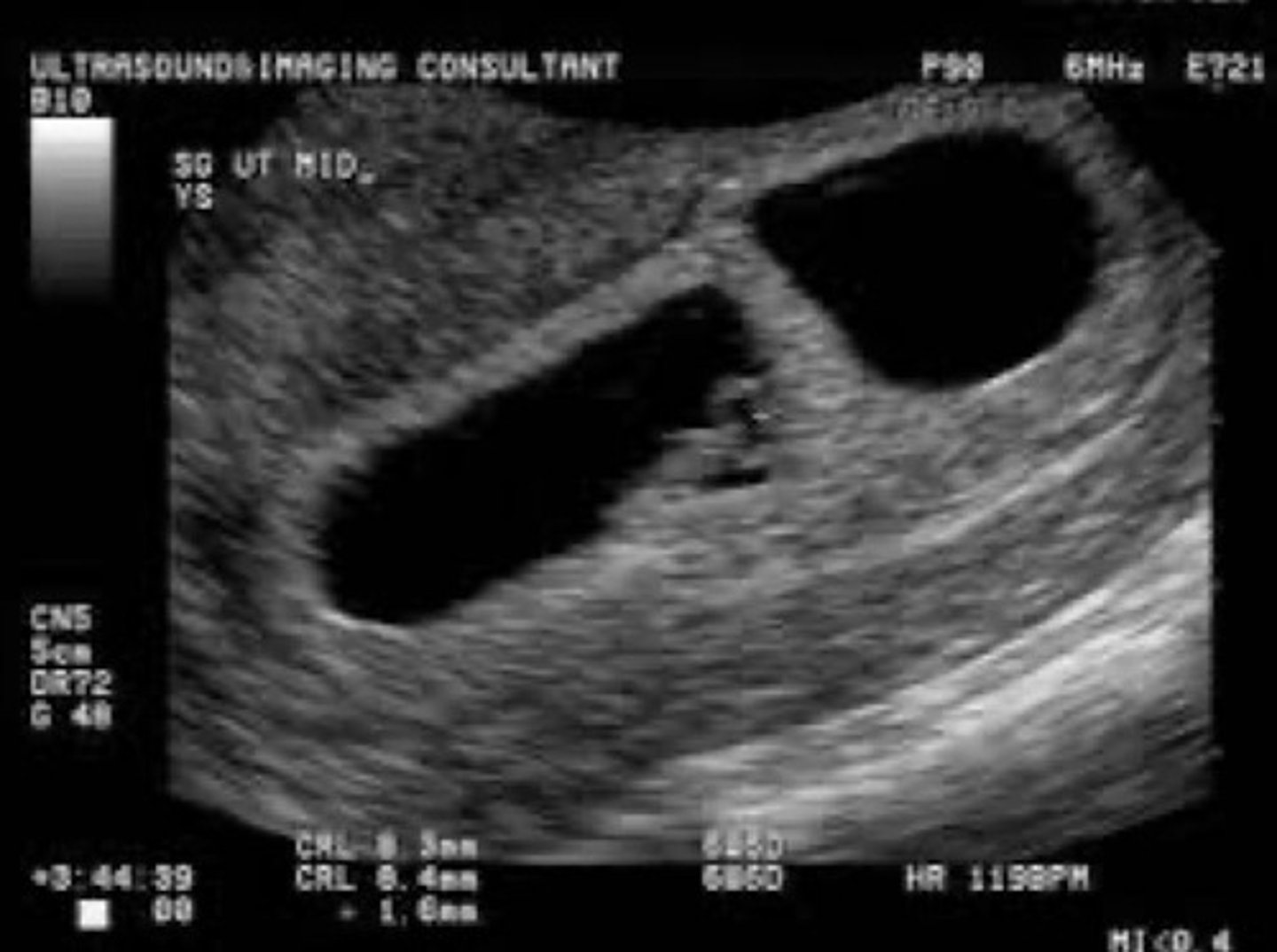
Monochorionic Diamniotic
75% of monozygotic twins
Divides between 4-7 days
25% mortality rate
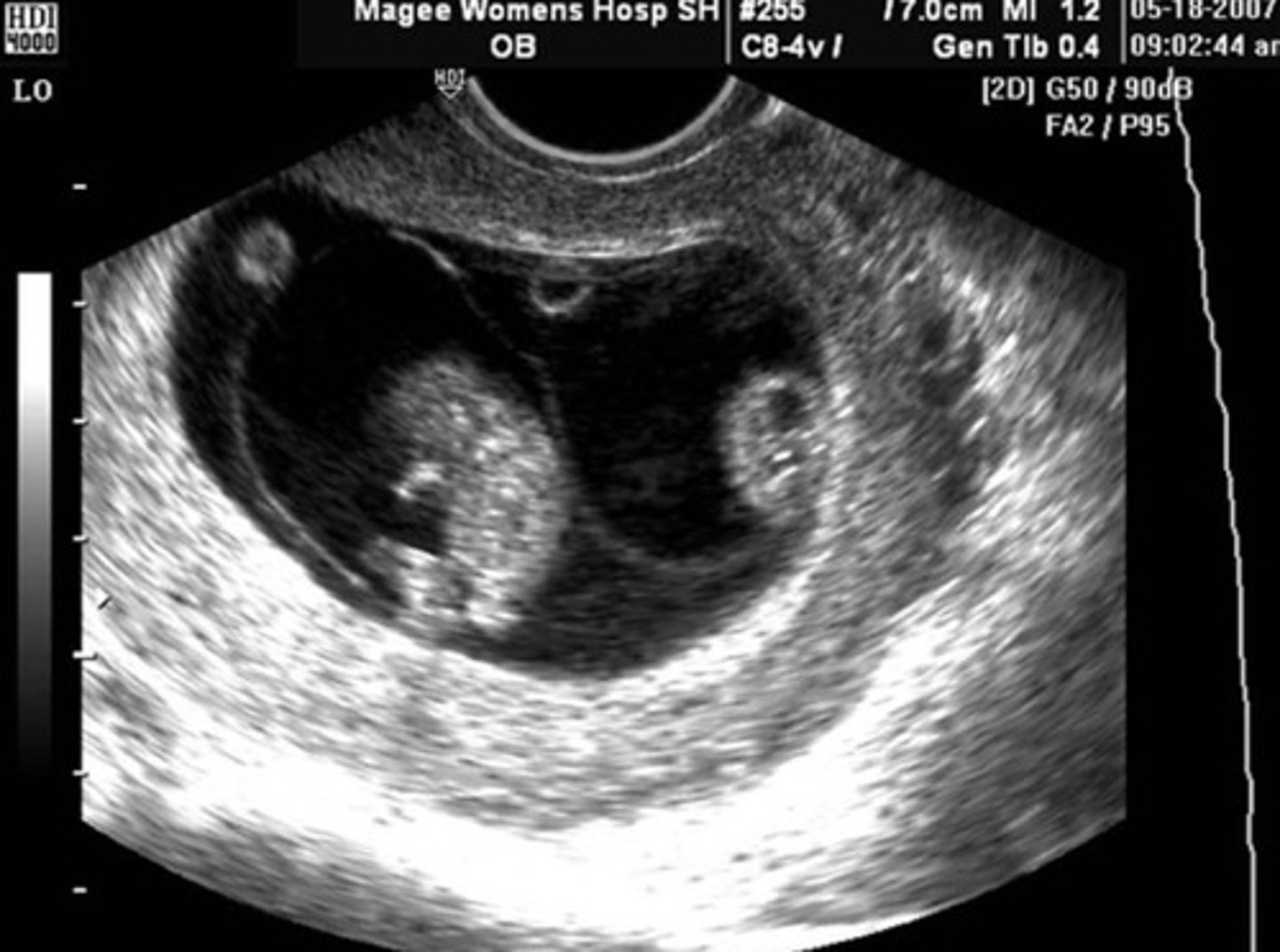
Monochorionic Monoamniotic
Divides after 8-13 days
50% mortality rate
High risk of conjoined twins
Monoamniotic twins must be classified as...
Monochorionic and monozygotic
Monoamniotic twins are associated with...
Cord knots
Conjoined twins
Monochorionic twins must be classified as...
Monozygotic
Can be monoamniotic or diamniotic
Sonographic Appearance of Monochorionic Twins
Thin membrane
Monochorionic twins are associated with...
TTTS
TRAP
FGR
Sonographic assessment protocol for twins
Number of sacs & fetal poles
Number & location of placentas
Membrane thickness and movement
Gender of the feti - after 16 weeks
Biometry comparison
Umbilical cord Doppler
Fluid assessment
Presence of anomalies
Assign a letter to each baby - baby A is always closest to the internal os of the cervix