The High Renaissance and Mannerism: Michelangelo and the Sistine Chapel
 Studied by 0 people
 Call with Kai
 Learn
Learn Practice Test
 Spaced Repetition
 Match
Match Flashcards
 Knowt Play
1/30

There's no tags or description
Looks like no tags are added yet.
Name | Mastery | Learn | Test | Matching | Spaced | Call with Kai |
|---|
No study sessions yet.
31 Terms

pietà
a representation of the Virgin Mary mourning over the body of the dead Christ, usually shown held on her lap
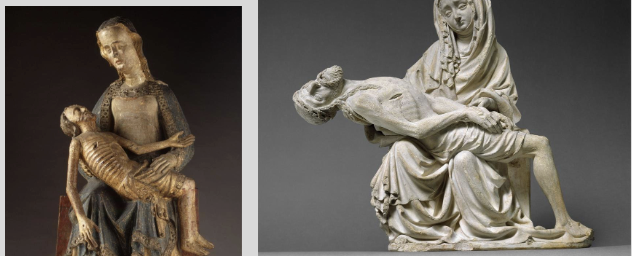

Pietà (artist)
Michelangelo
Pietà (date)
1498-1500
Pietà (material)
marble
Pietà (patron)
Cardinal Lagraulas
Pietà (location)
The Vatican, Rome

David (artist)
Michelangelo
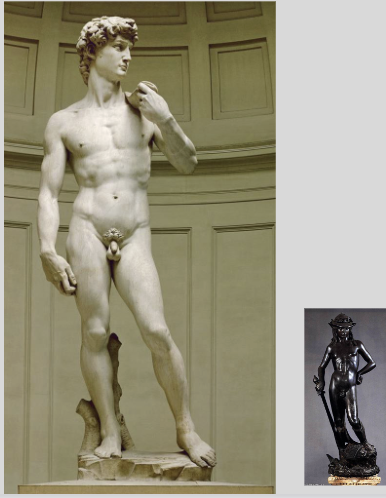
David (date)
1501-1504
David (material)
Marble
David (patron)
City of Florence
David (details)
reveals different emotions at different angles
exaggerated head and hands
interesting when compared to Donatello’s “David”
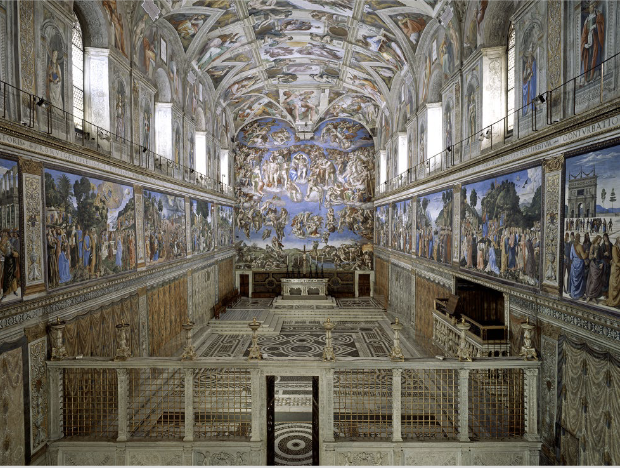
Sistine Chapel, ceiling (artist)
Michelangelo
Sistine Chapel, ceiling (date)
1508-1512
Sistine Chapel, ceiling (material)
fresco
Sistine Chapel, ceiling (location)
Vatican City, Rome
Sistine Chapel, ceiling (patron)
Pope Julius II
The Sistine Chapel (1414-1484), the Pope’s private chapel, was named after its founder, ______.
Pope Sixtus IV
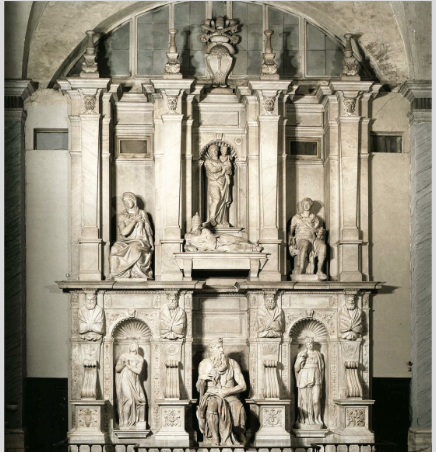
Pope Julius II’s Tomb (artist)
Michelangelo

Pope Julius II’s Tomb (date)
1513-1515
Pope Julius II’s Tomb (material)
marble
Pope Julius II’s Tomb (location)
Rome
Pope Julius II’s Tomb (patron)
Pope Julius II
Pope Julius II’s Tomb (details)
unfinished (or at least reduced in scale) because they ran out of funds
Moses looks angry and about to spring up at any moment
Mannerism
a style that thrived from 1520-1600 which employed “artifice,” often involving contrived imagery not directly derived from nature; emerged in reaction to the High Renaissance style; involved in distortions of form, space, and color; Michelangelo paints his Last Judgement in this style

Last Judgement (artist)
Michelangelo
Last Judgement (date)
1536-1541
Last Judgment (location)
Altar wall of the Sistine Chapel, Vatican, Rome
Last Judgement (material)
fresco
Last Judgement (details)
Christ in the guise of Apollo
Michelangelo included himself on the skin of Bartholomew
Detail of the damned figure
Continuous with the ceiling frescoes
Last Judgement (patron)
Pope Paul III
Neoplatonism
a philosophical movement inaugurated by Plotinus (204-270 AD); his ideas are linked with Florentine art of the 15th century