Communication
 Call Kai
 Learn
Learn Practice Test
 Spaced Repetition
 Match
Match Flashcards
 Knowt Play
1/52

There's no tags or description
Looks like no tags are added yet.
Name | Mastery | Learn | Test | Matching | Spaced | Call with Kai | Chat |
|---|
No analytics yet
Send a link to your students to track their progress
53 Terms
Communication in Health Care
Process of exchanging messages between healthcare workers, patients, patient’s families, students/visitors, administrators and business contacts
Verbal Communication
Use of language and words
Most effective form
Goals of verbal communication
Establish rapport
Obtain information from patients
Confirm understanding
Relay information to other healthcare workers
Give instructions to patients
Tone of Voice
Expresses speaker’s feeling
Patients can pick up on fear, agitation, calmness, and confidence
Adjust tone of circle appropriately to the situation
Language Choice
Translate medical terminology into more common terms
At the same time, health care workers must avoid talking down to patients by over simplifying their language
They should also be careful to pronounce their words and avoid mumbling
Therapeutic Communication
Patient-centered communication in which the patient is looked at as a person
Improves patient satisfaction and improves health outcomes
Ways to use therapeutic communication
develop a rapport
Speak clearly and slowly
Introduce yourself
Use language the patient can understand, and avoid medical jargon, codes, and abbreviations
Show leadership but do not be imposing or give advice
Be honest with the patient
Use open ended questions
Use closed question when specific info is needed
Ask one question at a time
Do not interrupt
Allow the patient enough time to answer a question before asking the next one
Listen carefully to what the patient says
Allow the patient to ask questions
Allow the patient to express their concerns or feeling
Be empathetic
Ask the patient for permission before performing a procedure
Tell the patient what you plan on doing
Apologize for any necessary discomfort or pain
Be aware of your non verbal communication
Written communication
Form of verbal communication
Allows writer time to research and to organize thought
What are some requirements for written communication
be accurate and clear
Be brief with logical organization
Be free of grammar, spelling, and punctuation errors
Use appropriate vocabulary
Questions to ask when selecting the correct form
would the message be better delivered orally
Does the message require a written record
What format
What is often used in the health care industry
written memos
What are the standard parts of a written memo
To:
From:
Date:
Subject:
body
What are the five Ws
Who is the audience
What is the purpose of the message
Why is the message important
When did or will the event invite
Where did or will the event take place
Nonverbal communication
Used in addition to or as a substitute for language
What is included in nonverbal communication
Eye contact and facial expressions
Gestures and body language
Physical appearance
Touch
Proximity
What does direct eye contact send
a powerful and positive message
Body language
using bodies instead of words
Posture can convey a message
Why do Uniforms matter
uniforms send a message that they belong to the healthcare field
Touch non verbal communication
touch can communicate many things but it can also be missinterpreted
By conscientious to touch patients with only kindness and respect
Proximity
Physical space between people
Includes: Distance, height, Odor
What becomes required when patient proximity becomes and issue
Sensitivity and professionalism
What is communication
a process
Sender
person who encodes or gives information
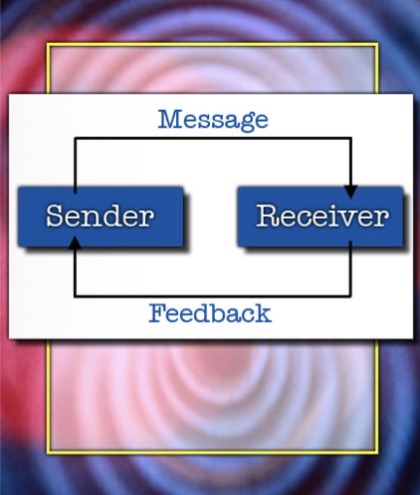
Receiver
the person who decodes or accepts the information

The message
the information that is being communicated

What are some active listening skills
show interest
Be alert
Maintain eye contact
Avoid interrupting
Pay attention
Avoid thinking ahead for a response
Try to ignore personal prejudices
Ignore distractions by moving to a quiet place
Watch the speaker closely for nonverbal contradictions
Maintain a positive attitude
Restatement
involves repeating the message back to the sender in the receiver’s own words
Reflection
Involves responding with empathy
Clarification
Occurs when the receiver ask questions to get a more concise explanation or to clear up any confusion about the message
What are some other effective communication skills
be conscious of your own body language
Avoid any display of anger
Speak slowly, softly, and clearly
Laymen’s terms
Simple everyday language
What are some acceptable attitudes and behaviors
Courtesy
Respect
Sensitivity To boundaries
Empathy
Courtesy
being polite, gracious, helpful, and considerate
Overcome personal and other issues unrelated to the job
Respect
Approach another person with a feeling of esteem or regard
Theme in any study of communication in health care
Without proper respect, communication can quickly veer towards failure
Sensitivity to Boundaries
The ability to recognize and observe the emotional and physical limits of others
Sensitivity
The ability to see and appreciate the personal traits of others
Empathy
ability to share someone else’s feelings or emotions
Who is especially in need of empathy
patients who are lonely or facing serious surgeries or terminal illnesses
Diversity
Put aside all personal and cultural bias
Treat all people fairly, equally, and with sensititivy
What does diversity include
Race
Gender
age
Ethnicity
Socioeconomic status
Occupation
Health status
Religion
Sexual orientation
Constructive criticism
can build people up and inspire them to do better
Non-constructive criticism
serves only to tear people down and discourage them
Accepting constructive criticism
appreciate it
Avoid making excuses, getting angry, and blaming others
Giving constructive criticism
put yourself in the other person’s place
Choose words carefully and speak kindly and considerately
Allow the other person a moment to accept what is said
What do healthcare workers have to put aside when communicating
their personal prejudice
Chain of communication pattern
moves from one person to another

Wheel of communication pattern
main person tells everyone else

All channel communication
everyone tells everyone

When does conformity occur
when individuals change their opinions or beliefs to match that of their group
Is conformity bad or good
bad when is causes people to go against their own beliefs and values
Good when people conform to behave appropriately in the professional atmosphere
In meeting situations what must group members do
be prepared
Use active listening skills
Focus on the discussion
Share relevant ideas
Respect others
Follow through with assignments
How should you give directions
Keep instructions simple and brief
Give directions in a logical and chronological order
Adjust language and complexity to the patient’s ability
Have the patient restate
Correct any misunderstanding
Following directions
be diligent
Ask questions
Take notes
Follow through