Human Anatomy & Phys 1 (Chapter 1: Introduction to Anatomy & Phys)
 Call Kai
 Learn
Learn Practice Test
 Spaced Repetition
 Match
Match Flashcards
 Knowt Play
1/48

There's no tags or description
Looks like no tags are added yet.
Name | Mastery | Learn | Test | Matching | Spaced | Call with Kai | Chat |
|---|
No analytics yet
Send a link to your students to track their progress
49 Terms
Human Anatomy
Study of the structure or form of the human body
Human Physiology
Study of human body functions
What are the characteristics of living organisms?
Cellular Composition, Metabolism, Growth, Excretion, Responsiveness, Movement, and Reproduction
What is metabolism? What are the two types of metabolism?
Metabolism is the sum of the body’s chemical reactions.
Anabolism: Smaller chemicals combine and make larger chemicals —> Build
Catabolism: Larger chemicals are broken down to smaller chemicals —> Break
What does the composition of cells have to be to be characterized as living?
Composed of one/multiple cells
Cells —> the smallest unit that can carry out the functions of life.
What is growth? What are the 2 reasons for growth to take place in living organisms ?
More building (anabolism) than breaking (catabolism) takes place
Increase in size of individual cells
Increase in # of cells
What is Excretion?
An organism must have a process to separate and remove waste.
Responsiveness (Irritability)
Living organisms sense and react to changes in their environment (stimuli)
What is Movement?
Movement of one or more cells within organism and movement of organism itself.
What is Reproduction? What are the 2 reasons living organisms reproduce?
The production of new cells within an organism or the production of offspring.
Individual cells reproduce within the organism during growth and to replace damaged or old cells
To yield offspring similar to itself.
What is the levels of structural organization and body systems (from least to most complex)?
Chemical → Cellular → Tissues → Organ → Organ System → Organism
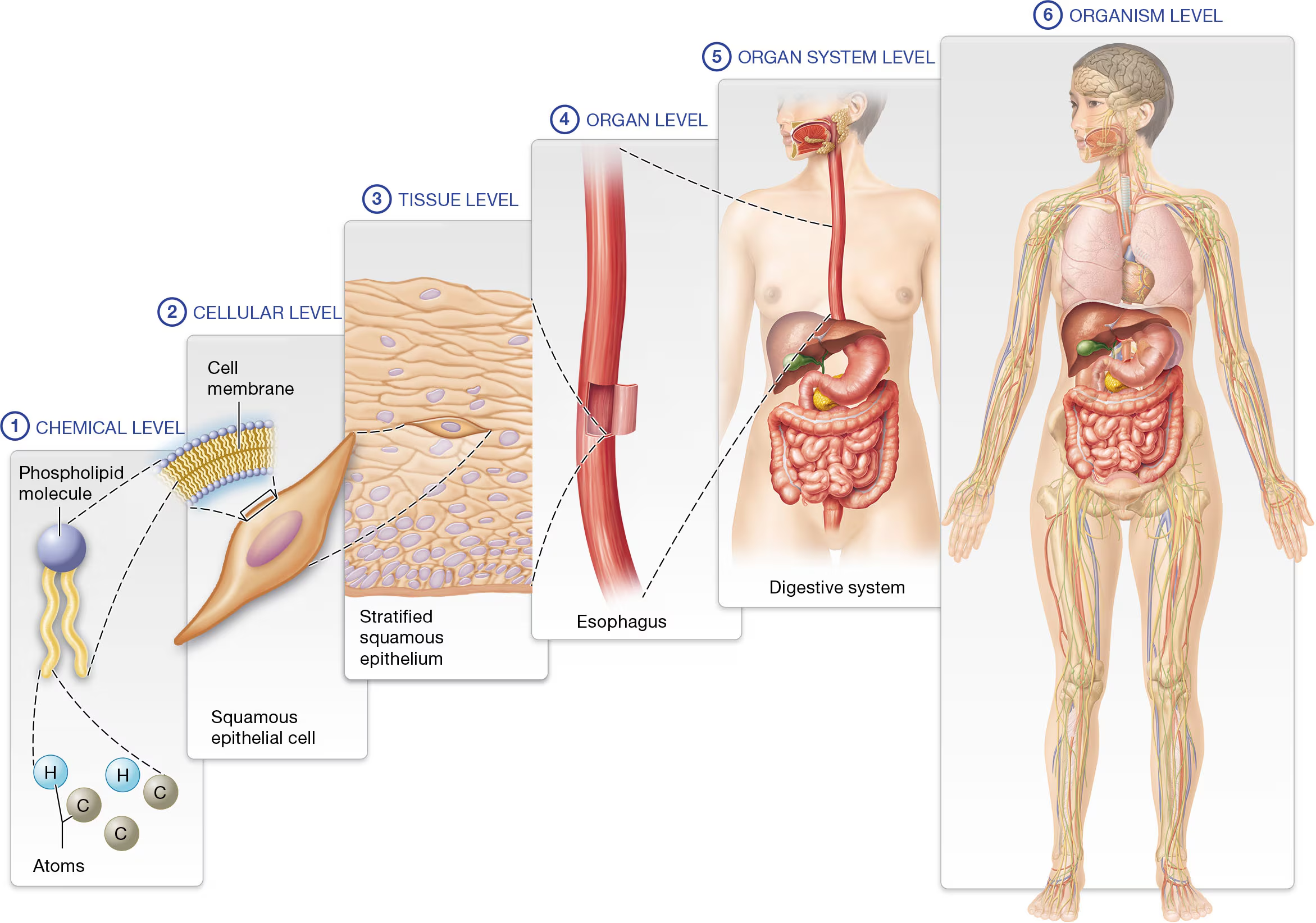
Level of Structural Organization & Body Systems: Chemical?
Ranges in size from tiny atoms to molecules
Smallest level of organization in the human body
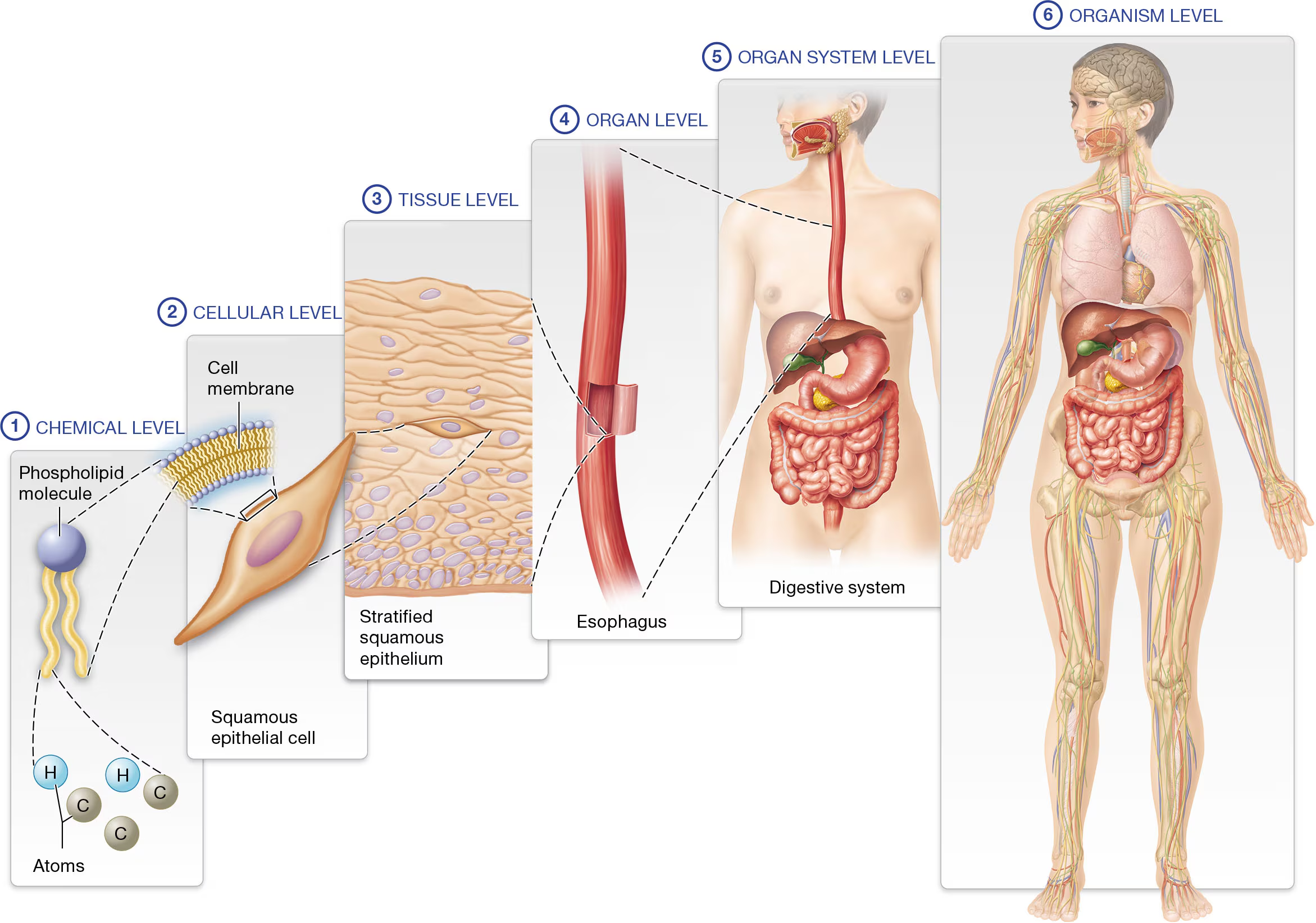
Level of Structural Organization & Body Systems: Cellular?
Groups of several different types of molecules combined in certain ways to form structures at the cellular level.
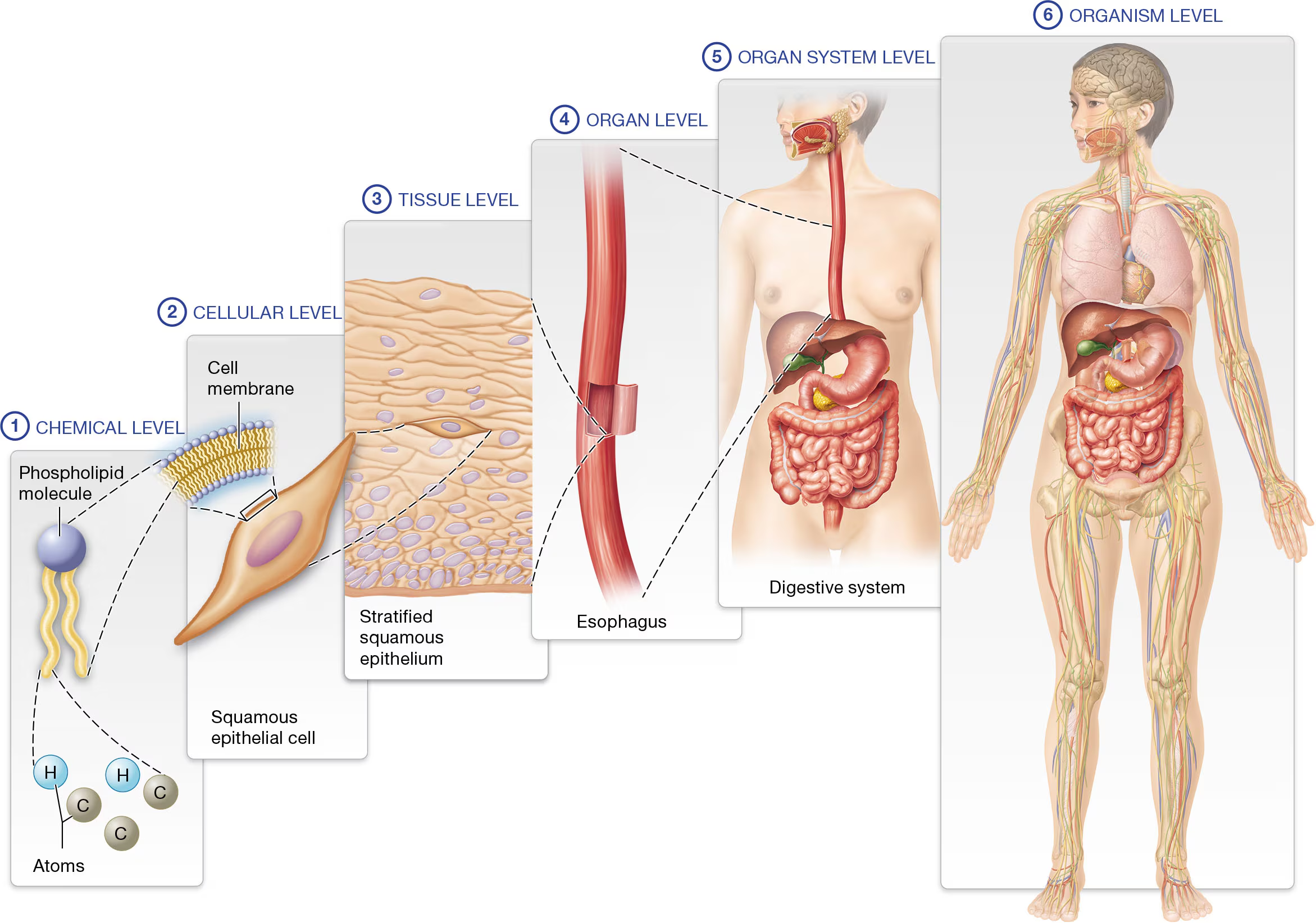
Level of Structural Organization & Body Systems: Tissues?
A group of structurally & functionally related cells & their extracellular matrix.
Comes together to perform a common function as a tissue (comes in a variety of shapes and sizes)

Level of Structural Organization & Body Systems: Organ?
Two or more tissues combined to produce a structure that has a recognizable shape and that performs a specialized task
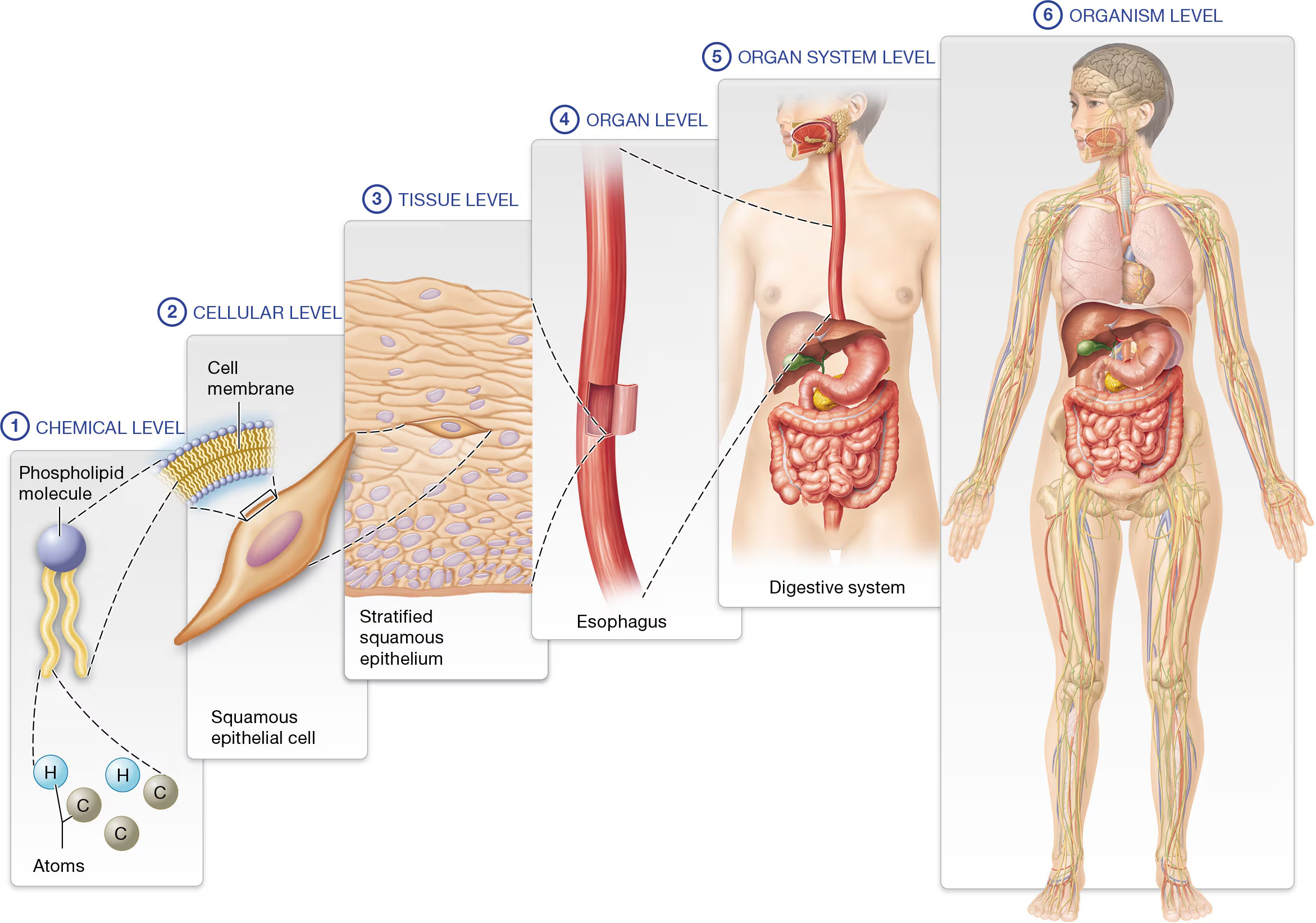
Level of Structural Organization & Body Systems: Organ System?
Two or more organs that work together to carry out a broad function of the body

Level of Structural Organization & Body Systems: Organism?
Organ systems function together to make up the working human body.
What are the 11 organ systems?
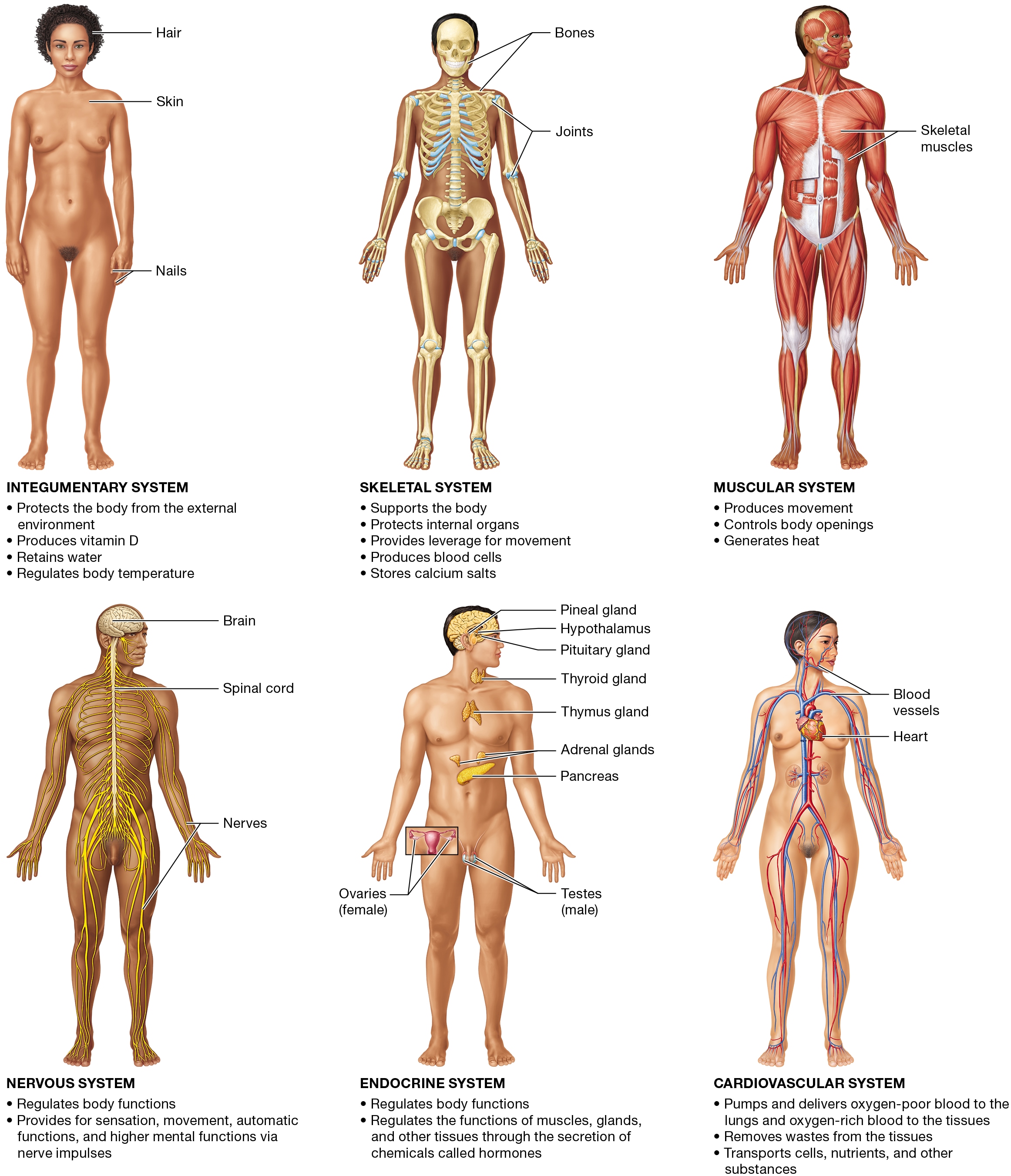

Systemic Anatomy
Examine the human body primarily by looking at individual organ systems.
Regional Anatomy?
Study of human body primarily by looking at specific body regions.
Surface Anatomy?
Study of the surface markings of the body.
Gross Anatomy?
Examines structures that can be seen with the unaided eye
Microscopic Anatomy?
Study of structures of the human body that requires the use of a microscope for observation.
What is the anatomical position (Point of Reference/ Common Frame of Reference)?
Always refer body as if it was in the anatomical position even if it’s actually in another position
Right & left of body not our own right and left
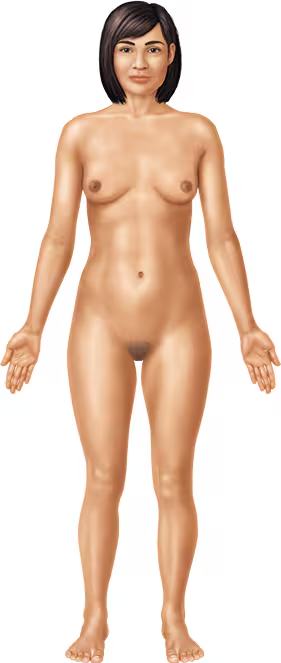
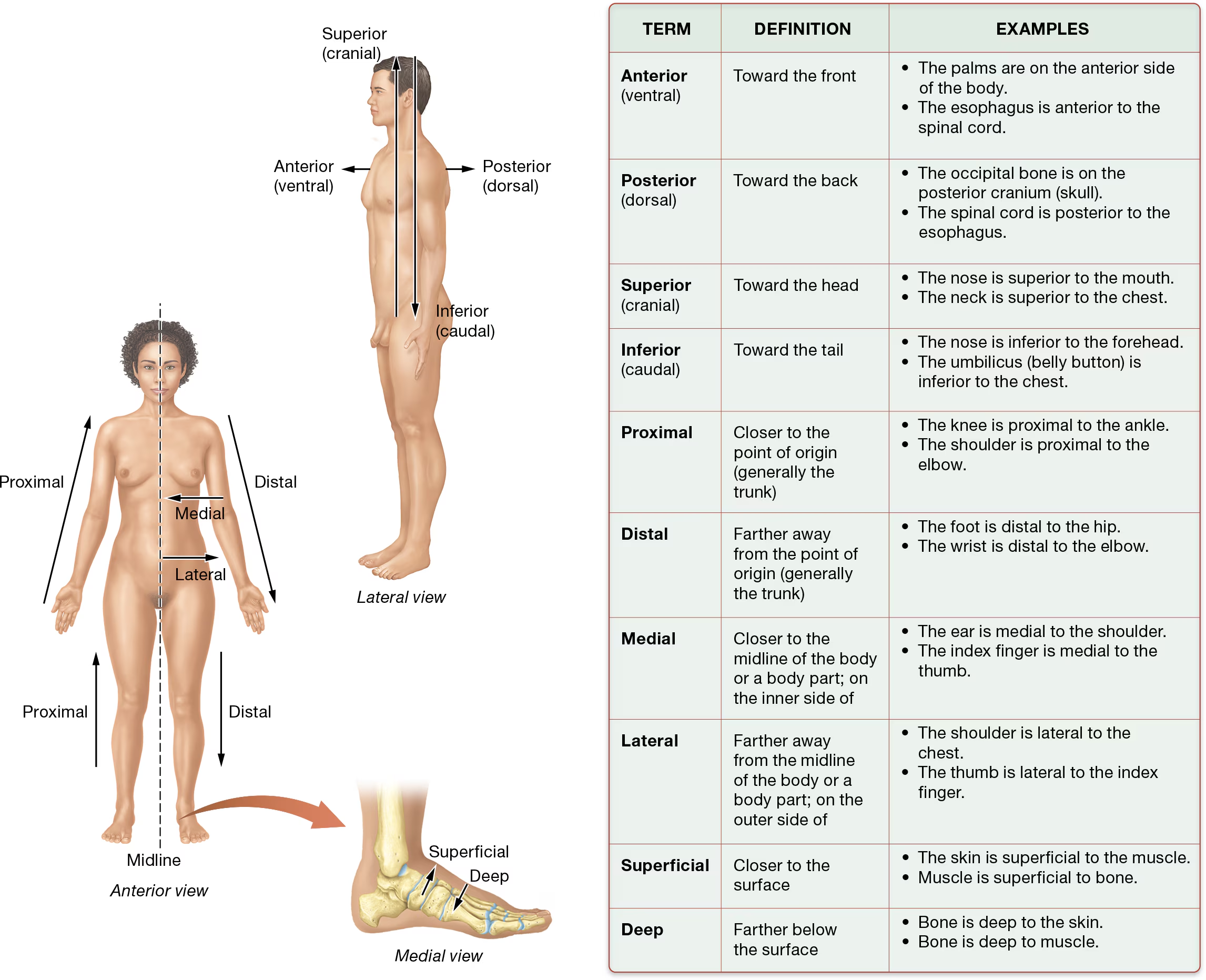
Directional Terms: Anterior/Posterior
Anterior: Front
Posterior: Back
(can refer to either the body as a whole or to a body part)

Directional Terms: Superior/Inferior
Superior: Toward the head
Inferior: Away from head, toward tail
Used mainly to refer to only position on head, neck, & trunk

Directional Terms: Proximal/Distal
Proximal: Something bring close to the point of origin (trunk)
Distal: Being further away or distant from the point of origin
Used mainly for limbs

Directional Terms: Medial/Lateral
Medial: Refers to a position that is closer to the bodies midline.
Lateral: Refers to a position that’s further away from the bodies midline
Midline of the whole body, not of individual body parts.

Directional Terms: Superficial/Deep
Superficial: Structures that are close to the surface of the body
Deep: Structures that are further away from the surface of the body (within body)
Regional Terms: What is the Axial Region?
Head, Neck, & Trunk
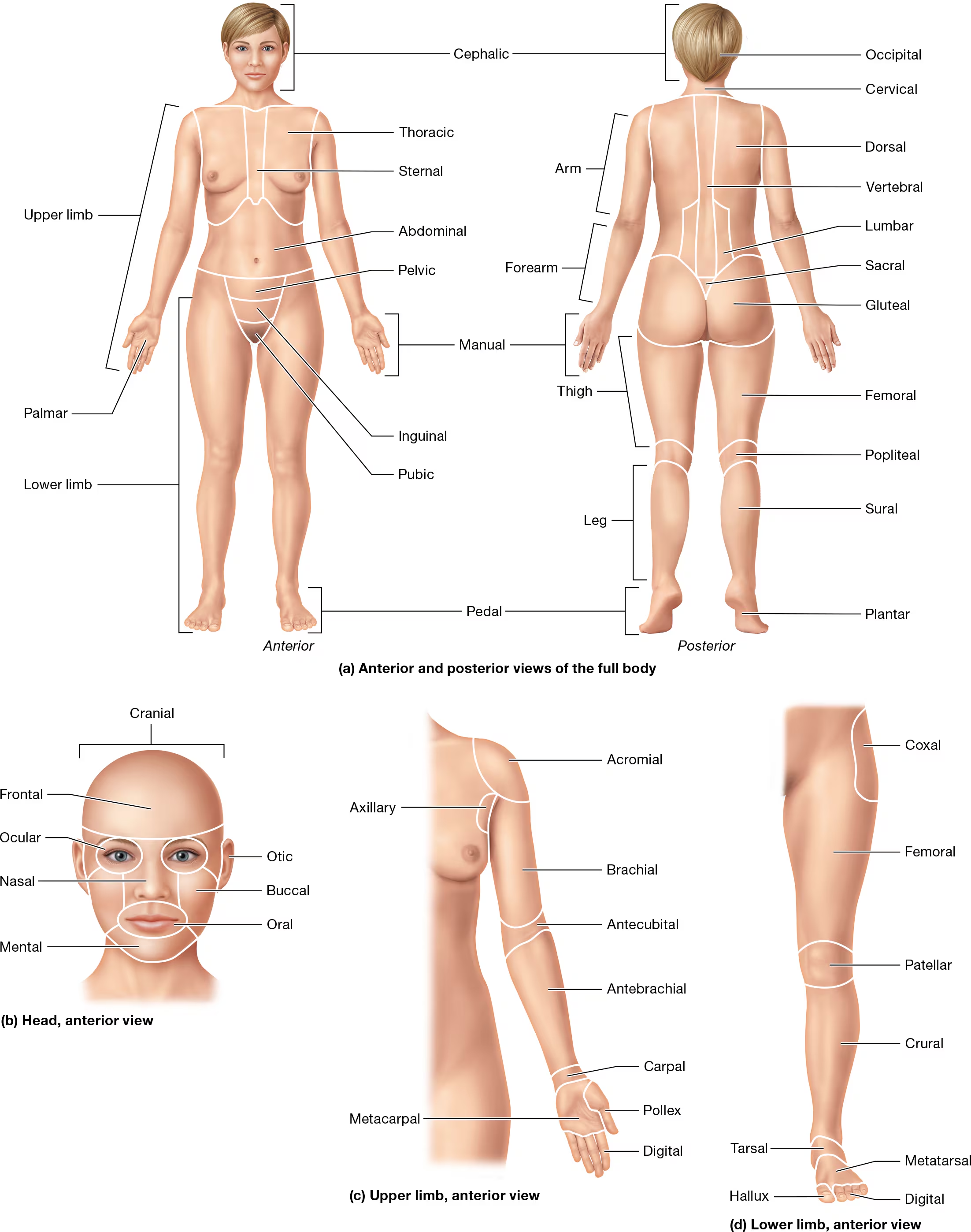
Regional Terms: What is the Appendicular Region?
Upper arms & lower limbs

Planes of Section
Standard ways of dividing a body or body part to examine its internal structure.
Note: Plane of section are not the same as directional terms
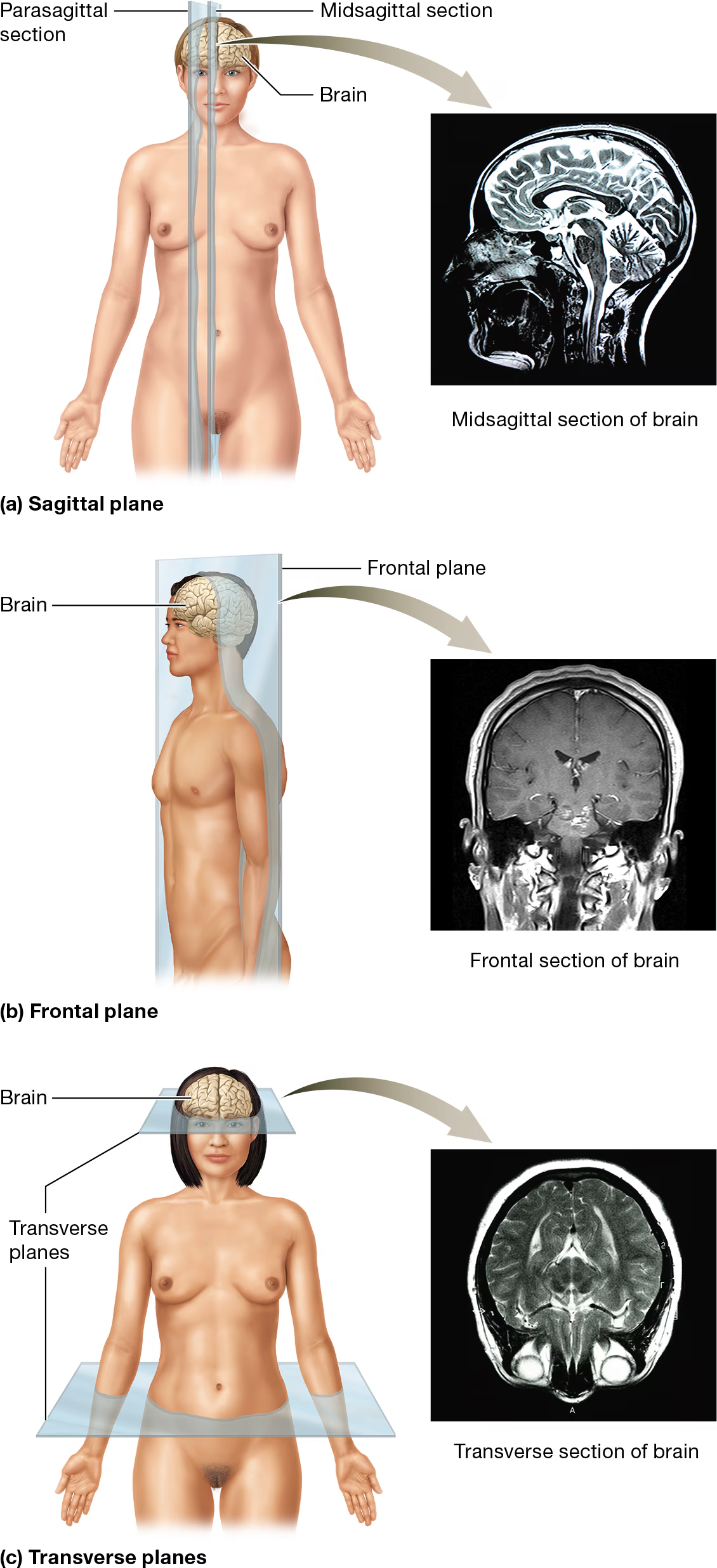
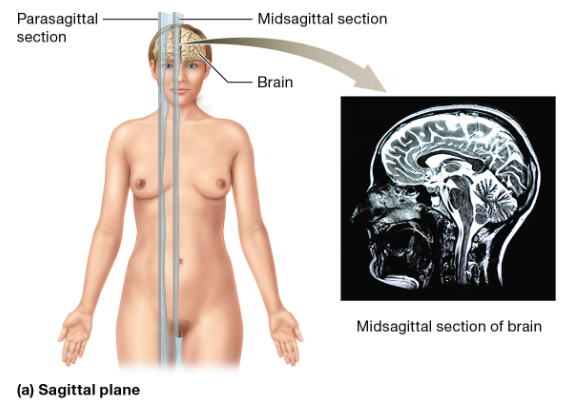
Planes of Section: Sagittal Plane & its 2 types?
Divides the body/body part into right and left sections
Midsagittal plane (median plane): Divides the body/body part into equal right and left halves.
Parasagittal plane: Divides the body/body part into unequal right and left sections.
Planes of Section: Frontal Plane?
Divides the body/body part into anterior and posterior sections.

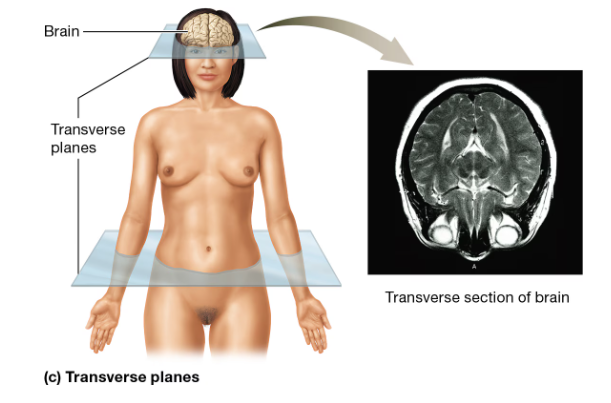
Planes of Section: Transverse Plane?
Divides the body/body part into superior and inferior parts.
Divides the appendicular regions into proximal and distal parts.
Body Cavity & the 2 major types?
Any space within the body
Both protect internal organs and allow them to move and expand as necessary.
→ Posterior body cavity
→ Anterior body cavity
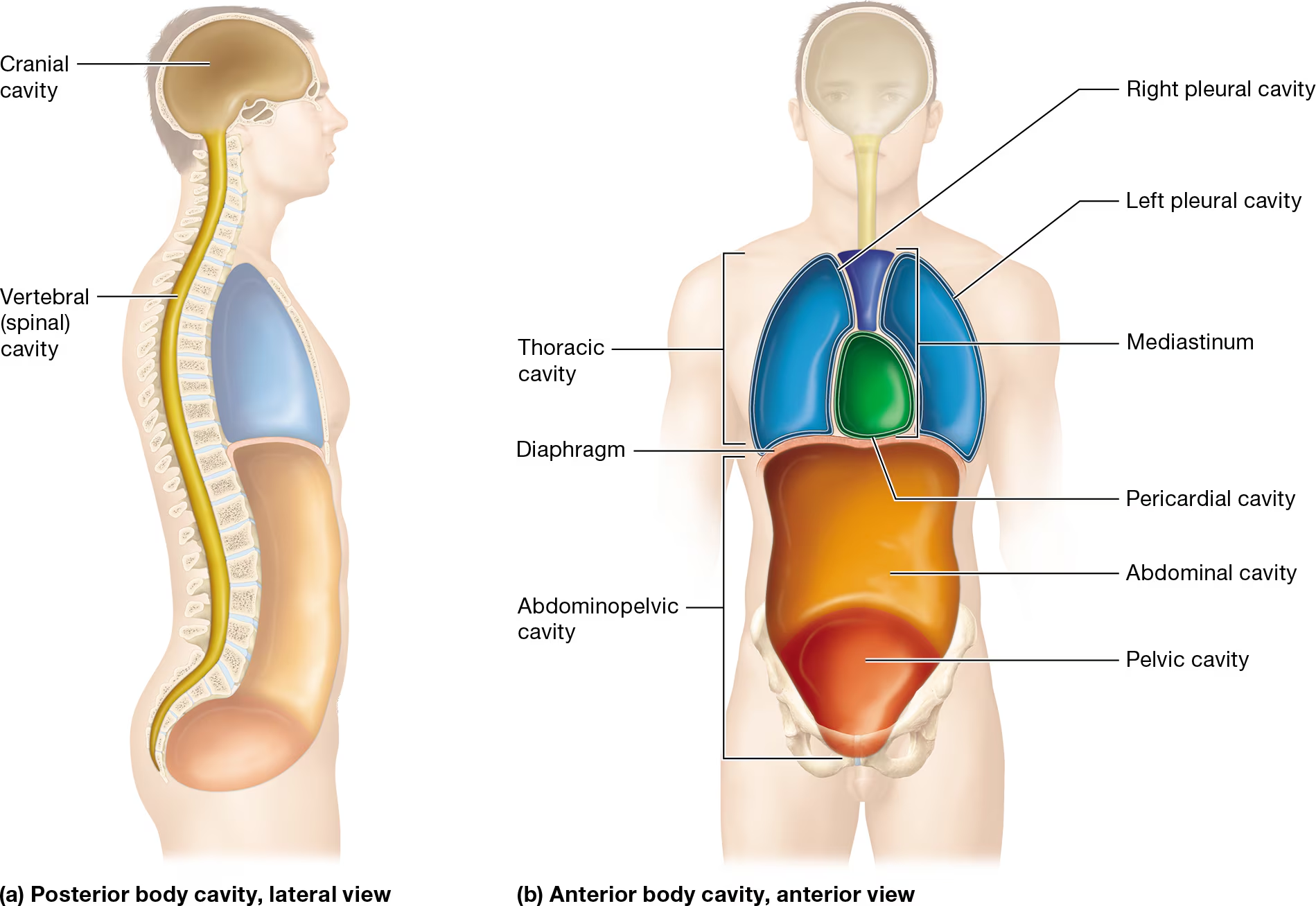
Body Cavity: Posterior Body Cavities & its 2 main types?
Largely located on the posterior side of the body
Cranial Cavity: located in the skull and protects the brain
Spinal Cavity: found within the vertebral column and protects the spinal cord
Both cavities are continuous w/ each other and both are filled with cerebrospinal fluid.

Cerebrospinal Fluid
Baths both organs and keeps the brain buoyant within the skull.

Body Cavity: Anterior Body Cavity & 2 main types?
2 main divisions separated by a dome-shaped muscle called the diaphragm muscle (function is breathing)
Thoracic Cavity: Thorax
Abdominopelvic Cavity: Abdomen & Pelvis
Smaller cavities made within these cavities and are formed by thin sheets of tissues called serous membranes.
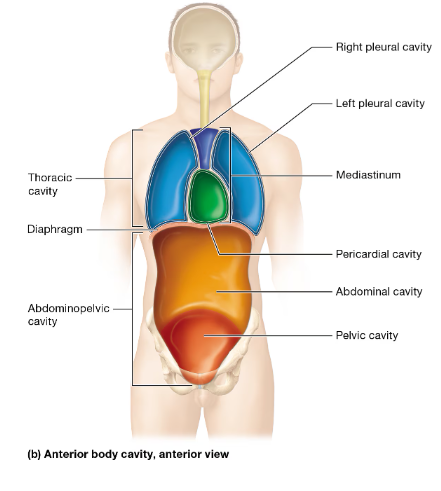
Anterior Body Cavity: Thoracic Cavity 3 Subcavities?
Pleural Cavities
Mediastinum
Pericardial Cavity

Thoracic Cavity: Pleural Cavities
Right and left pleural cavities, each of which surrounds one lung
located within the serous membrane

Thoracic Cavity: Mediastinum
Houses the heart, great blood vessels, trachea, and esophagus.
Not located within a serous membrane

Thoracic Cavity: Pericardial Cavity
Surrounds heart
Located within the serous membrane

Anterior Body Cavity: Abdominopelvic Cavity & its 2 subcavities?
Abdominal Cavity
Pelvic Cavity
Peritoneal cavity = another subcavity within serous membrane (not in picture)

Abdominopelvic Cavity: Abdominal Cavity
Spans the area from the diaphragm to the bony pelvis
Contains organs including digestive, lymphatic, and urinary systems
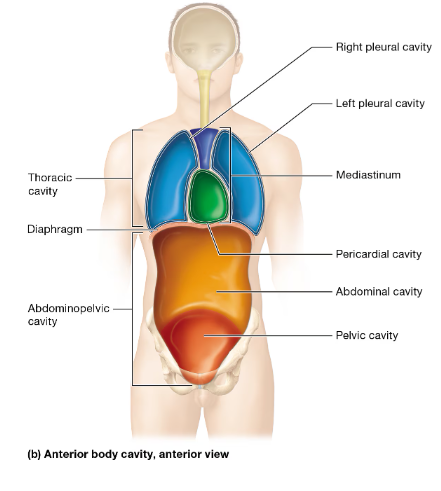
Abdominopelvic Cavity: Pelvic Cavity
Area within the bony pelvis
Contains organs including reproductive, digestive, and urinary systems.
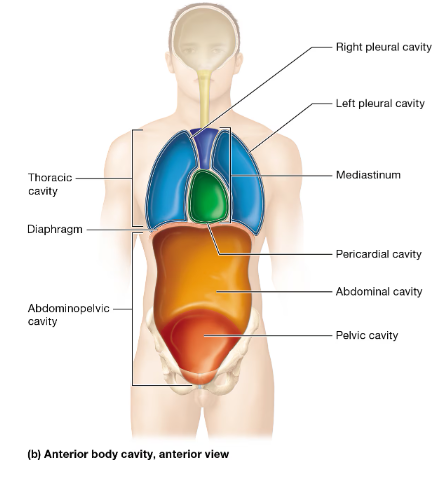

What is this called? How many quadrants & regions are there?
Abdominopelvic Cavity: 4 quadrants & 9 regions
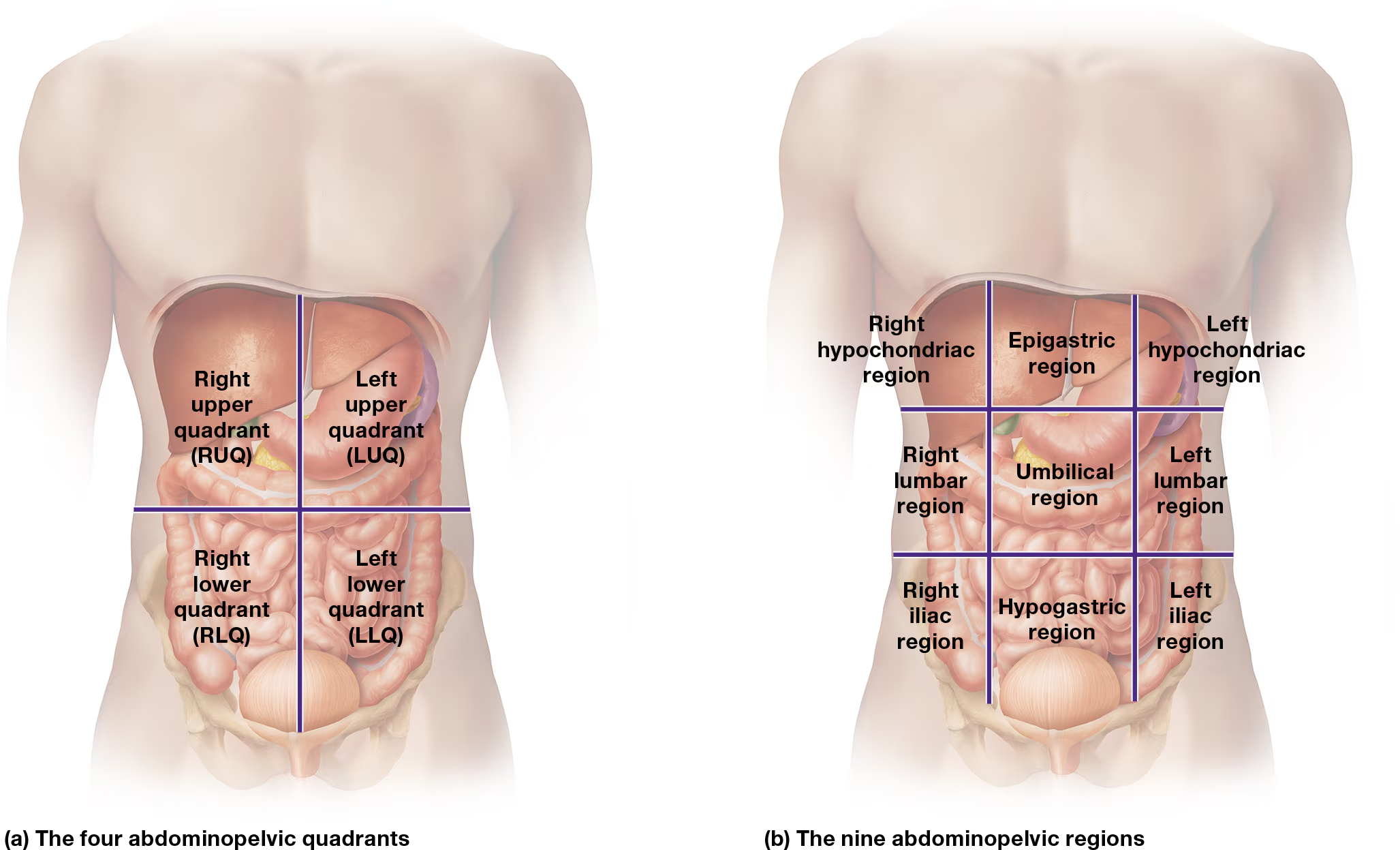
Which system does anatomist prefer? Which ones does the medical field prefer?
Nine region = Anatomist
Four quadrant = Medical field
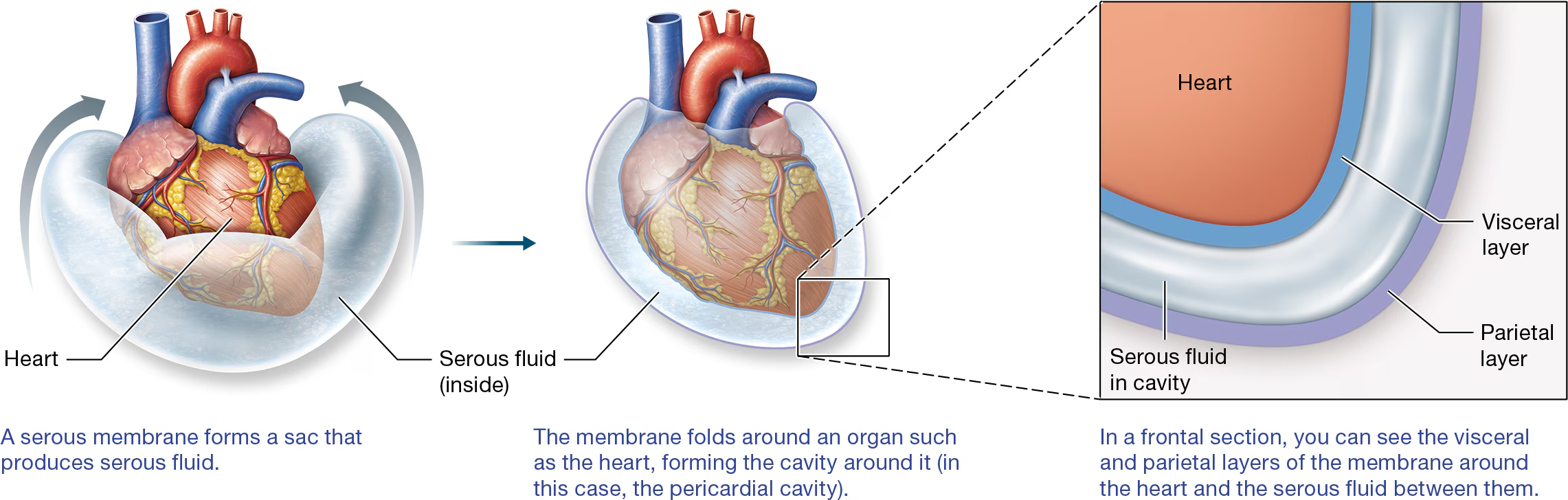
What is the Serous membranes? What type of liquid does it contain and why?
Thin sheet of tissues that envelop certain orgns and produce serous fluid.
Consists of a single continuous layer of tissue that fold over on itself
Contains serous fluid that aids in lubricating the organs to prevent friction.