Classification - a way of characterizing animals
 Call Kai
 Learn
Learn Practice Test
 Spaced Repetition
 Match
Match Flashcards
 Knowt Play
1/48

There's no tags or description
Looks like no tags are added yet.
Name | Mastery | Learn | Test | Matching | Spaced | Call with Kai | Chat |
|---|
No analytics yet
Send a link to your students to track their progress
49 Terms
What is the 1st division of animals?
Vertebrates and Invertebrates
what is the 2nd classification of division?
number of cells
metazoa
protozoa
metazoa
multicellular, development from blastula
protozoa
unicellular or acellular, not from blastula
are protozoa animals?
No
What is the 3rd characteristic that further divides Metazoans?
complexity of tissues
parazoa
eumetazoa
parazoa
no “true” tissues and no organs (sponges and placozoans)
Eumetazoa
with organs, mouth, and digestive system
What is the 4th characteristic that further divides Eumetazoans?
Body symmetry
radiata
Bilateria
Radiata
radial symmetry
Bilateria
bilateral symmetry (at least larvae)
defined anterior and posterior ends; dorsal/ventral surfaces
may exhibit cephalization
cephalization
the congregation of nervous tissue and nerves in one area (a head)
Cross-section
a cut that divides anterior from posterior
frontal
divides ventral + dorsal
Sagittal
divides left from right (plane of symmetry in bug)
What is the 5th characteristic that further divides Eumetazoans?
number of germ layers
triploblastic
diploblastic
germ layers
embryonic cell units that give rise to tissues/organs
ectoderm
outer covering, nervous system, gives rise to epidermis
endoderm
inner layer, digestive tract
mesoderm
middle layer, other structures, gives rise to muscle, bones, and circulatory structures
triploblastic
3 layers
diploblastic
2 layers
outer = ectoderm
inner = endoderm
What is the 6th characteristic that divides triploblastic animals?
body coelom
acoelomates
pseudocolomates
coelomates
acoelomates
lack body cavity
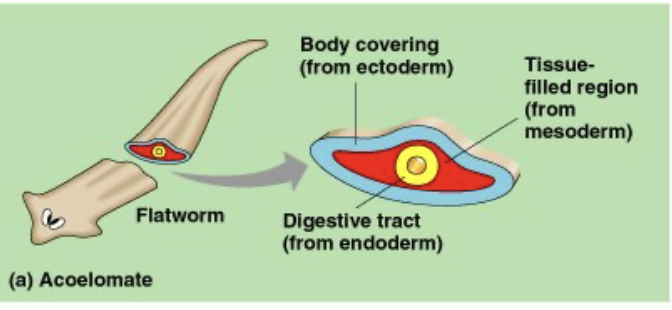
Pseudocoelomates
have fluid-filled cavity
forms between mesoderm and endoderm via blastocoel
internal organs free within coelom

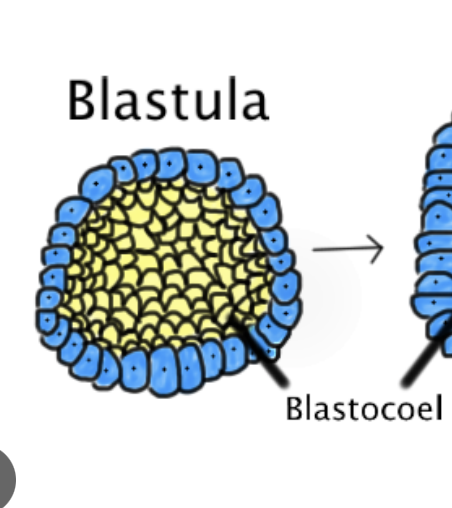
blastocoel
open space that forms within blastula
coelomates
fluid filled and fully lined with mesoderm
internal organs are not free, lined with peritoneum

Schizocoely (Protosomes)
mesoderm splits, gradually enlarges

Enterocoely (Deuterosomes)
archenteron evaginates (coelomic pouches), enlarges

What are the advantages of having a body cavity?
organs can expand and contract (heart + gonads)
locomotive more effective
gastrulation
embryonic ball of cells that invaginates forming gastrula
has an opening called the blastopore
protostomes
blastopore develops into mouth
spiral cleavage (rotation in cleavage)
determinate cleavage (fixed cell fate)
schizocoely

deuterostomes
blastopore forms anus
radial cleavage
intermediate cleavage (can develop identical twins if split)
enterocoely
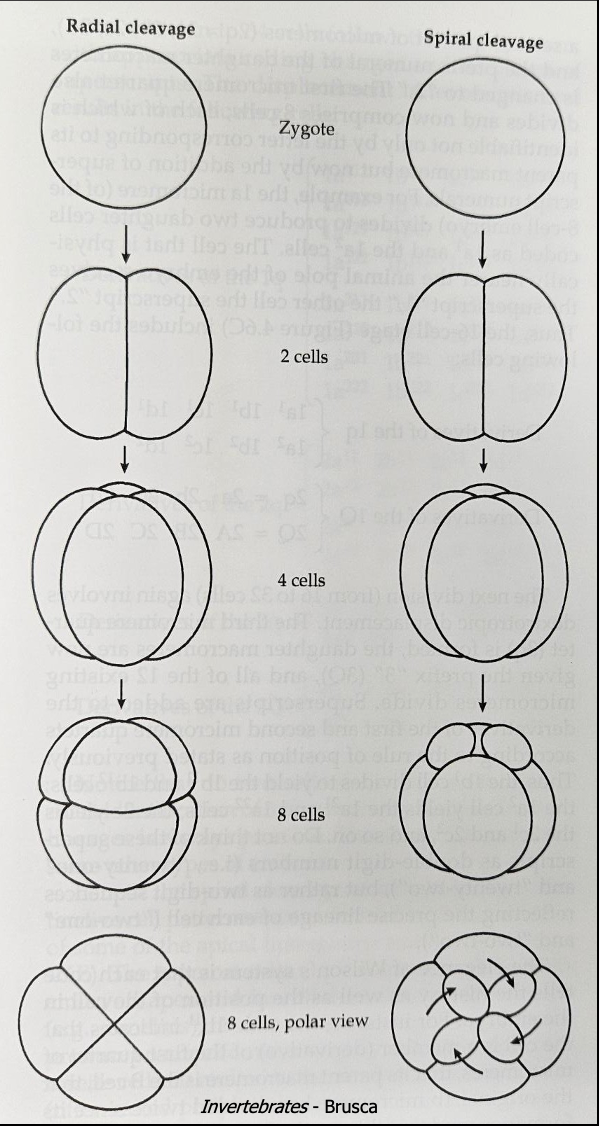
Order of development
zygote → cleavage → 8 cell stage → blastula (hollow ball) w/ blastula inside → gastrulation → 3 germ layers form

How do we tell the relation of organisms?
marker genes (DNA) that are conserved and ubiquitous
ex: 18sSU rRNA (nuclear gene) and CO1 (mitochondrial gene)
what is the marker gene process?
DNA extraction → amplification (PCR) → sequencing → alignment → compare nucleotide sequences
Higher order classification
domain → kingdom → phylum → class → order → family → genus → species
3 domains
bacteria
archea
eukarya
Kingdoms in archea
prokaryotes
bacteria like organisms
kingdoms in bacteria
prokaryotes
more recent bacteria
kingdoms in eukarya
all other organisms
protists (multiple kingdoms)
kingdom fungi
kingdom plantae
kingdom Animalia
Protists (multiple kingdoms)
protozoans, microalgae, macroalgae
kingdom fungi
molds + yeasts
kingdom plantae
multicellular (autotrophic)
kingdom Animalia
multicellular (heterotrophic)
How do we determine relationships, and group animals with common ancestors?
construct dendrograms and phylogenetic trees
monophyletic groups
groups that contain common ancestor + all descendants

paraphyletic group
includes the common ancestor and some but not all decendents (ex: invertebrates)
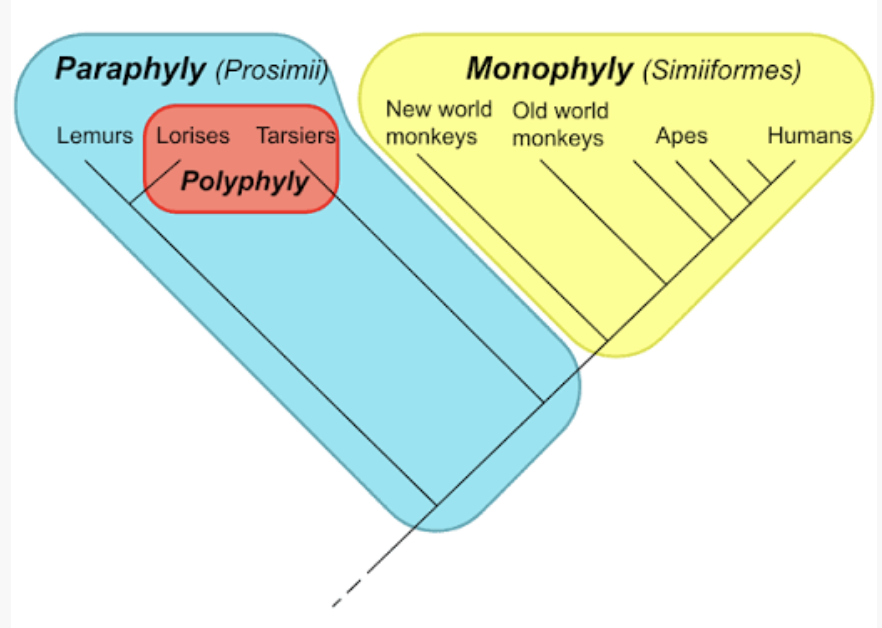
polyphyletic group
multiple lines of ancestry (ex: flying animals)
