Booth Controls and Inspection Procedures
 Call Kai
 Learn
Learn Practice Test
 Spaced Repetition
 Match
Match Flashcards
 Knowt Play
1/21

Earn XP
Description and Tags
Flashcards covering booth controls, inspection requirements, document verification, and privileged rank protocols according to the TRCU lecture notes.
Name | Mastery | Learn | Test | Matching | Spaced | Call with Kai | Chat |
|---|
No analytics yet
Send a link to your students to track their progress
22 Terms

Green button
A booth control used to call in the next civilian in line for inspection.


Yellow button
A control used to alert the border of a member of TGRA (RKERS), division, or ministry who is randomly killing civilians or facilitating illegal crossings.

Skull Button
Used to send a civilian to be executed by guards if they fail inspection; it serves as an optional alternative to the pit lever.

Red button
A tool used to sound border alarms when 3 or more raiders are attacking or have taken full control of the border.
Admission Doors Tool
The specific tool an inspector must use to operate any of the booth controls.
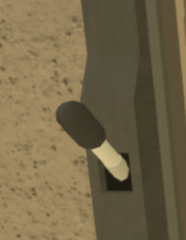
Left lever
The lever used to open the entrance door for the next immigrant to enter the booth.

Right lever
The lever used to open the exit door after a civilian has successfully passed inspection.

Top lever
Located above the red lever, it opens or closes the window shutters and is used to fix the booth if civilians cannot provide their passports.

Red lever
Used to send a civilian to the pit if they fail their inspection; it is an optional alternative to the skull button.
Passport and Permit
The two mandatory documents required for civilian entry; if either is missing, the civilian must be denied.
WORKPASS
An additional document required if the civilian's reason for entry is related to working, business, a profession, or joining the army.
USA and URM
Forbidden countries of origin that require an automatic denial because the Union is at war with them.
Passport ID Format
A code consisting of the first 4 characters of the username, gender (M/F), the last 2 digits of the expiry year, the digit of the month of expiry, and a random letter.
Custom Questions
An inspection phase requiring a minimum of 2 and a maximum of 10 questions that must be answerable and not based on personal bias.
Answer Time Limit
The time allowed for a civilian to answer a question: may be denied after 30 seconds and MUST be denied after 60 seconds.
Fake Workpass Indicators
Signs of forgery including a longer claw hammer, a darker handle, the username "Nooblordjjj", or the notation "W.R" instead of "W.P".
MAN FACE
An automatic reason for denial unless the civilian is an Inspector, a member of the CGB, MoFR/Foreign Diplomats, or other privileged ranks.
PCCP Benefits
A status for civilians who have the required documents but receive the benefit of facing no custom questions.
Inspector HR+ and CGB Benefits
Privileged ranks that require no WORKPASS and no questions, and must be saluted by the inspector.
Government and Union's Architect Benefits
These ranks require only a Permit (Passport and Workpass are not required), face no questions, and must be saluted.
Double Entry Protocol
A scenario where two civilians enter the booth; the inspector must either pit them immediately or pit them after 15 seconds if one does not leave.
Telephone
An optional tool used for making server announcements, such as announcing the start/end of inspection or informing guards of exploiters or rule-breakers.