Unit 3 AOS1: Nervous System and Psychological Functioning, stress (10 marker)
 Call Kai
 Learn
Learn Practice Test
 Spaced Repetition
 Match
Match Flashcards
 Knowt Play
1/42

Earn XP
Description and Tags
These flashcards cover key terms and definitions related to the nervous system and its role in psychological functioning as learned in Unit 3 AOS1.
Name | Mastery | Learn | Test | Matching | Spaced | Call with Kai | Chat |
|---|
No analytics yet
Send a link to your students to track their progress
43 Terms
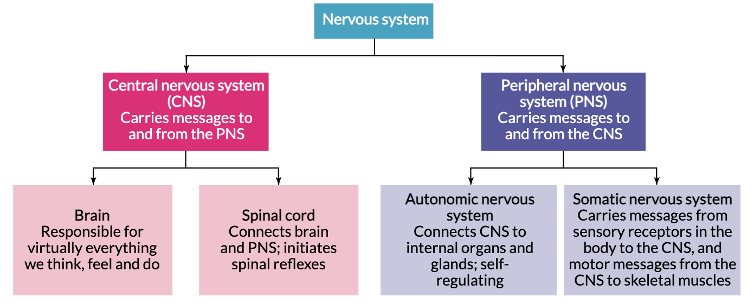
nervous system
SAME
“SAME”: sensory afferent, motor efferent.
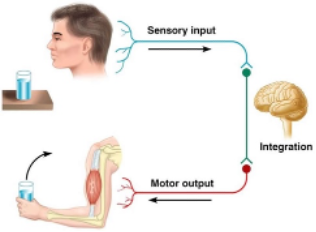
Sympathetic Nervous System
division of autonomic nervous system:
Alters the activity level of internal muscles, organs and glands to physically prepare our body for increased activity during times of high emotional or physical arousal (under threat).
Our body reacts with physiological changes that assist survival: Readying the body for a quick response (Flight – Fight – Freeze response.). Increases Arousal. Release of adrenalin and non-adrenalin to cause some body functions to speed up.
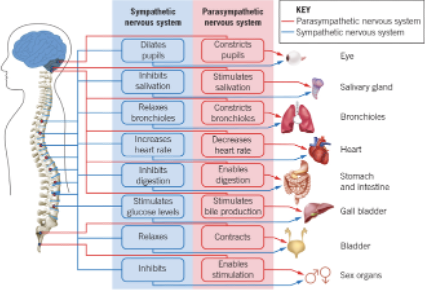
Parasympathetic Nervous System
division of autonomic nervous system
Two major functions: To keep the body in a state of balance – homeostasis. To bring the body back to a balanced level after any arousal due to sympathetic nervous system activity.

Conscious response:
Voluntary action that is initiated by brain and performed intentionally by body.
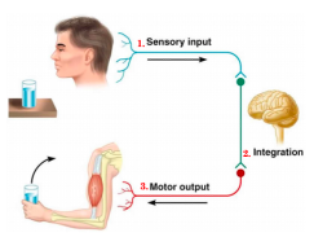
1. Sensory receptors in Michael’s eyes detect the sight of the glass of water on the bench. Sensory information received from the peripheral nervous system is sent along afferent neurons to the brain (central nervous system), via the spinal cord.
2. Michael’s brain receives the sensory image and interprets the glass of water sitting on the bench and decides that he is thirsty and would like a drink.
3. Motor information is sent along efferent neurons to the effector muscle in the arm/hand (somatic nervous system), which allows Michael to carry out the voluntary action of picking up the glass of water.
Unconscious responses:
automatic and involuntary action that is performed by body independently of brain (spinal reflex).
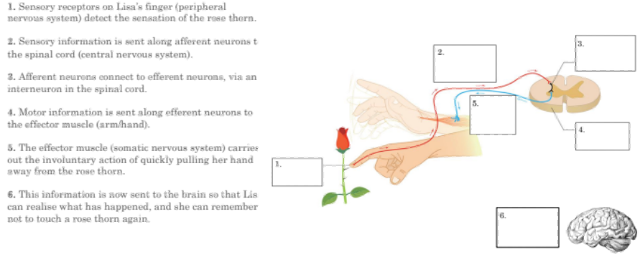
Reflex Arc/Spinal Reflex: An automatic, unconscious response that is initiated by neurons in the spinal cord, independent of the brain, notify brain of what happens after action is done.
· Sensory receptors on Lisa’s finger (PNS) detect the sensation of the rose thorn
· sensory information is sent along afferent neurons to the spinal cord (CNS)
· Afferent neurons connect to efferent neurons, via interneuron in the spinal cord.
· Motor information is sent along efferent neurons to the effector muscle of the arm and hand.
· The effector muscles (SNS) carry out the involuntary action of quickly pully her hand away from the rose thorn.
· This information is now sent to the brain so that Lisa can realise what has happened and can remember not to touch a rose thorn again.
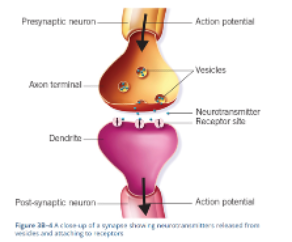
Neural Transmission
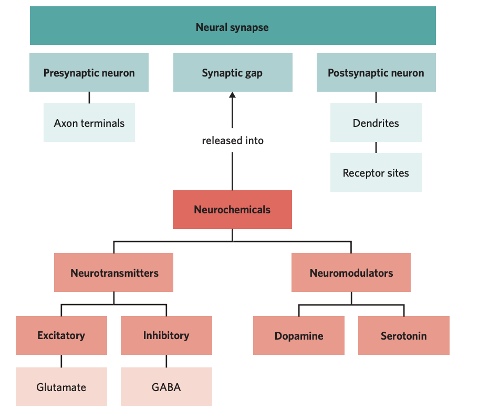
1. Presynaptic Neuron releases neurochemicals into the Neural Synapse via Axon terminals (releases neurochemicals into the neural synapse).
2. The Postsynaptic Neuron receives the neurochemicals from neural synapse via Receptor Sites (protein molecules) that are located on the Dendrites.

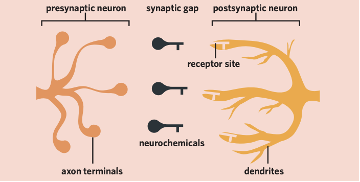
Neurochemicals
chemical substance that transmits neural information within NS, released by the presynaptic neuron and affect the postsynaptic neuron.

LOCK AND KEY PROCESS:
Neurochemicals have a distinct molecular structure that corresponds to a specific receptor site. Meaning neurochemicals (key) can only bind to the corresponding receptor site (lock) that matches its specific molecular structure.
Excitatory Neurotransmitter
Main excitatory neurotransmitter in the Nervous System is Glutamate.
Excitatory effect: when neurotransmitter increases likelihood of postsynaptic neuron firing an action potential. They enhance neural transmission along neural pathways by activating postsynaptic neurons.
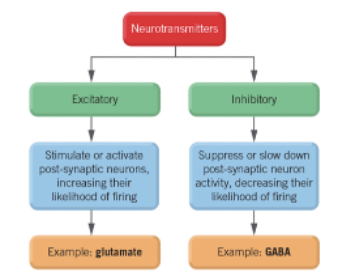
Inhibitory Neurotransmitter
Main inhibitory neurotransmitter in GABA (Gamma-AminoButyric Acid).
Inhibitory effect: when neurotransmitter decreases the likelihood of the postsynaptic neuron firing in action potential. They suppress neural transmission from occurring along neural pathways by regulating the activation of postsynaptic neurons.

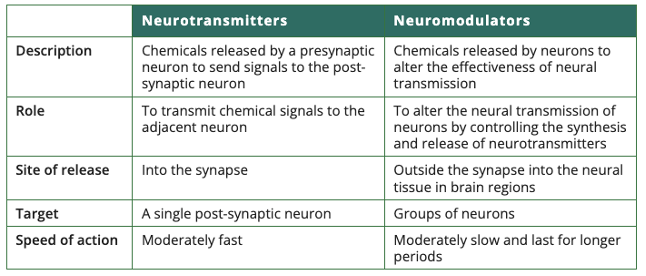
Neuromodulators VS Neurotransmitters:
Neuromodulators: Chemical molecules that influence multiple postsynaptic neurons and modulate overall neural transmission. increasing/decreasing responsiveness of many neurons to neurotransmitter action potentials. Released in a slower, diffuse manner. Must bind to their specific receptor sites to influence postsynaptic neurons.
Neurotransmitters: Chemical molecules that influence transmission of neural information across synapses.
Dopamine:
Neuromodulator, responsible for voluntary motor movement, experience of pleasure, and reward based learning.
Multifunctional with excitatory and inhibitory effects (dependent on the type of receptor sites present at the brain location).
· Primarily responsible for Voluntary motor movement and experience of pleasure and Reward-based learning- (Reward Pathway, structures in brain that activated by rewarding stimuli).
· Transmitted along pathways in brain originating from regions that produce Dopamine.
· Role in motivation and connection of reward-based learning and motivation can lead to addiction.

Dopamine: Addiction
· Pleasurable activities can cause association with unhealthy and addictive behaviours, due to the reward pathway. When we see a reward worth chasing, our brain produces higher levels of Dopamine (motivating us to complete the task. )
Theory of Addiction: Most addictions are caused by the brain’s inability to produce dopamine naturally, without the substance that someone is addicted to. Only the substance provides enough dopamine to feel pleasure - leading to repetition of behaviour = addiction.

Serotonin:
Inhibitory neuromodulator, influencing a variety of brain activities. Primarily responsible for the regulation of mood and sleep.
Primarily responsible for modulating all human behavioural processes (mood, perception, reward, anger, aggression, appetite, memory, sexuality, attention)
Majority of body’s serotonin is found in gastrointestinal tract as a part of the gut–brain axis (role in regulating bowel function and reducing appetite). Impairments to serotonin pathway system have been linked to anxiety disorders and depression.
1. Pathway begins in the Raphe Nuclei- mass of neurons in brainstem.
2. Extending to almost all areas of the cerebrum including cerebral cortex.
3. Travels through the brain modulating the brain activity in these areas
Serotonin and sleep:
Important role in regulating the sleep-wake cycle:
Influences quality and quantity of sleep at night
Influences feelings of alertness
Symptoms are associated with depression (which is also associated with lower levels of serotonin).
Serotonin and mood:
Important role in mood regulation and stabilisation. When serotonin levels are high, mood improves. However, a lot of chemical processes happening in the body, so difficult to establish a cause-and-effect relationship. Despite this, clear that balanced serotonin levels lead to calm, stable, happy moods. Low levels are associated with mental disorders (Depression) (Why some medications to treat depression increase/target serotonin receptors, HOWEVER, unable to determine if depressed people stopped making serotonin or if low serotonin led to the depression).

Serotonin and aggression & impulsivity:
lower level of serotonin in brain (cerebral cortex), leads people to discount a delayed reward, increasing impulsive behaviours. Low levels of serotonin in brain can affect communication between specific structures within limbic system responsible for regulating emotions. Communication between amygdala and frontal region of cerebral cortex becomes weaker, making it more difficult for the frontal area of our cerebral cortex (which makes decisions) to control and regulate emotional responses increasing aggressive and violent behaviours.
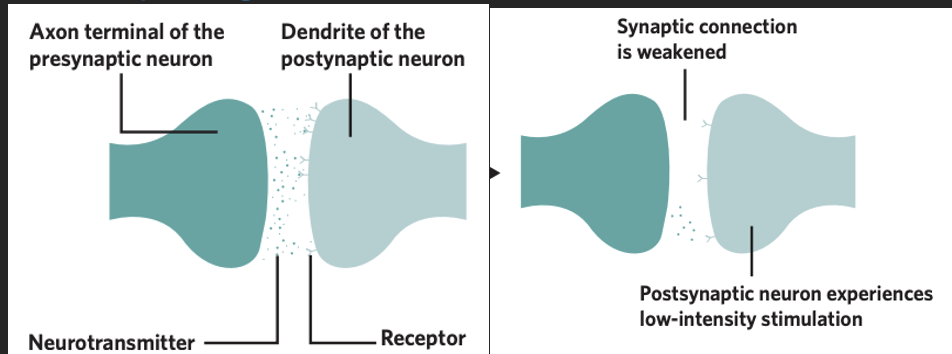
Long-Term Potentiation (LTP)
long-lasting and experience-dependent strengthening of synaptic connections that are regularly coactivated.
neural pathway is activated during learning, excitatory neurotransmitter glutamate is released. Neural synapses are strengthened in response repeated use during learning.
Increased strength of synaptic connections makes postsynaptic neurons more receptive to neural signals from presynaptic neurons.
(Tennis coach teaches you a new serving technique, take time to learn. Each time you practise, you are activating new pathway in brain associated with this technique. Through LTP, pathway becomes stronger, easier to serve.)
Structural and synaptic changes that occur during LTP: Strengthening & activation shows pathways to become more rapid & efficient.
Structural changes to neural synapse include:
· Increased number of receptor sites on the dendrites of the postsynaptic neuron.
· Growth of dendritic spines on the postsynaptic neuron (sprouting).
· Growth of axon sprouts called filigree appendages on axon terminal of presynaptic neuron
· Formation of additional synapses where these dendritic spines and filigree appendages meet, (synaptogenesis).

Long-Term Depression (LTD)
long-lasting and experience-dependent weakening of synaptic connections between neurons that are not regularly coactivated
Neural synapses are weakened in response to infrequent use. No longer regularly activated, long-term depression weakens synaptic connections in this neural pathway that is no longer necessary. Makes postsynaptic neurons less receptive to neural signals from presynaptic neurons and consequently less readily activated. Enables brain to accommodate more necessary memory traces that represent more relevant info.
Structural and synaptic changes that occur during LTD: structural changes to neural synapse:
· decreased number of receptor sites on the dendrites of the postsynaptic neuron.
· decreased number of dendrites on the postsynaptic neuron due to pruning.
· decreased number of synaptic connections between neurons due to pruning
Psychological internal stressors can include
Attitude, repetitive thinking, Low Self-Esteem, Nervous System Dysfunction.
Internal Stressors - Attitude:
negative attitude (i.e. pessimistic), more likely consider a situation to be outside of their capacity to cope, increasing the likelihood of experiencing stress.
Internal Stressors- Rumination:
Repeatedly thinking about the negative components of an event, more difficult to overcome, increasing the likelihood of experiencing stress.
Internal Stressors- Low Self-Esteem:
Negative opinion of themselves makes it more likely do not believe in their capacity to overcome a stressful situation, increasing the likelihood of experiencing stress.
Internal Stressors- Nervous System Dysfunction
The dysfunction of the production of certain neurotransmitters (gamma-amino butyric acid (GABA)), could make it more likely to experience a stress response.
Psychological Stress Responses:
Stress and excited same biological response, change in psychological response in different people. Influence on how we process a stressor and accompanied by different emotional states
Psychological nature of stress response is impact by: Eustress or Distress.
Physiological Stress Response:
experienced in similar ways by different people. However, different biological stress responses will occur depending on the length of time that the stressor demands & the efforts to cope.
- Acute stress = Fight Flight Freeze response
- Chronic stress = Cortisol release

Gut-Brain Communication:
Considered to be a bidirectional relationship (communication can occur both ways). Communication is completed through the Vagus Nerve. One of the connections between the brain and the gastrointestinal tract. (information about the state of the gastrointestinal tract, including pain and discomfort from the gut and feelings of hunger and satiety (fullness), can be sent ‘up’ from the gut to the brain.) Signals are also sent ‘down’ to the gut from the brain, such as initiating salivation and gastric acid secretion on smelling food and anticipating eating
Increased microbiome diversity is considered beneficial for managing stress because a diverse gut microbial community operates as a more stable, resilient, and efficient "second brain," helping to modulate the body's stress response and reduce inflammation.
The Gut (Gastrointestinal Tract):
Responsible for: Processing food, Absorbing nutrients, Excreting waste
· Multiple living microorganisms to help maintain gut health (Gut Microbiota and Gut Microbiome)
· Health of the gut is determined by types and amounts of microorganisms present.
(Imbalance of microbiota = Microbiota Dysbiosis or
Balance of Microbiota= Microbiota Symbiosis).
Gut dysbiosis:
alterations in gut microbiota composition and function. The most typical features of dysbiosis are a decrease in the diversity of the microbiota, a loss of beneficial microbiota, or an overgrowth of harmful microbiota.

Microbiota composition and research:
Research comparing the microbiota in healthy individuals and those with different psychological/behaviour patterns/experiences suggests that composition of gut microbiota can influence likelihood of experiencing:
· Autism Spectrum Disorder
· Mental Health disorders (Depressive, Anxiety & Psychotic Disorders)
· Cognitive Decline.
Stress as a Biological Process:
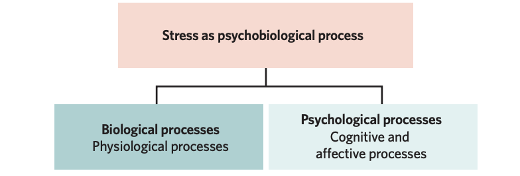
A psychobiological process as stress responses involves both psychological & biological aspects.
(biological aspects include immune system functioning and the release of hormones)
GAS explains the various biological/physiological reactions that occur in the presence of stressors, but not psychological.
Hans Selye’s research:
In the 1930’s, Hans Selye was conducting research on both immediate and long-term effects of stress. Research was done on rats, were exposed to stressors.
Found that: despite differences in these stressors, a typical physiological syndrome appeared, which he called the general adaptation syndrome (GAS).
He emphasised two elements when describing this syndrome.
· It is non-specific (it is same irrespective of the type of stressor)
· It is identical within all members of a species (for rats)
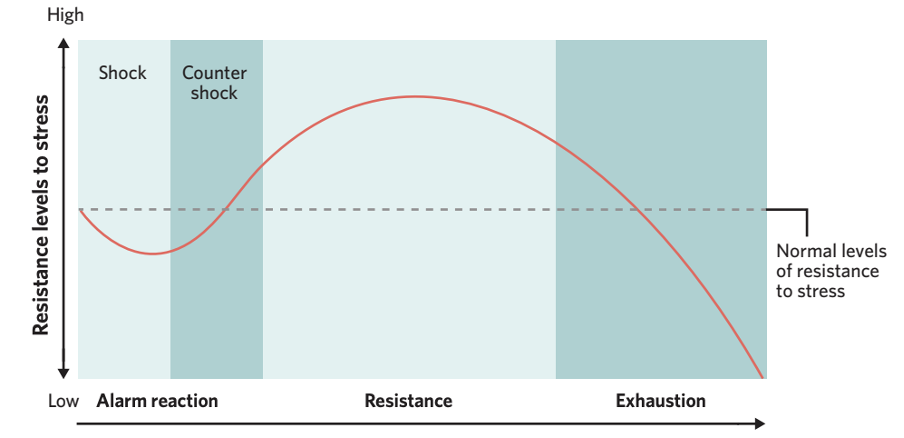
Explanatory Power of Selye's General Adaptation Syndrome:

Psychological Factors that influence stress :
Psychological factors influence how stress is perceived and processed, unique for everyone.
(Optimism vs. pessimism, Risk-taking, Lifestyle pace, Competing and compounding pressures, Past experiences, Influence of family, friends, Resources, Personality).
Stress as a Psychological Process:
Mental functions (cognitive), and emotions (affective) impact how individual interpret stressors. Processes are subjective (based on personal feelings, preferences), everyone will respond differently.
Lazarus & Folkman transactional Model of Stress & Coping (1984):
‘Transactional’= it explains stress response as an ‘output’ resulting from ‘input’. Explains that unique stress response is from an individual's appraisal of stressor and ability to cope with it.
Focuses on
two key psychological factors:
· meaning of event to individual
· individual’s judgment of their ability to cope with it.
· stress is result of individual and environment.
Views process of stress through Primary and Secondary appraisal mechanism & individuals’ assessment on ability to cope.

Explanatory Power of Transactional Model of Stress & Coping:

2 components of effective coping include:
· Context-Specific Effectiveness
· Coping Flexibility
Coping flexibility includes
being able to:
· recognise whether the use of a coping strategy is appropriate for a specific situation
· select a coping strategy that suits the circumstances of the situation
· discontinue using an ineffective coping strategy and implement an alternative, more effective coping strategy.
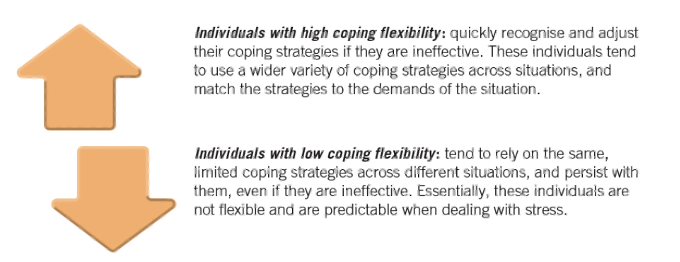
Coping strategies:
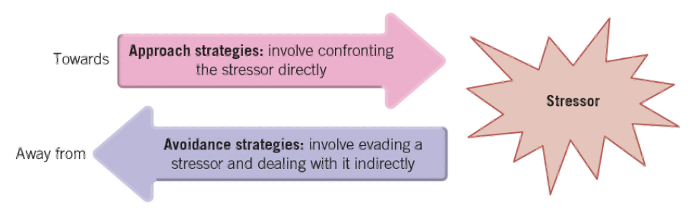
Exercise as a Coping Strategy: an avoidance strategy but has benefits:
· Increases demand on the body for energy, uses up stress hormones.
· Helps ‘work out’ tension in muscles.
· Increases the efficiency of the cardiovascular
system (increases strength, flexibility, stamina for future stressors).
· Short-term psychological benefits during (relaxation,
relief from stress symptoms).
· produces chemical changes in the body that can improve psychological health. (brain releases
mood-enhancing beta-endorphins- relieve pain and increase a sense of wellbeing).
· Distraction from a stressor.
· Can experience long-term psychosocial benefits from the social interaction and social support.
10 mark question (IDEA)
Identify: the relevant key terms, concepts, models or theories.
Define: these, by giving their precise meaning.
Explain: the key terms, concepts, models or theories by giving a detailed account including relevant examples, reasons and causes.
or
Evaluate: the results by considering strengths and limitations of the data.
Apply and analyse: by breaking down the data, methods or models in order to bring out the important elements. Consider the evidence and investigate possible explanations. Make an appraisal or assess the value of the evidence, by weighing up the strengths and limitations. select evidence that connects to the theory