7.5 Food Production
 Call Kai
 Learn
Learn Practice Test
 Spaced Repetition
 Match
Match Flashcards
 Knowt Play
1/22

There's no tags or description
Looks like no tags are added yet.
Name | Mastery | Learn | Test | Matching | Spaced | Call with Kai | Chat |
|---|
No analytics yet
Send a link to your students to track their progress
23 Terms
What is food security?
Having enough food to feed a population.

What are the biological factors which are threatening food security? (6)
Increasing birth rate → more food required
Changing diets in developed countries → already scarce food resources are transported around the world
New pests and pathogens → destroy crops
Environmental changes — e.g. famine in some countries is rains fail
Cost of agricultural inputs
Conflicts → affects availability of water and food

How can the efficiency of food production be improved?
Restricting energy transfer from food animals to the environment.

Farmers aim to increase the amount of energy (from food) that is converted to biomass in livestock because this is more efficient.
This is done by restricting energy transfer from food animals to the environment.
Explain how this is done.
Limiting their movement — e.g. small cages
This reduces the energy wasted on movement
Controlling the temperature of their surroundings — less energy wasted on controlling body temperature
Given high protein food → increases growth


Explain the ethical objections with intensive farming.
Animals are kept in a small space → causes distress
Increases the risk of spread of infection
Standard of living is low for the animals
How do farmers decrease the risk of spread of infection in intensive farming, what is the risk of this?
Giving animals precautionary antibiotics
Contributes to antibiotic resistant bacteria
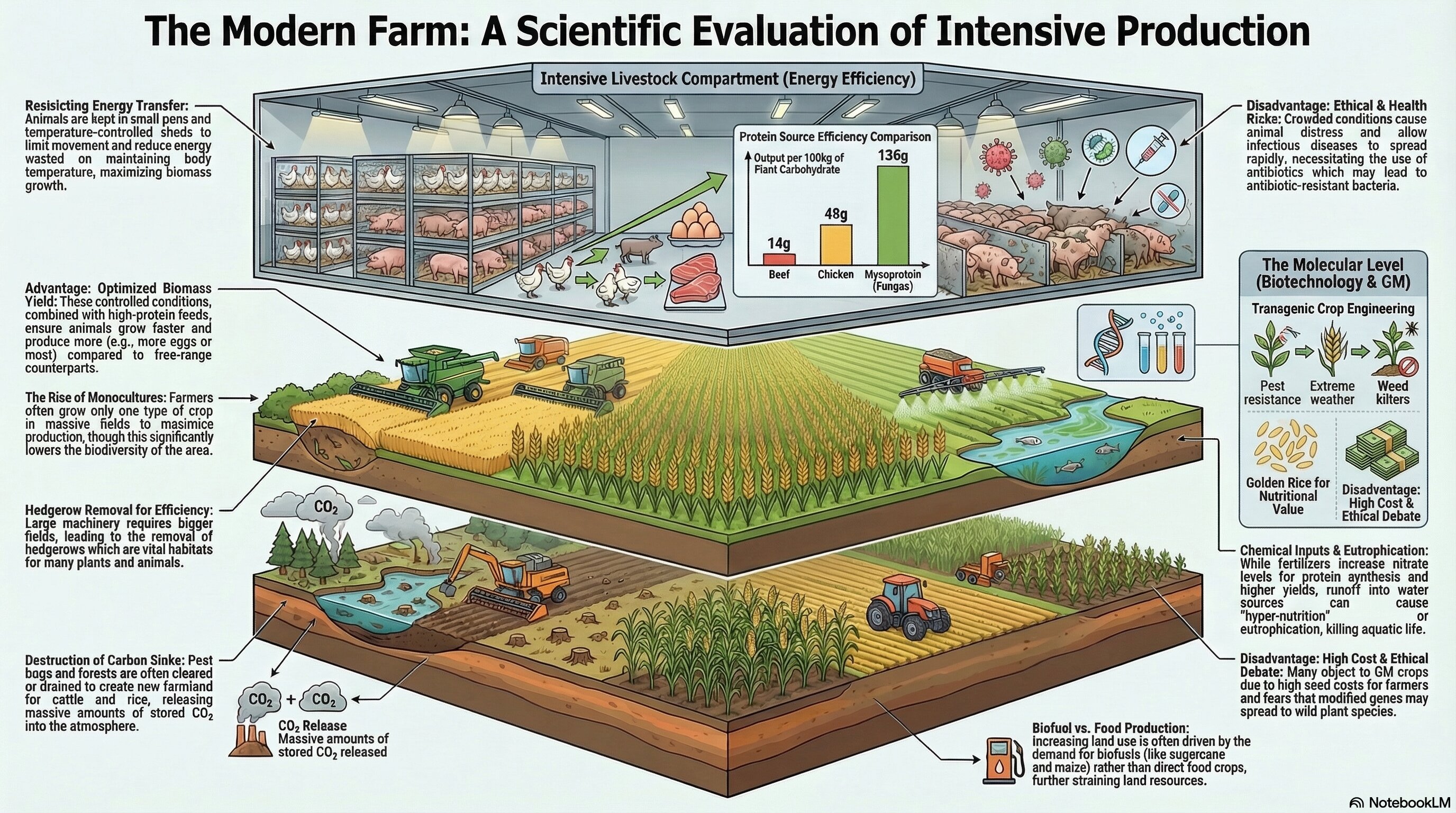
Evaluate the advantages and disadvantages of modern farming techniques.
Produces a higher yield of food
Makes more efficient use of land
Increased risk of disease spreading
Antibiotics given → increases risk of developing antibiotic resistant bacteria
Ethical objections — e.g. poor standard of living
Intensive crop farming practices → reduces biodiversity

How can intensive crop farming reduce biodiversity? (2)
Growing only one type of crop — monoculture
Removing hedgerows — makes fields larger
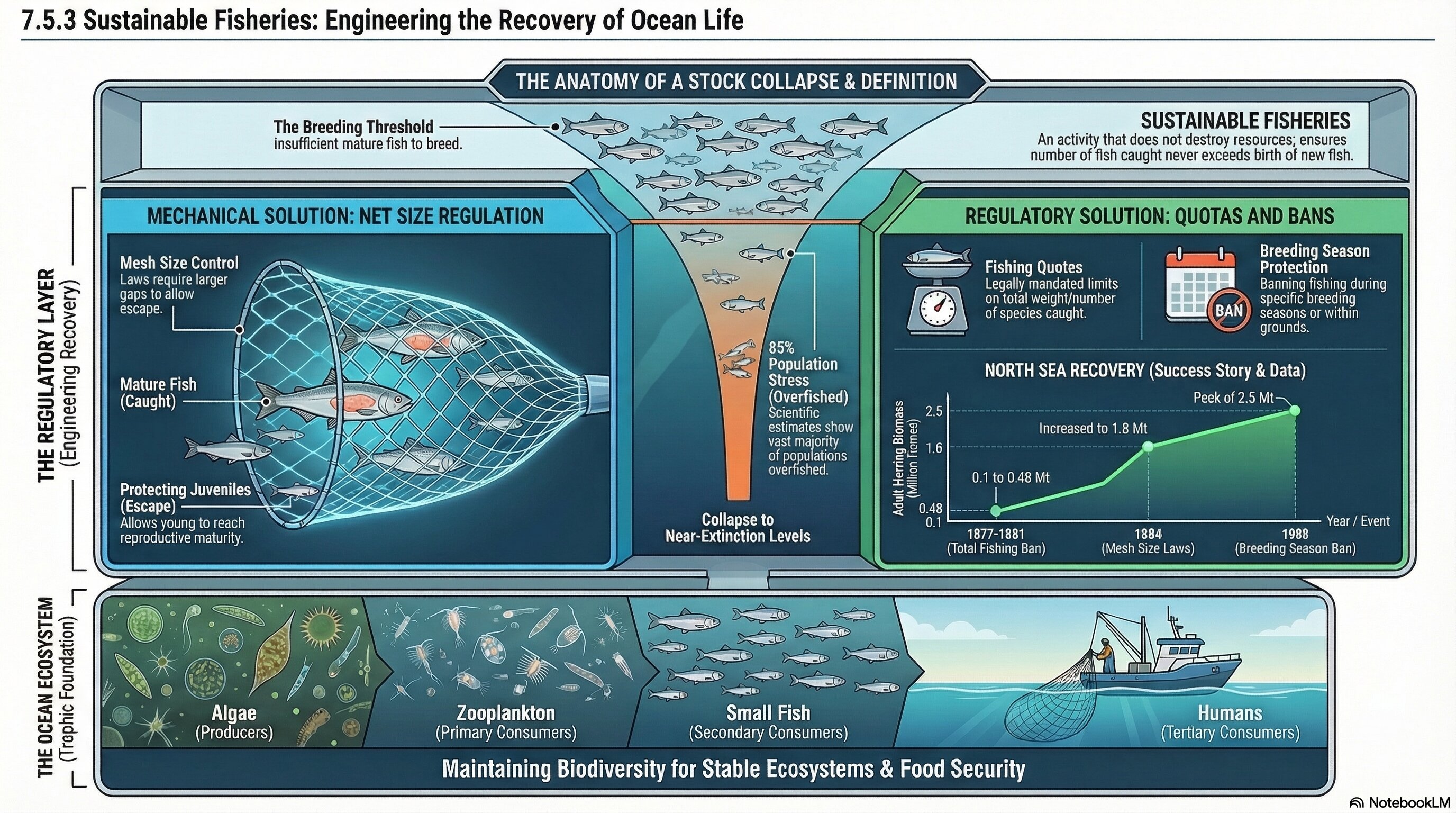
Fish stocks in the oceans are declining.
Explain why this is happening.
Humans are fishing faster than the populations can regenerate.


_______ ________ in the oceans are declining.
It is important to maintain _____ ________ at a level where __________ continues or certain species may ___________ altogether in some areas.
Fish stocks
fish stocks
breeding
disappear
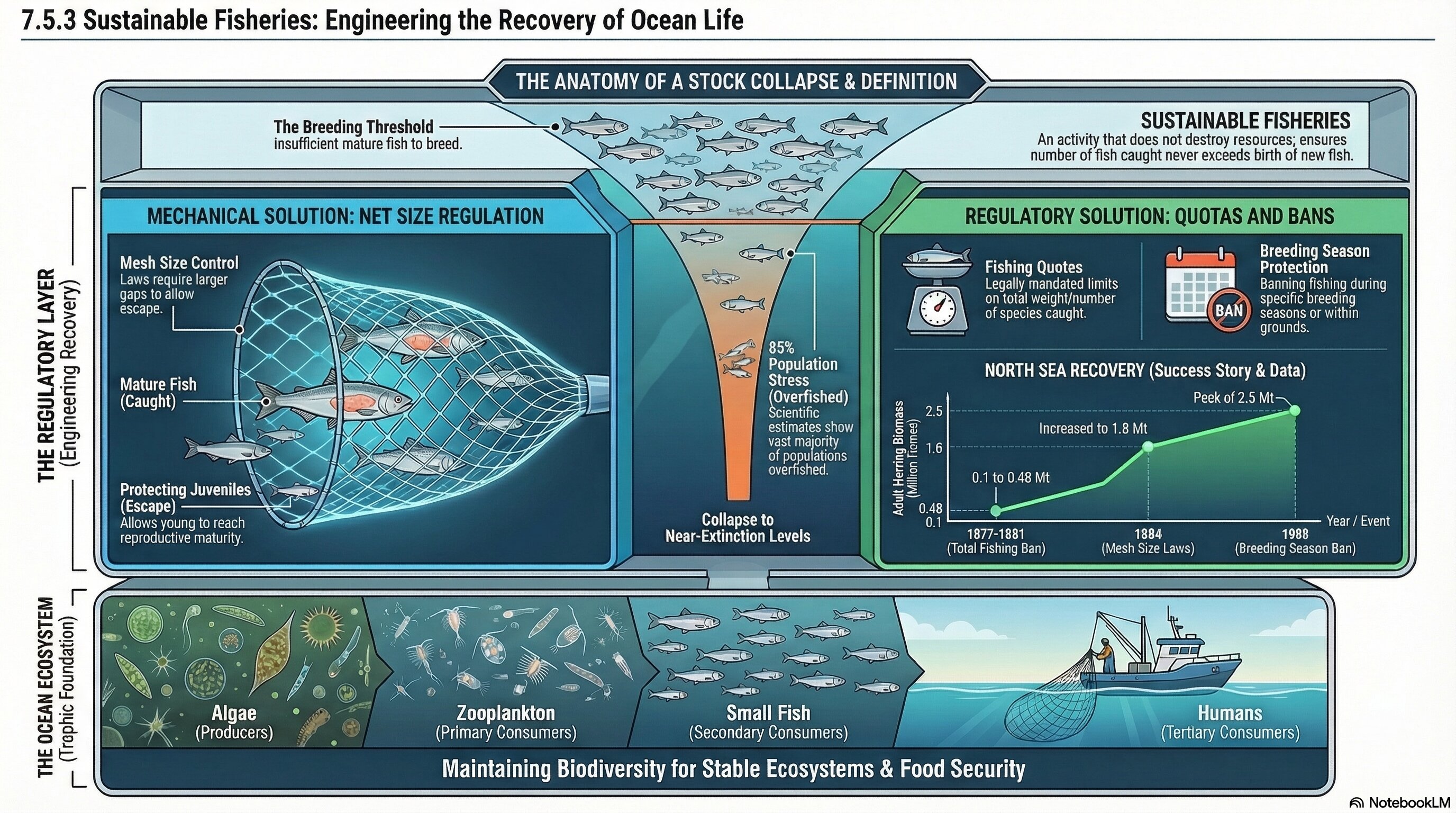

What restrictions have been put in place to conserve fish stocks? (2)
Control of net size
Fishing quotas
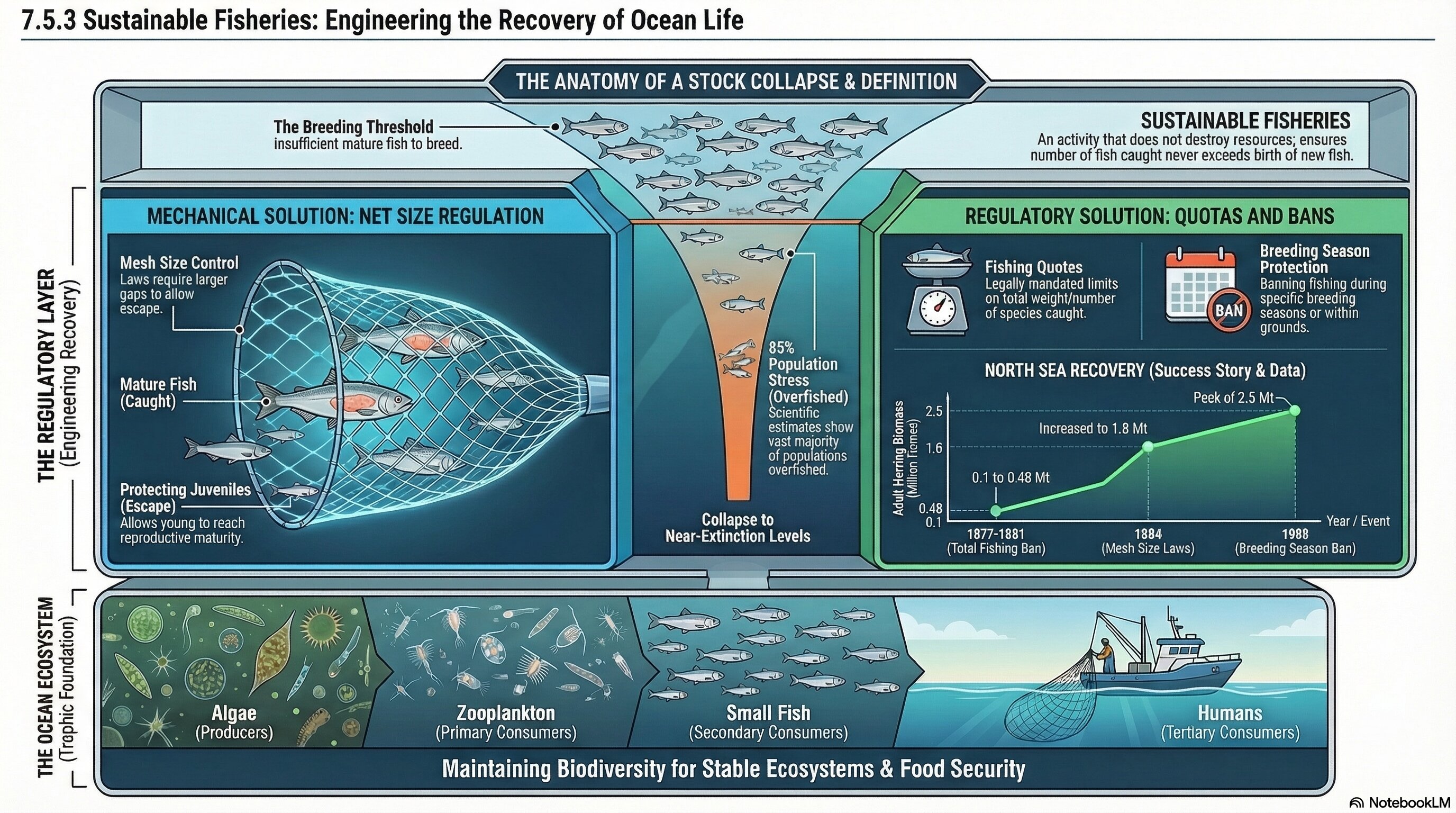

How does controlling net sizes help conserve fish stocks?
Making nets bigger → smaller fish can get through
Can reach breeding age and produce more fish


How do fishing quotas help conserve fish stocks?
Only a certain number of a species of fish can be caught → prevents overfishing

What is Fusarium used to produce? How is it produced?
Mycoprotein — protein-rich food for vegetarians
Fungus is grown on glucose syrup (aerobic conditions) — biomass is harvested and purified
How can biotechnology be used? (2)
Feed the population
Provide treatments for diseases
How doe the use of mycoprotein have a positive impact?
Reduces land use — less land used to rear animals and grow crops
Reduces methane contribution — cows produce methane → less cows being reared
A _____________ modified bacterium produces human _________.
When harvested and __________ this is used to treat people with __________.
genetically
insulin
purified
diabetes
What are the advantages of using genetically modified crops?
Resistance to pests or extreme weather conditions — increased yields
Increases nutritional value — beneficial where there is a lack of access to vitamins (e.g. golden rice)
It is more energy-efficient to rear cows indoors than to rear cows outdoors.
Give two reasons why. [2 marks]
Less energy lost as heat
Less energy lost in movement

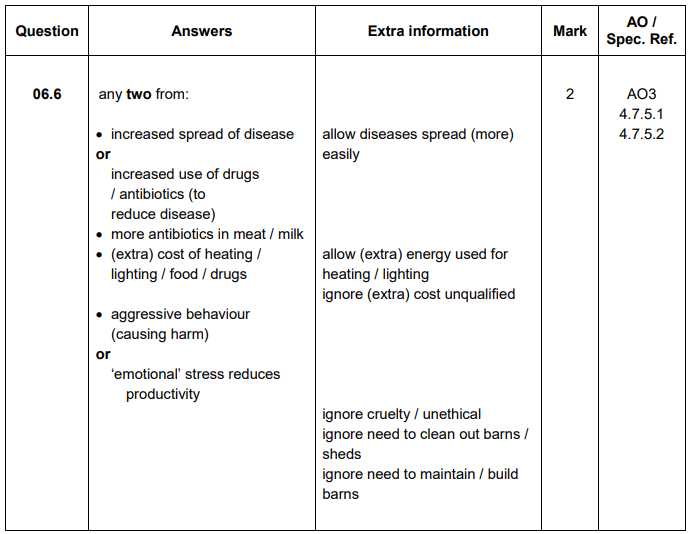
Suggest two possible disadvantages of rearing cows indoors. [2 marks]
Increased spread of disease
Extra cost of heating
![<ul><li><p>Too many herring were caught by fishermen between 1960 and 1977.</p></li><li><p>Herring can live for up to 12 years and begin to reproduce when 3 to 4 years old.</p></li><li><p>Laws have been introduced to help conserve herring:</p><ul><li><p>1977 to 1981 – herring fishing was banned in the North Sea</p></li><li><p>1984 to present day – control of mesh size of fishing nets</p></li><li><p>1997 to present day – fishing quotas were introduced</p></li><li><p>1998 to present day – herring fishing was banned in breeding grounds during the breeding season</p></li></ul></li><li><p><strong>Figure 11</strong> shows how the biomass of adult herring in the North Sea has changed box between 1950 and 2010.</p></li><li><p><strong>Figure 12</strong> shows how a minimum mesh size helps to conserve herring</p></li></ul><p>Evaluate the effect of these laws on the conservation of herring stocks. [6 marks]</p><p>Use data from <strong>Figure 11</strong> and information from <strong>Figure 12</strong> in your answer.</p>](https://assets.knowt.com/user-attachments/8a95a005-98f8-4f00-b048-5baaeb373a4a.png)
Too many herring were caught by fishermen between 1960 and 1977.
Herring can live for up to 12 years and begin to reproduce when 3 to 4 years old.
Laws have been introduced to help conserve herring:
1977 to 1981 – herring fishing was banned in the North Sea
1984 to present day – control of mesh size of fishing nets
1997 to present day – fishing quotas were introduced
1998 to present day – herring fishing was banned in breeding grounds during the breeding season
Figure 11 shows how the biomass of adult herring in the North Sea has changed box between 1950 and 2010.
Figure 12 shows how a minimum mesh size helps to conserve herring
Evaluate the effect of these laws on the conservation of herring stocks. [6 marks]
Use data from Figure 11 and information from Figure 12 in your answer.
Small fish are not caught — can live long enough to reproduce
Biomass has generally increases after laws are introduced
‘77 to ‘81 law resulted in an increase in biomass — 0.9 by ‘84
‘84 law resulted in an increase in biomass — 0.9 to 1.8
‘97 law resulted in increase — 1.15 to 1.25
‘98 law resulted in increase — 1.25 to 2.5
Each law results in an increase followed by a decrease
Laws superimposed so can’t tell the effect of each
Bans during breeding seasons are the most effective on conserving herring stocks as they had the largest increase

![<ul><li><p>Genetic modification of crop plants can help meet the demands of the increasing human population.</p></li><li><p>Golden rice is a genetically modified (GM) crop</p></li></ul><p>What is the advantage of golden rice compared with non-GM rice? [1 mark]</p>](https://assets.knowt.com/user-attachments/015e9876-58cb-4c11-9ba9-5c04c8fe14f2.png)
Genetic modification of crop plants can help meet the demands of the increasing human population.
Golden rice is a genetically modified (GM) crop
What is the advantage of golden rice compared with non-GM rice? [1 mark]
Golden rice has improved nutritional value
Genetic modification of crop plants can help meet the demands of the increasing human population.
Golden rice is a genetically modified (GM) crop
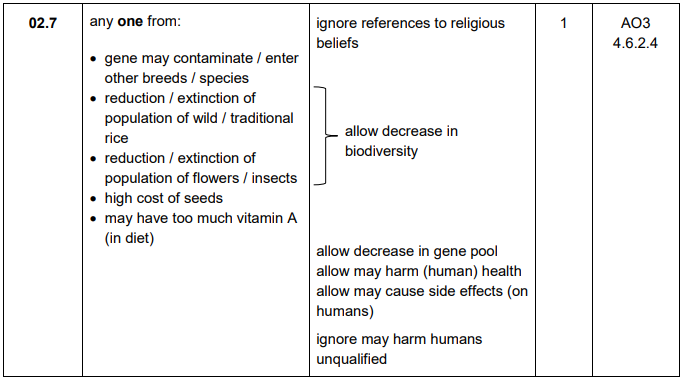
Suggest one reason why some people are concerned about the use of golden rice. [1 mark]
Genes may contaminate other species.