BIOL 291 Lab Practical 1
 Call Kai
 Learn
Learn Practice Test
 Spaced Repetition
 Match
Match Flashcards
 Knowt Play
1/74

There's no tags or description
Looks like no tags are added yet.
Name | Mastery | Learn | Test | Matching | Spaced | Call with Kai | Chat |
|---|
No analytics yet
Send a link to your students to track their progress
75 Terms
Solution
mixture of 2 or more substances
Solute
substance that gets dissolved
Solvent
substance that does the dissolving
Tonicity
effects of various osmotic solutions
Hypertonic
in 2 solutions, the solution with the higher osmolarity
Hypotonic
in comparing 2 solutions, the solution with lower osmolarity
Isotonic
a solution with an osmolarity that does not result in water movement
Diffusion
passive movement of molecules from higher to lower concentration
Osmosis
diffusion of solvent molecules across a semi-permiable membrane
Osmotic Pressure
the force of osmotic water movement

Directional Terminology
Proximal and Distal are used for limbs; Superior and Inferior are used for the trunk/main body

Anatomical Language

Microscope Labeled 1
Ocular Lenses
magnifies object 10x
Base
supports the microscope
Light Source
provides light
Iris Diaphragm
controls the intensity and size of the cone of light that is projected upward
Objective Lenses
magnifies objects at 4x, 10x, or 40x
Coarse Focus
adjusts the focus with broad adjustments
Fine Focus
adjusts the focus on a smaller scale
Condenser
collects and focuses the light onto specimen

Microscope Labeled 2
Arm
supports the microscope and connects the base
Brightness Control
controls the brightness of the light
Y-Axis Stage Control Knob
moves the slide vertically on the stage
X-Axis Stage Control Knob
moves the slide horizontally on the stage
Epithelial Tissue
Where do we encounter epithelia?
outer surfaces
skin, outer surfaces of organs
inner surfaces of hollow organs/structures
lungs, glands, bladder, intestines, stomach, etc.
Main Functions of Epithelia
protection – from mechanical abrasion & chemical contact
secretion – sweat, mucus, digestive enzymes, hormones, etc.
absorption – nutrients, wastes, etc.
sensory – embedded sensory neurons to detect changes
Classification of Epithelia
Number of cell layers
Cell shape
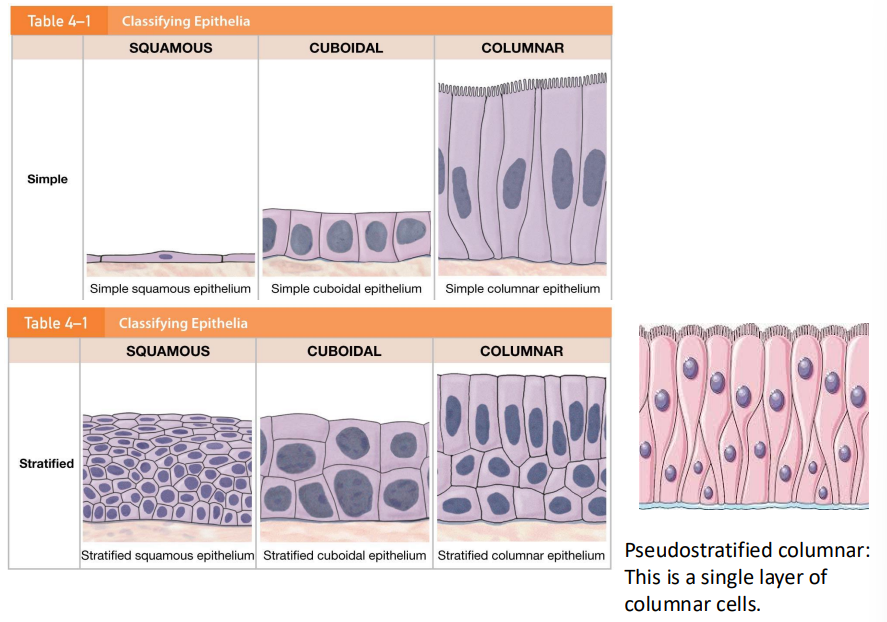
Classification of Epithelial Tissues

Simple Cuboidal Epithelium
Function: Absorption and secretion
Found in the glandular tissue and ducts, kidney tubules, etc.

Simple Squamous Epithlelium
Functions: Diffusion or filtrations
Found in kidneys and lungs
Adipose tissue consists of fat and is round; space in between

Non-Keratinized Stratified Squamous Epithelium
Not exposed to external environment
Function: provides protection from mechanical stress and abrasion
Found in any surface with space above it (vessel lumen)

Keratinized Stratified Squamous Epithelium
Has 5 layers rather than 4 (top layer flakes off)
Exposed to mechanical stress and abrasion; protects skin
Function: barrier to outside mechanical stress
Found outside the skin

Simple Columnar Epithelium
Functions: secretion or absorption
Found in the stomach, small intestine, etc.
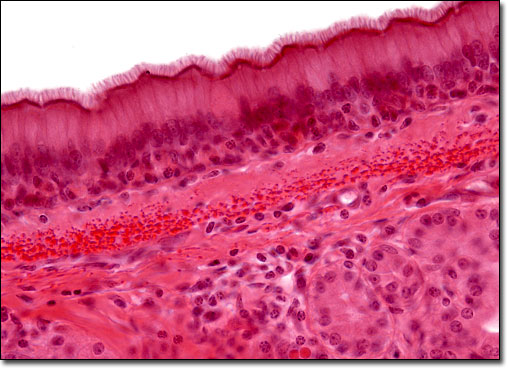
Pseudostratified Columnar Epithelium
Cilia is found on apical surface
Function: traps and secretes foreign material; mucus secretion
Found in the respiratory tract and male reproductive tract; trachea and bronchi
Keratin
tough protein that is the structural material for hair, nails, horns, claws, and the outer layer of human and animal skin
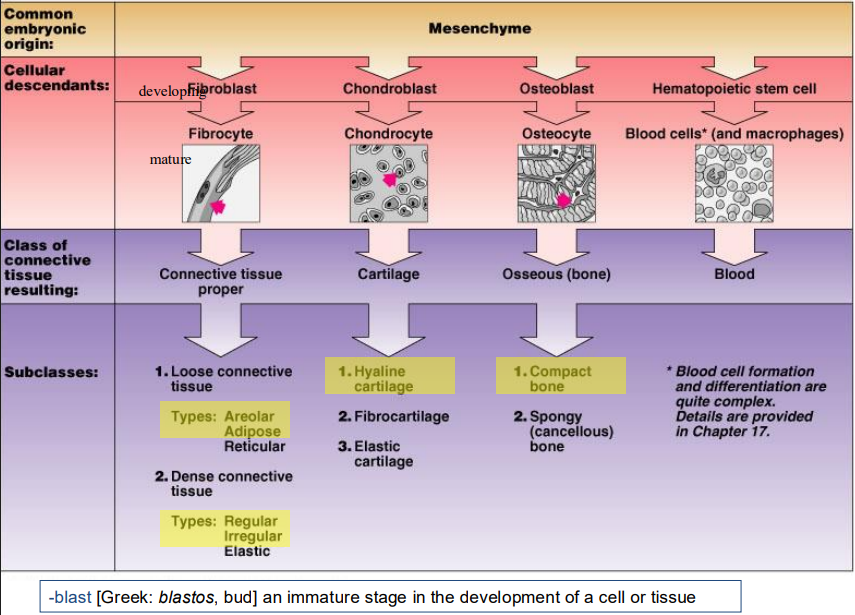
Connective Tissue
Functions:
Provides structural support & framework – bone, cartilage
Protection – adipose, dense irregular
Transport – blood & lymph
Energy storage – adipose tissue
Defense – blood (WBCs)
Wide variety of tissues but share 3 common components:
Contain specialized cells
Extracellular protein fibers (collagen, elastin, etc.)
Extracellular ground substance (fluid, gelatinous material, calcium salts, etc.)
**Together, the protein fibers and ground substance make up the extracellular matrix

Areolar Connective Tissue
Functions: diffusion, for nutrients and waste
Found under epithelial tissue; basement membrane, basal lamina

Adipose Tissue
Functions: fills space, provides padding, shock absorption, and insulation for protection
Found in the buttocks, breasts, and side of the body

Dense Regular Connective Tissue
Packed tightly together, parallel
Functions: can withstand one-directional stress
Found in ligaments, tendons, and aponeuroses

Dense Irregular Connective Tissue
Not in a uniform pattern
Function: can stretch in many directions; allows for free movement
Found in the dermis, joints, liver, epidermis, etc.

Bone (Osseous) Tissue
Calcified with embedded collagen fibers
Function: reduces brittleness and gives flexibility
Collagen is found in bone tissue

Hyaline Cartilage
Collagen fibers are found in hyaline cartilage
Firm, gelatinous material
Found in the ends of bones

Process
an often sharp, quasi finger-like projection away from the main part of the bone
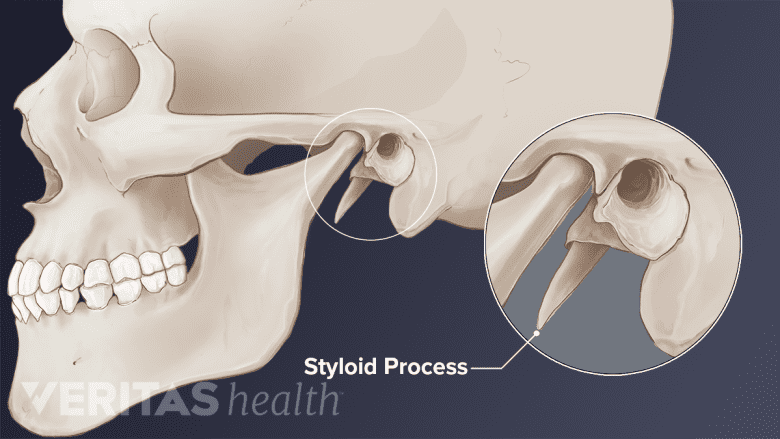
Styloid Process
a relatively long, thin process
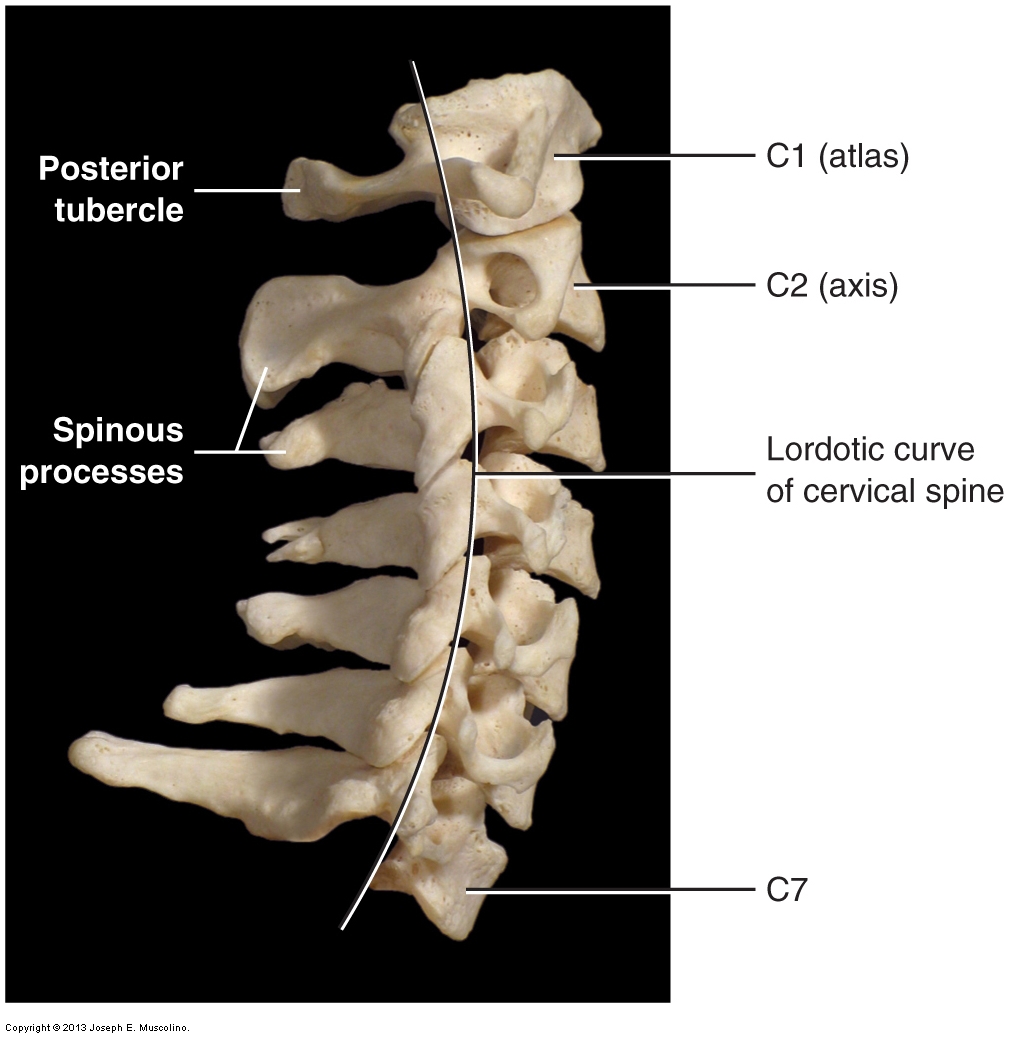
Spinous Process
a long bony projection on the posterior side of each vertebra

Tuberosity
a moderate-sized prominence (a medium bump)

Articulation
joint, where two bones come together
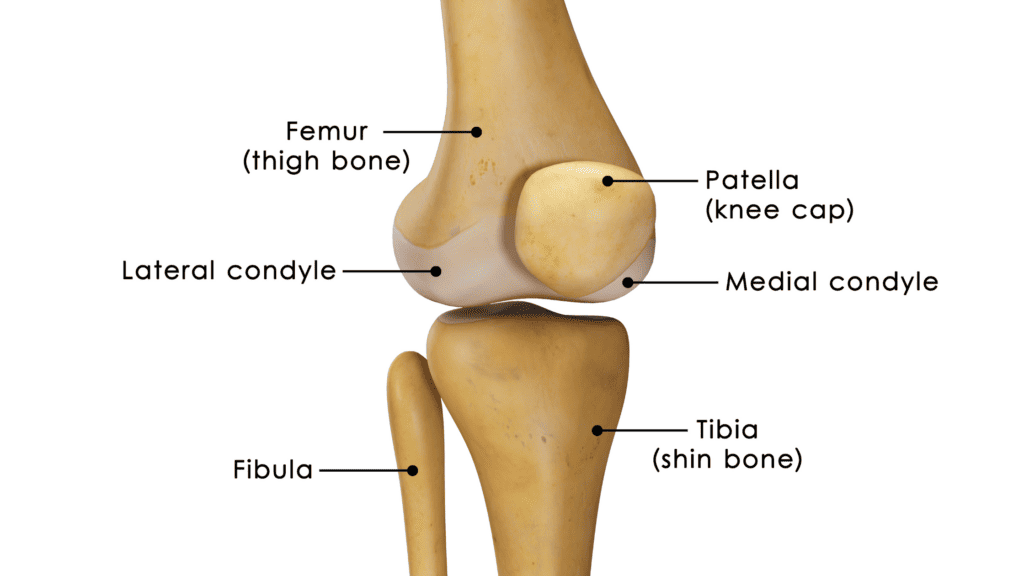
Condyle
large rounded bump that is used to form a joint with another bone

Epicondyle
a projection closely associated with a condyle, since “epi” means “above,” this is, above the condyle

Head, Shaft, Neck
Head: a rounded structure (usually on the proximal epiphysis); an epiphysis refers to the expanded ends of long bones
Shaft/Diaphysis: the main midsection of a long bone
Neck: the segment between the head and shaft of a bone
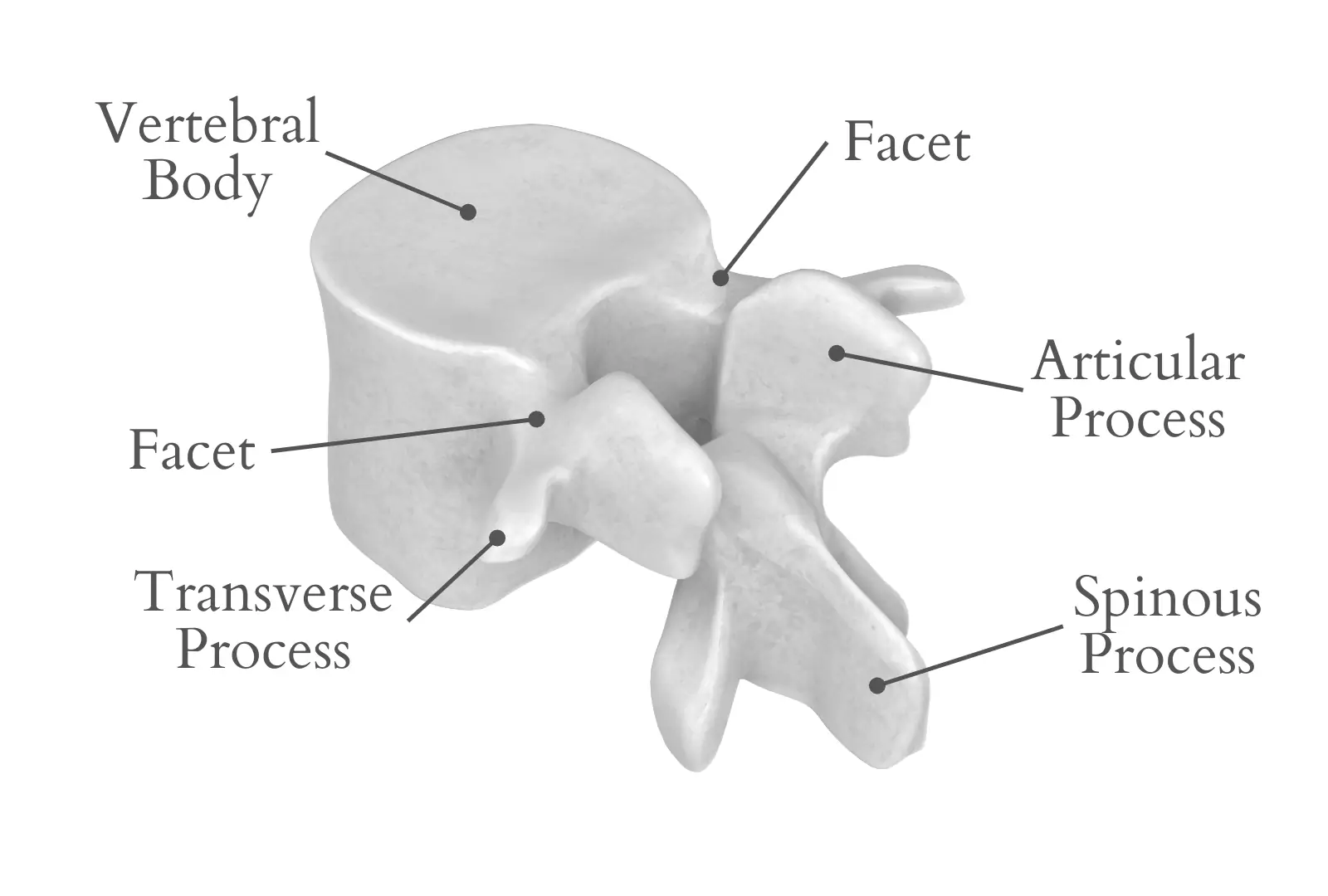
Facet
a flat, smooth surface
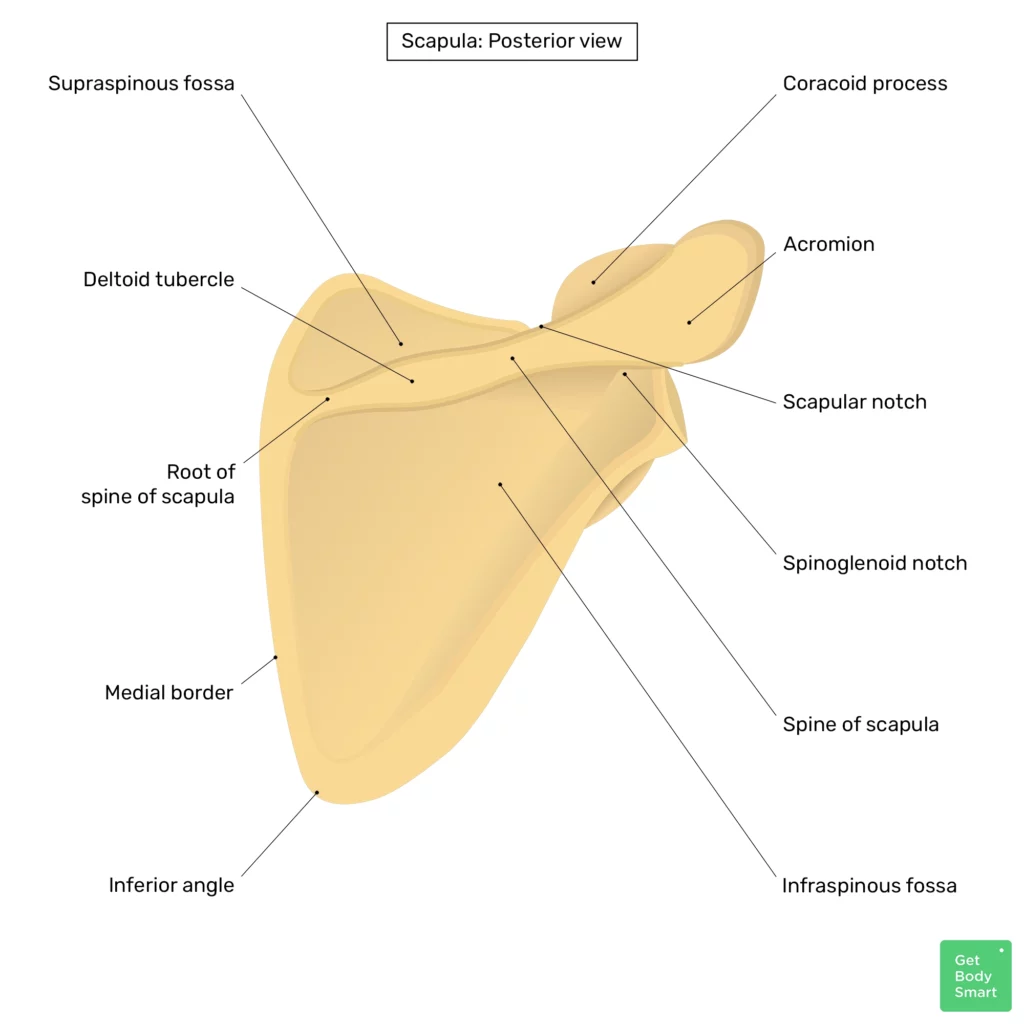
Fossa
a depression in a bone (often named after the structure that fits in it)
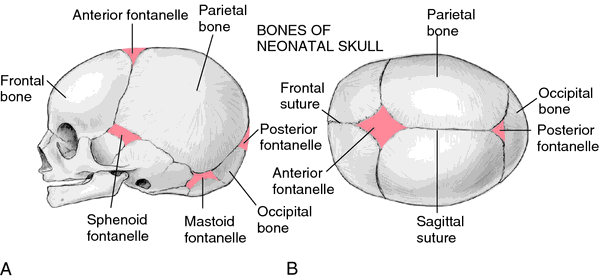
Fontanelle
a space between the bones of the skull in an infant or fetus, where ossification is not complete and the sutures not fully formed
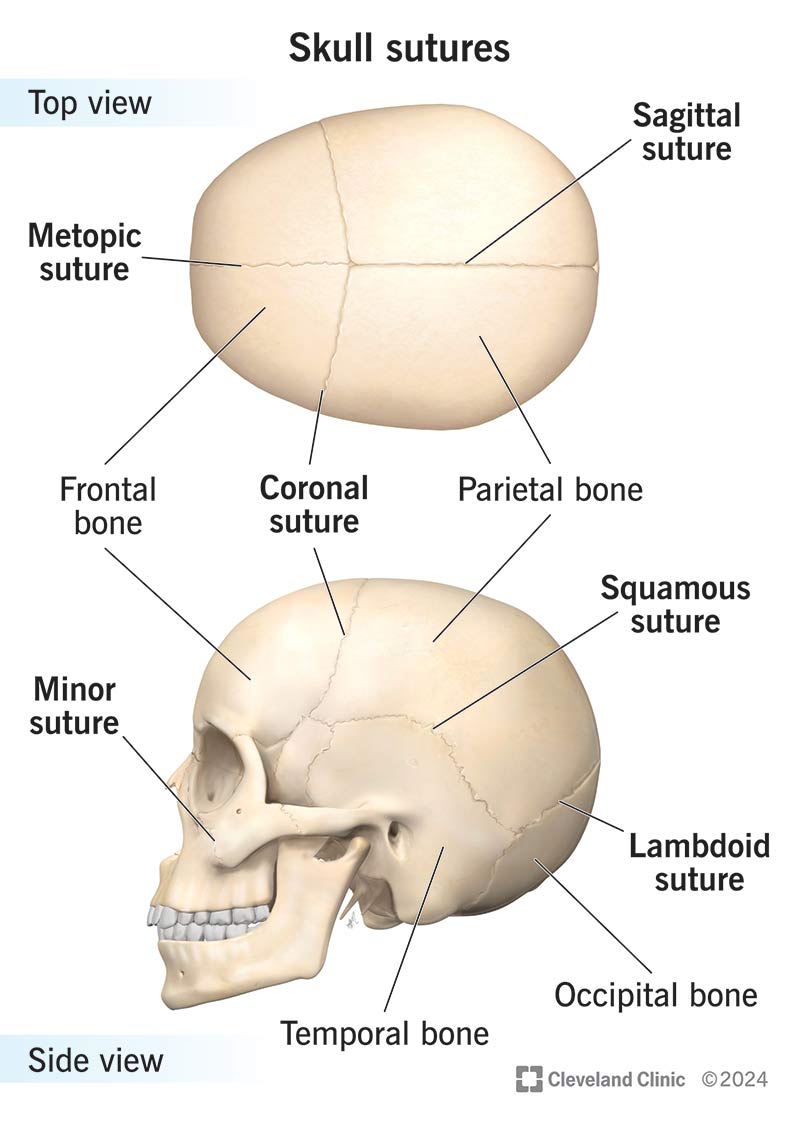
Suture
a type of joint between the bones of the skull where the bones are held tightly together by fibrous tissue
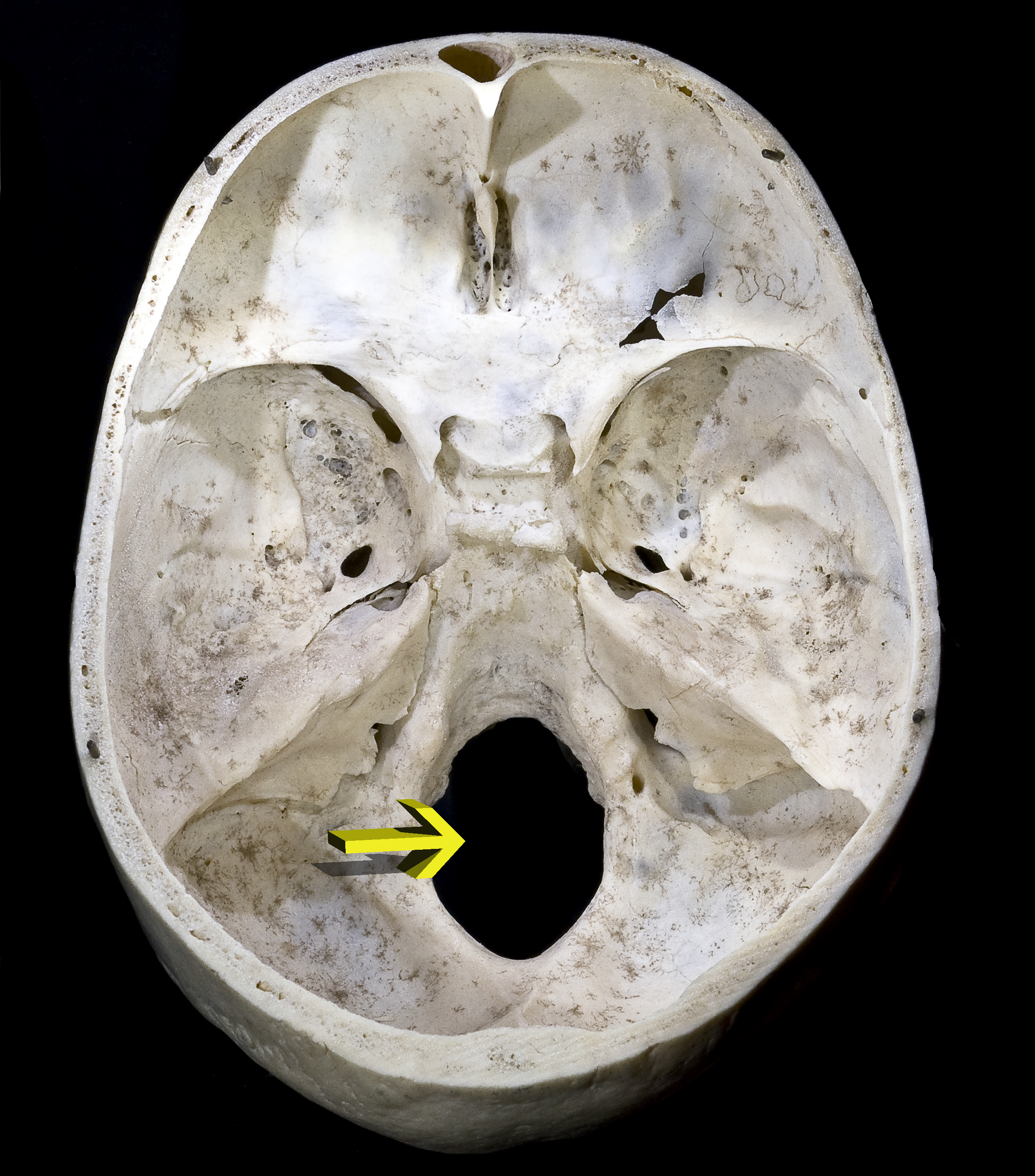
Foramen (Foramina)
holes or openings in a bone, usually through which nerves and blood vessels pass
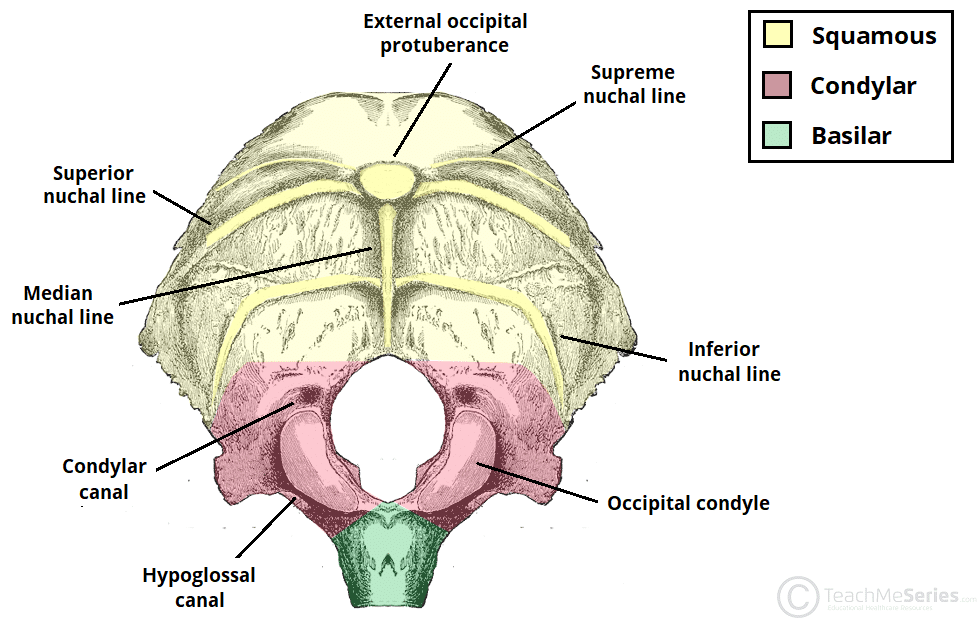
Canal
a tubular passage or tunnel in a bone

Sulcus
a groove

Alveolar Process
also called the alveolar bone, is the thick ridge of bone which contains the tooth sockets

Ligament
band of dense regular connective tissue that connects bone to bone

Aponeurosis
sheet of dense regular connective tissue that takes the place of a tendon in flat muscles having a wide area of attachment

Origin, Insertion
Origin: attachment of a muscle on the more stable bone
Insertion: attachment of a muscle on the more moveable bone

Action
what happens when the more mobile bone is brought toward the more stable bone during a muscular contraction

Tendon
dense regular connective tissue that attaches muscle to bone

Agonist, Antagonist
Agonist: sometimes called the prime mover, is the muscle that provides the primary force driving the action
Antagonist: is in opposition to a prime mover in that it provides some resistance and/or reverses a given movement.

Synergist
a muscle that acts in concert with another muscle to enhance its effect
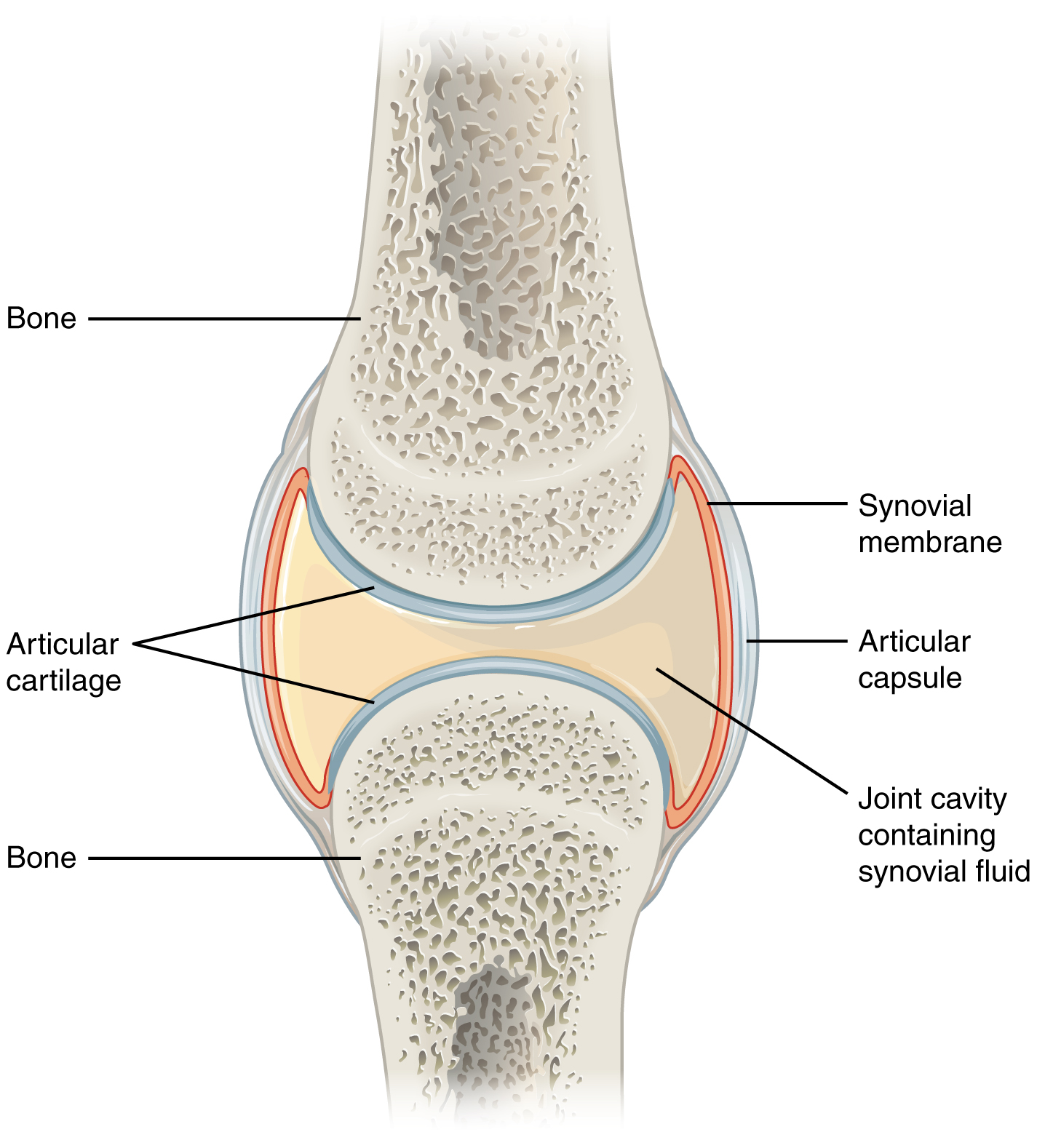
Synovial Joint
most common type of joint in the body. presence of a joint cavity, fluid-filled space is the site at which the articulating surfaces of the bones contact each other. the articular surfaces of bones are covered with smooth articular carilage.

Extension, Flexion
Extension: a movement that increases the angle between 2 body parts
Flexion: a movement that decreases the angle between 2 body parts

Hypertension
to extend so that the angle between bones of a joint is greater than normal

Abduction, Adduction
Abduction: move away from the midline of the body
Adduction: move toward the midline of the body

Circumduction
movement of a limb or extremity so that the distal end describes a circle while the proximal end remains fixed

Lateral & Medial Rotation
Lateral Rotation: movement of a joint, around its long axis, away from the midline of the body
Medial Rotation: movement of a joint, around its long axis, toward the midline of the body
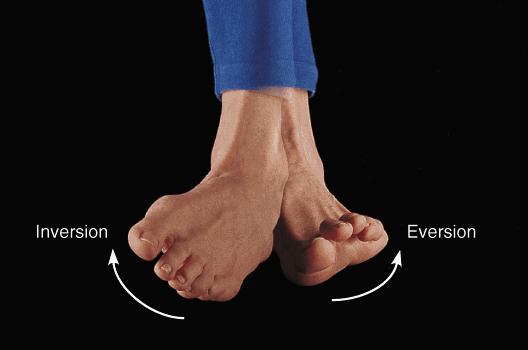
Eversion, Inversion
Eversion: turn the sole laterally or outward
Inversion: turn the sole medially or inward

Supination, Pronation
Supination: turn the palm anteriorly
Pronation: turn the wrist and hand from palm facing front to palm facing back

Dorsiflexion, Plantar Flexion
Dorsiflexion: flexion of the ankle joint and elevation of the sole
Plantar Flexion: extends the ankle joint and elevates the heel

Depression, Elevation
Depression: move a structure inferiorly
Elevation: move a structure superiorly