ROM practical 1
 Studied by 0 people
 Call with Kai
 Learn
Learn Practice Test
 Spaced Repetition
 Match
Match Flashcards
 Knowt Play
1/114

There's no tags or description
Looks like no tags are added yet.
Name | Mastery | Learn | Test | Matching | Spaced | Call with Kai |
|---|
No study sessions yet.
115 Terms
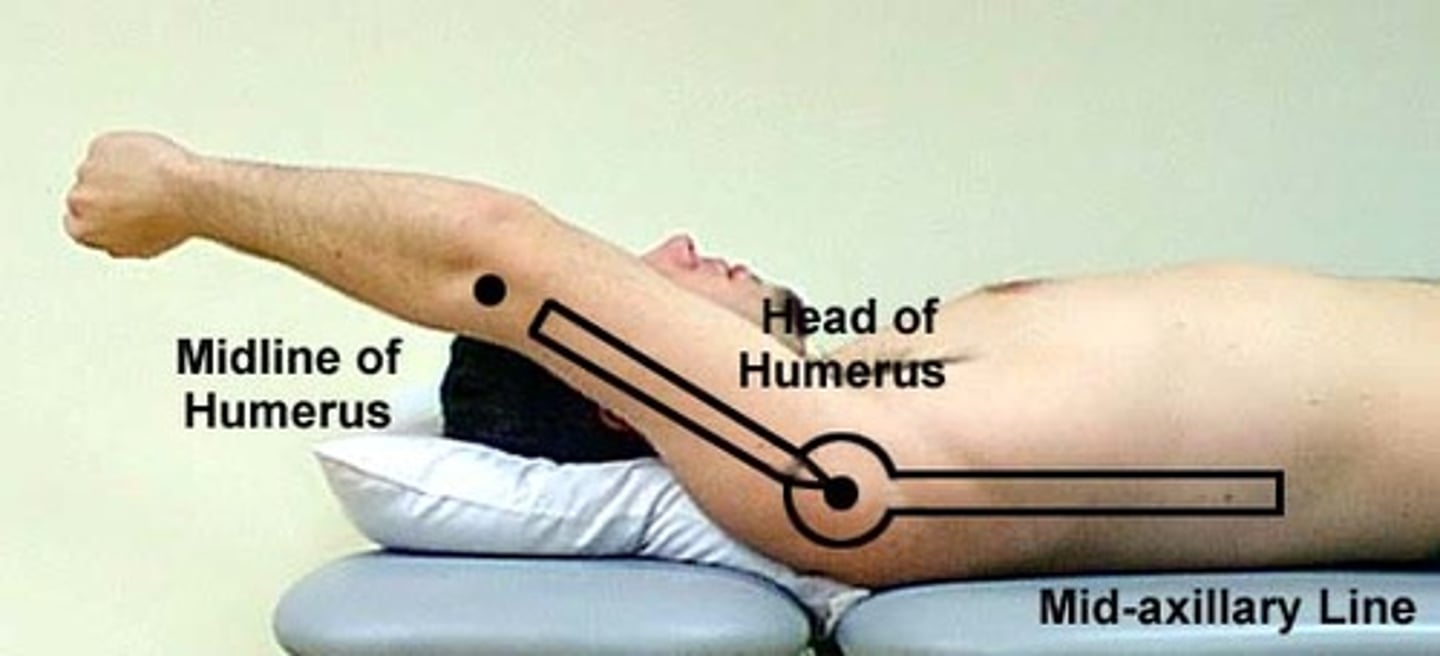
AROM right arm flexion
fulcrum: lateral greater tuberosity
proximal: parallel to midaxillary line of thorax
distal: lateral midline of humerus
* supine; palm facing body
* normal value 180

PROM left arm flexion glenohumeral
fulcrum: lateral greater tuberosity
proximal: parallel to midaxillary line of thorax
distal: lateral midline of humerus
* supine; palm facing body
* normal value 180
* feel scapula move
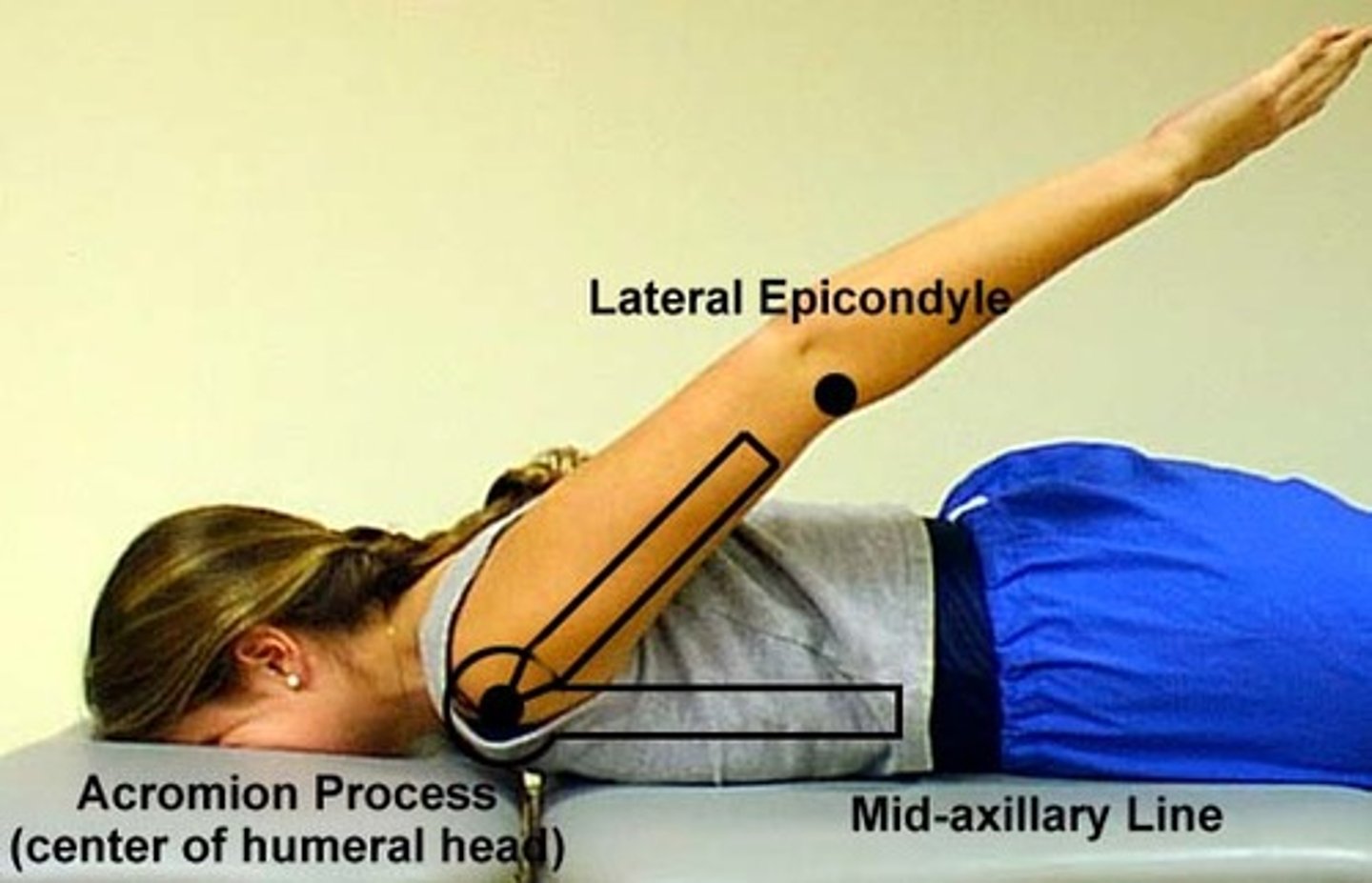
AROM right arm extension
fulcrum: lateral greater tuberosity
proximal: parallel to midaxillary line of thorax
distal: lateral midline of humerus
* prone; palm facing body
* normal value: 60
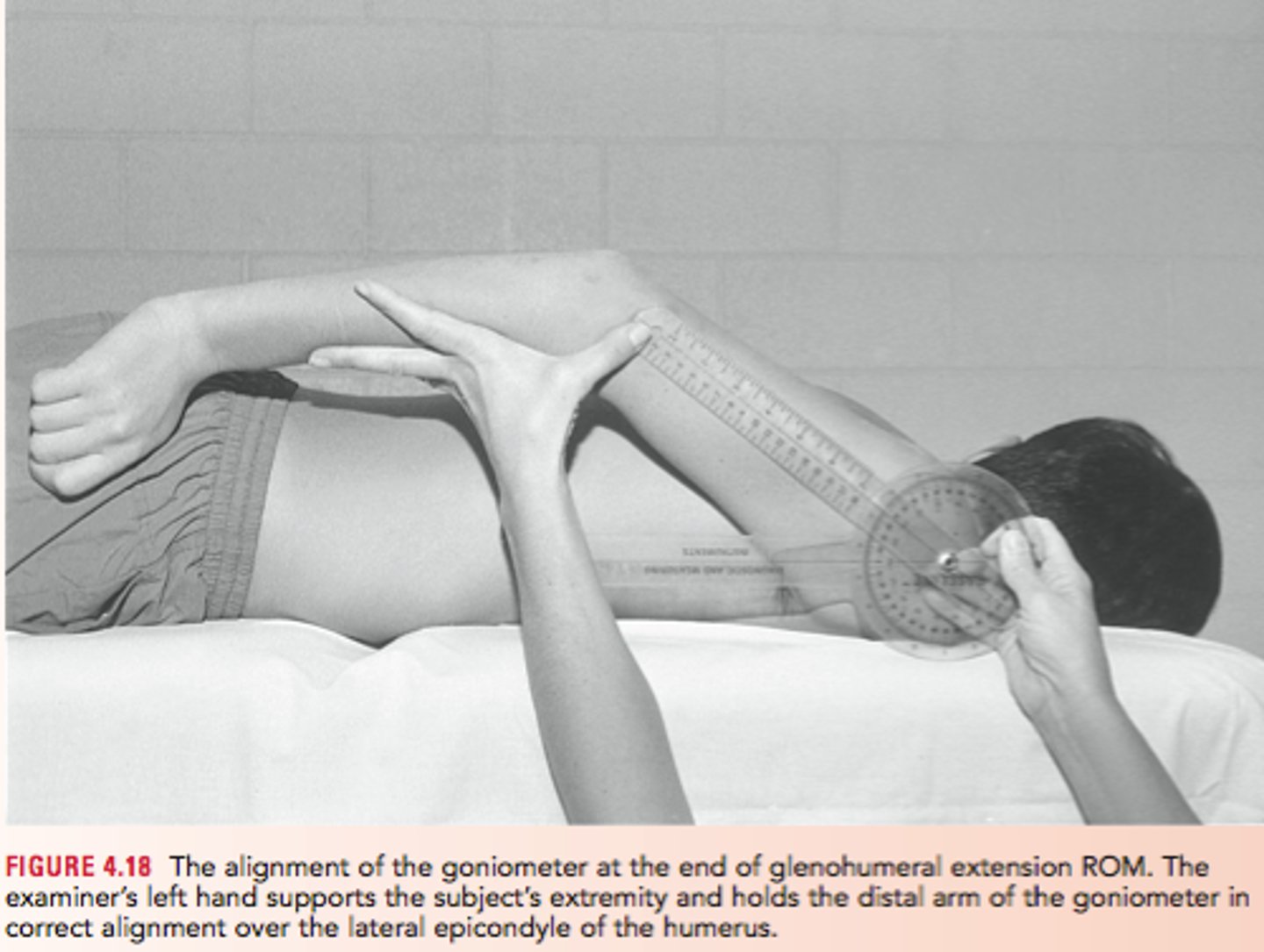
PROM right arm extension glenohumeral
fulcrum: lateral greater tuberosity
proximal: parallel to midaxillary line of thorax
distal: lateral midline of humerus
* prone; palm facing body
* normal value: 60
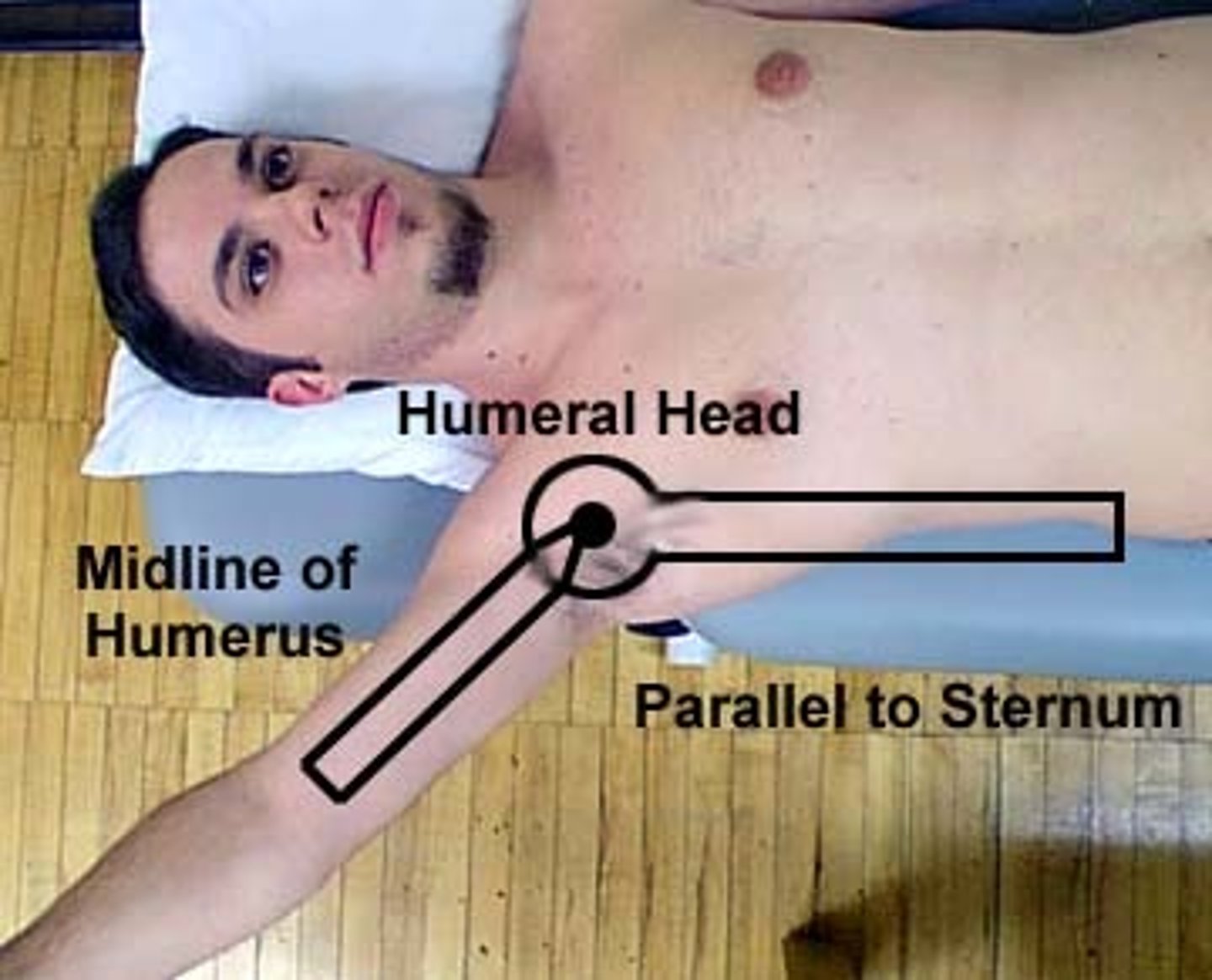
AROM left arm abduction
fulcrum: anterior acromion process
proximal: parallel to sternum
distal: anterior midline of humerus
* supine; palm relatively in anatomical position
* normal value: 180
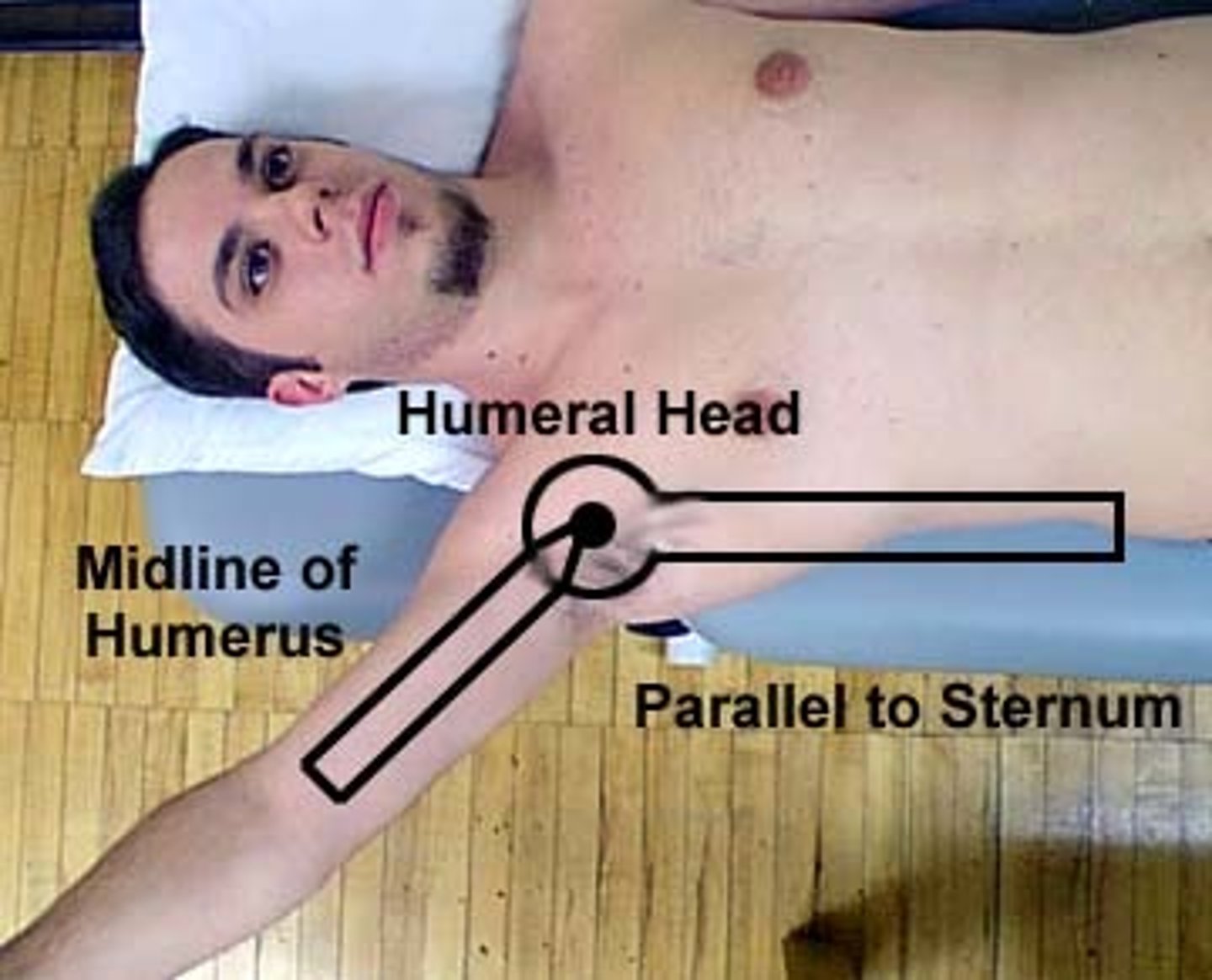
PROM right arm abduction glenohumeral
fulcrum: anterior acromion process
proximal: parallel to sternum
distal: anterior midline of humerus
* supine; palm relatively in anatomical position
* normal value: 180
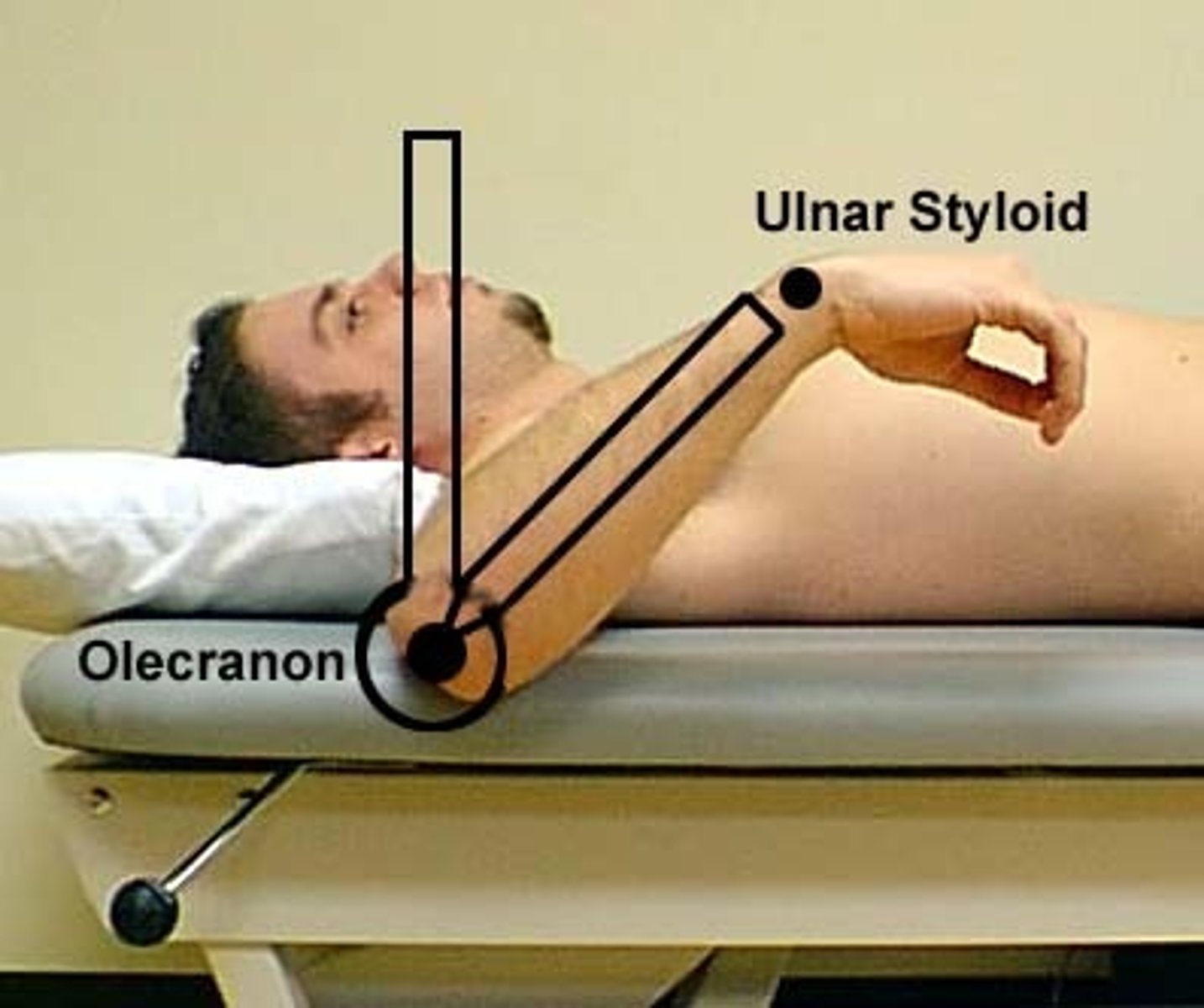
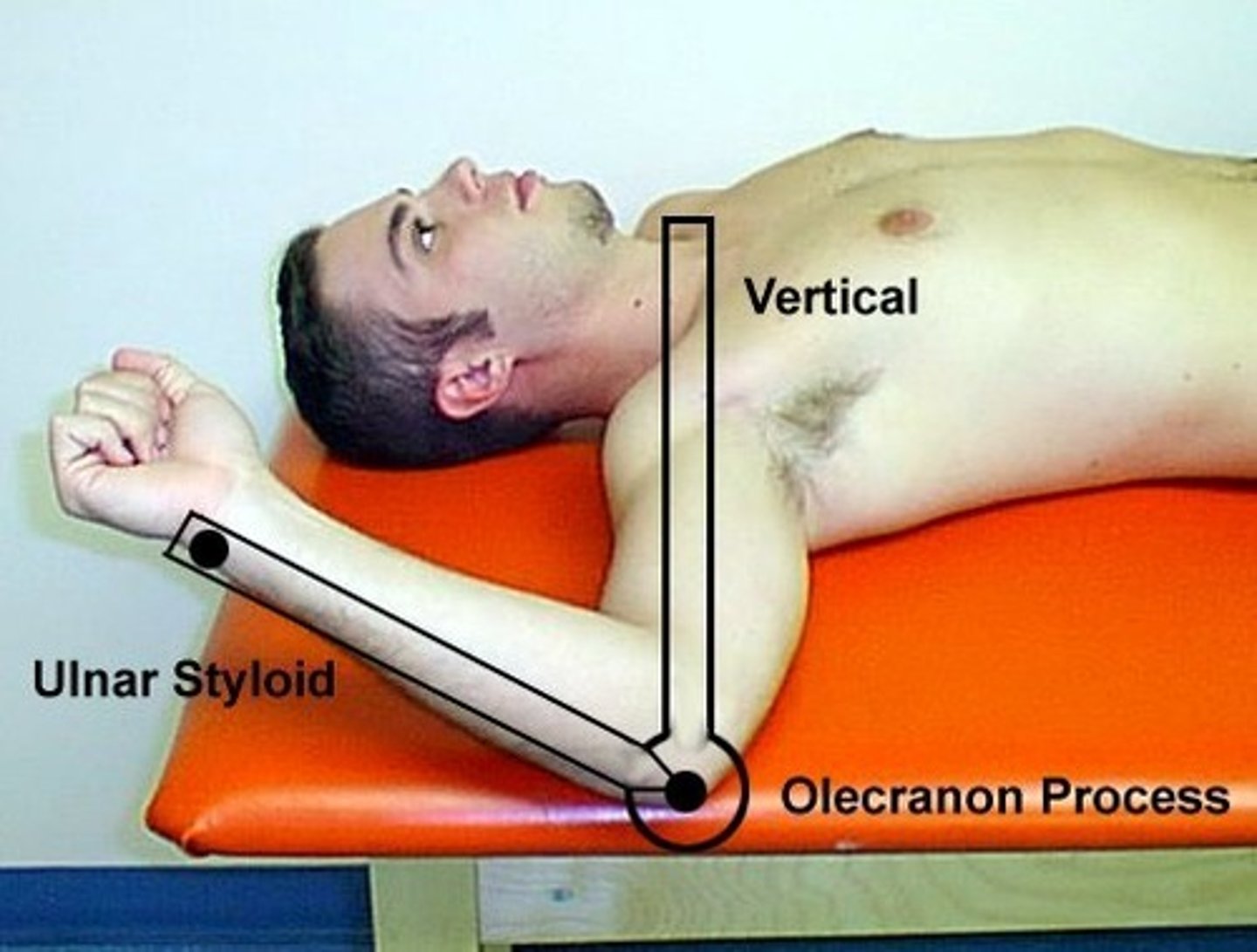
AROM right arm internal rotation
fulcrum: olecranon process
proximal: perpendicular to floor
distal: lateral midline of ulna using ulnar styloid process for reference
* supine
* TOWEL UNDER ELBOW!!!!!!!!!!
*normal value = 70
PROM right arm internal rotation glenohumeral
fulcrum: olecranon process
proximal: perpendicular to floor
distal: lateral midline of ulna using ulnar styloid process for reference
* supine
* TOWEL UNDER ELBOW!!!!!!!!!!
*normal value = 70

AROM left arm external rotation
fulcrum: olecranon process
proximal: perpendicular to floor
distal: lateral midline of ulna using ulnar styloid process for reference
*supine
* TOWEL UNDER ELBOW!!!!!!!!!!
* normal value = 90
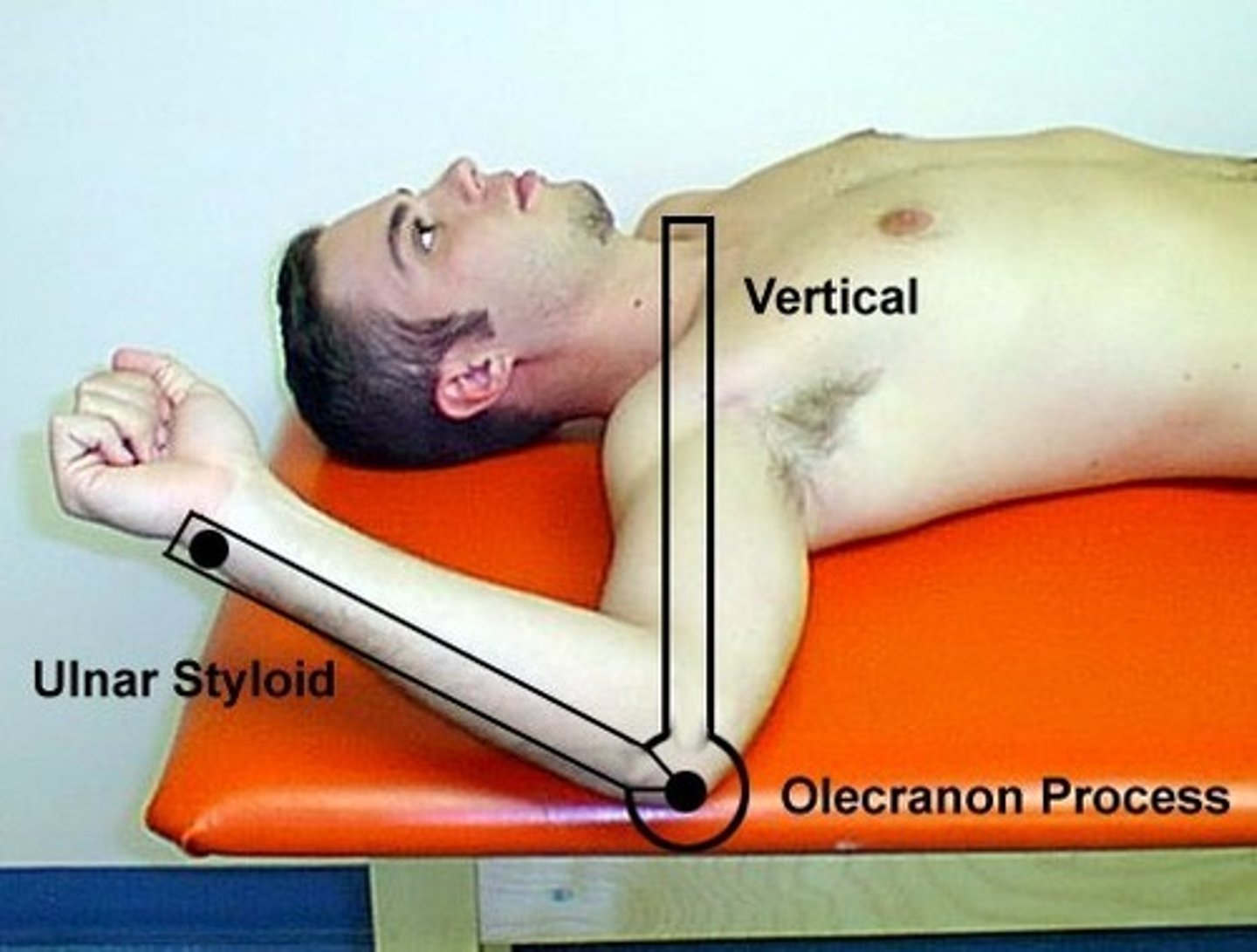
PROM right arm external rotation glenohumeral
fulcrum: olecranon process
proximal: perpendicular to floor
distal: lateral midline of ulna using ulnar styloid process for reference
*supine
* TOWEL UNDER ELBOW!!!!!!!!!!
* normal value = 90
AROM left elbow flexion
fulcrum: lateral epicondyle
proximal: lateral midline of humerus (acromion process for reference)
distal: lateral midline of radius (radial styloid process for reference)
*supine
* TOWEL UNDER ELBOW
* normal value = 150
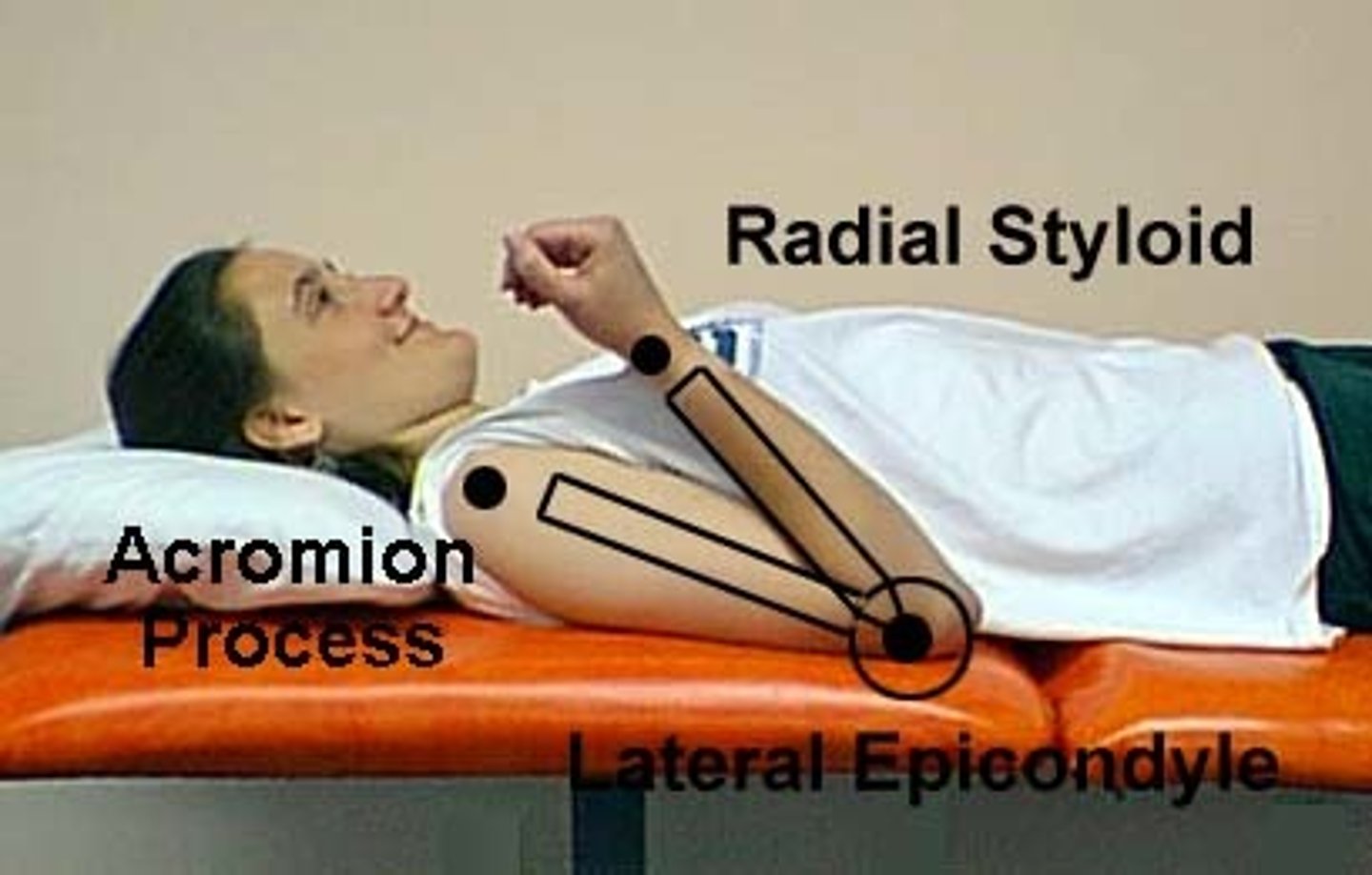
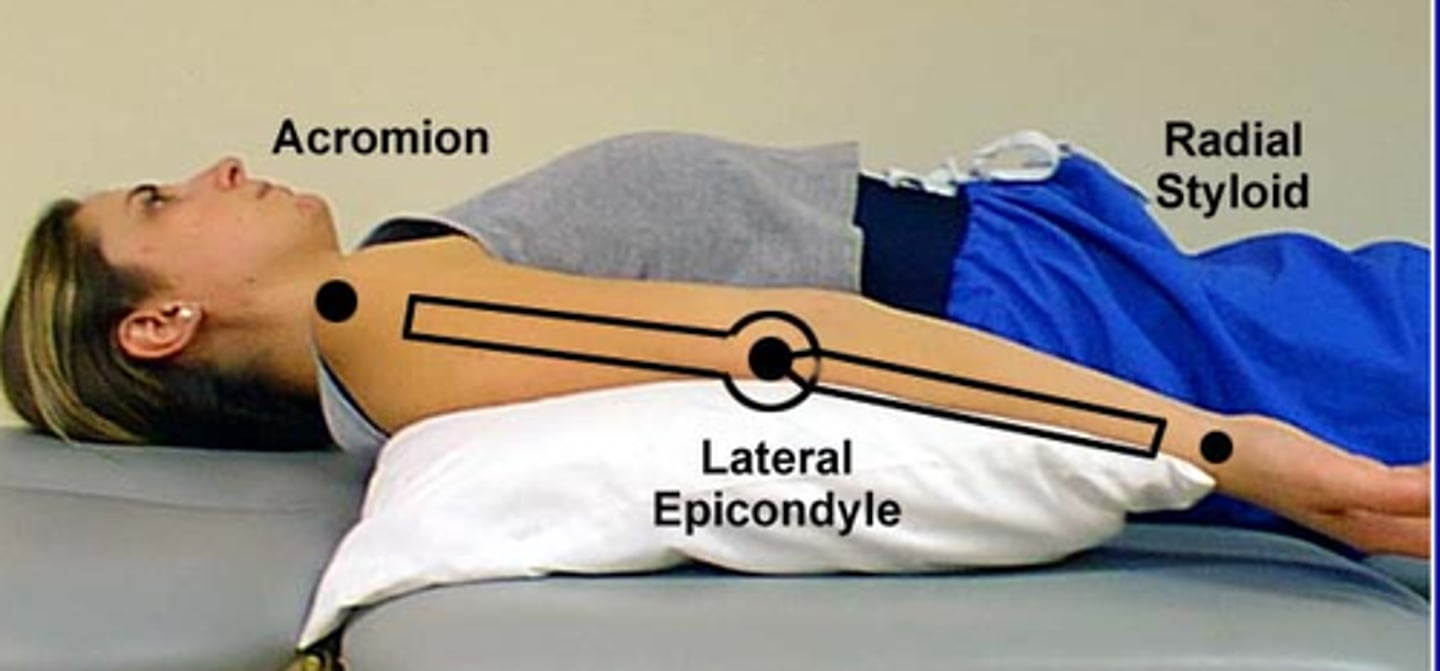
AROM right elbow extension
fulcrum: lateral epicondyle
proximal: lateral midline of humerus (acromion process for reference)
distal: lateral midline of radius (radial styloid process for reference)
*supine
* TOWEL UNDER ELBOW
* normal value = 0
AROM left forearm pronation
fulcrum: lateral ulnar styloid process
proximal: parallel to anterior midline of humerus / perpendicular to floor
distal: across dorsal surface of forearm
*elbow in 90 degree flexion, start in mid position
* sitting WITHOUT table underneath arm
* normal value = 80

AROM right forearm supination
fulcrum: medial to ulnar styloid process
proximal: parallel to anterior midline of humerus
distal: across ventral surface of forearm
*elbow in 90 degree flexion, start in mid position
* sitting WITHOUT table underneath arm
* normal value = 80
AROM wrist flexion left
fulcrum: lateral triquetrum
proximal: lateral midline of ulna (olecranon process reference)
distal: lateral midline of 5th metacarpal
* arm on table at 90 degrees, wrist and hand off table with palm facing ground
* fingers extended = straight
* normal value = 80
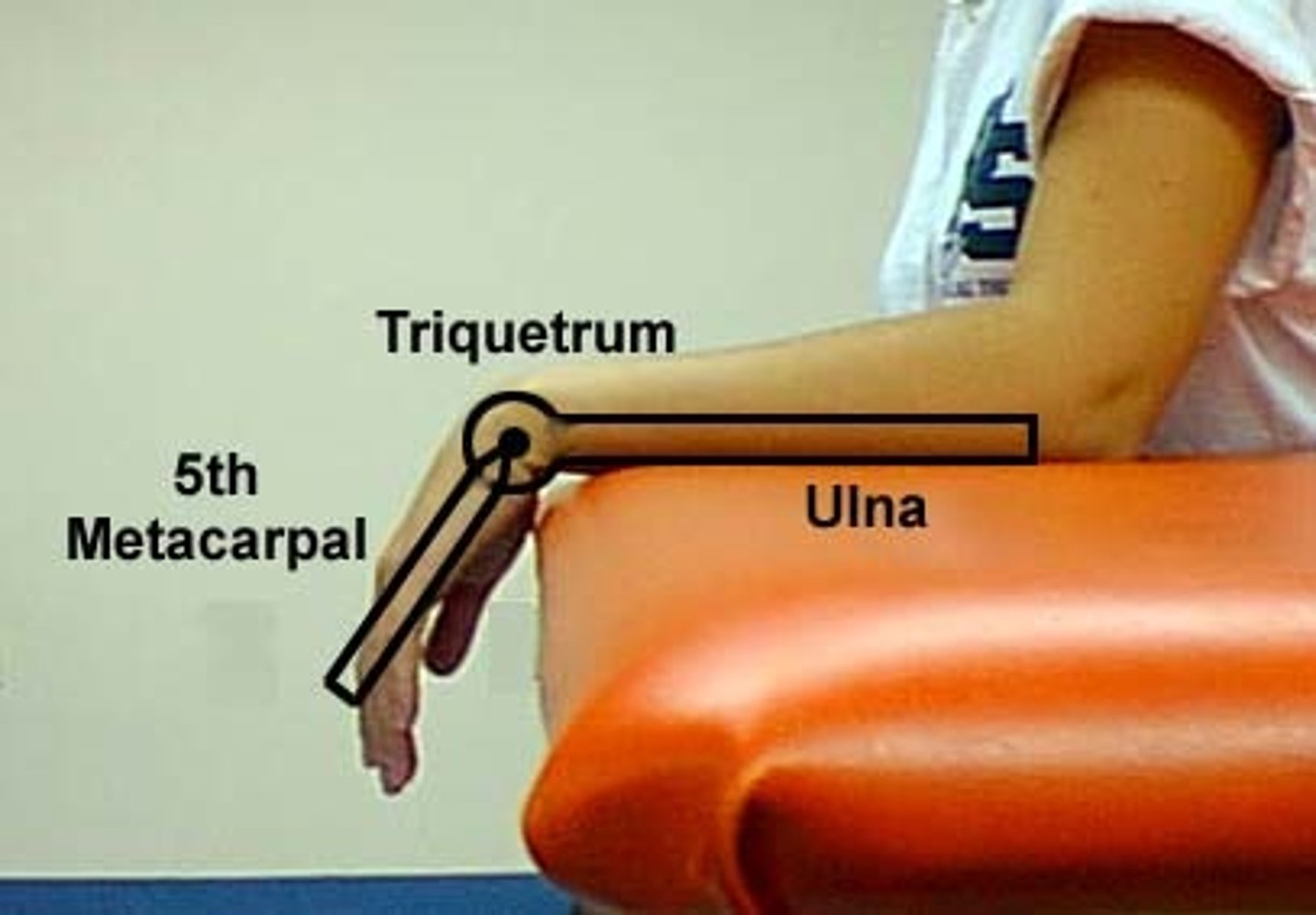
PROM right wrist flexion
fulcrum: lateral triquetrum
proximal: lateral midline of ulna (olecranon process reference)
distal: lateral midline of 5th metacarpal
* arm on table at 90 degrees, wrist and hand off table with palm facing ground
* fingers extended = straight
* normal value = 80
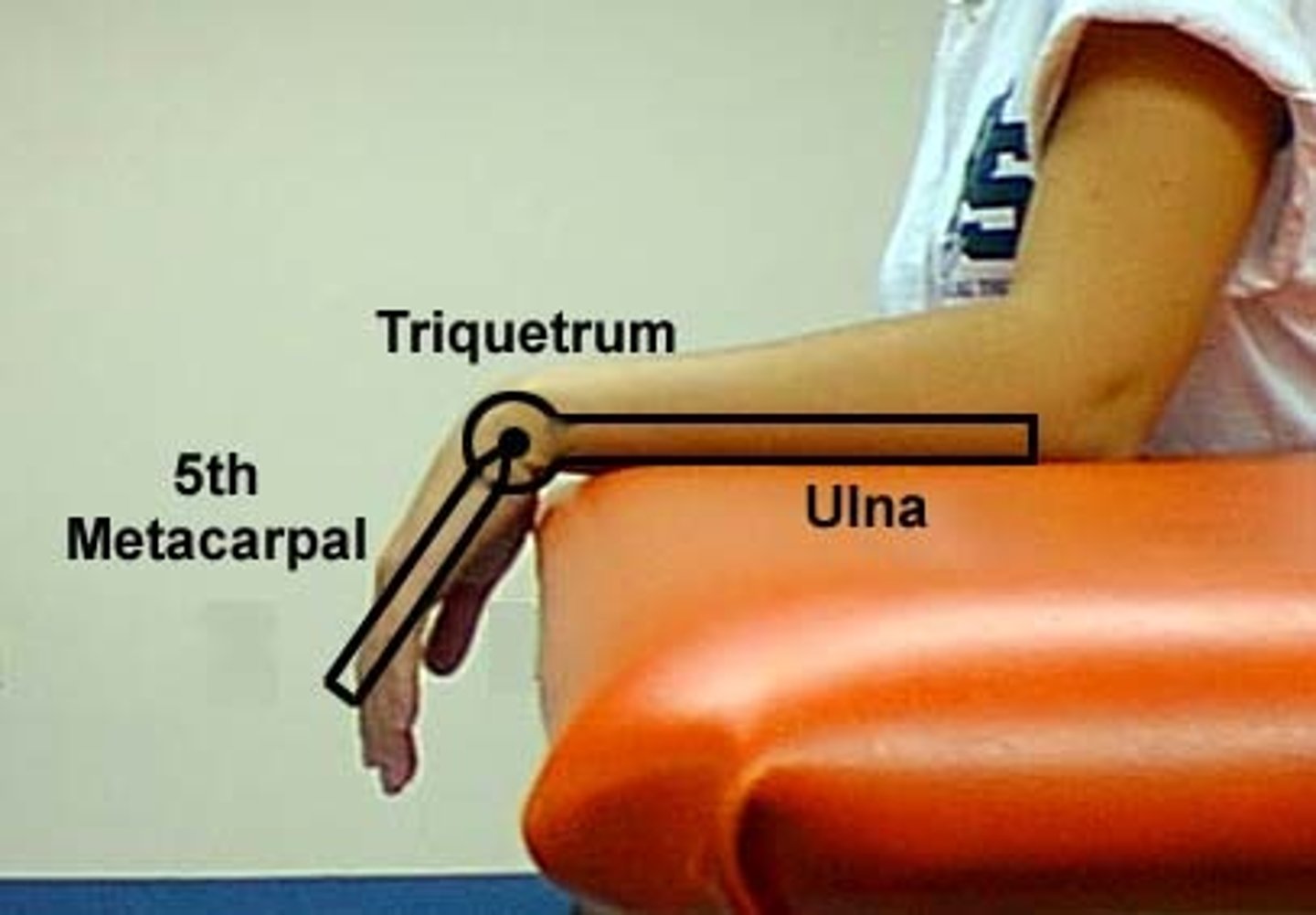
AROM right wrist extension
fulcrum: lateral triquetrum
proximal: lateral midline of ulna (olecranon process for reference)
distal: lateral midline of 5th metacarpal
* arm on table at 90 degrees, wrist and hand off table with palm facing ground
* fingers flexed
* normal value = 70
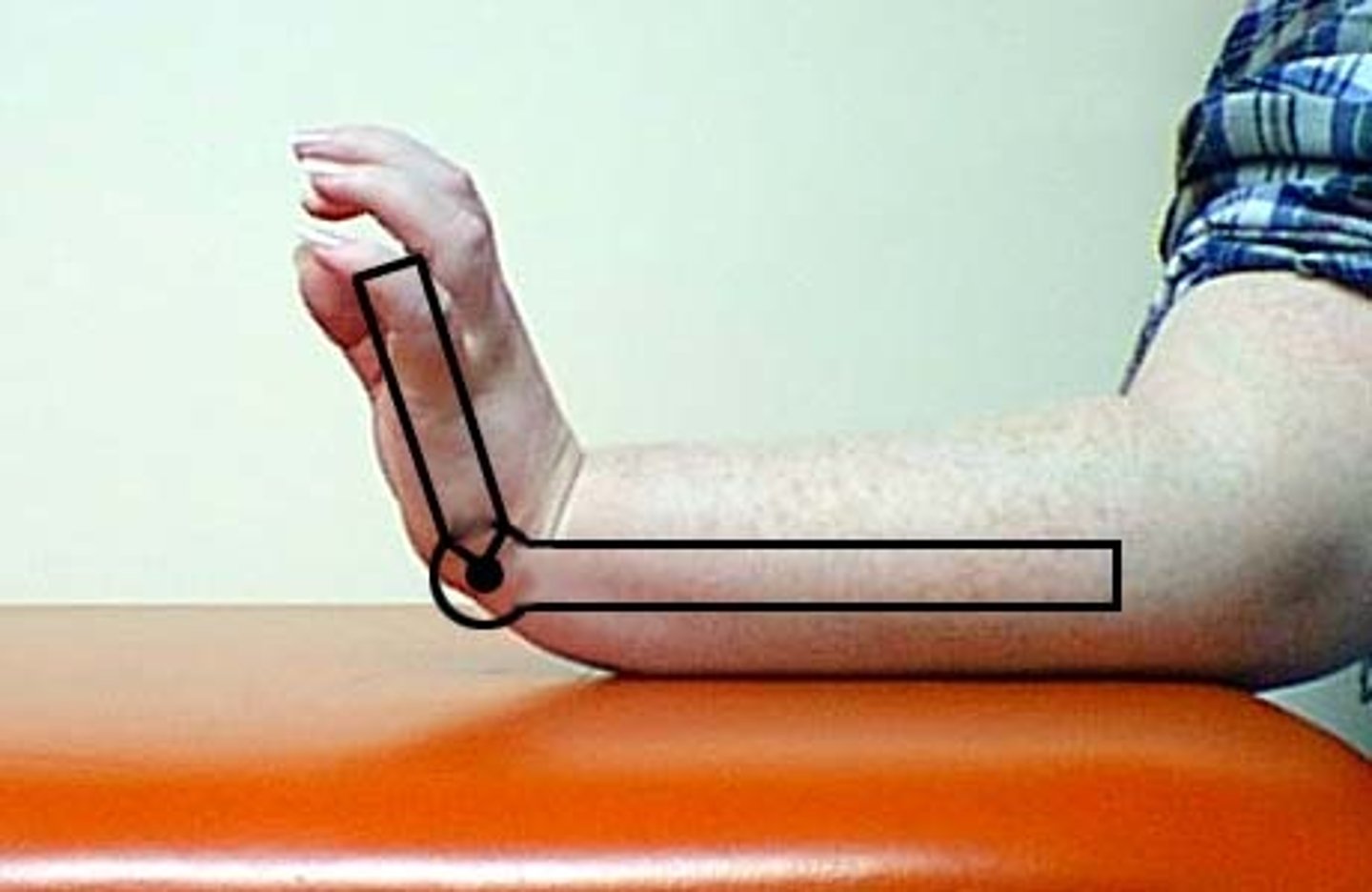
PROM left wrist extension
fulcrum: lateral triquetrum
proximal: lateral midline of ulna (olecranon process for reference)
distal: lateral midline of 5th metacarpal
* arm on table at 90 degrees, wrist and hand off table with palm facing ground
* fingers flexed
* normal value = 70
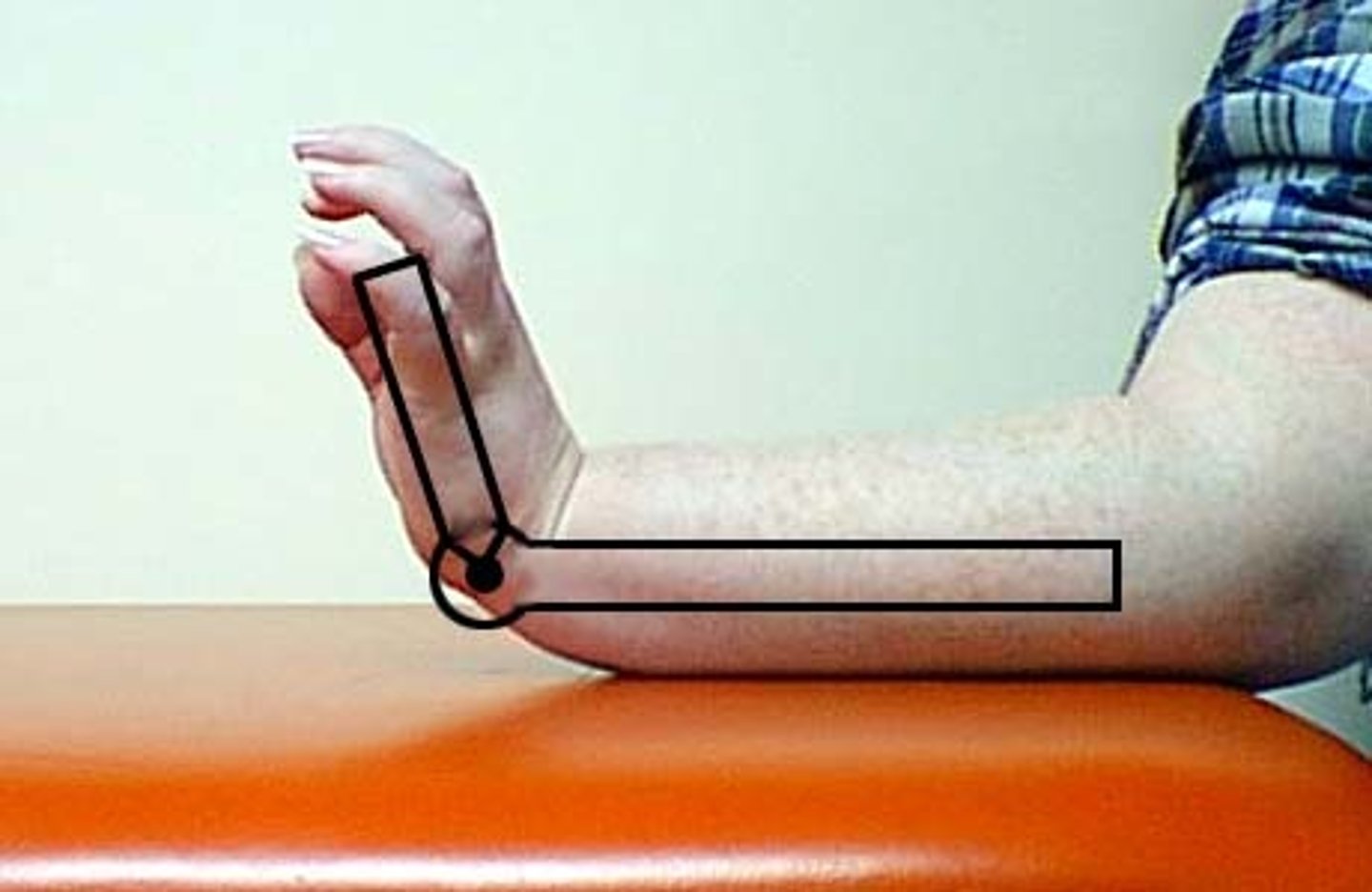
AROM right radial deviation
fulcrum: over capitate, dorsal surface
proximal: dorsal midline of forearm
distal: dorsal midline of 3rd metacarpal
* elbow in 90 flexion on table
* arm and hand rest on table
* normal value = 70
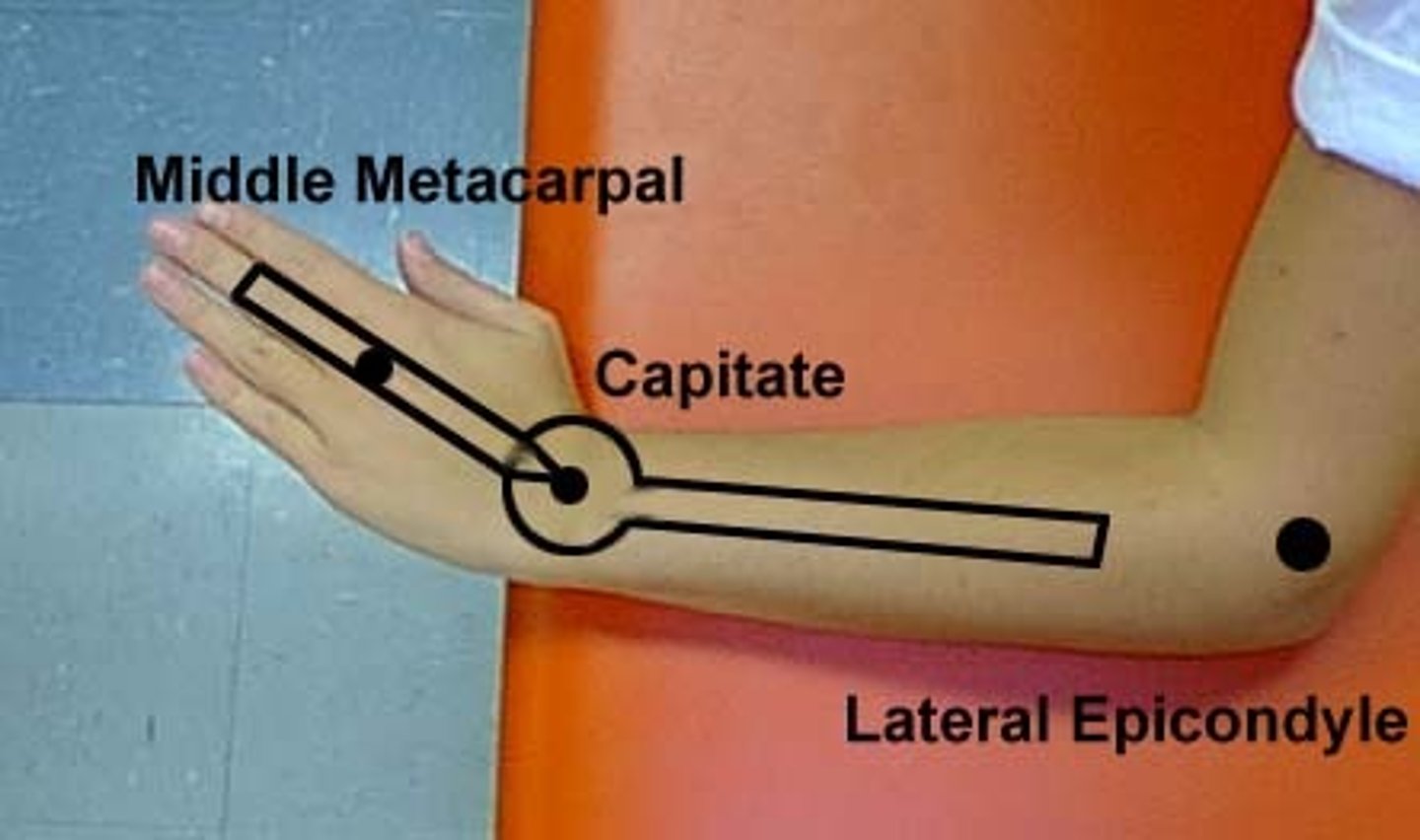
PROM right radial deviation
fulcrum: over capitate, dorsal surface
proximal: dorsal midline of forearm
distal: dorsal midline of 3rd metacarpal
* elbow in 90 flexion on table
* arm and hand rest on table
* normal value = 70
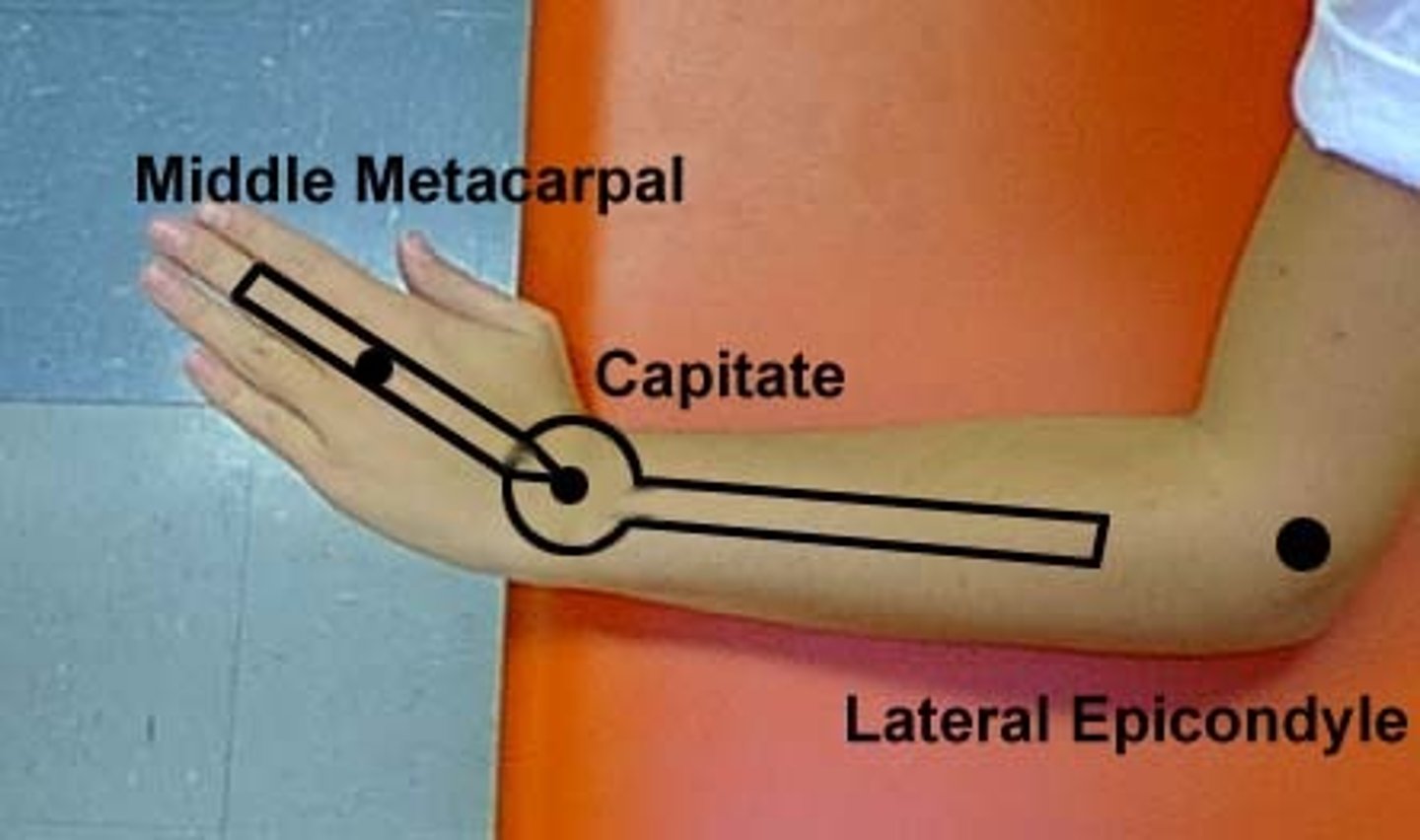
AROM left ulnar deviation
fulcrum: over capitate, dorsal surface
proximal: dorsal midline of forearm
distal: dorsal midline of 3rd metacarpal
* elbow in 90 flexion on table
* arm and hand rest on table
* normal value = 30
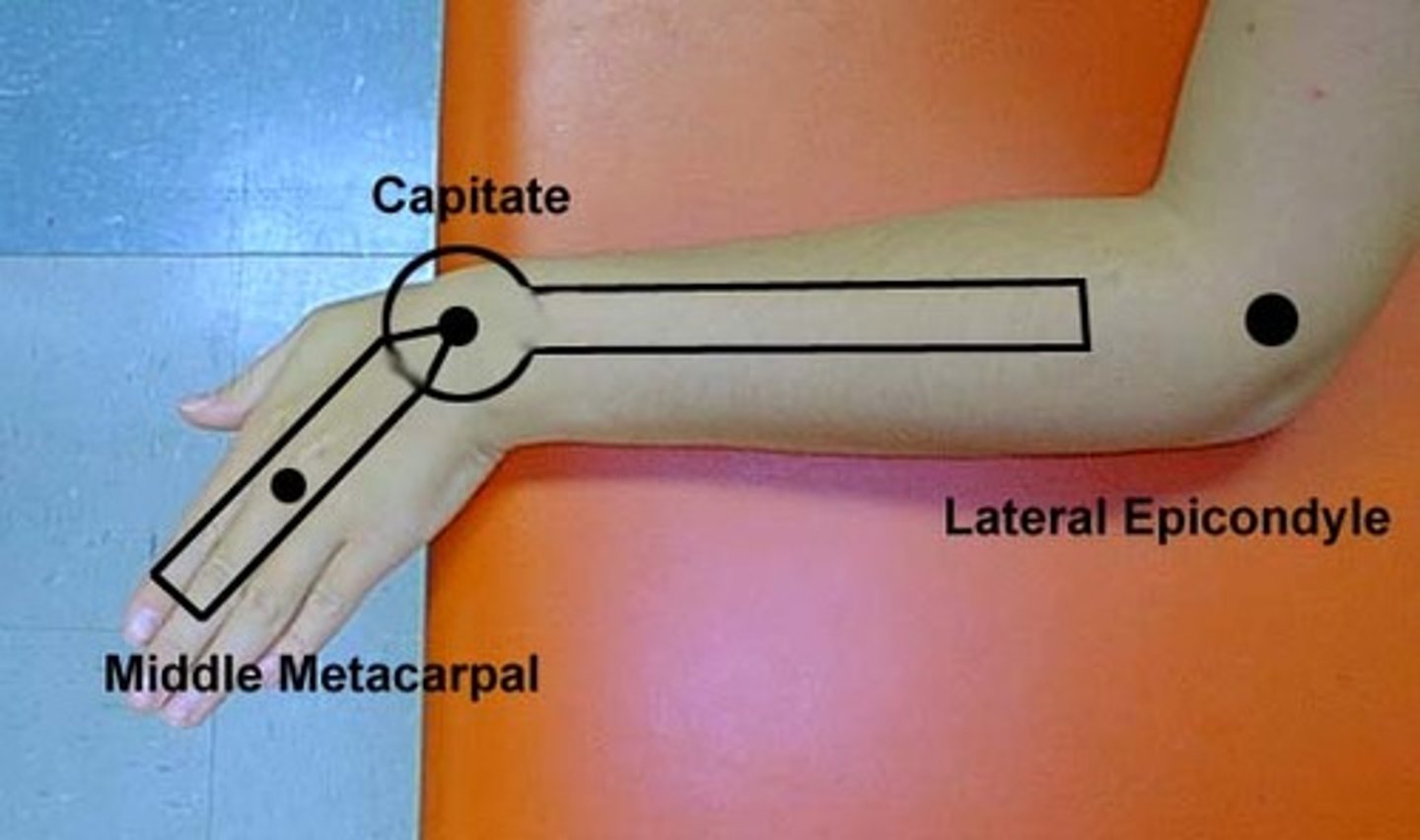
PROM left ulnar deviation
fulcrum: over capitate, dorsal surface
proximal: dorsal midline of forearm
distal: dorsal midline of 3rd metacarpal
* elbow in 90 flexion on table
* arm and hand rest on table
* normal value = 30
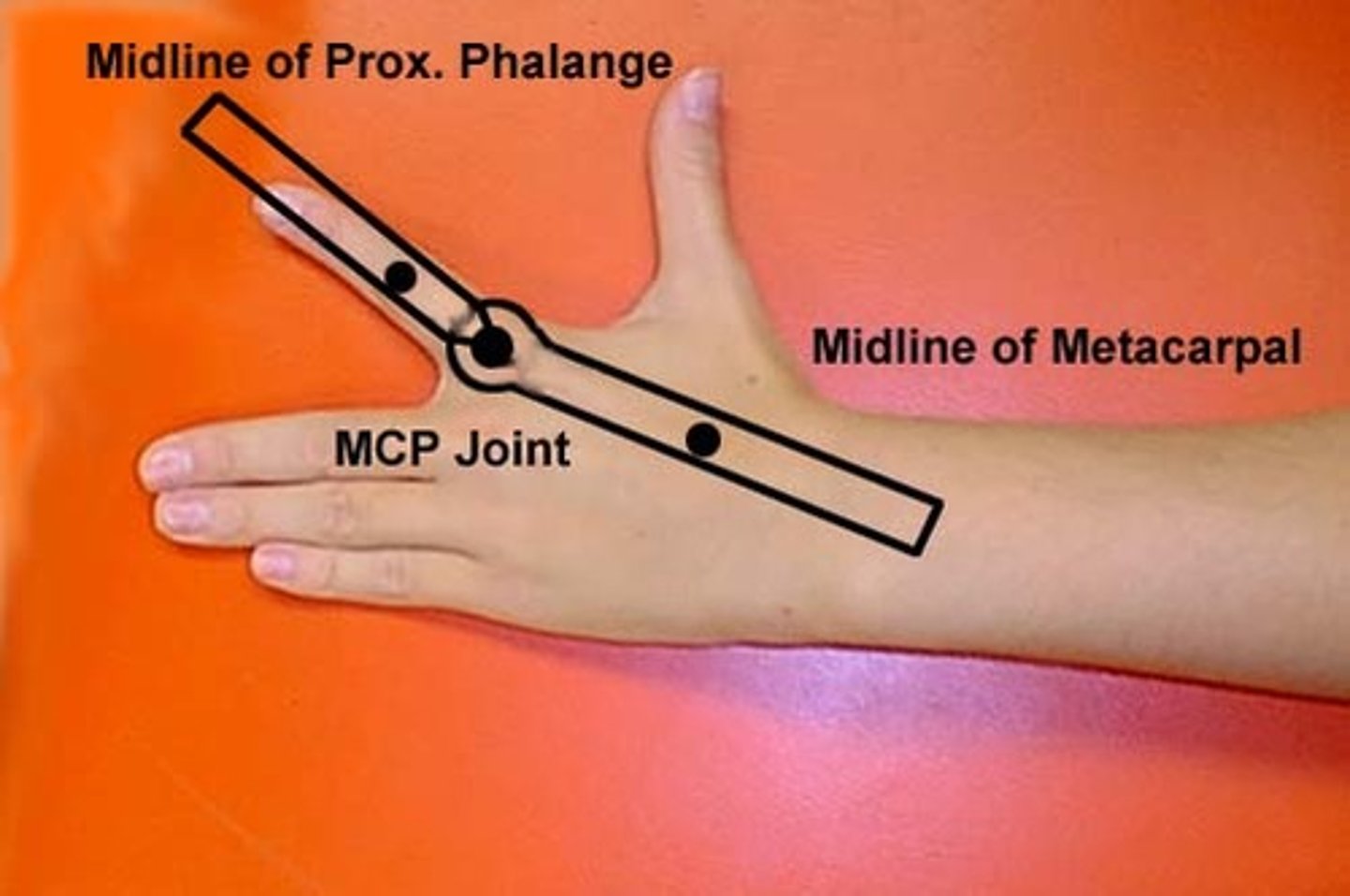
AROM right index metacarpophalangeal flexion
fulcrum: dorsal MCP joint
proximal: dorsal midline of metacarpal
distal: dorsal midline of proximal phalanx
* medial/ulnar side of hand resting on table
* normal value = 90
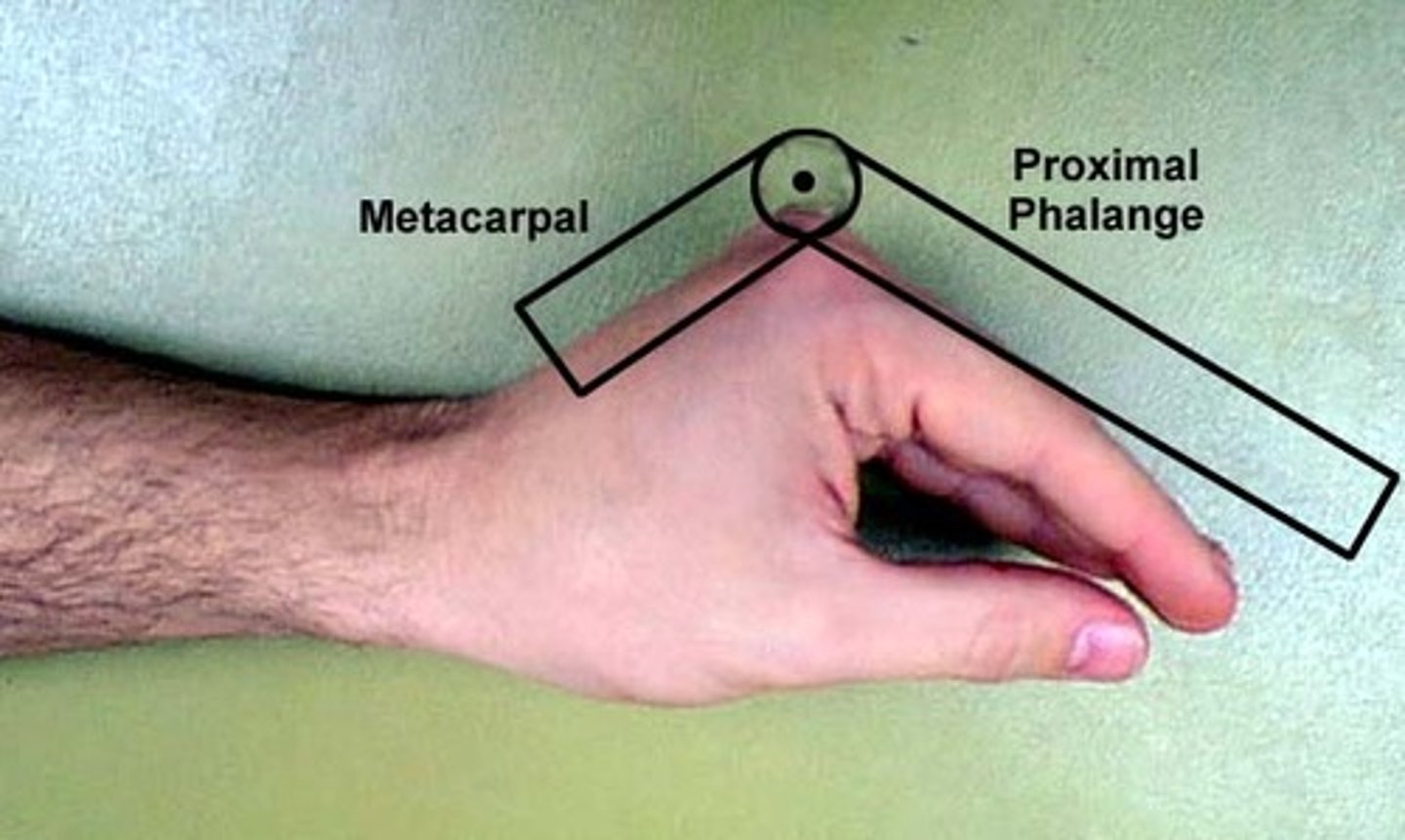
PROM right index metacarpophalangeal flexion
fulcrum: dorsal MCP joint
proximal: dorsal midline of metacarpal
distal: dorsal midline of proximal phalanx
* medial/ulnar side of hand resting on table
* normal value = 90
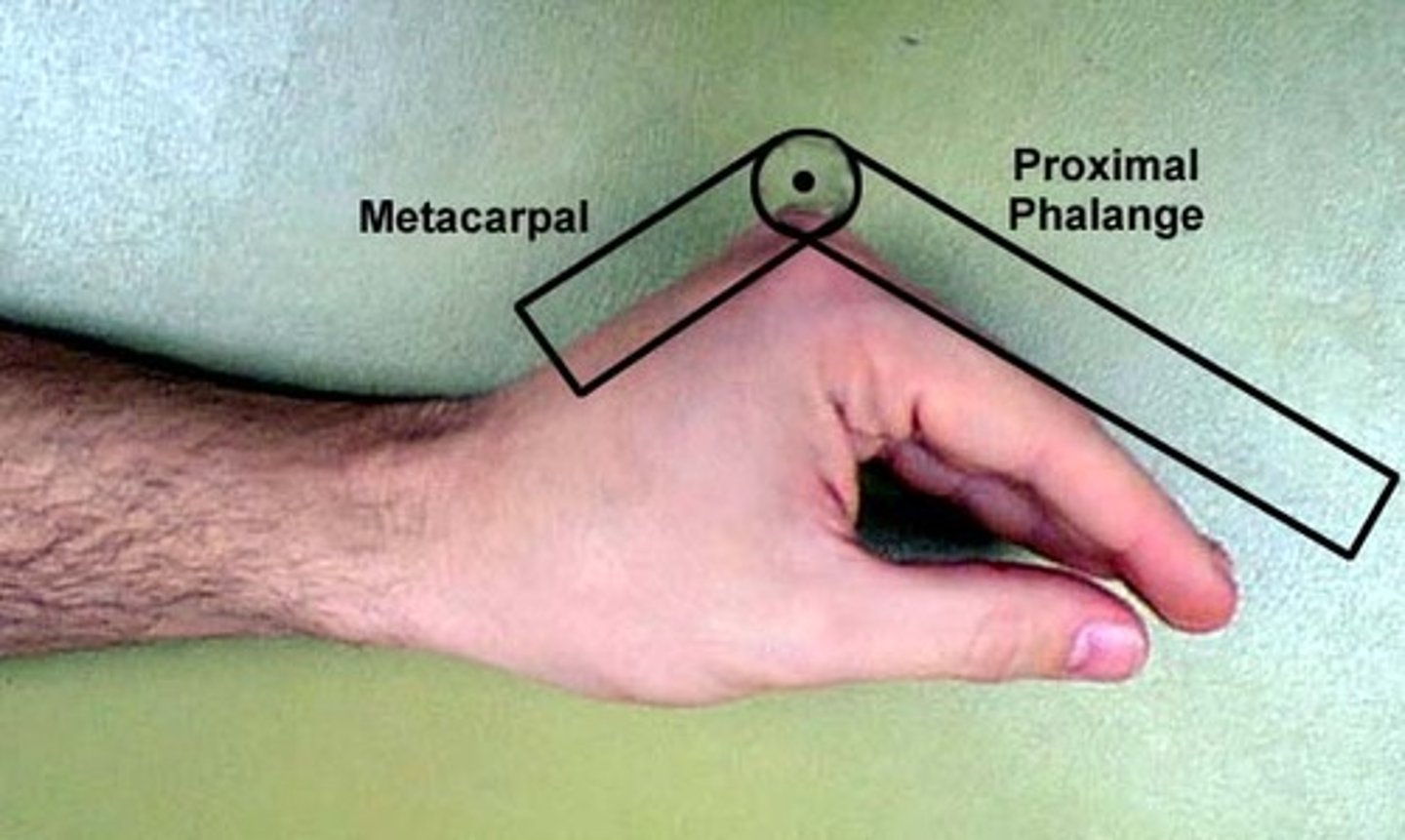
AROM left 3rd metacarpophalangeal extension
fulcrum: dorsal MCP joint
proximal: dorsal midline of metacarpal
distal: dorsal midline of proximal phalanx
* medial/ulnar side of hand resting on table
* normal value = 45
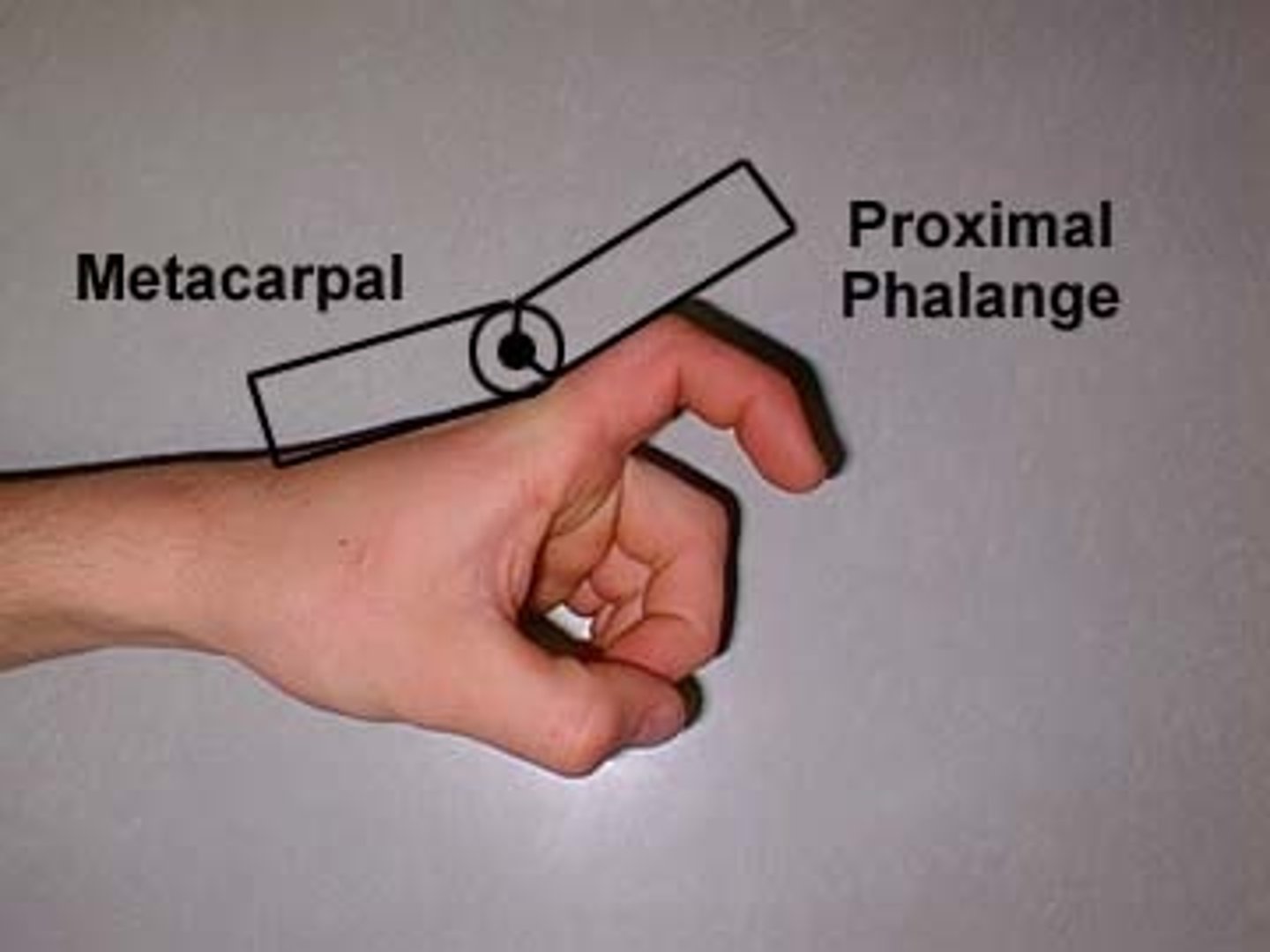
PROM left 3rd metacarpophalangeal extension
fulcrum: dorsal MCP joint
proximal: dorsal midline of metacarpal
distal: dorsal midline of proximal phalanx
* medial/ulnar side of hand resting on table
* normal value = 90
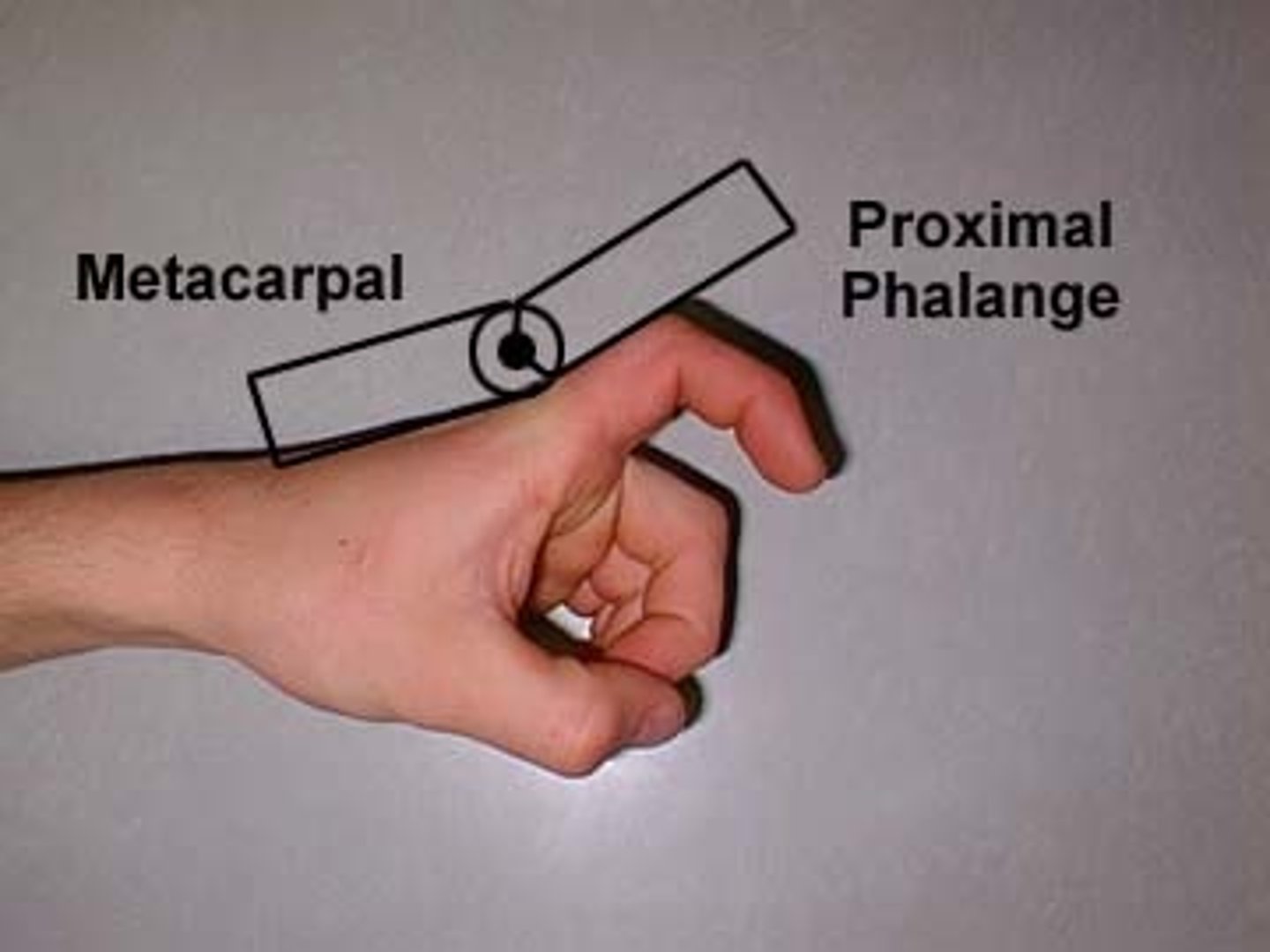
AROM right 4th MCP abduction
fulcrum: dorsal MCP joint
proximal: dorsal midline of metacarpal
distal: dorsal midline of proximal phalanx
* medial/ulnar side of hand resting on table
* normal value = 25
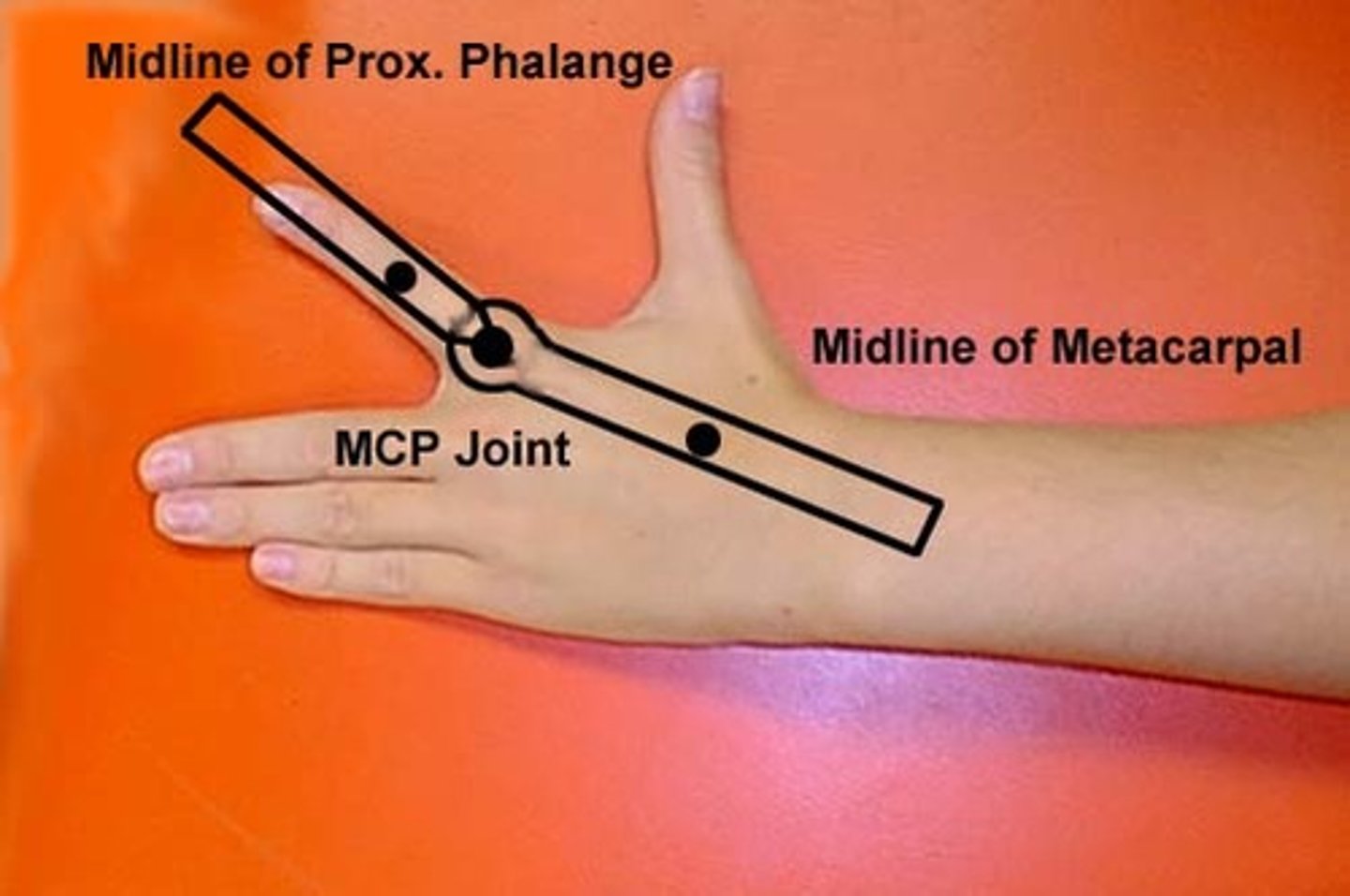
PROM left 2nd MCP abduction
fulcrum: dorsal MCP joint
proximal: dorsal midline of metacarpal
distal: dorsal midline of proximal phalanx
* medial/ulnar side of hand resting on table
* normal value = 25
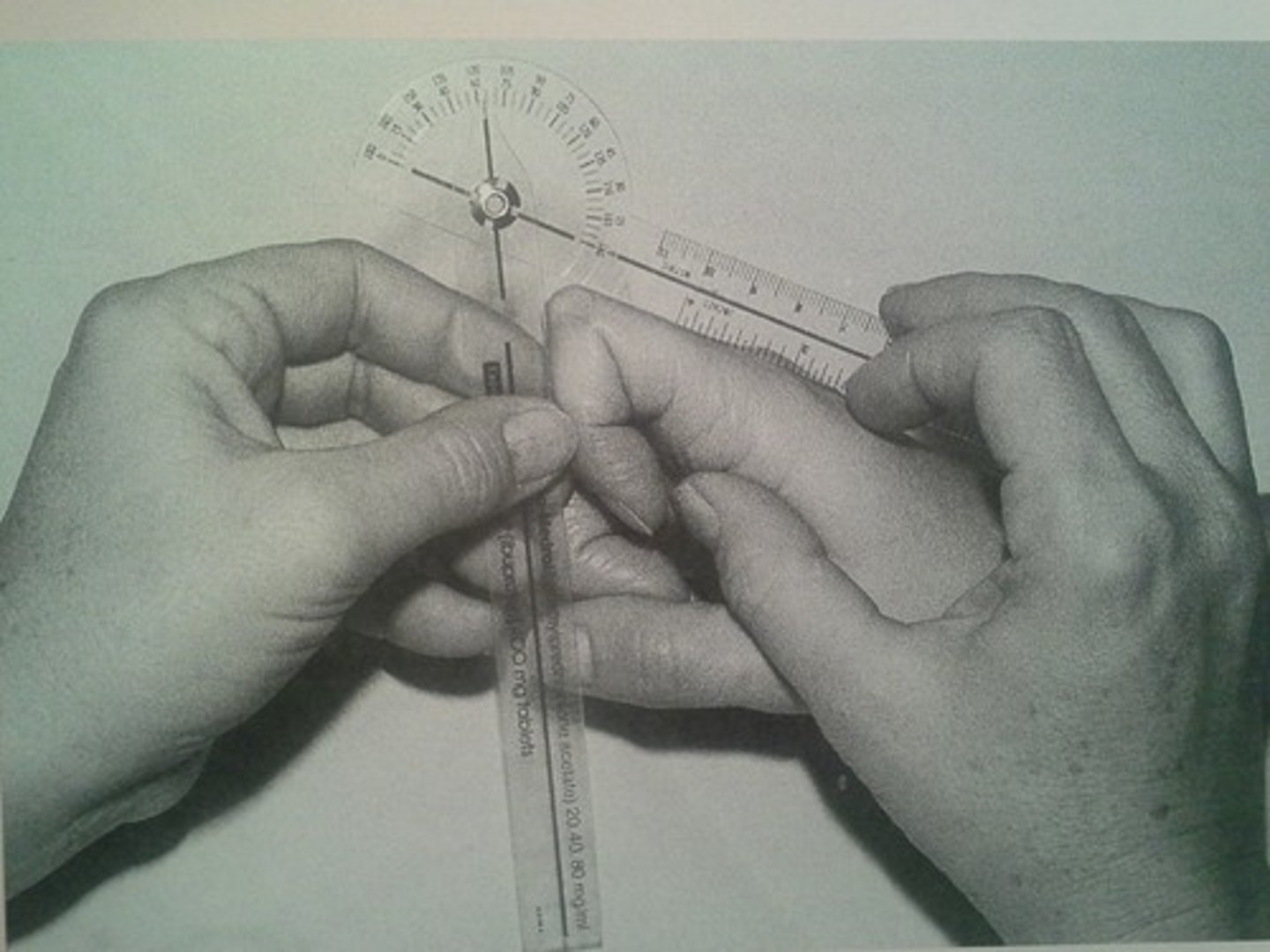
AROM left index PIP flexion
fulcrum: dorsal PIP joint
proximal: dorsal midline of proximal phalanx
distal: dorsal midline of middle phalanx
* medial/ulnar side of hand resting on table
* normal value = 100
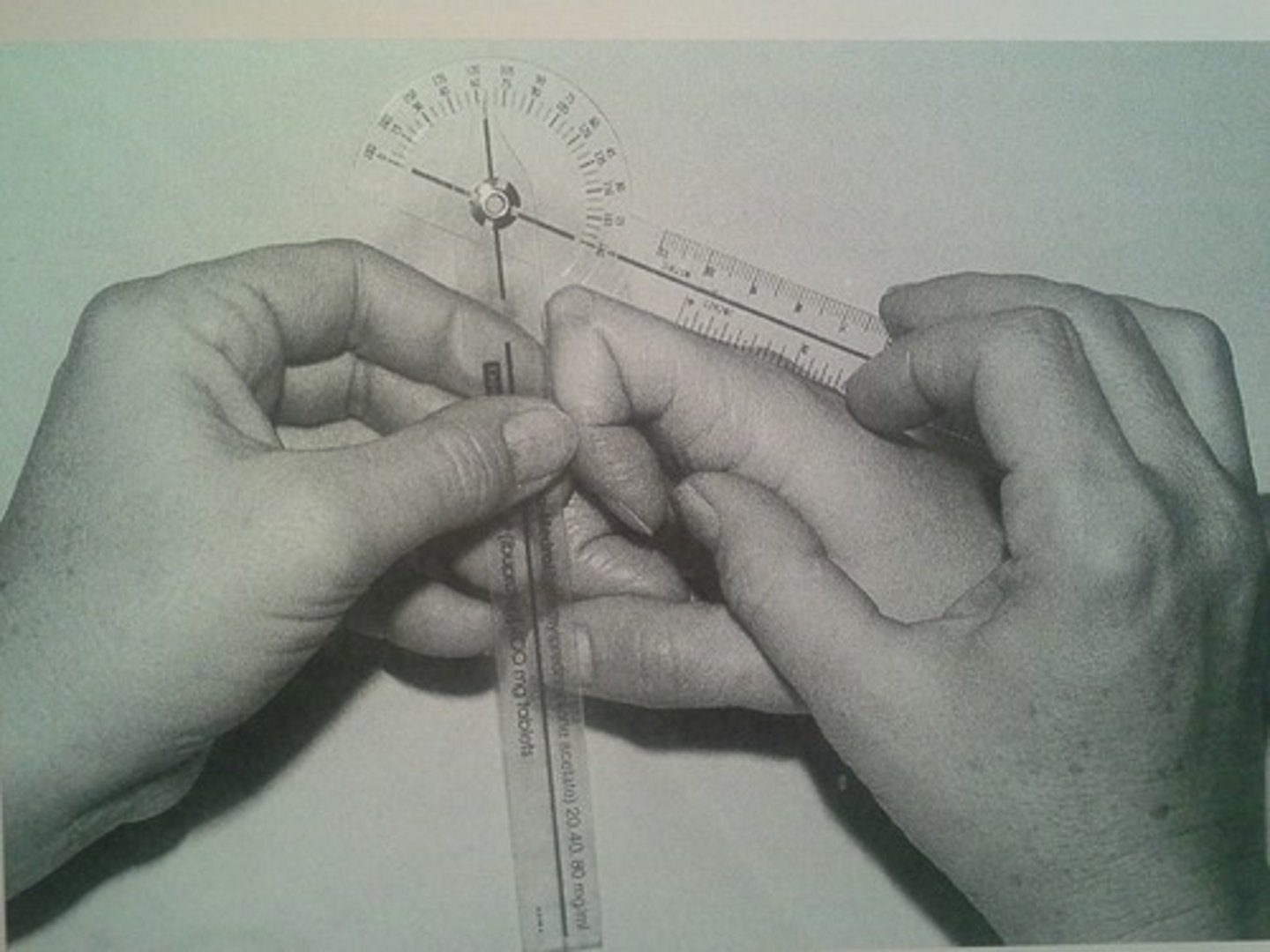
PROM left index PIP flexion
fulcrum: dorsal PIP joint
proximal: dorsal midline of proximal phalanx
distal: dorsal midline of middle phalanx
* medial/ulnar side of hand resting on table
* normal value = 100
AROM right index DIP flexion
fulcrum: dorsal DIP joint
proximal: dorsal midline of middle phalanx
distal: dorsal midline of distal phalanx
* hand resting on table with medial/ulnar side on table
* proximal phalanx in line with MC (straight)
* normal value = 90
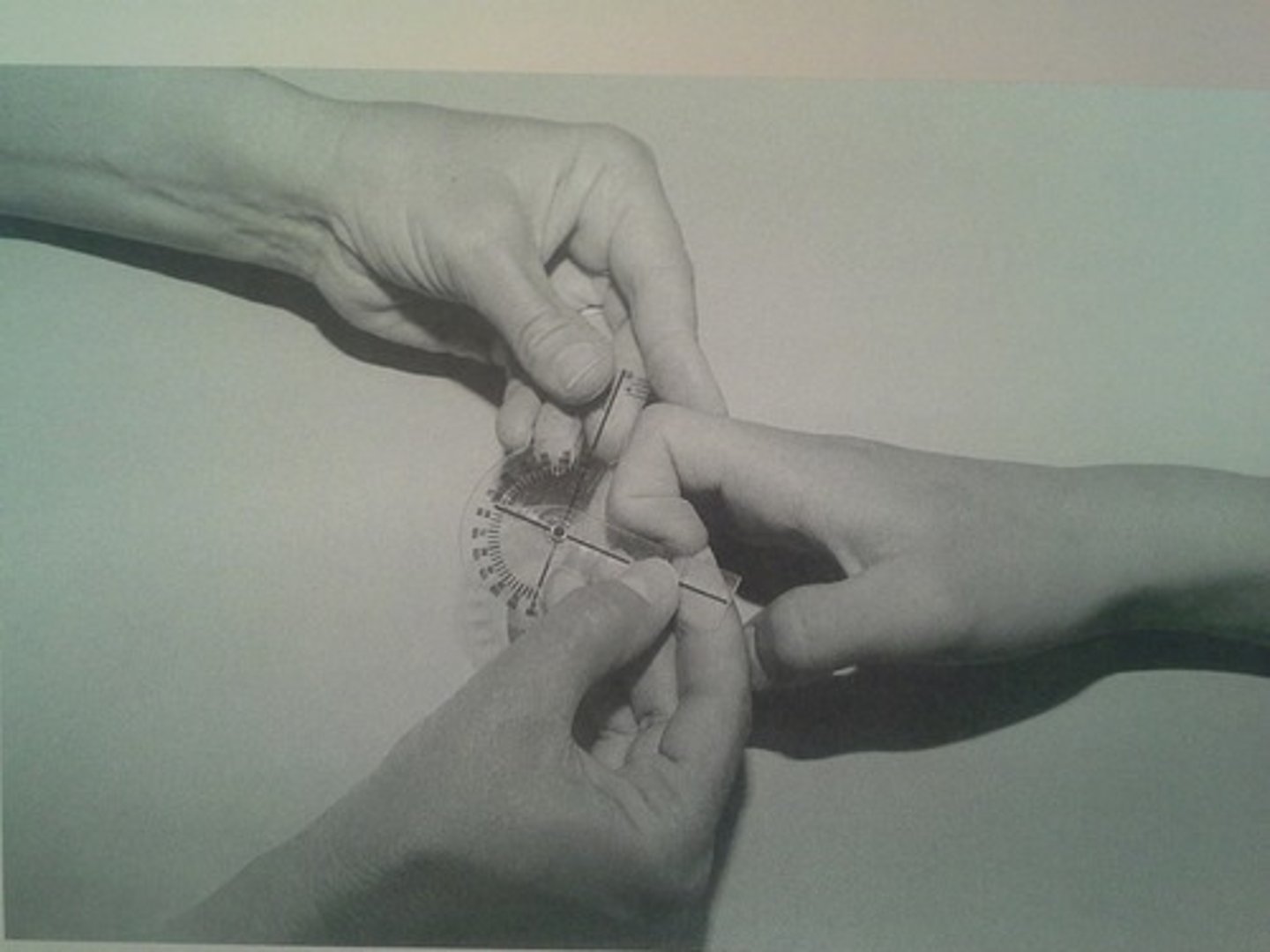
PROM left ring DIP flexion
fulcrum: dorsal DIP joint
proximal: dorsal midline of middle phalanx
distal: dorsal midline of distal phalanx
* hand resting on table with medial/ulnar side on table
* proximal phalanx in line with MC (straight)
* normal value = 90

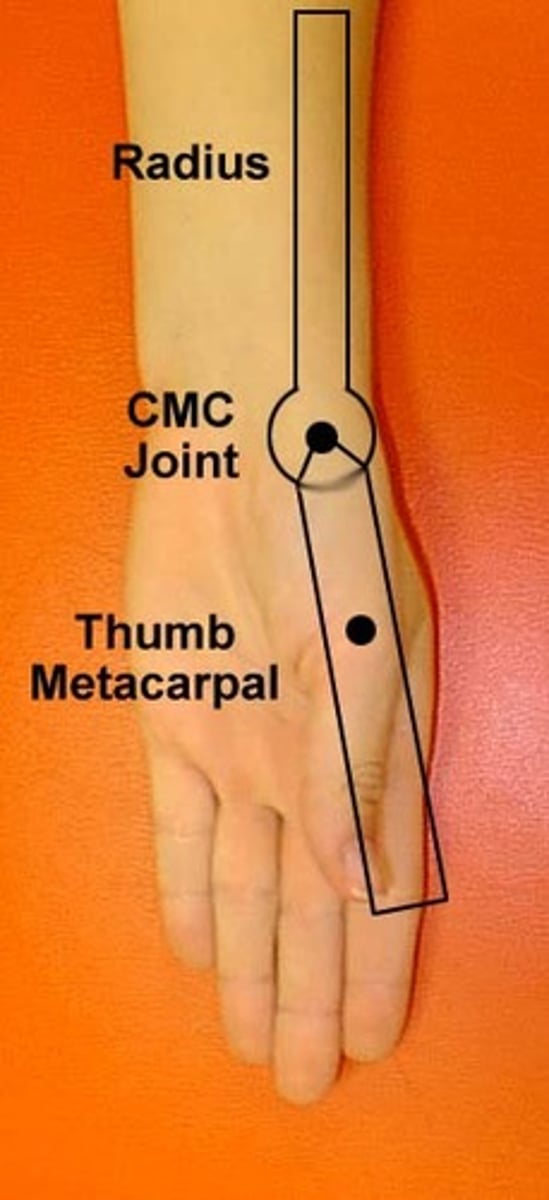
AROM left CMC flexion
fulcrum: palmar surface of 1st CMC joint/scaphoid
proximal: ventral midline of radius (radial styloid process for reference)
distal: ventral midline of 1st MC
* hand resting on table with palm facing up = SUPINATED
* STARTING WONT BE AT ZERO
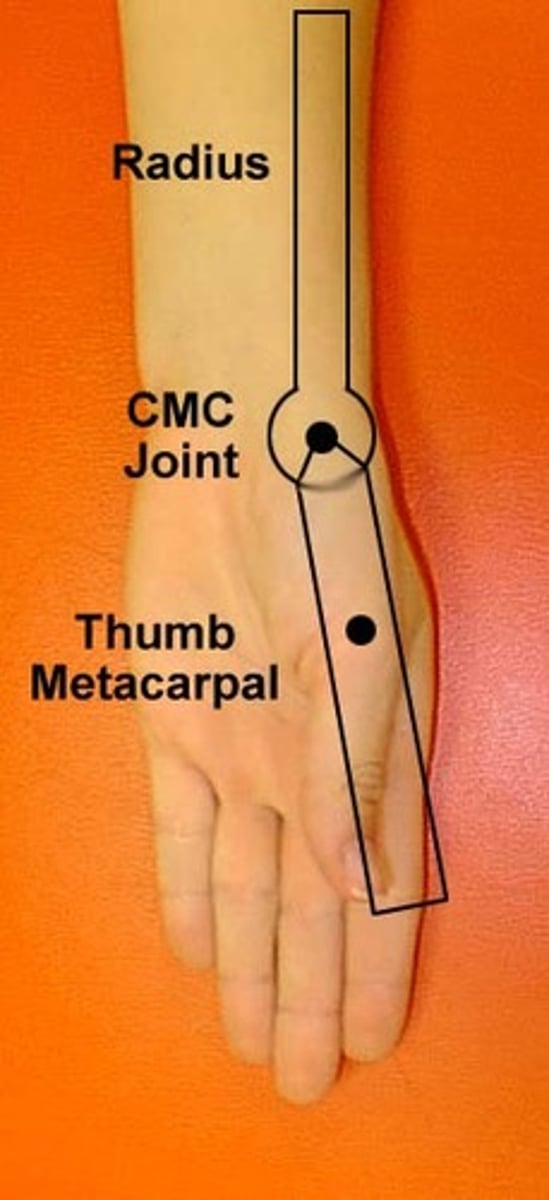
PROM left CMC flexion
fulcrum: palmar surface of 1st CMC joint/scaphoid
proximal: ventral midline of radius (radial styloid process for reference)
distal: ventral midline of 1st MC
* hand resting on table with palm facing up = SUPINATED
* STARTING WONT BE AT ZERO
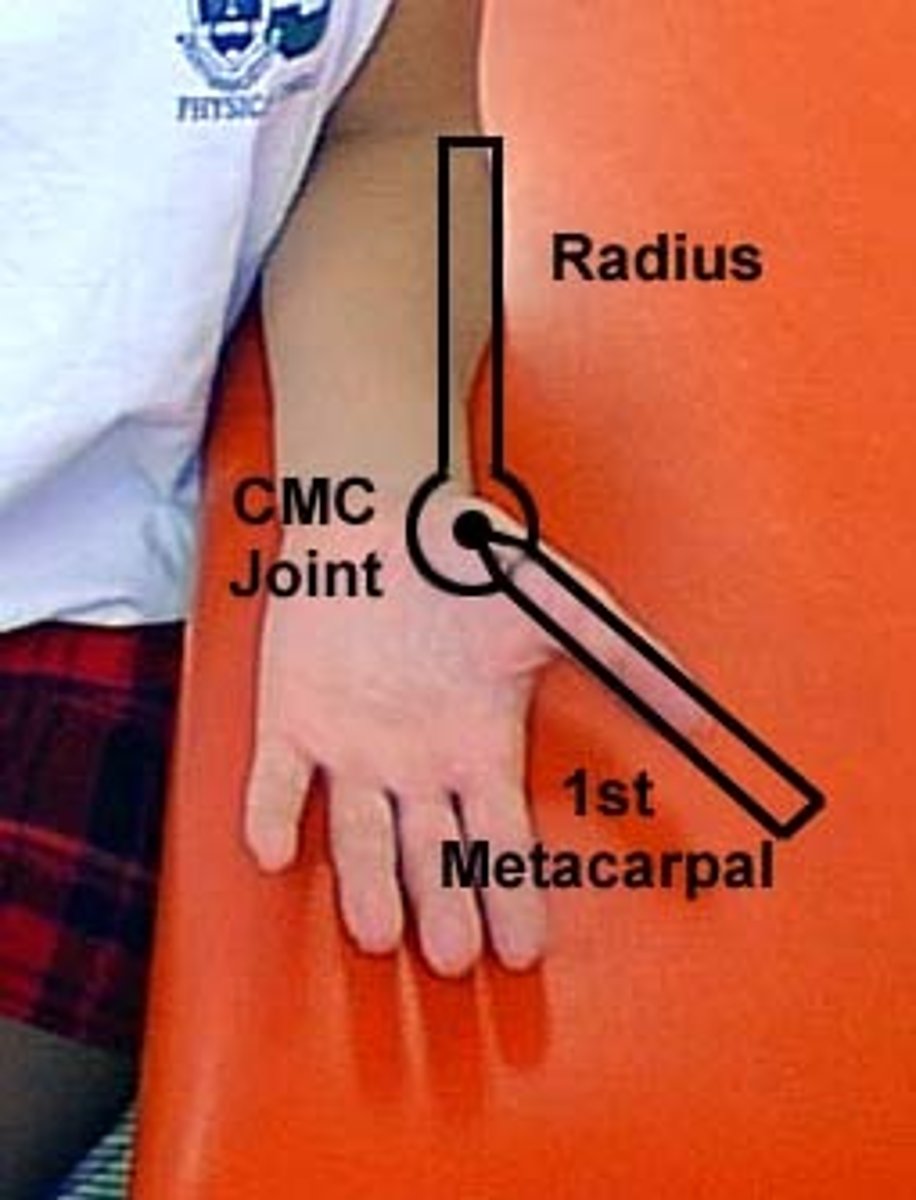
AROM right CMC extension
fulcrum: palmar surface of 1st CMC joint/scaphoid
proximal: ventral midline of radius (radial styloid process for reference)
distal: ventral midline of 1st MC
* hand resting on table with palm facing up = SUPINATED
* STARTING WONT BE AT ZERO
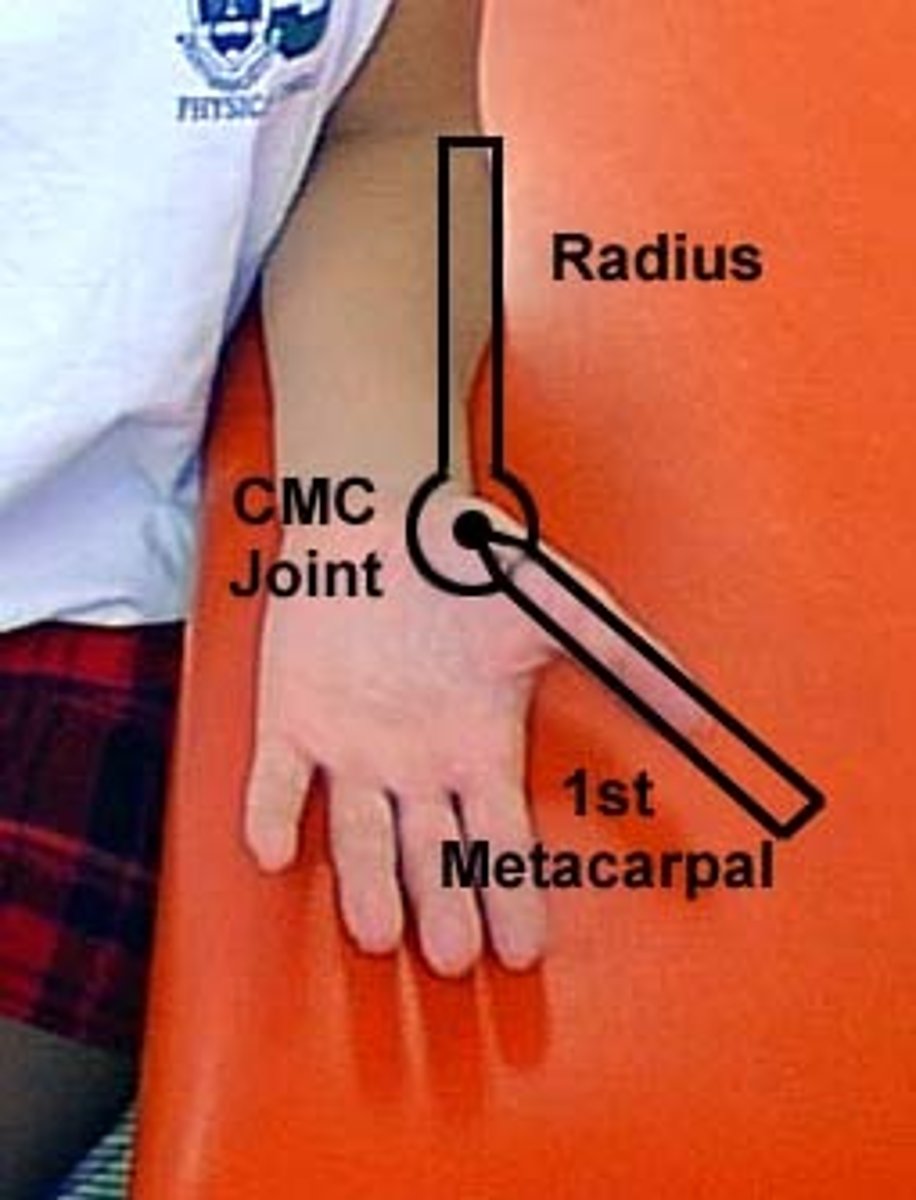
PROM right CMC extension
fulcrum: palmar surface of 1st CMC joint/scaphoid
proximal: ventral midline of radius (radial styloid process for reference)
distal: ventral midline of 1st MC
* hand resting on table with palm facing up = SUPINATED
* STARTING WONT BE AT ZERO
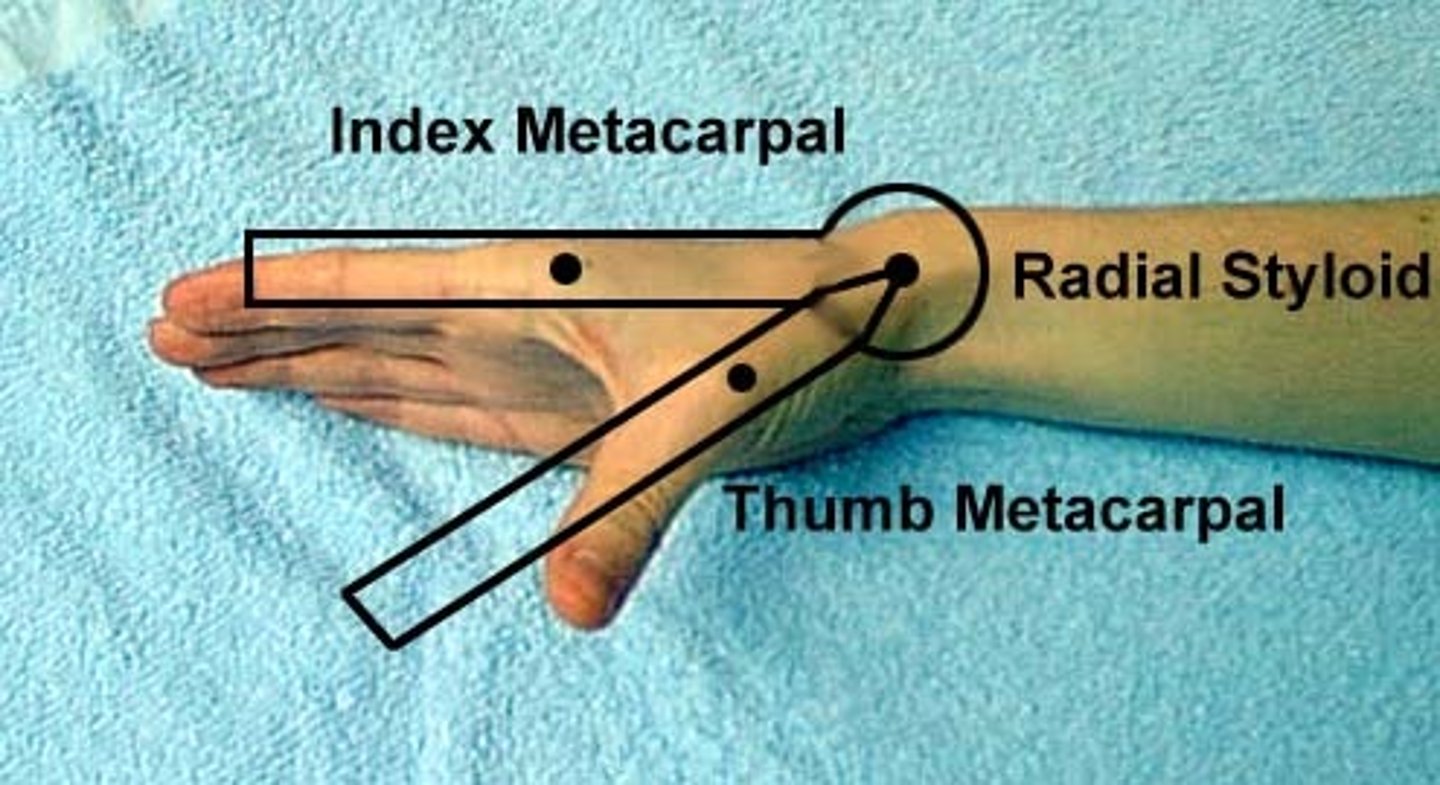
AROM left CMC abduction
fulcrum: lateral scaphoid/radial styloid process
proximal: lateral midline of 2nd MC
distal: dorsal midline of 1st MC
* goniometer forms V shape
* mid position
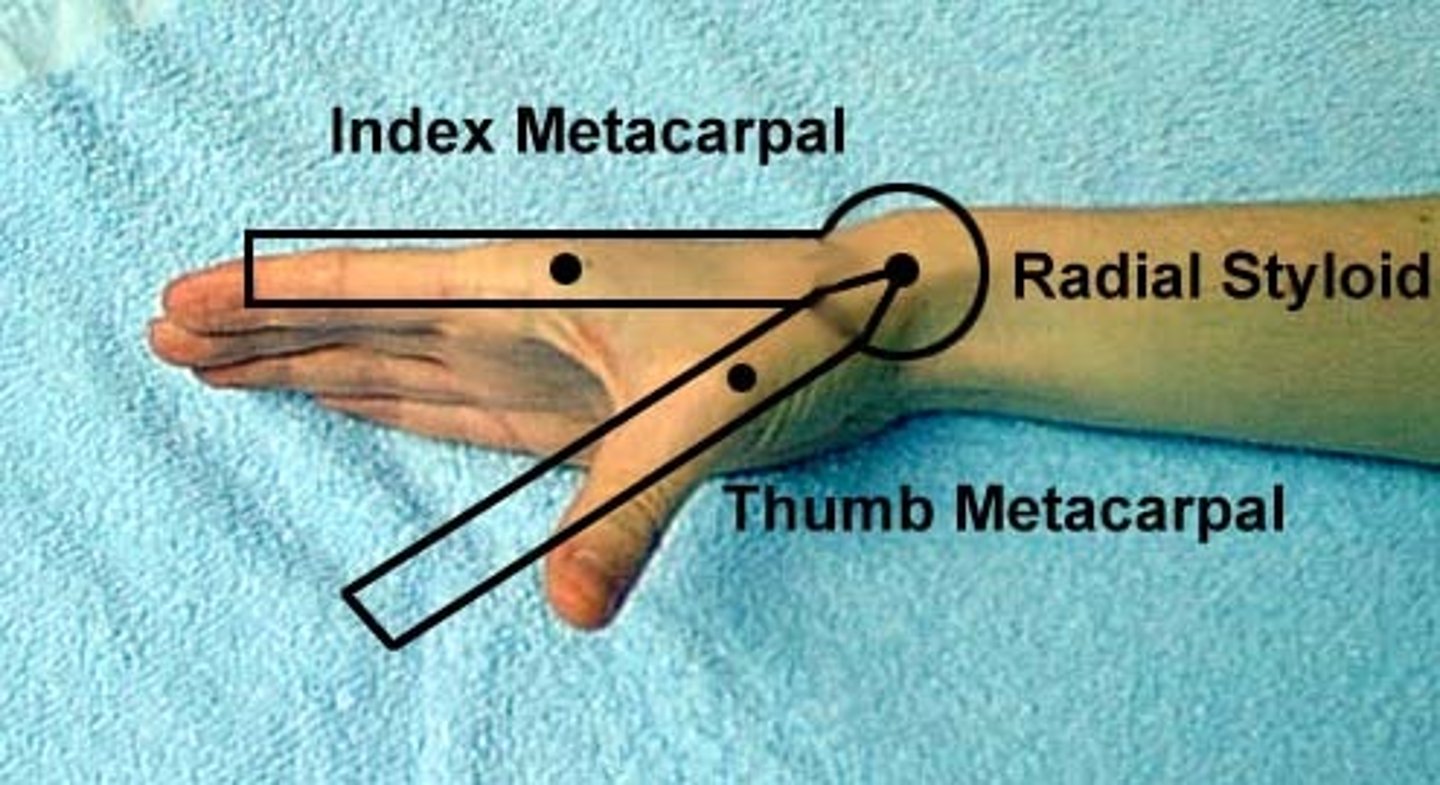
PROM right CMC abduction
fulcrum: lateral scaphoid/radial styloid process
proximal: lateral midline of 2nd MC
distal: dorsal midline of 1st MC
* goniometer forms V shape
* mid position
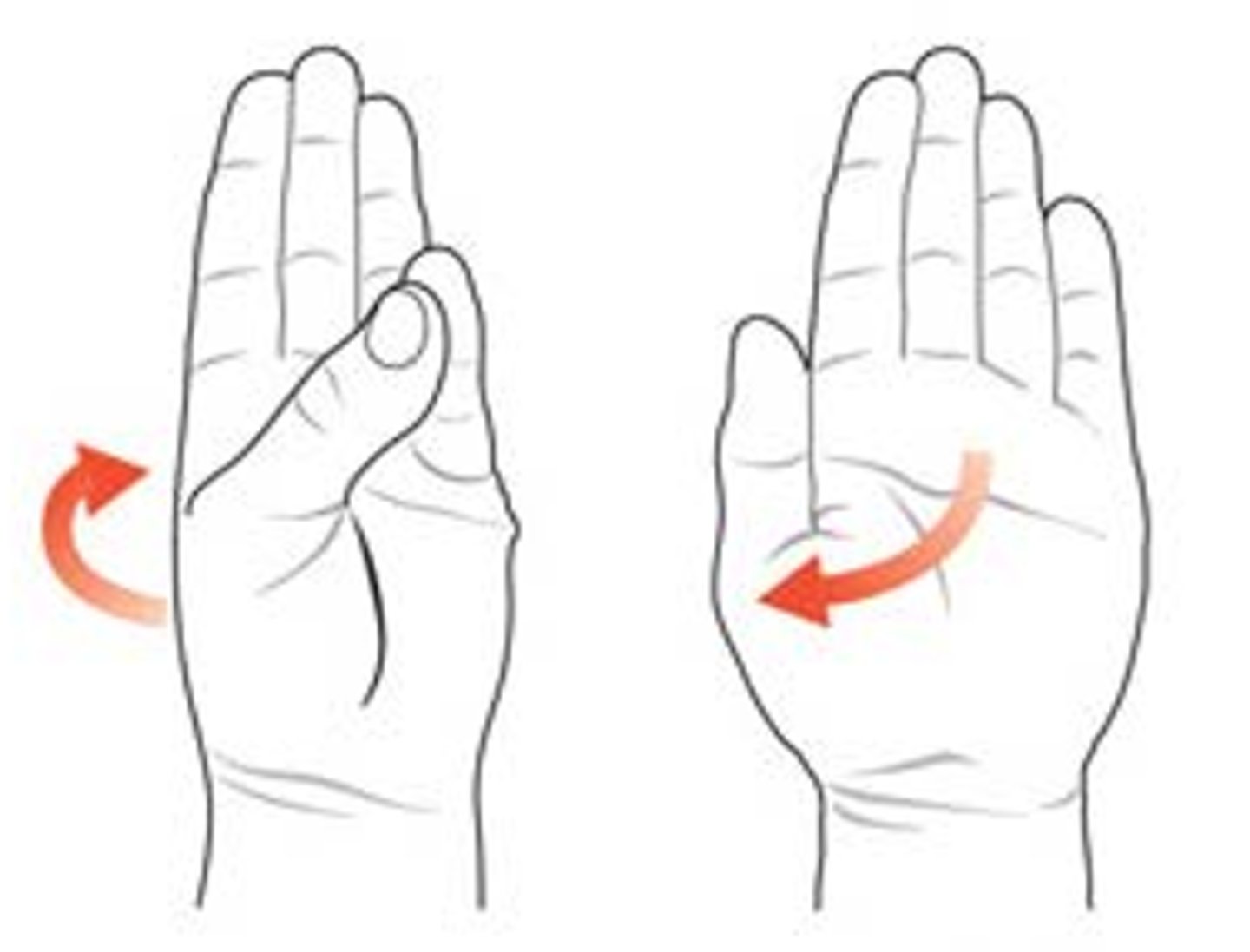
AROM right CMC opposition
measure distance from crease of pinky to thumb
supinated
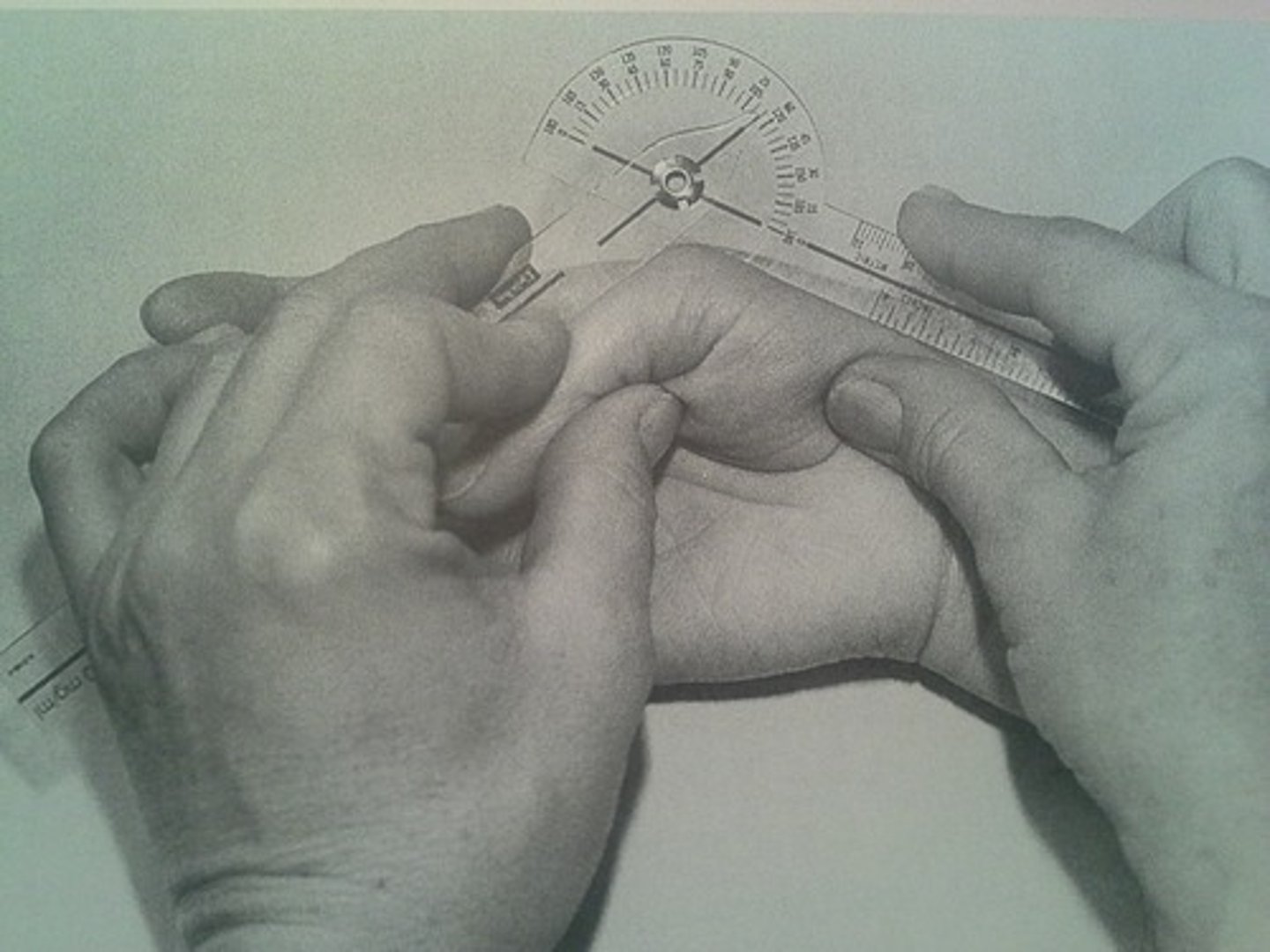
AROM right MCP flexion thumb
fulcrum: dorsal surface of MCP joint
proximal: dorsal midline of metacarpal
distal: dorsal midline of proximal phalanx
supinated
PROM right MCP flexion thumb
fulcrum: dorsal surface of MCP joint
proximal: dorsal midline of metacarpal
distal: dorsal midline of proximal phalanx
supinated
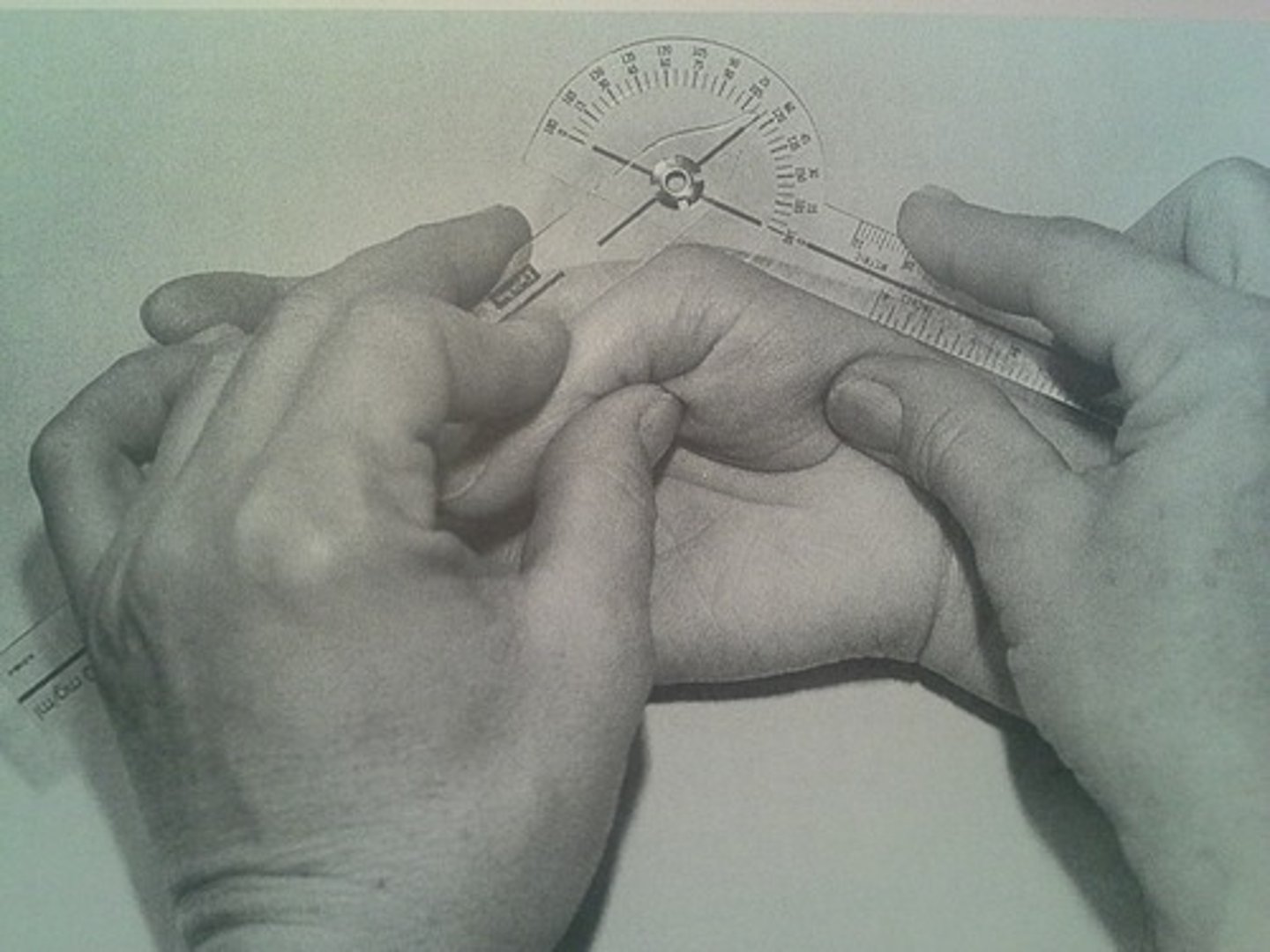
AROM left IP flexion
fulcrum: dorsal surface of IP joint
proximal: dorsal midline of proximal phalanx
distal: dorsal midline of distal phalanx
supinated
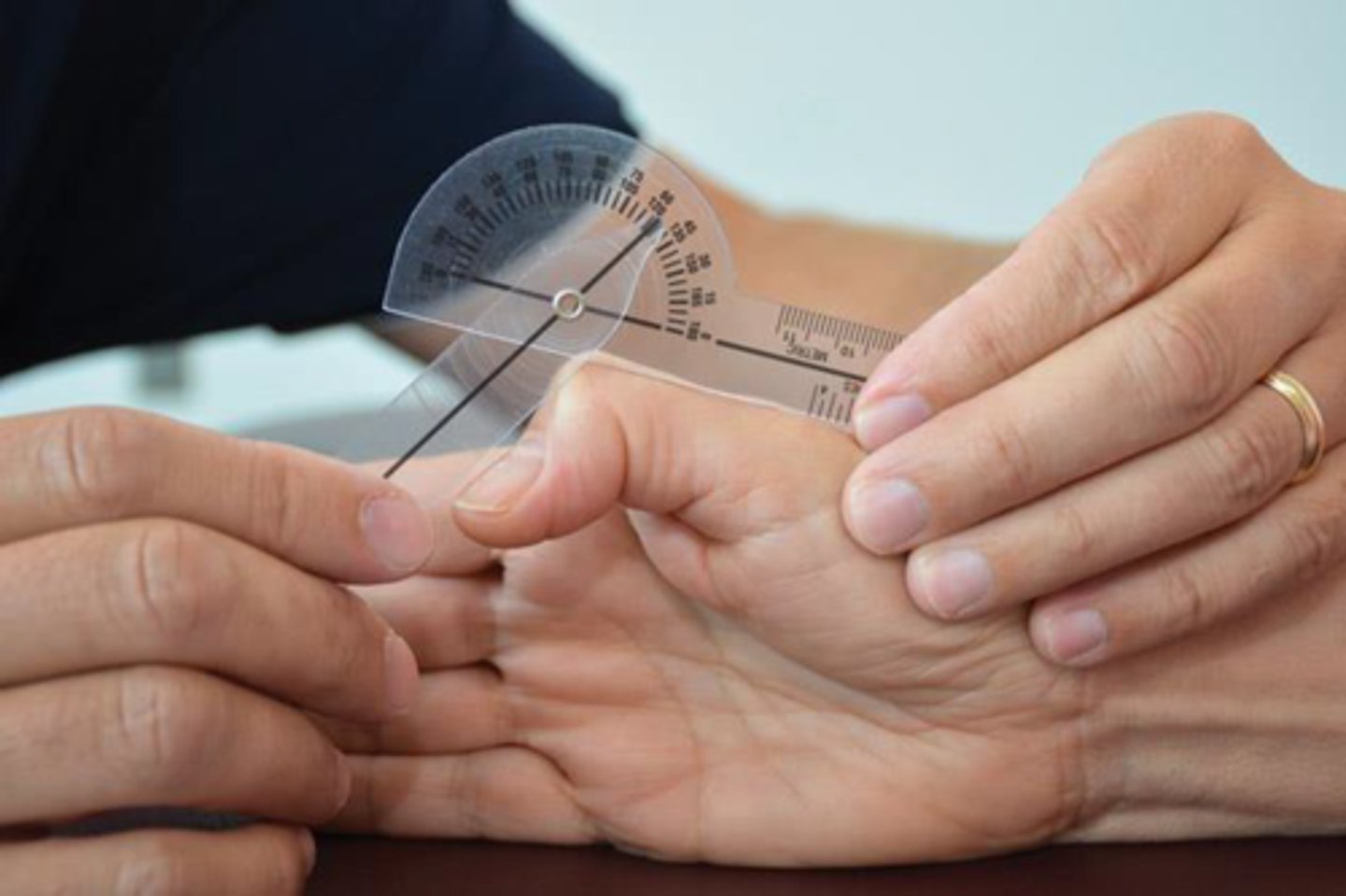
PROM right IP flexion
fulcrum: dorsal surface of IP joint
proximal: dorsal midline of proximal phalanx
distal: dorsal midline of distal phalanx
supinated
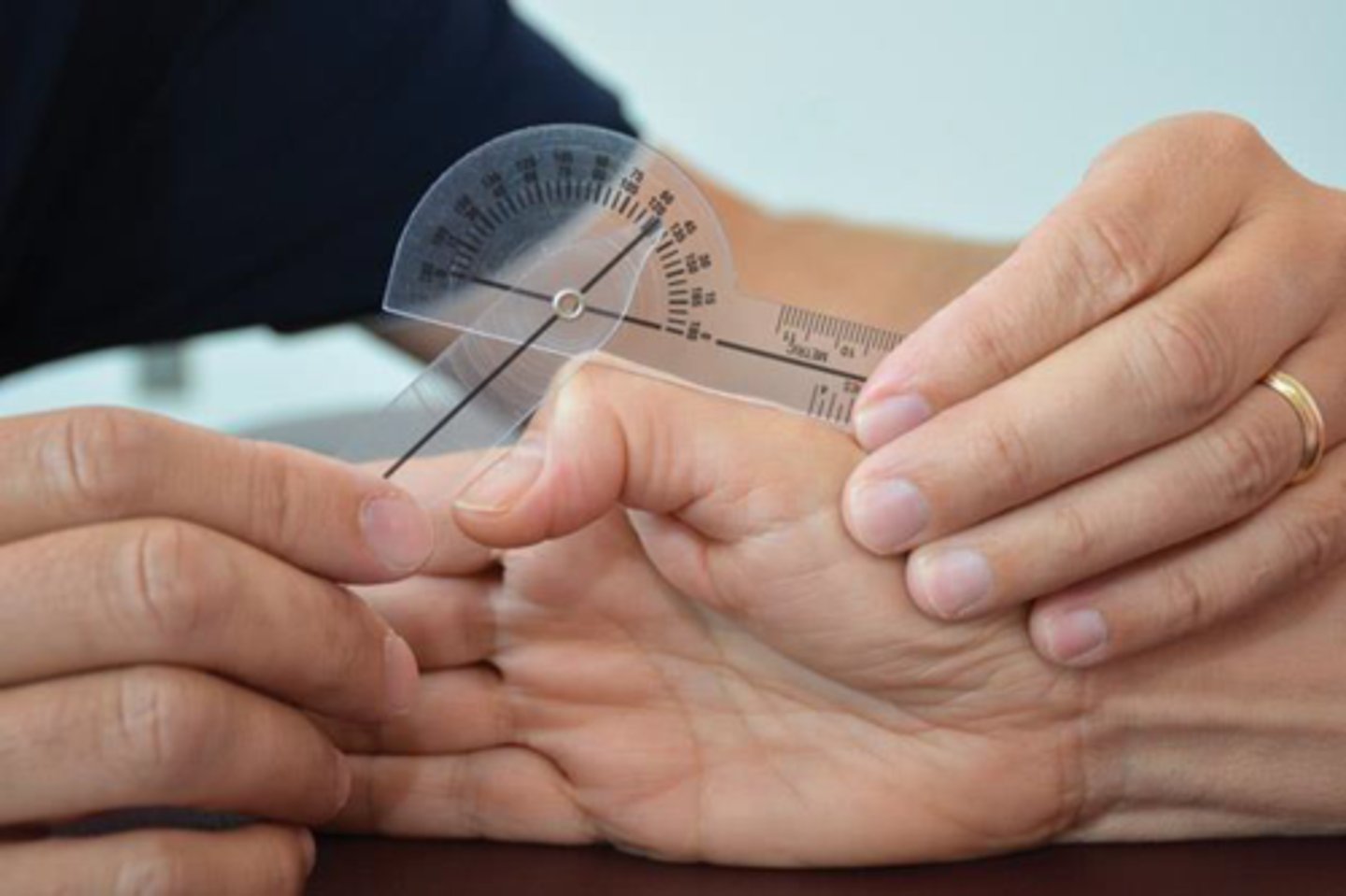
muscle testing: elbow extensors = triceps brachii
fulcrum: lateral epicondyle
proximal: lateral midline of humerus (acromion process for reference)
distal: lateral midline of radius (radial styloid process for reference)
* supine
* body close to edge of table
* end feel is firm due to tension in triceps
* if triceps short it will limit flexion in extension position of elbow
* COMPARE TO NORMAL ELBOW FLEXION IN SUPINE
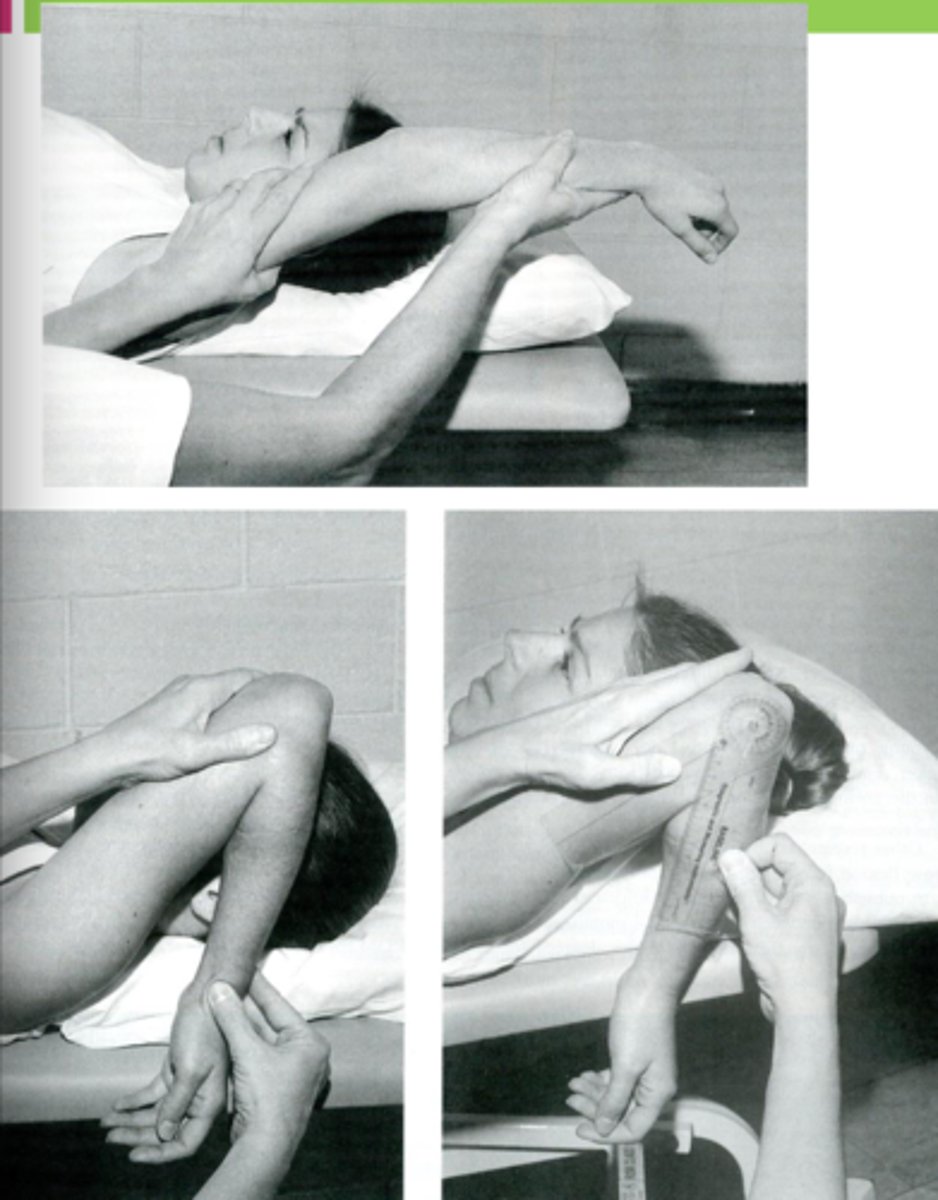
muscle testing: elbow flexors = biceps brachii
fulcrum: lateral epicondyle
proximal: lateral midline of humerus (acromion process for reference)
distal: lateral midline of ulna (ulnar styloid process for reference)
* supine
* body close to edge to allow full ROM
* TOWEL UNDER ELBOW!!!!!!!!!!
* end feel is FIRM because of tension on biceps
* If biceps is SHORT = limit elbow extension
* COMPARE TO ELBOW EXTENSION (supine)
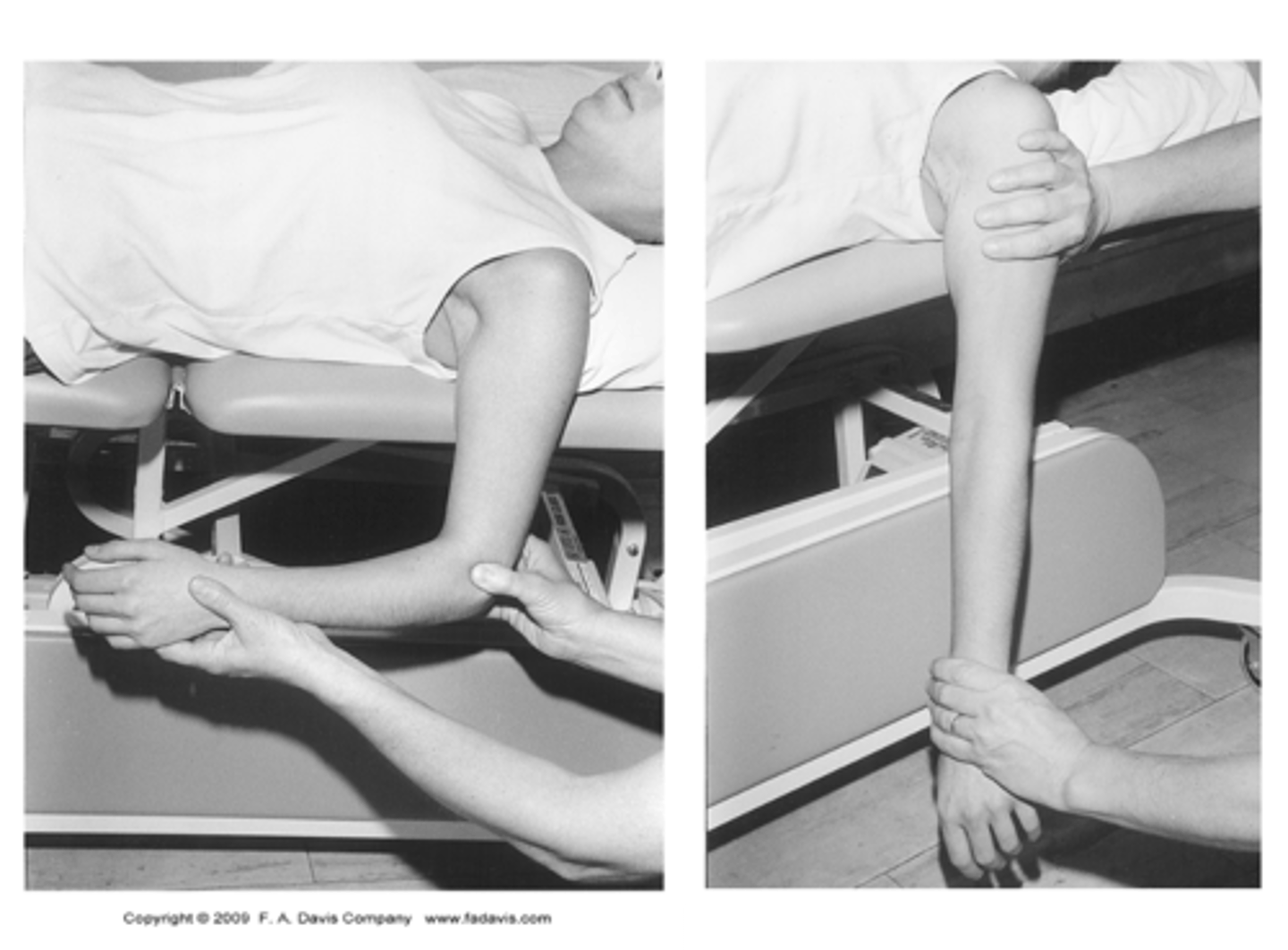
muscle testing: right FDP and FDS (wrist flexors)
fulcrum: lateral aspect of wrist over triquetrum
proximal: lateral midline of ulna using olecranon and ulnar styloid process for reference
distal: lateral midline of 5th MC
*if short it will limit wrist extension in MCP, PIP, DIP (firm feeling)
*arm extended on table with wrist hanging off
*FIRST = fingers straight by put flexors on slack
* COMPARE WITH ELBOW BENT AND FINGERS CURLED
muscle testing: left ED, EI (wrist extensors)
fulcrum: lateral aspect of wrist over triquetrum
proximal: lateral midline of ulna using olecranon and ulnar styloid process for reference
distal: lateral midline of 5th MC
*if short it will limit wrist flexion
*arm extended on table with wrist hanging off
* FIRST = fingers curled and arm straight go into flexion
* COMPARE TO FINGERS STRAIGHT GOING INTO FLEXION
muscle testing: right lumbricals
fulcrum: dorsal surface of MCP joint
proximal: dorsal midline of MC
distal: dorsal midline of proximal phalanx
COMPARE TO MCP EXTENSION
AROM: right hip flexion
fulcrum: lateral aspect of hip joint (greater trochanter for reference)
proximal: lateral midline pelvis
distal: lateral midline of femur (lateral epicondyle for reference
normal: 120
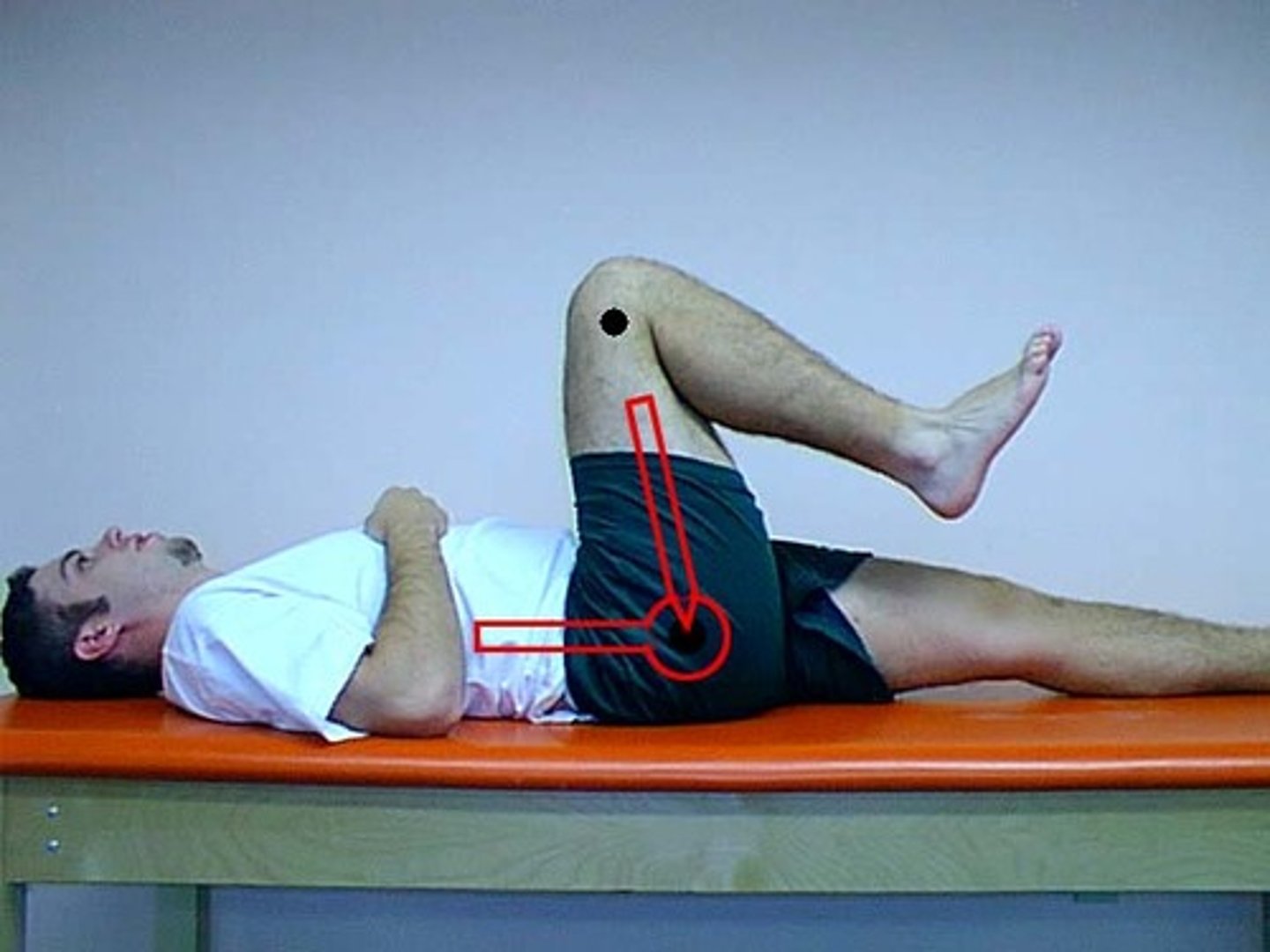
PROM: right hip flexion
fulcrum: lateral aspect of hip joint (greater trochanter for reference)
proximal: lateral midline pelvis
distal: lateral midline of femur (lateral epicondyle for reference
normal: 120
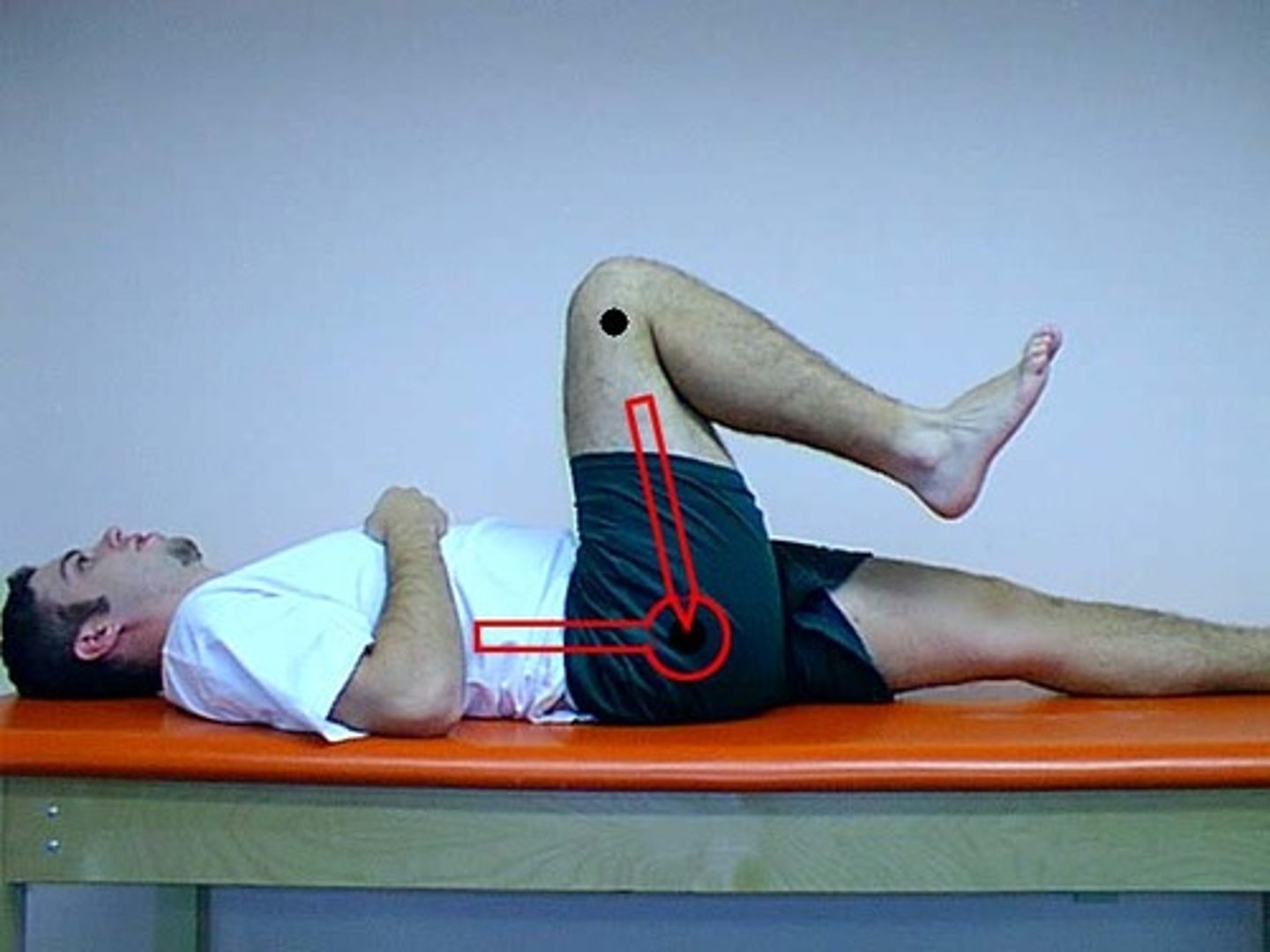
AROM: left hip extension
fulcrum: lateral aspect of hip joint
proximal: lateral midline pelvis
distal: lateral midline femur
normal: 20
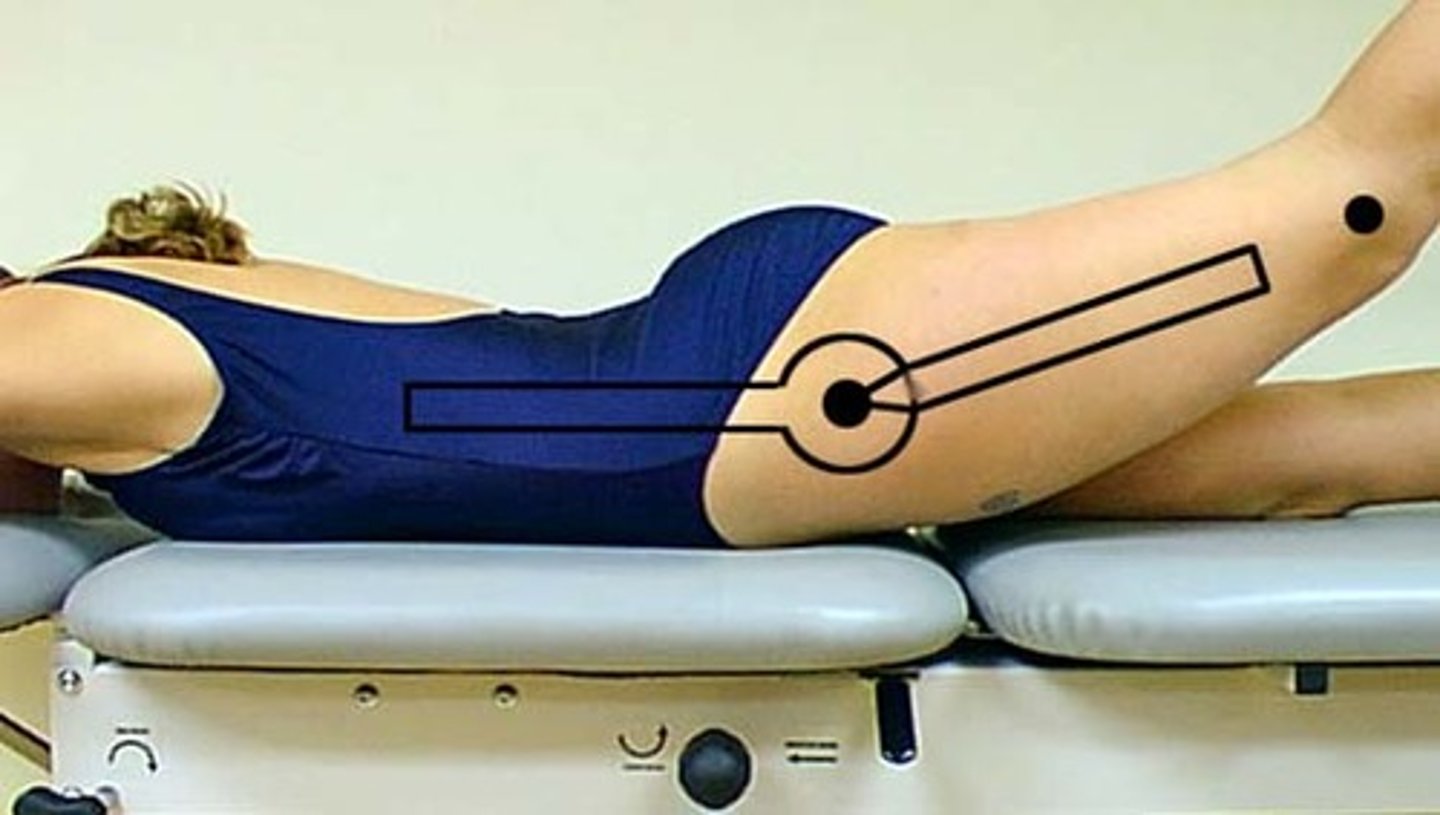
PROM: left hip extension
fulcrum: lateral aspect of hip joint
proximal: lateral midline pelvis
distal: lateral midline femur
normal: 20
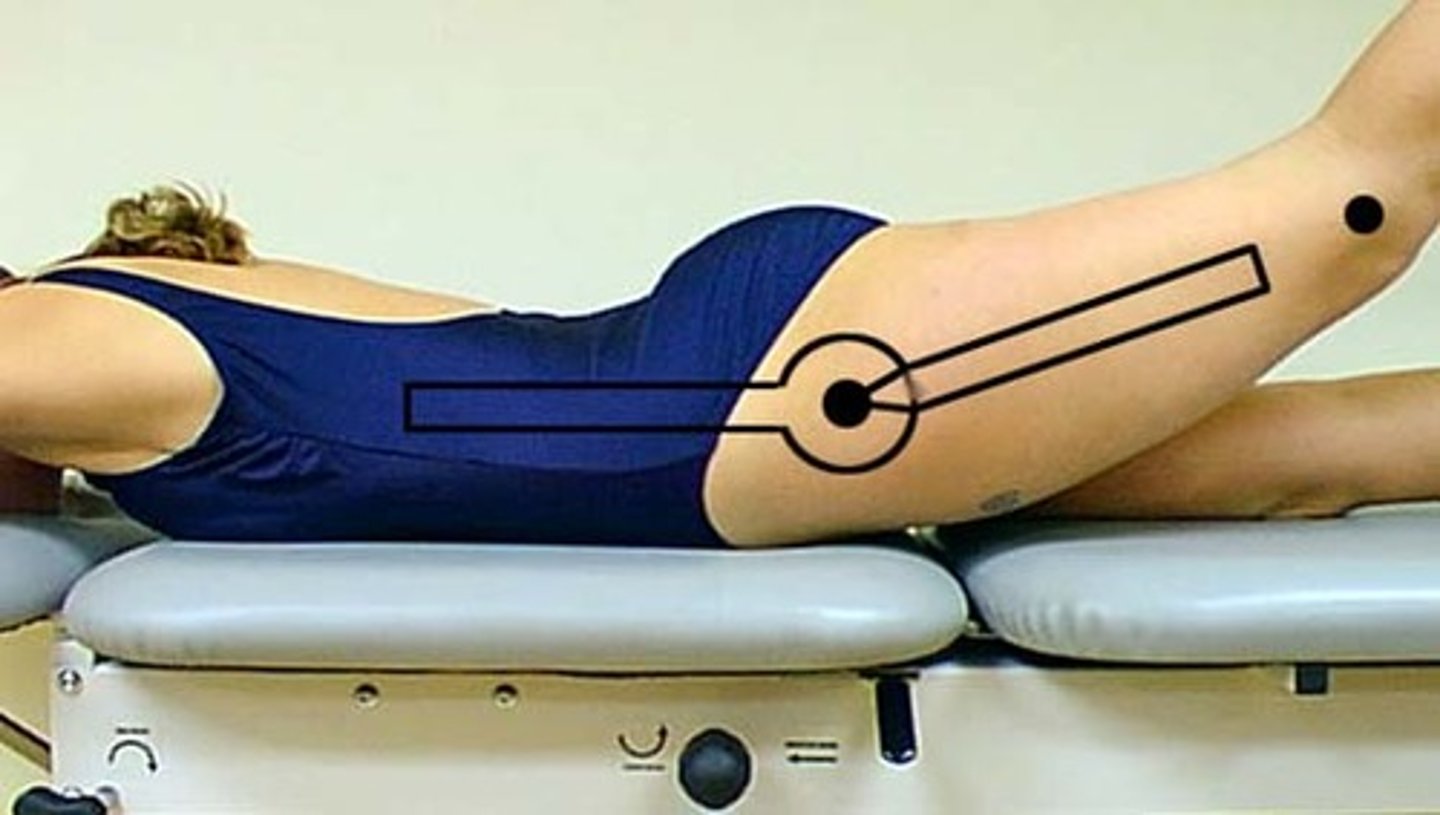
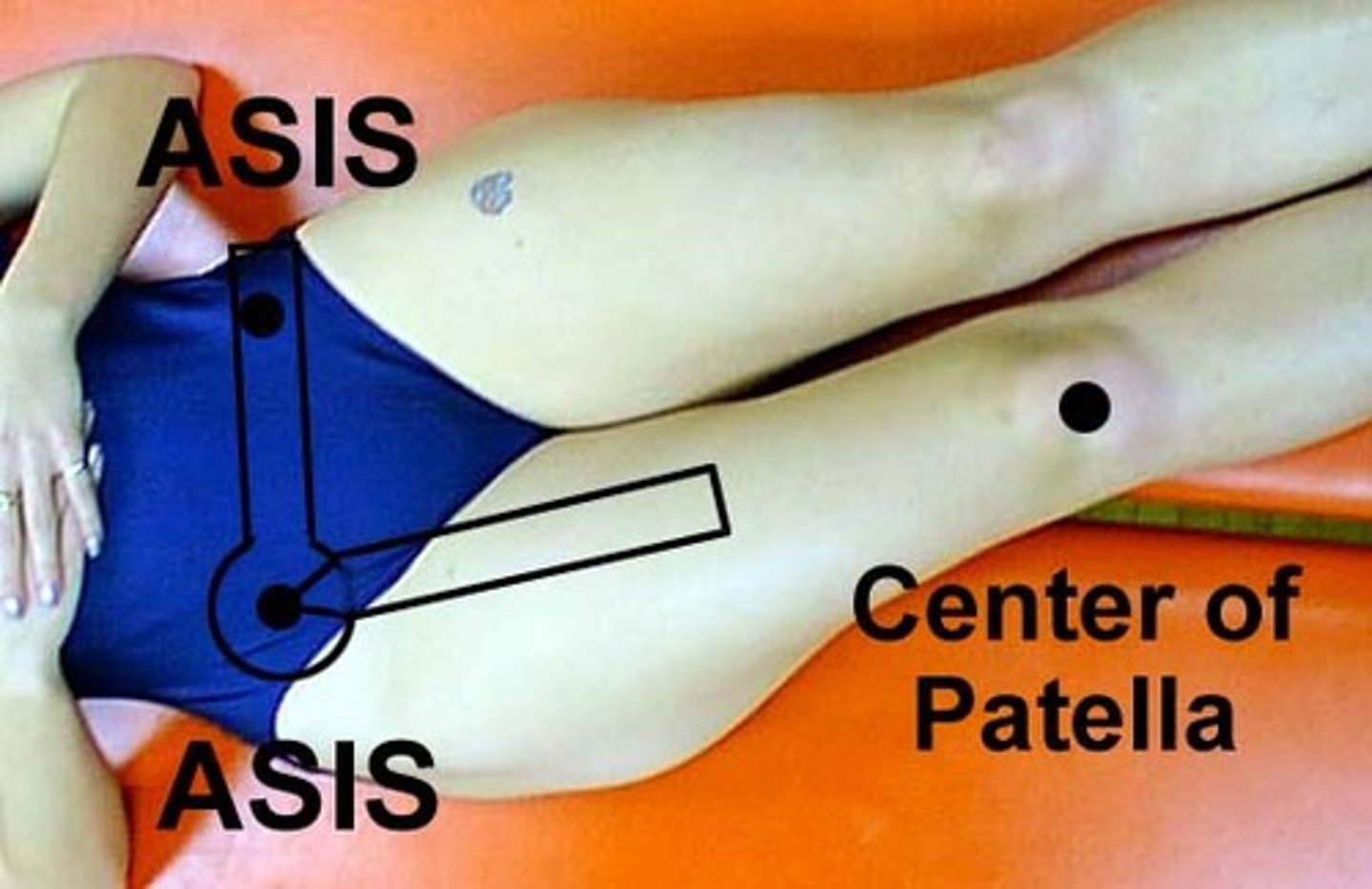
AROM: left hip abduction
fulcrum: ASIS
proximal: imaginary line from ASIS to other ASIS
distal: anterior midline of femur
* use red numbers
normal: 45
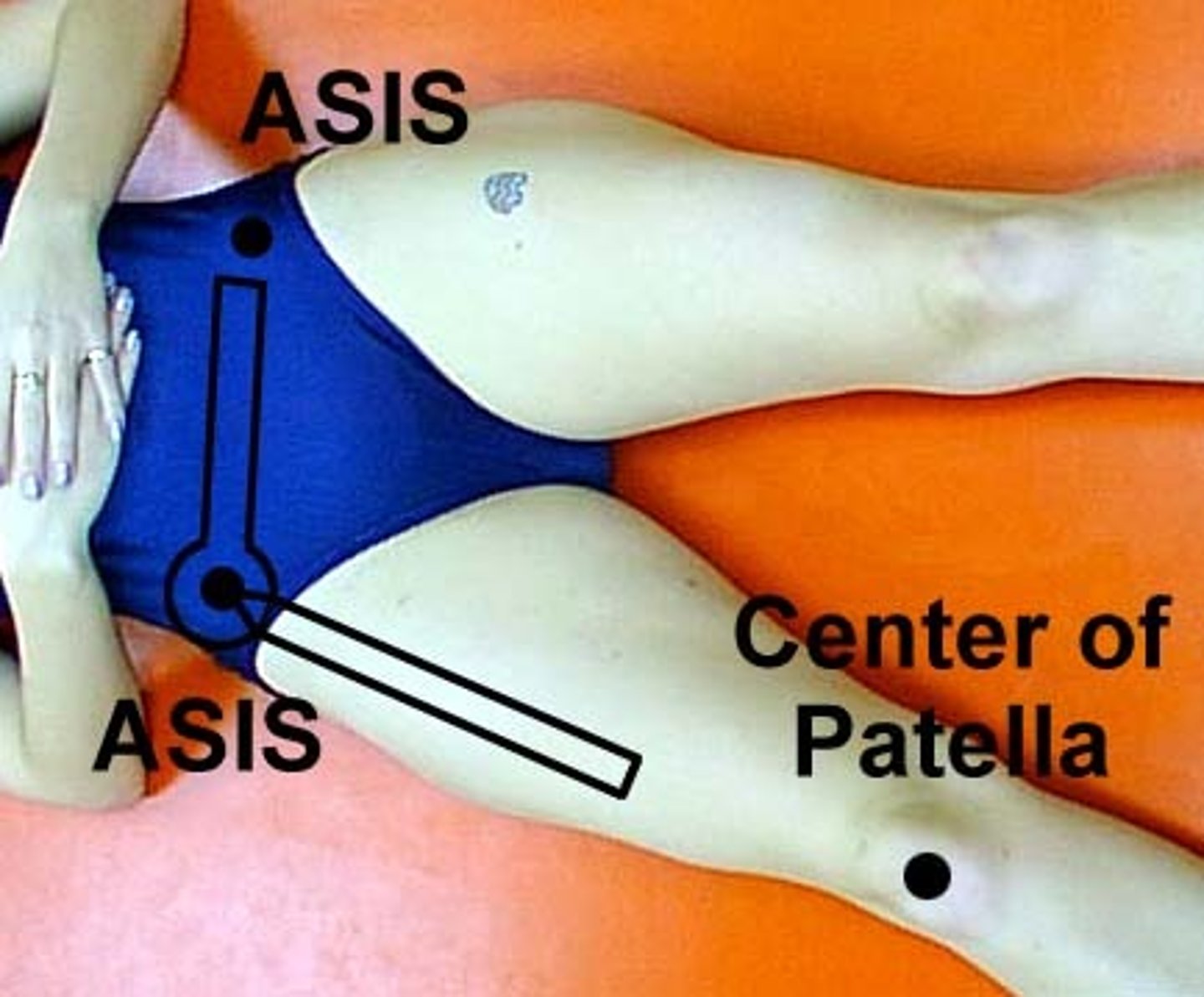
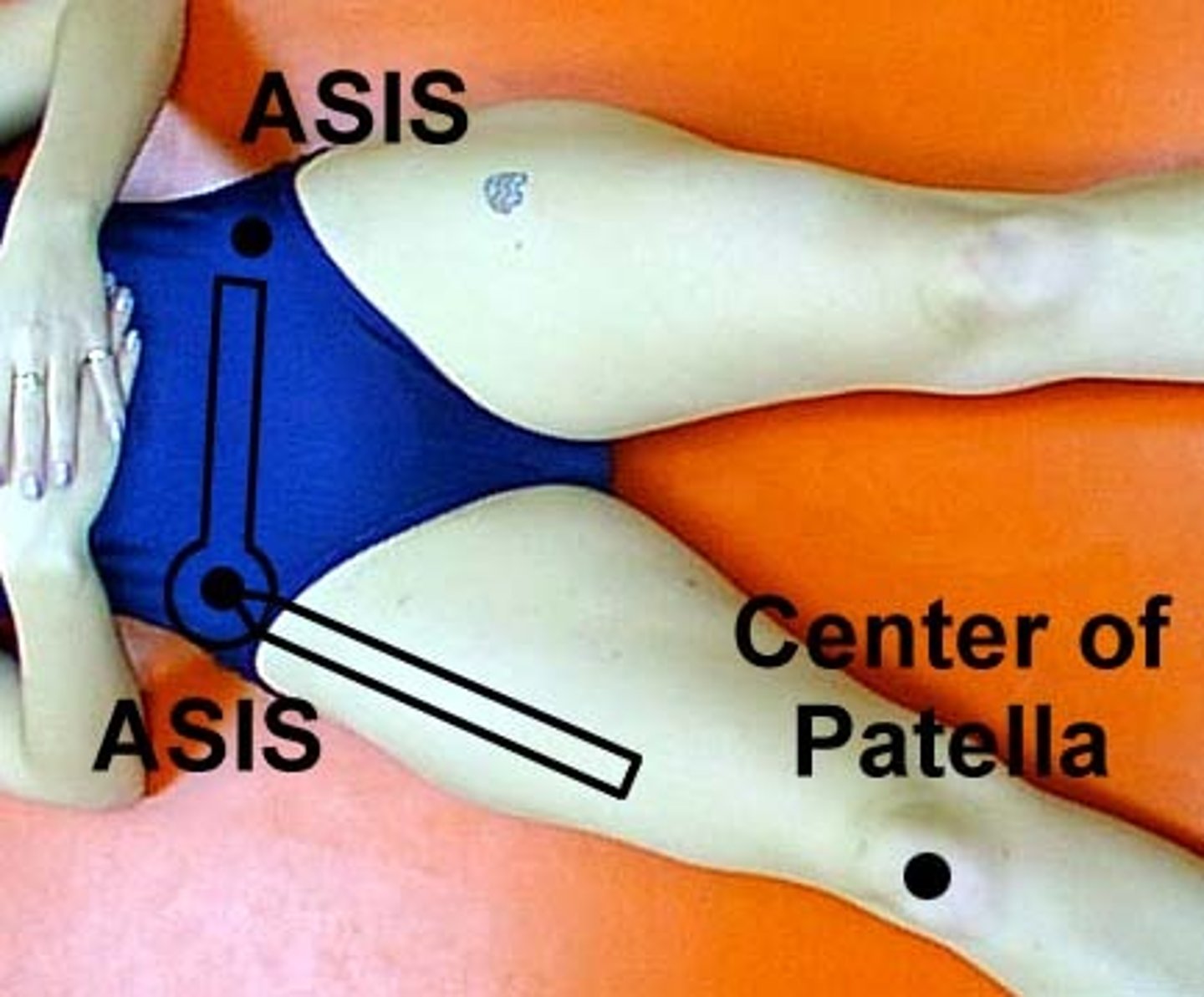
PROM: right hip abduction
fulcrum: ASIS
proximal: imaginary line from ASIS to other ASIS
distal: anterior midline of femur
* use red numbers
normal: 45
AROM: right hip adduction
fulcrum: ASIS
proximal: imaginary line from ASIS to other ASIS
distal: anterior midline of femur
* use red numbers
normal: 30
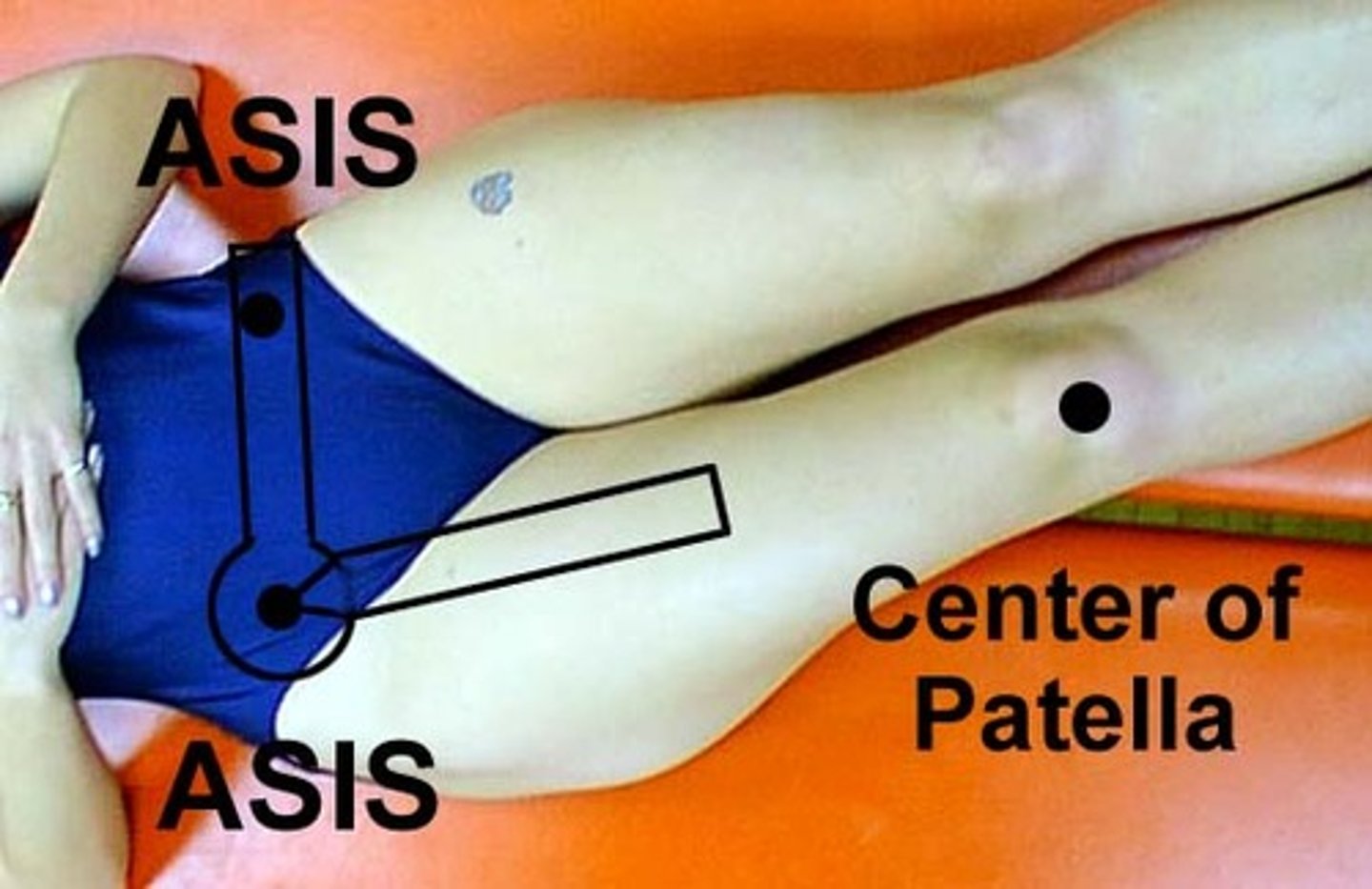
PROM: right hip adduction
fulcrum: ASIS
proximal: imaginary line from ASIS to other ASIS
distal: anterior midline of femur
* use red numbers
normal: 30
AROM: left medial rotation hip
fulcrum: anterior surface of patella
proximal: perpendicular to floor
distal: anterior midline of shank
* SITTING ON EDGE TABLE
* USE TOWEL UNDER LEG
normal = 45
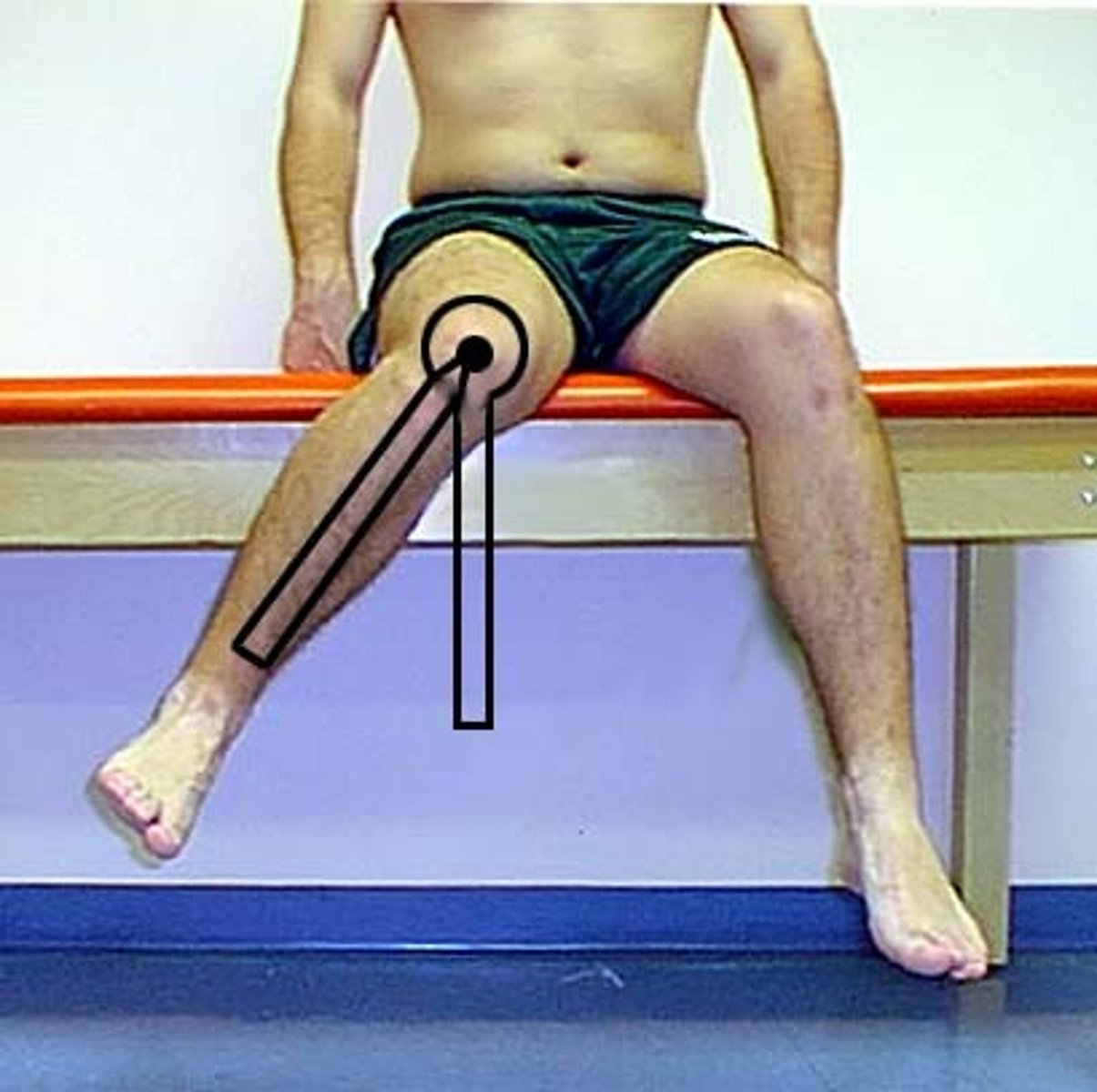
PROM: left medial rotation hip
fulcrum: anterior surface of patella
proximal: perpendicular to floor
distal: anterior midline of shank
* SITTING ON EDGE TABLE
* USE TOWEL UNDER LEG
normal = 45
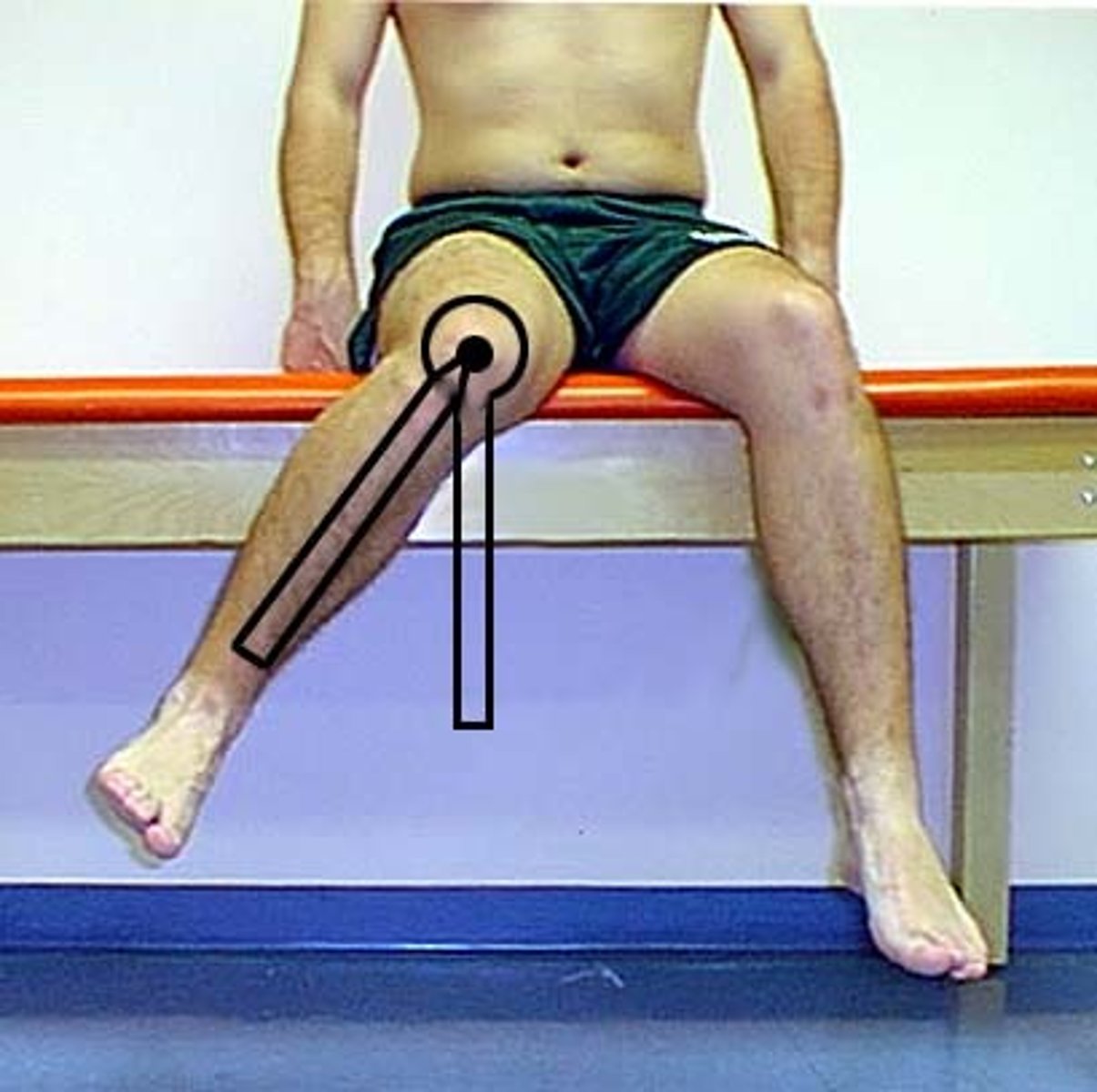
AROM: right lateral rotation hip
fulcrum: anterior surface of patella
proximal: perpendicular to floor
distal: anterior midline of shank
* SITTING ON EDGE TABLE
* USE TOWEL UNDER LEG
normal = 45
PROM: right lateral rotation hip
fulcrum: anterior surface of patella
proximal: perpendicular to floor
distal: anterior midline of shank
* SITTING ON EDGE TABLE
* USE TOWEL UNDER LEG
normal = 45
AROM: right knee flexion
fulcrum: lateral epicondyle femur
proximal: lateral midline femur
distal: lateral midline fibula
* supine
* normal = 135
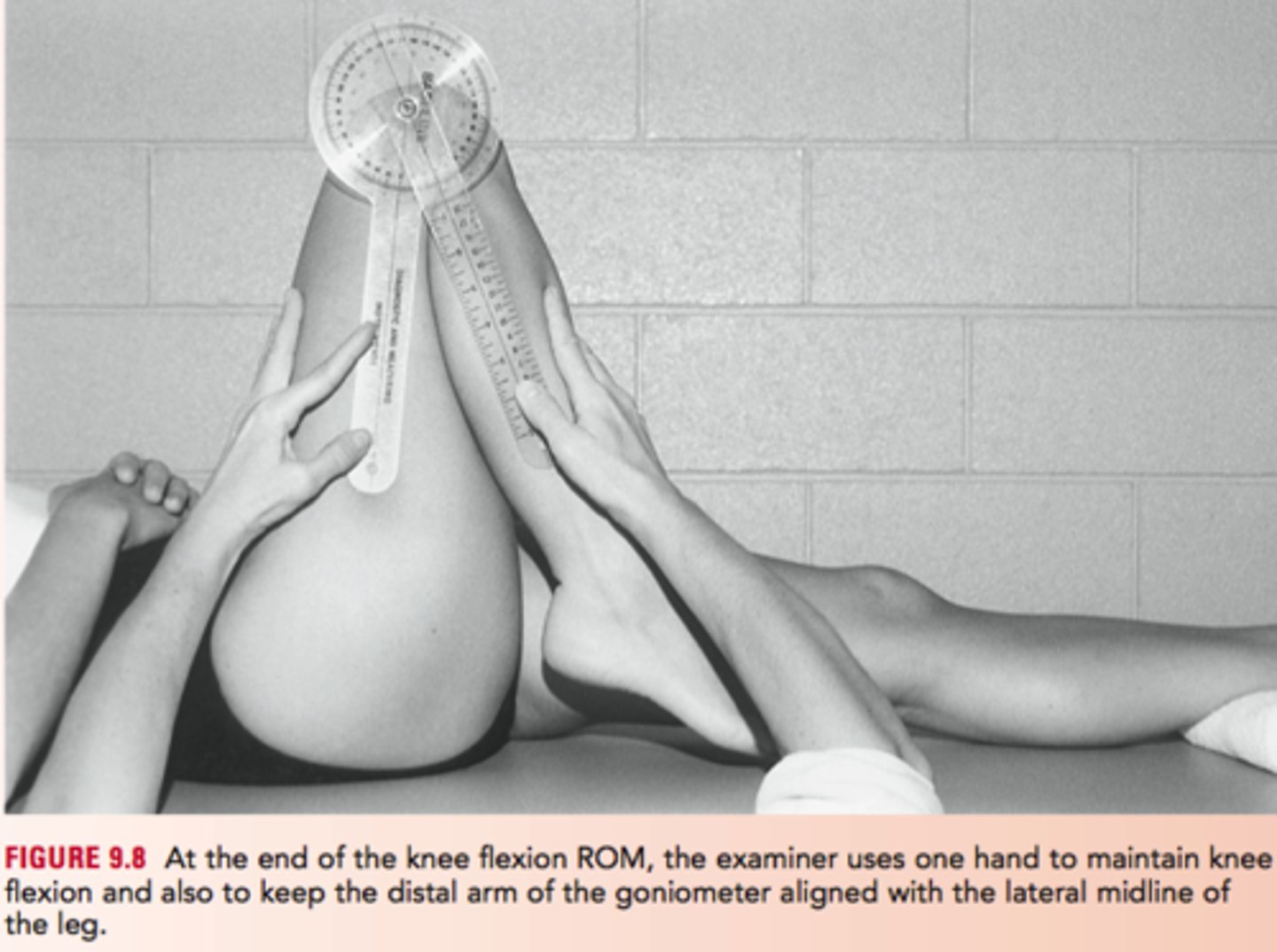
PROM: left knee flexion
fulcrum: lateral epicondyle femur
proximal: lateral midline femur
distal: lateral midline fibula
* supine
* normal = 135

AROM: right knee extension
fulcrum: lateral epicondyle femur
proximal: lateral midline femur
distal: lateral midline fibula
* supine
* USE TOWEL ON ANKLE
* normal = 10
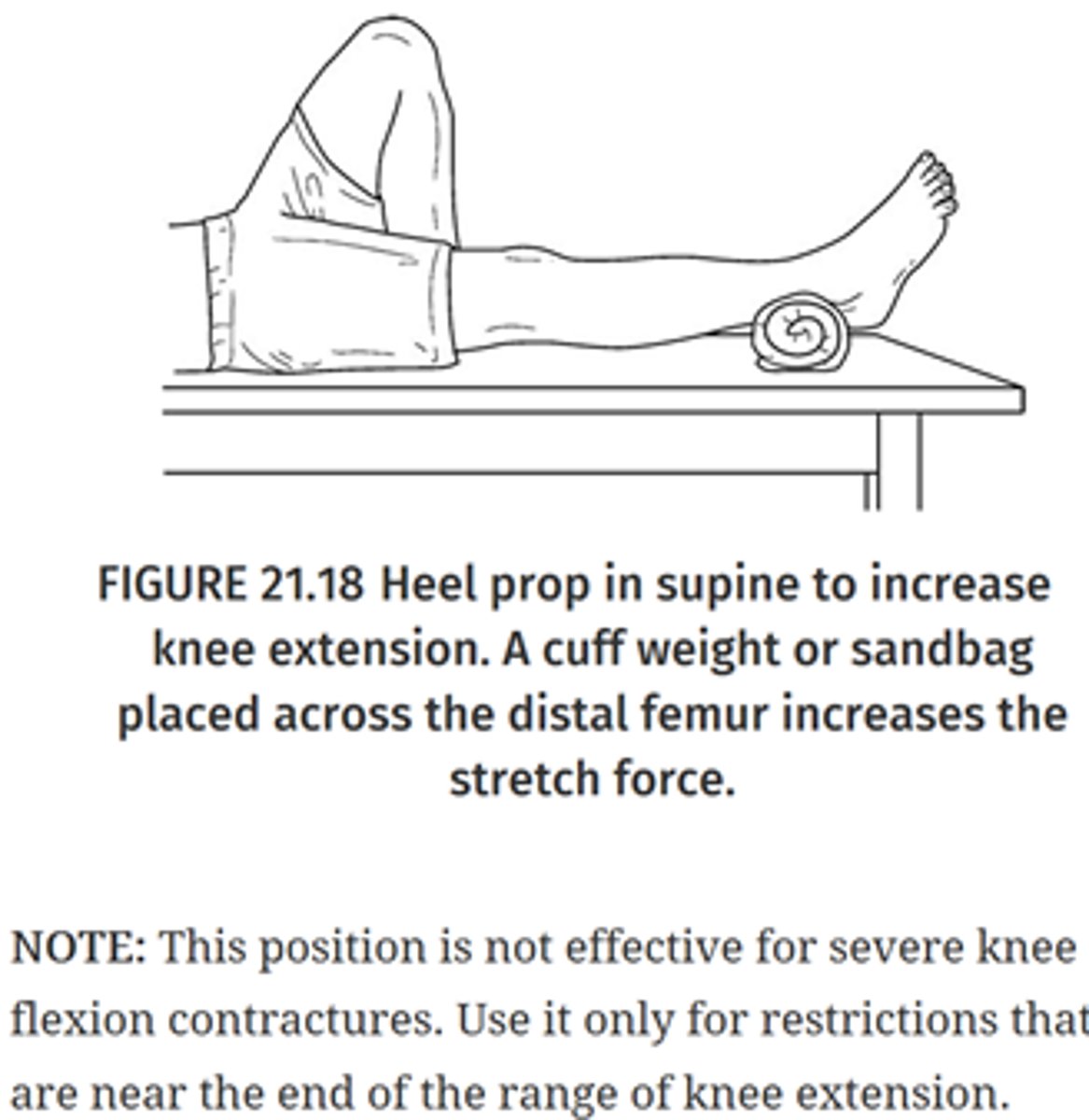
PROM: left knee extension
fulcrum: lateral epicondyle femur
proximal: lateral midline femur
distal: lateral midline fibula
* supine
* USE TOWEL ON ANKLE
* normal = 10
AROM: right talocrural joint dorsiflexion
fulcrum: lateral aspect of lateral malleolus
proximal: lateral midline fibula
distal: parallel to 5th MC
* seated with knees bent and leg hanging off
* measure on lateral side of leg
normal = 20
PROM: right talocrural joint dorsiflexion
fulcrum: lateral aspect of lateral malleolus
proximal: lateral midline fibula
distal: parallel to 5th MC
* seated with knees bent and leg hanging off
* measure on lateral side of leg
normal = 20
AROM: left talocrural joint plantarflexion
fulcrum: lateral aspect of lateral malleolus
proximal: lateral midline fibula
distal: parallel to 5th MC
* seated with knees bent and leg hanging off
* measure on lateral side of leg
normal = 50
PROM: right talocrural joint plantarflexion
fulcrum: lateral aspect of lateral malleolus
proximal: lateral midline fibula
distal: parallel to 5th MC
* seated with knees bent and leg hanging off
* measure on lateral side of leg
normal = 50
AROM: right tarsal joint inversion
fulcrum: anterior aspect of ankle halfway between malleoli
proximal: anterior midline shank
distal: anterior midline 2nd MC
* sitting
* normal = 35
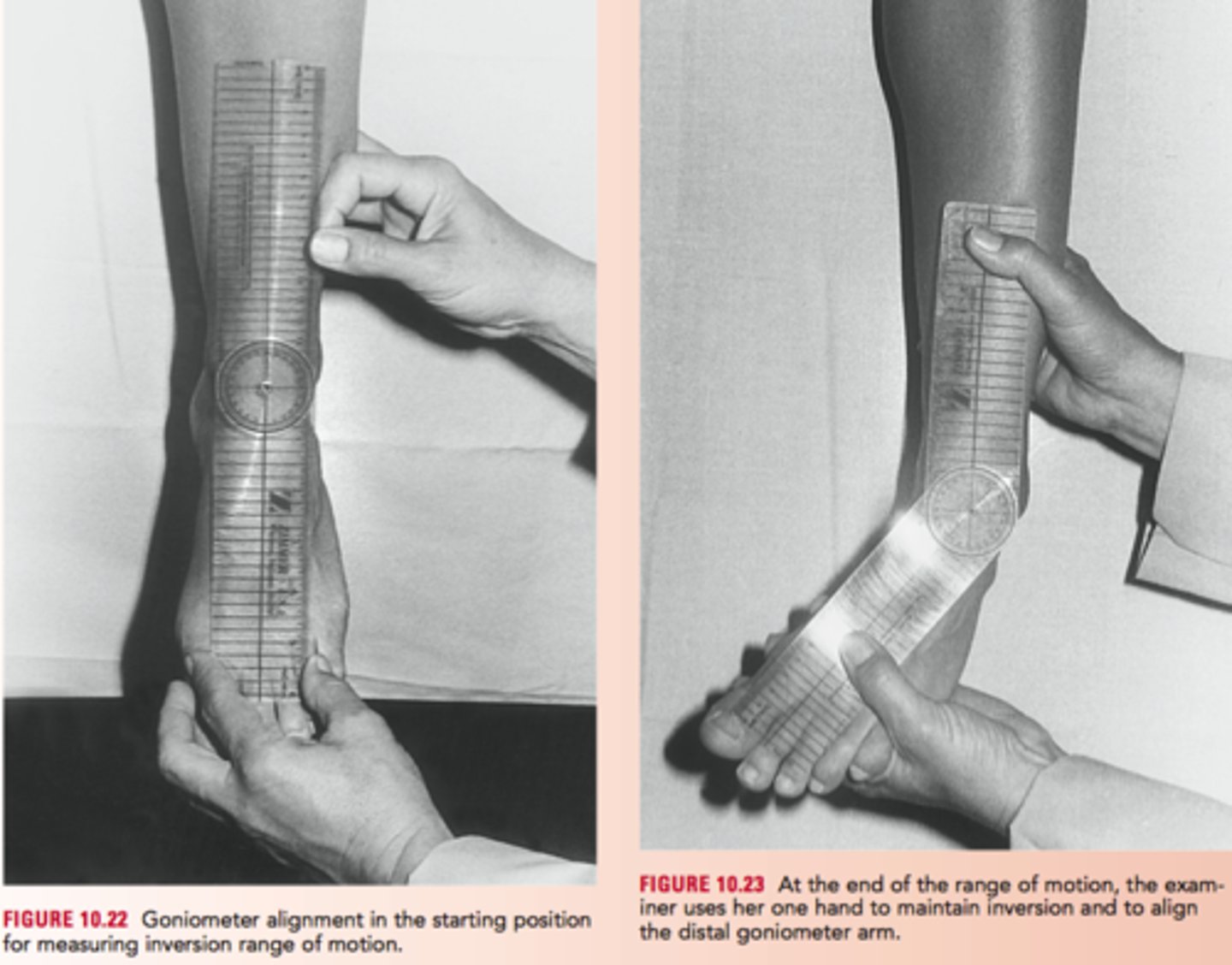
PROM: right tarsal joint inversion
fulcrum: anterior aspect of ankle halfway between malleoli
proximal: anterior midline shank
distal: anterior midline 2nd MC
* sitting
* normal = 35
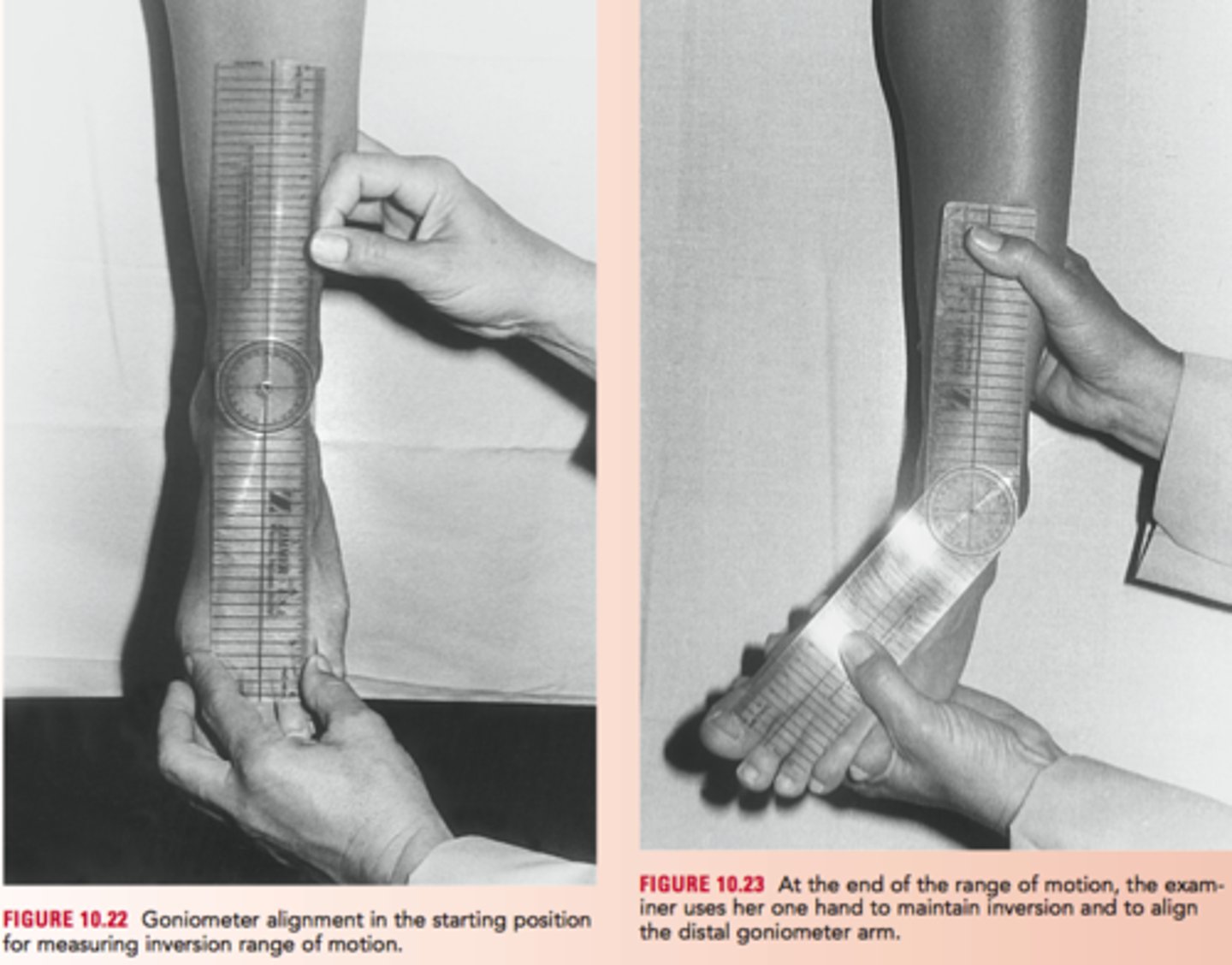
AROM: left tarsal joint eversion
fulcrum: anterior aspect of ankle halfway between malleoli
proximal: anterior midline shank
distal: anterior midline 2nd MC
* sitting
* normal = 15
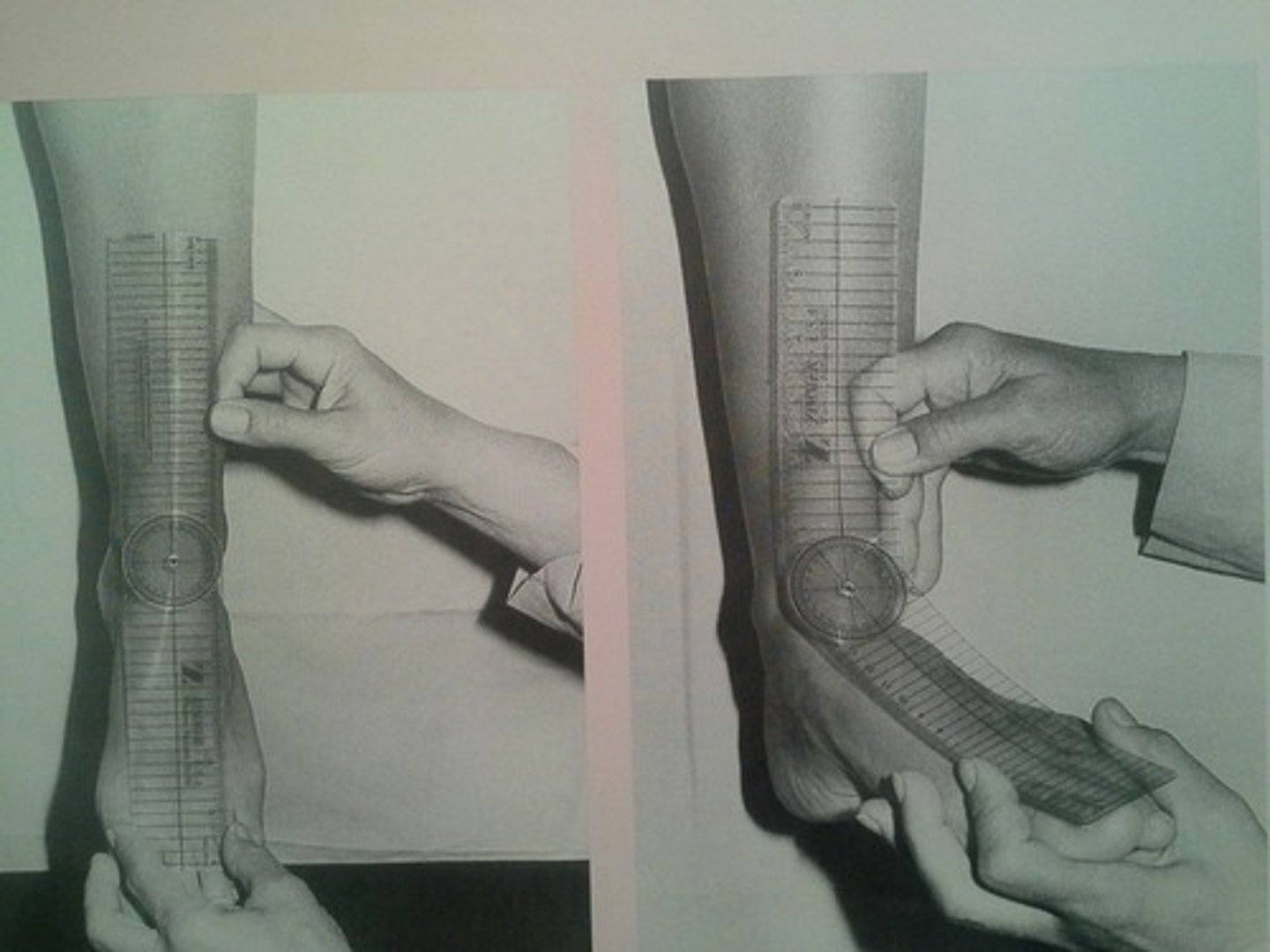
PROM: left tarsal joint eversion
fulcrum: anterior aspect of ankle halfway between malleoli
proximal: anterior midline shank
distal: anterior midline 2nd MC
* sitting
* normal = 15
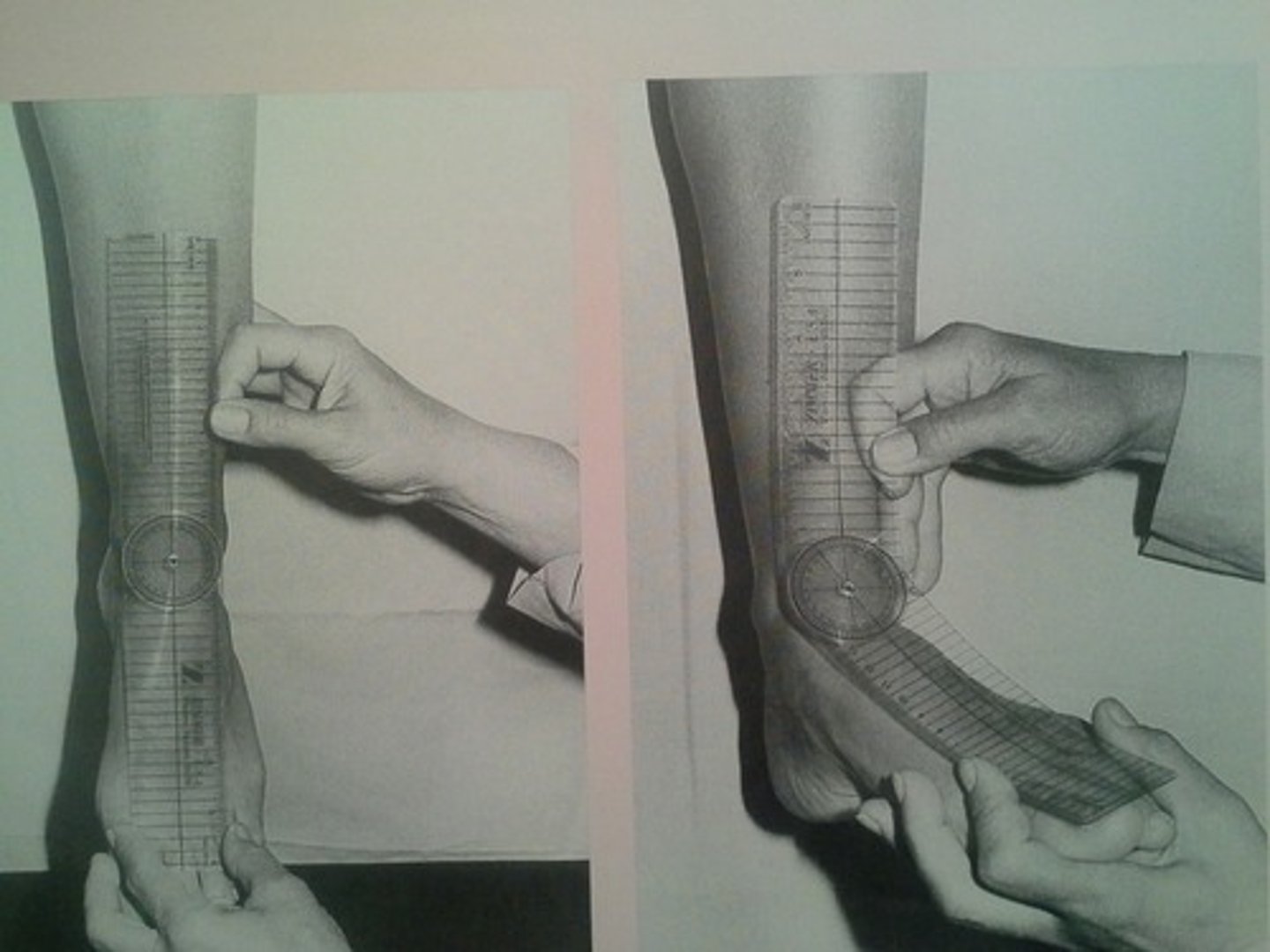
PROM: right subtalar joint inversion
fulcrum: posterior aspect of ankle halfway between malleoli
proximal: posterior midline shank
distal: posterior midline calcaneus
* PRONE
* move CALCANEUS
* normal = 5

PROM: left subtalar joint eversion
fulcrum: posterior aspect of ankle halfway between malleoli
proximal: posterior midline shank
distal: posterior midline calcaneus
* PRONE
* move CALCANEUS
* normal = 5-12
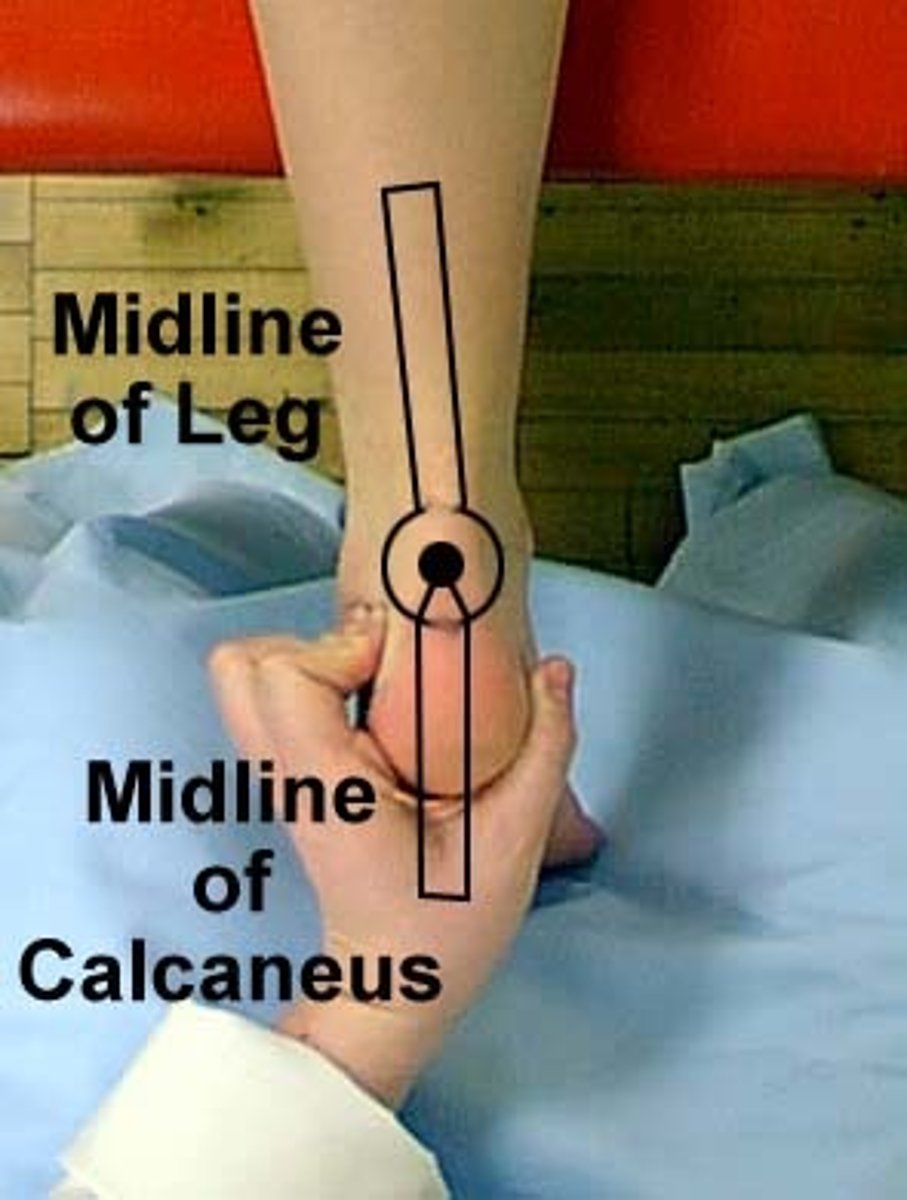
PROM: left transverse tarsal joint inversion
fulcrum: anterior aspect of ankle a few centimeters distal to malleolus
proximal: anterior midline shank
distal: anterior midline 2nd MC
* stabilize calcaneus
* normal = 35
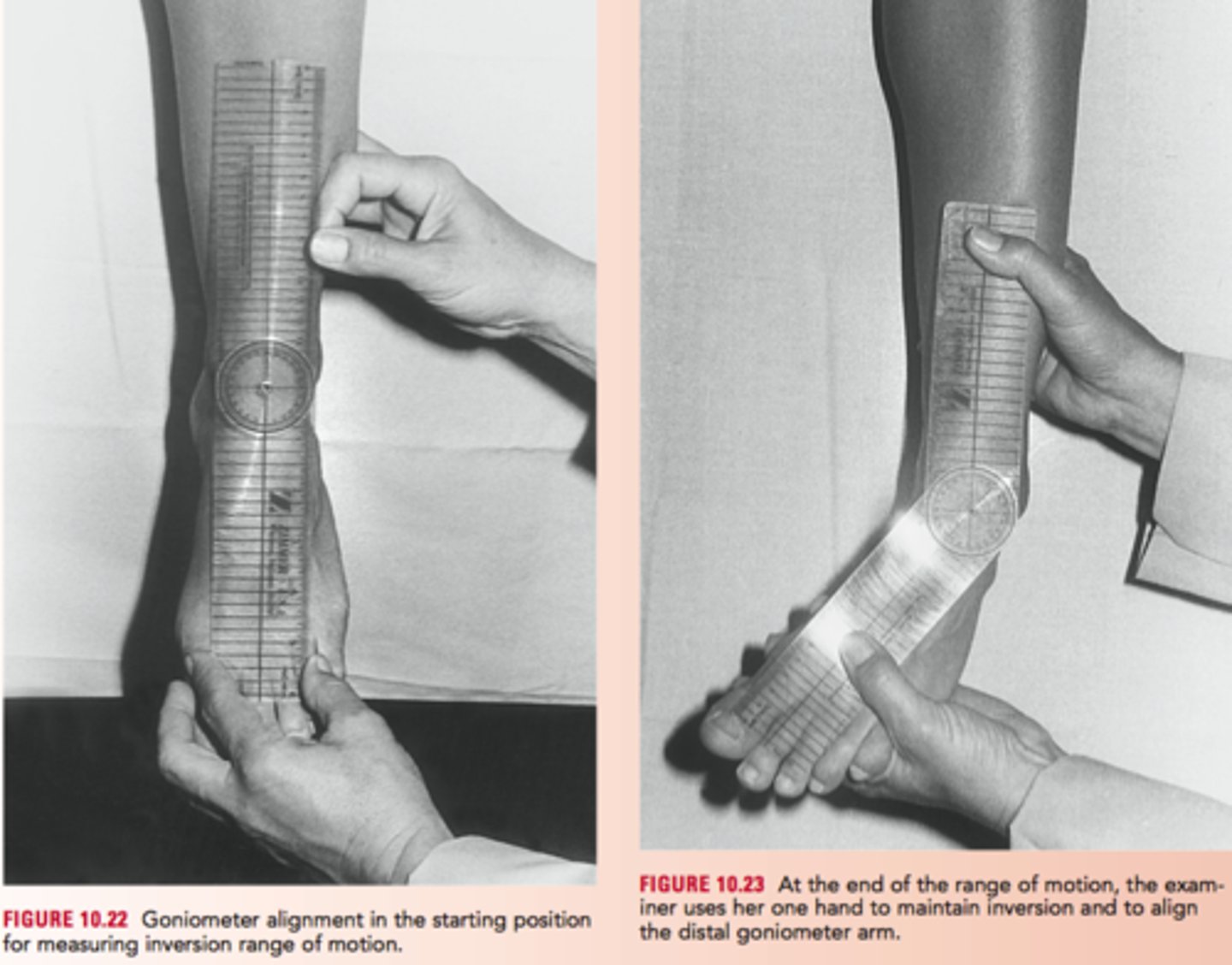
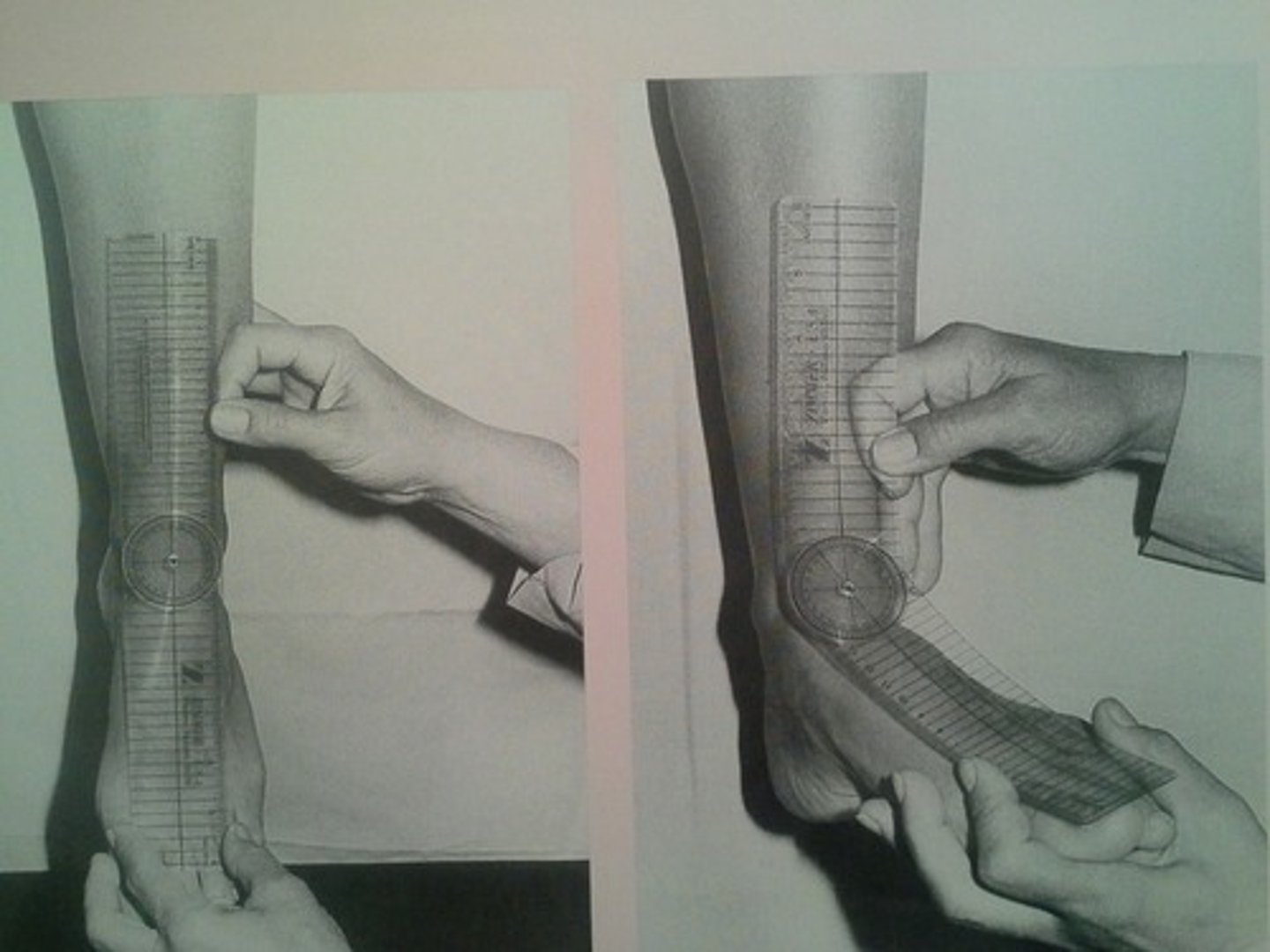
PROM: left transverse tarsal joint eversion
fulcrum: anterior aspect of ankle a few centimeters distal to malleolus
proximal: anterior midline shank
distal: anterior midline 2nd MC
* stabilize calcaneus
* normal = 15
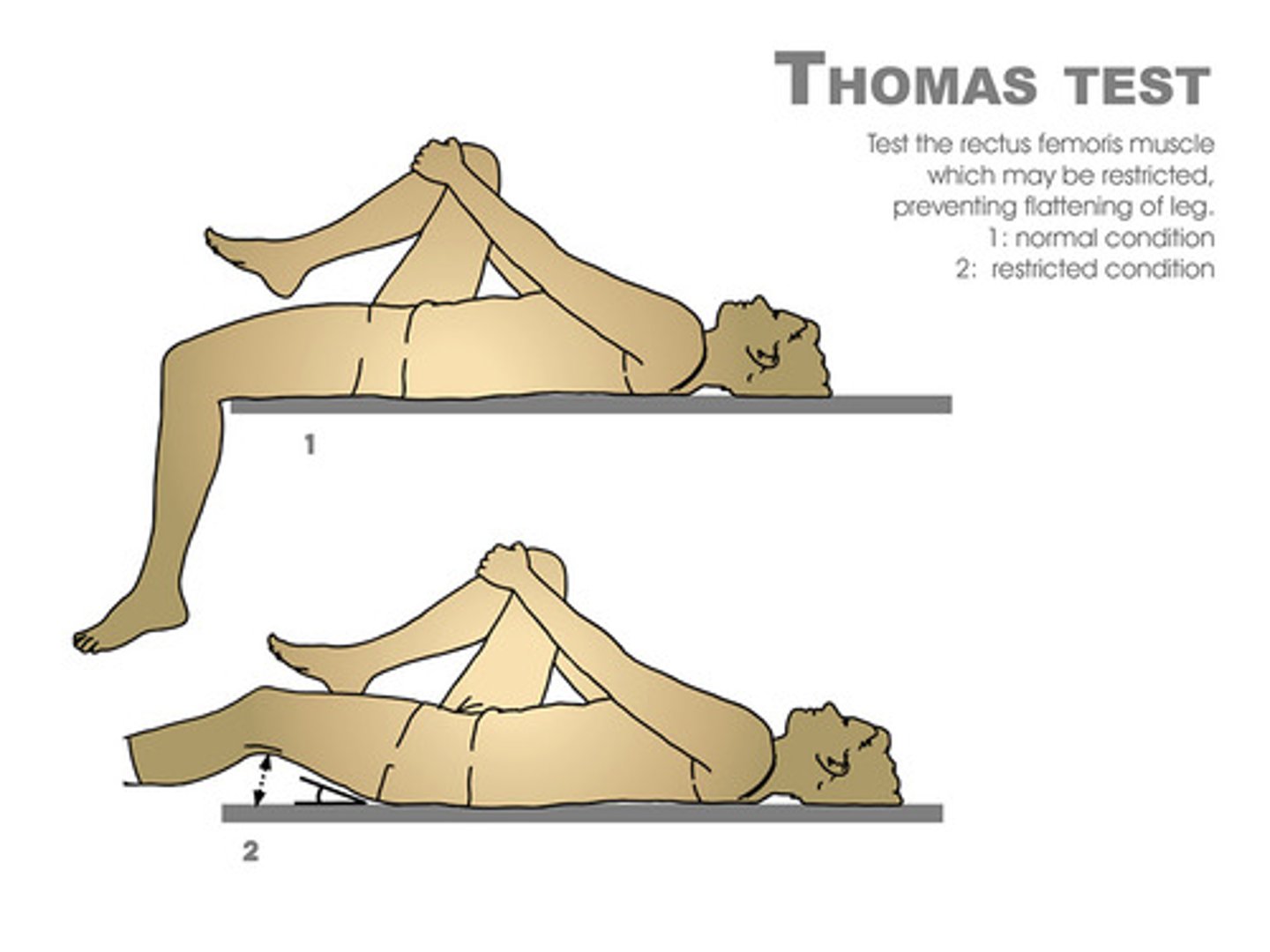
muscle length test: right thomas test (iliopsoas + rectus femoris)
1st part: sitting on edge and legs pulled to chest lay them back keeping knee flexed at 80 whole way down
* if thigh hits table it is negative
* if thigh doesnt hit table do part 2
2nd part: go back to knees flexed and lower back down
* keep leg extended and bring to table
* if touch table = rectus tight
* if still doesnt touch table = iliopsoas tight
COMPARE TO HIP EXTENSION (supine = 0)
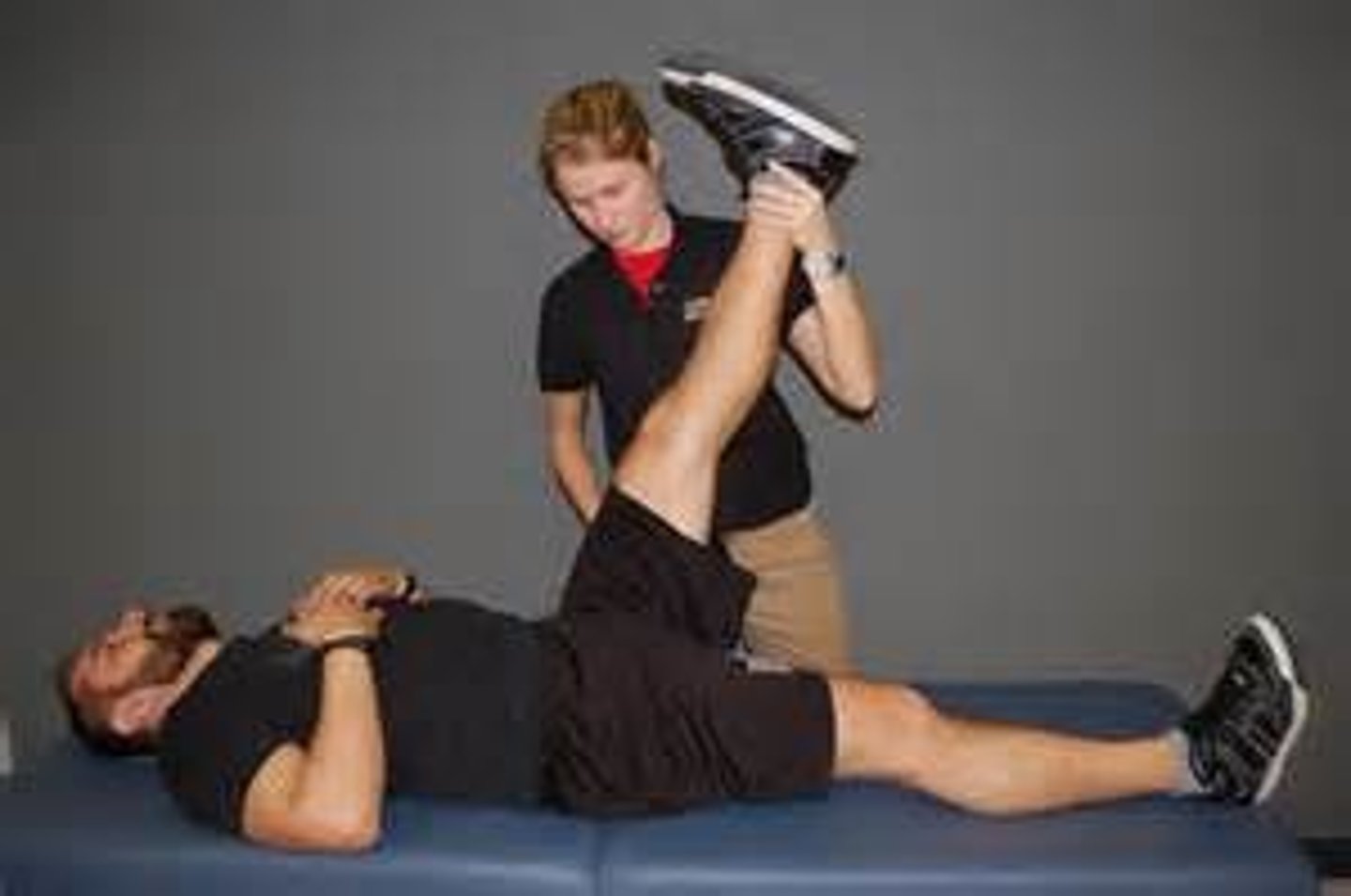
muscle test: straight leg test (HS)
fulcrum: lateral aspect hip joint using greater trochanter femur for reference
proximal: lateral midline pelvis
distal: distal arm with lateral midline of femur, using lateral epicondyle reference
negative test = 70-80
COMPARE TO HIP FLEXION (supine and bring knee to chest)
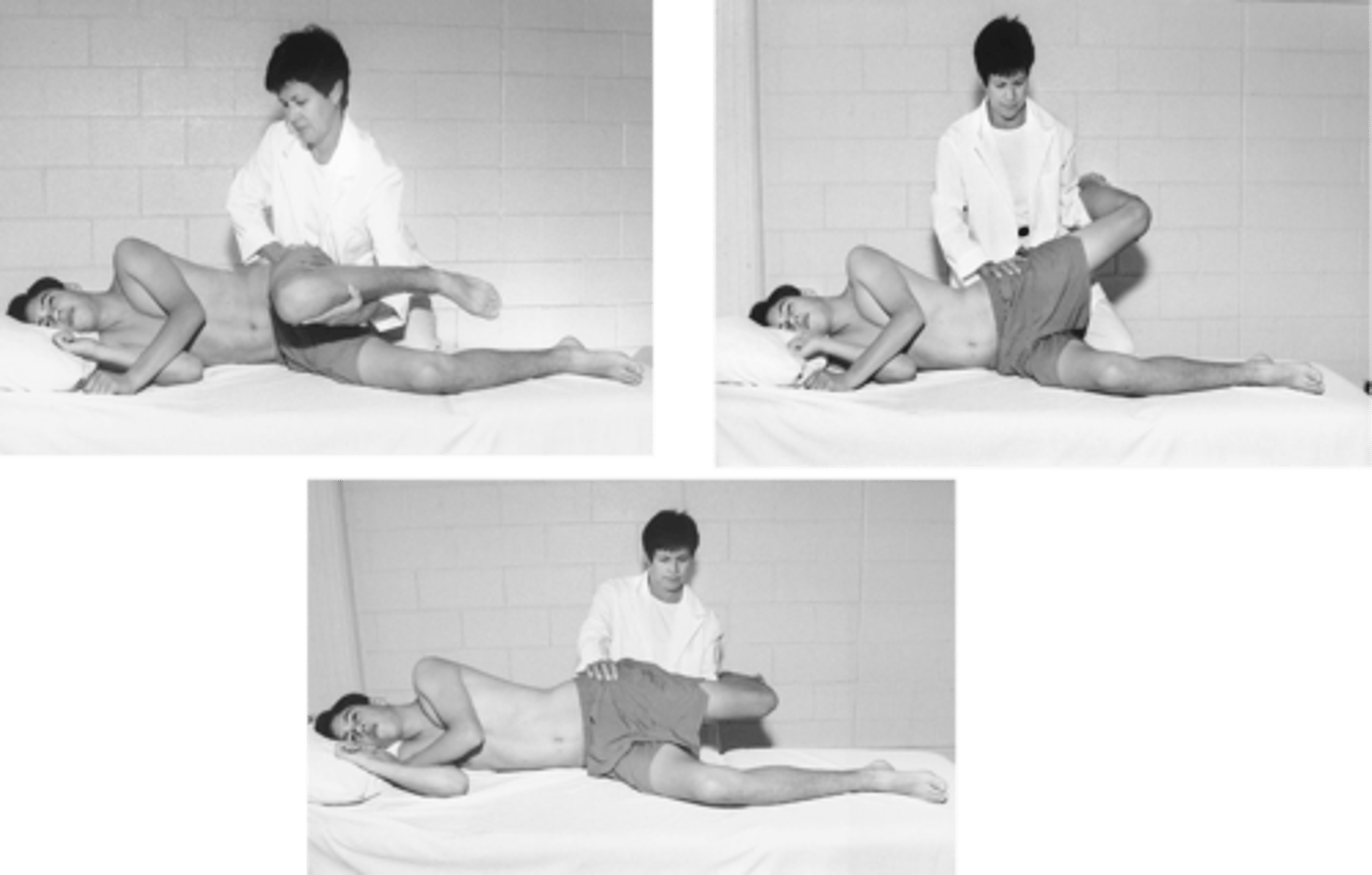
muscle test: ober test (TFL + IT Band)
fulcrum: ASIS
proximal: imaginary line extending from one ASIS to another
distal: anterior midline of femur, midline of patella reference
stabilize pelvis
COMPARE TO NORMAL HIP ADDUCTION (supine)
normal = 10
muscle test: ely test (rectus femoris)
fulcrum: lateral epicondyle of femur
proximal: lateral midline femur
distal: lateral midline fibula
* prone
* bring knee to butt
COMPARE TO NORMAL KNEE FLEXION (supine)
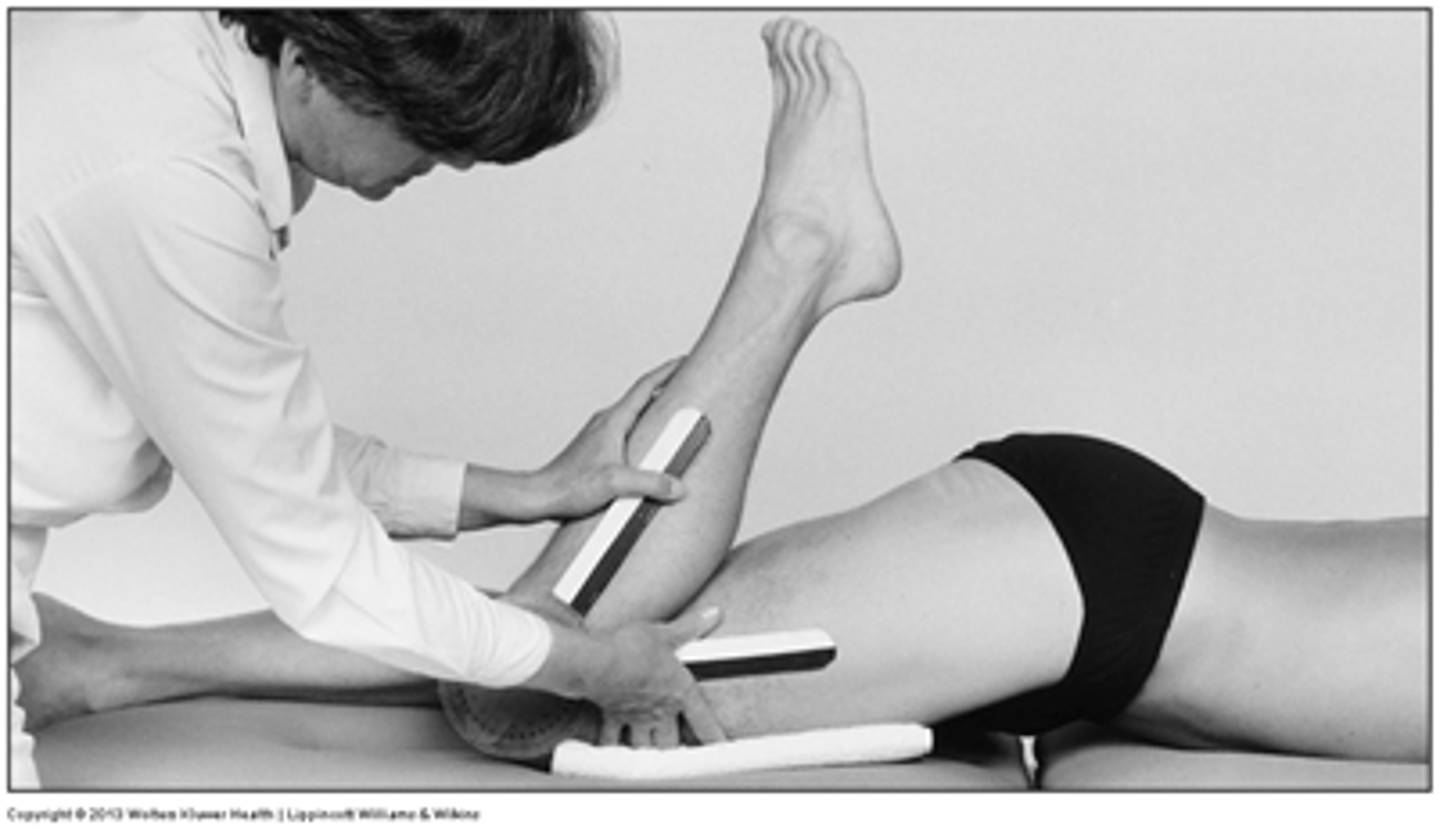
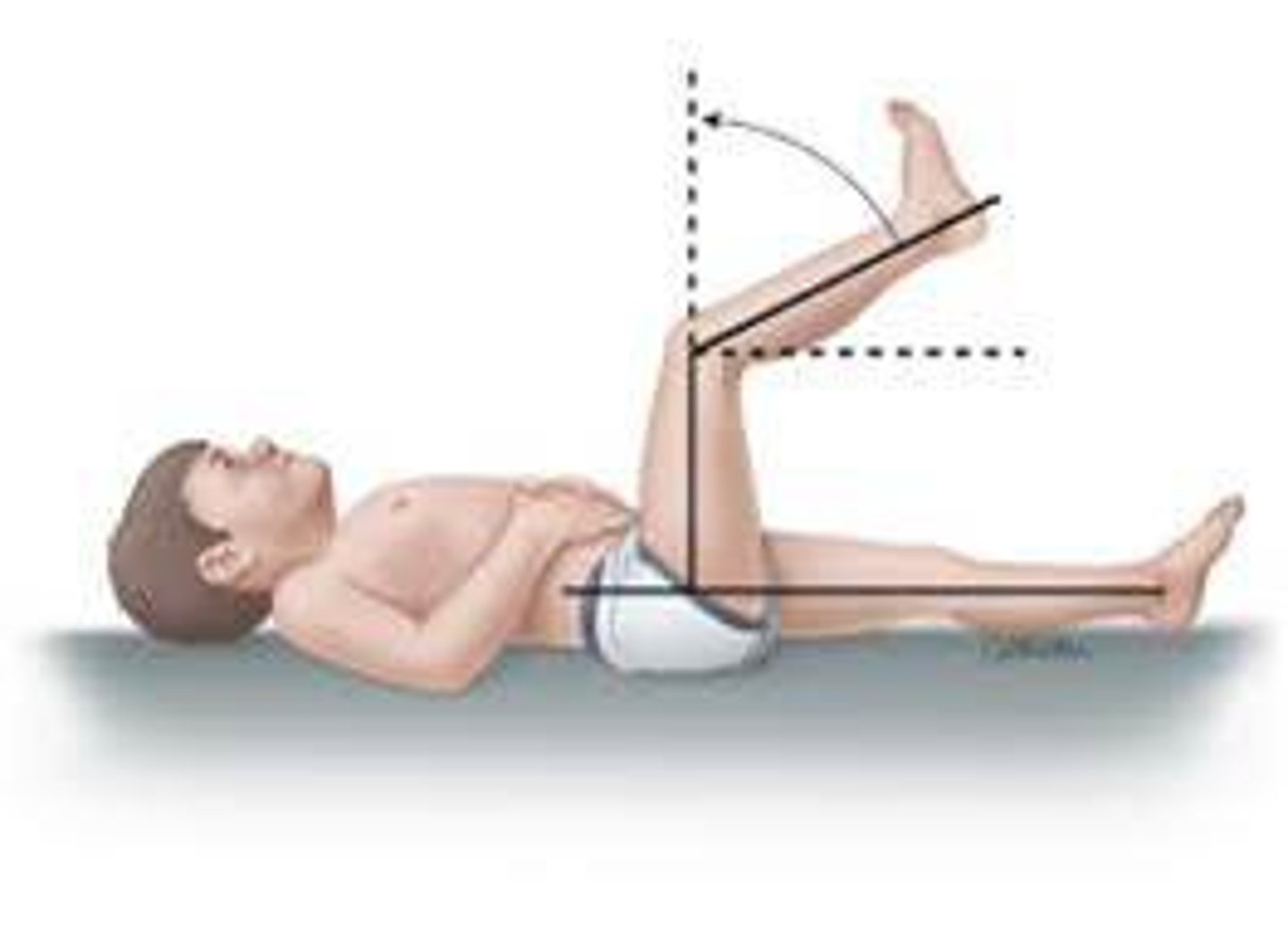
muscle test: 90-90 test (distal HS length test: HS)
fulcrum: lateral epicondyle femur
proximal: lateral midline femur
distal: lateral midline fibula
* birng hip into 90 then slowly extend knee
* negative = 0-31
* positive = >31
COMPARE TO NORMAL KNEE FLEXION (supine)
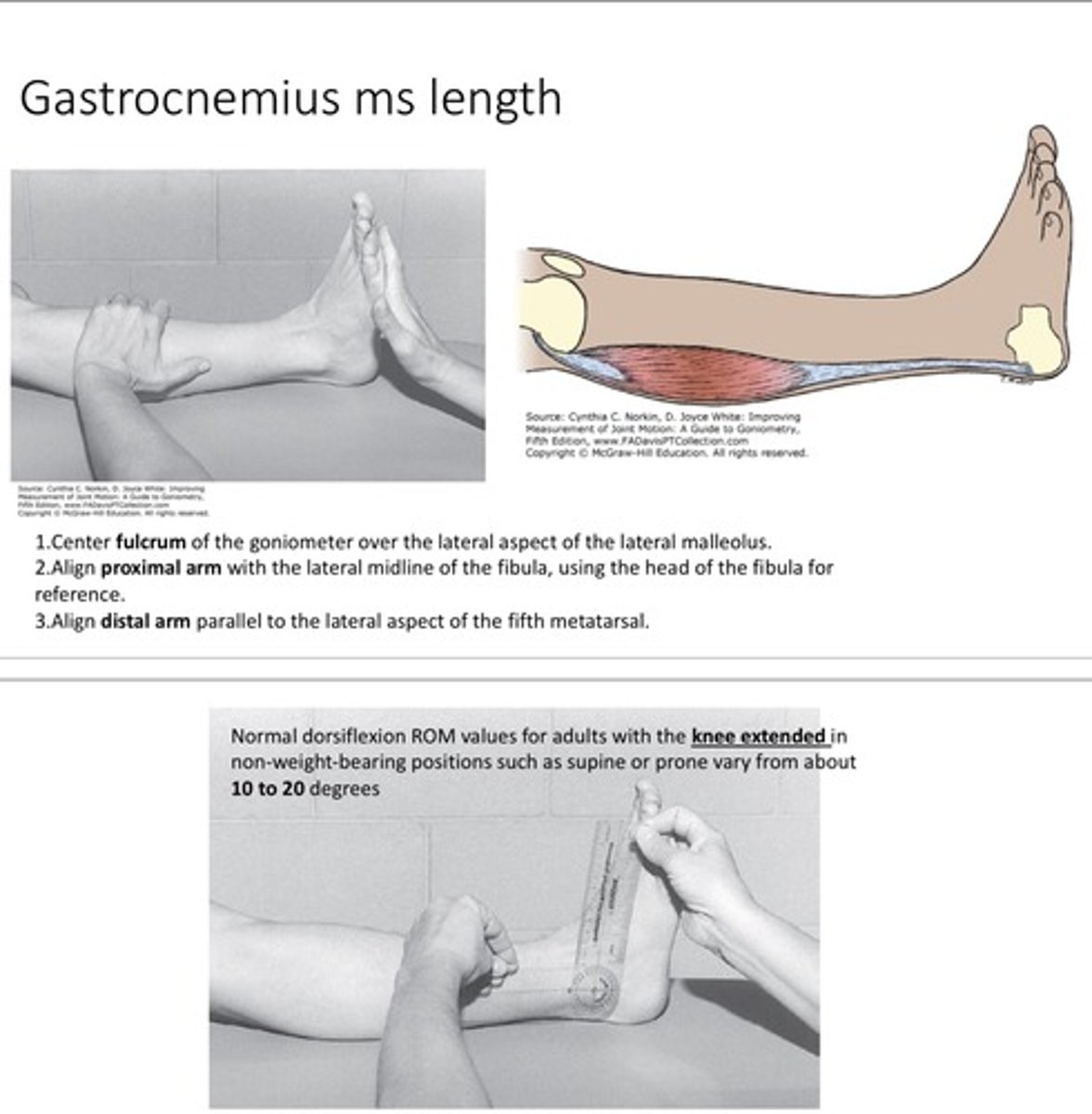
muscle test: gastrocnemius
fulcrum: lateral malleolus
proximal: lateral midline fibula
distal: parallel to 5th metatarsal
* supine
* bring ankle into dorsiflexion
COMPARE TO NORMAL DORSIFLEXION (sitting on edge table)
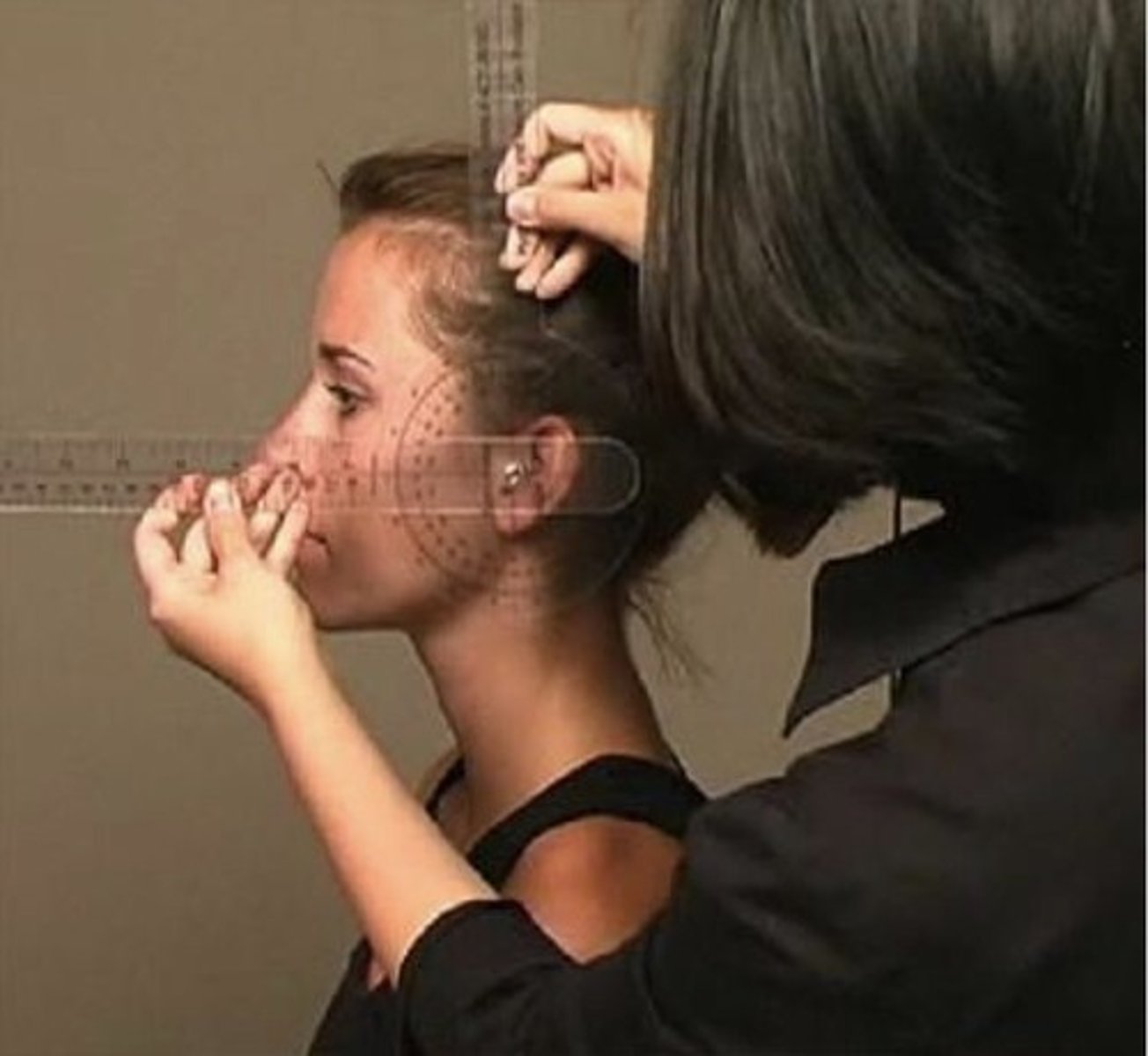
AROM: cervical spine flexion with goni
fulcrum: external auditory meatus
proximal: perpendicular to floor
distal: base of nares
normal = 45
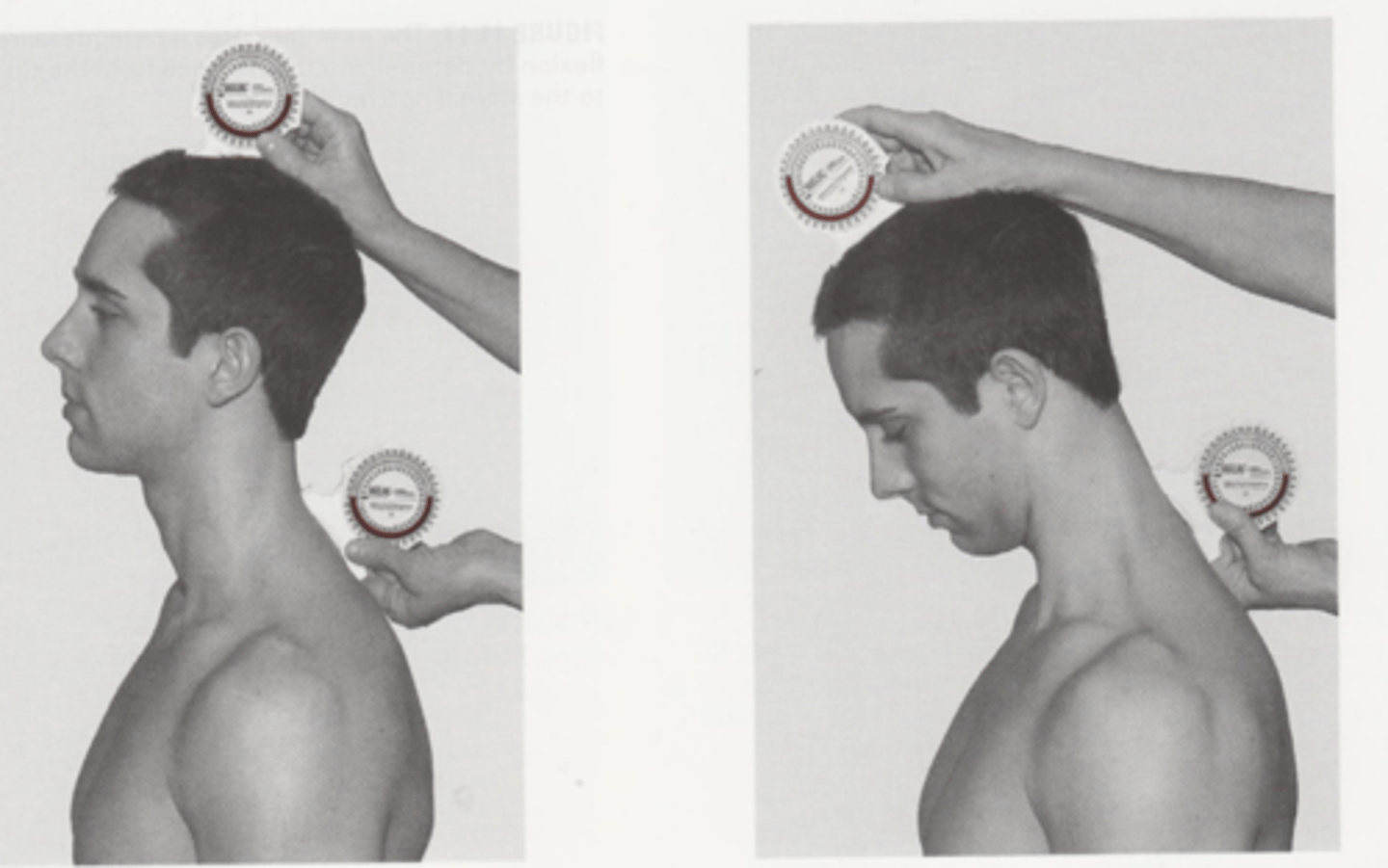
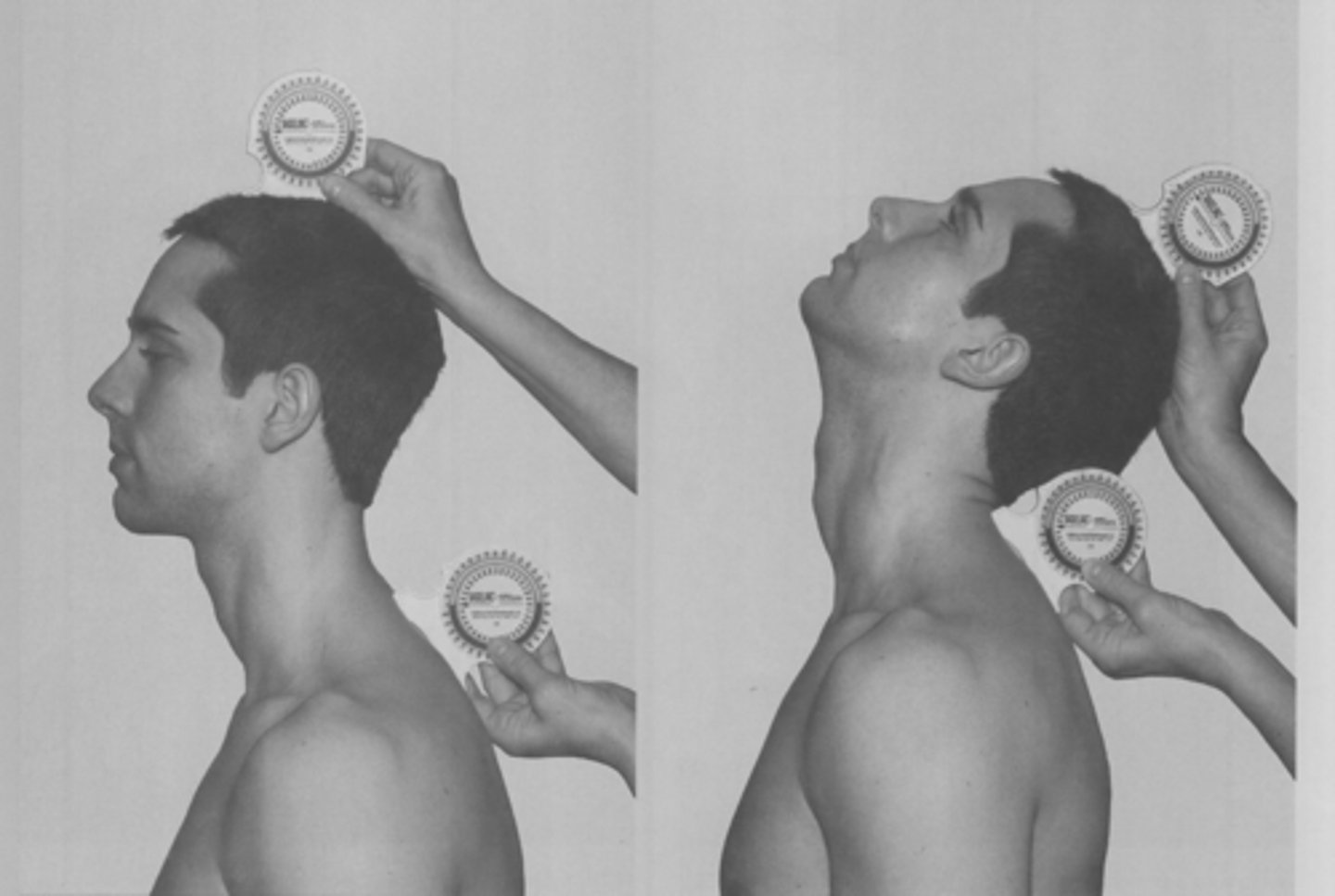
AROM: cervical spine flexion with double inclinometers
T1 and top head (subtract 2 measurements)
* make sure inclinometers perpendicular to head
AROM: cervical spine flexion with tape measure
tip of chin to sternal notch
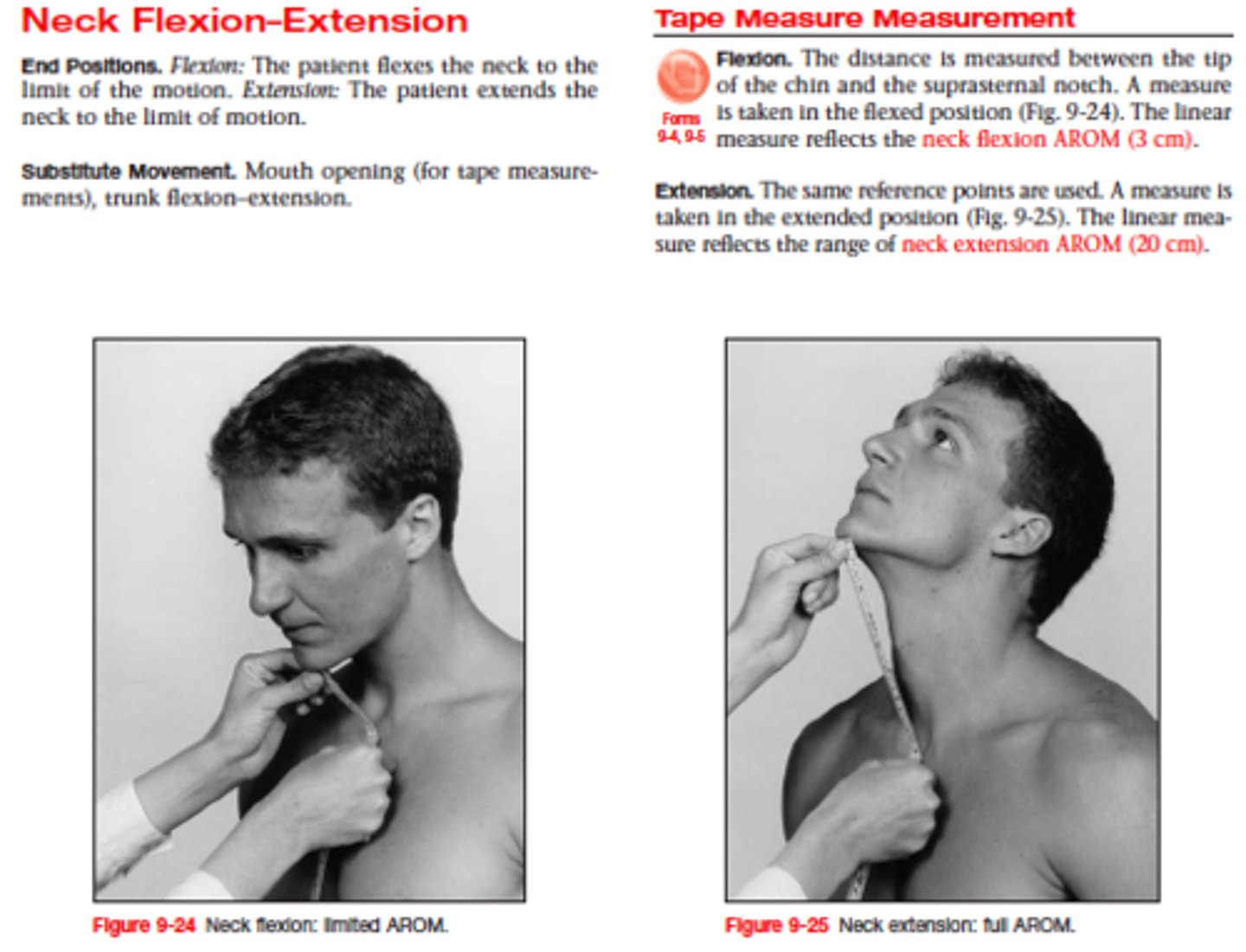
AROM: cervical spine extension with goni
fulcrum: external auditory meatus
proximal: perpendicular to floor
distal: base of nares
normal = 45

AROM: cervical spine extension with double inclinometers
T1 and top of head
(make T1 on lateral spine of scapula)
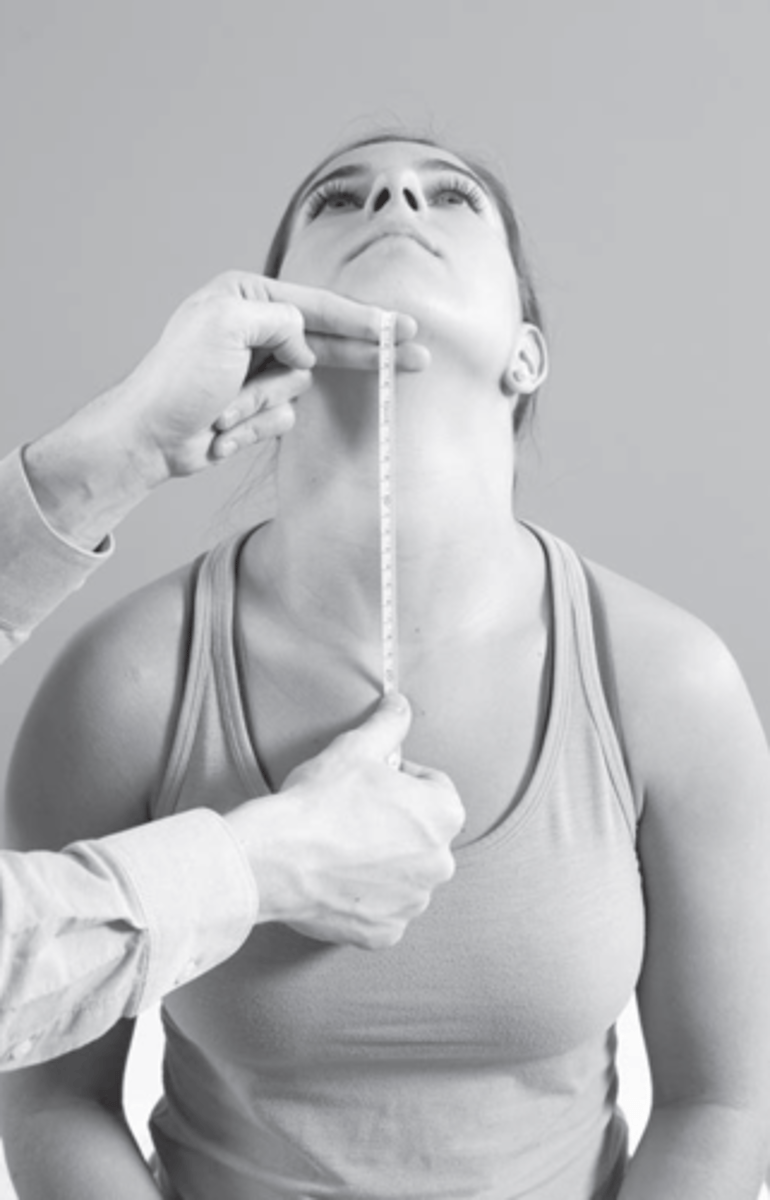
AROM: cervical spine extension with tape measure
tip of chin to sternal notch
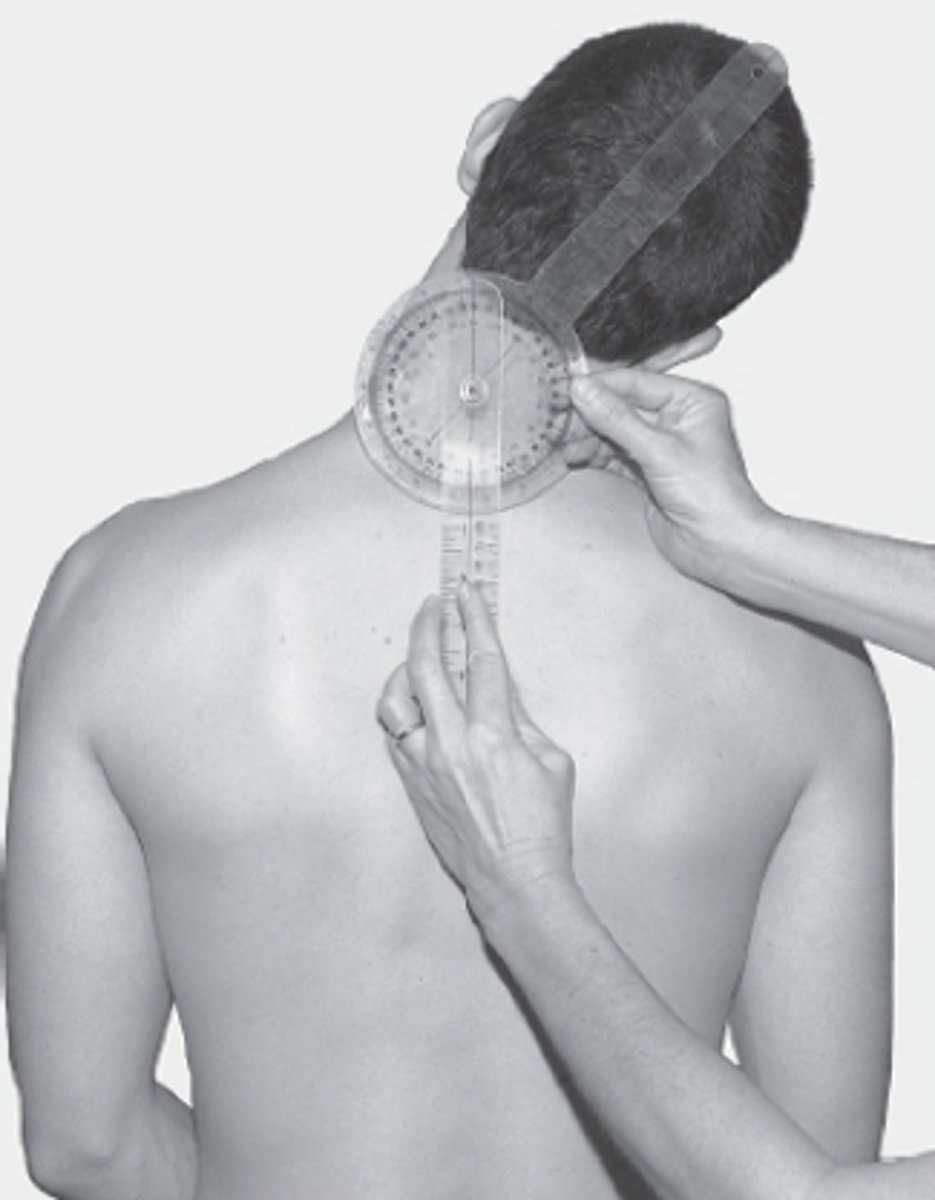
AROM: cervical spine lateral flexion to the RIGHT with goni
fulcrum: spinous process C7
proximal: along spinous processes of thoracic vertebrae / perpendicular to ground
distal: dorsal midline of head
normal = 45
AROM: cervical lateral flexion to the RIGHT with double inclinometers
T1 and top of head
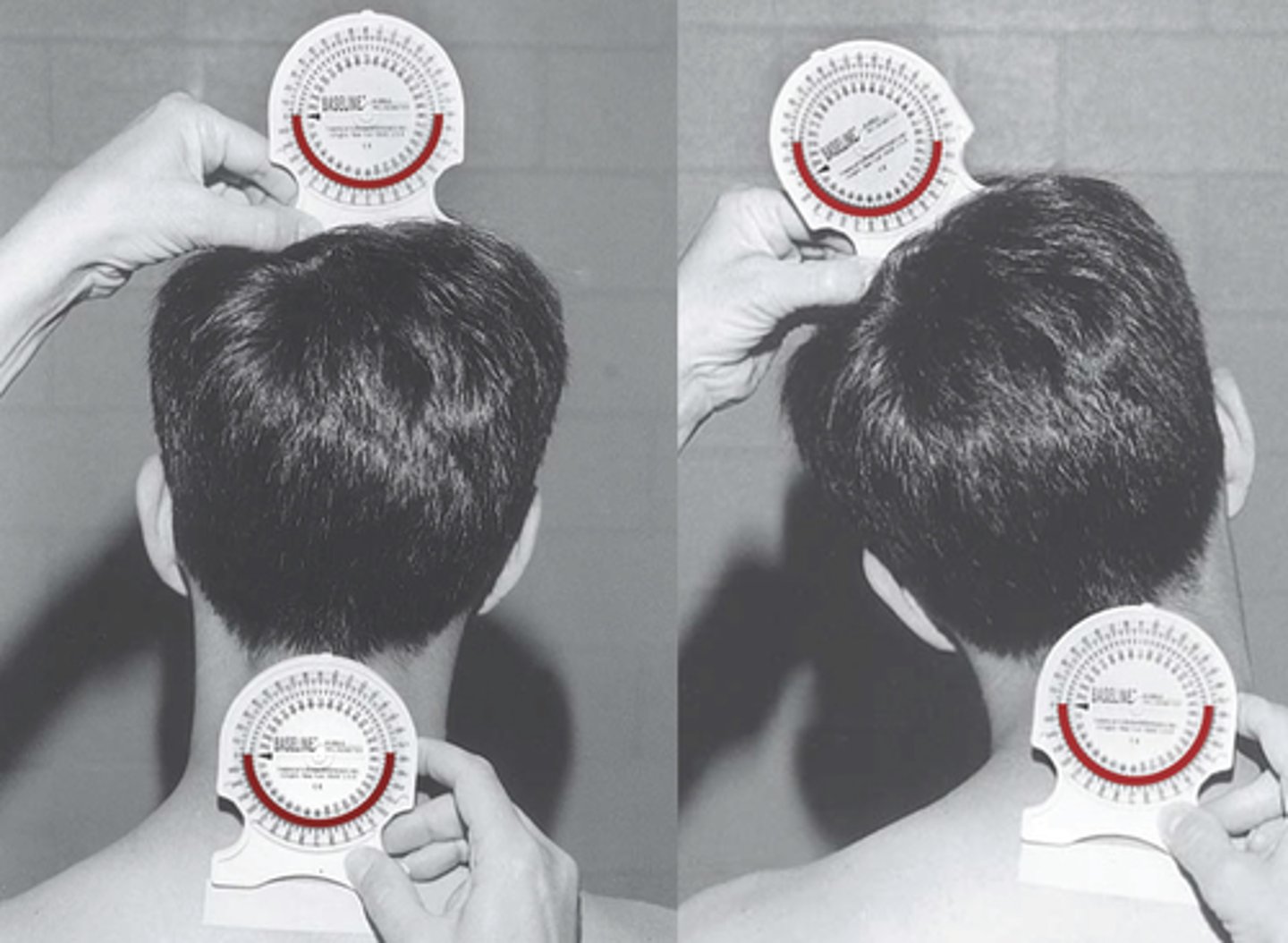
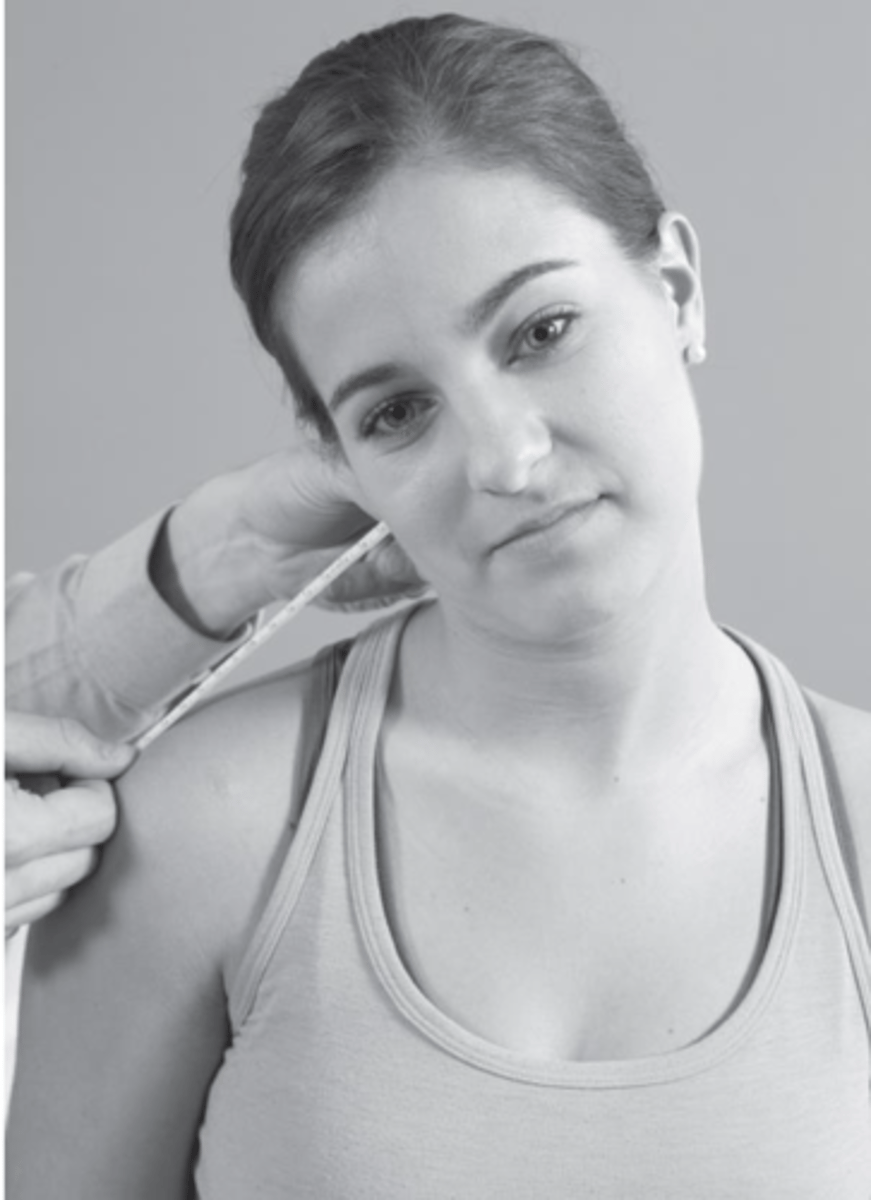
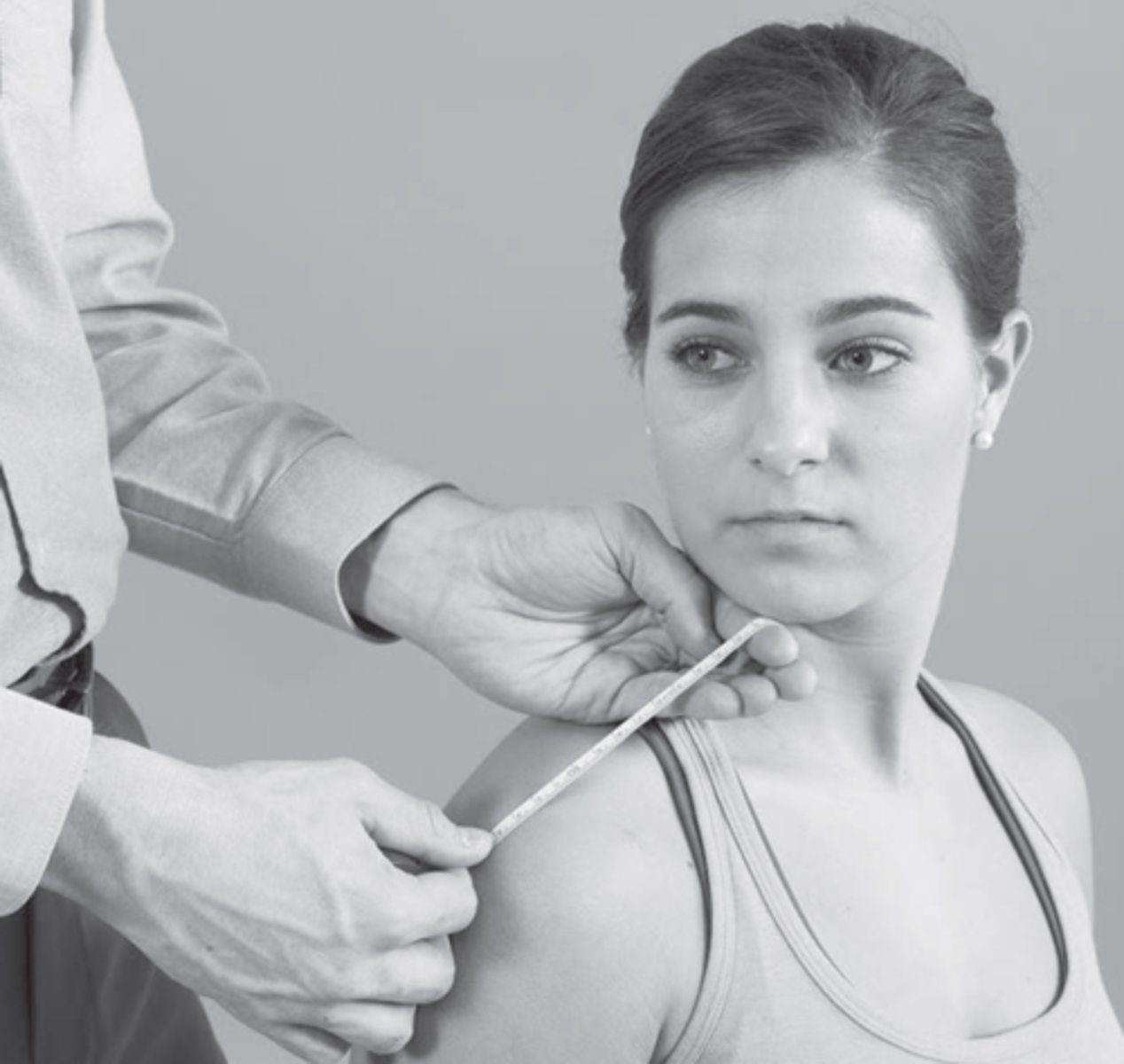
AROM: cervical spine lateral flexion with tape measure
mastoid process to lateral lip of acromion process
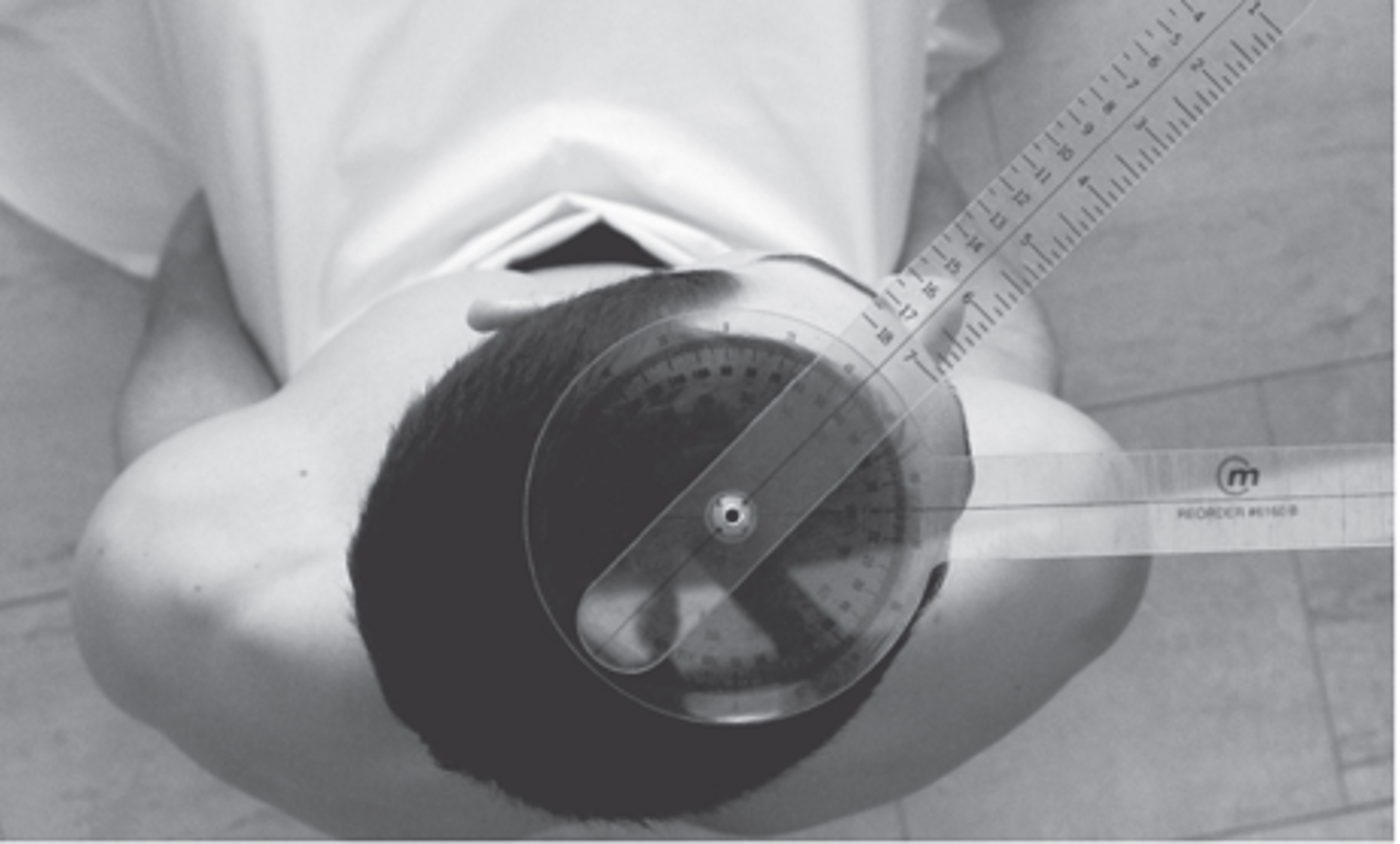
AROM: cervical spine rotation to the LEFT with goni
fulcrum: center of cranial aspect of head
proximal: parallel to imaginary line between acromion process
distal: tip of nose
normal = 60
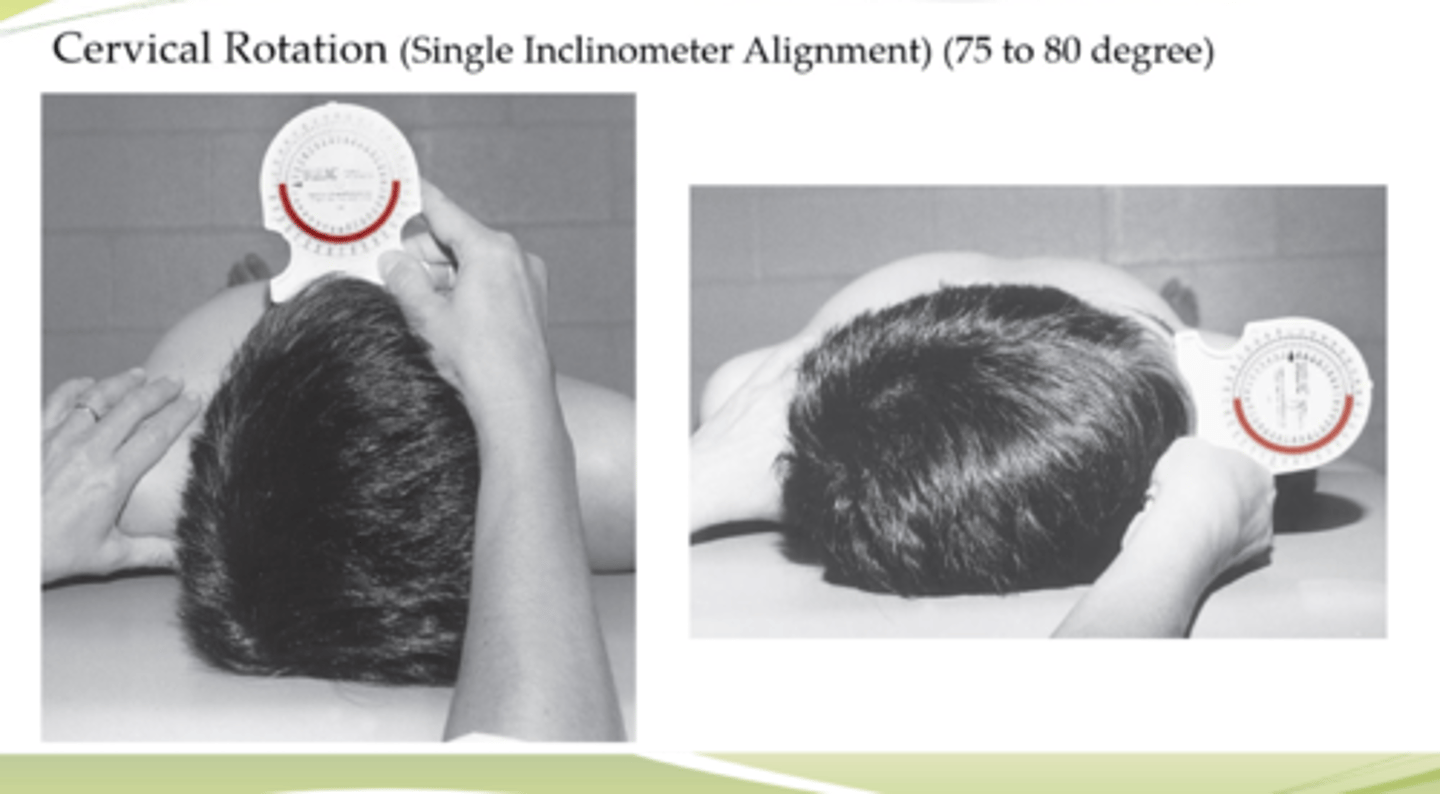
AROM: cervical spine rotation to the LEFT with single inclinometer
SUPINE
middle of forehead
AROM: cervical spine rotation to the LEFT with tape measure
tip of chin to acromion process
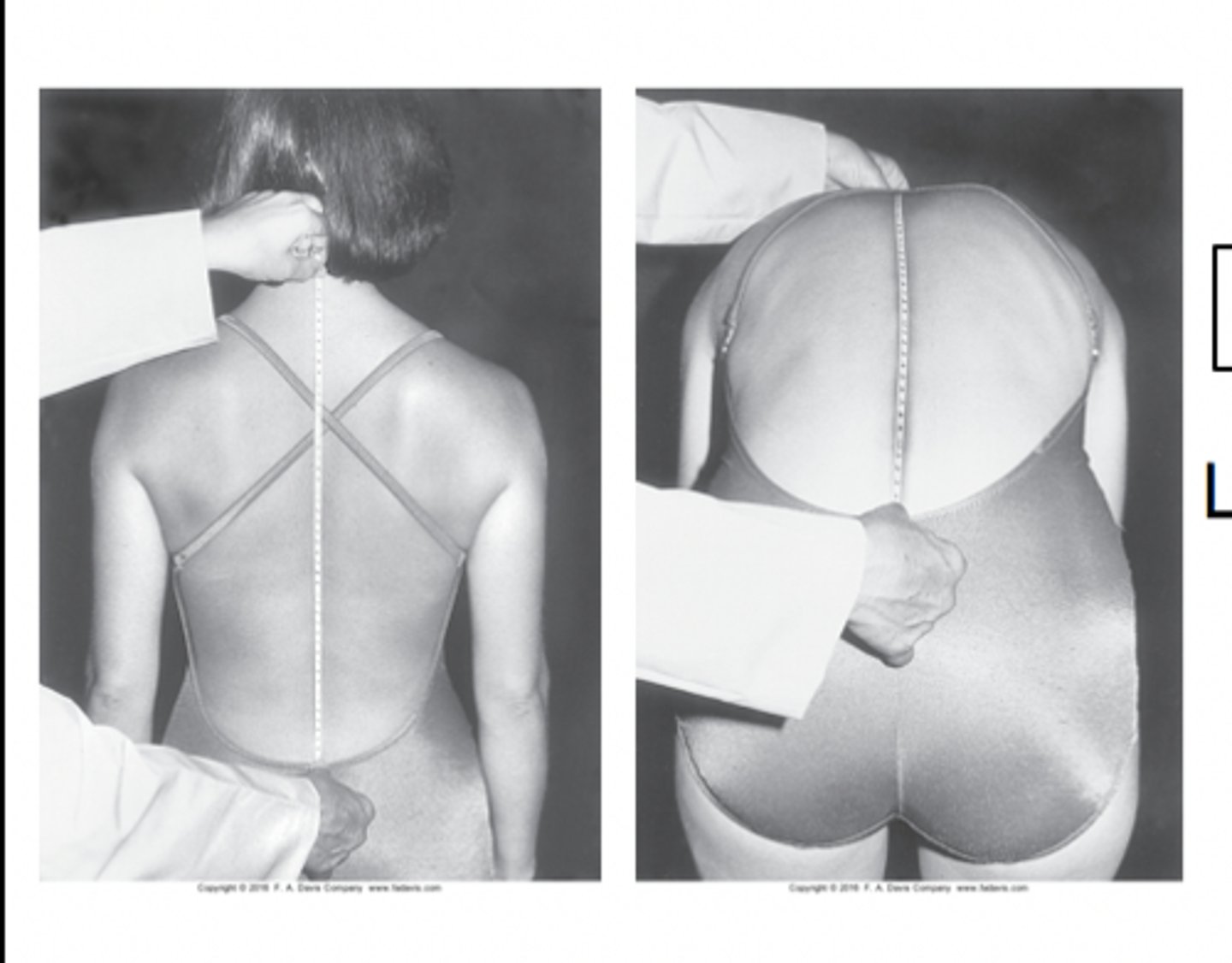
thoracolumbar flexion with tape measure
spinous process T1-S2
difference of 2
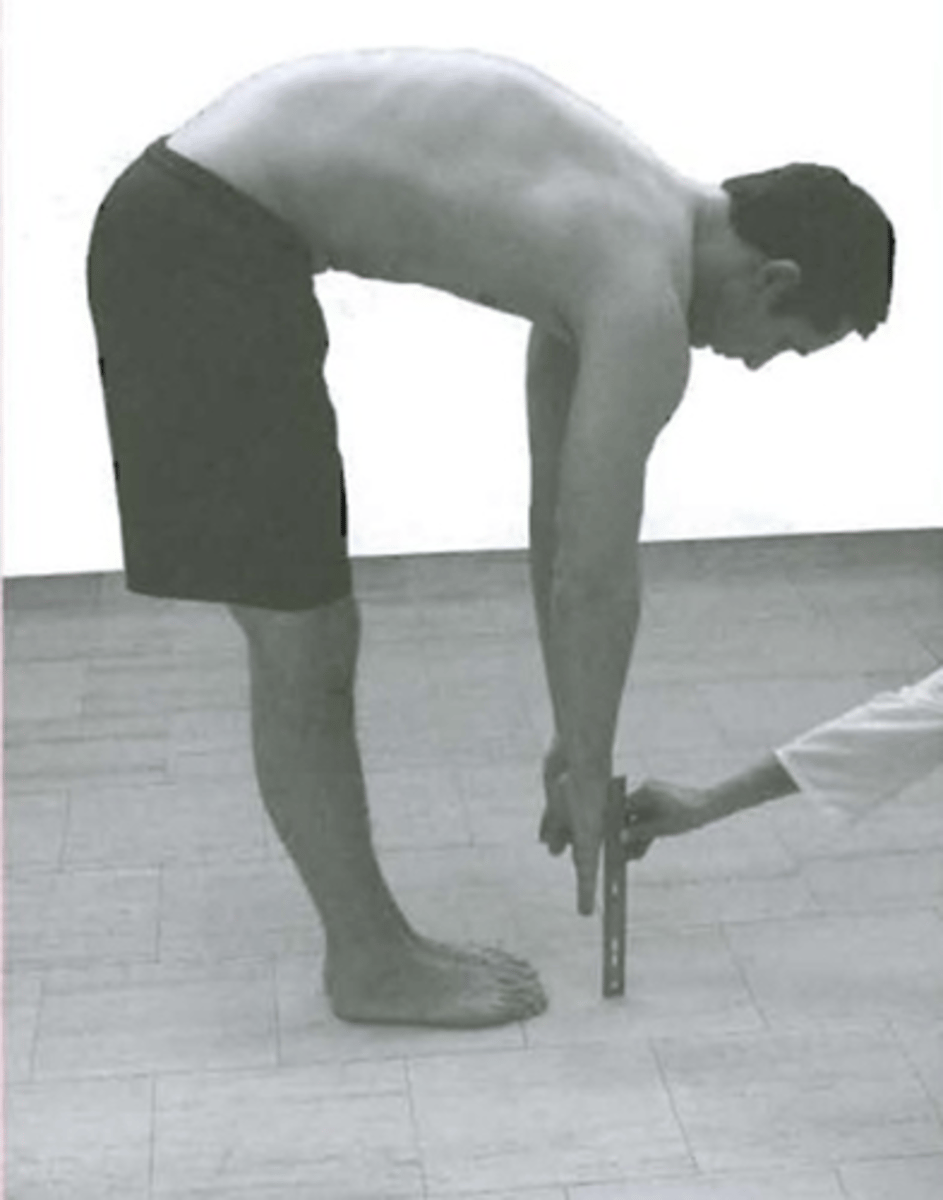
thoracolumbar flexion with fingertip to floor
distance between middle fingertip and floor
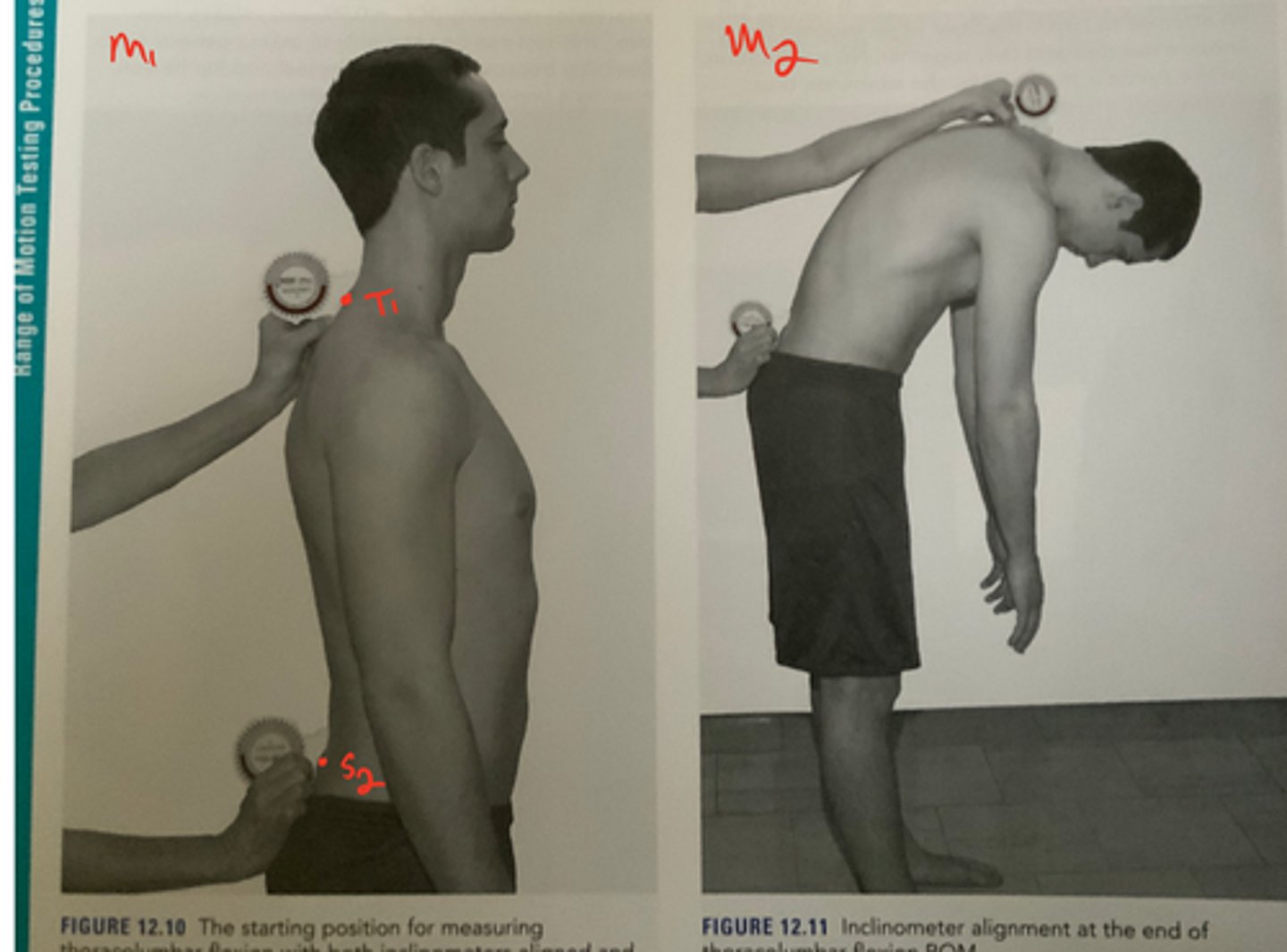
thoracolumbar flexion with double inclinometers
T1 and S2
normal = 60
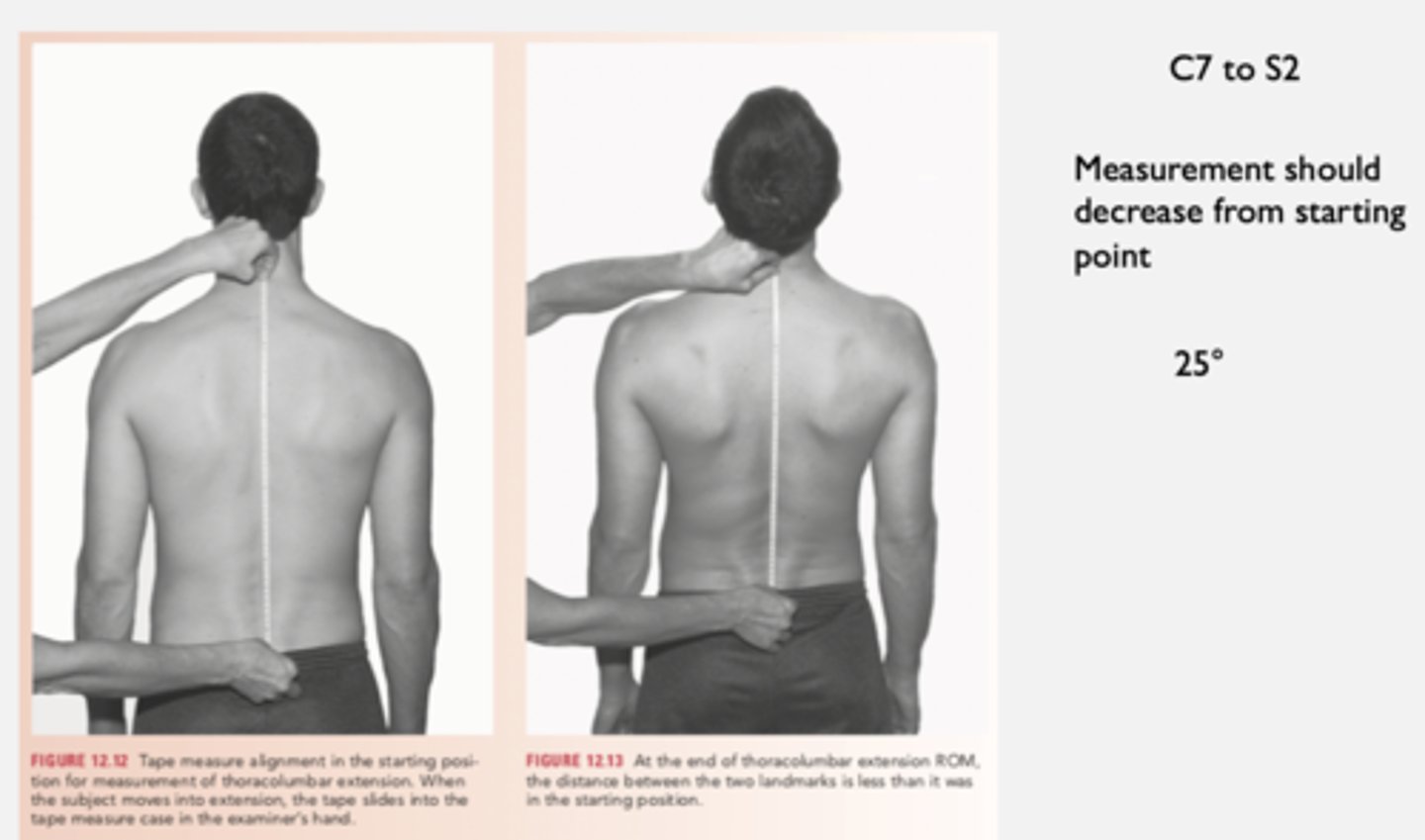
thoracolumbar extension with tape measure
spinous process T1 to S2
difference of before and after measurements
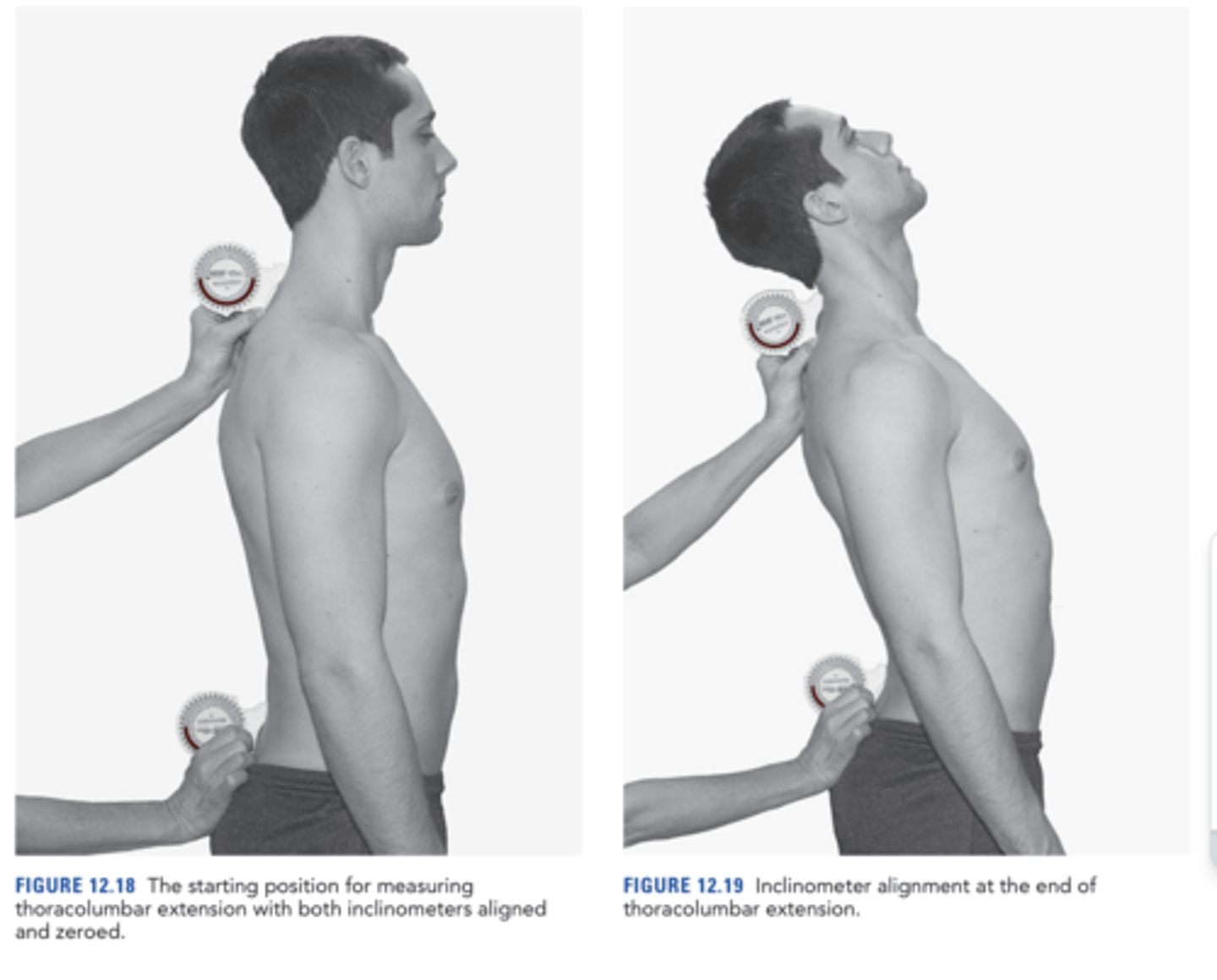
thoracolumbar extension with double inclinometers
T1 and S2
normal = 25
MARK ON PARTNER THE LANDMARKS
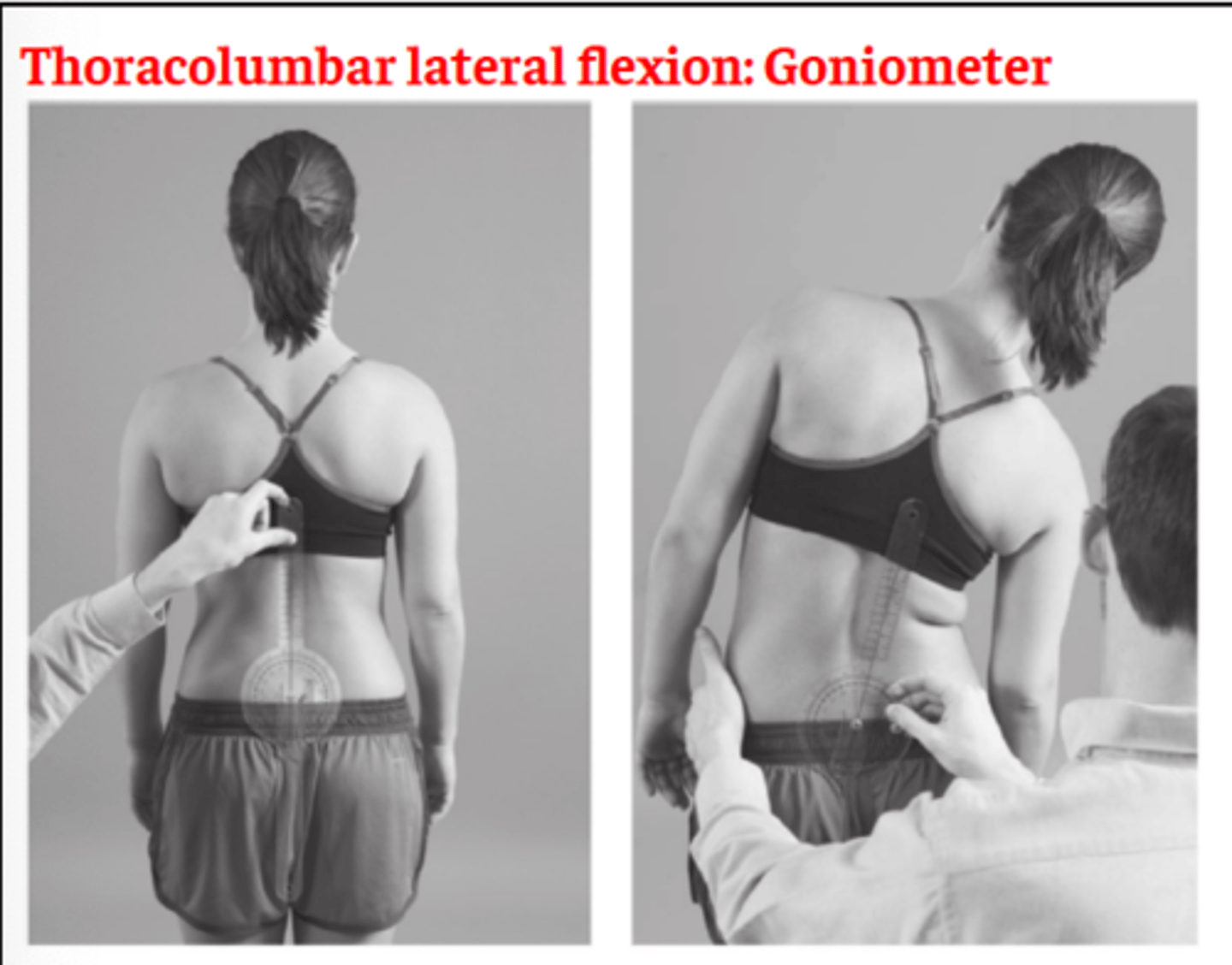
thoracolumbar lateral flexion to the RIGHT with goni
fulcrum: spinous process S2
proximal: perpendicular to floor
distal: aligned with thoracic vertebrae
normal = 35