Modalities Exam 1
 Call Kai
 Learn
Learn Practice Test
 Spaced Repetition
 Match
Match Flashcards
 Knowt Play
1/183

There's no tags or description
Looks like no tags are added yet.
Name | Mastery | Learn | Test | Matching | Spaced | Call with Kai | Chat |
|---|
No analytics yet
Send a link to your students to track their progress
184 Terms
What is the role of modalities in rehabilitation?
based on PT's evaluation, best available evidence, and an adjunct to the entirety of PT's plan of care as a tool
Should physical agents be a passive or active treatment?
it is a passive treatment (typically) but should be combined with an active treatment
What are A alpha fibers for?
proprioception
What are A beta fibers for?
touch and sensory
What are A delta fibers for?
pain and temperature
What are c fibers for?
temperature and itch
What fibers do we use to our advantage for modalities?
A beta and A delta; A beta are faster so we can get sensory information to the cortex quicker to "override" the A delta information
What is the gate control theory of pain?
there is a neural "gate" in the spinal cord that regulates the transmission of pain signals to the brain
What does gate open mean?
when small c fibers are active they can inhibit the inhibitory interneuron, which then "opens the gate" and allow pain signals to travel through the spinal cord and to the brain to be interpreted
What does gate closed mean?
when large sensory fibers are activate they can activate the inhibitory interneuron, blocking the pain signal from transmitting from the spinal cord to the brain, effectively reducing the perception of pain
What are the thermal agents?
ice, hot pack, paraffin, laser, and fluidotherapy
What are the mechanical agents?
traction and intermittent compression
What are the electromagnetic agents?
electrical stimulation, diathermy, and iontophoresis
What are the purposes of cryotherapy?
reduce inflammation, reduce pain, and increase tissue cooling
What is conduction/heat abstraction?
energy is transferred from the area of high temperature to the area of low temperature
What modalities do conduction?
hot pack, paraffin, cold pack, ice massage, cryo cuff, and ice bath
What modalities do conversion?
diathermy and ultrasound
What modalities do radiation?
infrared lamp, laser, and UV light
What modalities do evaporation?
vasocoolant spray
What modalities do convection?
whirlpool and fluidotherapy
What are the purposes of thermotherapy/cryotherapy?
increase tissue temperature, reduce pain, and improve soft tissue extensibility
What is conversion?
changes other energy forms into heat (electric -> heat)
What are the purposes of electrical stimulation?
increase strength, motor control and muscle activation; decrease pain
What are the purposes of blood flow restriction?
improve strength while lifting lower loads and reduce stress on the limb
What are the therapeutic goals of the acute phase?
minimize wound bleeding and tissue damage, reduce edema, pain and muscle spasms
What are the purposes of cryotherapy in the acute phase?
decrease edema, secondary tissue death, and pain
What are the purposes of electrical stimulation in the acute phase?
pain management, decreased secondary tissue death, and limits the amount of edema
What is the purpose of compression in the acute phase?
decrease swelling/edema
What is the purpose of ultrasound in the acute phase?
alter cell permeability
What kind of modality do we not use in the acute phase and why?
thermotherapy
What are the therapeutic goals of modalities during the proliferation phase?
enhance blood flow (angiogenesis) and cellular metabolism (fibroplasia) to allow for healing while minimizing pain
What is the purpose of modalities in the repair phase?
promote angiogenesis and fibroplasia and minimize pain
What is the therapeutic goal of modalities in the remodeling phase?
encourage optimal remodeling and maturation of newly formed tissues; optimize function; return the patient to PLOF and activities
What is the purpose of ultrasound in the remodeling phase?
enhance tissue repair
What is the purpose of electrical stimulation in the remodeling phase?
stimulation of muscle for reeducation and strength
What is the purpose of low-level laser?
enhance tissue repair
What is a precaution?
requires special consideration; need to assess risks and potential benefits prior to use
What is a contraindication?
a condition that could be adversely affected if a particular modality is used
What are some factors that contribute to changes in temperature?
-insulation and thermal conductivity
-type of agent and application
-limb circumference/subcutaneous tissue
-duration of application
-compression
What type of cryotherapy has the quickest cooling effect?
any cryotherapy that has gone through a phase change (ice->melted ice)
Why do we use cryotherapy?
hemodynamic, neuromuscular and decreased metabolic rate properties
What are the hemodynamic properties of cryotherapy?
vasoconstriction, increased blood viscosity, and decreased capillary permeability
What are the neuromuscular properties of cryotherapy?
decreased nerve conduction velocity, increased pain threshold analgesia, altered muscle strength, and decreased spasticity
What are the decreased metabolic rate properties of cryotherapy?
alteration in mitochondrial function
When do we want to control inflammation with cryotherapy?
acute inflammation (48-72hrs), to decrease metabolism, and minimize secondary cell death
When do we want to control edema with cryotherapy?
to decrease capillary permeability and fluid filtration
When do we want to control pain with cryotherapy?
decrease A-delta nociceptive fibers conduction, interruption of pain-spasm-pain cycle, and decrease post activity soreness
When do we want to modify spasticity with cryotherapy?
upper motor neuron dysfunction, 5 min= stretch reflex, 10-30 mins may decrease clonus
What are contraindications for cryotherapy?
Cold hypersensitivity
Cold intolerance
Cryoglobulinemia
Paroxysmal cold hemoglobinuria
Reynaud's phenomenon
Over a regenerating nerve or circulatory compromise
What are examples of cold hypersensitivity?
vascular skin reactions and wheals with erythematous, raised borders, and blanch centers
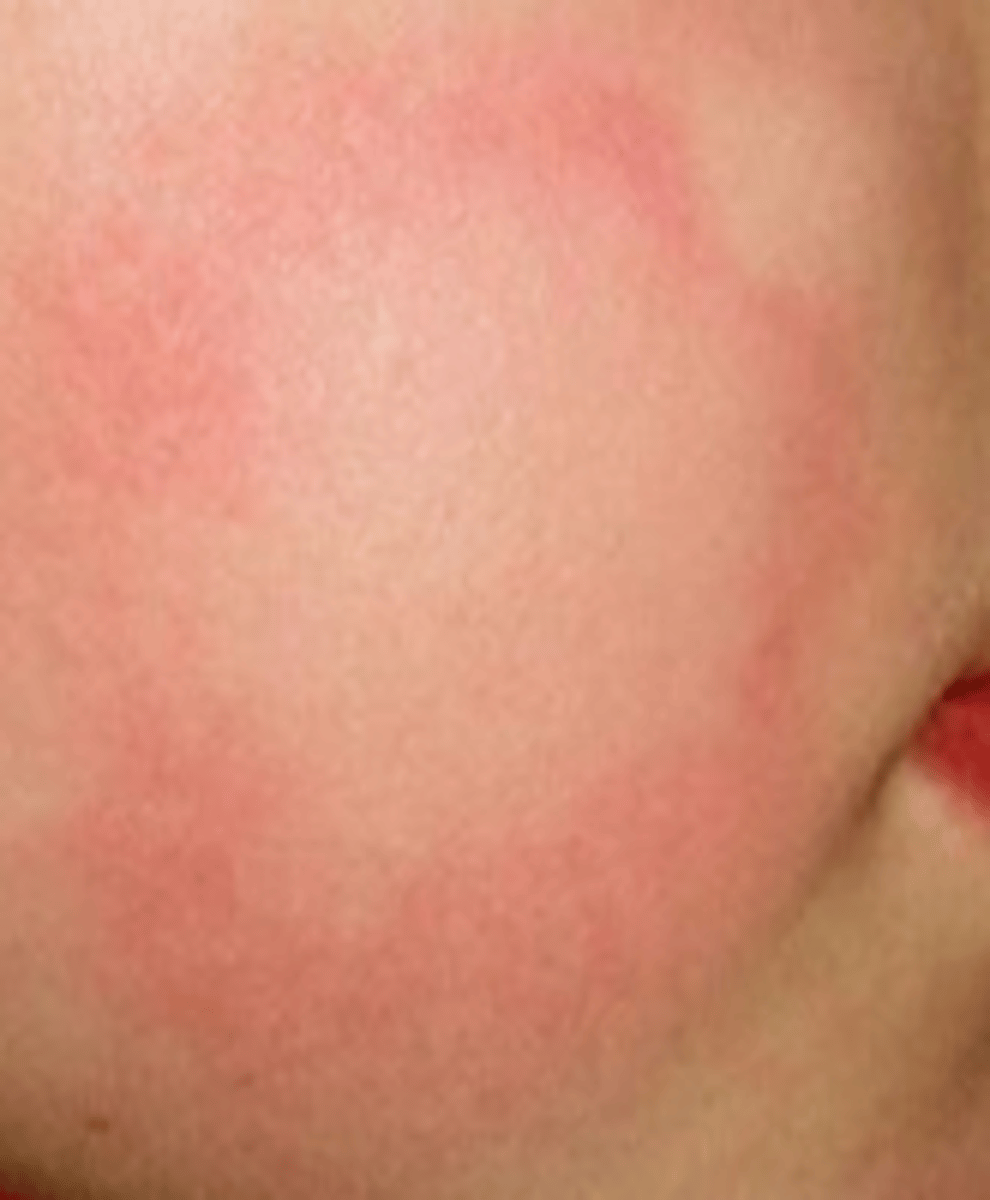
What are examples of cold intolerance?
rheumatological diseases and CRPS/RSD
What is cryoglobulinemia?
abnormal blood protein that forms a gel when exposed to low temperatures
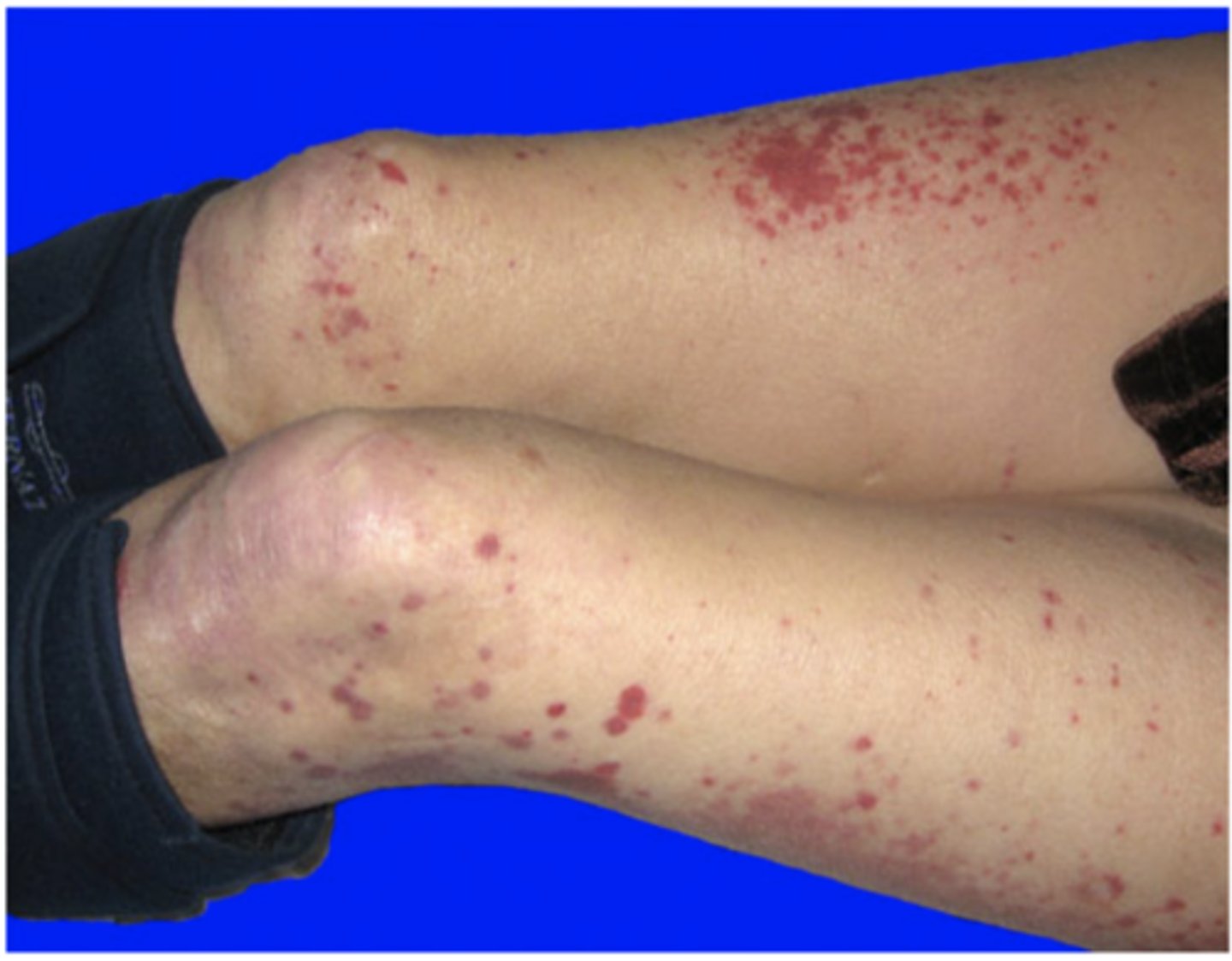
What is paroxysmal cold hemoglobinuria?
release of hemoglobin into the urine from lysed RBC in response to local or general cold exposure
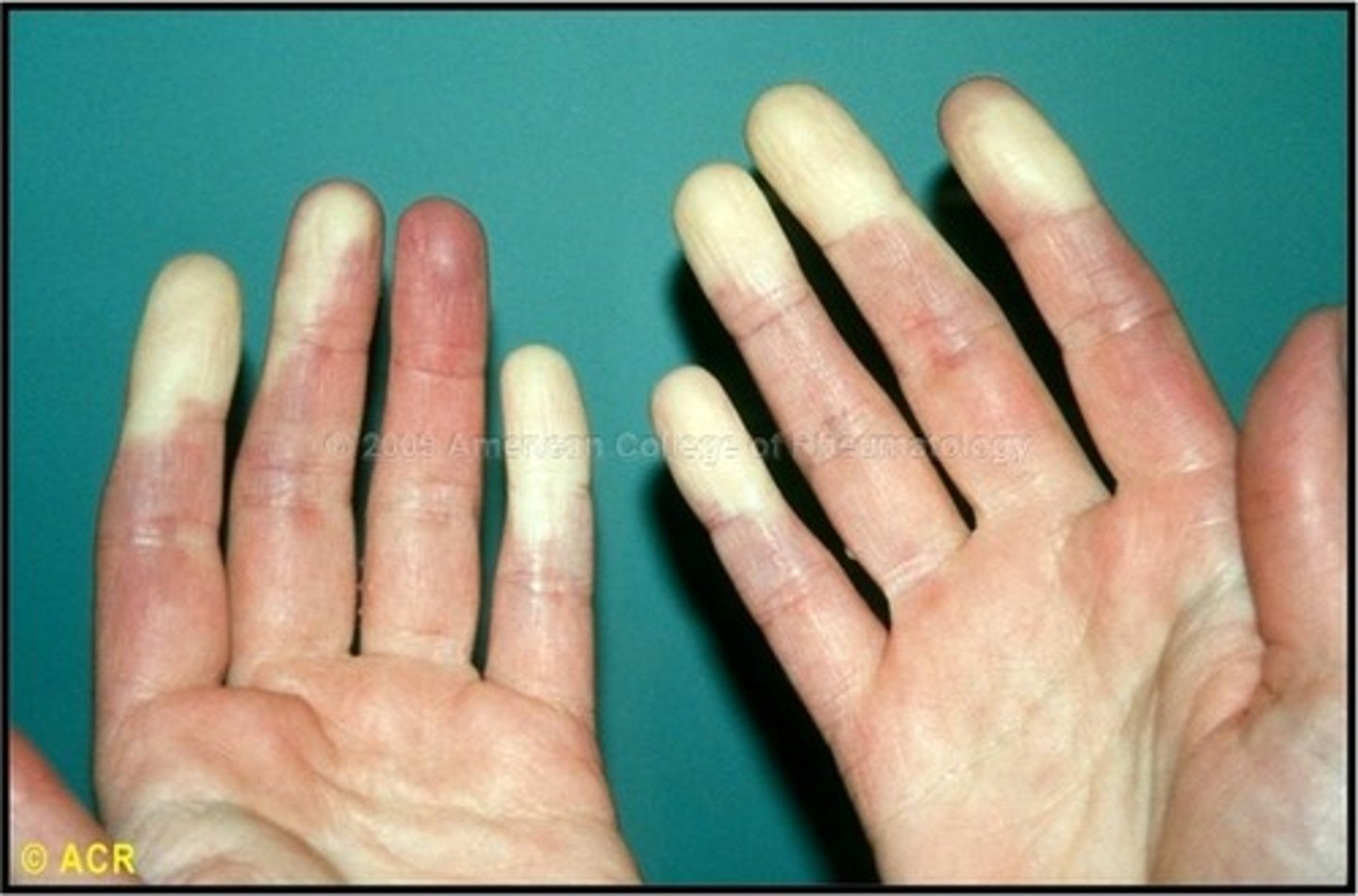
What is Raynaud's disease?
digital cyanosis
What are some precautions for cryotherapy?
-over superficial main branch of a nerve
-over open wound
-HTN
-poor sensation or mentation
-very young or old
How should we objectively test before and after a cryotherapy treatment?
measure the effusion
What are normal sensations to cryotherapy?
intense cold, burning, aching, and analgesia/numbness
What are adverse reactions of cryotherapy?
tissue death, frostbite, nerve damage, and unwanted vasodilation
What do we use instead of the RICE framework?
PEACE & LOVE
What does PEACE & LOVE stand for?
Protection
Elevation
Avoid anti-inflammatories
Compression
Education
Load
Optimism
Vascularization
Exercise
What is thermotherapy?
therapeutic application of heat
What factors contribute to change in temperature in thermotherapy?
insulation and thermal conductivity, intensity of heat applied, time of heat exposure, and thermal medium
What stores the therapeutic hot packs?
hydrocollator
What temperature range are the hot packs typically kept at?
158-167 degrees F
How many layers should we put between the patient and the hot pack?
6-8 layers
How long are hot packs typically applied?
15-20 mins
Why do we use thermotherapy?
increases circulation and cellular metabolism, produced analgesic effect and decreased pain/muscle spasms, and vasodilation to promote healing/increases in O2/removal or waste and debris
What are the physiological hemodynamic effects of thermotherapy?
vasodilation and hyperemia
What are the physiological neuromuscular effects of thermotherapy?
increased nerve conduction velocity, pain threshold, muscle spasm, and decreased strength/endurance
What are the physiological metabolic effects of thermotherapy?
increased metabolic rate, oxygen uptake, and nutrients available; potential tissue burn
What are the physiological effects on connective tissue of thermotherapy?
increased collagen extensibility/muscle flexibility and decreased connective tissue viscosity/stiffness
What temperature of thermotherapy may cause tissue damage?
>46 degrees C (114 degrees F)
Who do we use thermotherpy with?
chronic pain, inducing relaxation, muscle spasms, or decreased flexibility/ROM/tissue healing
What are contraindications to thermotherapy?
areas lacking thermal sensation, infection, thrombophlebitis, vascular disease, recent/potential hemorrhage, malignancy, acute injury, pregnancy, and mental state
What are our conductive heating thermotherapies?
hot pack, hydrotherapy (water not moving), and paraffin bath
What are our convective heating thermotherapies?
fluidotherapy, sauna, and hydrotherapy (whirlpool- moving water)
When we are trying to choose cryotherapy or thermotherapy for a patient and they would both have benefits, how do we choose?
patient preference
What is a ultrasound?
a sound wave beyond the range of human hearing, >20,000Hz
What is the crystal for in an ultrasound?
electrical impulse and hits the crystal; alternating current causes crystal to expand/contract, rapidly vibrate, and creates energy
What do molecules in front of the crystal do?
compress/decompress/refract
What are some of the features of the ultrasound?
heat on/off, frequency, duty cycle, and display/intensity
What is the heat on/off feature used for?
applying heat along with the ultrasound effects
What does the frequency feature used for?
goes from 1-3.3 MHz, which signified how deep and the resolution (area)
What does a frequency of 1 MHz mean?
deeper tissue and less resolution (area affected)
What does a frequency of 3.3 MHz mean?
superficial tissue and more resolution (area affected)
What does the duty cycle used for?
determines how the sound waves are delivered
What are the types of duty cycles?
continuous or pulsed
What is a continuous duty cycle?
continuous waves are sent through the transducer
What is a pulsed duty cycle?
pulses of waves are sent through the transducer with periods of breaks in between
What ratio signifies the percentage for duty cycle?
50%- 1:1, 33%- 1:2, 25%- 1:3, 20%- 1:4
What is the display/intensity?
rate at which energy is delivered per unit of area of the crystal (how fast the tissue heats up), 0.5-2.0 W/cm^2
What is the maximum temperature change of tissues we want to occur?
increase of 4 degrees Celsius
What frequency takes a quicker time to increase in temperature?
higher frequency
What are the guidelines for non-thermal therapeutic effects?
since there is no temperature increase or thermal effect; we would want a pulsed duty cycle with either frequency
What are the guidelines for mild thermal therapeutic effects?
temperature increase- 1 degree C; thermal effect for mild inflammation and acceleration of metabolic activity; 3 MHz with lower intensity and shorter time; 1 MHz with higher intensity and longer time
What are the guidelines for moderate thermal therapeutic effects?
2-3 degrees C temperature increase; thermal effect for decreased muscle spasms/pain and increased blood flow; 3 MHz with lower intensity and shorter time; 1 MHz with higher intensity and longer time
What are the guidelines for vigorous thermal therapeutic effects?
3-4 degrees C temperature increase; thermal effect for tissue elongation, scar tissue reduction, and inhibition of sympathetic activity; 3 MHz with lower intensity and shorter time; 1 MHz with higher intensity and longer time
What is the purpose of gel with ultrasound?
dissipation of energy through absorption of the waves through the gel to the body
What is the beam nonuniformity ratio?
defines the energy coming from each spot of the transducer head
What is the beam nonuniformity ratio usually between?
2:1 - <6:1 considered acceptable