MAIN POULTRY EXAM QUIZ
 Call Kai
 Learn
Learn Practice Test
 Spaced Repetition
 Match
Match Flashcards
 Knowt Play
1/48

Earn XP
Description and Tags
rams opp diseases, but explain most important! Newcastle - CS hemorrhages in proventriculus + can be diagnosed through that.
Name | Mastery | Learn | Test | Matching | Spaced | Call with Kai |
|---|
No analytics yet
Send a link to your students to track their progress
49 Terms
1.Health problems in intensive egg-productive poultry farming
In intensive egg-producing poultry farming, health problems can be broadly categorized into infectious diseases, nutritional deficiencies, and management-related → economic loss, death, decr. prod. + poor eggs.
Intensive farming: Many birds, confined housing, no access to outside, high production → overcrowding, stress, rapid spread.
Management & Enviornmental stressors:
Heat stress: high temperatures → hyperpnea (panting) → resp. alkalosis → impacts egg production & shell quality.
Air quality: high levels of ammonia from litter (deep-litter housing systems) can cause resp. stress, keratitis + blindness. Due to poor ventilation.
Behavioral issues: Feather plucking, vent pecking, Cannibalism. By stress/overcrowding, boredom, poor-protein diet.
Nutritional & Metabolic problems:
High producing layers need balanced diets, any change → metabolic diseases.
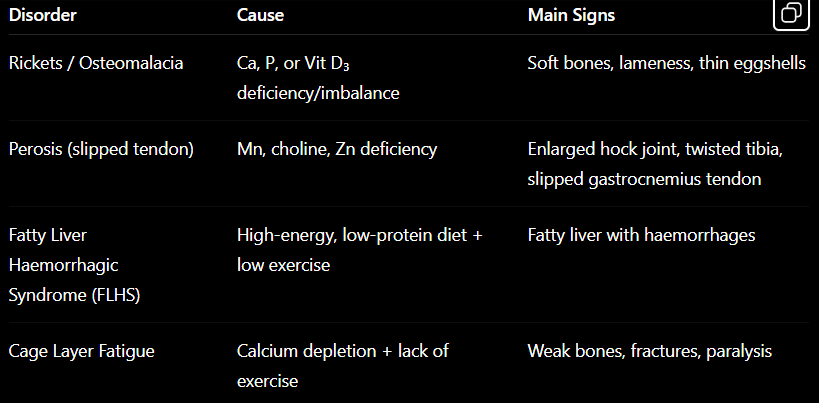
Rickets in young birds & Osteomalacia in mature hens: Due to vitamin D3/Ca/P deficiencies. Typical by soft, weak bones, soft-shelled eggs.
Cage layer fatigue: by Ca+ deficiency, occurring after peak egg output → result in soft bones, paralysis
Fatty liver Hemorrhagic syndrome: due to incorrect protein-energy balance in caged, mature hens → more intake than exercise, get excessive fat accumulation in the liver → rupture, internal bleeding (fatal). Give proteins/antioxidants - prevent vascular damage.
Infectious diseases: newcastle disease, fowl cholera, salmonella (fowl typhoid), fowl pox, coccidiosis. Avian influenza - egg prod. decline, death, shell-less.
Reproductive:
Egg-drop syndrome: Adenovirus (by contaminated vaccine/cariers), pale-soft shelled, shell-less eggs in otherwise healthy hens (sudden drop in prod.)
Egg peritonitis: problem with oviduct → egg does not form properly → yolk is deposited internally in abdomen → risk for E.Coli infection. Typical by: fibrin/album-like material (cooked look) among abd. viscera.
Vet should do what during outbreak: clinical exam, PM, take blood - swabs, bumblefoot - physical treatment by opening them, medication/vaccine, giving instructions - isolation etc.
Examined and treated at flock basis (not individually).
2.Health problems occuring in intensive fattening flock
Short production lifespan: 42 days, reaching 2.5 kg body weight.
Generally affected by fewer disease types than hatchery birds, but rapid growth → predispose them to disorders, locomotive + circulatory issues. Metabolic + cannibalism can also occur.
Growth-Related (Locomotory) Disorders
Rapid weight gain places excessive stress on the skeletal system, these occur during development usually - genetics/malformation/growth - Leading to:
Rickets
Tibial dyschondroplasia (Growth plate issue → abnormal cartilage mass under plate)
Degenerative joint disease (DJD; including viral arthritis → thinning/degen. of cartilage, forming bony outgrowths around joint)
Tibial rotation
Circulatory Disorders
The cardiovascular system may not develop proportionally to body growth, meaning heart remains too small, insufficient capillary development.
Consequences: sudden death syndrome (SDS) & ascites syndrome
Foot Lesions - Bumblefoot (pododermatitis)
Constant pressure on the feet causes local ischemia (wire cage/soiled/damp bedding) → damaged tissue becomes susceptible to bacterial infection, necrosis/ulcers (inflammation of footpads) → bone infection (severe).
Metabolic Disorders
can occur due to extremely rapid growth and high production demands.
Environmental and Management-Related Problems
High stocking density + poor ventilation - increased exposure to airborne pathogens, rapid spread of diseases
Overcrowding + stress - cannibalism, suffocation/crushing of birds
deep-litter housing systems + poor ventilation → ammonia accumulation & intoxication. by metabolism of uric acid by bacteria in wet poultry litter.
When locomotory or circulatory disorders become evident:
Feed lower-energy/poorer-quality diets to slow growth.
Reduce daily light exposure to decrease feed intake and growth rate.
3.Health problems in extensive poultry farming
Extensive systems: FREE-range. Low bird density, lower meat and egg production, and less veterinary supervision (often only annual visits). Higher risk of disease by bigger access to IH, environment, wildlife.
General Problems:
Pododermatitis
Nutritional deficiencies (vitamins/minerals, energy/protein)
Intoxications: salt intoxication, soil toxins (clostridium & mycotoxins - aflatoxins in feed).
Wildlife predation
Parasitic Diseases:
Endoparasites: capillaria (IH-earthworm), Ascaridia, heterakis gallinarum, Histomonas meleagridis, syngamus tranchea, eimeria
Ectoparasites: Lice, mites (dermanyssus gallinae, air sac mites), TIcks.
T: flubendazole/levamisole, limit IH.
Viral Diseases (virus):
Marek's disease (Herpes, from vaccinated poultry, cause paralysis, high mortality)
Newcastle disease (paramyxovirus, resp. sudden death, airborne)
Avian influenza (orthomyxovirus, Zoonotic risk-H5N1 form)
Bacterial Diseases:
Chlamydia psittaci (systemic - resp. + GIT, often asymp. Zoonotic).
Mycoplasma synoviae (resp. + synovitis) & Mycoplasma gallisepticum (chronic resp. disease)
Salmonella pullorum (young) /gallinarum (older).
Fungal Diseases: Aspergillosis (Aspergillus spp. - lungs, airsac) & Dermatophytosis (Microsporum spp., Trichophyton spp.)
4.Specific immunoprophylaxis and serodiagnostics
Immunoprophylaxis: Prevention of disease by inducing active immunity (vaccination, recovery from infection) or passive immunity (maternal antibodies).
Important points:
Vaccinate only healthy birds.
Do not use chlorinated water for vaccines administered via drinking water.
Live vaccines are mainly used in housed poultry.
Killed vaccines are preferred for outdoor birds.
Vaccinating breeder hens provides maternal antibodies to offspring.
Vaccine administration methods: Injection (SC/IM), Wing web (fowl pox/avian encephal.), Water (NCD, IB, IBD), spray (IB, NCD), Eye drop/intranasal.
Biosecurity/hygiene: All-in-all-out system, cleaning + disinfection bw. flocks, black and white hygiene zones, egg disinfection (dipping), probiotic feed.
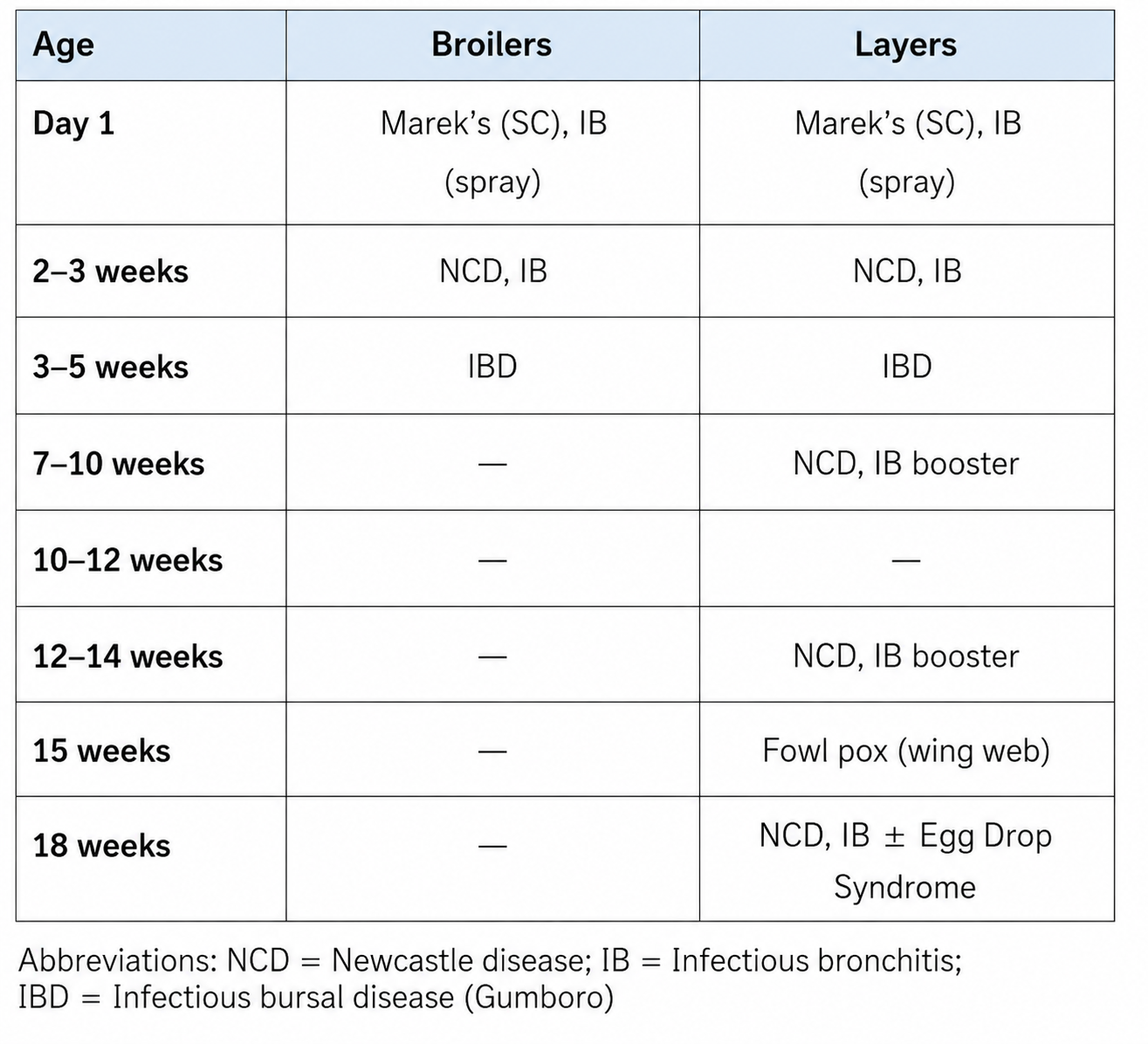
Vaccination scheme
Broilers:
day 1 (hatchery): Marek`s disease, IB (SC, spray)
1-2w: NCD, IB (eye drop/water booster). Then booster at 3-4w.
2-3w: infectious bursal disease (drinking water)
Layers:
day 1: Marek (SC) & IB (spray)
2-3w: NCD, IB (eye/nasal drop) + IBD
15w: fowl pox (wing web)
16-18w: pre-lay, NCD, IB, egg drop syndrome (inactivated oil-emulsion inj. given right before laying starts fro long-term egg protection)
Breeders
same as layers + vaccination against mycoplasma, ILT, salmonella
Avian encephalomyelitis is important in breeders to protect offspring - given at 10-12w. (!not in layers!).
Serodiagnostics: Diagnosis & monitoring of disease using serum Ab detection. We check Ab titers - Serology after 2-3w to look for titers (vaccination give elevated titers).
Uses: to check if vaccine worked, determine timing of revaccination, investigate outbreaks + increased mortality.
Test - ELISA, HIT (Hemagglutination inhibition test - for NCD), VNT (virus neutralization test), AGID (Agar gel immunodiffusion), PCR (not Ab-based but for detecting pathogen DNA/RNA).
5.Diseases caused by incorrect nutrition, avitaminosis, malabsorption syndrome
Incorrect nutrition:
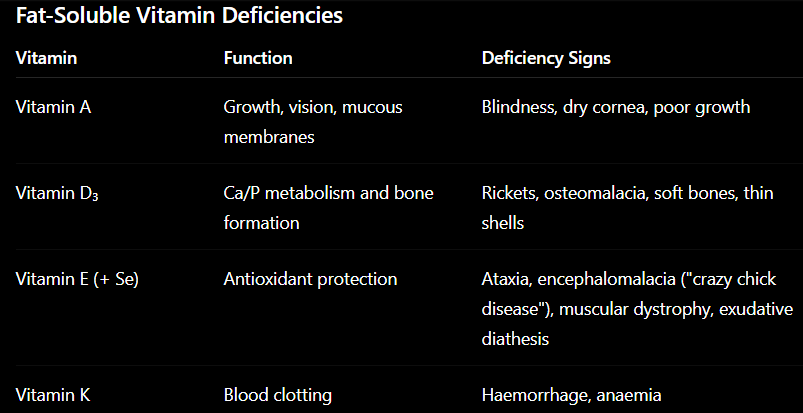
Avitaminosis:
Primary: exogenous - lack in feed. Mostly by lack of complete vitamin premix from diet.
secondary: endogenous - high demand or disorders in absorption/utilisation (enteritis), Stress, infection.
Multiple signs of deficiency can be seen, generally, signs of B-vit. deificiencies appear first as there are some stores of fat-soluble vitamins in the body.
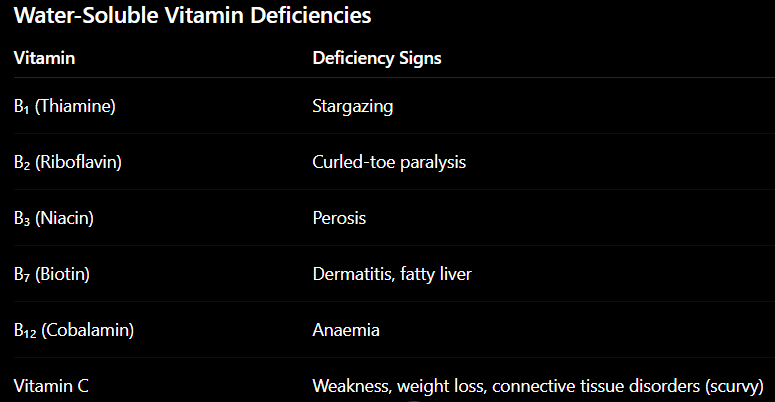
B3 + B4: retarded growth.
Malabsorption syndrome
Disease complex (avian reovirus + enterovirus, other, bacteria)
May affect GIT → nutritional deficiency + lesions, impaired absorption.
diarrhea, malpositioned beak, rickets, foamy undigested particles in droppings. Apoptosis & heterophil infilt. of jejunum.
NO treatment! May vaccinate. Good hygiene.
Common in broilers.
Bone problems → think Calcium/P/Vit D3 or perosis
Neuro signs → think Vit. E or B vitamins
Skin/epithelium → vit. A/biotin
Bleeding → vit K
6.Feather disorders - etiology, symptoms, diagnostics, dif. dg, therapy and prevention.
Feather disorders are by feather pecking, parasites & Lice, pisttacine beak and feather disease, reticuloendotheliosis.
Ectoparasites:
Most common lice: Menocanthus stramineus (chicken body louse) + Menopon Gallinae (shaft louse) → eggs on feathers, adults feed on dry skin scales/feathers/scabs → pruritus, damaged, poor health.
Red mite (Dermanyssus gallinae) - Pruritus, anemia, restless, decr. production - feather picking. Feeds on birds at night - disease vector - fowl cholera.
Other: Bed bugs (Cimex lectularius), Ixodes ticks, dermacentor ticks
Treat by pyrethroids/pyrethrin spray/carba/organo.
Burrowing mites (Knemidocoptes spp.) - depluming itch → self-plucking, Pruritus, weight loss. Species: K.mutans, K.gallinae, K.pilae. Treat by ascaricides.
Northern fowl mite (Ornithonyssus sylviarum) - Soiled feathers, anemia. blood-sucker. Often lead to blackened feathers + scabby skin, esp. around the vent area. Treat by ascaricidal sprays. Resistance is common (pyrethroids - ineffective).
Non-parasitic Feather Disorders
Feather plucking - by Stress, Overcrowding, high temp., Boredom/lack of enrichment, Low-protein diet, High stocking density → leading to feather loss & skin damage, trauma, potential cannibalism.
treat by enrichment, reduce light intensity, incr. dietary protein, sedation if needed, beak trimming.
Viral Feather Diseases
1) Reticuloendotheliosis virus (Retrovirus)
Signs: Abnormal feather development (nakanuke disease) - barbules compress to the shaft, Anemia, Enlarged nerves & Thymic atrophy
Diagnosis by PCR, diff.dx: Marek`s disease (also causes nerve enlargement). NO treatment available.
2) Psittacine Beak and Feather Disease (PBFD) - circovirus
Infects rapidly dividing cells, esp. thymus, feather follicles, crop epithelium
Primarily affects pet birds, parrots.
Signs: Abnormal feather growth, Immunosuppression, Feathers may be: Pinched or club-shaped at the base & Hemorrhagic (bleeding within the feather shaft)
Nutritional Causes
Niacin (Vitamin B3) deficiency → Signs: Feather loss & Perosis ("slipped tendon" deformity of the legs)
Treat by B-complex vitamin supplements.
But also: vit. B12, B5, folic acid (b9), D3
Dg: PM, feather appearance, chicken inoculations
7. Skin diseases – etiology, signs, diagnosis, DDx, therapy, prevention
Main skin disorders of poultry: Dermatitis, ulcerative dermatitis, ceullulitis, ringworm (favus), miscellaneous skin disease (tumors), cannibalism, skin emphysema, breast blisters.
Dermatitis: Inflammation of skin
Causes can be:
infectious: bacteria, virus, fungi, parasites
Non-infectious: chemicals, trauma, frost-bite
Dg: flock history, CS, PM, bacteriology/PCR
Most important:
1) Gangrenous dermatitis (“malignant Edema”)-bacterial
by clostridium perfringens, C.septicum
Signs: Red to black moist necrosis, feather loss, cellulitis, skin sloughing, gas crepitiation (crackling under skin)
Pressure sores/breast blisters - is linked to this → when heavcy birds or birds with leg weakness → too much time resting → breast bone on hard, wet/ammonia-heavy liter → ullcers/sores/cracks → bacteria (clostridium/staph.) → enters through, destroys tissue.
Treat by Penicillin/Amoxycillin
2) Avian pox (avipoxvirus) - Viral
dry form: skin nodules on head, neck, legs, vent
wet form: diptheritic plaques in mouth and upper resp. tract
diff.dx: marek. Usually self-limiting. Prevent by vaccine/vector control.
3) Favus/ringworm (miscosporum gallinae) - fungal
white lesions - crusty/scaly lesions on head, white oral membranes. In severe case → spread to lungs + GI tract. Treat by antifungals.
Other:
Bumblefoot (pododermatitis) - by. staphylococcus aureus, S.epidermidis/gallinarum. Cause plantar abscess (bumble), lame. Contact podo (hock burn) → by wet/dirty litter → erosion/inflam→lame.
Erysipelas (Zoonotic, bacteria) - scabby skin lesion/enteritis/endocarditis/pericarditis. Dg: culture (blood agar). Diff. dx: salmonellosis/pasteurolosis
Ceullulitis - by E.Coli, Staphylo. aureus. → subcutan.exudate - inflam. of CT, often seen at slaughter. Few signs.
Treatment by ATBs (tetracyclines), penicillin. Prevent: hygiene, good litter, reduce skin trauma, stress. Vaccine in erysipelas.
Marek`s disease (herpesvirus) - cutaneous nodules, nerve enlargement, ocular lesions, visceral tumors. NO treatment, prevent by vaccine.
Parasitic causes: ectoparasites (lice, mite, ticks) - skin irritation, feather loss, anemia. Trichomoniasis → skin nodules.
Skin emphysema - subcutaneous emphysema - condition where air or gas gets trapped under skin. Due to air escaping from air sacs, lungs, trachea. tympanic sounds.
8.Non-infectious, bacterial and parasitic diseases with ocular changes
8. Ocular diseases – etiology, signs, diagnosis, DDx, therapy, prevention
Non-infectious:
keratoconjunctivitis (ammonia/NH3 blindness) - by ammonia gas metabolized from uric acid by bacteria in wet litter (ex. E.Coli, salmonella), poor ventilation → damage upper resp. tract, eye irritation → photophobia, pruritus, inflammation, weight loss. Starves, blind.
Levels of 25-30ppm - damage upper resp. tract. Levels of 50-75ppm -irritates + blindness.
Avitaminosis A - Vitamin A is imp. for photoreceptor function/formation and protection of epithelial tissue + MM → so absence/critical deficiency → light blindness, eyelids stuck together (xerophtalmia), caseous yellow discharge.
Hypervitaminosis A - excess vit. A in food → photophobia, conjunctivitis + eyelid edema.
Bacterial:
chlamydiosis (chlamydia psittaci - zoonotic) - nasal/ocular discharge, conjunctivitis, sinusitis - puffy face, green/yellow feces.
T: Tetracycline & supportive
infectious coryza (avibacterium paragallinarum) - racute resp. disease, transmit by direct/air droplet/water. Cause nasal/ocular discharge (water/pus-like, facial swelling, severe swelling of infraorbital sinuses → eyes closes (swells around eyes).
T: ATBs (tylosin), sulphonamides. Vaccine in endemic.
Other bacterial agents: Avian influenza (H5N1) - ocular change as part of its systemic effects, salmonella (S.typhimurium)
Mycoplasma (M.gallisepticum) - chronic resp. disease. nasal discharge, swollen infraorb.sinus.
Parasitic:
eye fluke/trematode (philoptalmus gralli) - in conjunctival sac of eyes, IH: freshwater snail → congestion/erosion of conjuctivae.
eye worm (oxyspirura mansoni)
Trichomas gallinae - live in sinus/mouth/esoph. + liver. Small yellow lesions around oral mucosa, watery ocular discharge - blockage of esoph.
9.Viral and mycotic diseases with ocular changes
Several viral + fungal diseases can be characterized by ocular changes, ranging from discharge + inflammation to permanent blindness & iris deformation.
Viral:
Avian pox (avipoxvirus) - eyelid nodules
cutaneous (dry) - wart-like lesions around eyes, if severe → blindness. Unfeathered skin - feet/legs.
Also diptheric (wet) form (lethal) & mixed.
Dry form - can resolve on its own. dg: PCR, ELISA. Attenuated vaccine in high risk areas in first few weeks of life, revaccine at 12-16w.
Marek´s disease (Gallid alphaherpesvirus 2): ocular lymphomatosis. Ly infiltration of iris → irreg. consitriction of the iris → unequal pupil sizes, blindness, grey eye.
contagious neoplastic disease, malignant visceral lymphona + lymphoid infiltration of nerve&organs. Types: Classical (paralysis of limbs), acute (death), cutaneous (lesions at feather follicles), atherosclerosis, immunosuppr.
No treatment. Prevent by vaccine. Diff.dx: Lymphoid leucosis (only in older 14w).
Infectious laryngotracheitis (Gallid herpesvirus-1)
ocular route for virus → conjunctivitis (red, inflamed) & watery eyes with discharge (subacute form) + rales (rattling sound).
Avian rhinotracheitis (metapneumovirus)
Resp. tract infection in turkey & swollen head in broilers
Foamy conjunctivitis & periorbital swelling
Newcastle Disease (avian paramyxovirus) - watery, red, inflamed or closed eyes. Specific strains can give pink eye + swollen eyelids due to fluid accumulation.
Avian influenza (orthomyxovirus) - may show ocular discharge/liquid.
Duck viral enteritis (herpesvirus) - photophobia, eyelid closed/crusty/pasty, discharge (water or blood-tinged), conjunctivitis.
Fungal:
Aspergillosis (A.fumgitaus, A.flavus) - plaques in eye, resp. disease, but can spread systemically. Intenral lesions - yellow/green fungal nodules can sometimes be seen directly within the eye → blindness.
Favus/ringworm (microsporum gallinae) - eyelid crusts, thickened, scabby.
Candida spp
10.Non-infectious diseases of circulatory system
Mainly in broilers due to rapid growth (hypoxia, nutrition, toxins, stress)!
cardiovascular diseases (term for all) - main cause of morbidity + mortality in broilers after infectious diseases, by genetics, environment, often due to too small circulatory system.
Cause cyanosis of comb/wattle, weakness = key sign
Restricted space for blood flow by small lung vessels & rapid growth rates = cause it.
Diseases:
Sudden death syndrome
Cause unknown, can be linked to carbohydrate metabolism, lactic acidosis → arrhythmia. Birds look healthy before signs → sudden neck extension, gasping, collapse and death. Typ. in days 12-28.
PM: edema of pectoral muscles & abdomen, dilated atrium, contracted ventricles + congested lungs.
Ascites syndrome (pulmonary hypertension syndrome)
right ventricular failure → fluid accumulation in abdomen, often due to incr. pulmonary pressure from lack of O2 in rapidly growing chicks.
Open beak breathing, cyanosis of comb/wattles, slow heart rate
exudative diathesis (lEnzootic heart failure, Low vit. E + Se)
dystrophic changes (non-inflammatory):
parenchymatous degeneration (toxins)
gout (pericarditis uricosa) - deposition of uric acid crystals in visceral organs
fatty degeneration of heart (toxins - arsenic/Phosphorous poisoning)
hyaline degeneration (hypovitaminosis E → myopathy in myocardium of turkey/waterfowl)
vascular disorders:
aortic rupture (hypovit E, thrombi, genetics) - occurs in heavy male turkeys during intensive growing. We find large amount of blood in coelomic cavity due to rupture near kidney/lung/heart in PM.
Sudden death of healthy birds, no prior symptoms.
arteriosclerosis (cholesterol) - narrowing of arteries by buildup of plaque
Also inflammations: Myocarditis, Pericarditis (of heart muscle/sac around heart, can be due to chronic toxicity, Vit.E/Se/stress, or visteral goat - uric into sac)
Dg: CS, sudden death pattern, PM, nutrition/environmnet history.
Therapy: mostly ineffective, supportive only in some cases (vit.K)
Prevent: control growth rate (light/feed), balanced nutrition, good ventilation to prevent hypoxia, reduce stress + genetic selection.
11.Infectious diseases of circulatory system - etiology, symptoms, dx, diff dx, tx, px
Infectious diseases of circulatory - pathogens target the blood/heart + vascular system. Conditions manifest often as systemic (septicemia), fluid accumulation around heart or severe anemia.
General signs: ascites, cyanosis, depresion, weak, decr. production. T: ATBs
Myocarditis - infection, toxin, systemic. Inflammation of heart muscle
Endocarditis
By bacteria: Staph, strepto, pasteurella, E.Coli
Disruption of the valve allows bacteria to proliferate and cause inflammation of the valves → endocardium inflamed, valvularis, right ventricular failure + ascites.
Signs: distended abdomen, congestion of peripheral vessels
T: ATB, prevent by good hygiene, prophylaxis in feed.
Pericarditis (infla. of pericardium), types:
Fibrinous (mycoplasma)
exudative (strepto/enterococcus)
Purulent (foreign body)
uricosa (gout)
hemorrhagic (fowl cholera, plaque)
Hydropericardium
Can be consquence of chicken edema disease, toxins, infections - inclusion body hepatitis, can cause nutritional/cardiac edema
Leads to accumulation of clear-light yellow watery, serous fluid.
Viruses:
Avian influenza virus (internal hemorrhage)
Highly pathogenic strain (HPAI) → systemic disease, severe vascular damage.
Typical: pinpoint bleeding under the skin of feet/shanks + hemorhages in the visceral serosa, ovaries, fat around the heart.
signs: depression, cyanotic wattle/comb, decr.prod, resp. issues (cough/nasal discharge), neurological (ataxia, torticollis), periorbital edema, acute death. Recovery = rare.
Marek (Herpesvirus)
systemic form + visceral, tumor in heart
Signs: paralysis, enlarged skin follicles, blind, immunosuppr.
Reticuloendotheliosis (neoplasia of heart/organs)
Chicken infectious anemia (CIA) → bone atrophy, anemia
By parasites, plasmodium gallinaceum, hemoproteus, leucocytozoon.
Newcastle disease (velogenic strain-most virulent form) → hemorrhages throughout digestive tract + other internal organs
Parasites: Plasmodium (chicken malaria), Hemoproteus & Leucocytozoon - blood infection, by biting insects → depression, muscular incoordination
12.Anemia associated with infectious and non-infectious diseases of poultry
Anemia = decrease in the total amount of RBC or Hb in blood, or lowered ability of the blood to carry O2.
Typical signs of: paleness (wattle/comb), depression, anorexia, lethargy.
Can be classified as:
Regenerative: responsive, The body is bleeding/hemorrhage/or hemolysis (low on RBCs) but the marrow is trying to fix the problem.
Non-regenerative: indicates inadequate bone marrow response due to a bone marrow disorder. (cannot make/prod. blood).
Infectious:
1.Chicken infectious Anemia (CIA, circovirus)
By circovirus - typical by bone marrow atrophy, anemia + severe immunosuppression (T-cell damage)
transmits from hen→egg, fecal-oral, bird→bird.
the virus targets and destroys:
Bone marrow - hemocytoblasts => loss of blood cells
thymus (cortex) - precursor T-cells => immunosuppression - kills these immune cells before they mature.
Spleen - dividing CD4&CD8 cells => destorys markers on WBCs
PCV: less or = 27% = sign of anemia (packed cell volume/hematocrit)
Blood smear: anemia, leukopenia, pancytopenia
NO specific treatment. ATB for sec. bacterial infections. Live vaccines for Ab-negative breeder flocks before start of egg prods.
2.Inclusion body Hepatitis (Adenovirus)
Viral disease of young chicks, linked to anemia, hemorrhagic disorders, hydropericardium. chick→egg.
pale, swollen, friable with petechial hemorrhages on Liver.
signs: sudden onset mortality, peaks within 3-4d and ceases by day 5-6.
NO vaccines/treatment.
Ectoparasites: Lice, mites & ticks → hemorrhagic anemia
Endoparasites: Plasmodium gallinaceum, hemoproteus, leukocytozoon
Non-infectious:
intoxications: warfarin, aflatoxins (haemolytic/hemorrhagic anemia)
hypovitaminosis K (low prothrombin → delayed clotting → bleeding)
13.Hemorrhagic diathesis associated with infectious and non-inefctious diseases
Hemorrhagic diathesis = increased tendency to bleed due to hypocoagulability, caused by coagulopathies, thrombocytopathies or vasculopathies.
It is issue with how the blood clots!
Cause hemorrhages on legs, breast muscle & abd.organs. Typical by pale comb/wattle, weakness, apathy, delayed clotting, death.
1. Vasculopathies (vessel wall defects) by:
exudative diathesis (Vit E+Se def) - lipid oxidation → capillary damage → edema (incr. permeability, fluid exudation)
Signs: ruffled feathers, occurs at 3-6w old, swelled neck
Septicemia/vasculitis
From IBH (inclusion body Hepatitis), duck viral hepatitis, fowl cholera, Infectious laryngotracheitis, salmonellosis, Marek, IBD)
IBD: viral infection → affects immune system, destroys lymphoid organs, esp. bursa of fabricius → vessel wall damage
2. Coagulopathies (clotting factor disorder)
caused by reduced clotting factors or decr. production of the coagulation factors => defect in coagulation system
Non-infectious:
intoxications by chronic rodenticides → hemolytic anemia → cause sudden death, gross hemorrhagic lesions in lung, intestine, peritoneal.
Warfarin (anticoagulant) & Aflatoxins (liver damage)
vitamin deficiencies
Vit. K - needed for prothrombin synthesis.
B9 - it is important in blood cell formation, deficiency cause macrocytic anemia + leukopenia
3. Thrombocytopathies (platelet disorders)
= Incr. tendency to bleed, usually seen as petechiae, due to reduced platelet number/function.
non-infectious causes: Drug overdose (sulphonamides → pancytopenia) & intoxications (fumonisin, ochratoxin, satratoxin)
Infectious causes:
Infectious contagious anemia (bone marrow atrophy)
Inclusion body hepatitis - linked to anemia, hemorhages, hydropericardium.
Dg: CS, history, coagulation tests, hematology (blood count), PM, PCR.
Therapy: vitamin K, ATB in sec. infection.
14.Bacterial diseases of the respiratory system
1) Mycoplasmosis (Mycoplasma gallisepticum & M.meleagridis)
Typical: airsacculitis, thick, turbid, foamy yellow exudate + caseous (cheesy) flecks/masses.
M. gallisepticum - in breeder turkeys, egg transmitted. Reduced hatchability.
M.gallisepticum - chicks/turkeys, severe upper resp. signs - sinusitis, tracheitis + airsacculitis. (Sneezing/coughing). Often in combo with other like NCD, IB, E.coli.
2) Infectious coryza (avibacterium paragalllinarum)
acute upper resp. tract disease → cattarhal infalmmation (nasal/sinus)
Typical: nasal discharge, sneezing, swelling of face under eyes, infraorbital sinus edema → can close one or both eyes
Through direct/airborne droplets/water
Prevent by vaccination
3) Fowl cholera (Pasteurella multocida)
transmits by nasal exudate, feces, soil, equipment/people.
Signs: acute with white diarrhea, resp. distress, mucoid discharge from the mouth & death. Chronic by swelling of wattles/joints/tendon/foot & torticollis.
4) Avian chlamydia (Chlamydia psittaci)
Rare - can be asymptomatic or cause respiratory/digestive or systemic issues. Zoonotic! Cause facial swelling, dyspnea.
Birds have air sacs + rigid lungs (no explansion) → infections easily spread to air saacs (airsacculitis)
Dg: PCR, Serology, PM, CS, history.
T: sulphonamides, ATBs, eradication
15.Viral diseases of the respiratory system
Every condition cause resp. signs - cough, sneezing, nasal discharge, rales, rale-induced dyspnea, infraorbital facial swelling. Risk to egg production and quality, can cause facial & head edema. Airbrone/droplet transmission, direct contact.
1) Infectious Bronchitis (coronavirus)
most contagious in chickens! Transmit by air droplets
70% decreased egg production, poor quality, shell less eggs and misshapen, smaller + can have watery albumen.
nephropathogenic strains - mortality rate of 60% in young chicks
Typical resp. signs like cough/sneeze, facial swelling.
2) Fowl pox (avipoxvirus)
cutaneous (dry) and diptheric (wet), mixed
attenuated vaccine
3) Newcastle Disease (paramyxovirus)
velogenic - severe nervous/resp. signs - high mortality. dyspnea, tremors/sposms/torticollis. Sharp drop in eggs.
mesogenic - cough, decr.egg quality, red.prod.
lentogenic - mild like cough/sneeze.
respiratory/nervous/digestive form. Zoonotic.
Pigeons most affected → torticollis, falling, incoordination etc.
4) Avian influenza (orthomyxovirus)
Low pathogenicity Avian infl. strains (LPAI) → mild resp signs, cough/sneeze/discharge, sinusitis, green diarrhea
High patho (HPAI) - (subtype H5N1) → systemic hemorrhagic disease, cyanosis + edema, necrosis of organs
5) Infectious Laryngotracheitis (gallid herpesvirus 1)
cheesy exudate in trachea → suffocation, severe dyspnoe, rales, death
recovered → carriers for life. Prevent by vaccine.
6) Avian rhinotracheitis (metapneumovirus)
swollen head syndrome, swelling of sinuses, frothy eyes
Dg: CS, isolation, serology (PCR, ELISA), Hemmaglutination
T: No treatment (IB) - culled.
16.Parasitic and mycotic diseases of the respiratory system
Parasites:
1) Syngamus trachea
2) Cytodites Nudus
3) Sternostoma Trachealocum
1. Syngamus trachea (in free-range birds, gaping, coughing, head shaking, resp distress. Ivermectin. Paratenic host is earthworm, insect. Only use flubenazole in meat producing animal1)
2. Cytodites nudus (air sac mite, rare in commercial poultry, PM white spots in air sacs/lungs)
3. Sternostoma tracheocolum (air sac mite, in cage birds, rare in poultry)
4. Cryptosporidium baileyi/meleagridis (resp tract and bursa. no treatment)
Fungi
1. Aspergillus fumigatus, A.flavus, A.niger (opportunistic, not from bird-bird. grey/green granulomas in lungs/airsacs. acute in youngs first 3weeks ->high mortality, CNS signs. Chronic -> dyspnoe, weight loss. Not as important in poltry, no airsacculitis as in retiles/exotic birds)
Non-infectious, infectious and parasitic diseases of beak, beak cavity and crop
Non-infectious
- beak deformities (congenital: brachygnathia superior/inferior, acquired: rickets/osteomalacia)
- beak necrosis (fine feed accumulation -> pressure necrosis)
- vit A def (metaplasia of crop epithleium)
- foreign bodies (crop obstruction)
- chemicals/trauma (high fiber feed and chemicals -> ingluvitis.
- nervus vagus damage -> pendulous crop (enlagred, fluid filled)
Infectious
1. Pasteurella (ingluvitis)
2. Pseudomonas (stomatisis)
3. Klebsiella (stomatitis)
4. Fowl pox (diptheric form -> stomatitis and ingluvitis)
5. Candida albicans (stomatitis and ingluvitis. white plaques in crop -> sour crop. crop stasis and regurgitation in youngs)
Parasites
1. Trichomonas gallinae (stomatitis, ingluvitis. yellow plaques in oral cavity, blocks the esophagus -> starvation)
2. Capillaria anulata, contorta (ingluvitis)
3. Gongylonema ingluvicola
Non-infectious, infectious and parasitic diseases of the proventriculus and gizzard
Proventriculitis
1. Candida albicans
2. Newcastle disease (hemorrhages)
3. Mareks (lymphoma)
3. Macrorhabdus ornithogaster (rare in poultry)
4. Fusarium toxins (fusarium fungi -> necrosis and ulceration of oral mucosa, GI reddening, visceral hemorrhages)
5. Cyclopiazonic acid (aspergillus flavus -> lesions in proventriculs with enlargement, ulceration and thick mucosa)
6. Proventricular dilation syndrome (high fibre and mash feed diet -> enlarged, thin walls, gizzard atrophy)
7. Tetrameres Americana (in proventricular glands -> red spots in serosa. Thick oedematous, possible partial obstruction)
Diseases of gizzard
1. Impaction (litter ingestion in turkeys -> early sudden mortality)
2. Dilation (soft feed, lack of grit -> inflam + dysfunction)
3. Amidostomum anseris (waterfowl, hemorrhage and necrosis -> anemia)
4. Clostridium spp. (necrosis in proventriculus-gizzard junction)
5. Adenovirus -> gizzard erosion and ulceration
6. Macrorhabdus (mainly in pet birds, weight loss)
Non-infectious and infectious diseases of intestines and cloaca
ENTERITIS
Bacterial enteritis
1. Necrotic Enteritis (Clostridium perfringens due to diet change, coccidiosis or gut damage -> infection -> necrosis of SI -> death, diarrhea, ruffled feathers, liver lesions)
2. Pullorum disease (Salmonella pullorum in chicks, vertical and horizontal -> unabsorbed yolk sac + white nodules in organs -> death, diarrhea)
3. Fowl typhoid (Salmonella gallinarum, older birds)
4. Colibacillosis (E.coli -> enterocolitis and coligranulomas)
5. Avian tuberculosis (M.avium, granulomas in intestine, liver -> weight loss, lameness if in bone)
6. others: Pasterurellosis, campylobacter jejuni (no CS in poultry, hidden disease - contamination in slaughterhouse), yersinia
Parasitic enteritis
1. Eimeria -> coccicdiosis with bloody diarrhea
2. Ascaridia -> obstruction
3. Capillaria -> enteritis
4. Histomonas meleagridis -> blackhead disease. LIVER lesions - then too late to treat (toltrazuril).
5. Trichomonas (upper GIT, sometimes small intestine)
Viral enteritis
1. NCD (velogenic viscerotrophic strain -> severe hemorrhagic enteritis. PM: petechial hemorrhages in proventriculus!!)
2. Avian influenza (HPAI -> hemorrhagic enteritis and necrosis)
3. Coronavirus (turkey coronavirus, infectious bronchitis)
4. Reovirus, Rotavirus, adenovirus, parvovirus, astrovirus (-> malabsorption syndrome)
Intoxications
1. CuSO4 overdose -> catarrhal enteritis
2. Mercury -> caustic burns, ulcers
3. Phosphorus -> diarrhea, weakness, anorexia
Others
- poor nutrition, sudden diet change, stress, dysbiosis, hypomotility (nervous origin), volvulus (gas -> obstruction)
CLOACA
- cloacal prolapse (enteritis and egg-laying problems)
- cloacitis (infection, irritation or enteritis -> dirty vent, foul odour, ulceration, stop egg laying)
Protozoan diseases of the GIT
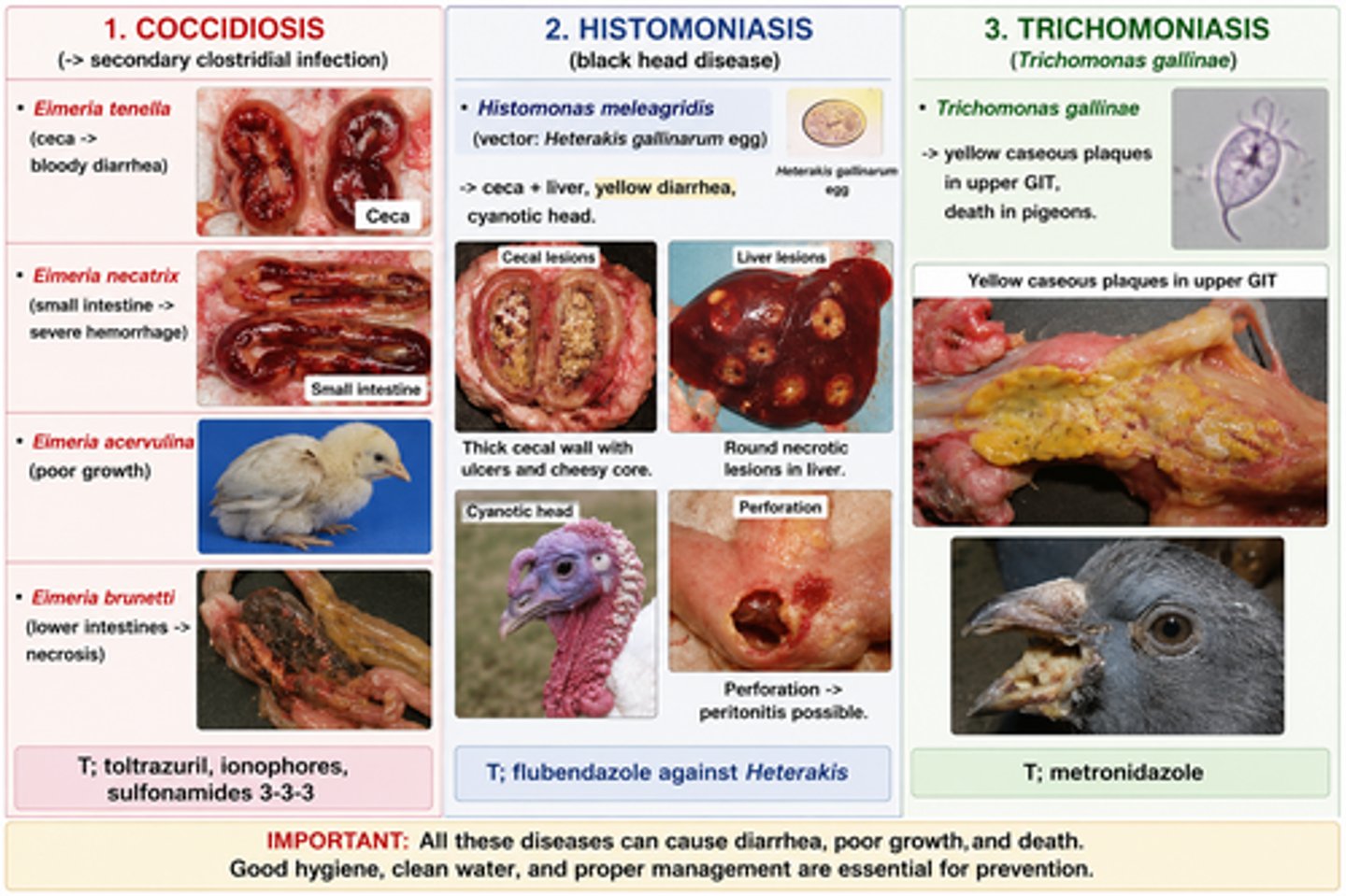
1. COCCIDIOSIS (-> secondary clostridial infection)
- Eimeria tenella (ceca -> bloody diarrhea)
- Eimeria necatrix (small intestine -> severe hemorrhage)
- Eimeria acervulina (poor growth)
- Eimeria brunetti (lower intestines -> necrosis)
(T; toltrazuril, ionophores, sulfonamides 3-3-3)
2. HISTOMONIASIS (black head disease)
- Histomonas meleagridis (vector: heterakis gallinarum egg)
-> ceca + liver, yellow diarrhea, cyanotic head. Thick cecal wall with ulcers and cheesy core. Round necrotic lesions in liver. Perforation -> peritonitis possible. T; flubendazole against heterakis
3. TRICHOMONIASIS (trichomonas gallinae)
- yellow caseous plaques in upper GIT, death in pigeons. T; metronidazole
Helminthoses of the GIT
Nematodes
1. Ascaridia galli (obstruction of duodenum/jejunum, migrate to cloaca)
2. Capillaria spp (C.annulata in crop, C.obsignata in SI, C.anatis in ceca. Inflm and thickening of intestine. Catharral enteritis if severe. Some need earthworm as IH)
3. Heterakis gallinarum (Direct LC. Ceca. vector histomons. usually mild with poor growth and depression.
4. Trichostrongylus tenuis (ceca)
5. Amidostomum spp. (gizzard)
T; flubendazol
Cestodes
1. Davainea proglottina (hemorrhagic enteritis in duodenum)
2. Raillietina tetragona ( iluem. indircet LC - snails etc)
T; praziquantel
Trematodes (flukes)
1. Prostogonimus ovatus (IH: snail + dragonfly. intestine -> oviduct. rupture -> peritonitis)
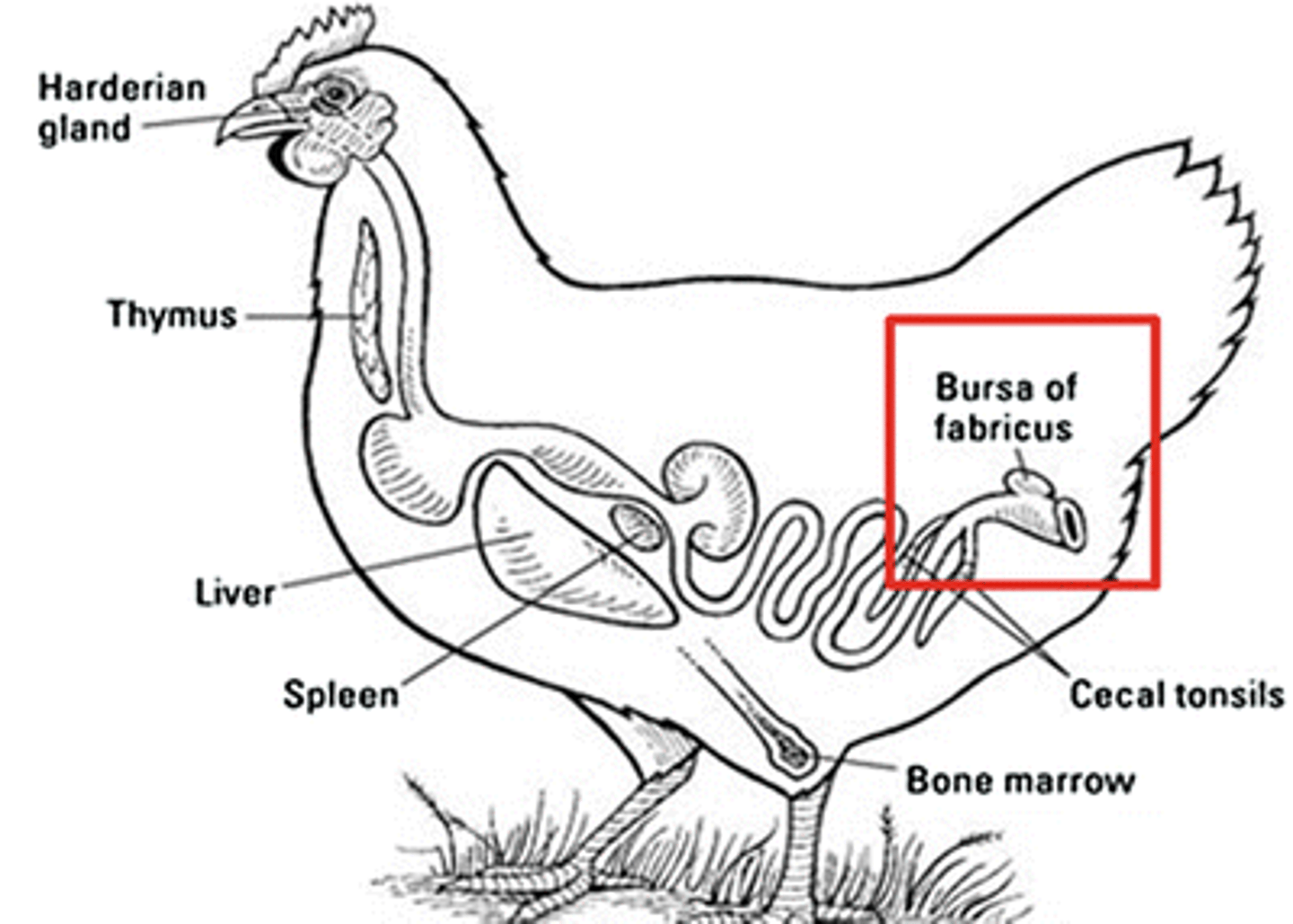
Diseases of bursa of Fabricius
1. Infectious bursal disease (Gumboro disease)
- etiology: Birnavirus, serotype 1 (pathogenic to chickens), serotype 2 (non-pathogenic). Destroy B cells -> severe immunosuppression. subclinical in chicks under 3 weeks, clinical in older: watery dirrhea, soiled vent, infl of cloaca and incoordination. Enlarged, edematous, hemorrhagic bursa in acute case. Atrophy in chronic case. Core vaccine week 3-5!
2. Lymphoid leukosis (avian leukosis virus - retrovirus)
- affect birds older than 14-16weeks due to slow tumor development. Infect B-cells -> tumor formation in liver, spleen and bursa. Weakness, weight loss, diarrhea. Vertical transmission!
3. Marek´s disease (GHV-2)
- spread via feather dander (resistnat in environment). Infect T-cells -> lymphoma formation. Tumors and nerve lesions -> paralysis, ocular change, skin lesions. Atrophy of bursa rather than tumor! Core vaccine day 1!!
4. Histomonas meleagridis (transmitted from heterakis gallinarum egg) -> infects the cecum -> spreads to liver and bursa -> atrophy -> immunosuppression
5. Prostagonimus spp.
Non-infectious and parasitic diseases associated with changes in the liver
Non-infectious
1. Fatty liver hemorrhagic syndrome (in caged birds with positive energy balance and no excercise. Obese birds, low egg prod., pale, sudden death)
2. Aflatoxicosis (aspregillus, penicillium -> convulsions, ataxia, opistotonus, anorexia, death. PM: large yellow liver)
3. Heavy metals (Lead, Mercury -> degeneraiton + atrophy of liver)
Parasitic
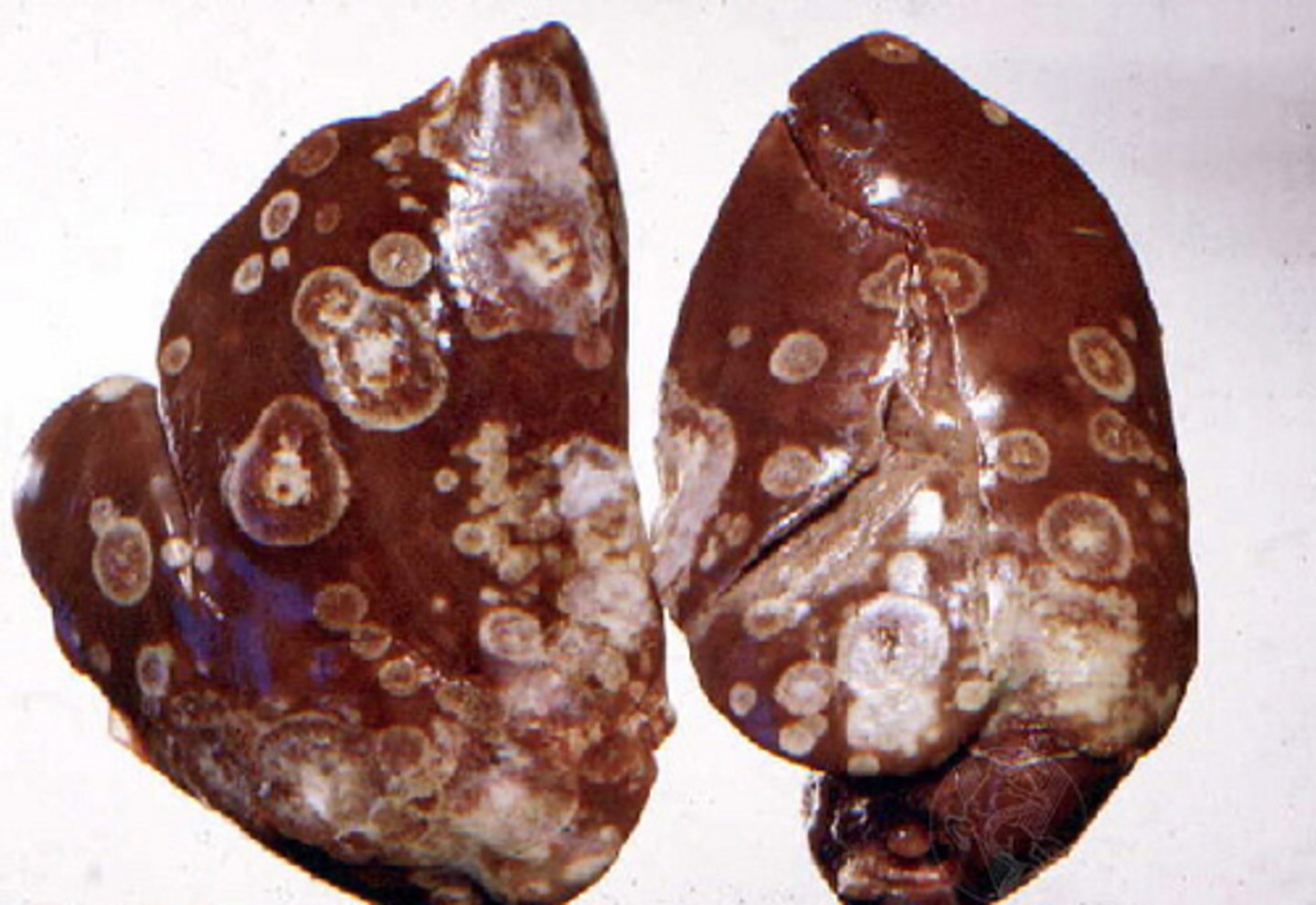
1. Histomonas melagridis (transmitted from heterakis eggs, spread from cecum to liver -> severe necrosis. Sulphur-yellow diarrhea, cyanotic head (blackhead disease), high mortaility. Round necrotic foci in liver. Caseous cores in cecum. Flubendazole.)
2. Trichomonas gallinae (necrotic lesions in liver, weight loss, weakness, upper GIT lesions)
Infectious diseases asociated with changes in the liver
Most important → TBC, AVIAN LEUKOSIS + HISTOMONAS!
TBC → CS, GIT (DIARRHEA), + BONE LAMENESS IS INVOLVED AND HOW LESIONS LOOKS.
how to know difference in clinical signs of these three.
1. Pullorum disease (Salmonella pullorum, vertical + horizontal. young chicks acute, diarrhea, grey necrotic foci in liver and organs.
2. Fowl typhoid (Salmonella gallinarum. older birds, diarrhea, pale and dehydrated. hepatomegaly, congestion, necrosis. T; only eradication due to carriers)
3. Salmonella typhymurium (liver congestion+necrosis)
4. Avian tuberculosis (mycobacterium avian -> grnaulomas in liver, spleen, intestine. chronic weigh loss, emaciation, lameness. T; culling)
5. Duck viral hepatitis (picornavirus, young ducklings under 7 weeks show signs like sudden death, neutrological signs: ataxia, opistotonus. Hepatomegaly with focal haemorrhages. T; no therapy, vaccinate breeders! 95% mortality)
6. Inlcusion body hepatitis (avian adenovirus, liver damage with intranuclear inclusion bodies -> sudden death, pale comb, icterus may be. T; no therapy, control IBD and CIA)
7. Aspergillus fumigatus (respiratory -> spread -> granulomas in airsacs, lungs and LIVER
8. Lymphoid leukosis (avian leukosis virus - tumors in chicks over 14-16 weeks in liver, spleen and bursa. Differential diagnosis is Histomoniasis!)
Non-infectious and infectious diseases of the female reproducitve organs
Non-infectious diseases of the ovary (only left ovary and oviduct is functional in birds!!!)
1. Cysts (fluid filled incidental finding due to endocrine imbalance or chronic inflammation)
2. Degeneration (toxins, vit A def, fowl typhoid -> misshapen dark follicles)
3. Hypoplasia (congenital small underdeveloped -> low egg production)
4. Neoplasia (adenocarcinoma, lymphosarcoma (mareks)
Infectious diseases of the ovary
1. Salmonellosis (-> misshapen follicles with caseous content)
2. Fowl cholera (inflammation of ovary)
3. Infectious bronchitis (70% less egg prod., thin, soft shells, water albumen.
Diseases of the oviduct
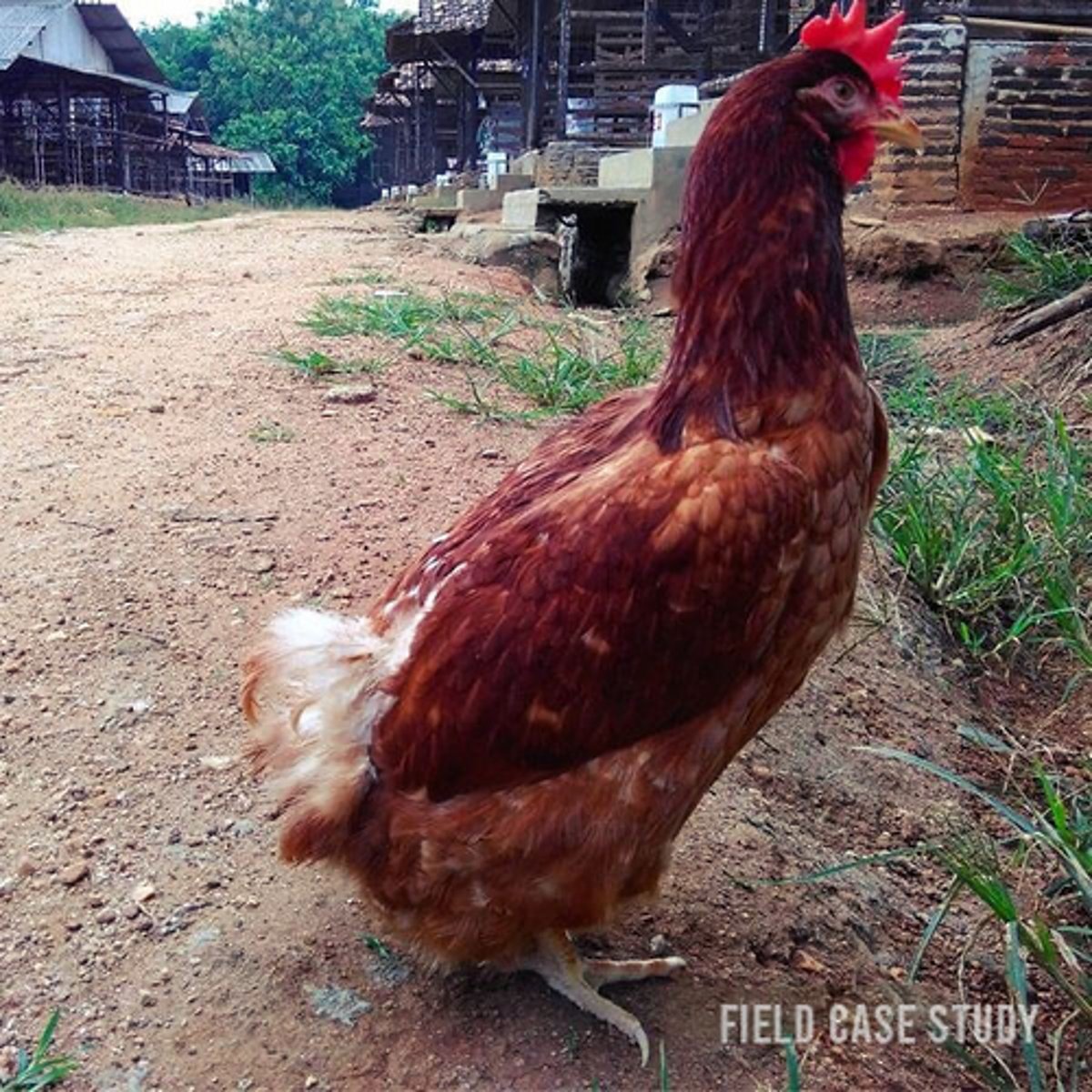
1. Salpingitis (multifactorial -asending infection from cloaca, trauma, spread from airsacs, e.g: E.coli, Mycoplasma gallisepticum, Salmonella, Pasteurella multocida. CS: soft/misshapen/shell less eggs, cloacal discharge, penguin posture! see picture)
2. Egg peritonitis (backflow of egg material + E.coli infection -> distended abdomen, penguin posture, low egg prod)
3. Egg binding (caused by large/deformed eggs, Ca deficiency or oviduct dysfunction. Distended abdomen, swollen vent. Oviduct rupture -> peritonitis. T; lubricate, massage, surgery)
4. Egg drop syndrome (adenovirus -> sudden drop, and soft or shell-less eggs)
5, Prolapse (egg retention, salpingiits or inflam of cloaca. T; clean, disinfect, reposition)
6. prostogonimus ovatus (fluke in oviduct -> low egg prod and soft shelled eggs, may rupture oviduct -> peritonitis. T; limited, control IH.
Non-infectious and infectious diseases of the male reproductive organs
Diseases of the testicles:
1. Orchitis (Salmonella, E.coli -> testicle enlargement -> atrophy later with fibrosis and calcification
2. Atrophy (age, nutrition, chronic disease, vit def -> low fertility and decreased size)
3. Hypoplasia (congenital -> small non-functional)
4. Neoplasia (rare, more in older birds)
Diseases of the penis (phallus in waterfowl)
1. Trauma during mating (on land -> microinjuries -> secondary infections -> hyperemia, edema, prolapse, necrosis if severe. Clean, ATB, reposition)
Venereal diseases
- infections transmitted during mating caused by bacteria (mycoplasma, neisseria, pasteruella), fungi (candida, aspergillus), protozoa (trichomonas) -> catarrhal, crupous and necrotic inflammation of RT in males and females -> weight loss and cloacal inflammation. AI reduces the spread!
Artificial insemination
- common in male turkeys (heavy males cant mate efficiently), massage abdomen + back and apply pressure pushing the tail forward-> semen release. Use extenders to maintain fertilizing ability of sperm. Pressure on abdomen on left side to evert cloaca and and oviduct, then apply semen. Once per week)
Egg-output disorders, the factors and diseases influencing egg-output, and management of egg-output disorders in poultry farming
Egg output abnormalities
- soft-shelled or shell-less eggs (rapid passage through shell gland)
- thin or poorly calcified shells (nutrition, virus, genetics)
- small/misshapen eggs (Infectious bronchitis)
- double yolk eggs (2 follicles ovulated simultaneously)
- factors: E.coli, Proteus, micrococcus, pseudomonas contamination of RT. Aspergillus and Penicillium penetrating shell and contamiante
Bird related/reproductive diseases
- Salpingitis and oophoritis (E.coli, salmonella, mycoplasma)
- ovarian cysts, degeneration, hypoplasia, prolapse, rupture of oviduct, neoplassia, egg peritonitis, venereal infections
Important production diseases
1. Egg drop syndrome (adenovirus -> soft shelled eggs in healthy birds)
2. Caged layer fatigue (calcium depletion -> thin shells, weakness, anorexia, bone fragility)
3. Fatty liver hemorrhagic syndrome (ovefed birds -> fatty liver -> hemorrhage -> death)
Factors influencing egg output
1. Age and genetics (start egg laying at 5months, peak first 8 weeks, then decline 65% after 12months. No egg prod during moulting!)
2. Nutrition (energy:protein balance, Ca + vit D3 for shell, methionine + lysine (protein synthesis), Vit E+Se (repro and antioxidant function), water intake!!)
3. Light (increasing day length -> stimulate egg laying. Commercial flocks have 14-16h light per day)
4. Stress (heat, overcrowd, trnasport, feed change, vaccine and management)
5. Infections (IB, Marek, NCD, AI, Lymphoid leukosis, salmonella, strepto, aspergillus.(IB and NCD -> wrinkled egg shell and malformed eggs. IB has affinity to highly metabolic active cells such as those in reporducitve tract)
Management and prevention
- nutrition, body condition, light (30-40lux 3 days, then 10lux at 15 days), temperature (30 chicks, 25 adults), humidity (60%), ventilation, biosecurity, vaccination, all-in-all-out
Hatching of eggs in poultry and its control
Egg formation: yolk from ovary -> captured by infundibulum (fertilization by sperm) -> magnum (albumen formed) -> isthmus (shell membranes) -> shell gland -> vagina
Veterinary control of hatching
- hatchability is influenced by egg quality, storage duration, ventilation, breeder nutrition (def Se+vit E -> myodystrophy -> low embryo development and reduced hatchability)
Handling and storage
- Collect eggs frequently (not dirty eggs -> contamination risk) and fumigate with formaldehyde to reduce microbes
- very small eggs -> insufficient nutrients for embryo
- very large eggs -> navel defects
- Storing temp: 10-12 °C and 70-75% humidity
- Equilibration at 18-22 °C before incubation! to avoid sudden temperature shock!
- Too long storage (>7 days ) -> embryo age before incubation -> increaed mortaility
Incubation conditions
- Blunt end UP to ensure correct air cell position (first breath during internal pipping)
- Temp: 37.8 °C
- Humidity: 50-60%
- CO2 and O2 exchange (proper ventilation essential)
- Egg rotation: turn every 2-3 h to prevent embryo adhesion and ensure normal development
- Critical phases: early (organogenesis - sensitive) and late (air cell pipping)
Candling and monitoring
- Day 5-6 (white eggs - fertility check/embryo viability
- Day 7-8 (brown eggs)
- Day 18 (embryo development and viability - see if it moves)
- remove infertile or dead embryos
Hatching phase
Day 19: transfer eggs to hatcher
- temp: 37 C
- humidity: 70-75%
- hatching: day 21
- check chick quality, remove weak chicks
- evaluate hatchability %, chick quality scoring, and culling weak
Sexing
- commercial layers: cloacal sexing (japanese method)
- broiler systems: sex separation may be performed
The causes of embryonal mortality and growth disorders in poultry and waterfowl
Two critical phases during incubation:
1. Early mortality (day 4 -> peak lactic acid prod and CO2 exchange)
2. Late mortality (day 19 -> oxygen demand increase)
Causes of embryonal mortality
1. Nutrition (vit A, B, E and minerals Ca, P, Mn, Zn. Protein and lipid. Vit E+Se -> muscle weakness + poor hatchability)
2. Management factors (temp, RH, ventilation, long storage, contamination, inadequate turning, cracked shells, improper incubation conditions)
3. Infections (salmonella, strepto, NCD, IB, Mareks, IBD, aspergillus. Mycoplasma synovia with vertical transmission1)
4. Genes (lethal genes)
Age-related:
0-7days: hygiene, trauma, vit def, toxins
7-14 days: malnutrition, infections
14-21: malposiiton, low O2, improper incubation
Metabolic growth disorders (CVS and MSS)
1. Sudden death syndrome (fast growing broilers, metabolic imbalance+arrhthmias -> healhy bird suddenly collapse and die)
2.Muscular dystrophy (Se+vit E -> perioxidative damage -> muscle degeneration -> weakness, no standing, sudden death if cardiac muscle)
3. Rickets
Infectious growth disorders
1. Malabsorption syndrome (multifactorial affecting intestinal absorption -> poor uneven growth, diarrhea, poor feathering (helicopter wings), undigested feed in droppings
30.Metabolic diseases of bone
Metabolic diseases -+?
1. Rickets (disorder of endochondral ossification in growing bones due to def. in Ca, P, Vit D3/incorrect Ca:P ratio -should be 1.2:1. Lack of sunlight. Renal/GI disorders. Enlarged joints and epiphyses, soft beak+claws, bone deformities)
2. Osteomalacia (adult rickets affecting bone remodelling -> fragile bones, fractures, spinal deformities, thin/soft eggshells)
3. Osteoporosis (reduction of total bone mass due to high Ca depamand during egg laying and low Ca + vitD3 intake + protein deficiency -> cage layer fatigue -> unable to stand, fragile bones, drop in egg prod., soft shelled eggs)
4. Cage layer fatigue (severe form of osteoporosis caused by demineralisation of bones to get Ca to egg production -> cortical bone thinning -> cage paralysis, fragile bones -> tibia and femur fractures, low feed intake)
31.Infectious diseases of bones
Osteopetrosis (too much bone)
by virus (avian leukosis virus)
Bone forming cells (osteoblasts) get overactive → bones become too thick and heavy. Long bones (legs) get thickened on both sides (tibiotarsus/tarsometatarsus)
Legs dont work well → lameness, weakness, birds cannot reach food/water, recumbency.
Osteomyelitis (Bone infection)
by bacteria (staph. aureus, strep., E.Coli, Salmonella)
Infection spreads to bone → septicemia, infection of epiphyseal region (near joints) → lysis (breaks down) → dies. Pus-like material form (caseous exudate).
sclerosis and deformity in chronic case. Can be in vertebrae (kinky back)
Lameness, swollen joints. Poor resp. to ATB.
Typical in turkeys - joint inflammation, green liver discoloration - carcass condemnation at processing plants.
Femoral head necrosis/Malabsorption syndrome (MAS) (FHN/Broken hip in fast-growing broilers)
Happens in fast growing chickens, bone growth is too fast for blood supply and strength → weakness at growth plate → separation from articular cartilage → BV gets blocked, bone loses blood supply and dies. Typical by osteomyelitis + osteoporosis.
Can get sec. bacterial infection. signs - sudden severe lameness, bird sits and uses wings to move.
This is the structural outcome of “bacterial chondronecrosis with osteomyelitis (BCO)”.
ATB wont fix main problem (it is structural, not just infection)
Avian TBC
By bacteria, Mycobacterium avium
Forms small lumps (granulomas) in liver, spleen & bone marrow
Arthritis - as tubercles (granulomas) forms inside long bones → expand, break through bone shaft and into joint capsules → destruction, stiff, jerky hopping gait or severe lameness. → keel sign (extreme muscle wasting).
Signs: weight loss, weak, sometimes lameness. More common in backyard birds than commercial farms (as it favors long-term survival and spread of bacteria → older birds kept longer, poorer biosecurity (can mix with wild birds), enviornmental contamination, small-mixed age flocks etc).
32.Muscle disorders in poultry
All: muscle diseases that cause weakness, inability to stand/move normally, poor performance or death.
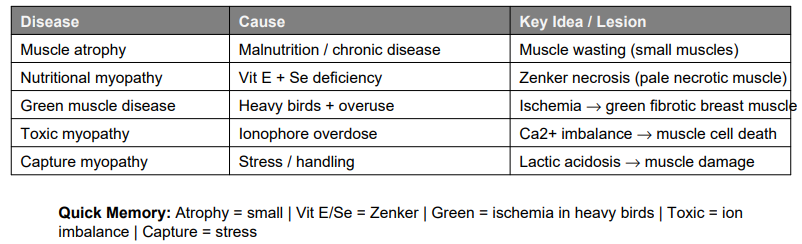
Green Muscle Disease (DPM, deep pectoral myopathy)
In heavy birds (turkeys/broilers)
This occurs when the deep pectoral muscle, swells during heavy wing flapping → as muscle is locked inside a rigid bone +tight fascia → swelling cuts off its own blood supply → ischemia, muscle death. The dead tissue becomes green, with fibrous capsule.
Nutritional Myopathy (Vit. E & Se deficiency)
oxidative damage → muscle cell destruction → stiff muscle, cannot stand, can affect heart → sudden death
classic lesion: Zenker`s necrosis, muscle fiber death (degeneration) → muscle look pale, waxy/cooked looking, stiff. (looses structure & become hyaline (glassy) and necrotic microscopically). In skeletal muscle + heart in severe case.
Muscle atrophy
By malnutrition or chronic disease, like Marek.
Muscle shrinks (wastes away)
Toxic myopathy
By ionophore overdose (feed additives) → Too much Ca inside muscle cells → cell death. Incoordination, weak, diarrhea,dyspnea, low feed intake.
Capture myopathy (RARE)
by stress (handling/capture) → anaerobic glycolysis → lactic acidosis, hyperthermia → pale, skeletal muscle on legs, sometimes cardiac muscle.
Which disease gives bleeding in muscle?
Avian influenza - muscle hemorrhages
Muscle sickness in big and heavy roosters?
Deep pectoral myopathy!
33.Diseases of the joints
These all affects legs, joints, tendons or bones → lameness, difficulty walking/standing, swollen joints sometimes, paralysis (If spine is affected).
Infectious synovitis (Mycoplasma synoviae)
joint & tendon infection → yellow creamy exudate, swollen hocks, footpads, breast blisters (recumbency)
Viral arthritis (Reovirus)
transmitted to offspring, from bird-bird. Typical in meat-type
Arthritis + tenosynovitis - can rupture tendon. Swelling of hock + stifle joints. Trembling/painful gait. Internal lesions → discolored, brown/blood-tinged fluid in the joints → can progress to chronic fibrosis.
vaccinate breeders
Articular gout
High uric acid (renal dysfunction, high protein, dehydration, vit.A deficiency)
→ uric acid crystals deposits in the joint → swollen painful joints.
Treat by alkalisation of water by sodium bicarbonate.
Staphylococcal aureus → arthritis
Follows as an opportunist after other infections. Purulent arthritis (pus-filled) - affected joints has a viscous yellow/green exudate.
Others:
Chondrodystrophy (Mn deficiency) - enlargement of the hock joint, reduction in length of long bones.
Perosis (slipped tendon) - Mn/choline def. → achilles tendon slips, large hock/lame.
Tibial chondrodysplasia (in fast growing broilers/genetic/vit.D disorder/imbalance of Ca/P) - cartilage not turning into bone → plugs into tibia (growth plate of tibiotarsus) → lame/fractures.
Leg deformities (valgus/varus) - bends outward/inward.
Spondylolisthesis - kinky back, deformity in fast growing broilers, genetic issue, causing vertebral displacement → compress spinal cord → hindlimb paralysis (sits on their hocks, feet extended/falls).
Degenerative joint disease (DJD) - older/heavy birds → wear-tear arthritis, chronic lame
34.Diseases of the tendons
Leg and tendon diseases:
“Silly Vets cant Cure Injured Viral Tendons”
Slipped tendon (Perosis)
Cause: Mn deficiency (young chicks <6w).
Achilles tendon slips out of place → enlarged hock, bent leg, lameness.
Curled toe paralysis
By vit. B2 (riboflavin) deficiency or poor flooring → toes curl downward under the foot.
Infectious synovitis
By mycoplasma synoviae → infects joints & tendon sheaths → swollen joints, lameness. Creamy exudate in the joint that extends into the tendon tissues.
Dg: PCR, ELISA, Culture (slow)
Viral arthritis (avian reovirus)
Tendon inflammation (tenosynovitis), can rupture the gastrocnemius (achilles) tendon, esp. in broilers.
Bacterial Tenosynovitis/Staphylococcal arthritis (staphylococcus aureus)
infection in tendon sheaths. Produce a purlent (pus-filled) whitish/yellow exudate and frequently occurs as an opportunistic infection following reovirus/mycoplasa.
Tendon rupture (often after reovirus/staphylococcal damage) → birds cannot use legs, usually culled.
Other conditions - genetic origin, but infleunced by nutrition/management:
Common in heavy broilers/turkeys.
Valgus/Varus deformities
legs grow crooked
valgus = legs bend outward (cowboy stance)
varus = legs bend inward (knock knees)
Can lead to slipped tendon and fractures.
Crooked toe
toes curl sideways/inward because tendons are weak (deviated sideways/crooked!) - gives a crab-like foot appearance.
35.Infectious and non-infectious diseases of the central nervous system in poultry
These all damage the nervous system (brain, spinal, nerves) → Neurological signs such as ataxia, tremors, paralysis, falling/cannot walk, torticollis in some cases, death in severe.
Non-infectious:
Conditions that are caused by nutrition or toxins.
Encephalomalacia (Crazy chick syndrome, vit. E/Se deficiency/Rancid feed)
lipid peroxidation, neuronal damage → edema of cerebellum, hemorrhage, necrosis.
Affects brain (cerebellum) → ataxia, incor. head tremors. Can fall onto side, cycling motions of legs.
Thiamine deficiency (vit. B1 deficiency)
impaired carb metabolism, decr. ATP in neurons → cerebrocortical necrosis → stargazing (abnormal retraction of head).
Treat by B1 injection/in feed.
Aflatoxicosis
By aspergillus flavus (mold toxin, aflatoxins) in feed → poor nurient absorption + NS (paralysis).
Lead intoxication
Most important & frequent intoxication. Esp. birds of prey eating shot prey (with bullet).
botulism
Intoxication by toxins from C.botulinum from rotting material → flaccid paralysis (Limber neck) due to acetylcholine release being blocked. Unable to fly/walk, drowning in waterfowl.
Infectious (by viruses):
Newcastle disease (Paramyxovirus, velogenic strain)
Cause resp. signs, NS - paralysis/torticollis.
West nile fever
Mosquito-borne virus → enchephalitis, tremors, paralysis
Avian encephalomyelitis (picornavirus/enterovirus)
Head/neck tremors, staggering, dullness, affects 1-3w. old. High death rate. Can spread to offspring, bird-bird.
Vaccinate breeders.
36.Infectious and non-infectious diseases of the peripheral nervous system
Diseases of PNS in poultry - manifest mostly as paresis (weakness) or paralysis, often resulting from direct infection of nerves or metabolic disturbances that impair neural function.
Non-infectious:
by nutritional deficiencies, toxins, or environment/physical stressors.
Curled toe paralysis (vitamin B2 - riboflavin deficiency)
Degeneration of peripheral nerves, esp. sciatic nerve
Cause curled toes, difficulty walking, paralysis
Vit. B5 (Panthothenic acid) deficiency
Degeneration of peripheral nerves → ataxia, goose-stepping gait.
Organophosphate poisoning
stops acetylcholinesterase → accumulation of acetylcholine → overstimulation of peripheral + CNS → SLUD signs (salivation, lacrimation, urination, defecation). Tremors, paralysis.
Treat by atropine.
Botulism (Botulinum neurotoxin)
Blocks neuromuscular transmission → Flaccid paralysis (prevents contraction).
Heavy metal poisoning (lead, mercury, arsenic)
Trauma/Neoplasia → compression of peripheral nerves
Infectious:
Marek`s disease (Gallid alphaherpesvirus 2)
Infects T-Ly → tumors → tumor cells infiltrate peripheral nerves → enlargement, dysfunction.
Classical (neurolymphomatosis): split leg posture, enlarged sciatic nerve + brachial plexus (wing), crop dilation (n.vagus).
Acute (visceral): depress/paralysis/death
Ocular: grey iris, unequal pupils, death.
Cutaneous: nodules at feather follicles.
Immunosuppressive: T-cell destruction
Atherosclerotic - of arteries
Newcastle disease - mainly affects CNS, but may involve peripheral. Causing tremors/torticollis, paralysis.
37.Mycotoxicosis
Mycotoxicosis - by ingestion of chemical toxins (mycotoxins) made by molds (contaminating typ. cereal grains + oilseeds like wheat, rice). Not infectious, but cause chronic production loss. Immature chickens/ducklings are most suscpetible.
Mechanism: Oxidative stress → formation of harmful free radicals & lipid peroxidation → cell membrane damage, cell death → stops protein & DNA synthesis → disrupts normal cellular metabolism.
General effects: Immunosuppression, liver & kidney damage, bone marrow damage, GI disorders, NS → poor growth & feed conversion, low production, death.
Main types:
Aflatoxicosis (Aspergillus, Penicillium)
Targets Liver → anorexia, cirrhosis & ascites, ataxia, convulsions, opisthotonous
Fusariotoxicosis (fusarium)
Trichotecenes, fumunosins, Zearalenone
Targets GIT, immune system → not eating, oral ulcers/stomatitis, dermatitis
Zearelenone → acts like estrogen → reprod. disorders.
Ochratoxicosis (Aspergillus, Penicillum)
Main target: Kidney degeneration → hypothermia, poor growth/prod.
Ergotism (Claviceps spp.)
Targets: NS, BV, endocrine system → convulsions, vasoconstriction → poor blood supply → gangrene, hormonal issues.
diagnosis: Detection of mycotoxins using chromatography, lab testing of feed samples, feeders/feed residues, tissues from dead birds.
chromatography - separate + identify chemicals in mix, HPLC - high performance liquid chromatography, Gas chromatography..
38.Aflatoxicosis, ochratoxicosis
Both are forms of mycotoxicosis - caused by ingestion of chemical toxins made by molds that contaminate cereals/oilseeds. Share general effects on production, but differ in target organs/lesions.
Both cause poor growth, low egg production/hatchability, weakness, depression and death in severe case. Immunosuppression - increases risk of other pathogens, like E.Coli - airsacculitis/septicemia.
AFLATOXICOSIS (liver)
By aspergillus flavus, A.parasiticus - grow in high moisture/temperature feed → aflatoxin B1
In ducks & turkeys = very sensitive
Main lesion: Liver - yellow, in birds receiving high levels (200ppb), Stops protein synthesis, linked to ascites (fluid in body cavity) & excess fat.
can cause fluid ccumulation in the heart sac.
Acute: hepatocellular necrosis & death. Chronic: Hepatomegaly, poor growth & immunesuppression.
Ataxia/convulsions in severe case - death
Dg: moldy feed, CS, Necropsy.
OCHRATOXICOSIS (Kidneys)
by Aspergillus Ochraceus, Penicillium viridacatum → ochratoxin A in corn, rice, peanuts.
Main target: Kidney - degeneration. But also liver, immune system, bone marrow.
Dg: necropsy - enlarged, pale kidneys.
Managing aflatoxins - contaminated feed can be saved by using high-temp. ammoniation or by adding aluminosilicates. Specific binders - zeolite compounds + extracts like Mycosorb, bind aflatoxins in the intestine (to avoid absorption), but zeolite have limited ability to inactivate other mycotoxins..
NB: unit for mycotoxins in feed: ppb (parts per billion)
39.Other mycotoxicoses (fusariotoxicosis, F2-toxicosis, T2-toxicosis)
Mycotoxicosis: It is a problem in the poultry industry by ingestion of toxins (mycotoxins) produced by molds. These typically contaminate cereals (like wheat/rice) + certain oilseeds (peanut meal) both before and after harvest.
Generally affects production - growth rate, feed conversion, decr. egg production, health status - immune response, and gives poor carcass quality.
Other Mycotoxicosis (Fusariotoxicosis)
Intoxications by toxins prod. by Fusarium molds.
Fusarium species produce several toxins:
T2-Toxicosis (By T2 toxin - part of Trichothecene group)
Strong cytotoxic & immunosuppressive effect
Typical: Stomatitis, ulceration of oral mucosa (mouth ulcers, oropharynx)
Also: Abnormal feather formation, diarrhea (GI damage)
F2-Toxicosis (By F2 toxin - part of Zearalenone)
disrupted reprod. function due to its strong estrogenic activity.
Hyperestrogenism → reprod. disorders, oviduct enlargement, decr. egg production, infertility, poor eggs
3. Fumonisins
Poor feed conversion, targets liver - focal liver necrosis. No clear lesions in poultry.
Monilliformin
Cardiotoxin and neprotoxic - can lead to acute heart failure, ascites.
other mycotoxicosis:
Ergotism (claviceps spp.) → vasoconstriction → ischemia, necrosis of extremities, toe gangrene. cyanosis + vesicles on legs/toes. NS.
Rubratoxicosis (penicillium spp. rare) → hemorrhagic syndrome, liver damage, NS
40.Intoxications caused by drugs
Intoxications by drugs is by overdose, wrong route of administration, prolonged use, drug combination interactions and species sensitivity differences.
Anticoccidials:
IONOPHORE toxicity
Drugs: Monensin, salinomycin, narasin
These drugs can disrupt ion transport (Na/K/Ca2+) across membranes → increased intracellular Ca2+ → muscle degeneration & cell death
Toxicosis is common, as they are given for prevention & treatment of coccidiosis, prone to overdosing + mixing failures. Narrow range of safety.
CS: Paresis (Weakness) & Paralysis, ataxia, diarrhea, less feed intake, dyspnoea
Monensin → backward leg paralysis
Salinomycin → paralysis, Decr. egg production
Narasin → flaccid paralysis of wings and legs.
Turkeys = most sensitive, salinomycin & narasin - Toxic.
Toxicity increases with ATB (Tiamulin, erythromycin - due to it interfering with its metabolism)
Amprolium
chemical anticoccidial drug.
Act as a thiamine (Vit.B2) antagonist to starve the parasites → overdose in poultry can cause thiamine deficiency → causing severe neurological signs like stargazing “polyneuritis”, incoordination.
We also have nicarbazin - primarily toxic in hot weather. Disrupts mitochondrial metabolism and impairs the bird`s ability to thermoregulate → fatal heat stress → severe resp. distress, rapid mortality even at normal temp.
Antimicrobials & ATBs:
Sulfonamide toxicity
older antibacterial drugs, overdosing cause severe kidney damage (uraturia), bone marrow suppression, internal hemorrhages.
Treat by vit. K
Typical signs of drug intoxication: legs paralyzed, lying on breast (locomotor issues), NS - nervousness & hysteria in flocks, physical lesionbs - improper inj. of drugs → scabby necrotic areas, esp. neck region.
Nitrofurans - used before as anticoccidial. Banned Globally!
Diff.dx.: NCD, Mareks, mycotoxicosis, nutritonal defi., heavy metal poisoning.
Treat by removing drug, supportive therapy.
41.Intoxications caused by chemical compounds and toxic gases
Intoxications in poultry result from accidental exposure to toxic gases, contamianted feed/water, poor ventilation (gases), overdose or misuse of disinfectants/rodenticides.
Toxic gases:
Ammonia gas - from breakdown of nitrogenous compounds (uric acid) in the litter + poor ventilation
cause resp. tract irritation → keratitis, conjunctivitis, corneal ulcers, blindness
Carbon monoxide - forms carboxyHb → blocks O2 transport → hypoxia, cyanosis, weak. sudden death. PM - bright pink/red tissues.
Chemical compounds:
Anticoagulant rodenticides - stops vit. K → decreases clotting factors synthesis → coagulopathy & hemorrhage → sudden weakness, pale comb and MM, dyspnoe (lung hemorrhage), bloody droppings, death. Takes 4-7d.
treat by Vit. K
Organophosphates pesticide - stops acetylcholinesterase → accumulation of acetylcholine → continuous stimulation of cholinergic system. Cause tremors, seizures, paralysis, death.
Treat: atropine
Ionophores - disrupts the Na/K/Ca transport → incr. Ca2+ → muscle cell death, leading to weak, ataxia, dyspnea, not eating, poor growth, paralysis.
Monensin → backward leg paralysis
Salinomycin → red. prod.
Narasin → flaccid paralysis (turkeys esp.)
Incr. toxicity by macrolides/tiamulin. Prevent by correct dosing in feed.
Lead intoxication - contaminated environment, paint, batteries → stops enzymes → neurotoxic + nephrotoxic → green droppings, ataxia, paralysis.
Mercury intoxication - from disinfectants, fungicides → ulcers of MM, oral cavity + GIT → visceral hemorrhages, incoordination, diarrhea
Zinc - cage wire ingestion → neurological signs, green droppings. Treat by Ca-EDTA
Nitrate/nitrite - from fertilizers → Methemoglobinemia → cyanosis, hypoxia
Copper sulphate → cattarhal enteritis
NaCl excess → neuro signs, edema, seizure
42.Metabolic and mycotic diseases in pigeons
Metabolic:
Fatty liver (Hepatic Lipidosis)
high energy intake + low activity in cage birds → obesity → fatty liver, liver dysfunction & risk of hemorrhage.
PM - enlarged friable yellow liver. Treat by vit. E, Choline.
Gout
By high protein, kidney disease/failure, vit. A deficiency + dehydration → uric acid levels increase, and deposit in organs & joints → weak, anorexia, joint swelling.
PM - urate deposits. Treat by sodium bicarbonate in water, allopurinol.
Rickets (soft, deformed bones)
Ca/P/vit.D3 imbalance
Vit. A deficiency (epithelial keratinization → eye lesions, blindness, poor growth)
Mycotic (fungal) diseases:
These infections are imp. as they may affect all bird species, and some (like aspergillosis) can be a risk to humans.
Candidiasis
white plaques in crop & GIT
Mild in adults, weight loss, lethargy + dull plumage
Young: anorexia, crop stasis, weight loss, regurgitation
Aspergilosis (A.fumigatus) - mycotic pneumonia.
Air sac & lung granulomas (yellow-white pinhead-sized nodules) → dyspnea, death in young
Inhalation of spores from contaminated litter/feed
Acute: high morbidity & mortality, gasping, anorexia, convulsions, death
Chronic: gasping, weight loss, dyspnea, tail bobbing, exercise intolerance.
Dg: endoscopy. Cytology of feves/crop.
43.Parasitic diseases of the feathers and skin in pigeons
Primarily caused by ectoparasites, like lice, mites and ticks. Generally causing itching, redness, and damaged feathers.
Lice
Columbicola columbae
Host-specific, underside of feathers on upper wing feathers. Feeds on keratin!
Cause minimal signs, mild feather damage. Low patho - not vector of disease.Treat by pyrethrins.
General - presence of egg clusters (nits) - looks likle white dots on shafts of feathers.
Mites
Dermanyssus Gallinae (Red mite)
Most common, blood-sucking, leave host during the day (lives in cracks). Treat by pyrethroids (carbamates/organo).
Cause feather picking, pruritus, anemia.
Cnemidocoptes spp. (burrowing mites)
C.gallinae → depluming itch
C.mutans → scaly leg
C.pilae → scaly face/Beak
Burrows into feather shafts & skin → severe itching, pain. Self-trauma, less eating, weight loss. Dg: skin scraping, Treat by ivermectin, repeat after a week.
Fleas
Ceratophyllus columbae - Common in feral pigeons, blood-feeding → irritation, stress, anemia. Treat by ivermectin.
Others:
Bed bug (cimex lectularis) - blood sucking, affects humans, pigeons/poultry, mammals.
Cause irritation, anemia, swelling and pruritus at bite site. Loft infestations can be heavy. Treat by pyrethroids and again after a week
Ixodes ticks - blood sucking → anemia, vector for borrelia
Argas ticks - Argas persicus (poultry tick) & reflexus (european pigeon tick)
Blood loss - anemia, weak, irritation, stress. (reflexus feed at night, can abandon nests). At featherless areas, like under wings → hematomas.
Louse fly (Pseudolynchia canariensis) - vector for Hemproteus columbae → anemia, weak.
Harpyrhynchus - at feather base, can cause hyperkeratotic epithelial cysts.
Management: strict hygiene, dust baths, petroleum jelly to affected areas of scaly leg, carbamate powders for ectoparasites (insecticide) - ex. sevin, spray for housing.
44.Protozoan diseases in pigeons
Trichomoniasis (Canker)
By Trichomonas gallinae (flagellated)
In oral cavity, pharynx, esophagus, crop
Transmit by crop feeding (pigeon milk), carriers common
Young = most affected. CS - white/yellow lesions in oral cavity, progress to ulcers, inflammation, extending to esophagus, crop → large necrotic masses → obstruction. Stops eating, appear ruffled, weak, green-yellow fluid dripping from the beak!
Can spread → liver, organs → death in a week. Wet mount microscopy. Treat by metronidazole.
Coccidiosis
By Eimeria columbanum, E.Labbeana
In SI - catarrhal enteritis. Mainly young.
Mucoid, bloody diarrhea, ruffled feathers, hunched posture. If severe - paralysis & death.
Treat by sulphonamides, toltrazuril
Toxoplasma Gondii
FH: Cats, IH: birds.
Cause cell necrosis, cyst formation in organs, inflammatory lesions → anorexia, conjunctivitis, neurological signs.
Histopatho & PCR.
IN BLOOD:
Hemoproteus Columbae - Linked to avian malaria.
Cause Anemia, weak. Dg. by giemsa stain blood smear
vector by pigeon lice fly (pseudolynchia canariensis)
Leukocytozoon spp. By blackflies (simuliidae), liver invasion → cell destruction → anemia, leukocytosis, diarrhea, CNS signs. Dead in ish week or survive with organ damage.
Dg: blood smear giemsa. Treat: antiprotozoal - buparvaquone or antimalarial (chloroquine)
45.Helminthoses in pigeons
CESTODES (tapeworms)
Hymenolepis columbae
IH: earthworms, snails/insects
usually asymptomatic
heavy infections → decr. performance, diarrhea
Davainea Proglottina
IH: molluscs (slugs)
Scolex penetrate deep into duodenal villi → necrosis, hemorrhage, inflammation
Light infections give poor growth, weak, less production, heavy → death.
Raillietina tetragona (IH - insects, ants, flies) → enteritis
NEMATODES (roundworms)
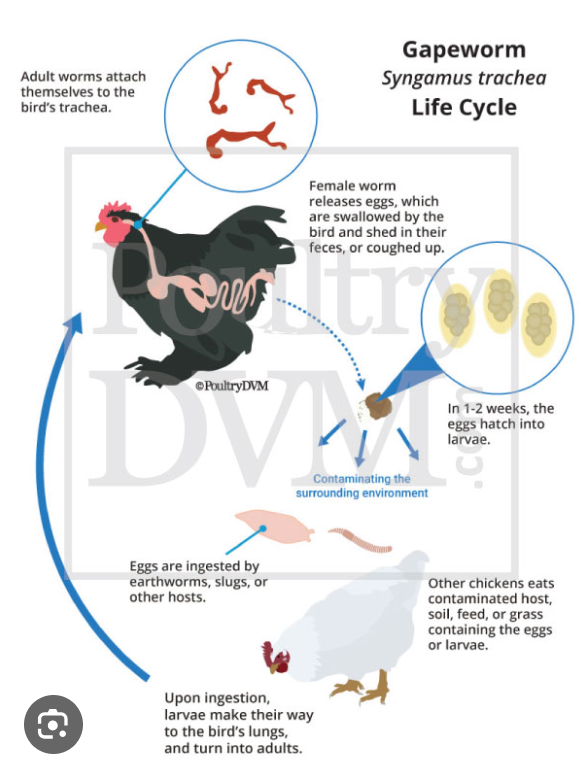
Syngamus trachea - respiratory worm. (gaping worm)
Adults in permanent copulation (Y-shape, male attached to bigger female)
In trachea, direct cycle (can have PH - earthworms, snail).
Cause tracheal irritation, mucus production, obstructs airway. Signs - gaping (gasping for air), open-mouth breathing, distress, dyspnea, cough/sneeze, head shaking.
Death by asphyxiation.
Ascaridiae columbae
intestinal damage → hemorrhagic enteritis, decr. feed intake, weight loss, poor growth.
Capillaria spp. - C.caudinflata, C.obsignata
Inflammation & thickening of GIT. Severe thickening + catarrhal enteritis in heavy infection → anorexia, droopy wings, ruffled feathers, diarrhea, death.
TREMATODES
Echinostoma revolutum → hemorrhagic enteritis
General: Fecal examination for diagnosis, necropsy for adult worms, Clinical signs (resp. or GIT).
Diff. dx: bacterial enteritis, nutritional defficiencies.
Therapy: Anthelmintics - Praziquantel (Cestode), Flubendazole (Nema)
Prevent: hygiene, control of IH, clean, regular deworming.
46.Bacterial diseases in pigeons
Psittacosis (Chlamyiosis) “parrot fever”
While primarily linked to psittacine birds (parrots), this disease by bacterium chlamydia psittaci can also affect pigeons. Infects sinuses, conjunctiva & trachea, may spread to liver, spleen.
CS: General weakness, diarrhea, discharge from eyes, and nose, dyspnea. Can be asymptomatic carriers, or severe.
Biliverdinuria → green urates (linked to liver, hepatitis, RBC broken down to green biliverdin).
dg: PCR, Serology, x-ray by hepatosplenomegaly, airsacculitis.
Cull infected birds, treat flock with ATBs in feed (doxycycline, reduce Ca if given orally)
Zoonotic! → can cause severe, fatal pneumonia in humans (or general influenza)
Avian TBC (Mycobacterium avium)
CS: Wasting disease, non-specific, develops slowly by gradual loss of weight, lameness, general weakness, death. granulomatous lesions in intestine, liver + spleen.
Dg: necropsy, PCR, acid-fast staining. Cull infected.
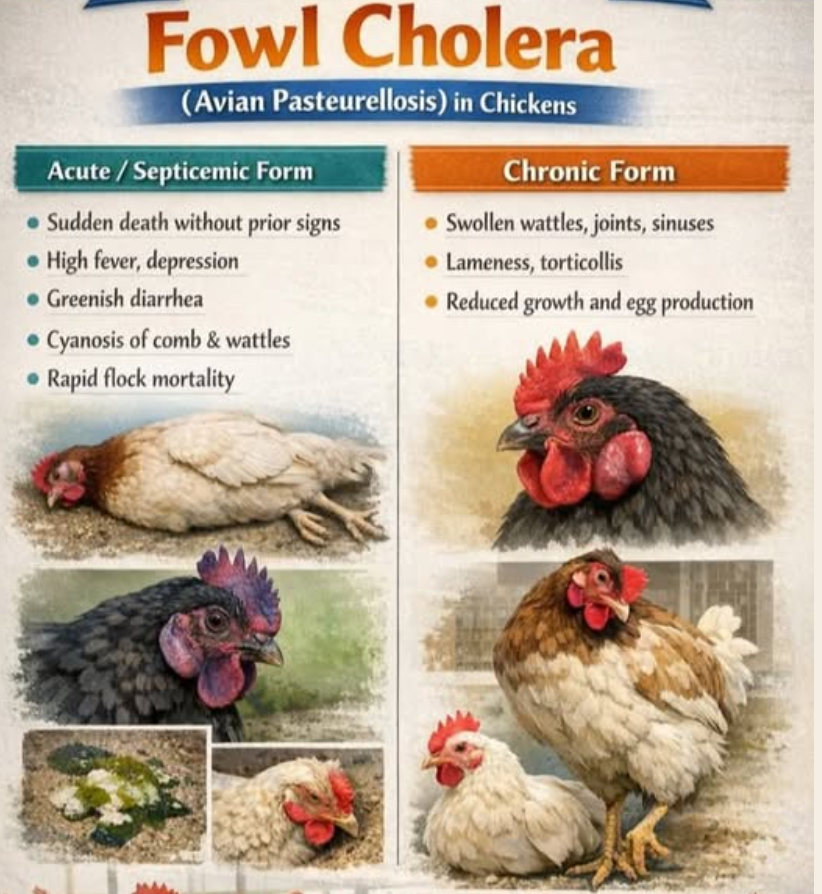
Pasteurellosis (Fowl cholera, by Pasteurella multocida)
CS: Varies.
Acute = deadly, resp. issues & diarrhea, fever.
Chronic = swelling of wattles/footpads, lameness by arthritis/tendonitis & torticollis from inner ear infections.
Treat my sulphonamides, ATB, vaccine
Salmonellosis (Paratyphoid, wing disease/joint)
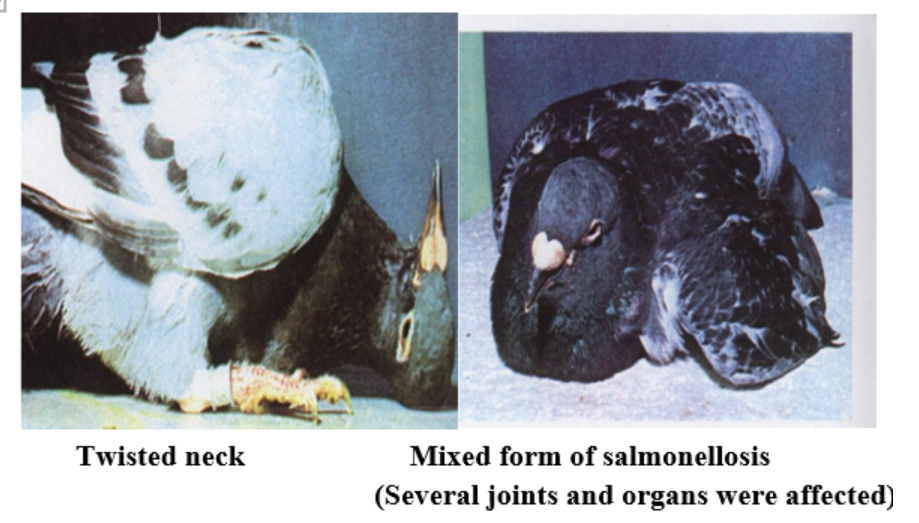
CS: in young - depression, diarrhea + death. In adults - often asympt. carriers but can suffer from septicemia.
Joints & organs = arthritis common, dropped wing (joint too swollen). Lameness, torticollis.
Vaccine.
Mycoplasmosis - mycoplasma columbinum (resp.)
colonize upper resp. tract early in life → immunosuppression → sec. infections.
CS: fatigue, panting, rhinitis, tracheitis, sinusitis
Treat by ATB (not always curative), Vaccine.
Other:
clostridiosis - necrotic enteritis, sudden death, diarrhea. Penicillin.
Colibacillosis (E.coli) - septicemia, enteritis, toxemia. ATBCs (often resistance issue)
Avian spirochetosis - by argas ticks, borrelia. Fever, sudden death, green/yellow feves. Treat by tetracyclines. Giemsa blood smear.
47.Viral diseases in pigeons
Avian Pox (Poxviridae, avipoxvirus)
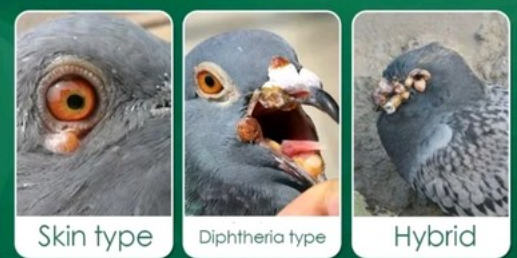
Cutaneous (dry) form: nodules on unfeathered skin like head, comb and wattles. Lesions on eyes can lead to eye closure. (Wart-like nodules).
Diptheric (wet) form: caseous plaques (yellow-white cheesy cankers) on mouth, pharynx, larynx, trachea. Interferes with feeding, respiration/breathing → laboured.
Mixed form: combination.
Spread through direct contact, indirectly by mosquitoes, + other biting insects. More common in young.
Vaccinate with attenuated vaccine in wing web in high-risk areas. Vector control (mosquitoes), no specific treatment. Supportive care only, secondary infection control.
Newcastle disease (Paramyxovirus, Avian avulavirus 1)
Forms:
Velogenic (highly virulent) - severe resp. + nervous signs, lethargy, dyspnea, tremors, paralysis & torticollis
Mesogenic (moderate) - cough, decr. egg prod.
Lentogenic (mild) - mild resp. signs (sneezing, cough)
Spread through direct/indirect.
Dg: serology - hemagglutination, Hemagglutination inhibition, ELISA
No treatment. Prevent by vaccine, strict biosecurity.
Pigeon Herpesvirus
transmitted during feeding (regurgitation) → replicates in oropharynx → viremia (systemic spread) → depression, anorexia, conjunctivitis, oral + pharyngeal ulcers, dyspnea, green diarrhea
Can cause cheese-like yellow plaques/pseudomemrbanes in mouth/through, similar to wet form pox, loose, ulcers. (While in pox they are firmly attached). Fatal in young, older usually asympt. carriers.
Inclusion body Hepatitis (Adenovirus)
Liver necrosis - pale, swollen, friable liver → sudden death is most typical.
Depression shortly before death, pale comb/wattles, sometimes icterus.
Dg: necropsy (liver lesions), histopathology (shows inclusion bodies)
No treatment/Vaccine.
Circovirus (pigeon circovirus)
Destroys lymphoid tissue (destroys WBCs) → immunosuppression, poor feathering, chronic wasting, secondary infections, poor growth. Typical by not causing signs directly, it destroys the immune system → sec. pathogens to gut → enteritis.
No treatment.
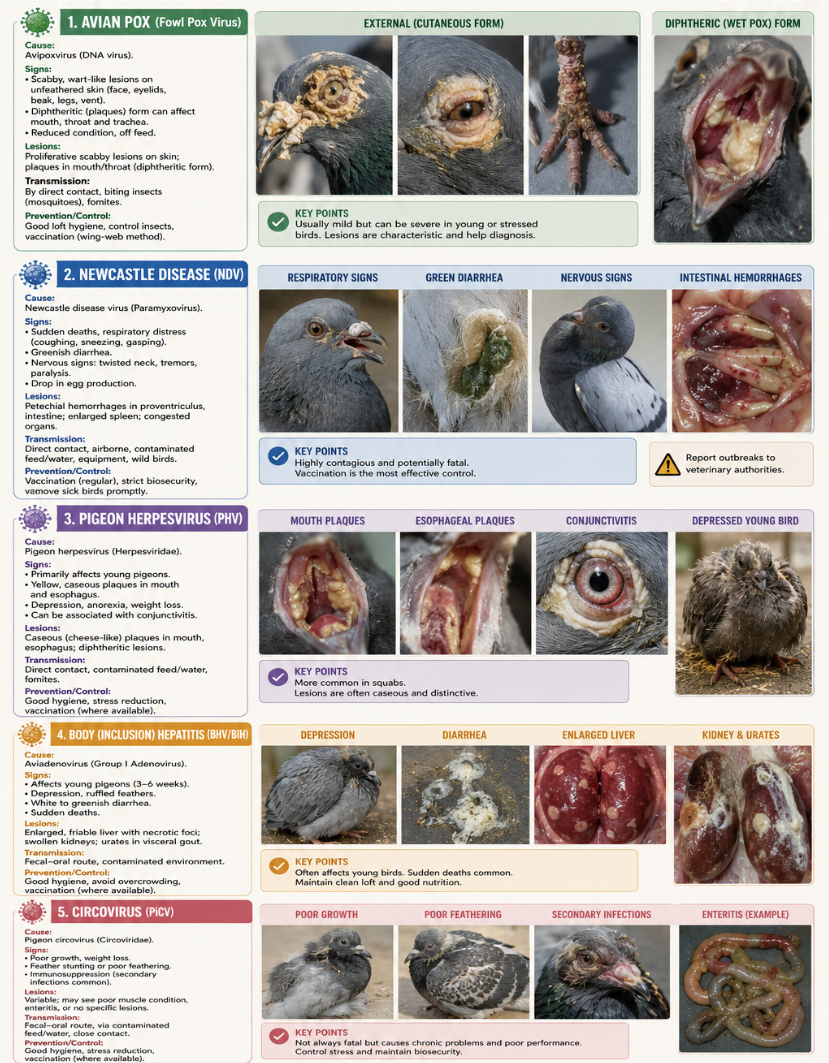
Avian influenza = NOT FOR THIS Qs. (PIGEONS ARE RESISTANT!)
48.The tasks of the field practitioner in the poultry farming
The field practictioner, vet, students & avian health professionals - responsible for manage, diagnostic tasts + clinical - aimed at optimizing productivity + health. Primary role is to
Prepares the poultry house before arrival of the animals (before the new chickens come, we must:)
Disinfection: mechanical cleaning & chemical disinfection. To remove mealworms. Control by bacterial swabs.
Deep litter management: Disinfect the deep litter by aerosolator with Virkson S. Bedding can be hay, special pellets, or wood shavings.
Environmental conditions:
Temperature: 30°C
Relative humidity: 50%
Arrival of chickens (at time of arrival of the new chickens)
Take random samples from a few chicks to confirm health status, check Ab titers
During first days, add probiotics + plant extracts to increase appetite and water intake
Feed control
Check composition of food, check if it matches to recommended dietary levels
Check for presence of mycotoxins
Coccidiostatic drugs can be added to control parasites
Vaccination program
Infectious bronchitis - vaccinate in hatcheries, often combined with Newcastle, revaccinate at 2-3w of age.
Infectious bursal disease - take blood, evaluate maternal Ab titers (these Ab can last up to 3w). Vaccination timing based on Ab levels, as it can interfere and inactivate a vaccine virus.
Regular veterinary visits and monitoring
during first 3w - vet should visit farm 2x per week to collect carcasses and check protocols/records.
Monitoring health status - daily mortality rate or max. 3%, check for signs of disease by changes in feed intake and change in weight (malabsorption/disease)
do necropsy in dead chickens
samples are taken of sick animals and start treatment
Salmonella monitoring
Salmonella sampling is done 3w before birds leave
shoe cover sampling system - vet walks through the halls with shoe covers and fecal samples are collected from the shoe covers. Detecting such as S.pullorum, S.gallinarum, S.copenhagen.
Blood sampling
Done at ulnar vein (wing vein), medial metatatarsal or right jugular vein.
Hematoma is common. Thin skin, do not put pressure (can remove blood from vessel)
Common health problems in broilers: Locomotor issues, resp. disorders, bacterial infections like E.Coli & enterococcus.
49.Welfare and its influence on health status and productivity of poultry
Welfare is linked to the interaction bw. host, agent + environment. Poor welfare often comes from management + environmental failures, acting as primary stressors that affects negatively on health and productivty of the poultry.
We should do:
Regular inspections - min. 2x daily, ensure good house conditions, requirements met
Preventative health measures - ensure infection control, good hygiene
Five Freedoms of Animal Welfare:
1) Freedom from hunger & Thirst:
Giving access to water, food, proper nutrition to prevent deficiencies, reduced productivity, disease susceptibility. ex. rickets (vit.D3/Ca), curly toe disease (riboflavin) or encephalomalacia (vit.E)
2) Freedom from Discomfort:
housing - protect from weather, resting areas, ventilation/temperature
3) Freedom from pain, injury & disease:
Focus on disease prevention - rapid diagnosis & treatment, vaccination programs, litter management. Poor litter quality/rough wire floors can cause for ex. bumblefoot (pododerma)
Enriched cages: good hygiene, feces management - falling onto belt system => lower risk of infection from feces.
Broiler systems: all-in-all-out system, also reduces infection risk.
4) Freedom to express Normal behaviour:
Giving enough space, flocks together. Housing:
stocking density: max. 39kg/m2 or 42kg/m2
Effects of poor stocking density → heat stress, death. Also leads to changes in temp., relative humidity + ammonia levels = pathogen load increase. Increased humidity = better for microbes to survive + transmission.
Environmental parameters:
Temperature: 35 degrees for young, 25 for adult
Humidity: 60-65%
Lighting: role in production, growth + behavior, different wavelengths:
Blue light = calming
red light = reduce cannibalism
orange/red = beneficial for reproduction (organs)
Blue/green = growth
Enriched cages - should have nests, sand baths, perches, and a limited group size to maintain stable social hierarchies.
Free-range systems - allow for more natural behaviors, but gives a higher risk of infection.
5) Freedom from fear & distress
Humane handling - minimize stress, environment, humane treatment practices.