Stress Response and Adaptation
 Call Kai
 Learn
Learn Practice Test
 Spaced Repetition
 Match
Match Flashcards
 Knowt Play
1/8

There's no tags or description
Looks like no tags are added yet.
Name | Mastery | Learn | Test | Matching | Spaced | Call with Kai | Chat |
|---|
No analytics yet
Send a link to your students to track their progress
9 Terms
The Body Strives for Homeostasis
Homeostasis is the purposeful maintenance of a stable internal environment by coordinated
physiologic processes that oppose change
Most control systems in the body operate by negative feedback mechanisms, which function
in a manner similar to the thermostat on a heating system
Can you think of examples?
Hypothalamus
Regulation of Homeostasis
Body Temperature → triggers sweating to cool you down or shivering to warm you up
Energy and Hunger → tells you when to eat (hunger) and when you are full (satiety).
Fluid Balance → controls thirst and signals the kidneys to conserve water via hormones like vasopressin.
Sleep-Wake Cycles → manages your "internal clock" to regulate when you feel tired or awake.
Blood Pressure & Heart Rate
sends signals through the autonomic nervous system to adjust these based on your body's needs
Normothermic State

Stress Response
System developed in response to any stimuli that makes an intense systemic demand
Normal, coordinated system meant to increase survival
Designed to be acute!
What happens when threatened?
ANS stimulation & activation of HPA axis
ANS: Autonomic Nervous System
Sympathetic
Parasympathetic
HPA Axis: Hypothalamic-pituitary-adrenal
neuroendocrine system
mediates effects of stressors by regulating
metabolism, immune responses, and the
autonomic nervous system (ANS).
Hypothalamic- Pituitary-Adrenal Axis & Role of Cortisol
too much cortisol: exhaustion/ adaptation syndrome

HPA AXIS responds to stressors by:
Suppresses osteoblast activity, growth hormone, hematopoiesis
Suppresses protein & collagen synthesis, suppresses thyroid stimulation hormone
Antagonizes insulin – glucose increases
Makes body more responsive to catecholamines
Inhibits immune response
NEURO, ENDOCRINE, & IMMUNE SYSTEMS ARE TIGHTLY INTERTWINED
Cytokines can stimulate HPA axis blunting the body's response.
Protecting cells from an overactive immune response.
But ... Prolonged hyper-cortisol states increase the risk of infection
General Adaptation Syndrome
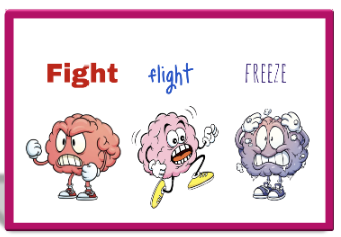
Alarm: fight
Resistance: wearing out; poor sleep
Exhaustion

WHAT FACTORS AFFECT THE STRESS RESPONSE?
Previous responses
Physiologic reserves
Psychosocial factors
Time exposed to stressor
Age
Health status
Gender
Nutrition
Sleep wake cycles
Genetic predisposition
Can affect healthcare