Enzyme Kinetics
 Call Kai
 Learn
Learn Practice Test
 Spaced Repetition
 Match
Match Flashcards
 Knowt Play
1/42

There's no tags or description
Looks like no tags are added yet.
Name | Mastery | Learn | Test | Matching | Spaced | Call with Kai | Chat |
|---|
No analytics yet
Send a link to your students to track their progress
43 Terms
enzymes greatly accelerate the rate of reaction factors of
10³ to 10^(20)
enzymatic reactions can occur under physiological conditions in which
they could not normally occur
Enzymes will not induce a reaction that is
unfavorable due to a positive free energy change
enzymes have a high specificity for the
reaction substrate
high reaction specificity is defined as
chemical reactions typically have a problem with unwanted contaiminating side reactions but this does not occur in enzyme ctalayzed reactions
Enzymes are
unchanged in the reactions and can undergo rapid turnover
Enzymes frequently are subject to regulation to alter their
substrate binding afinity or acitivity
the largest class of enzymes are
proteins
Other class of enzymes are
ribozymes
RNA was the
first enzyme
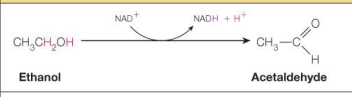
Oxioreductase
example of oxireducatase family enzyme
alc dehydrogenase
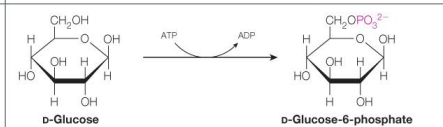
transferase class
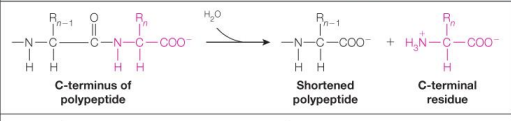
hydrolases class
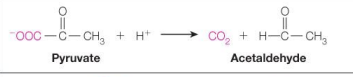
lyases class
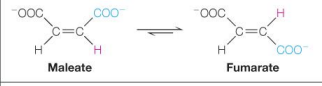
isomerases class

Ligases class
The first step in the enzymatic reaction
E + S = ES
the slow or rate-limiting step in the reaction is
The first step in the reaction, E + S ES; the substrate must find the enzyme in the solvent; this rate is dependent on the concentration of the substrate and is limited by the diffusion rate.
first enzymatic step in the reaction is
reversible
K_1
formation of ES complex
F_-1
dissociation complex
The second step occurs very
rapidly
the second step is considered
irreversible
The progress of a biochemical reaction is
dependent on the free energy changes as the reaction proceeds
The rate of an uncatlyzed reaction is tied to the size of the
activation energy
Enzymes lower the
activation free enrgy needed to get to the transition state which increases the forward rate constant
Michaelis -menten kinetics are used to study enzymes at
steady-state
At VMAX the enzyme is
working as fast as it can
The vmax of an enzyme is determined by its
catalytic constant Kcat and its concentration
Km is defined by the ratio of
rate constants that dissociate and associate the substrate
when K2 is small relative to K-1 the Km value is
close to the dissociation constant between the substrate and the enzyme
The strength of the enzyme is determined by Kcat and Km
Kcat and Km
kcat
turnover number
Kcat Turnover
indicates how fast the enzyme can work under conditions in which there is saturating amount of substrate; a strong enzyme will have a large kcat value.
the enzymatic rate constant is
Kcat/Km
Diffusion-controlled limit
the limit to rate constants caused by ES complex forming due to diffusion
The diffusion-controlled limit determines how
small the Km value can be
Lineweaver-burk
michaelis-menton equation transofmred to a linear graph
An enzyme that is allosteric will exhibit
velocity curves that depend a lot on whether activator or inhibitor effectors are present
An allosteric activator
is a ligand that increases the activity of the enzyme.
an allosteric inhibitor is a
ligand that decreases the activity of the enzyme