📸chapter 23 final test questions
 Call Kai
 Learn
Learn Practice Test
 Spaced Repetition
 Match
Match Flashcards
 Knowt Play
1/38

Earn XP
Description and Tags
https://quizlet.com/693468339/chapter-23-final-test-questions-flash-cards/
Name | Mastery | Learn | Test | Matching | Spaced | Call with Kai | Chat |
|---|
No analytics yet
Send a link to your students to track their progress
39 Terms
Which is a factor that does NOT affect hemoglobin's affinity for oxygen?
Respiratory rate
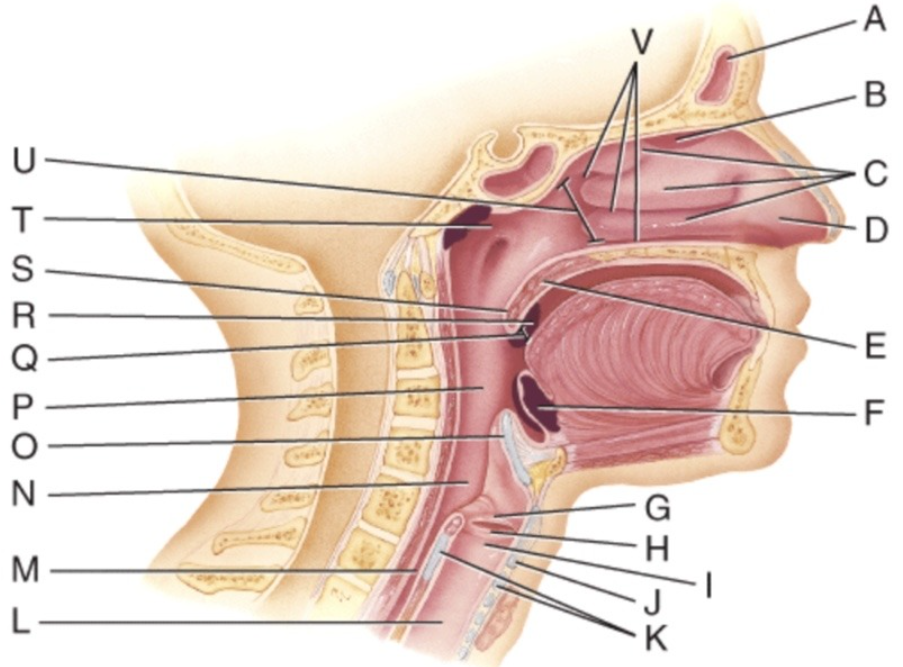
Where is the epiglottis?
O
Pitch of the voice is controlled by
Tension of the vocal chords
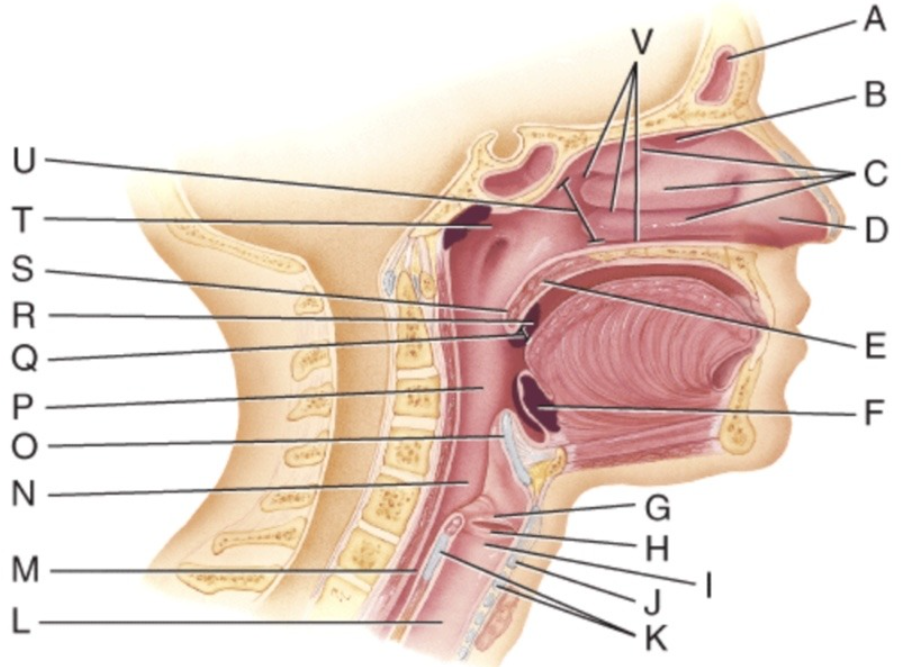
Where is the larynx?
I
This is direction of diffusion of gases at the alveoli of the lungs.
Oxygen into blood , Carbon dioxide out of blood
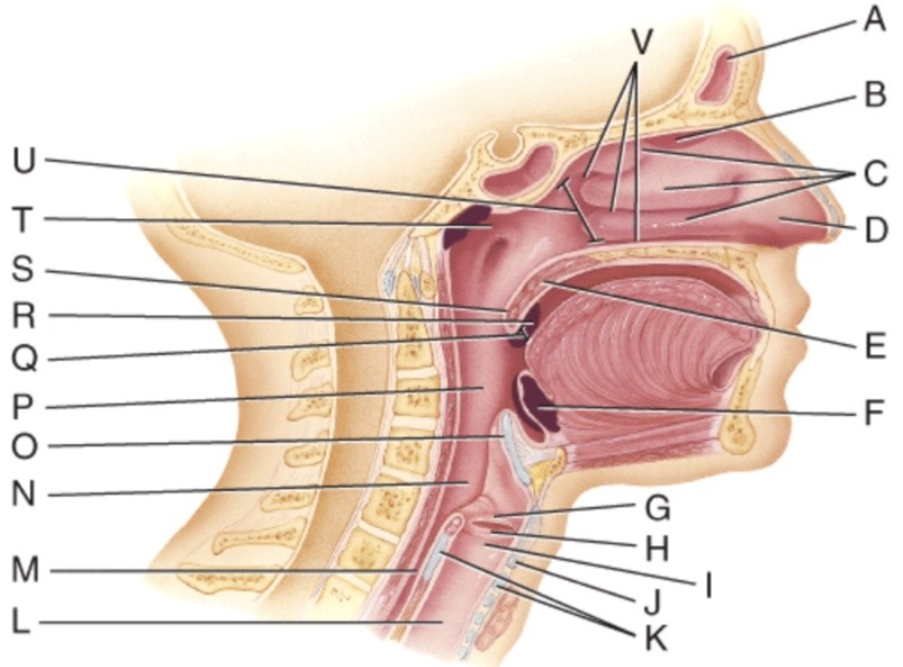
Where is the uvula?
S
During swallowing, which structure rises?
Pharynx
These are triangular pieces of mostly hyaline cartilage located at the posterior and superior border of the cricoid cartilage.
Arytenoids cartilage
Which of the below tissues forms the exchange surfaces of the alveolus?
simple squamous epithelium
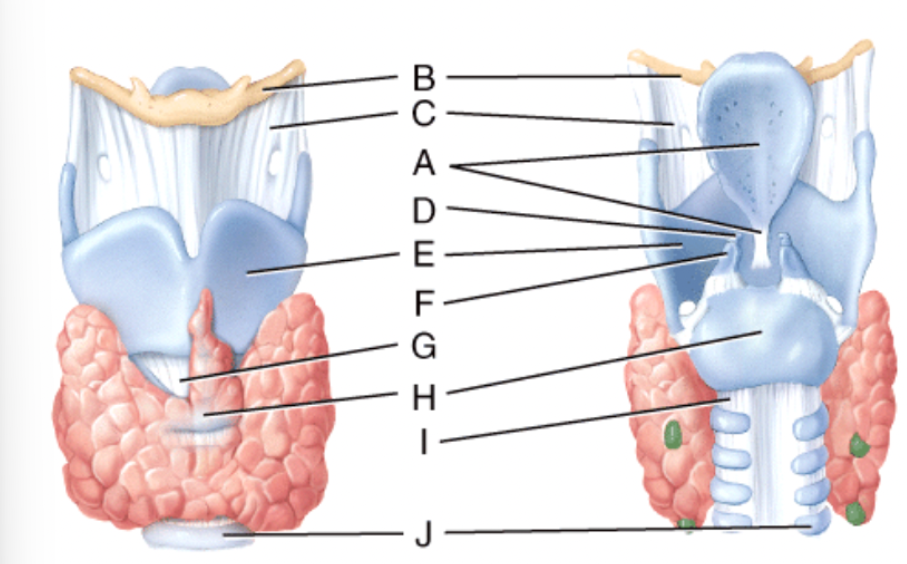
Where is the tracheal cartilage?
J
Which of the following is a normal passageway for air, food and water?
Pharynx
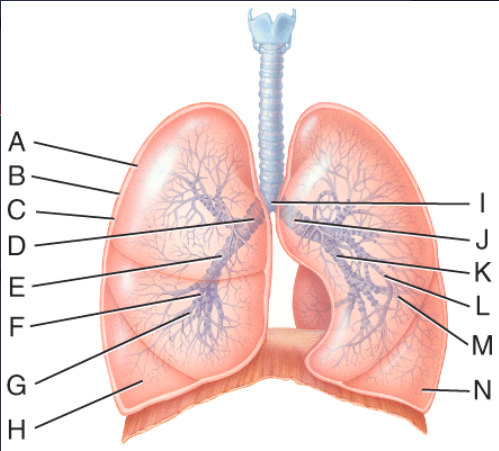
What lines are pointing to tertiary bronchi?
F and L
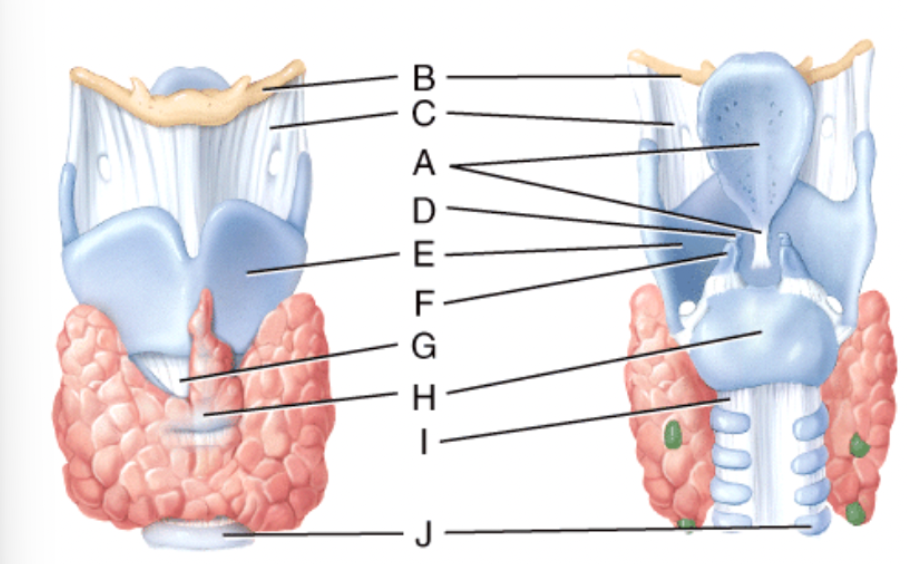
Where is the cricoid cartilage?
H
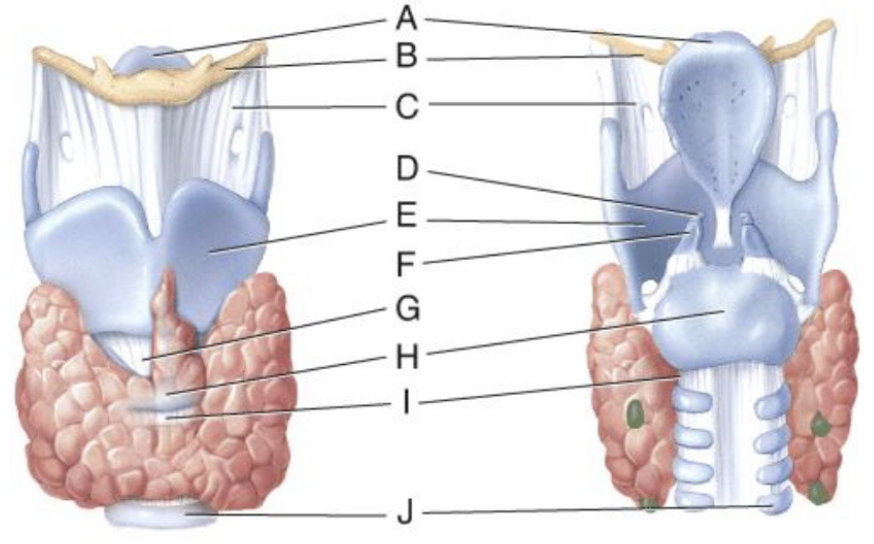
What is line D pointing to?
Corniculate cartilage
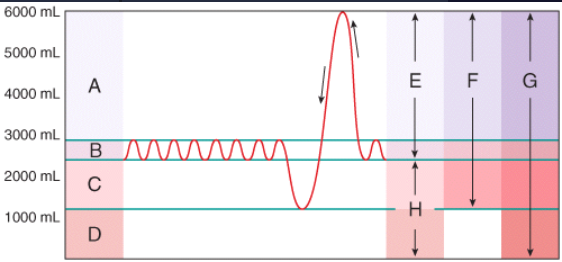
What area in the figure is the sum of the tidal volume and the inspiratory reserve volume?
E
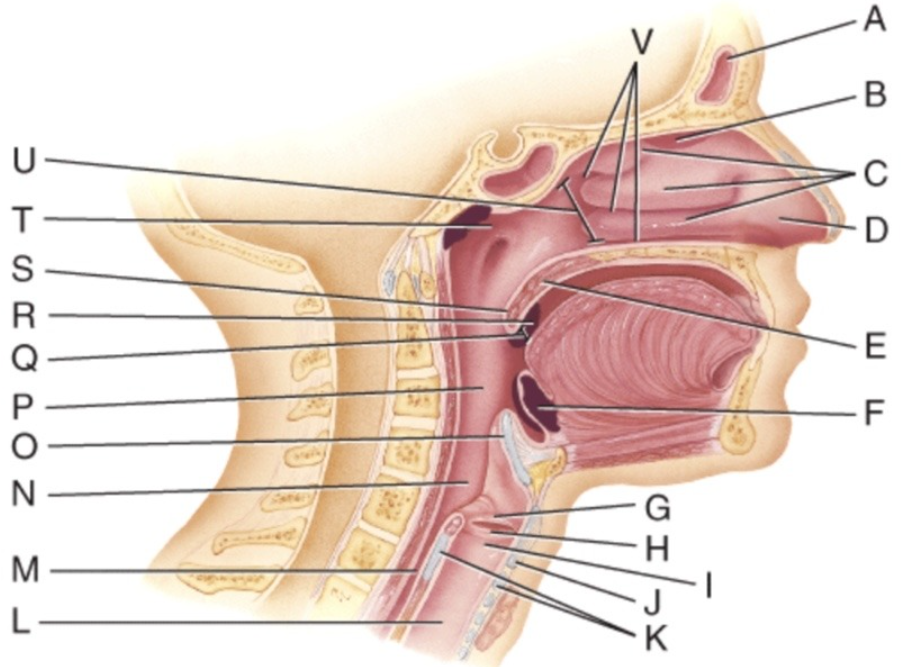
Where is the soft palate?
E
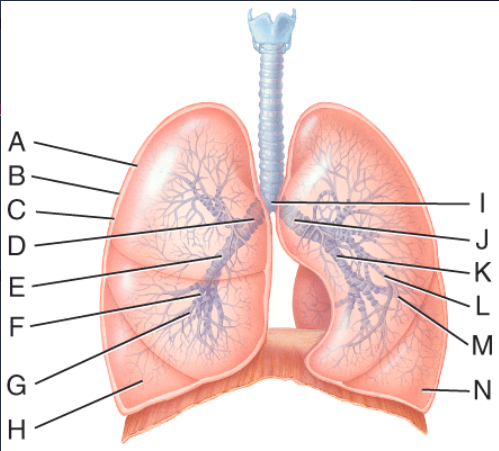
Where is the right bronchiole?
G
These are cells of the alveoli that produce surfactant.
Type II alveolar cells
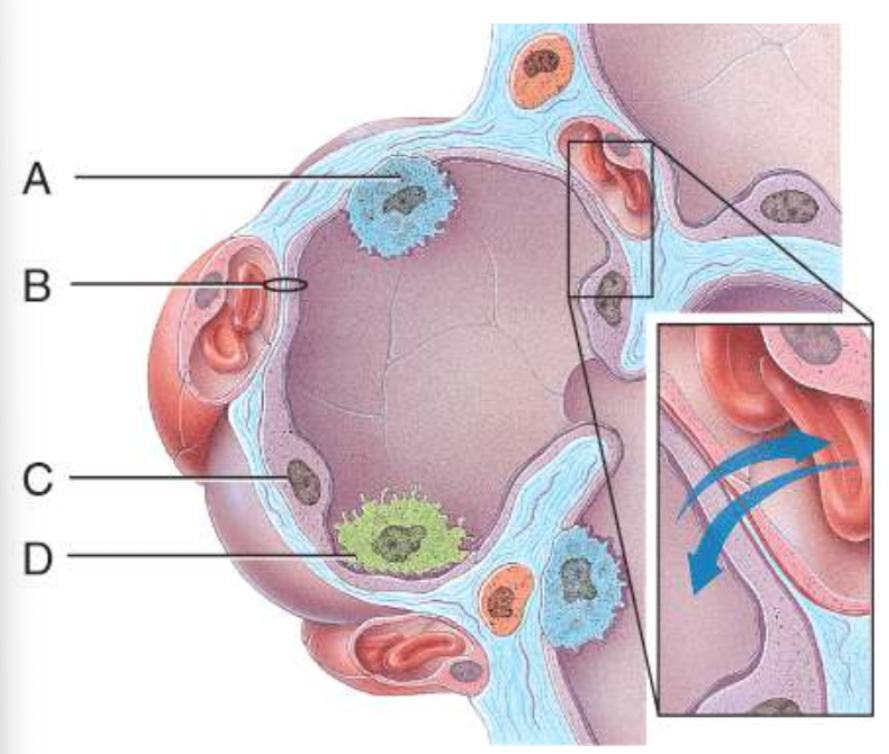
Which cells are the main sites of gas exchange?
C
This is the primary gas exchange site.
Alveolus
Exhalation begins when
Inspiratory muscles relax
This is located anterior to the esophagus and carries air to the bronchi.
Trachea
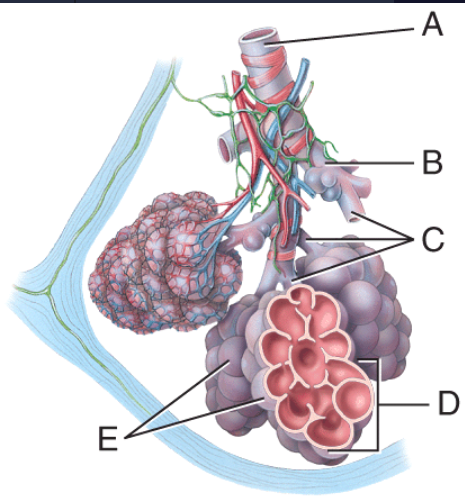
This is the primary gas exchange structure.
E
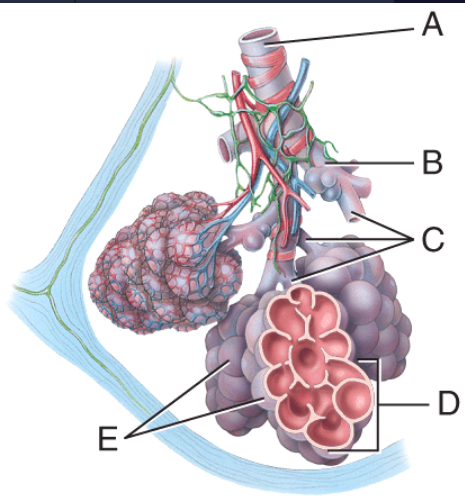
What is line C pointing to?
Alveolar ducts
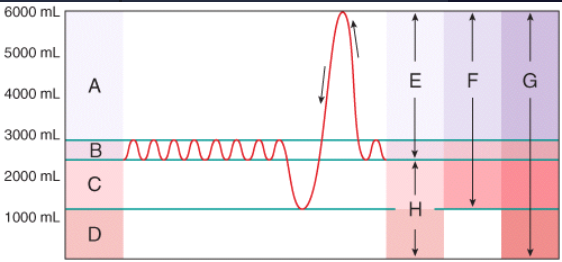
What area in the figure represents a very deep inhalation, much greater than the tidal volume?
A
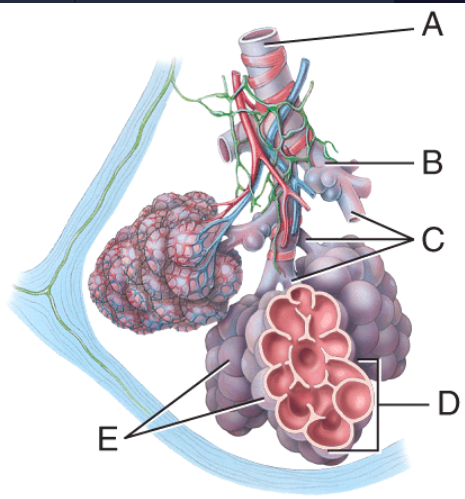
Where is the terminal bronchiole?
A
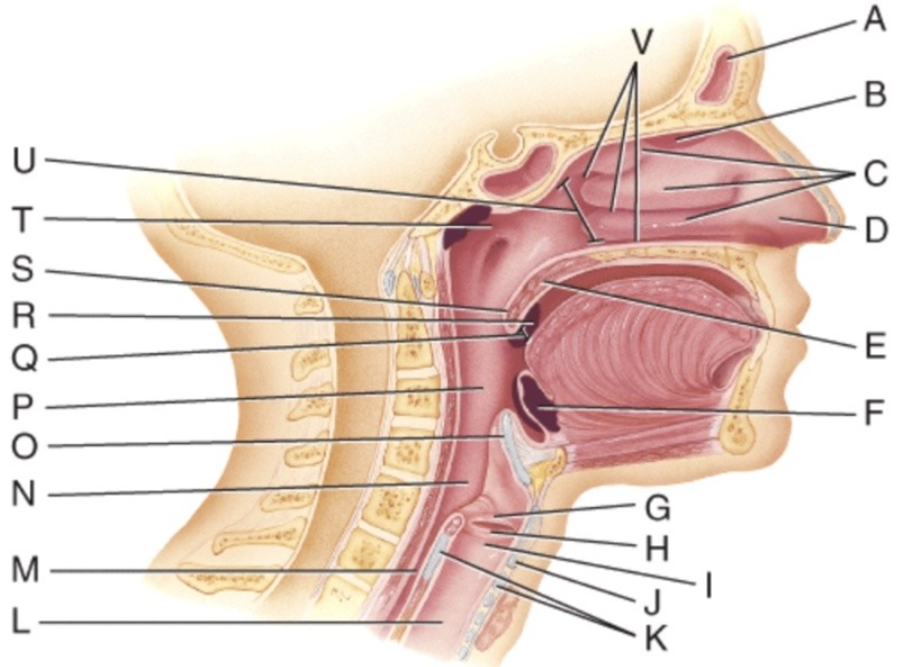
Where are the palatine tonsils?
R
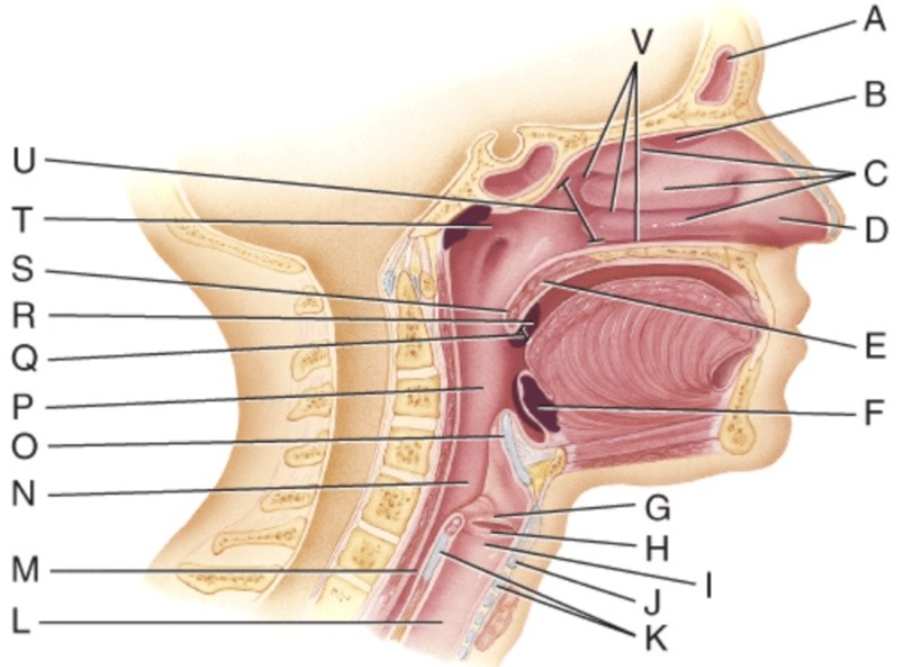
Which tonsils are found in the oropharynx?
R
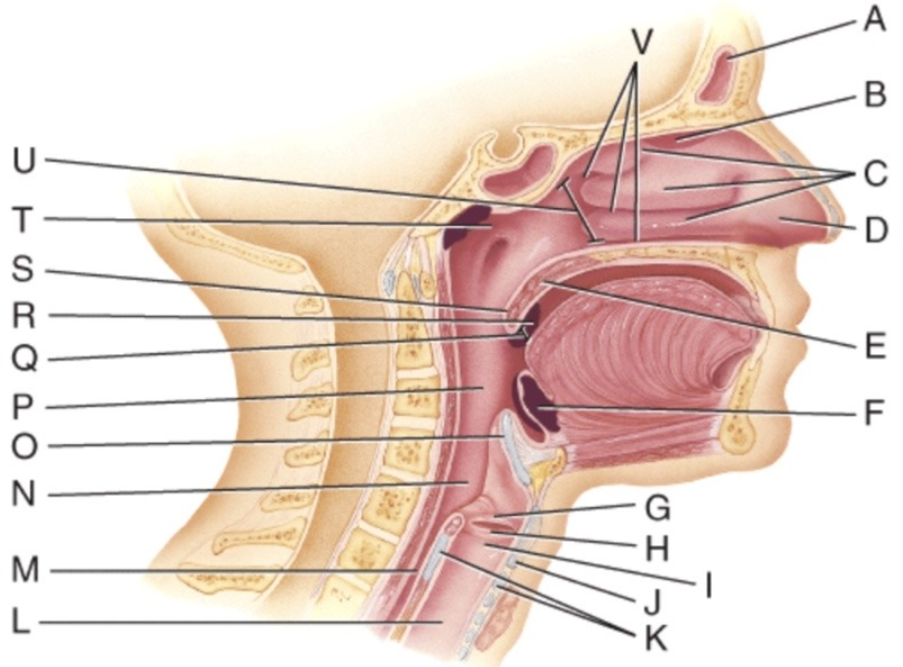
Where are the nasal conchae?
C
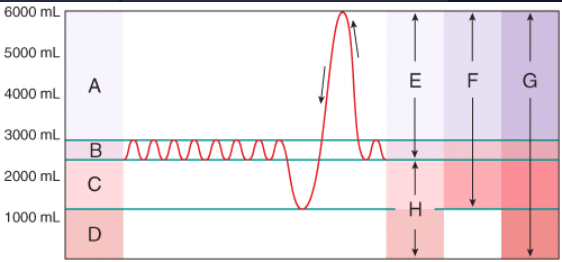
What area in the figure is the sum of the vital capacity and residual volume?
G
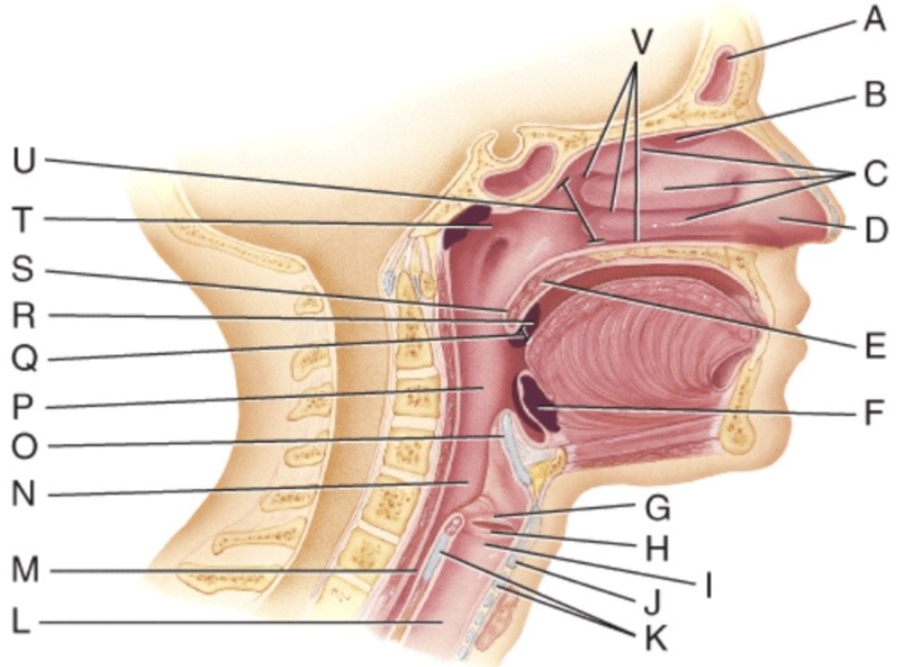
What is also referred to as the Adam's Apple?
J
Which of the below lines the inner layer of the conducting organs and serves to trap foreign particles?
ciliated pseudostratified columnar epithelium with goblet cells
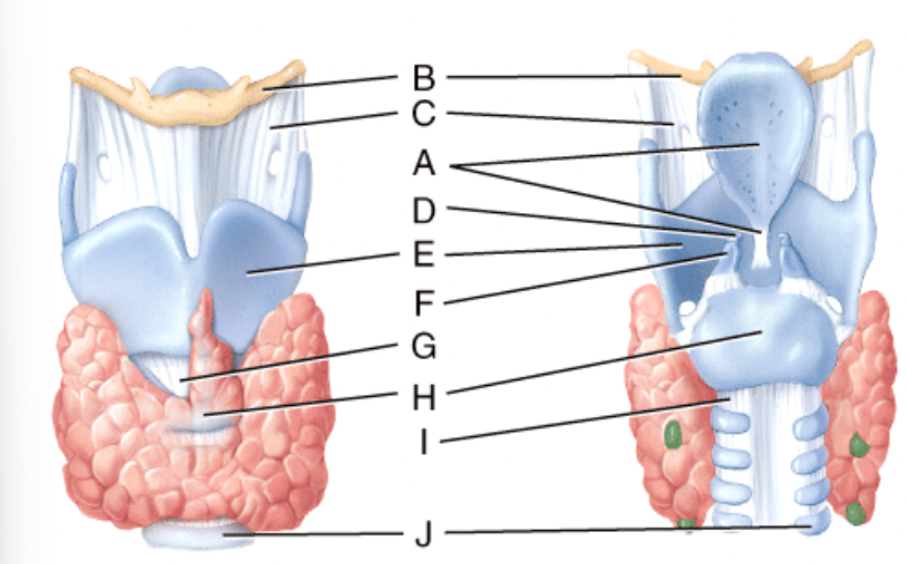
What is line A pointing to?
Epiglottis
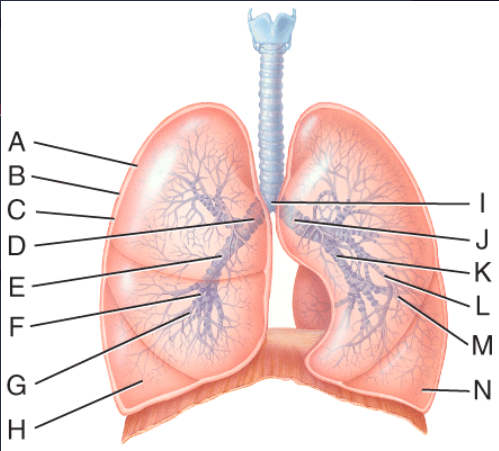
What is line J pointing to?
Left primary bronchus
This means the lungs and the chest wall expand easily.
High compliance
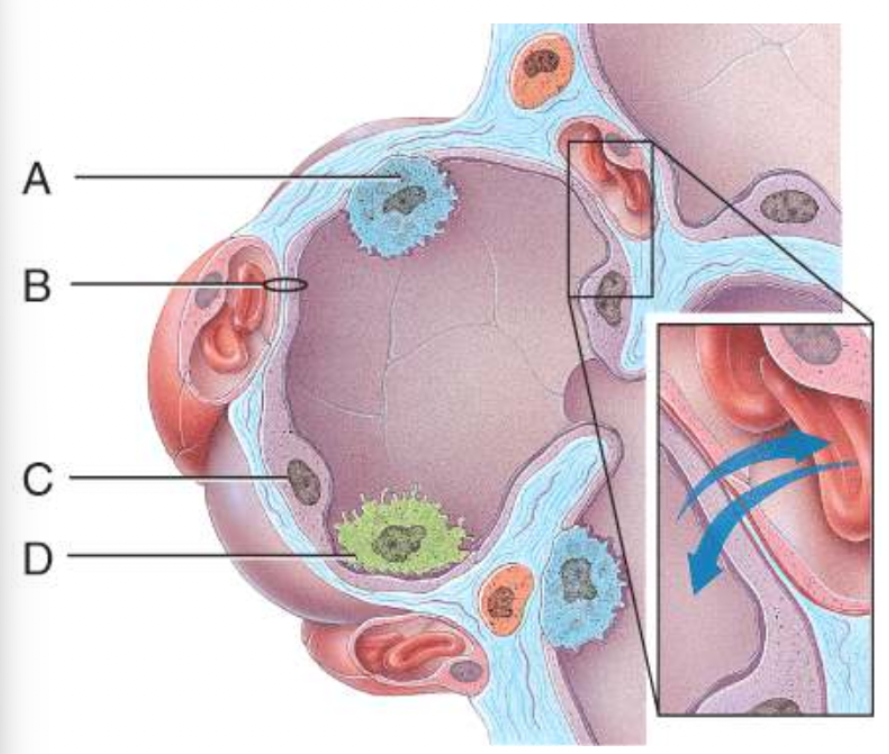
Which cell secretes surfactant?
A
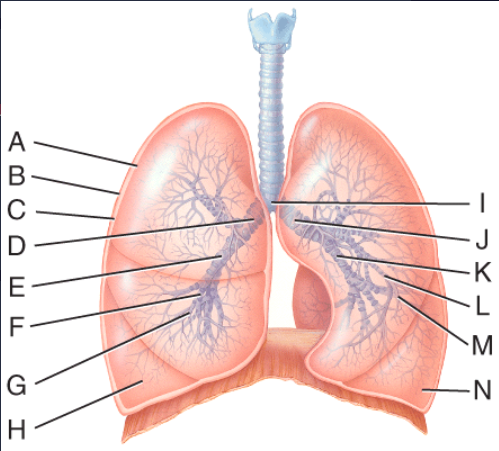
What is line B pointing to?
Parietal pleura
Which of the following is NOT part of the upper respiratory system?
Trachea
The point where the trachea divides into right and left primary bronchi is a ridge called
Carina