Radius & Ulna
 Call Kai
 Learn
Learn Practice Test
 Spaced Repetition
 Match
Match Flashcards
 Knowt Play
1/40

There's no tags or description
Looks like no tags are added yet.
Name | Mastery | Learn | Test | Matching | Spaced | Call with Kai | Chat |
|---|
No analytics yet
Send a link to your students to track their progress
41 Terms
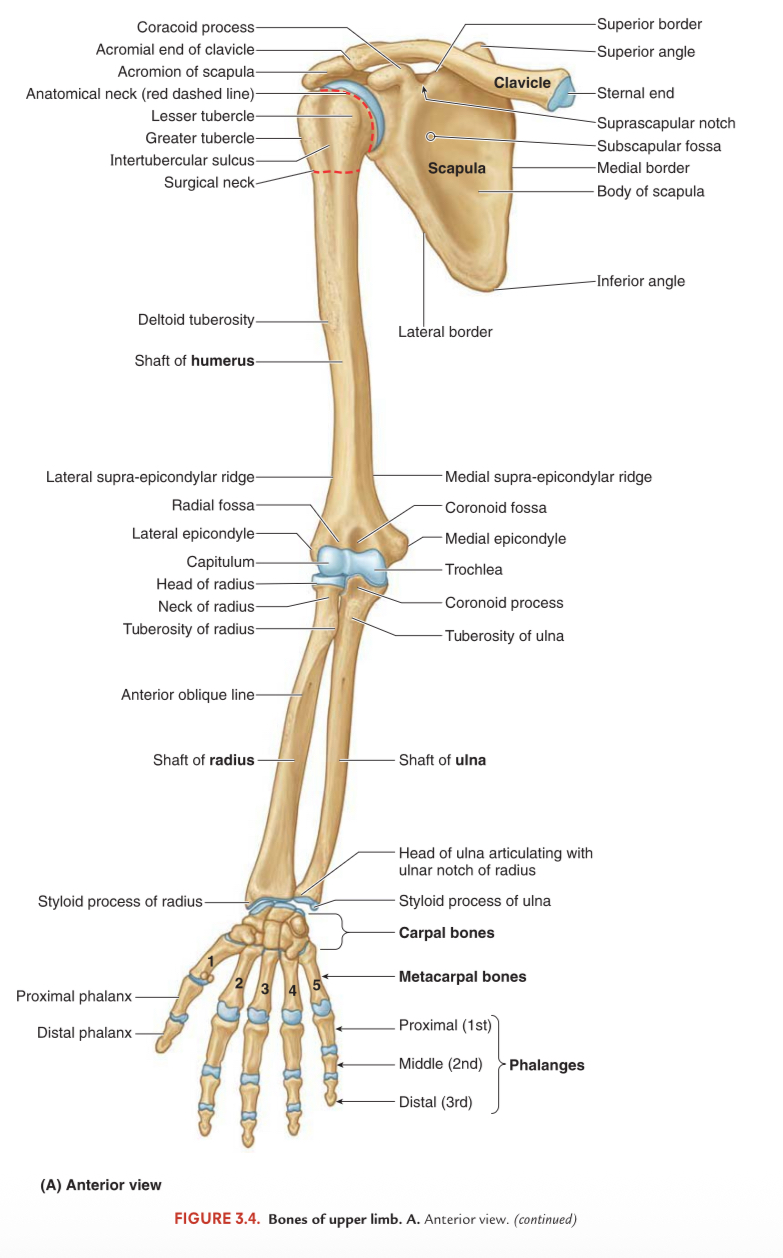
Which forearm bone is medial?
The ulna.
(In anatomical position.)
Which forearm bone is lateral?
The radius.
(In anatomical position.)
Which forearm bone is longer?
The ulna.
Which forearm bone is the stabilising bone of the forearm?
The ulna.
Compare the radius and ulna (4 points)
Radius | Ulna |
Lateral | Medial |
Shorter | Longer |
Enlarges distally | Narrows distally |
Main wrist articulation | Main elbow articulation |
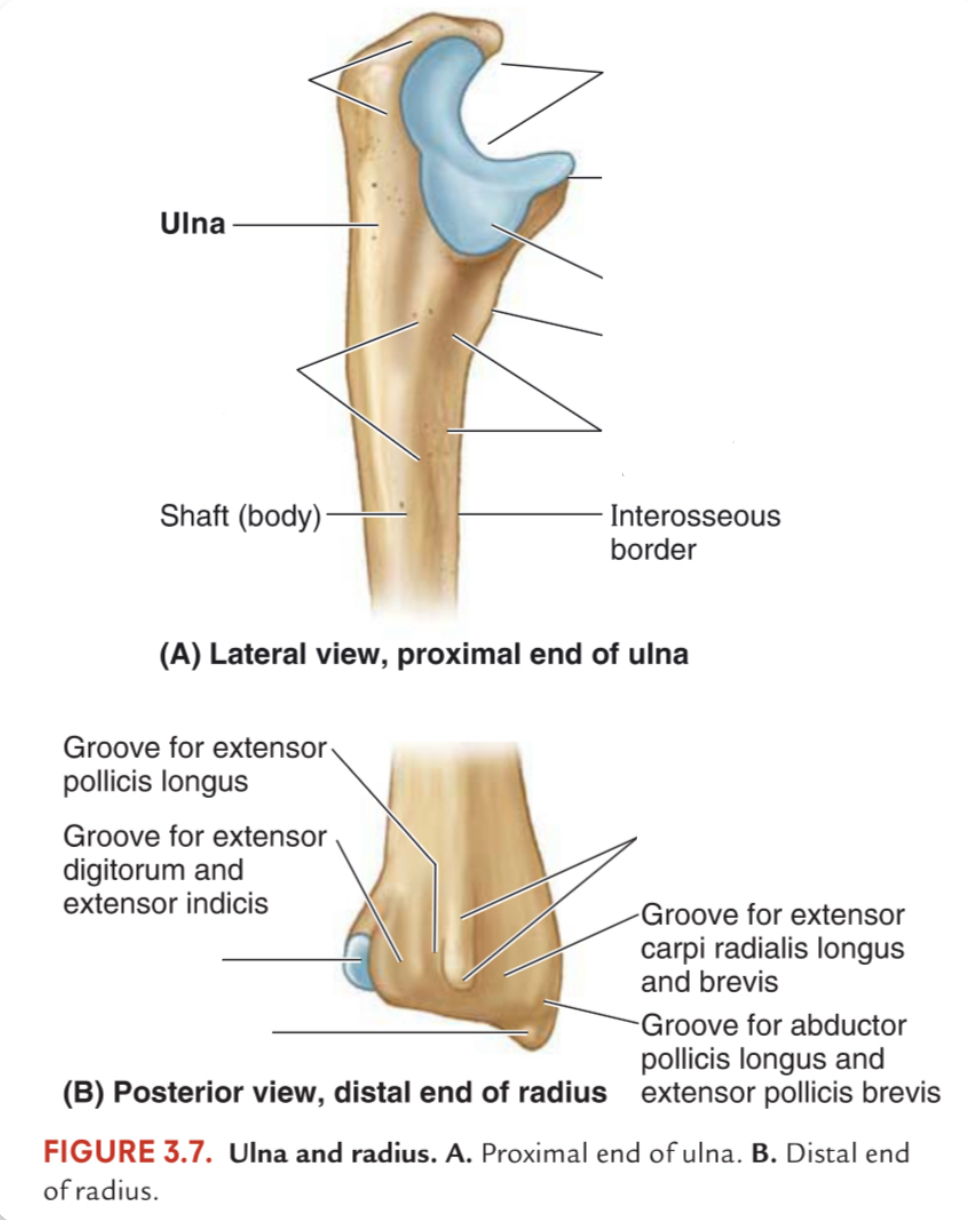
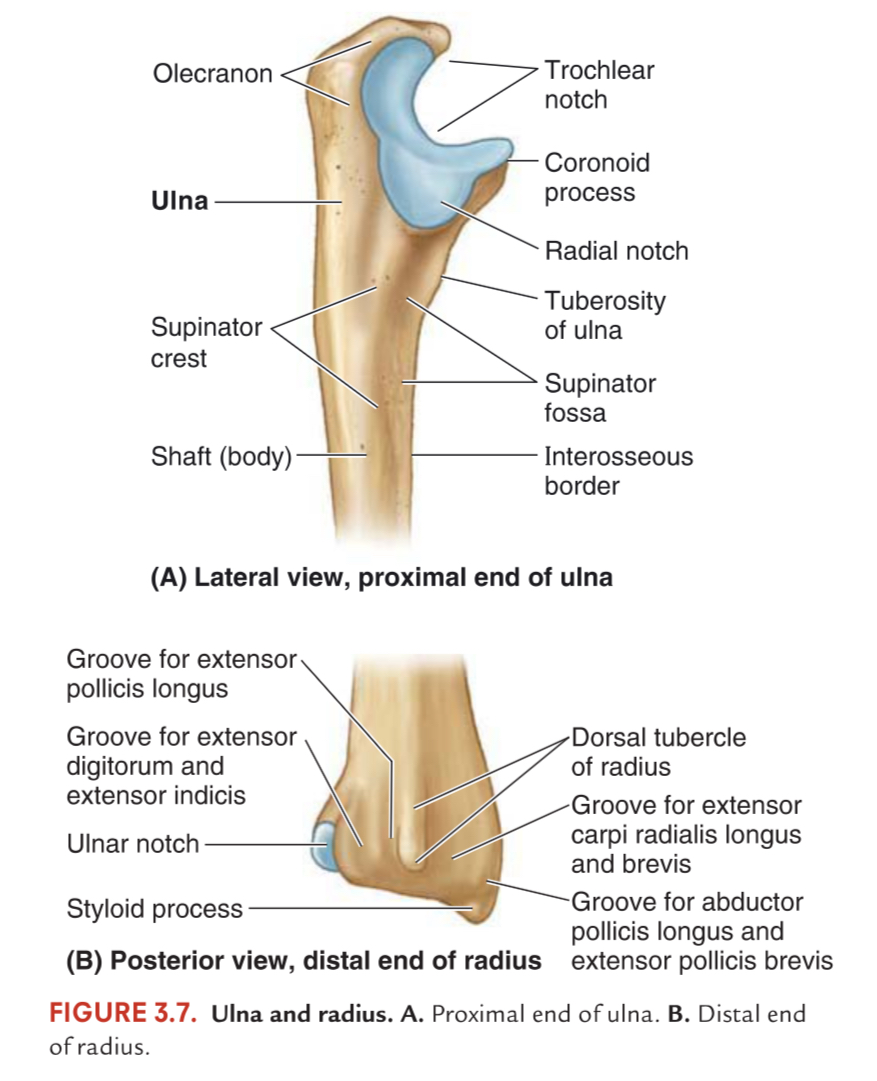
What are the two prominent projections on the proximal ulna?
Olecranon
Coronoid process
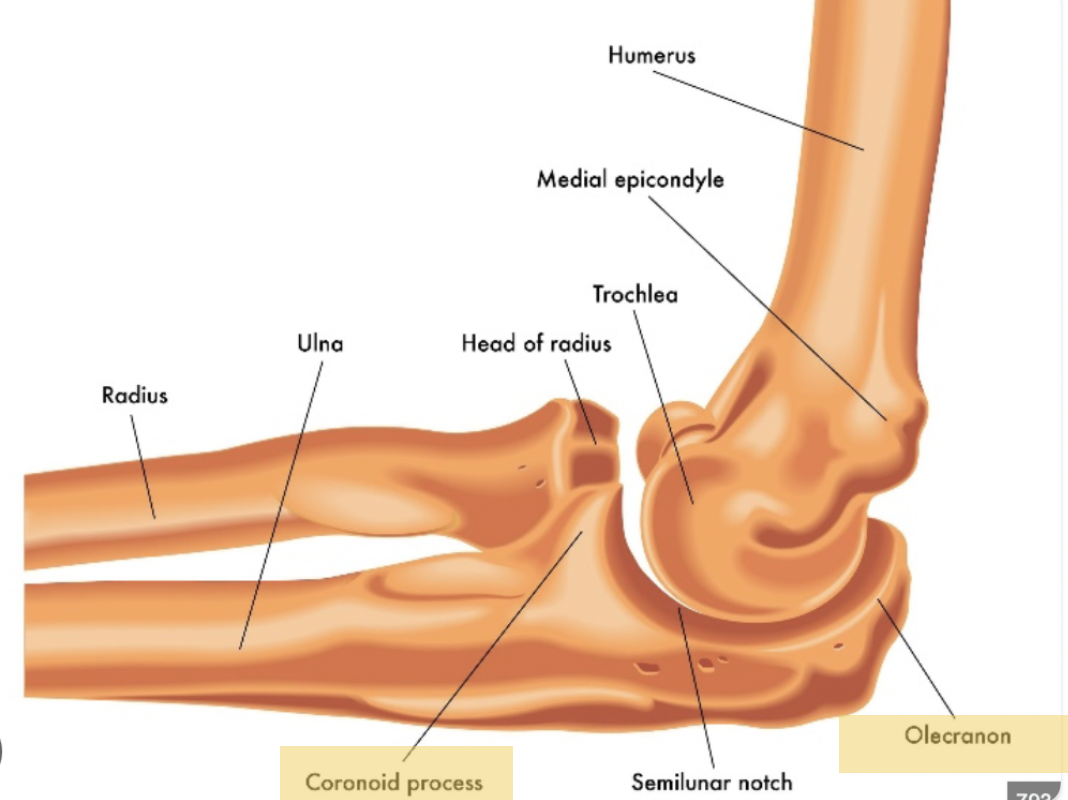
What structure is formed between the olecranon and coronoid process?
The trochlear notch (semilunar in picture)
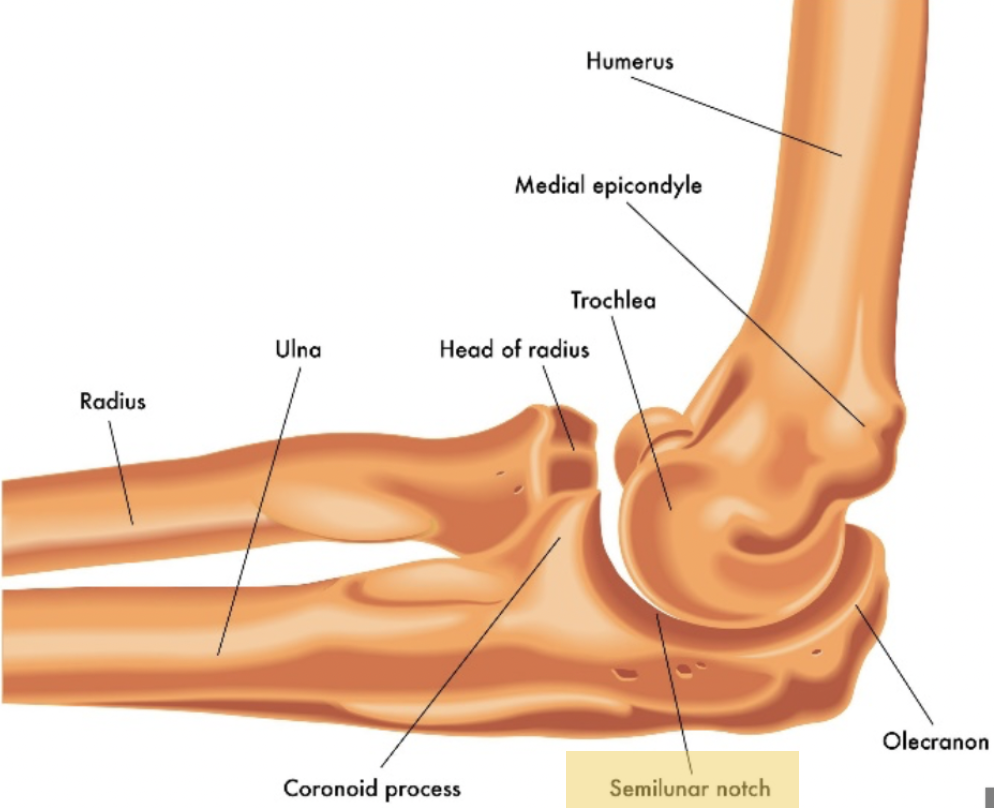
Which part of the humerus articulates with the trochlear notch?
The trochlea.
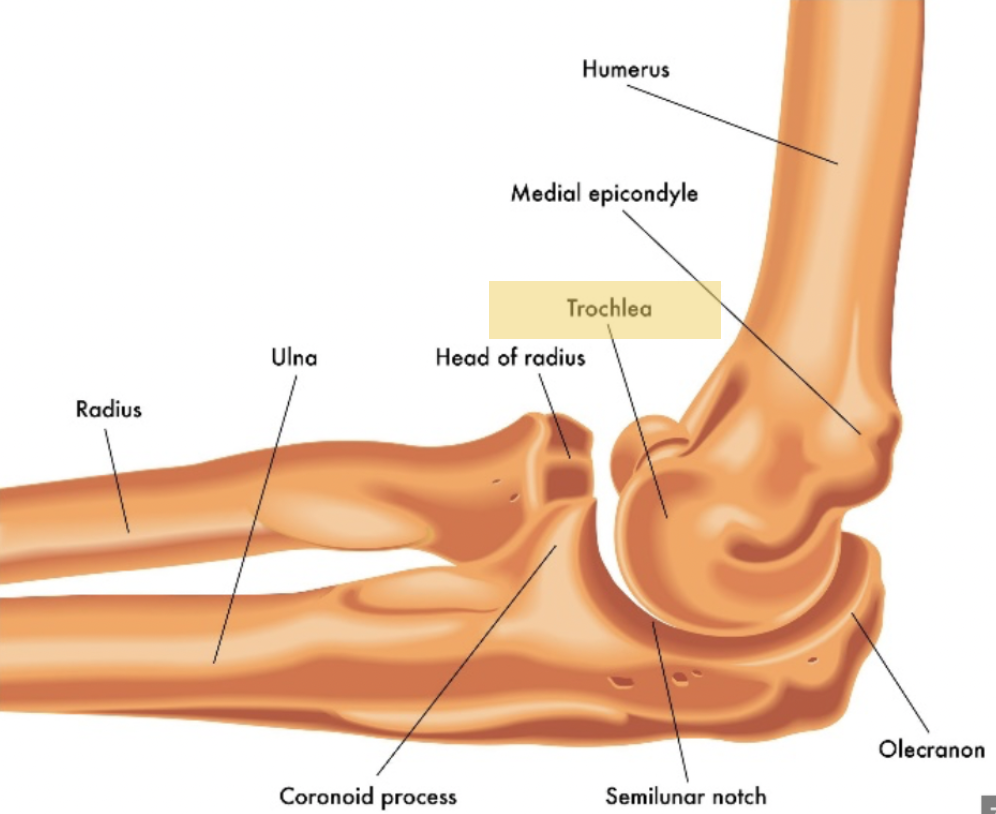
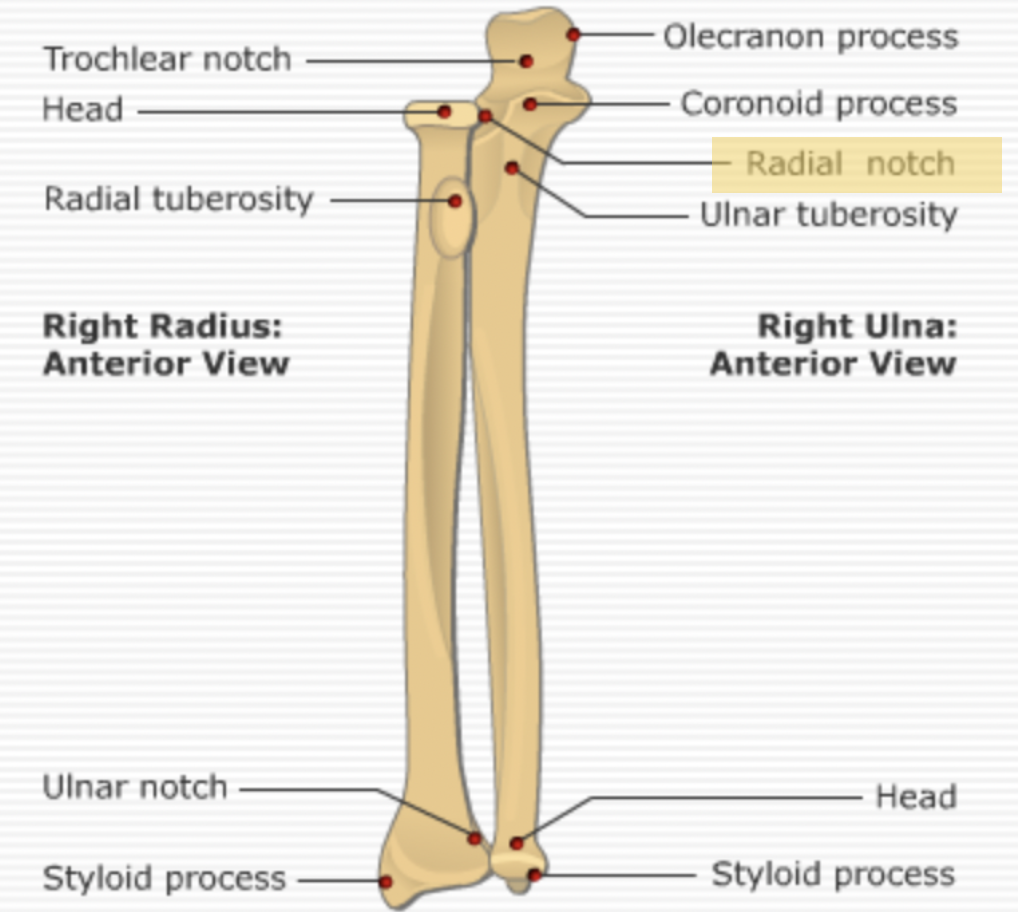
Where is the radial notch located?
On the lateral side of the coronoid process.
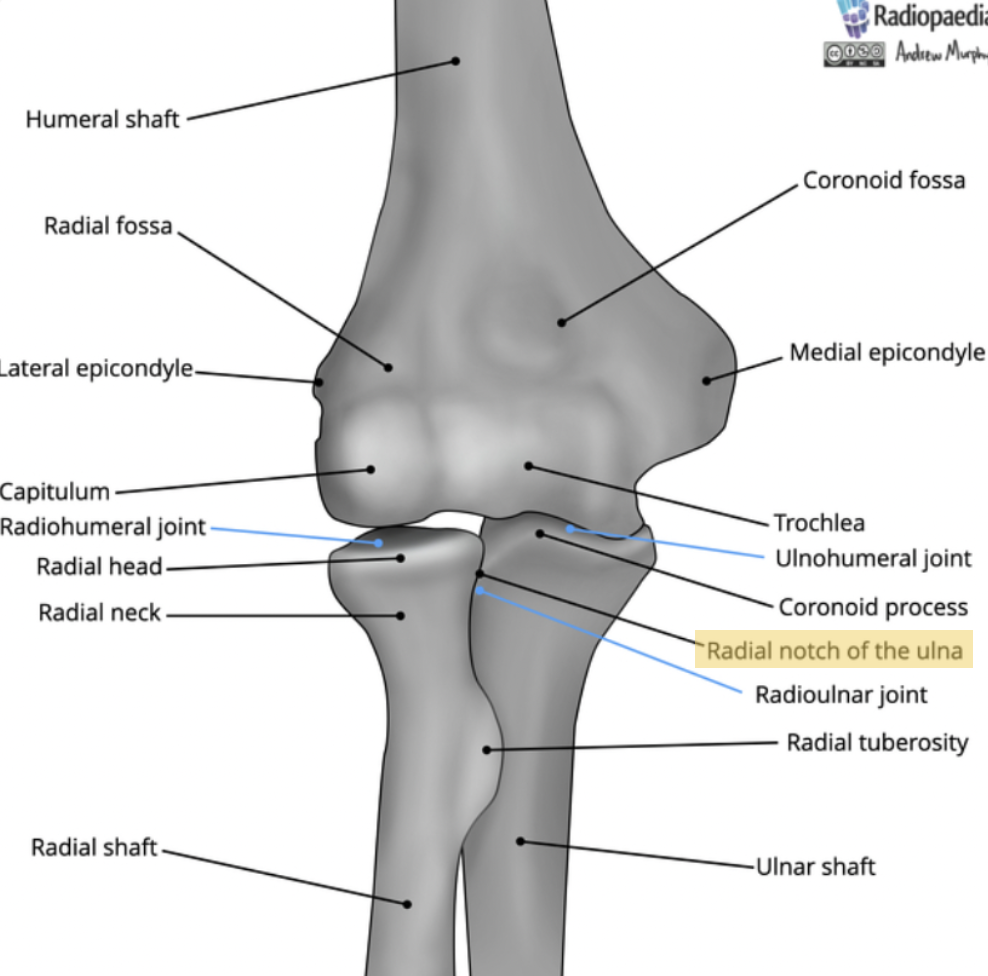
What articulates with the radial notch?
The head of the radius.
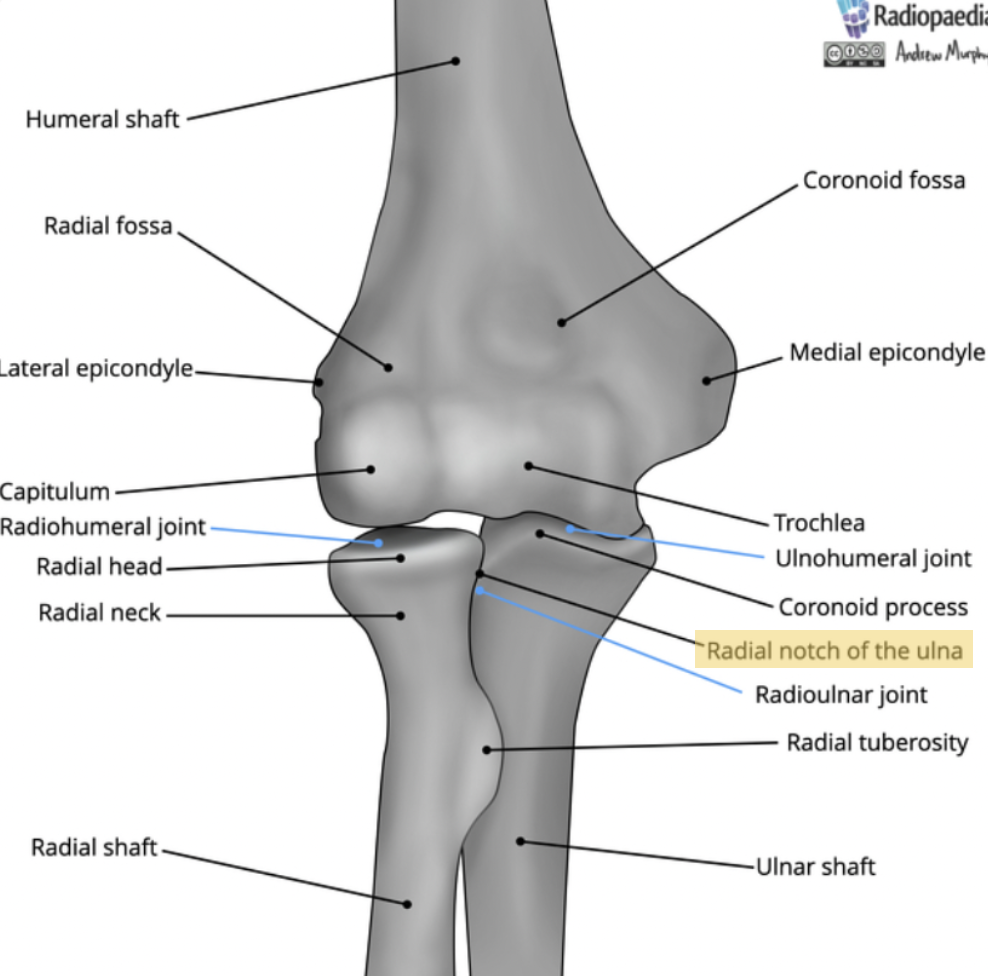
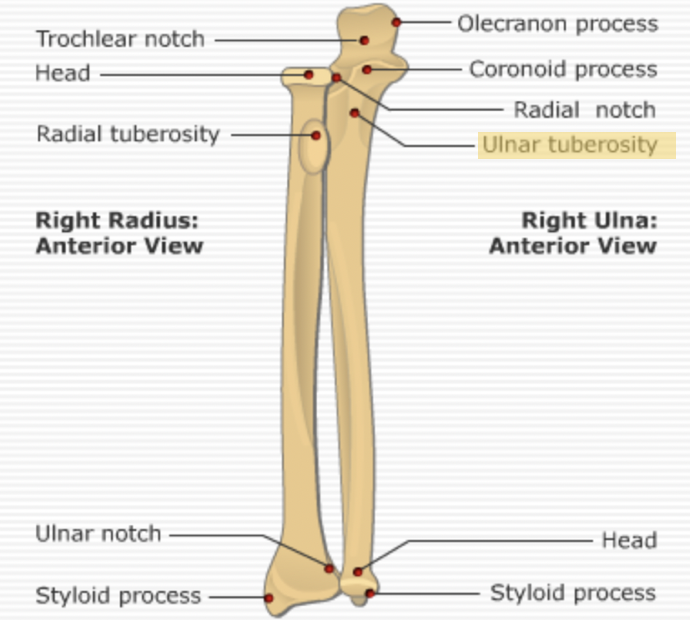
Where is the ulnar tuberosity located?
Immediately inferior to the coronoid process.
What is located distal to the radial notch?
The supinator crest.
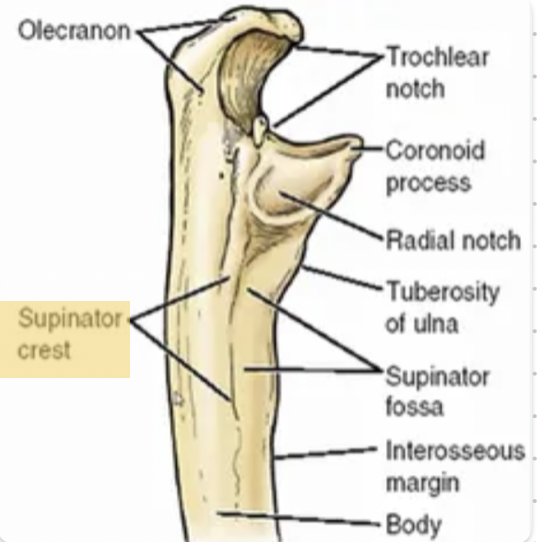
What is the supinator fossa?
A depression between the supinator crest and the distal part of the coronoid process.
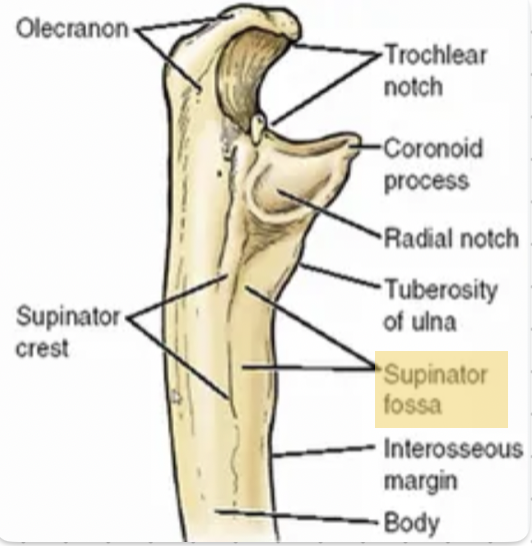
Describe the shaft of the ulna.
Thick proximally and gradually tapers distally.
What structures are found at the distal end of the ulna?
Head of ulna
Ulnar styloid process
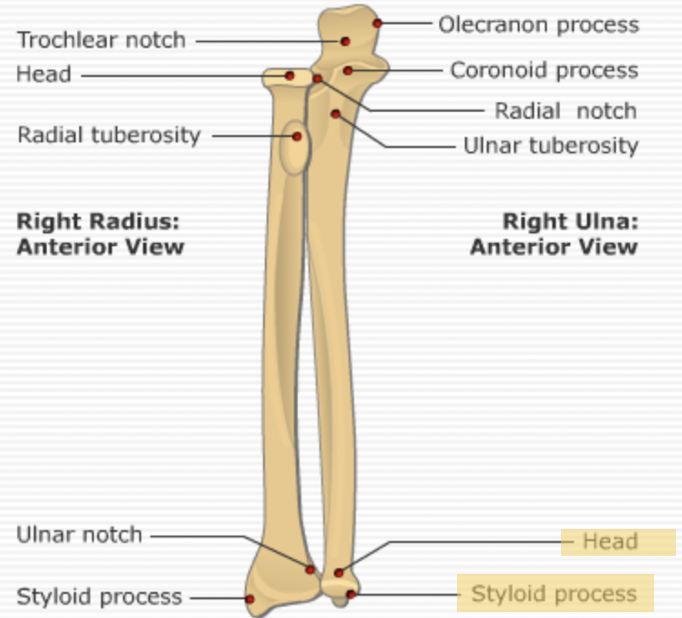
Does the ulna articulate directly with the carpal bones?
No.
It is separated from the carpal bones by an articular disc (fibrocartilage).
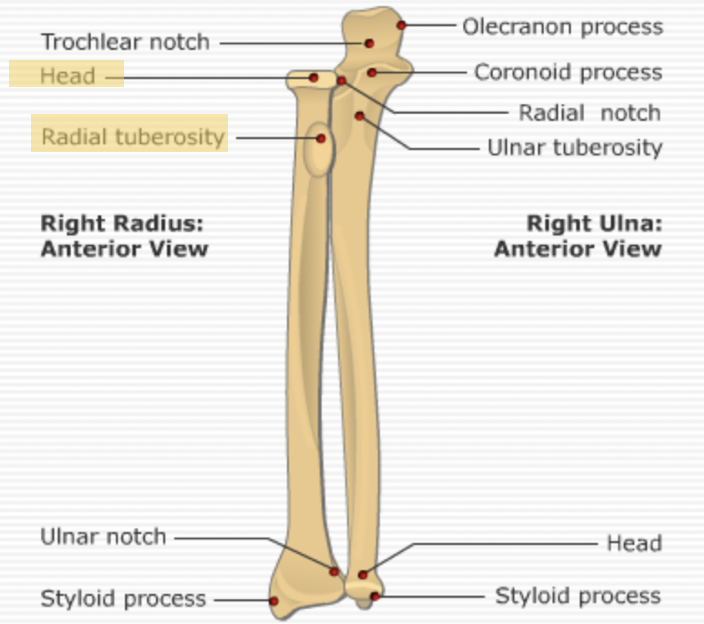
What structures make up the proximal radius?
Head
Neck
Radial tuberosity
Which part of the humerus articulates with the head of the radius?
The capitulum.
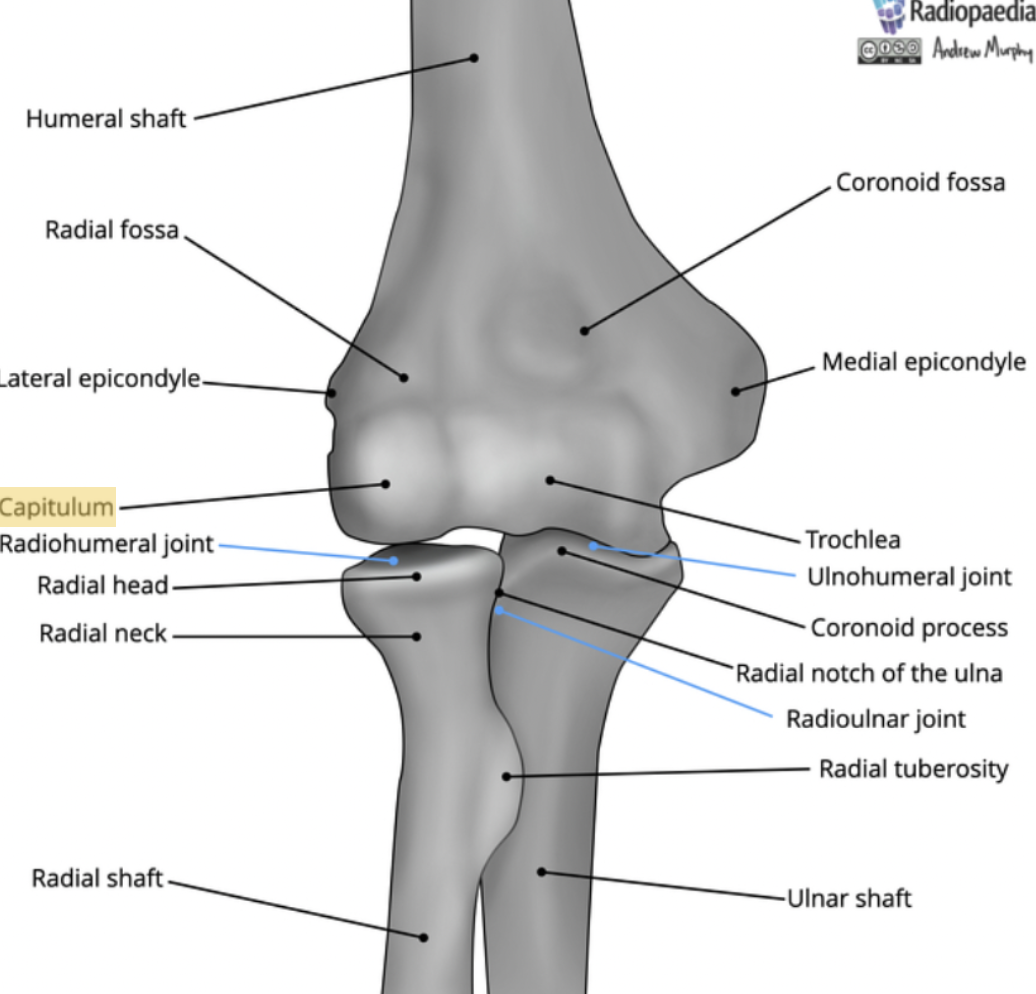
Which part of the ulna articulates with the head of the radius?
The radial notch.
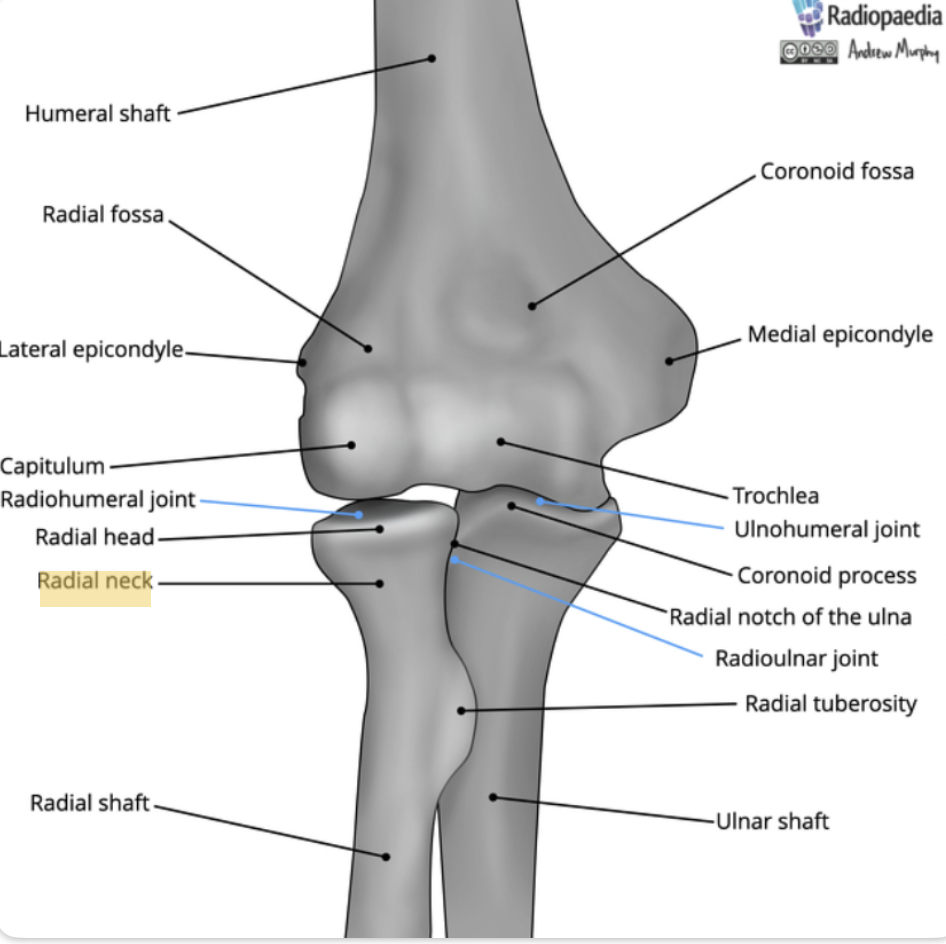
What is the neck of the radius?
The narrowed region between the head and radial tuberosity.
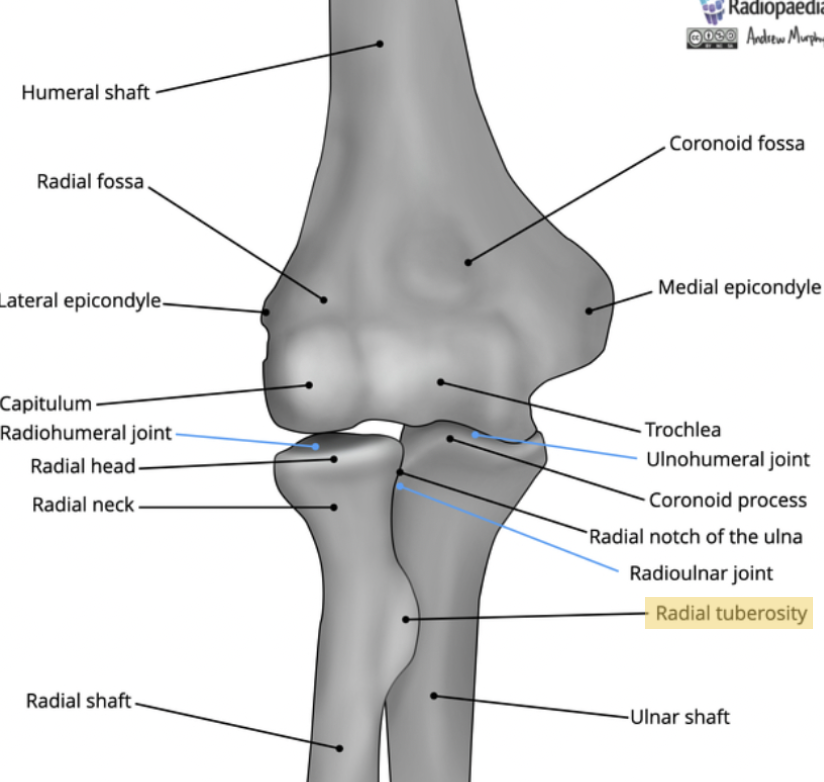
What landmark separates the proximal end of the radius from its shaft?
The radial tuberosity.
Describe the shaft of the radius.
It has a lateral convexity and gradually enlarges distally.
What is the ulnar notch of the radius?
A concavity on the medial aspect of the distal radius that accommodates the head of the ulna.
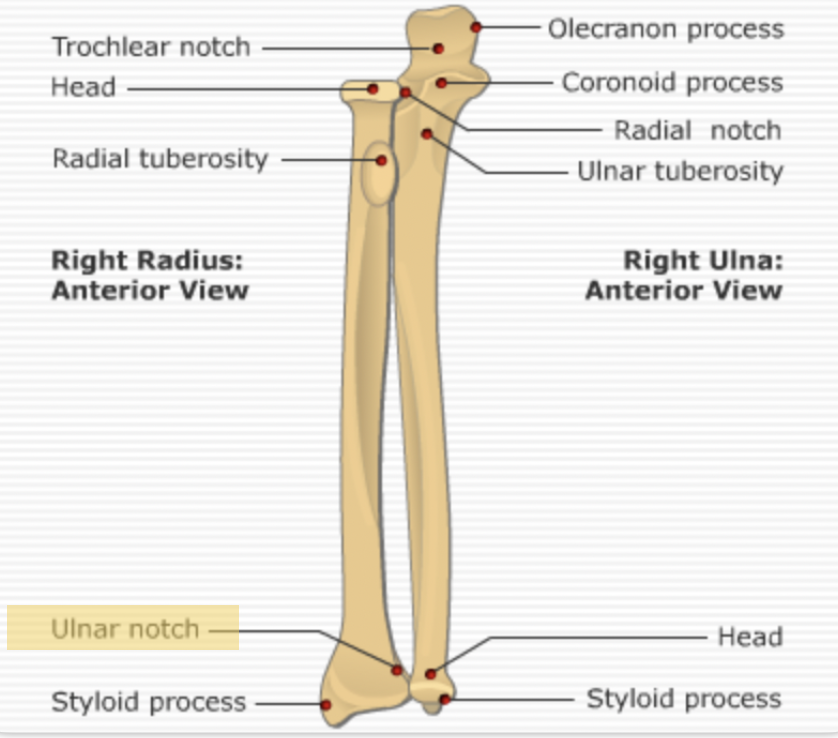
What articulates with the ulnar notch?
The head of the ulna.
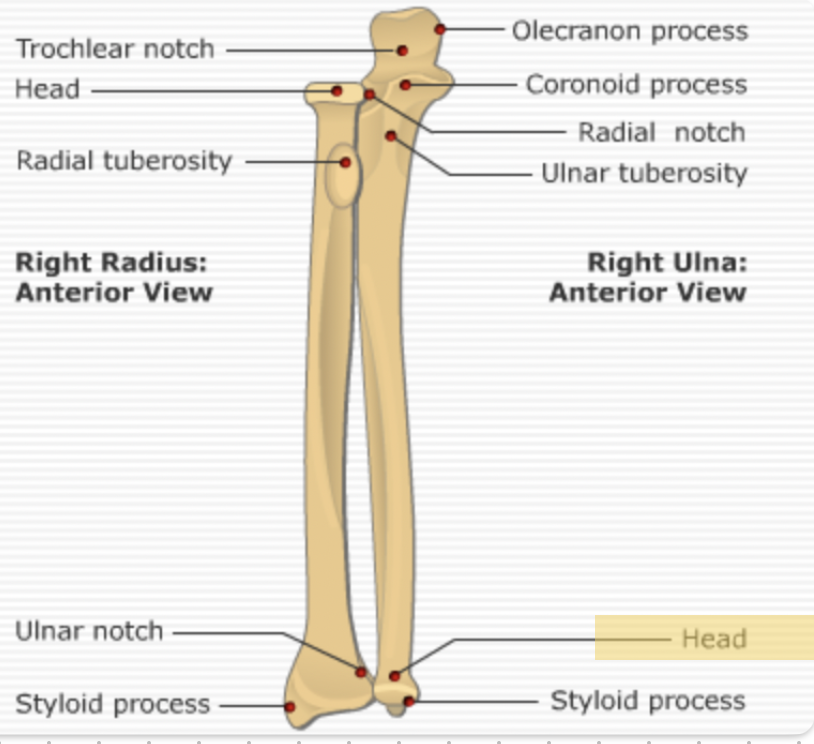
Which process forms the lateral distal projection of the radius?
The radial styloid process.
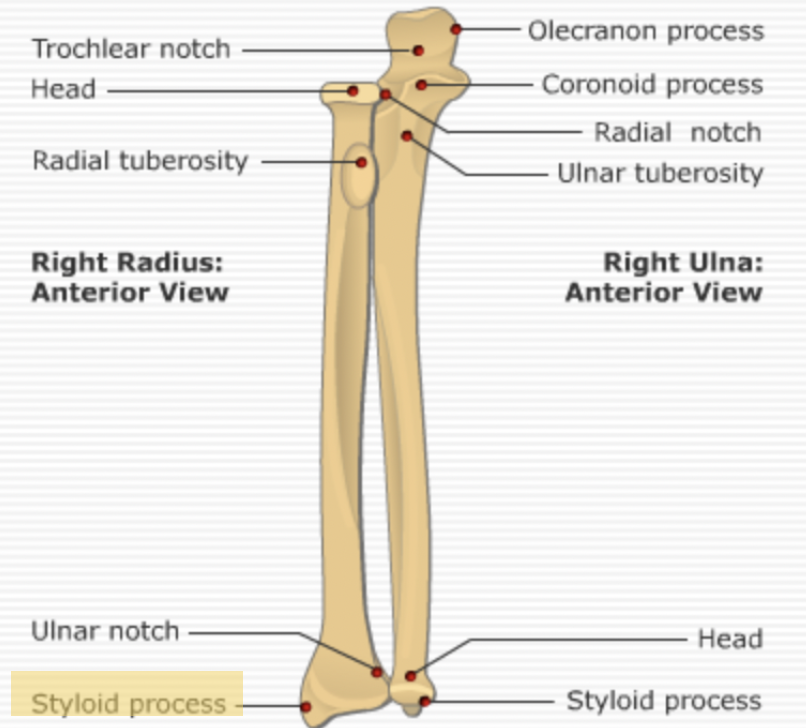
Which styloid process projects farther distally?
The radial styloid process.
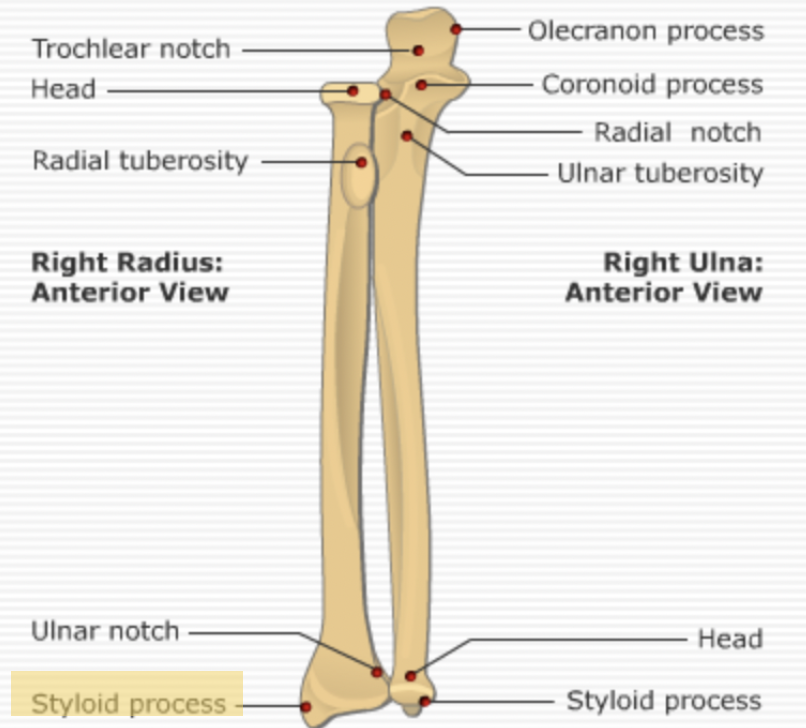
Why is the position of the radial styloid process clinically important?
Normally it lies distal to the ulnar styloid.
This relationship changes in Colles fractures.
What is the dorsal tubercle of the radius?
A bony prominence on the distal posterior radius that acts as a pulley for the tendon of extensor pollicis longus.
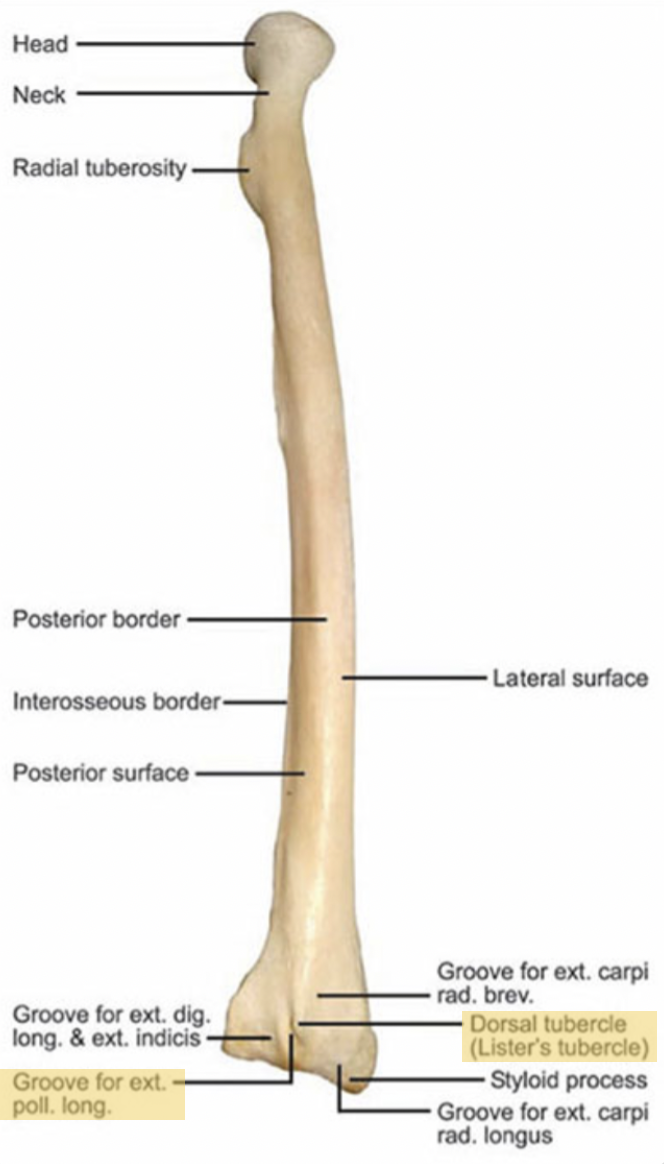
Match each articulation:
Trochlea
Capitulum
Radial notch
Ulnar notch
Trochlea ↔ Trochlear notch
Capitulum ↔ Head of radius
Radial notch ↔ Head of radius
Ulnar notch ↔ Head of ulna
Which forearm bone primarily articulates with the wrist?
The radius.
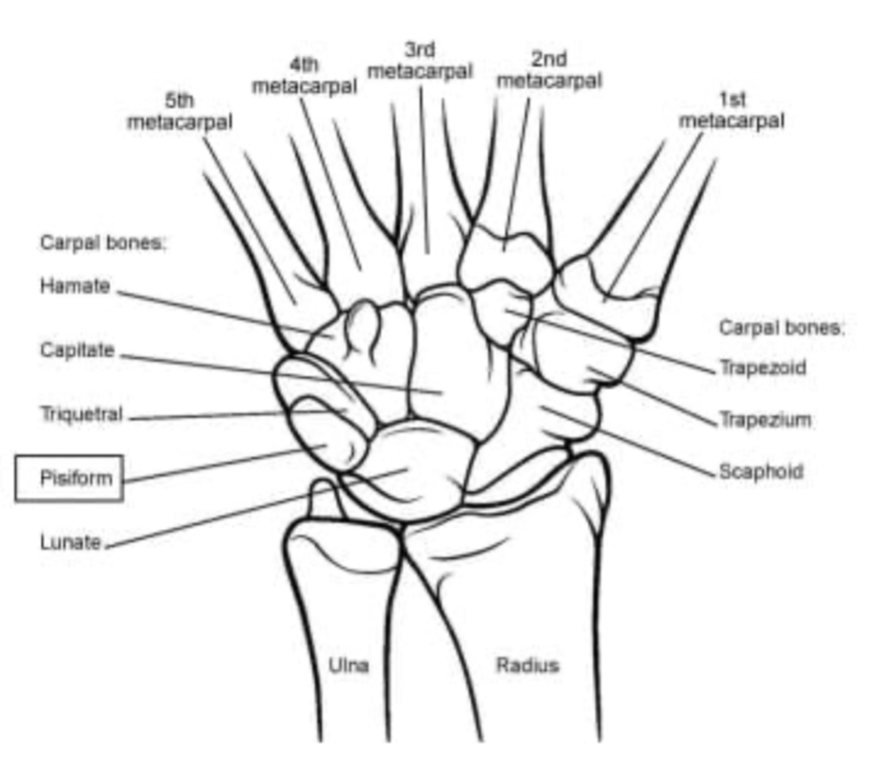
What is the most common fracture of the forearm?
A Colles fracture.
What is a Colles fracture?
A fracture of the distal 2 cm of the radius, usually caused by a fall on an outstretched hand.
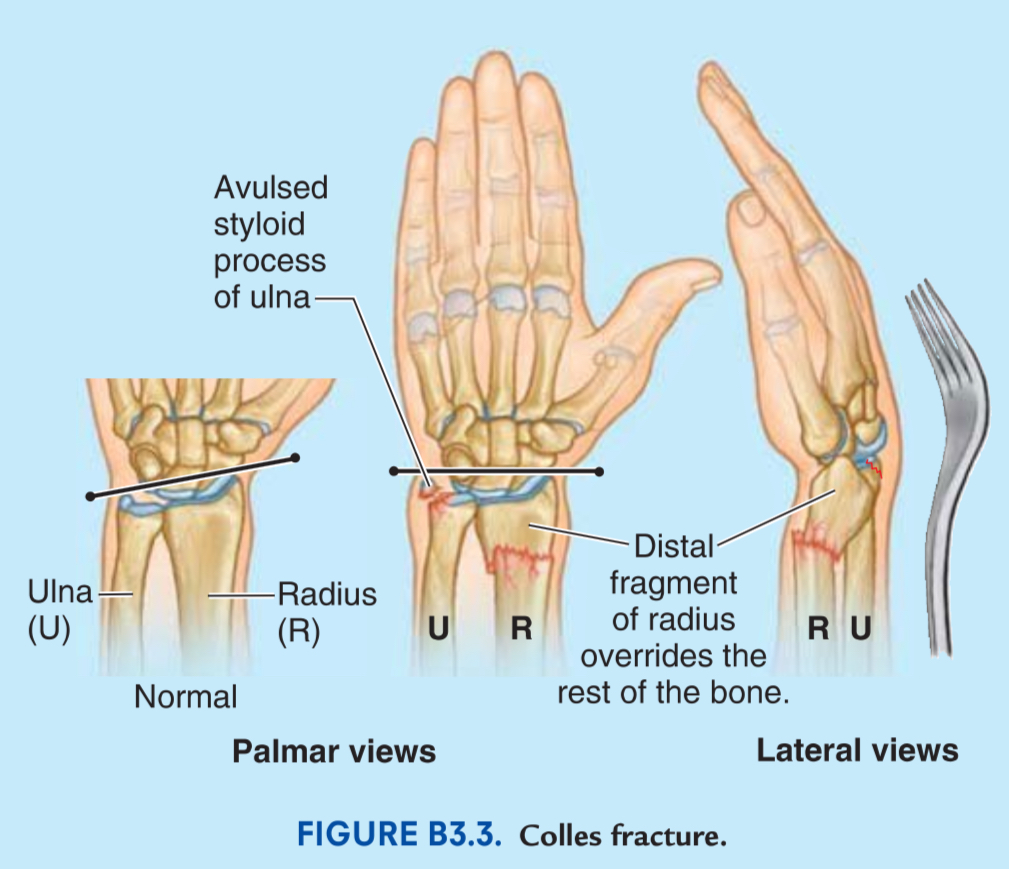
What deformity is associated with a Colles fracture?
A dinner fork (silver fork) deformity.
What may happen to the ulnar styloid process in a Colles fracture?
It may be avulsed.
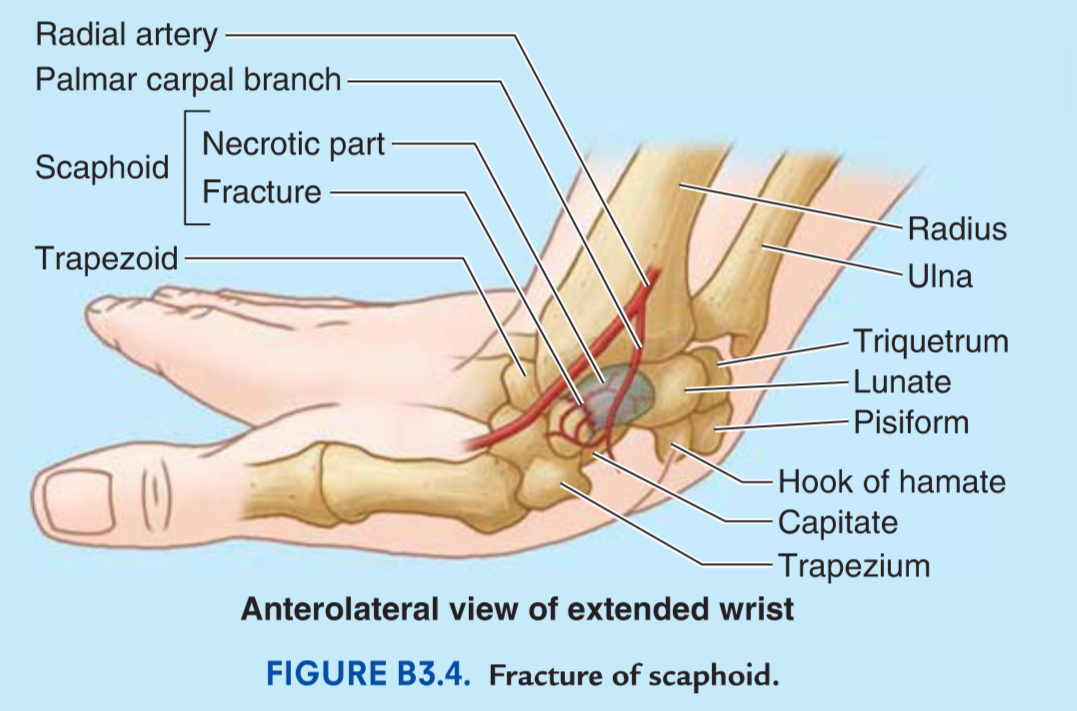
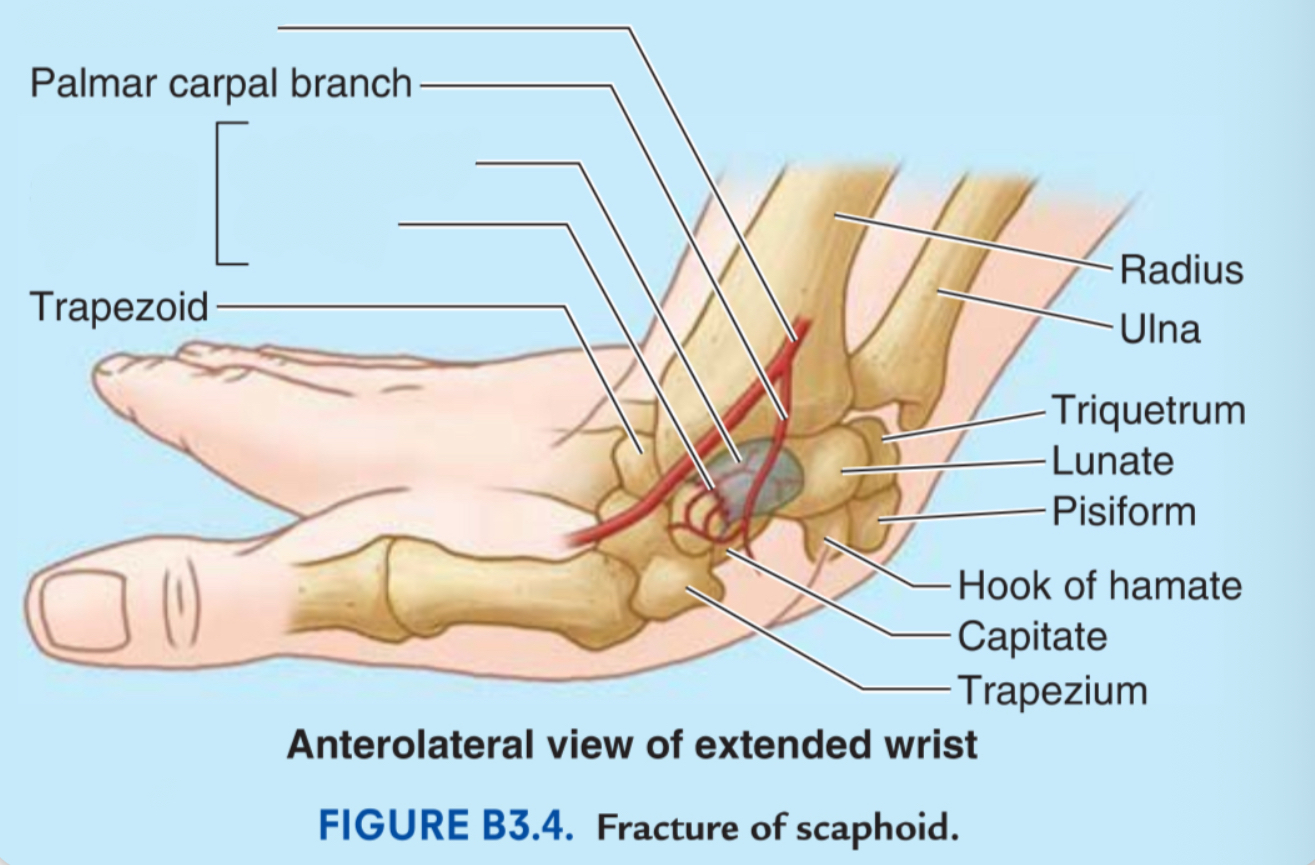
Why are scaphoid fractures clinically important?
Because the proximal fragment has a poor blood supply and may undergo avascular necrosis.
Where do scaphoid fractures most commonly occur?
At the waist of the scaphoid.
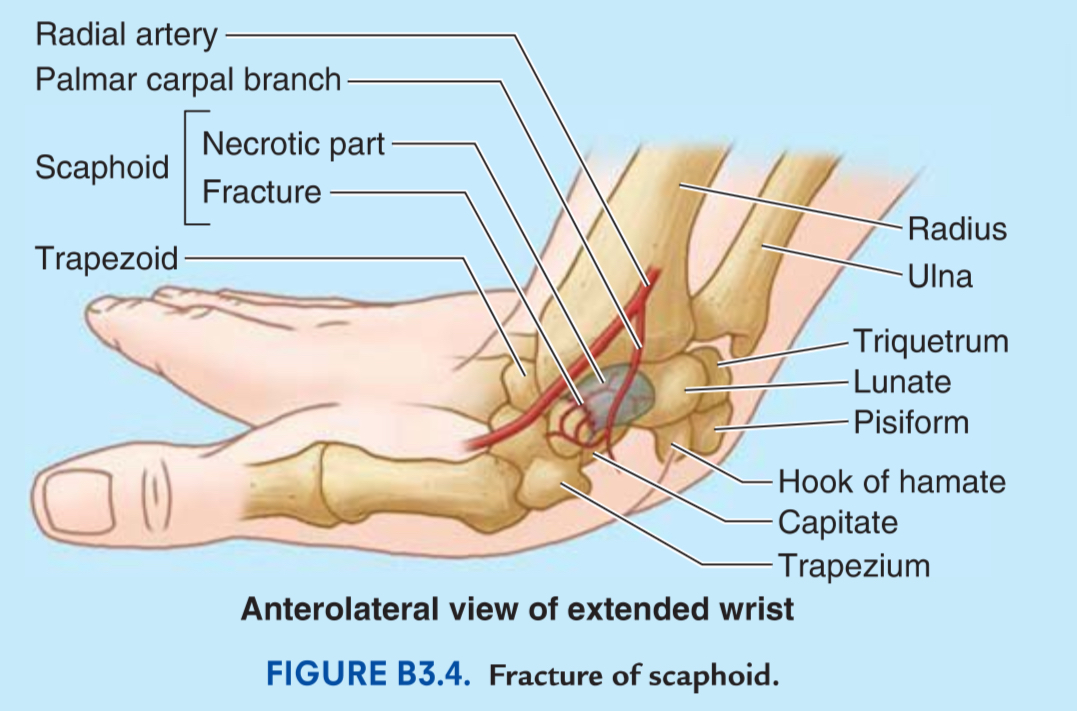
Why may an initial X-ray appear normal after a scaphoid fracture?
The fracture may only become visible 10–14 days later, after bone resorption has occurred.
Compare the radius and ulna
Radius | Ulna |
Lateral | Medial |
Shorter | Longer |
Enlarges distally | Narrows distally |
Articulates with wrist | Does not directly articulate with wrist |
Capitulum articulation | Trochlea articulation |
Ulnar notch | Radial notch |
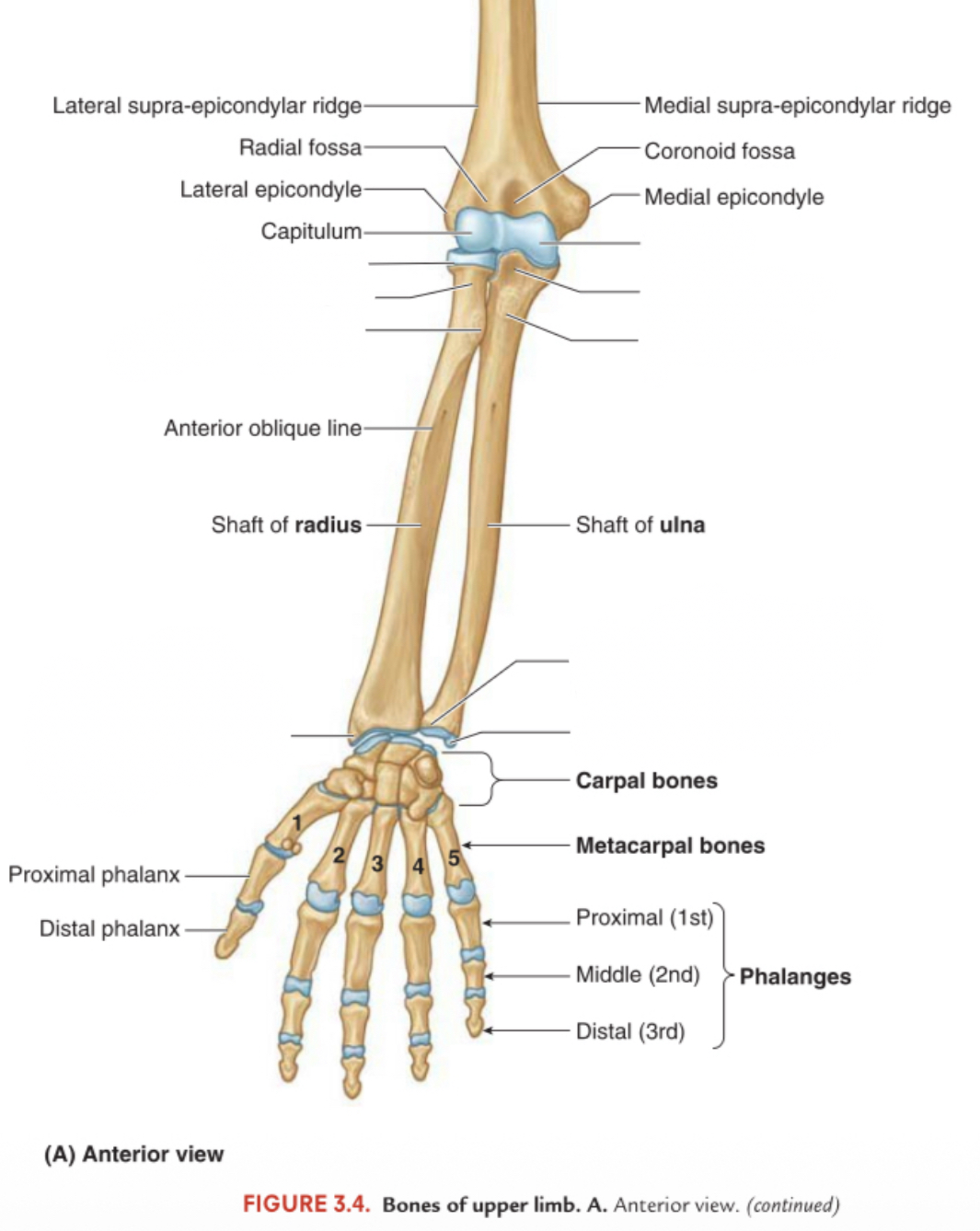
Label
Label
Label