Who pays the price? - True pricing in fashion retail
 Call Kai
 Learn
Learn Practice Test
 Spaced Repetition
 Match
Match Flashcards
 Knowt Play
1/12

There's no tags or description
Looks like no tags are added yet.
Name | Mastery | Learn | Test | Matching | Spaced | Call with Kai | Chat |
|---|
No analytics yet
Send a link to your students to track their progress
13 Terms
who actually pays the price gap? (hidden costs)
not the brand, buyer.
the gap is paid by those directly affected:
cotton farmers: pesticide exposure, low prices
garment workers: sub-living wages, unsafe buildings, unpaid overtime
downstream communities: polluted rivers, contaminated soils, respiratory illness
future generations: climate change, biodiversity loss
What is MPC, MPB, MEC, MSC
MPC (marginal private cost): the direct cost tot he producer to make one additional unit (e.g., ingredients, labor). This represents the traditional supply(S) curve.
MPB (marginal private benefit): the direct benefit to the consumer from buying one additional unit. This represents the traditional demand (D) curve.
MEC (marginal external cost): the hidden damage caused to society/environment by producing one additional unit (e.g., pollution, health, degradation)
MSC (marginal social cost): the true cost to society. Calculated as:
MSC = MPC + MEC
What are the policy toolboxes? Pigouvian taxes.
core idea: policy interventions are essential to internalize hidden costs and correct market failures, tho each tool involves specific trade-offs
Pigouvian taxes: make the price reflect the cost
mechanism: tax each unit of the externality at the level of the damage it causes
strength: cost-effective, lets the market decide where to cut
limit: regressive, politically hard, damage must be measurable.
What are the policy toolboxes? Standards and bans
Standards and bans: prohibit the harm, regardless of price
mechanism: set a legal limit on emissions, chemical use, or working conditions. If limit is not met, the activity is simply not allowed, the activity is not allowed.
strength: “certainty” of outcome, easy to communicate
limit: same rule for very different actors, slow to update
What are the policy toolboxes? Extended producer responsibility
Extended producer responsibility: make the producer pay for the afterlife → producer liability
mechanism: brands pay a fee per garment sold, scaled to recyclability. The fee funds collection, sorting, and reuse infrastructure
strength: internalises end-of-life cost, rewards better design
limit: fees often too low to change behaviour, requires infrastructure
what happens when market equilibrium takes externalities into account?
we want to be where MSC=MPB
where Q drops and P increases
this is the “true price”. It is higher and lowers production to a safer, sustainable level
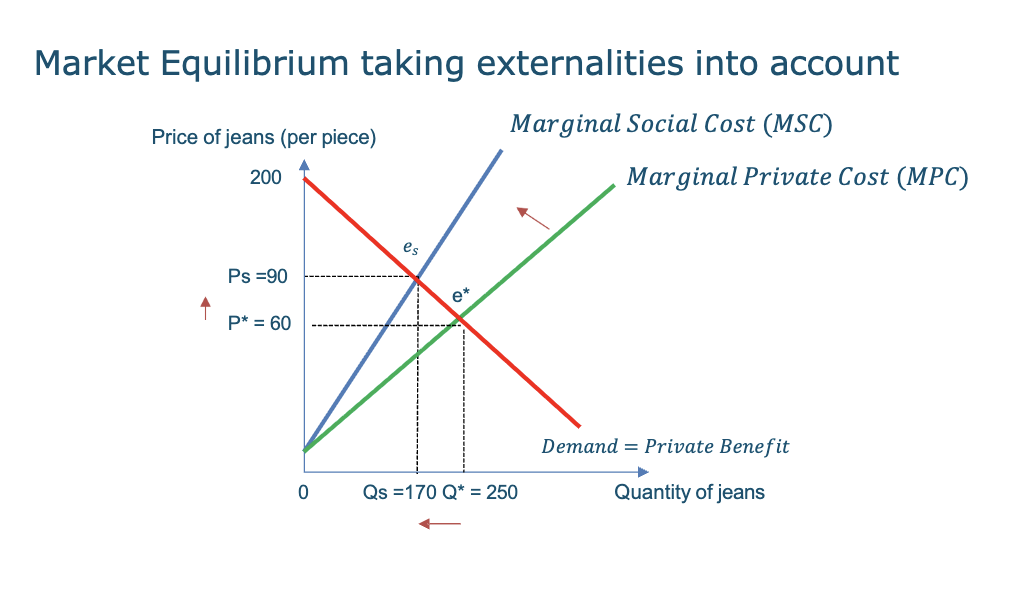
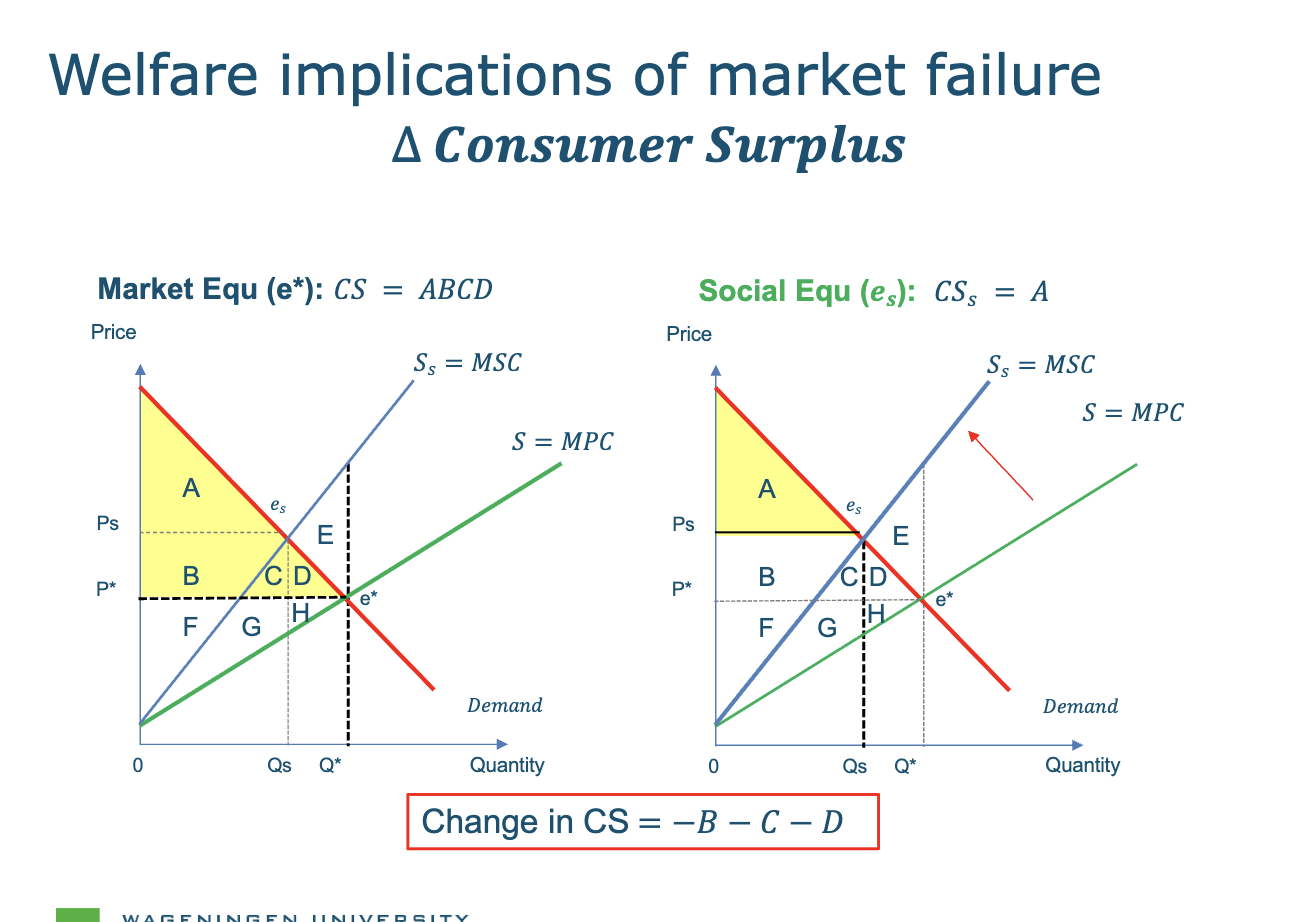
what happens in this graph?
delta consumer surplus
the gov imposes a (Pigouvian) tax = tot he MEC (cost of the pollution it causes)
this tax increases the factory’s production costs.
as a result, the private supply curve shifts upward from MPC to MPC+tax
which lies perfectly on top of the MSC curve.
tax shifts supply up to meet social cost.
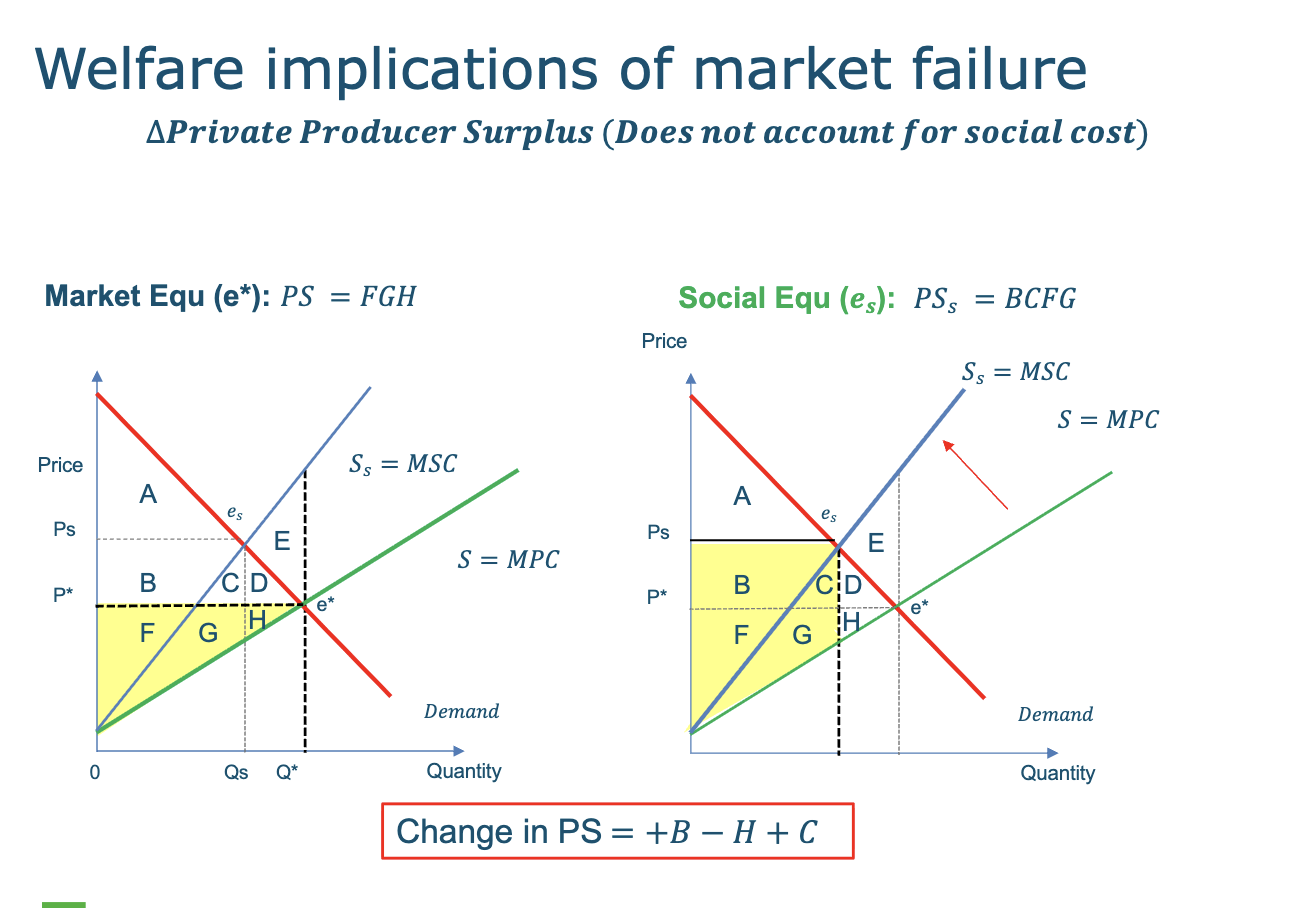
what happens in this graph?
delta private producer surplus
the gov gives a subsidy = to the external benefit
shifts the demand curve upward from MPB to MPB+subsidy
aligns with MSB
Social curve (MSB) is on the Demand side and sits Above/Right of private demand. We want more production.
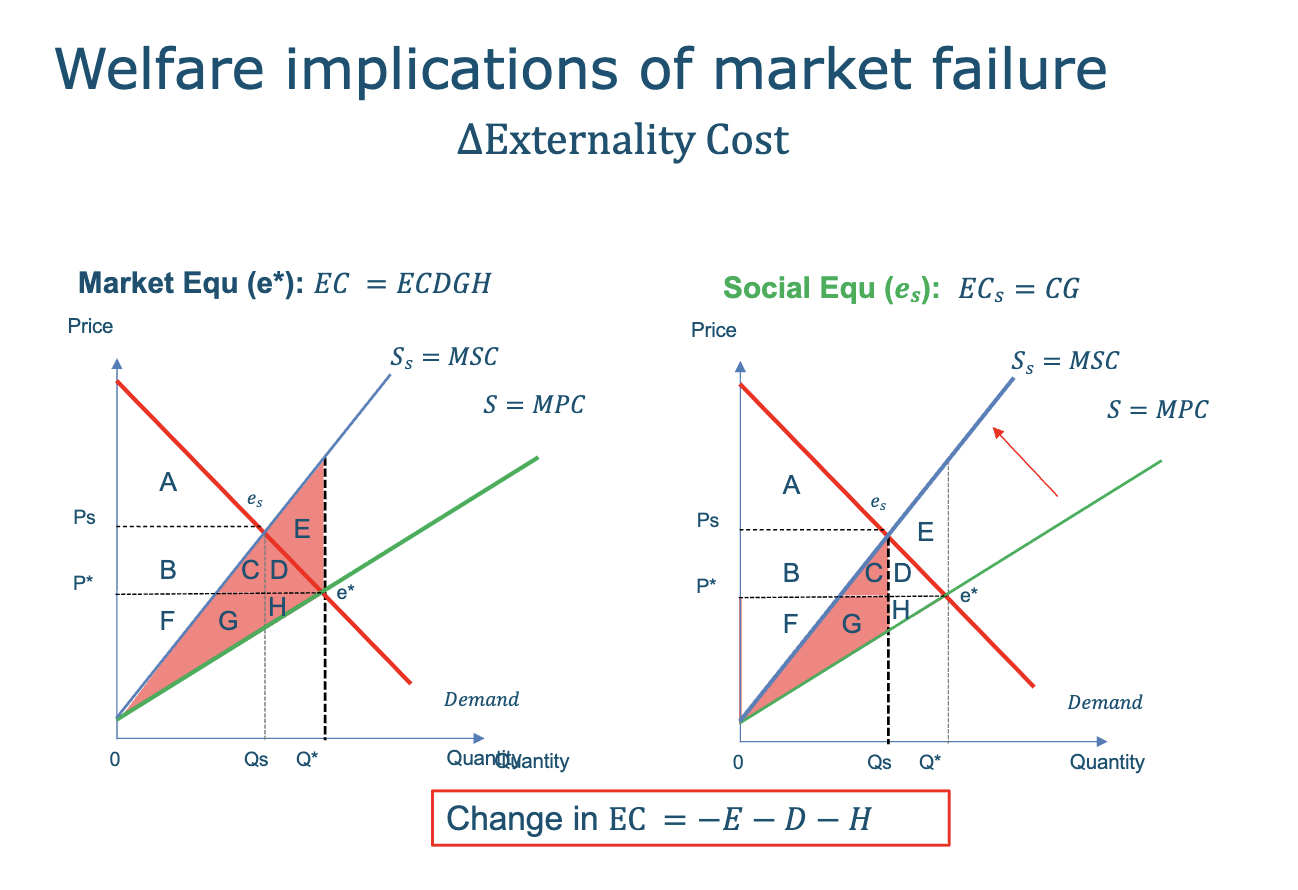
what happens in this graph?
delta externality cost
no tax or subsidy.
if property rights are clearly defined and transaction costs are 0,
private parties can negotiate with each other to solve externalities on their own.
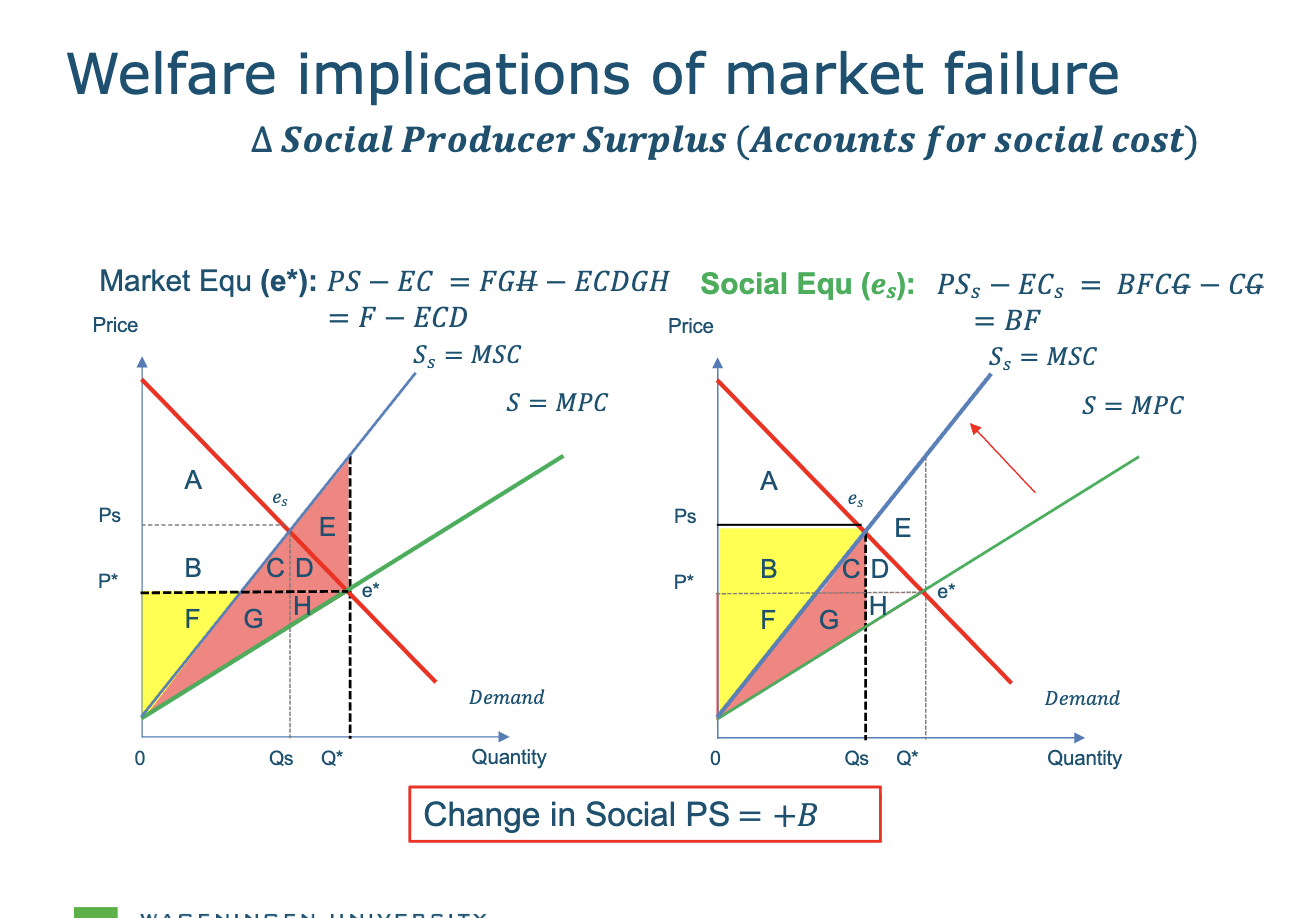
what happens in this graph?
delta social producer surplus (accounts for social cost)
tragedy of the commons
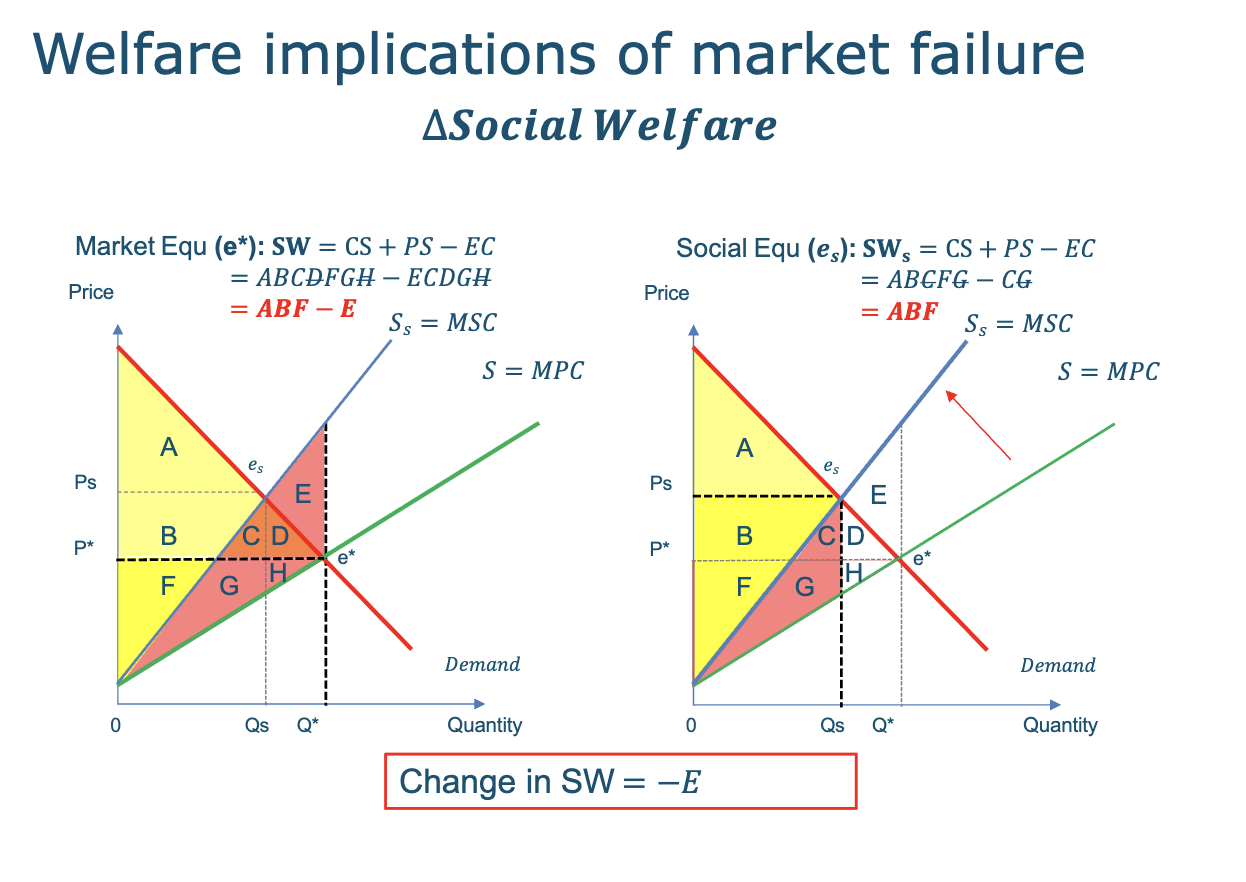
what happens in this graph?
delta social welfare
shows how society determines the economically optimal amount of pollution reduction (abatement)
cost of abatement vs. cost of env damage
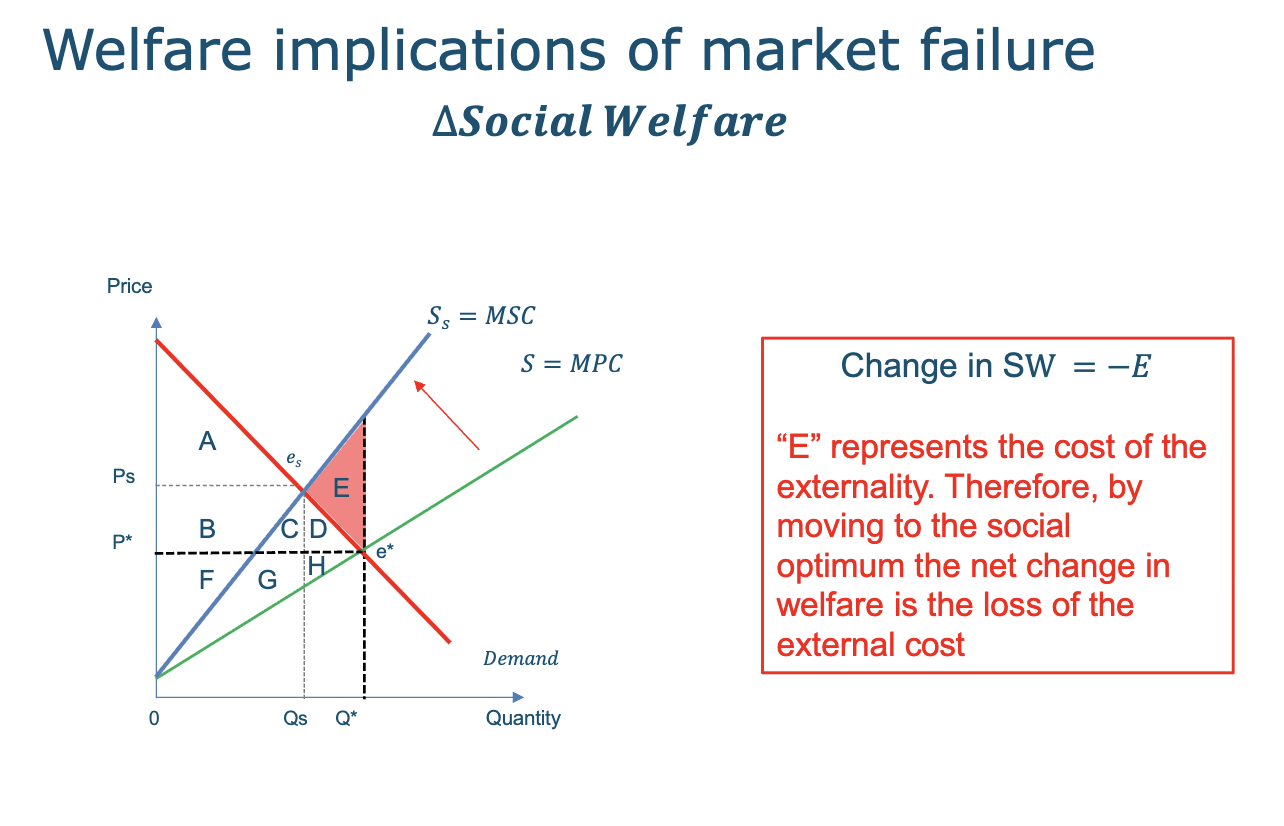
what is the deadweight loss (DWL)?
the welfare difference between the private competitive equilibrium and social optimum is a net welfare loss called the DWL
the DWL is a burden to society that occurs because the competitive market equates price with private marginal costs instead with social marginal costs
what leads to deadweight loss (burden to society from ignoring social marginal costs)
failure to account for external costs leads to production above the social optimum