DI Exam 3 part 1 (RA of the c-spine)
 Call Kai
 Learn
Learn Practice Test
 Spaced Repetition
 Match
Match Flashcards
 Knowt Play
1/36

There's no tags or description
Looks like no tags are added yet.
Name | Mastery | Learn | Test | Matching | Spaced | Call with Kai | Chat |
|---|
No analytics yet
Send a link to your students to track their progress
37 Terms
Cspine
Where is the mc place for RA to affect the axial skeleton?
Half (50%)
RA of the c spine with effect about ____ of pateints within 10 years of the diagnosis.
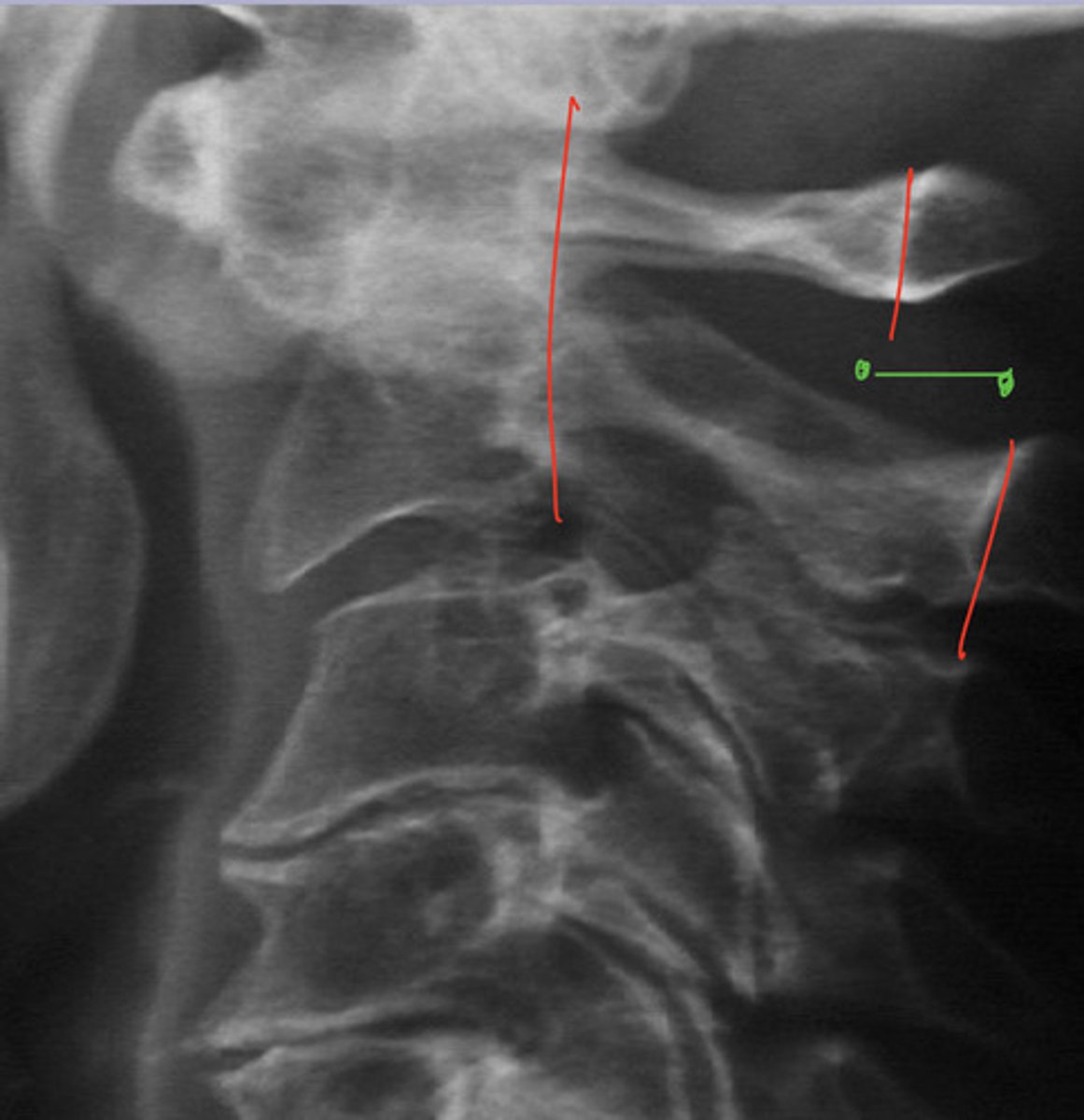
Anterior ADI >3 mm
Post ADI <14 mm
What would indicate a Atlantoaxial subluxations?
Odontoid erosion(s)
What can lead to a whittled dens?
<14mm
Subaxial subluxations has a Canal that is <___mm
Atlanta-axial impaction
What mc cause of upper cervical neurological symptoms in patients with RA?
RA cervical spine
Apophyseal joint disease (not epiphyseal?)
Decreased disc height
Spinous process erosions
Malalignment/subluxation
Osteopenia
All indicate what condition?
1. Between dens and anterior arch (AADI)
2. Between the dens and transverse ligament
3. At the tip of dens
Where can odontoid erosions affected synovial joints?
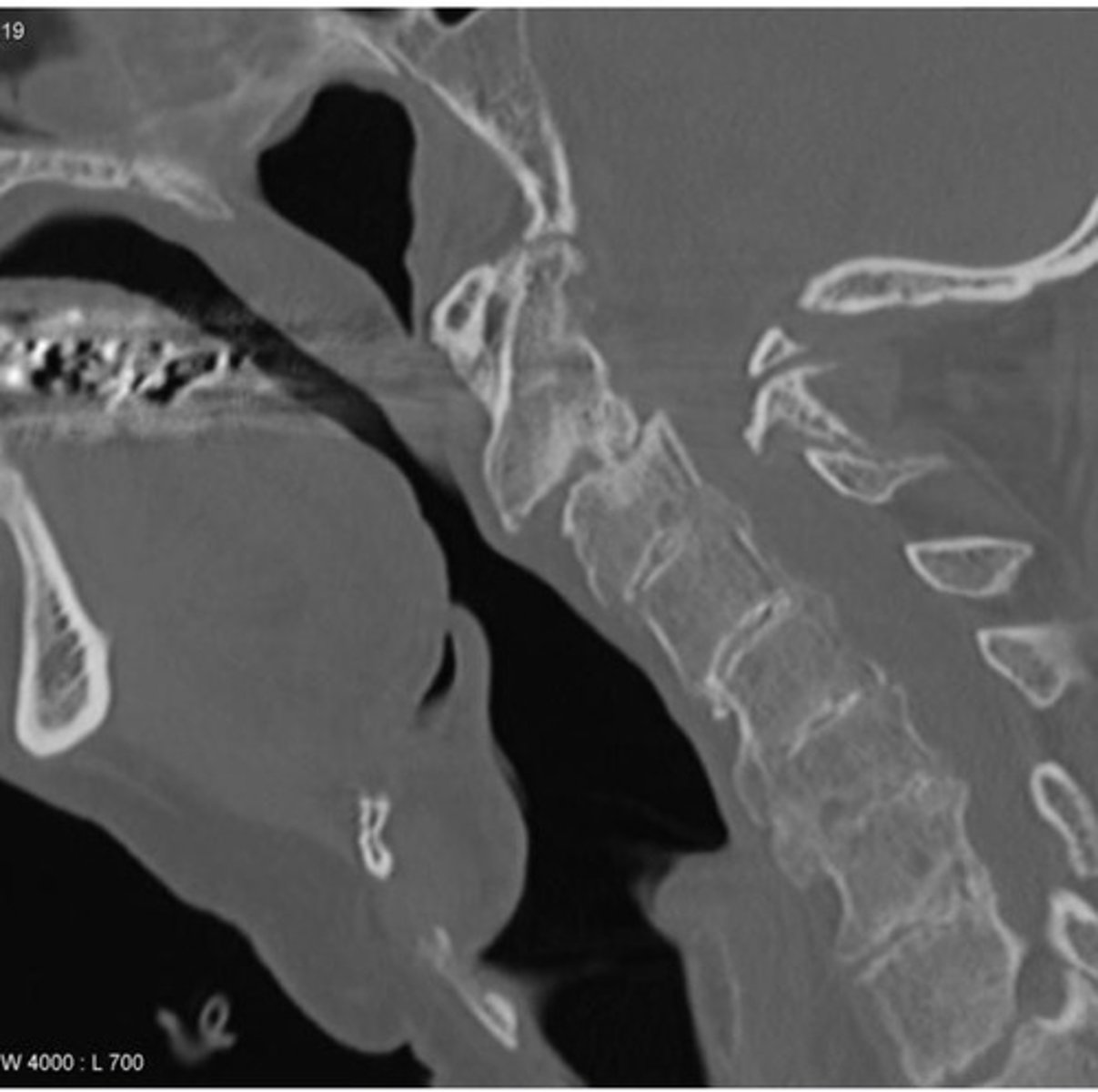
the anterior atlantodental interval (AADI)
Flexion and extension studies should be performed to evaluate what?
3mm
anterior AADI should not exceed ___mm in the adult
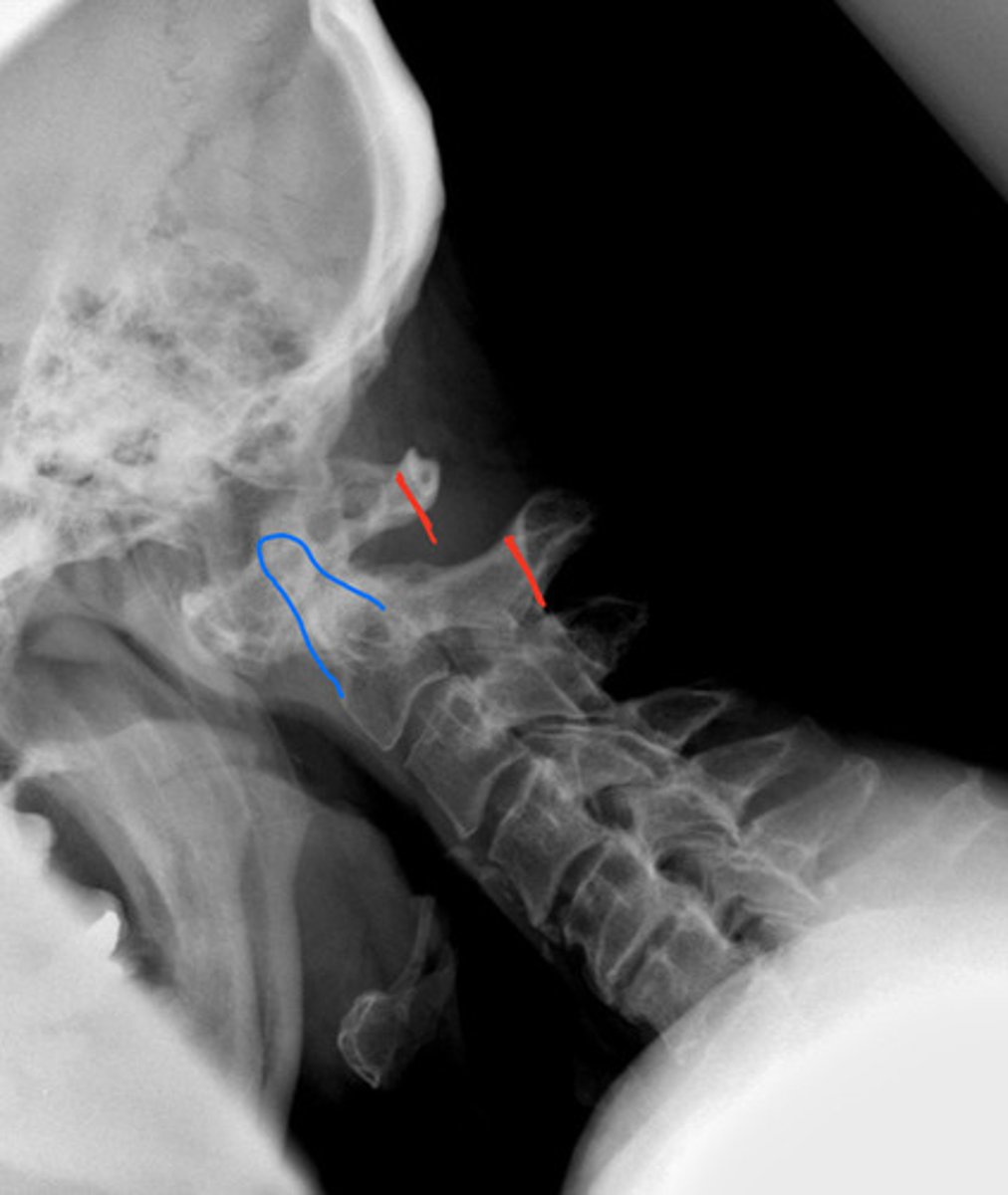
cranial settling
Occ-C1, C1-C2
facet erosions
Basilar
invagination
Potential
neurological
compromise
These all indicate what?
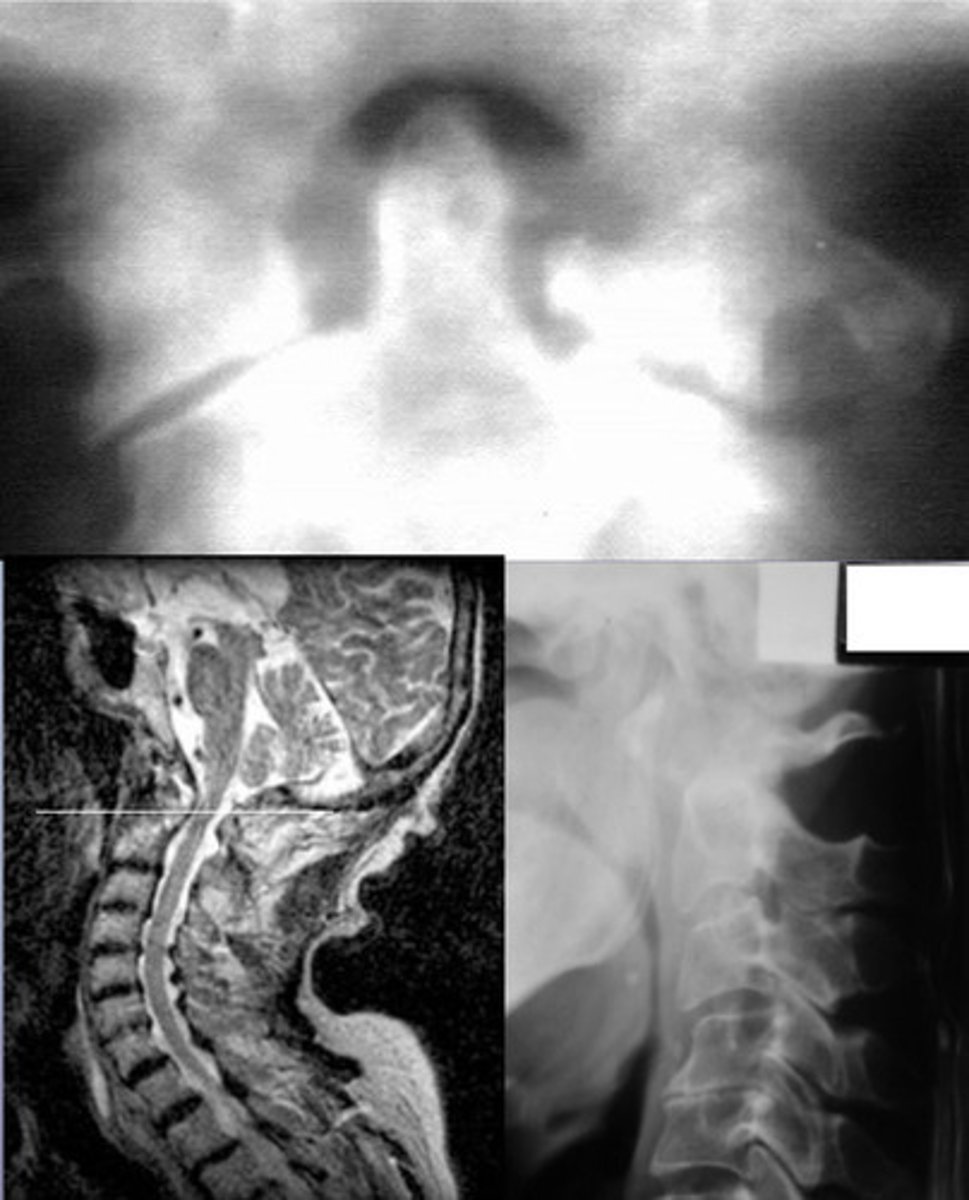
reference tools to evaluate the craniocervical junction (CCJ) on medical imaging (X-ray)
Why did we learn Chamberlain, McGregor, and McRae lines?
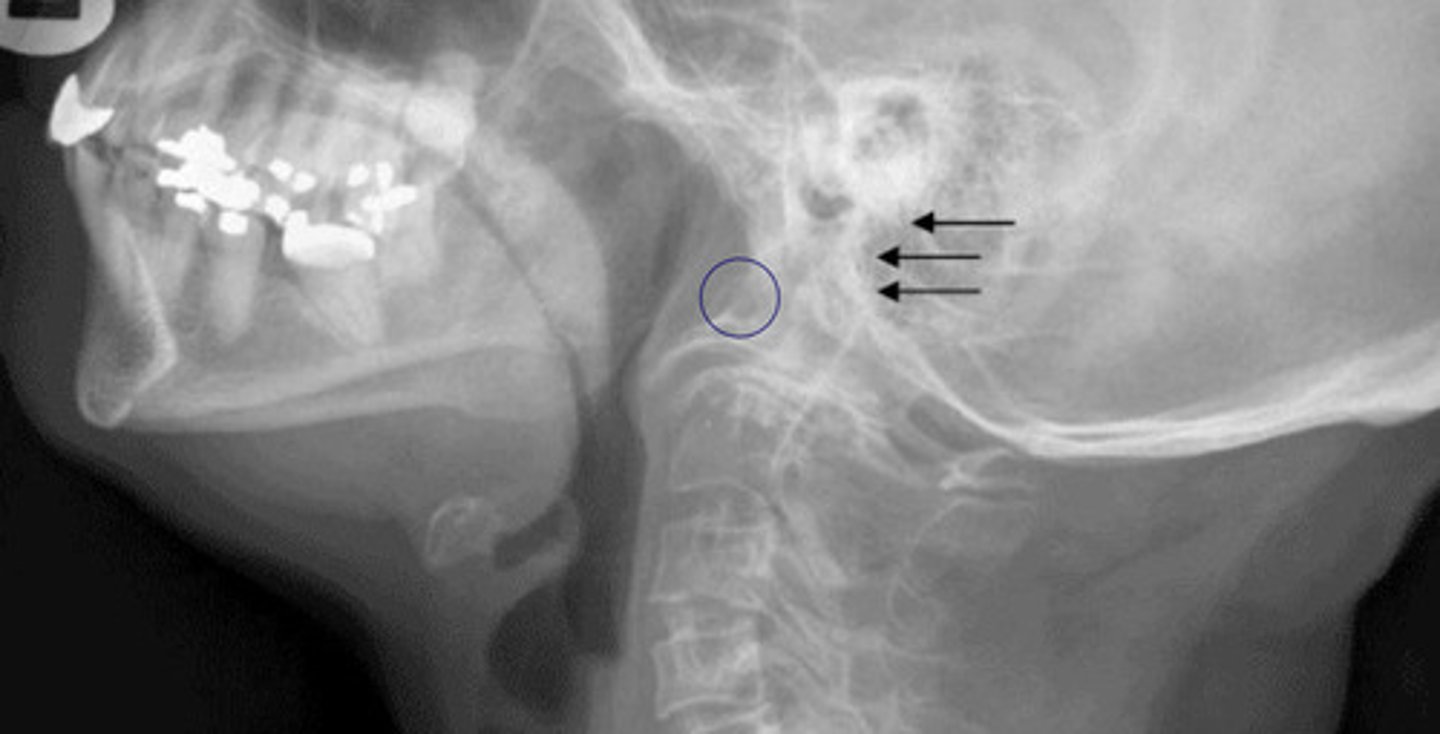
Pannus
What may cause a widened anterior ADI due to erosions?
genetic syndromes, congenital bone anomalies, and infections.
What are the other reasons a patient may have a widened anterior ADI?
Outline dens
What should you outline to find the AADI?
Juvenile chronic arthritis
What is a Seronegative condition that has an Onset younger than 16 years of age. This conditions has systemic involvement of organ systems and general body function, equal sex prevalence, and has high, acute intermittent fever, lymphadenopathy, hepatosplenomegaly, carditis, anemia, common to have a pale erythematous rash on trunk, face or extremities, often fleeting and migratory
T (seropositve 10%)
T/f: Seronegative JCA is most common
Seropostive Arthritis
What type of JCA has the poorest prognosis?
Seronegative JCA
Still's disease (classic 20%)
Polyarticular (50%): Next slide
Pauciarticular(30%)* (4 or fewer joints)
Are examples of what type of JCA?
Polarticular
Females
What is the mc Seronegative JCA?
What gender is mc affected?
F
T/f: Polyarticular Form is unilateral and asymmetrical.
Polyarticular form
Systemic signs may be present but mild, fever,
lymphadenopathy, and rash are all symptoms of what?
JCA
Soft tissue swelling
Osteopenia
Loss of joint space
Articular erosions
Malalignments/subluxations
Are all radiographic findings of what?
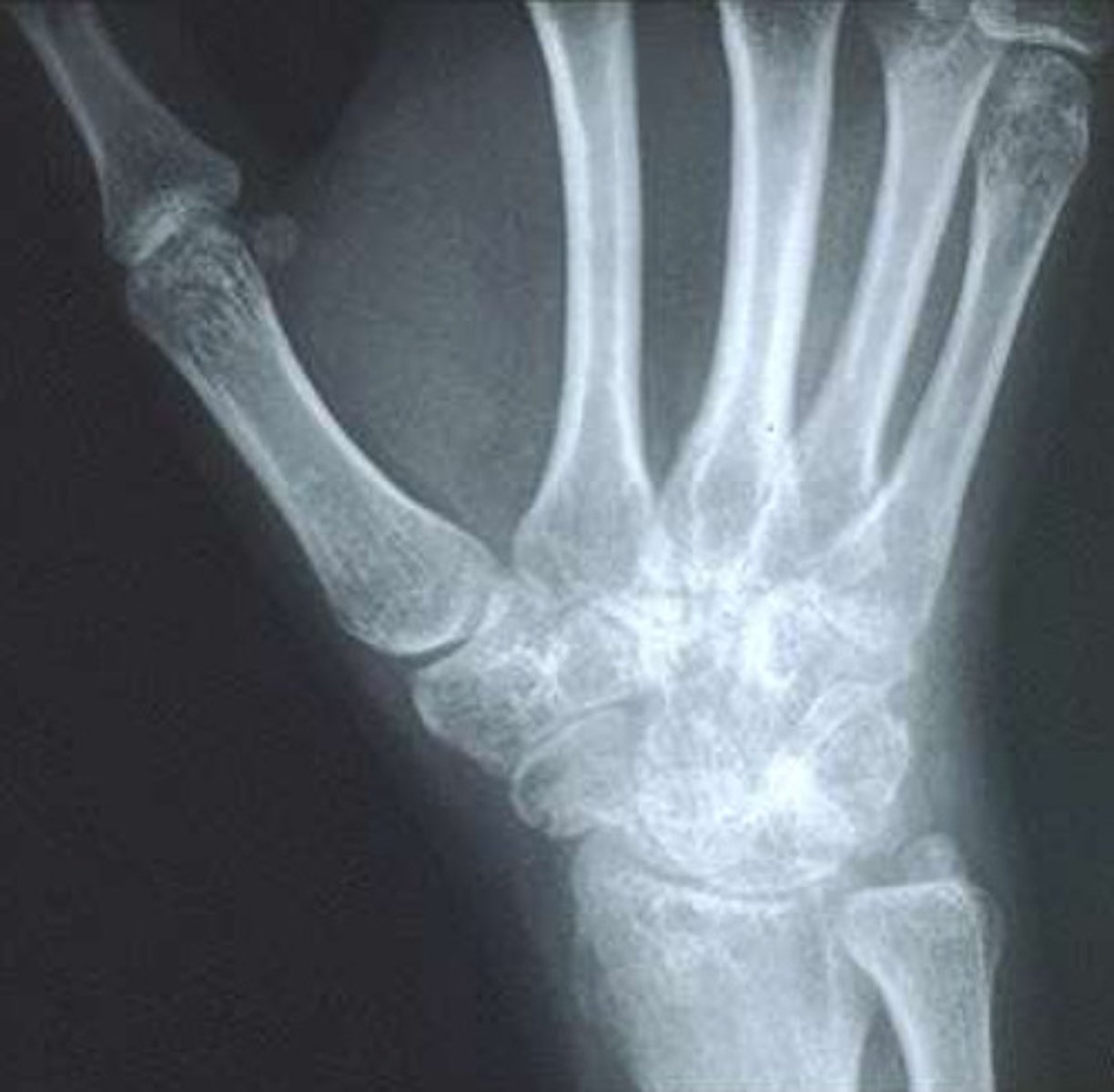
Malalignments/subluxations
Growth disruptions
Periostitis
Ankylosis
Are all examples of what?
Hands
Knee
Hip
c-spine
Where are the mc locations of JCA?
Hands
What location of JCA is described as a characteristic rheumatoid changes with periostitis and shortening?
"ballooning" of metaphysis
What location of JCA is described as
Hip
What location of JCA is described as acetabular protrusion ?
C-spine
What location of the JCA is described as erosions and posterior joint ankylosis; vertebral body and disc hypoplasia?
Ballooning
______ represents large epiphysis with a constricted
appearance of the metaphysis and diaphysis
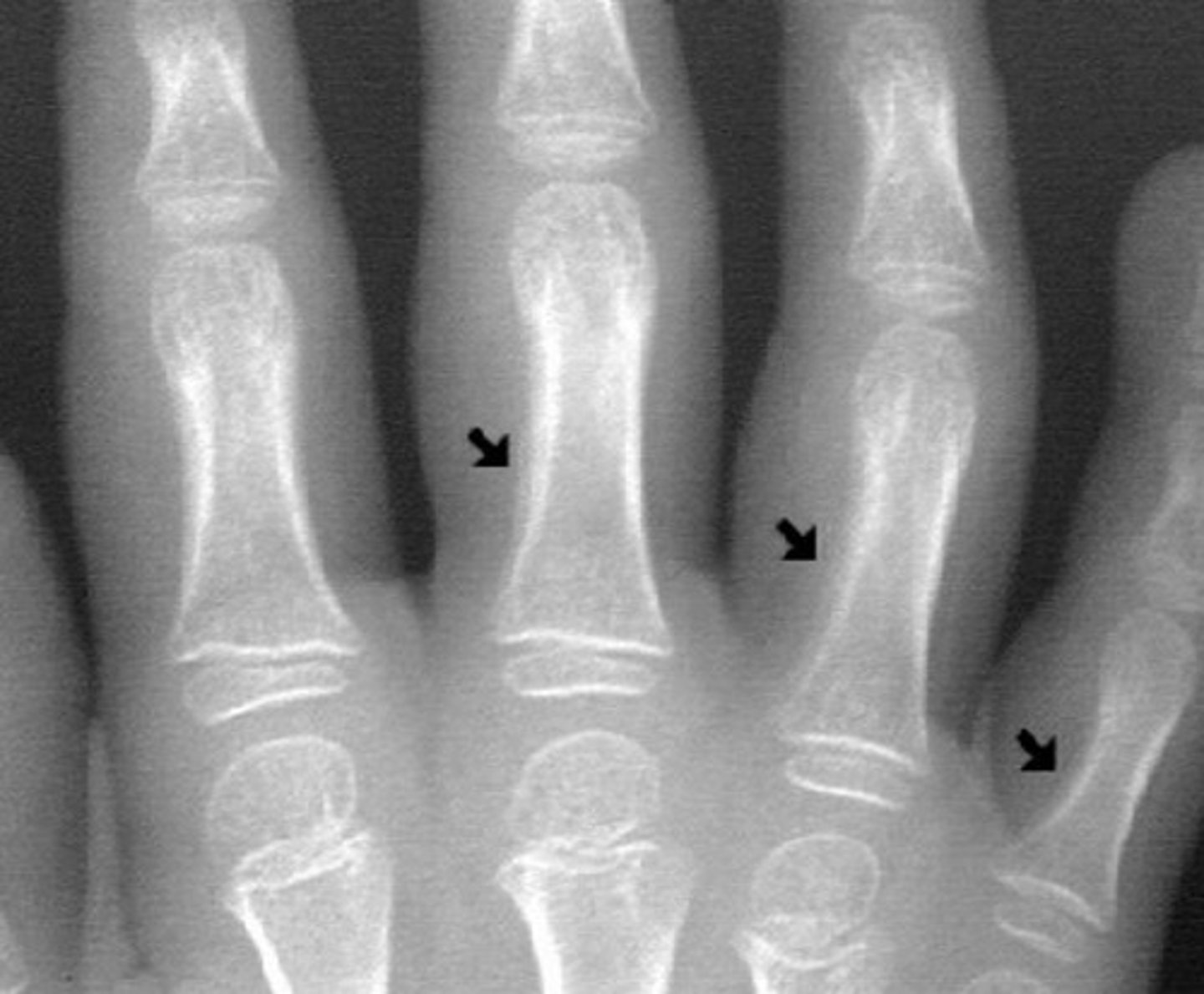
Periostits
JCA
What is called when children have loosely attached
periosteum which reacts to the hyperemia by lifting
away from the parent bone?
What condition is is asssocatied with?
JCA
A Young female presented with stiffness and pain in both wrists, limitation of movements of bilateral wrist joints, especially on the right side?
What is the possible diagnosis?
Osteopenia
What is the condition with an enlargement of the distal femoral epiphysis?
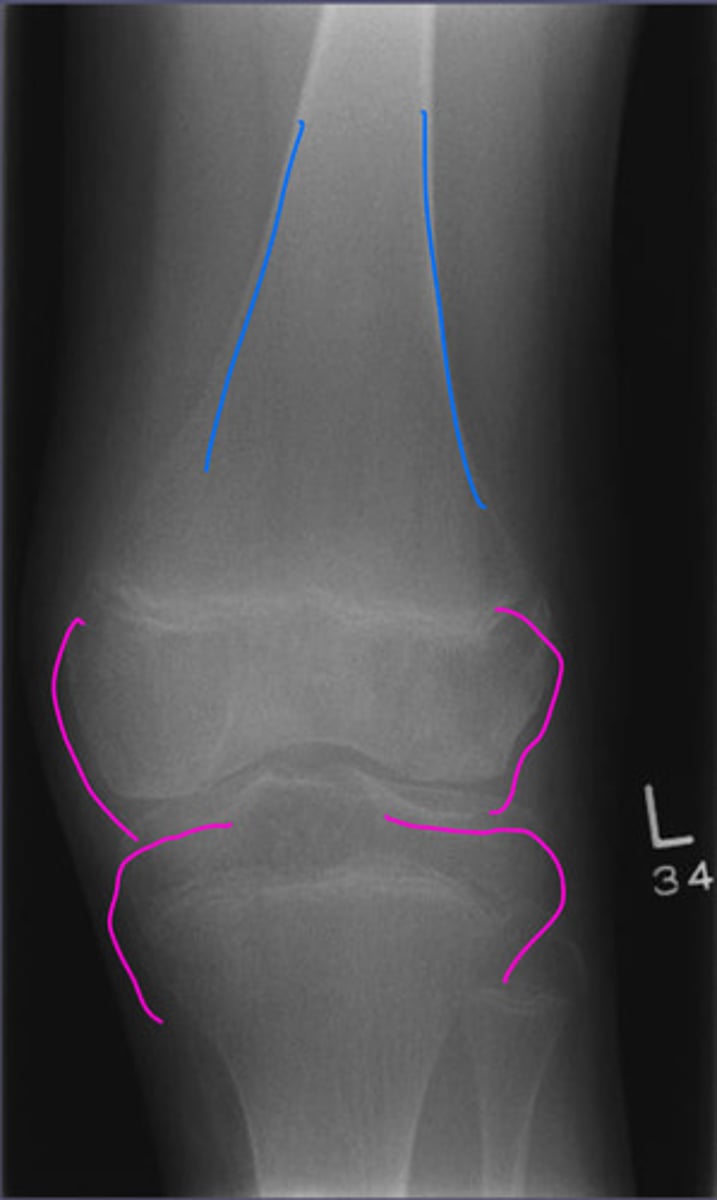
Chronic hyperemia
Epiphyseal overgrowth is thought to result from what?
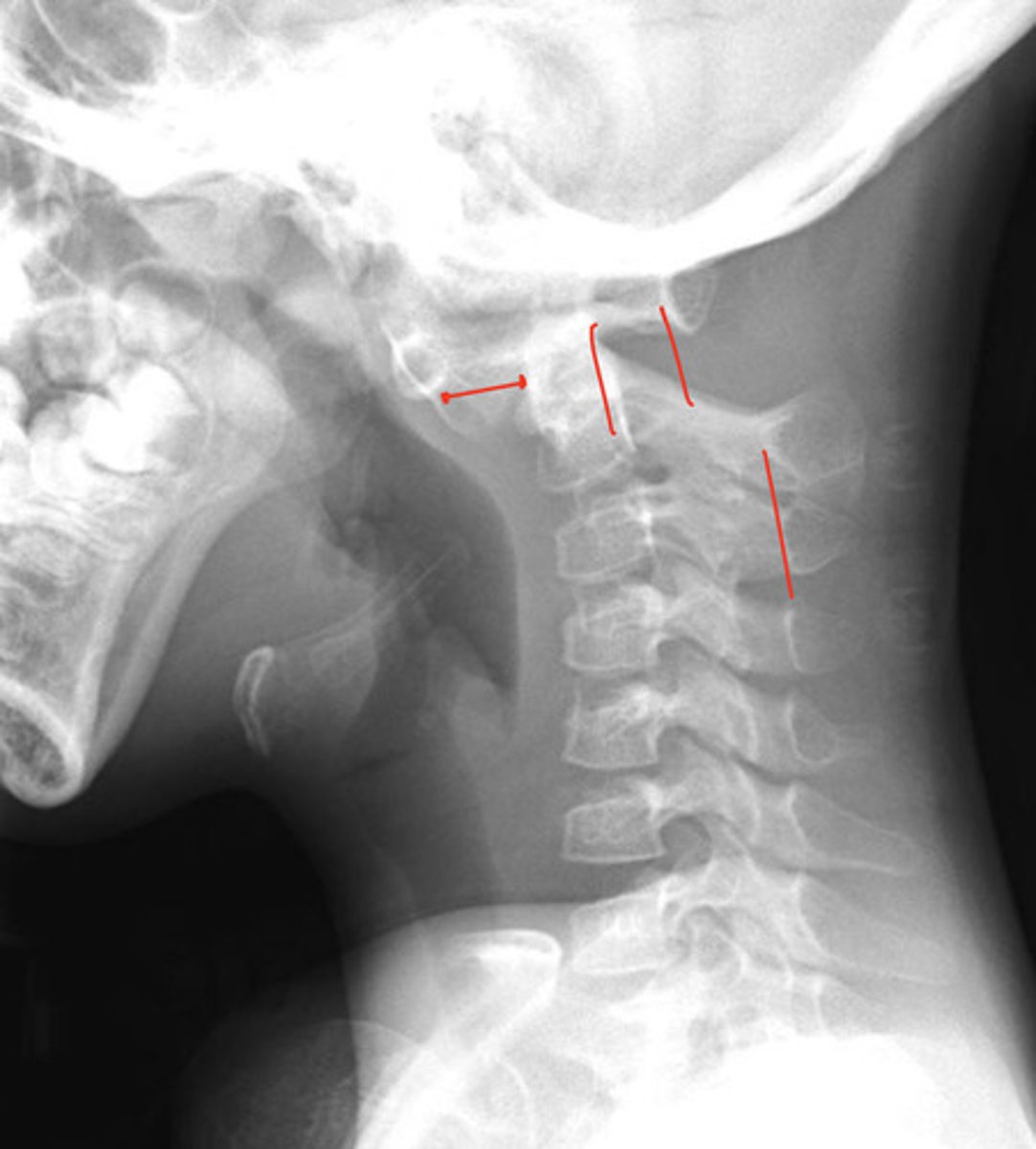
JIA (JCA)
What does this represent if it's a 12 year lad patient with neck pain?
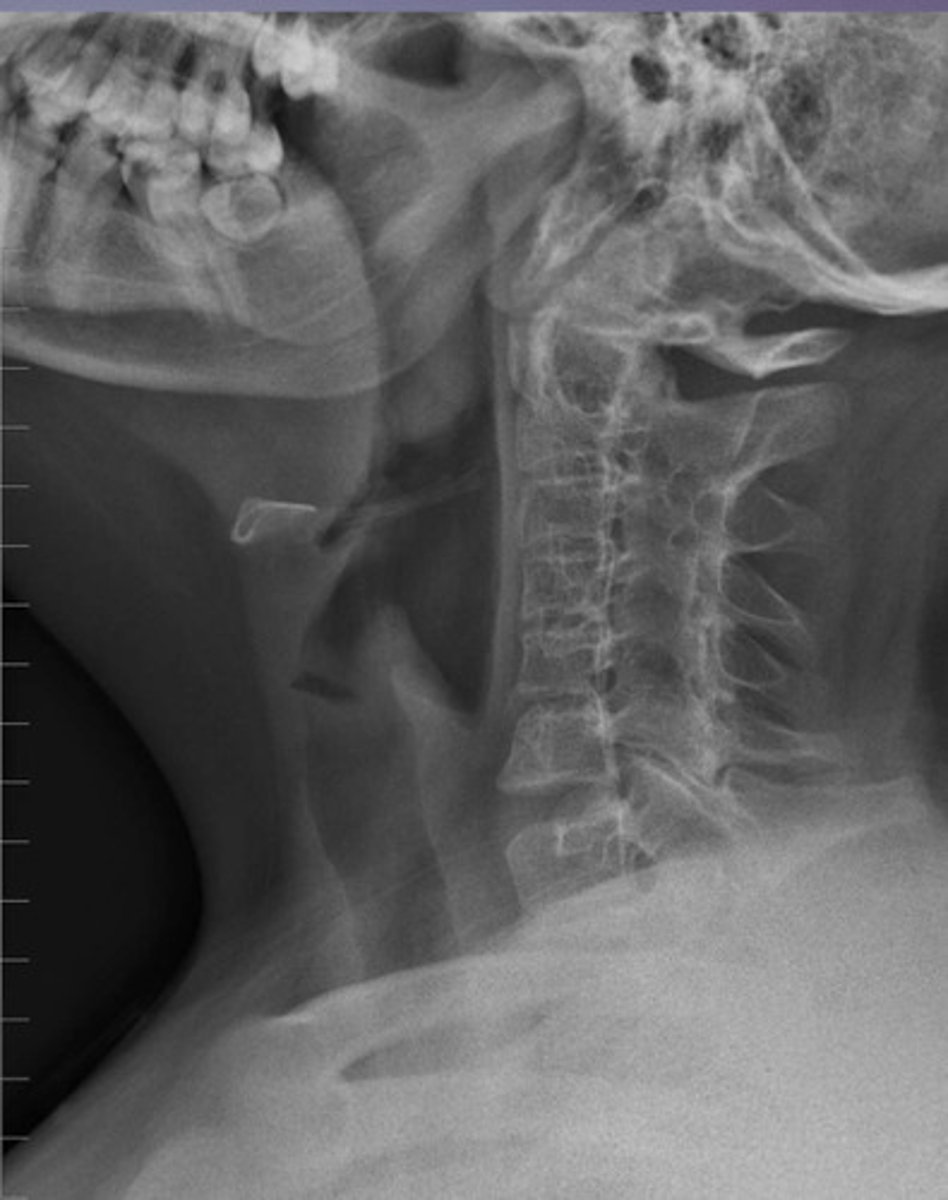
Juvenile chronic arthritis: Still disease, with secondary DJD
What does this image show?
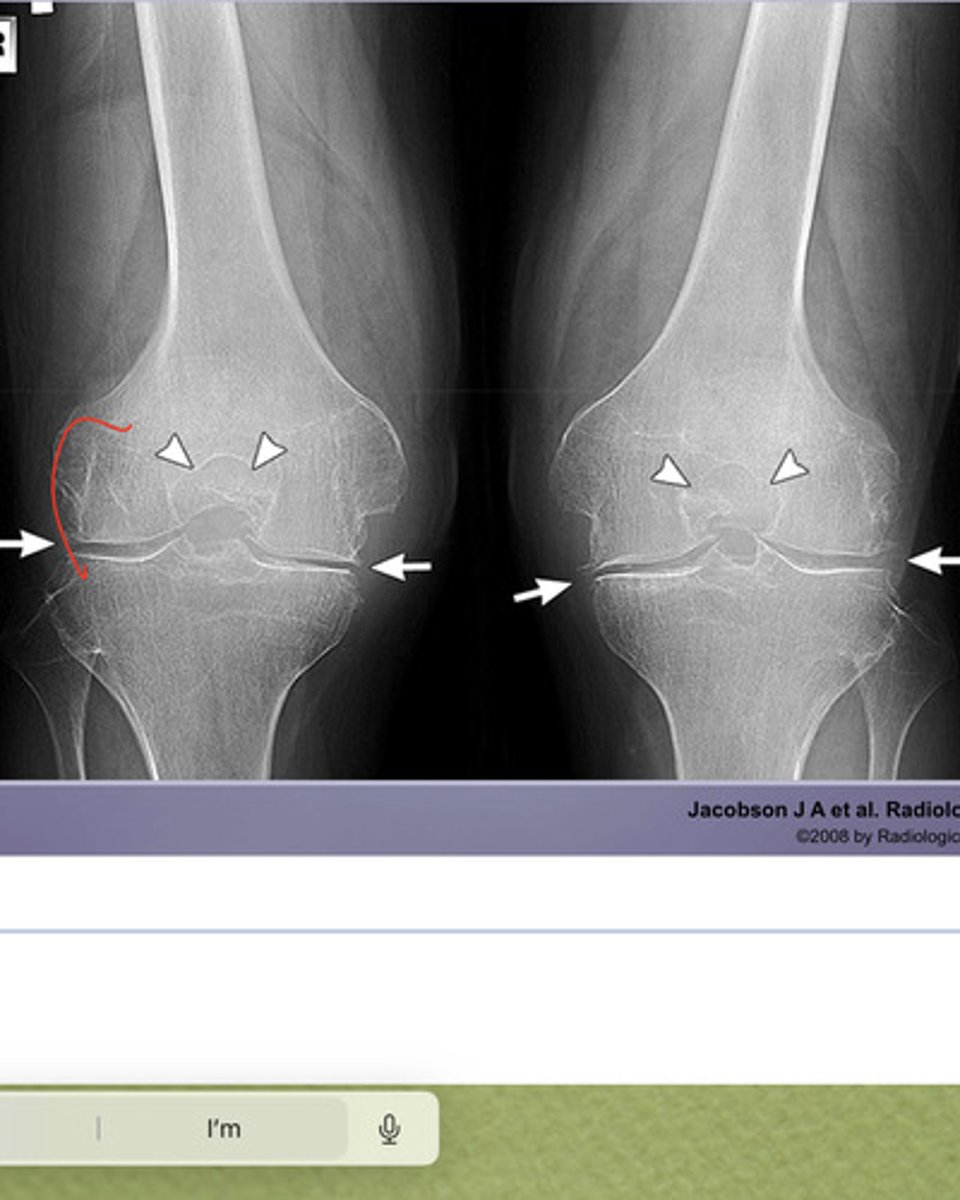
JCA
Hypoplastic bodies and ankylosed facets indicate what condition?