EXAM 3
 Call Kai
 Learn
Learn Practice Test
 Spaced Repetition
 Match
Match Flashcards
 Knowt Play
1/121

There's no tags or description
Looks like no tags are added yet.
Name | Mastery | Learn | Test | Matching | Spaced | Call with Kai | Chat |
|---|
No analytics yet
Send a link to your students to track their progress
122 Terms

PHRENIC

It increases intrathoracic pressure, which decreases venous return to the heart and causes a decrease in cardiac output.
Identify less obvious injuries that require immediate treatment.

Maintain stabilization of the head
Confirm that the patient is not allergic to aspirin, give him the appropriate dose of aspirin, and document the time and dose given.
encouraging him to cough and transporting.

Cheyne-Stokes respirations

Place her in a supine position

12 TO 20 BREATHS PER MINUTE

Any situation that causes vasoconstriction or loss of red blood cells, such as anemia or bleeding, may result in an inaccurate or misleading value.

Glucose is a simple sugar that is readily absorbed by the cells

Stand behind him and administer abdominal thrusts

"What seems to be the matter?"

Have pulmonary edema and can follow verbal commands

500 PSI
Administer epinephrine to the patient, begin immediate transport, and attempt to contact medical control en route to the hospital

300 mm Hg

Overdosed on an opioid drug.
Patients with a significant MOI and unresponsive medical patients

Has bradycardia and diminished muscle tone

Falsely high systolic and diastolic reading
The epiglottis

Identify and rapidly treat all life-threatening conditions
Introduce yourself to the patient
Remove her dentures, resume ventilations, and assess for adequate chest rise
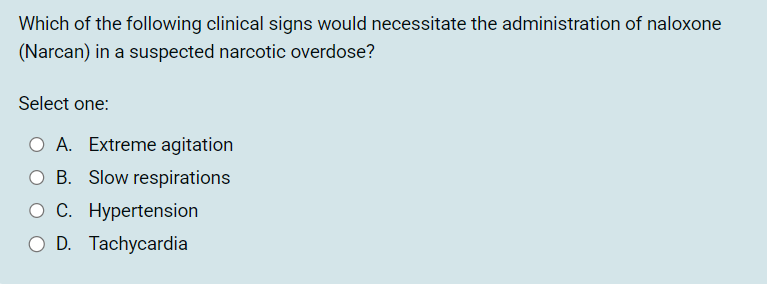
SLOW RESPIRATIONS
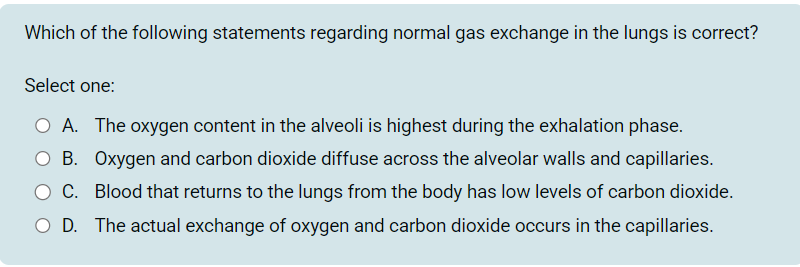
Oxygen and carbon dioxide diffuse across the alveolar walls and capillaries
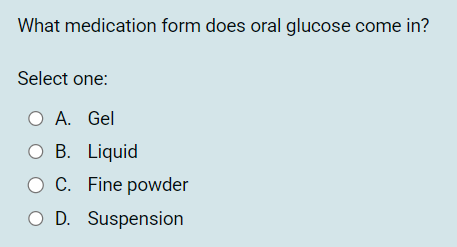
GEL
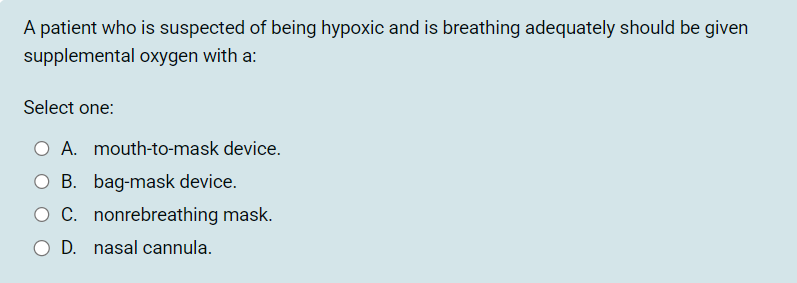
Nonrebreathing mask
Avoid compressing both carotid arteries simultaneously

Between the skin and the muscle

Systolic blood pressure
With the bevel facing the septum if inserted into the right nare
Most serious thing the patient is concerned about.

Adequate amounts of surfactant
Repeat the primary assessment

90

Reservoir bag is fully inflated

Shallow breathing

Man with altered mental status after being exposed to blunt force trauma

Assist his ventilations with a bag-mask device

Systematic head-to-toe examination

Place the tips of your index and long fingers over the pulse point.

Decrease the amount of pressure that the CPAP device is delivering.

Adequate tidal volume is often difficult to achieve when one EMT is operating the bag-mask device
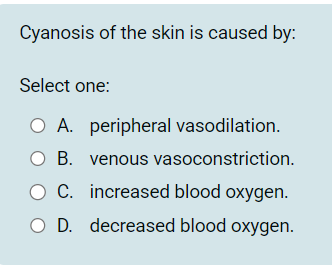
Decreased blood oxygen.

All the patients have been triaged.

Incompletely convert glucose into energy, and lactic acid accumulates in the blood

44%
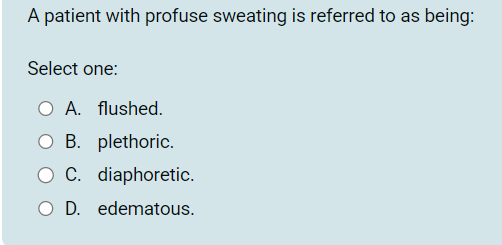
Diaphoretic
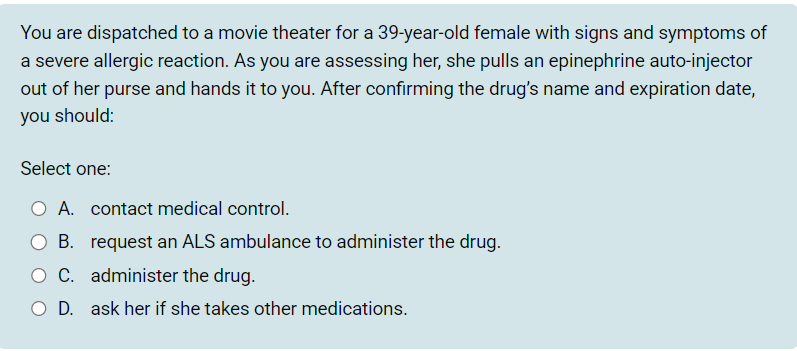
Contact medical control
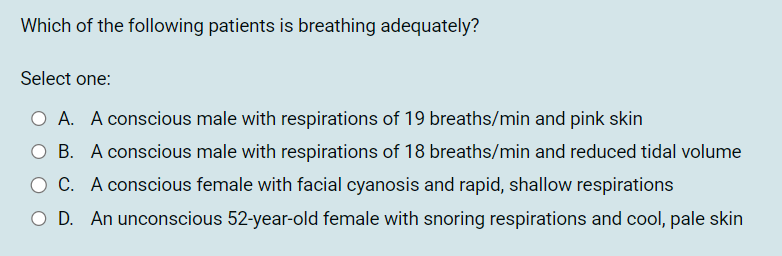
A conscious male with respirations of 19 breaths/min and pink skin

Hypoglycemia

Only one section of the chest rises on inspiration, while another area falls

60, 100

CYANOSIS

Ask him if he took his Viagra within the past 24 hours.

Determine which complaint poses the greatest threat to the patient's life
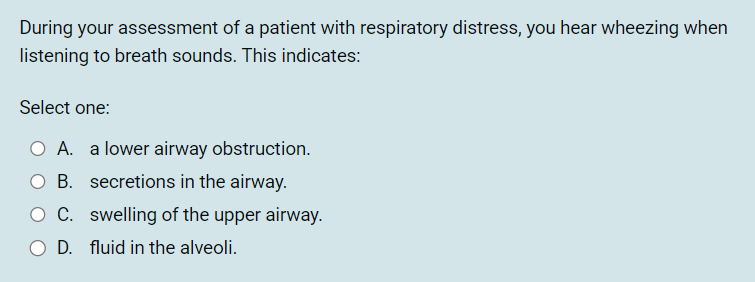
A LOWER AIRWAY OBSTRUCTION
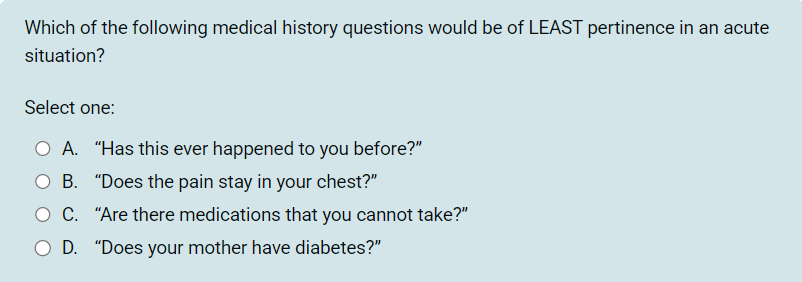
“ DOES YOUR MOTHER HAVE DIABETES “

THE TONGUE
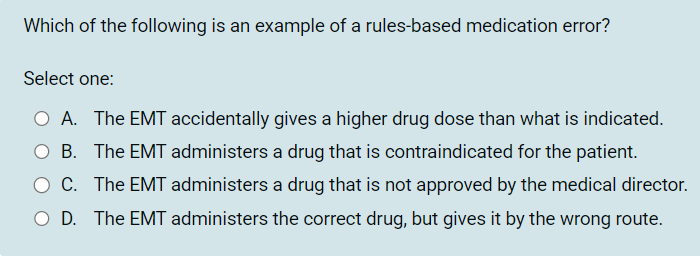
THE EMT ADMINISTERS A DRUG THAT IS NOT APPROVED BY THE MEDICAL DIRECTOR

Administer drugs via the IV ROUTE TO ACHIEVE THE FASTEST EFFECT
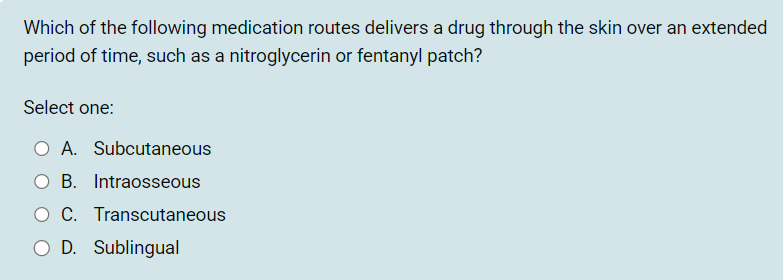
TRANSCUTANEOUS
RADIAL

A disruption in blood flow inhibits the exchange of oxygen and carbon dioxide in the lungs, even though the alveoli are filled with fresh oxygen.
CYANOSIS

ENSURE THAT YOU ARE SAFE
APNIEC OXYGENATION
IT FORCES THE ALVEOLI OPEN AND INCREASES THE CONCENTRATION OF OXYGEN IN THE ALVEOLI

REQUEST LAW ENFORCEMENT PERSONNEL IF THE SCENE IS UNSAFE UPON ARRIVAL

13
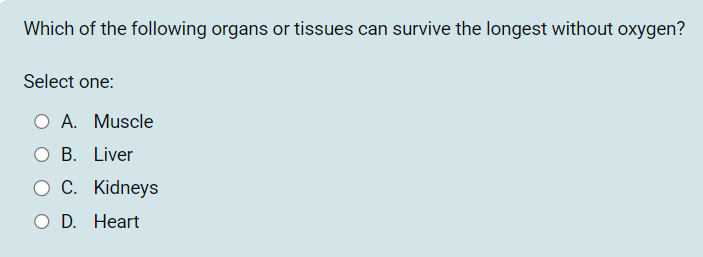
MUSCLE

PERFORM A CAREFUL AND THOROUGH ASSESSMENT
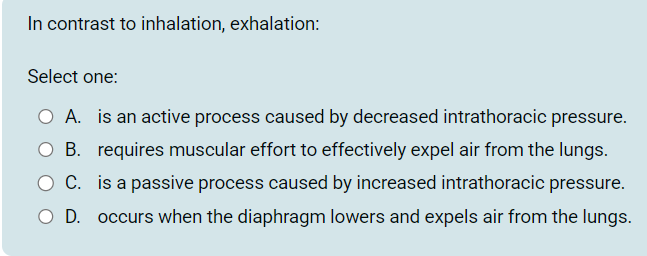
Occurs when the diaphragm lowers and expels air from the lungs
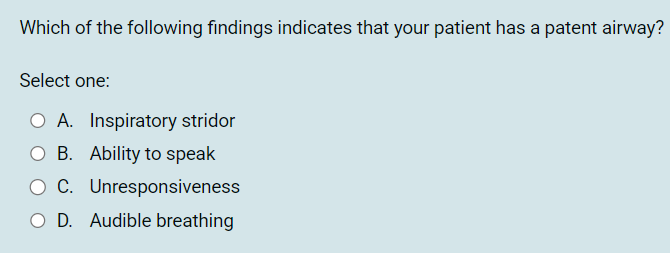
Ability to speak

Cellular tissue damage occurs from excessive oxygen levels in the blood.

In mines or confined places, where oxygen levels are low, ventilation may continue
despite inadequate oxygenation

Naloxone administration could cause seizures in this patient
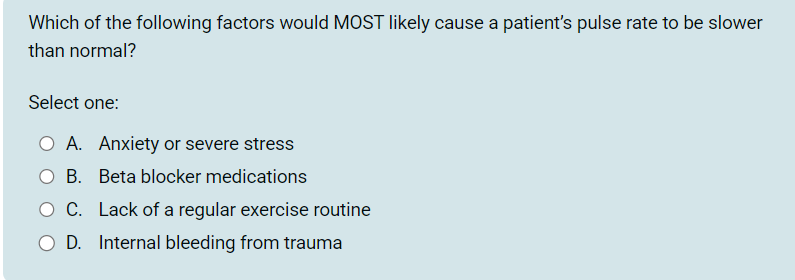
Beta blocker medications
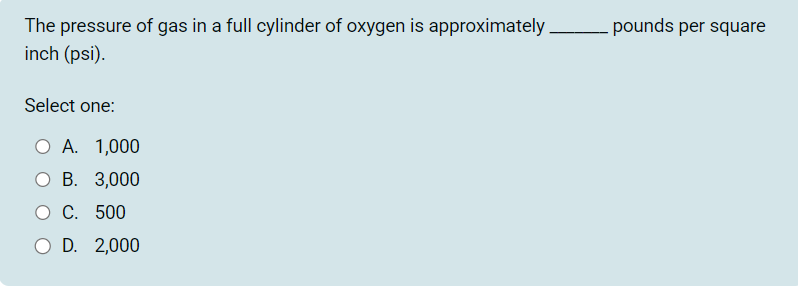
2,000

Two-thirds the length from the armpit to the crease at the elbow.

Low blood oxygen levels

Perform oropharyngeal suctioning
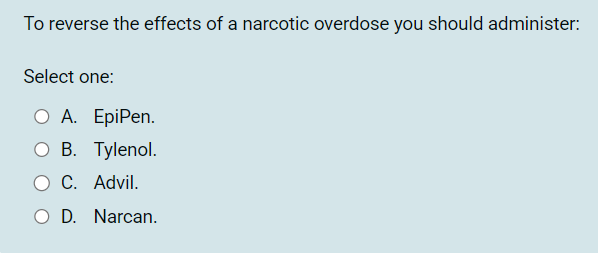
NARCAN

Determine how much carbon dioxide is being exhaled
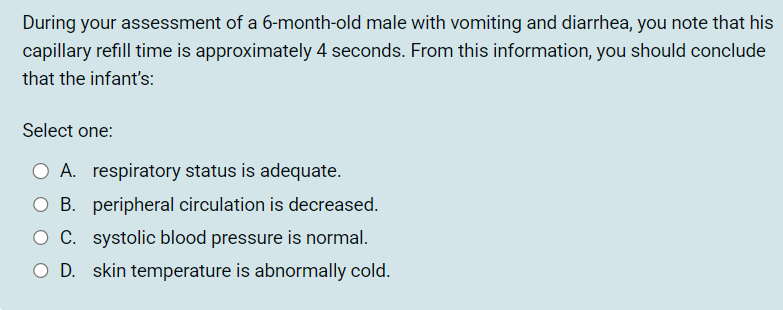
Peripheral circulation is decreased.
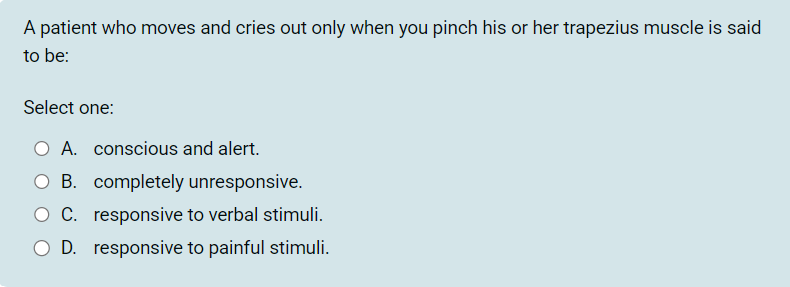
Responsive to painful stimuli.
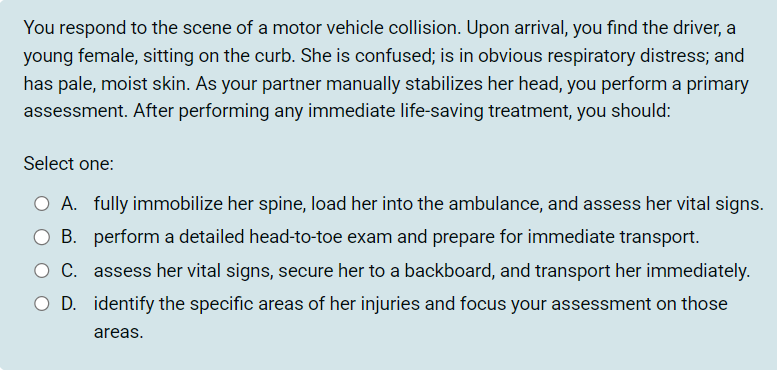
Perform a detailed head-to-toe exam and prepare for immediate transport.
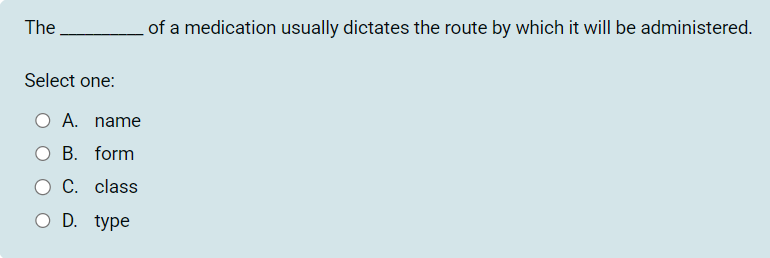
FORM
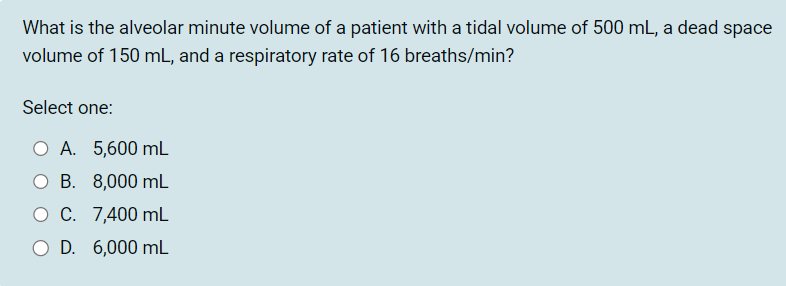
5,600 mL

Wiggle his or her toes on command.

Bourdon-gauge flowmeter
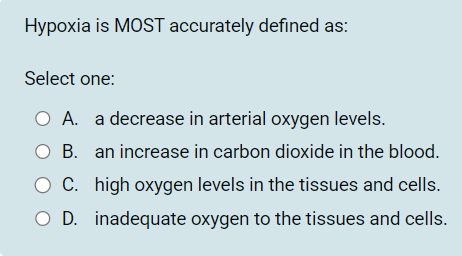
Inadequate oxygen to the tissues and cells.

Hypercarbia
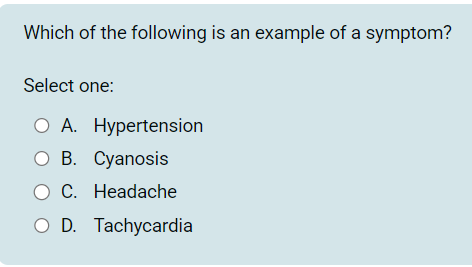
HEADACHE
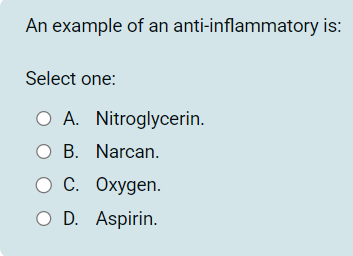
ASPRIN
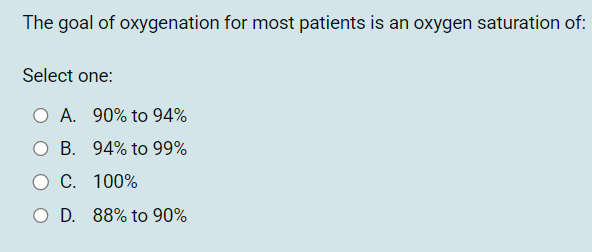
94% TO 99%

ESOPHAGUS

Slight increases in carbon dioxide or a decrease in the pH of the cerebrospinal fluid