Retroviruses
 Call Kai
 Learn
Learn Practice Test
 Spaced Repetition
 Match
Match Flashcards
 Knowt Play
1/33

There's no tags or description
Looks like no tags are added yet.
Name | Mastery | Learn | Test | Matching | Spaced | Call with Kai | Chat |
|---|
No analytics yet
Send a link to your students to track their progress
34 Terms
summary
-helical nucleocapsid
-icosahedral capsid
-enveloped (acquired)
-v fragile in enviro
-cytoplasm replication
transmission
general
-close contact
-transfer of body fluids
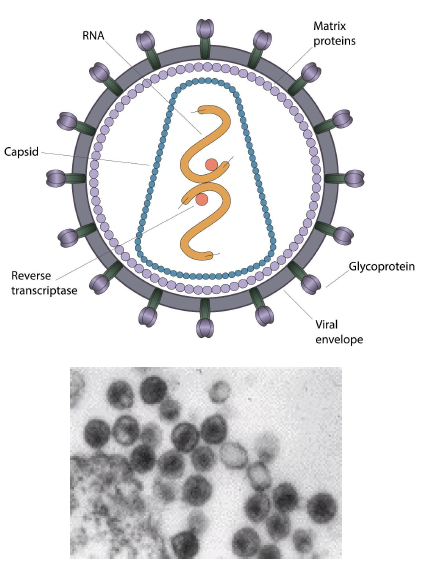
-general retrovirus
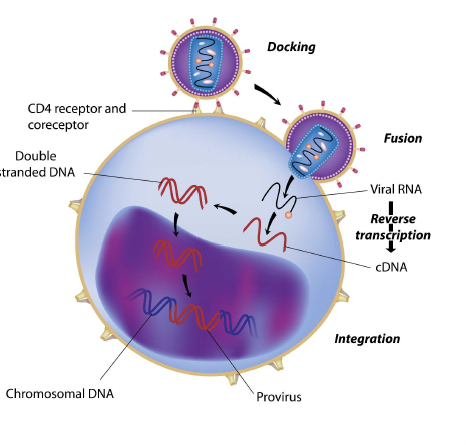
-general retrovirus
replication
-unique
-provirus inserted into host cell’s DNA
-provirus may stay transcriptionally silent for long periods (months/years)
-may continue to transcribe
endogenous
general
-transmitted horizontally
-if incorporated into germline DNA will be inherited
-ERVs are defective with no production of virus
-some can have beneficial effects in hosts
-ERVs can cause disease in:
cats
mice
koalas
humans
Abs
-can be used to detect viruses in individuals
-no enviro reservoir of virus
-
how do oncogenetic retroviruses produce tumors?
-virus effects cell oncogene (chronic transformation)
-virus posesses an oncogene (acute transformation)
oncoviruses:
chronic transformation
-provirus inserts nearest cellular proto-oncogene → increase unit expression
-slow oncogenesis → require requires chance event to occur
-not every animal will develop neoplastic change
oncoviruses:
Acute transformation
-directly oncogenic
v-onc usually displaced another viral gene → gene is defective and requires help (replication competent helper)
-not as common as chronic transformation
avian lymphoid leucosis
poultry
-horizontally and vertically (egg)
-if infected vertically or during first few days → persistent viremic but Ab neg
-if infected over 1 wk → can mount immune response, clear virus and no tumors
-low mortality rate
-⬇ egg production, hatchability
avian lymphoid leucosis
control
-no vx
-breed for resistance
Feline leukemia virus
Factors for outcomes
–age
– Dose of virus at time of infection
Feline and leukemia virus
Immunity
– Older cats, Mount immune response, and clear virus
– Young cats have been effective immune response → persistent viremia
Feline leukemia virus
Symptoms
– Lymphoid and myeloid leukemia
– Lymphosarcoma
– Bone marrow aplasia → anemia
– Immunosuppression
– Reproductive failure
– glomerulonephritis
– Osteosclerosis
Feline leukemia virus
Most common symptoms
– Lymphoid and myeloid leukemia
– Lymphosarcoma
– Anemia
– Immunosuppression
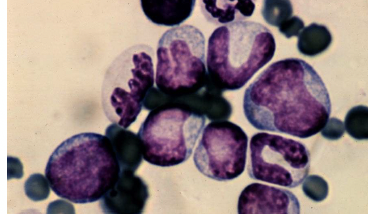
– Leukemic bone marrow
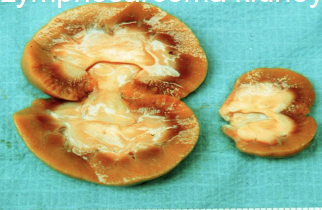
– Lymphosarcoma kidney
FeLV:
subgrps
A
B
C
T
FeLV:
subgrp A
-most common
-source of other subgrps
FeLV:
which subgrp is associated with tumors?
B
FeLV:
which subgrp is associated with anemia?
C
FeLV:
which subgrp is associated with immunodeficiency?
T
FeLV:
transmission
-shed in saliva, secretions/excretions
-high in multi cat households, catteries
FeLV:
dx
-need to detect persistent viremia (they are the ones who develop disease)
-Ag detected in blood
-ELISA, rapid Ag tests
-Ab test not useful because anyone exposed to virus will test (+)
FeLV:
Vx
-recombinant vx is available in Aus
-must test before vx
enzootic bovine leukosis
Summary
(EBL)
-persistent lymphocytosis in 30% of infected animals
-lymphosarcoma in 5% of infected animals
– Long incubation period, persistent infection
– Transmission: blood transferred between animals
– Insect of vectors can also transmit
– No vaccine
– Control programs: Ab testing
EBL
Dairy freedom program
– EBL has been eradicated from Australian Derry herds
– Objective: protect, enhance Australia's access to international export trade
– EBL free from December 31, 2012
– Continued bulk milk, monitoring called maintenance of freedom
– Any infections must be reported to state CVO's
– Annual EBL status report given to international trading partners
– Beef herds still have low levels of EBL
– Dairy herds must be separated from untested beef herds
lentiviruses
-slow progressive disease
– Transmission: close contact, transfer of body fluids
medi-visna virus
(ovine Progressive Pneumonia)
– Sheep and goats
– Incubation: 2 to 3 years
– Slow progressive pneumonia (maedi) → dyspnoea, wasting → death
– Slow demyelination (visna) → neurological signs, wasting → death
– Global except Australia: strict quarantine, virus fragility
Caprine arthritis encephalitis virus
CAEV
-goats
-transmission: colostrum
-in Aus
-symptoms: lesions in jts, brain, lungs, mammary glands
CAEV:
CAE scheme
-flock management
-2 neg blood tests of all goats over 6 mo for initial accreditation
-annual or biennial re-accreditation
-if infection occurus, loose accreditation until all reactor animals are removed from herd
-must meet all vet and lab costs, fee to Biosecurity QLD
Equine infectious anemia
EIA
– Symptoms: fever, anemia, abnormal, iron metabolism, increased, gammaglobulin levels, immunosuppression
– Acute death or recurrent episodes with progression
– North Australia
- transmission: biting arthropods
Feline immune deficiency virus
FIV
– Initial symptoms: fever, anemia, lymphadenopathy → eventual immunosuppression → secondary infections
– Long incubation period
– Transmission: biting/fighting (high prevalence and males)
– Killed vaccine available
– DX: antibodies in serum