Psych Exam 1 Review
 Call Kai
 Learn
Learn Practice Test
 Spaced Repetition
 Match
Match Flashcards
 Knowt Play
1/72

Earn XP
Description and Tags
Psych 101
Name | Mastery | Learn | Test | Matching | Spaced | Call with Kai | Chat |
|---|
No analytics yet
Send a link to your students to track their progress
73 Terms
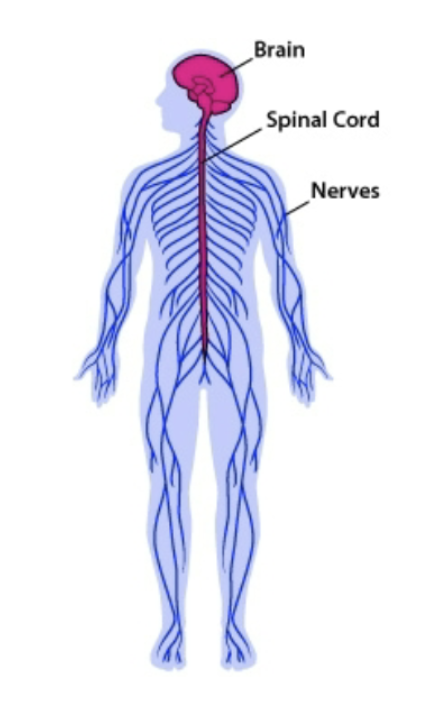
What is the job of the spinal cord?
to carry sensory information and motor commands.
Sensory info carried to brain
Motor commands carried to muscles
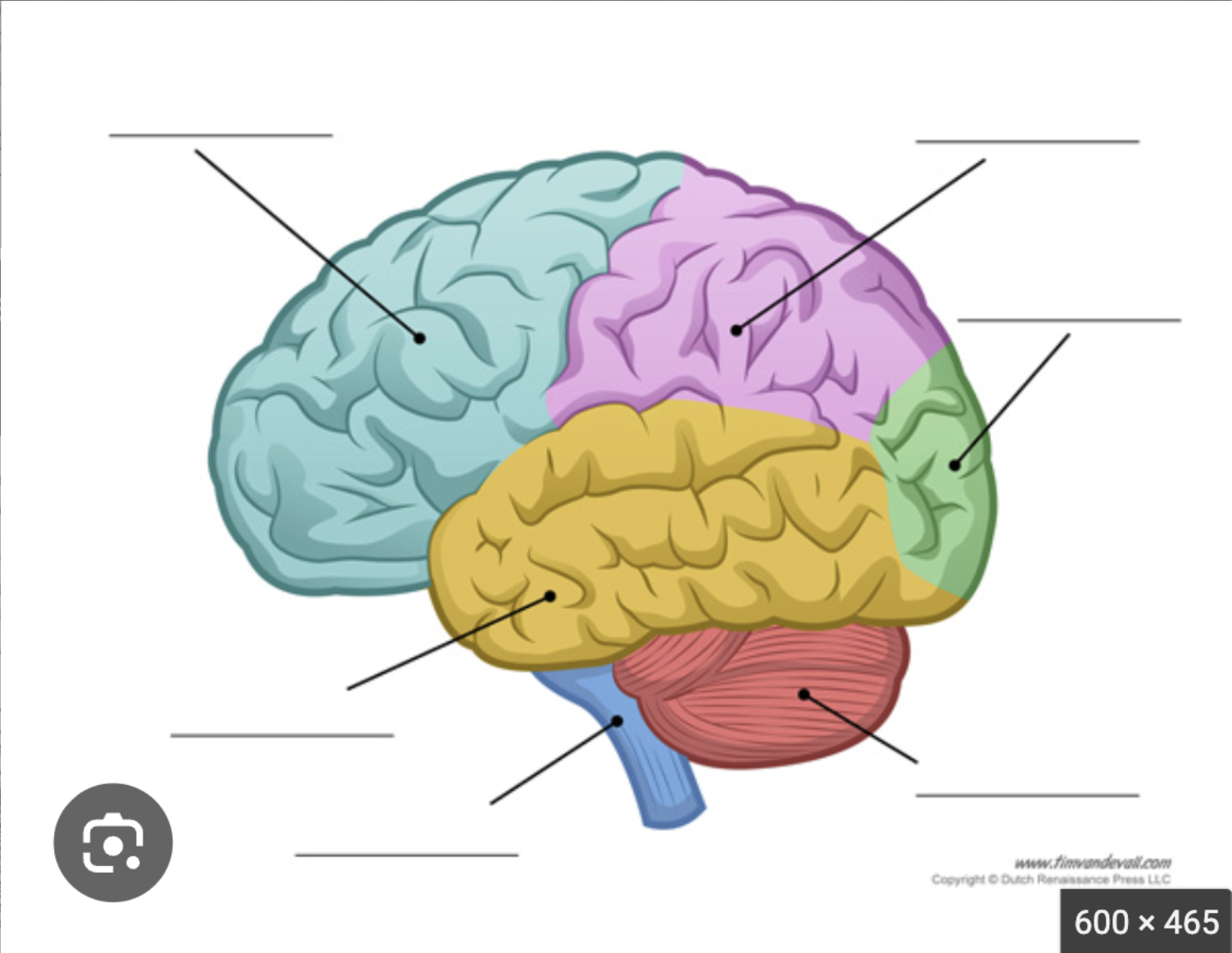
Which lobe is the teal-blue representing?
Frontal Lobe
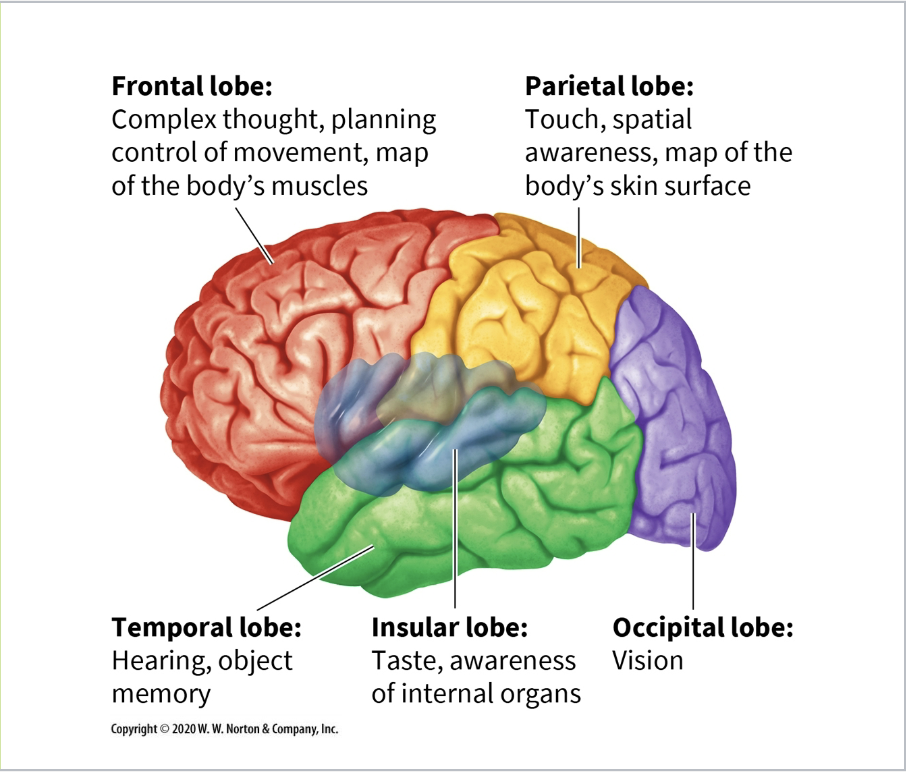
What is the frontal lobe responsible for?
Responsible for thinking, planning, decision-making, and controlling behavior


What lobe does the purple color represent?
Parietal Lobe

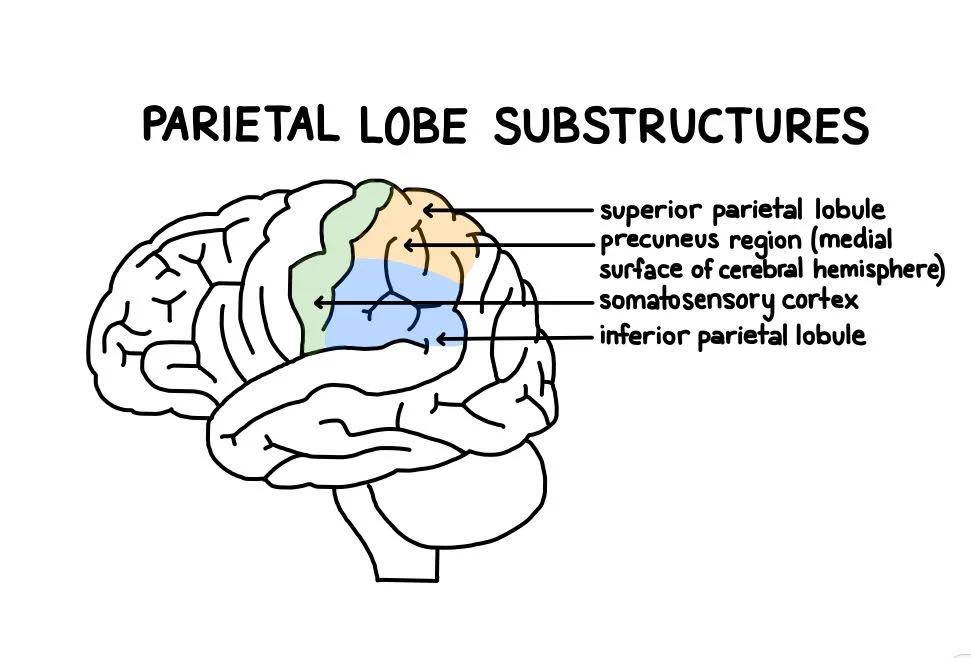
What does the parietal lobe do?
processes sensory information, perception, and spacial awareness
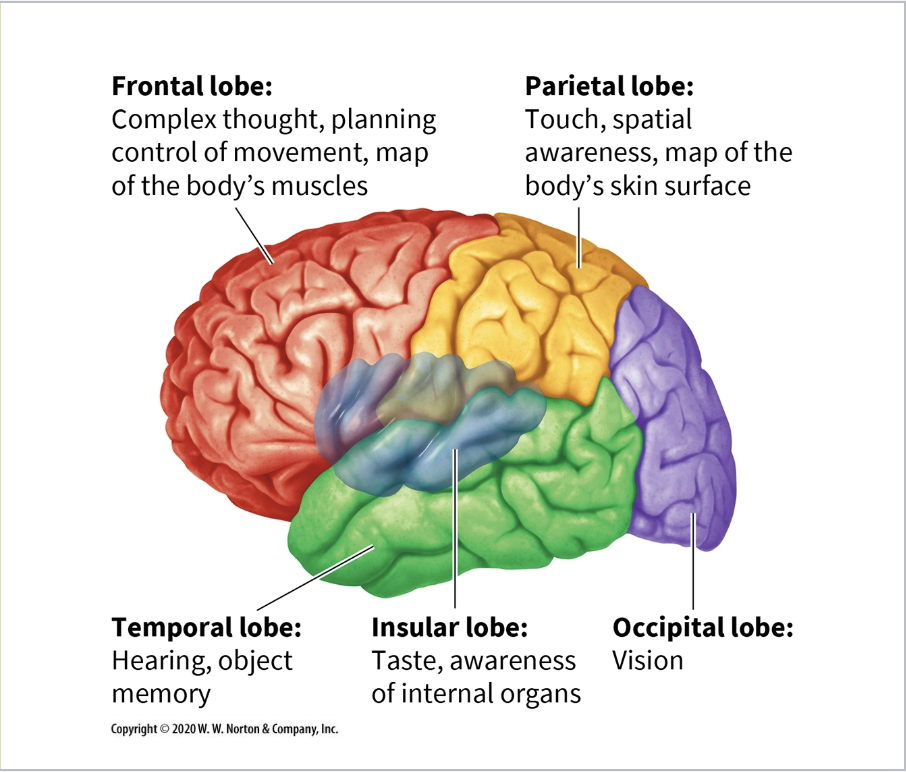
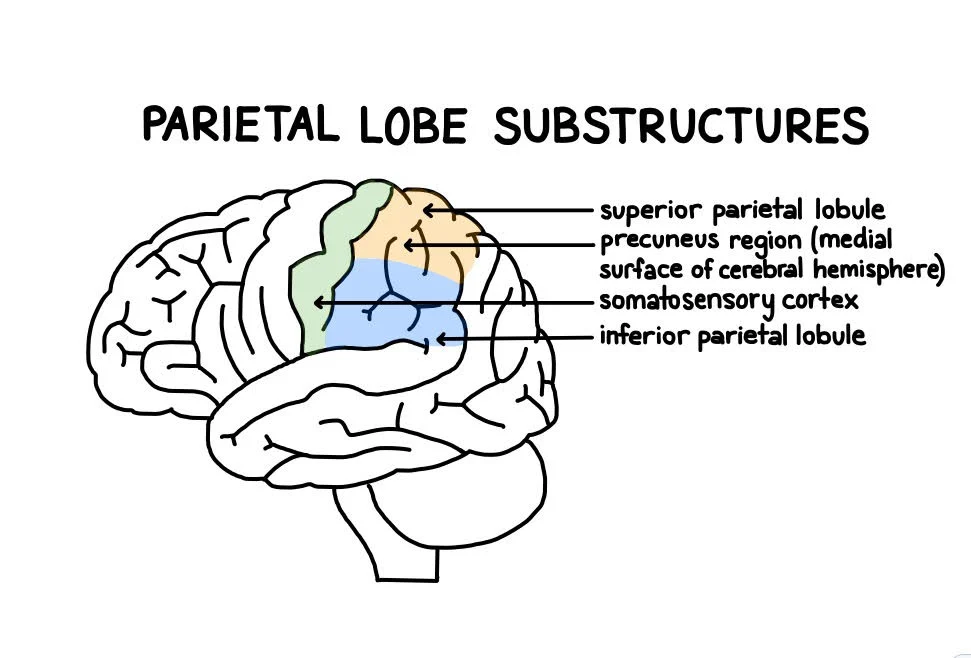
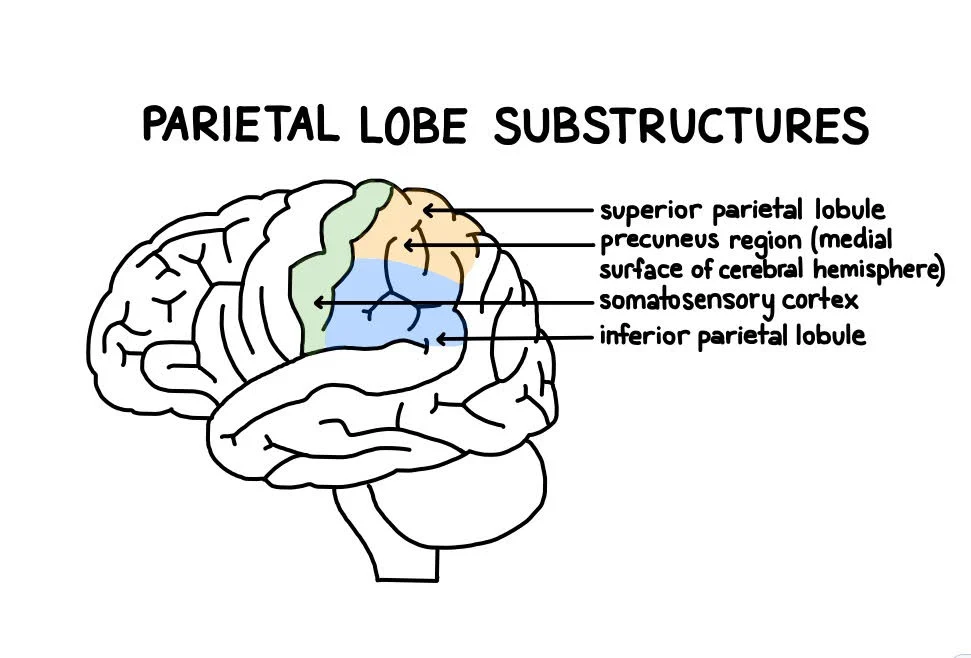
What cortex is significant in the Parietal lobe?
Somatosensory cortex: receives and processes sensations from the body

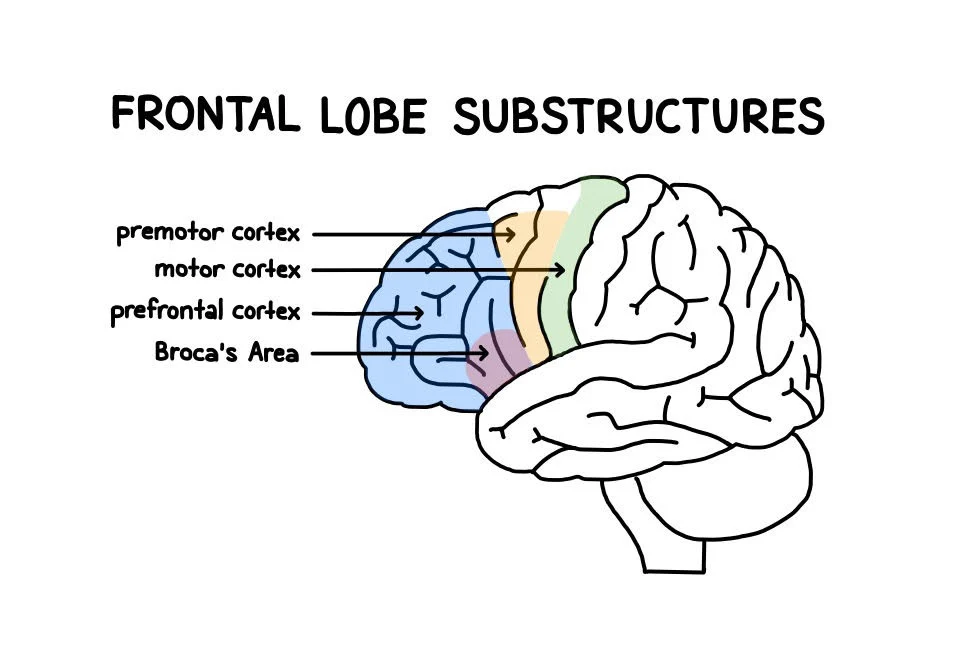
What are the cortexes in the frontal lobe?
Motor, Prefrontal, Brocas area
What does the motor cortex do?
responsible for voluntary movements of the body, planning, preparation and initiation of motor movements.
Prefrontal cortex
responsible for thought, planning, decision-making, and self control
Brocas area
responsible for language production
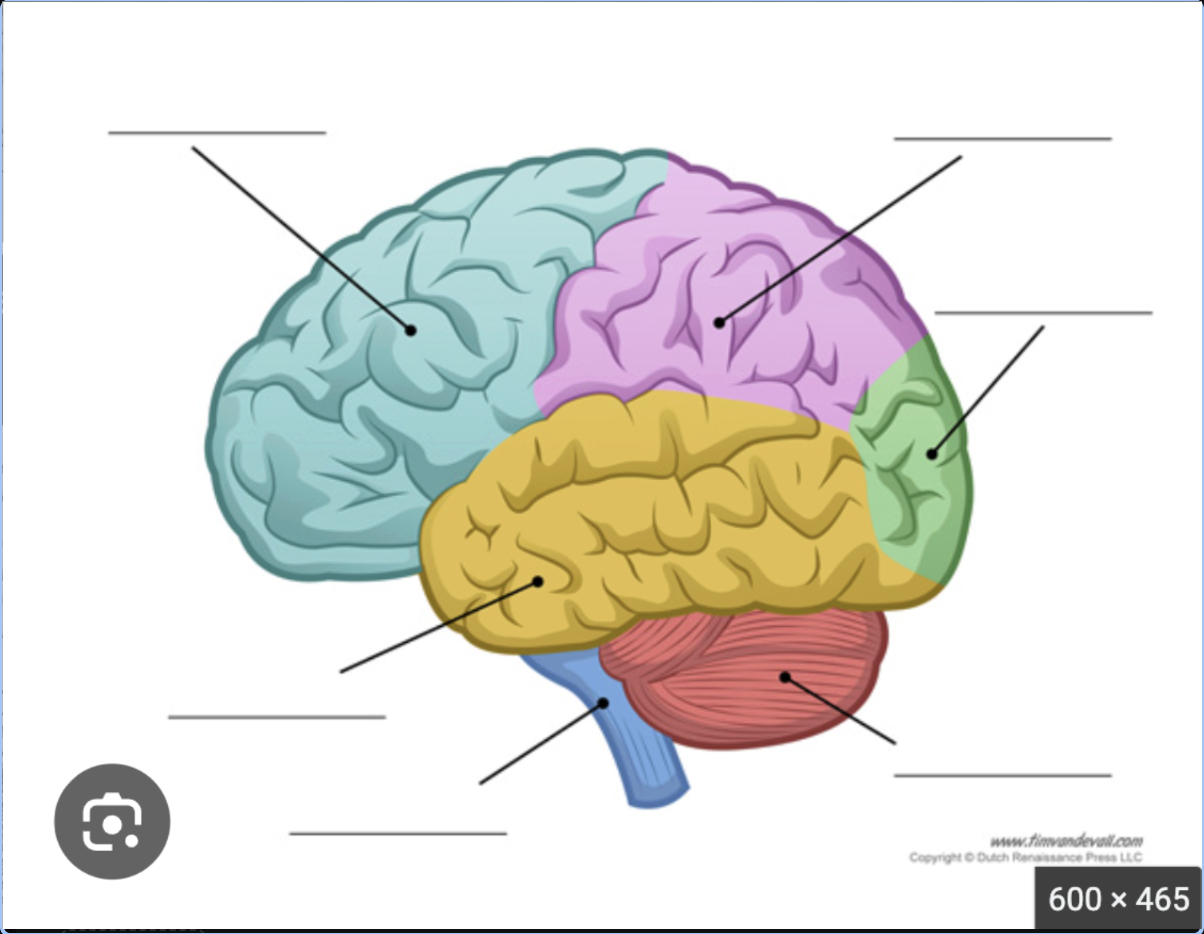
What color does the yellow region represent?
Temporal lobe


What does the green region represent?
Occipital lobe
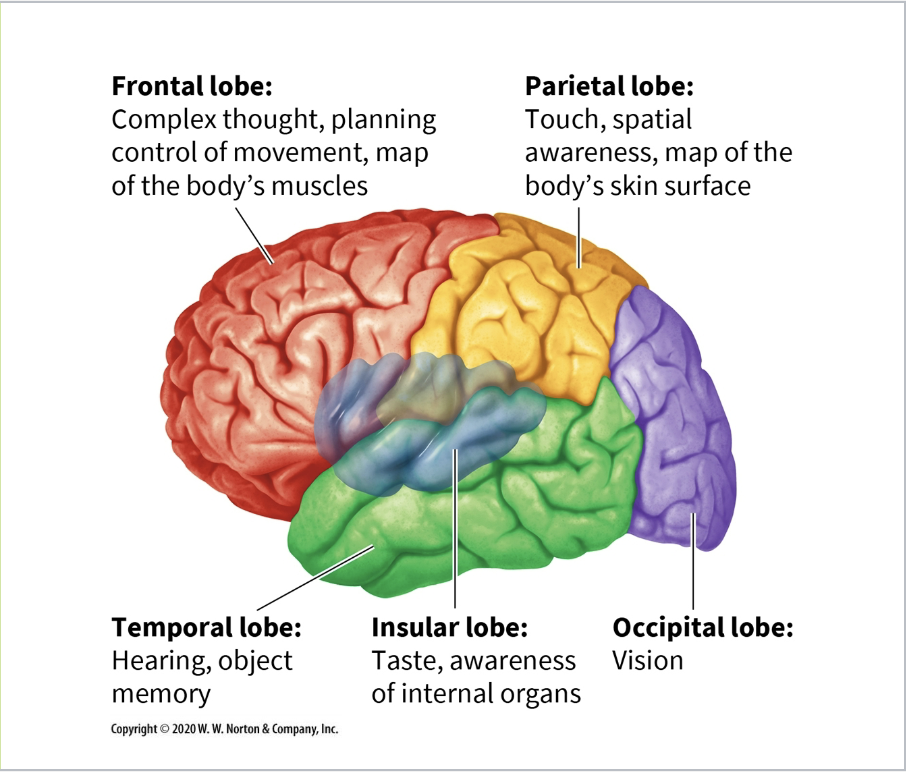
Temporal Lobe
Responsible for hearing, language, memory
Helps with recognizing and identifying what you see; visual recognition of objects and faces
Cortex in Temporal lobe
Auditory cortex: processes sounds and hearing
Wernicke’s Area
located usually left temporal lobe, understanding language.
temporal lobe
occipital lobe
• Responsible for receiving and processing visual information (color, shape, size, movement, location of objects).
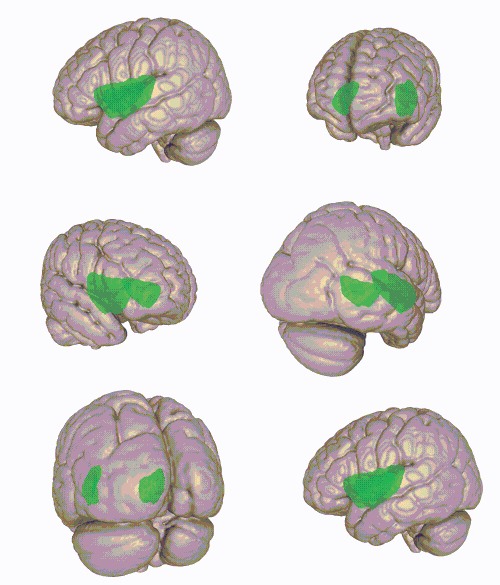
What does the highlighted area represent?
Insular lobe
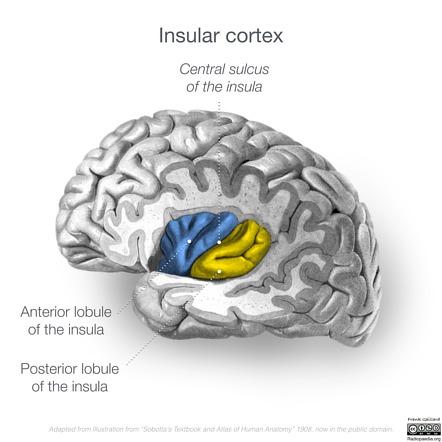
insular lobe
Responsible for sensing internal states, maintaining homeostasis, diverse roles.
• Taste, emotions, pain, heartbeat, hunger, etc.
Corpus Callosum
• Responsible for connecting left and right cerebral hemispheres, allows two hemispheres to communicate, coordinate, and share information.
In split-brain patients, the corpus callosum is cut so the hemispheres cannot communicate, leading to perceptual difficulties.

Cerebellum
• Responsible for controlling movement, balance, posture, motor learning and coordination.

Limbic System: Thalamus
Responsible for relaying sensory information; receives sensory signals and sends them to the appropriate areas of the cerebral cortex.
• Relays information about vision, hearing, touch, temperature, pain. (Except smell)
Limbic: Hypothalamus
Responsible for maintaining homeostasis, keeping body’s internal environment stable.
• Regulates body temperature, hunger, thirst, sleep, heart rate/blood pressure, stress emotions
Limbic: Amygdala
Responsible for processing emotions, especially fear and threats
• Fear and threat detection, anger/aggression, emotional responses, emotional memories.
Limbic: Hippocampus
Responsible for learning and memory
• Forming new memories, learning new information, spatial memory
Basal ganglia
Responsible for controlling movement and motor coordination, damage linked to Parkinson’s
• Ex; starting/stopping movements, controlling smooth purposeful movements, learning habits and motor skills, reward and motivation.
Sympathetic System
excited, “Fight or Flight”
Adrenaline released
Increased heart rate
Increased blood pressure
Lungs relax
• ⁃ Digestion inhibited
What system is sympathetic ?
peripheral → automatic
Parasympathetic
relax
Slows heart rate
Promotes growth
Stimulates digestion
• Promotes cell regeneration
Ventricles
empty space in the brain where fluid flows through
Pseudoscience
Overuse of ad hoc immunizing hypotheses - making excuses for lack of evidence
exaggerated claims
over-reliance on anecdotes.
absense of connectivity to other research
lack of peer review
unnecessary jargon
talk of "proof", instead of evidence.
Biological psych
The study of how biological processes in the brain and body are related to behavior
Ex; neuroscience, behavioral genetics
“How Brain and Body relate to Behavior”
Clinical psych
Study of causes of mental disorders and their treatment
Ex; educational psych
“Mental Disorders and their Treatment”
Social psych
Study of how people think about themselves and others and how they influence one another
“What People Think and How They Influence One Another”
Developmental psych
Study of how change in behavior and mental processes over the lifespan
Ex; educational psych
“How Behavior Changes Over Time”
Personality psych
Study of similiarties and differences among people such as sociability, reliability, emotionality and others.
Ex; industrial-organizational
“Similarities and Differences Among People”
Cognitive Psych
Study of mental abilities including sensation, perception, learning and memory, thinking, consciousness, intelligence and creativity
Ex; perception and language
“Study of Mental Abilities”
Confirmation Bias
the tendency to seek evidence that supports what you already believe, while ignoring information that contradicts it.
Bandwagon Fallacy
believing something is true or correct because many other people believe it.
"everyone thinks its true so it must be true"
Emotional Reasoning Fallacy
he belief that because you feel something strongly, it must be true.
"I want it to be true, so it must be true"
Glial cells
support cells of the nervous system
insulates neurons with myelin
which part of the neuron is responsible for releasing neurotransmitters'?
terminal branches
The evolutionary perspective emphasizes the influence __________ on behavior?
genetics
What is one surprising result of studies of twins rear apart?
twin pairs were just as similar whether raised together or apart.
Brainstem
connects brain to spinal chord

What is an interesting fact about adoptive studies?
Similarities between adoptive children and their biological parents on intelligence get stronger over time.
Brainstem - Midbrain
• Helps control vision and visual tracking, hearing and auditory reflexes, movement, eye movements.

Brainstem - Pons
middle part of the brainstem
Acts as a bridge between cortex and cerebellum. Helps regulate breathing, sleep, arousal.

Brainstem - medulla
Located at the lowest part of the brainstem, directly above spinal cord.
• Controls important automatic functions such as heart rate, breathing, blood pressure, sleep and wakefulness.

Which part of the brain, located on the left frontal lobe, was identified by a surgeon as being implicated in speech production?
Broca’s Area
Which essential area of the brain helps to regulate such critical functions as breathing, digestion, and the beating of your heart?
Brainstem

Juan is eating paella, his favorite dish of rice and seafood. What part of Juan’s cerebral cortex is probably most active as he is enjoying the taste of his dinner?
Parietal Lobe
______theory deals with the evolution of cognitive biases that lead to judgments and decisions we make in situations of uncertainty.
Error Management
Cultural Relativism
understanding a person's behavior, beliefs, or values within the context of their own culture, rather than judging them based on the standards of your own culture.
“different doesn’t necessarily mean wrong”
Ethnocentrism
the tendency to judge another culture based on the standards, values, and beliefs of your own culture.
One problem with adopting cultural relativism is that it leaves no room for criticism of ______.
harmful cultural practices
Which of the following examples would demonstrate the influence of nature on one’s success? (nature= genetic/biological influences).
a football player is born with the genes to be very tall, very fast and quite muscular
The field of _______ involves searching for genes that are associated with characteristics using genetic testing.
molecular genetics
🧠 Parietal
physical sensation
🧠 Frontal
Future & Function
🧠 Temporal
temples = hearing
🧠 Parietal
Parie-feel → sensory info
🧠 Medulla
maintenance of life.
🧠 Pons
bridge
🧠 Midbrain
movement & senses
🧠 brain stem
basic survival → keeps essential body functions running automatically.
🧠 hippocampus
memory maker
🧠 amgydala
alarm
🧠 hypothalamus
homeostasis
🧠 thalamus
traffic controller
🧠 Cerebellum
coordination
🧠 Corpus callosum
communication bridge
🧠 Insular
inside
🧠 Occipital
Optical = Vision