Coral Reefs FInal Exam
 Studied by 0 people
 Call Kai
 Learn
Learn Practice Test
 Spaced Repetition
 Match
Match Flashcards
 Knowt Play
1/107

There's no tags or description
Looks like no tags are added yet.
Name | Mastery | Learn | Test | Matching | Spaced | Call with Kai |
|---|
No study sessions yet.
108 Terms
As coral cover declines, what happens to reef fish abundance and biodiversity?
Abundance and biodiversity both decrease
Coral reef fish _____ groups can be linked to key ecosystem function that regulate the wider ecosystem
trophic
Some fish have a fourth photoreceptor (humans only have 3), which allows them to see which additional wavelength of light?
Ultraviolet
What can non-sequenced-based bacterial community analysis not provide?
The identity of individual members of the community
What larvae are born with an egg yolk/sack that provides their nutrition at early life stages?
Lecithotrophic
Bacterial abundance is higher in the _____ than the ____
sediment; coral mucus
The successful octopus fishery in southwest Madagascar is an example of a(n)
customary marine tenure (CNT) or a community-managed system
Which genus of cyanobacteria is commonly found in waters that are nutrient-limited?
Procholococcus
In the microbial loop, what is the approximate rate of turnover in microbial communities?
seconds to minutes
What percentage of the total estimated catches worldwide do coral reefs represent?
2-5%
What is harvested for their abductor muscles
Tridacna
Amoeboid-like protists that range from <1 to 15 mm
Formanifera
Phytoplankton with cellulose walls
Dinoflagellates
Territorial fish that turns blue/purple when guarding eggs
Sergeant Major
Herbivorous fish with a fused beak
Parrotfish
Protozoans that produce elaborate external skeletons
Radiolarians
Photoplanktons with CaCO3 cell walls
Coccolithophores
Pathogen that causes white pox in the Elkhorn coral
Serratia marcescens
Nocturnal fish with very large eyes
Squirrelfish
Phytoplankton with silica cell walls
Diatoms
A corallivore that causes a great deal of coral loss in the Indo-Pacific
Acanthaster planci
An alternative to the wild capture of fish for use in the aquarium fish trade and the commercial fish industry
aquaculture
What is the primary mechanism of algal loss from a coral bleaching event?
Exocytosis
What do stonefish use to blend into their environment and conceal themselves from prey?
camoflaugue
A ____ animal is toxic if eaten or touched whereas a _____ animal is toxic if bitten or punctured by
poisonous; venomous
A fish that exhibits ____ mimicry takes on the coloration or behavior of a noxious individual and thus is avoided by predators; whereas a(n) _____ mimic resembles another in order to take advantage an otherwise beneficial interaction (i.e. a fish mimicing a cleaner wrasse)
Batesian; mullerian
_____ are ubiquitous in the environment, it can reach 10^8 particles ml^-1 and likely infect all cellular organisms on Earth
viruses
Paradigmatically, it was assumed that increased light and temperature damaged photosystem II of the zooxanthellae and led to the production of ______, which lead to a toxic environment in the coral and led to the explusion of zooxanthellae
Reactive oxygen species (ROS)
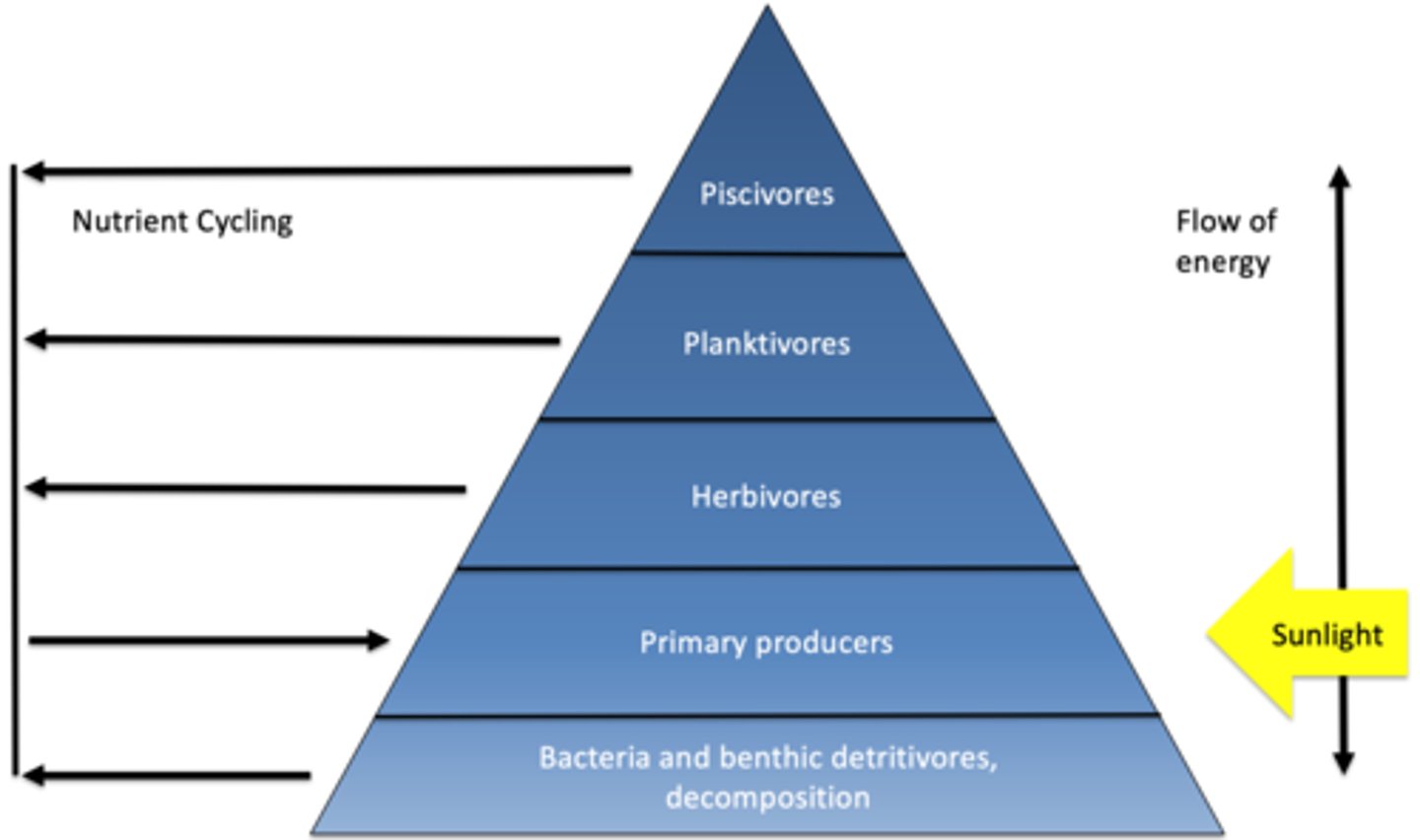
Draw an overall energy pyramid in coral reef systems from producers to top predators (include at least four trophic levels_. Indicate the flow of nutrients (in or out) at each trophic level and the overall flow of energy
Below are the results of a bacterial community analysis. What technique was used to yield these results? How many distinct bacterial communities are associated with the analyzed samples? Which samples exhibit the same bacterial composition?
The technique used was denaturing gel gradient electrophoresis. There are at least 5 distinct bacterial communities. 2, 3, and 4 all exhibit the same bacterial composition, and 6 and 8 share the same composition

At least one type of zooxanthellae is capable of growing heterotrophically on different sugars. How can you explain this, and what would be the implications on the Fv/Fm of the zooxanthellae while growing heterotrophically vs. autotrophically?
Some zooxanthellae can grow heterotrophically because they retain metabolic pathways that allow them to use organic carbon, not just rely on photosynthesis. When they grow this way, Photosystem II is less active, so their Fv/Fm values decrease. In contrast, autotrophically growing zooxanthellae use light for energy, resulting in higher Fv/Fm and greater PSII efficiency
What does it mean to be a "reef fish"? What sort of attributes can be used to describe a "reef fish"? Give at least two examples of fish species that are considered "reef fish".
A reef fish typically refers to a small, brightly colored or patterned fish that inhabits a coral reef ecosystem. They sometimes feed on macroalgae on a reef for survival, and they also use the reef structure for shelter. One species that is considered a "reef fish" is a parrot fish. These fish are typically yellow or blue fish with a fused beak that helps them feed on algae. Another "reef fish" is the scorpionfish. This fish is also brightly colored, but it also uses patterns and texture, so it can camouflage itself so it looks like the surrounding coral environment.
Why are lionfish such a concern for Caribbean reefs? Are there management strategies to control their population? If so, what are they?
Lionfish, which are an invasive species in the Caribbean, have taken over the environment. They have no known predators in this environment, so their populations continue to rise without anything stopping them. This species also preys on any organism that will fit in their mouth, and they reproduce very rapidly. Lionfish also have 13 venomous spines, which deters predators from preying on them. However, there have been some management strategies to control their population. Local communities will sometimes host competitions for fishermen where they reward whoever catches the most lionfish. Like some other species, there are no regulations on how many lionfish a single person can catch at a time. These are just two incentives that have been placed to inspire locals to help stop the lion fish.
What are at least two strategies that corals and/or their zooxanthellae can take to deal with lower light levels while still maintaining a symbiotic relationship? Describe how these strategies allow for success at a lower light level?
Corals and their zooxanthellae use several strategies to maintain symbiosis under low-light conditions. Zooxanthellae can increase chlorophyll or adjust their pigments to capture more light, improving photosynthetic efficiency. Corals may also host symbiont types that are better adapted to low-light environments, ensuring a continued supply of photosynthetic products. Together, these adjustments allow the coral-algae partnership to function successfully even when light availability is limited.
What is coral mucus? What is coral mucus comprised of? Describe at least four functions of coral mucus.
Coral mucus is a coating on the outer layer of the coral that helps the coral thrive in the surrounding environment. It is comprised of glycoproteins and sugar side chains. There are many functions of coral mucus, which include protection from sedimentation and dessication, protection from UV rays, protection against pathogenic microbes, and aiding in coral feeding.
What is the microbial loop, and what role do they play on coral reefs? Where would you expect to find higher rates of productivity: in the water column or in the benthos? Why?
The microbial loop is the pathway by which bacteria and other microbes recycle dissolved organic matter back into the food web, converting waste and leaked photosynthetic products into biomass that can be consumed by higher trophic levels. On coral reefs, this process is crucial because it keeps nutrients circulating in an otherwise nutrient-poor environment, supporting coral and reef productivity. Higher rates of productivity occur in the benthos, where corals and algae are concentrated, because primary production and nutrient recycling happen directly on reef surfaces rather than in the relatively nutrient-poor water column
Why does the Red Sea have more coral biodiversity than Hawaii, even though they are at the same latitude?
The aragonite saturation state is higher in the Red Sea
Which wavelength of light in the visible spectrum attenuates the quickest in the ocean?
Red
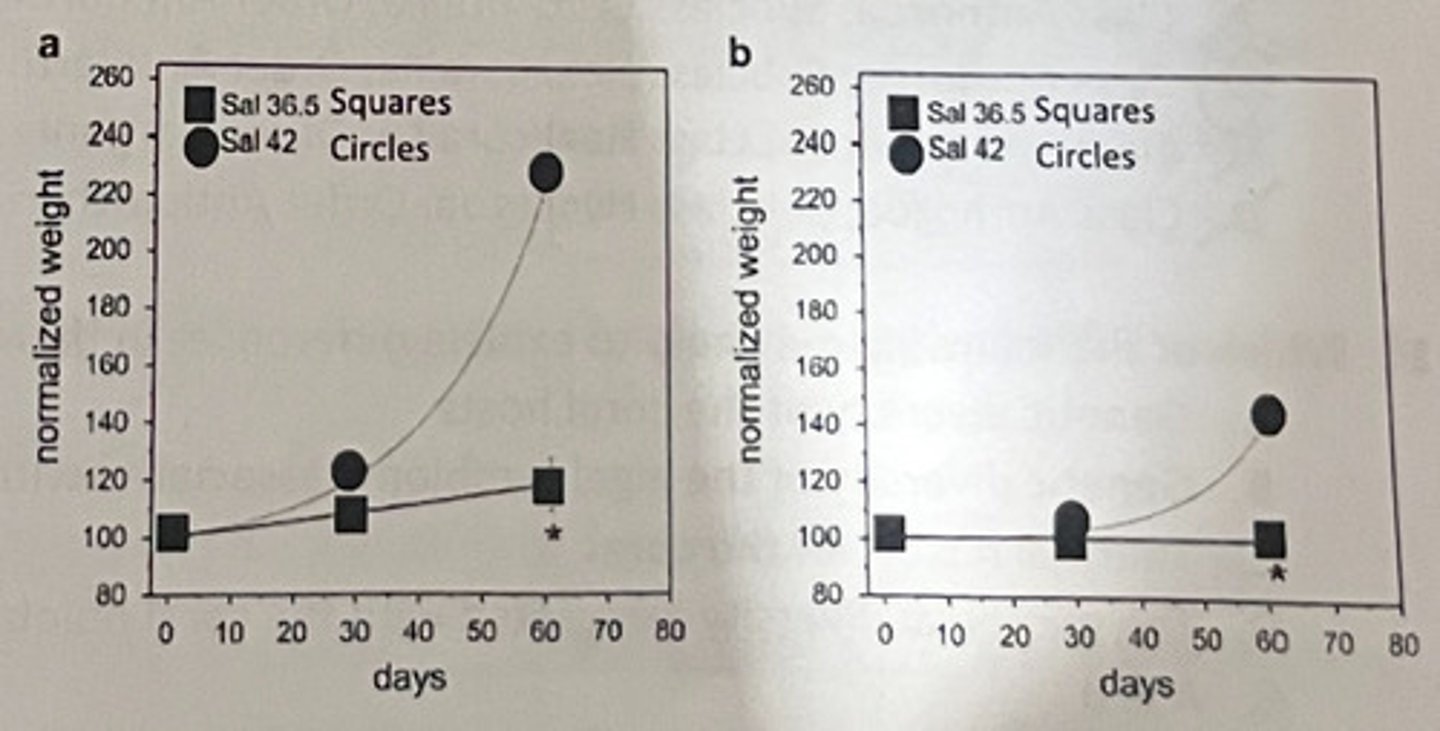
What might you conclude about the corals based on the figure below?
The corals were taken from the Persian Arabian Gulf
What are ancient reefs (also known as stromatolites) formed by?
Bacterial biofilms and cyanobacteria
On coral reefs, what is nitrogen fixation primarily formed by?
cyanobacteria
Molecular genotyping of Symbiodiniaceae became a standardized method in the 1990s by first using which genetic marker?
18S ribosomal DNA
Which coral genus is known for its asexual reproduction using fragmentation?
Acropora
_____ is the order that contains flower-like clusters of polyps connected by a basal plate
Zoantharia
Which taconomic hierarchy is correct for black corals?
Class Anthozoa; Subclass Hexacorallia; Order Antipartharia
What explains the differences in thermal tolerances among corals?
Genetic diversity of the coral hosts, genetic diversity of the algal symbionts associated with the corals, thermal history of the coral, and the microbial diversity associated with the coral holobiont
_____ is when the pathway of recovery of an ecosystem differs from its pathway of degradation
hysterisis
The coral genus _____ appears to be relatively resilient to environmental stressors, including temperature and salinity
Porites
To assess the health or efficiency of Photosystem II we can use ___ which is a measure of how much light energy can be used in photosynthesis
PAM
____ is the primary sugar that is transferred to the coral host as photosynthate
Glucose
Approximately 5.2 MYA, the _____ Sea closed; separating the Indian and Pacific Oceans
Tethys
Corals are osmo-______ that regulate their cell volume by producing ______ such as free amino acids and glycerol to combat changes in environmental osmotic pressure
conformers; organic osmolytes
_____ °C is the minimum log-term temperature that can still allow coral reef formatiom
21
The limestone rock of a coral reef is produced by the coral animal itself and thus is considered to be ____ in origin. The form of calcium carbonate is ______
biogenic; aragonite
The progression of coral reef development starting from fringing reefs to barrier reefs to atolls was first proposed by _____ in 1842
Darwin
_____ is a model organism used for the stufy of coral dinoflagellate symbiosis
Aiptasia
Hydrozoan colonies are made up of multiple types of zooids. ____ are zooids involved in feeding and _____ are primarily used for protection and maintenance of the colony
Gastrozooids; dactylozooids
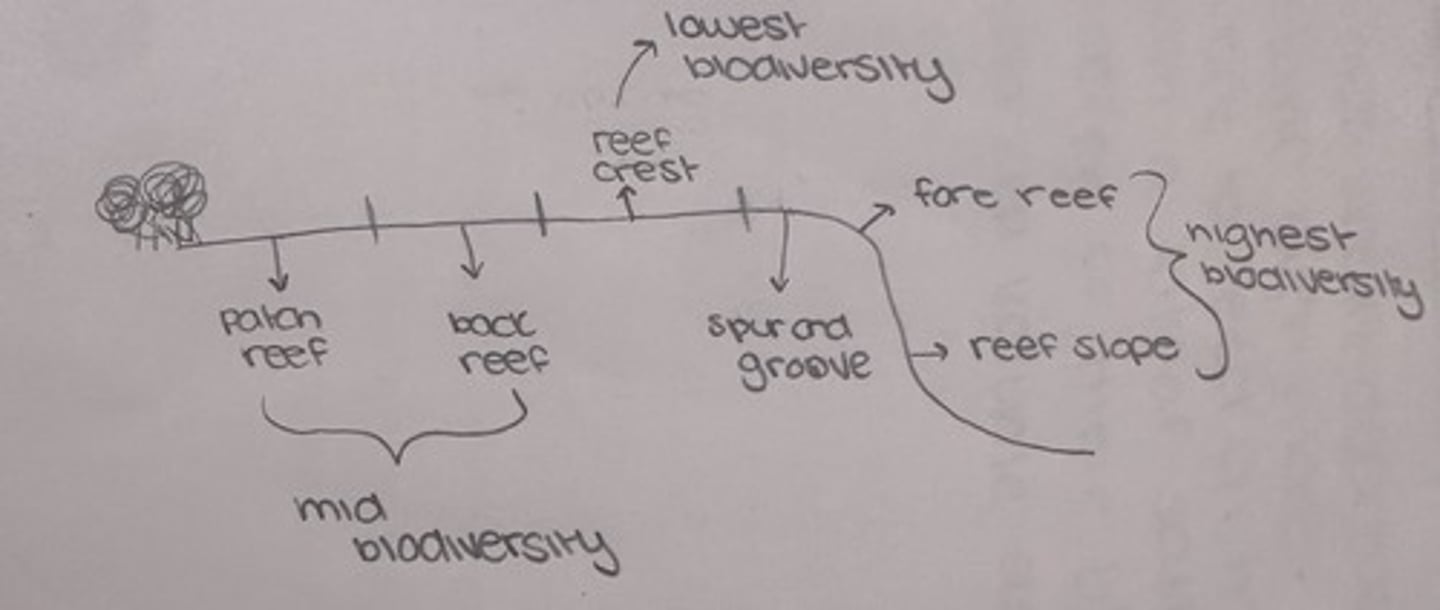
Draw all of the major zones of a coral reef moving from shore to open ocean. Label which zones have the highest and lowest biodiversity.
The reef crest has the lowest biodiversity, and the reef slope has the highest
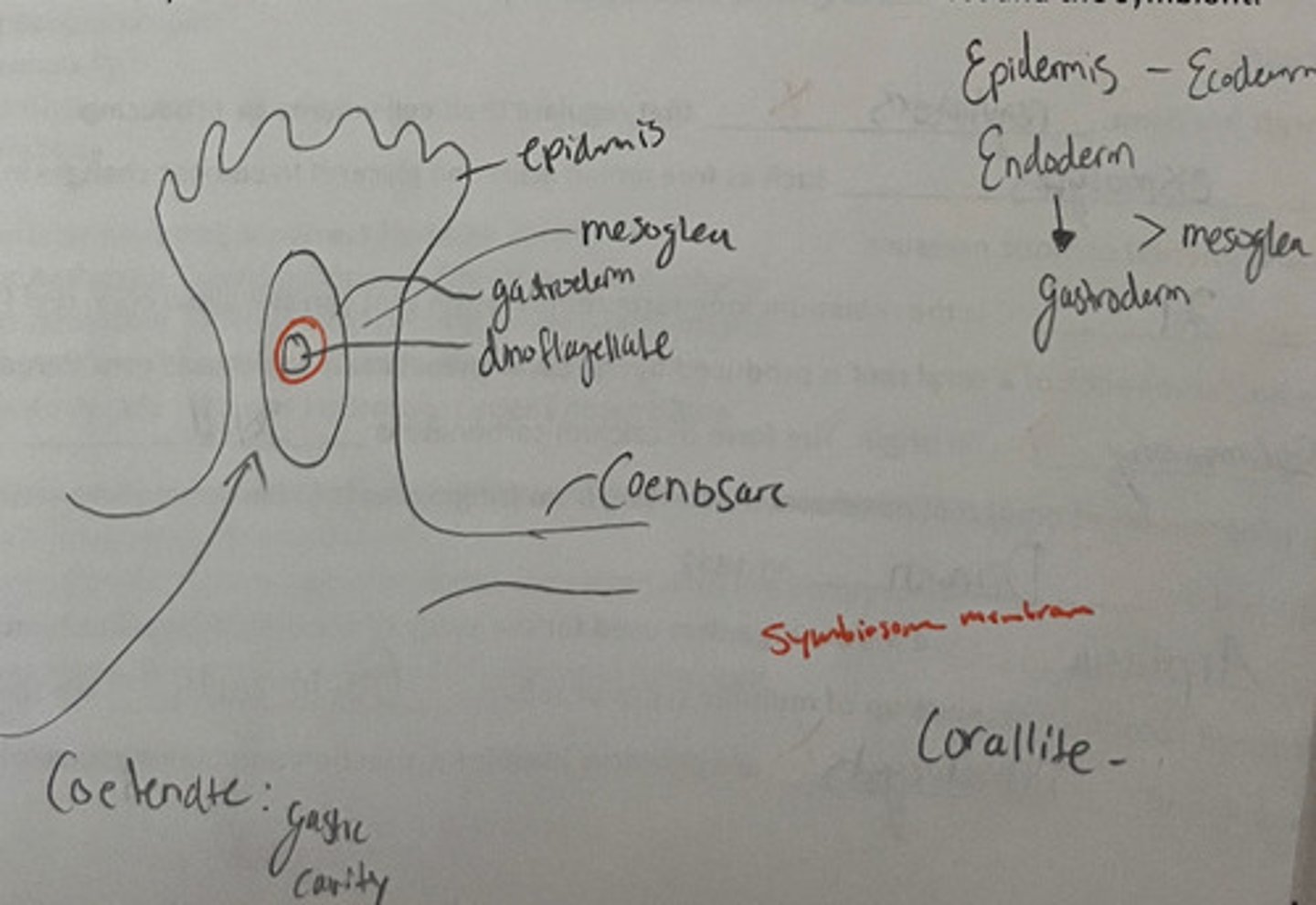
Draw all of the tissue layers of a symbiotic coral, including the symbiotic dinoflagellate algae in the appropriate tissue layer. Label all of the associated membranes of both the host and the symbiont
Briefly describe spur-and-groove reefs and how they form. Highlight some differences between these types of reefs and the corals present in the Pacific and in the Caribbean.
Spur-and-groove reefs are ridge-and-channel formations typically found on the fore-reef, created by wave energy that erodes channels (grooves) while promoting coral and algal growth on the raised ridges (spurs). They help dissipate wave force and trap sediment. In the Pacific, these structures are often dominated by fast-growing branching corals like Acropora, leading to high structural complexity. In contrast, Caribbean spur-and-groove reefs tend to feature more massive and slower-growing corals such as Orbicella and Montastraea, resulting in less branching complexity and slower recovery from disturbance.
What is an ecological phase shift? Describe how nutrient concentrations on coral reefs can affect the state of coral reefs (i.e., alternate stable states)
An ecological phase shift is the shift of the dominant species in that eria. The dominant species/organisms need the right amount of nutrients in that area to stay dominant. If there was an increase/decrease of a specific nutrient that a different species/organism was better suitable for. This could cause that organism/species to become dominant. An increase in nutrients can cause an alternative stable state, allowing for another species to overtake the original, allowing for a change in the environment. For example, too many nutrients in the environment can cause a formerly coral-dominated ecosystem to become an algal-dominated ecosystem.
Describe two ways that Persian Gulf corals differ from their conspecifics in the Indo-Pacific with regard to the abiotic environment. How would each type of coral respond if you were to transplant them to the other location?
Corals in the Persian Gulf experience much more extreme environmental conditions than their conspecifics in the Indo-Pacific, including higher summer temperatures (often above 34-35°C) and greater salinity due to high evaporation and limited water exchange. As a result, Gulf corals have evolved higher thermal and salinity tolerance. If transplanted, Gulf corals would likely survive better in the Indo-Pacific because the conditions are milder, but Indo-Pacific corals moved to the Gulf would likely bleach or die because they are not adapted to those stressful extremes
Explain 2-3 hypotheses used to describe why the Indo-Australian Archipelago (IAA) is a biodiversity hotspot
Several hypotheses explain why the Indo-Australian Archipelago (IAA) is the world's marine biodiversity hotspot. One idea is the Center of Origin hypothesis, which suggests species evolve in the IAA due to its warm, stable conditions and complex habitats, then disperse outward. Another is the Center of Accumulation hypothesis, which proposes that species formed elsewhere are carried into the region by ocean currents and become concentrated there. A third is the Center of Overlap hypothesis, which posits that species from the Indian and Pacific Oceans meet and coexist in the IAA, thereby increasing diversity. Together, these processes help explain the region's exceptionally high biodiversity of coral reefs.
What are the two primary reproduction strategies of corals? How are they similar or different?
Corals reproduce using two primary strategies: sexual reproduction and asexual reproduction. Sexual reproduction, often through broadcast spawning or brooding, creates genetically diverse larvae that can disperse and colonize new areas. Asexual reproduction, such as budding or fragmentation, produces genetically identical clones that help colonies grow larger and recover from physical damage.
List and describe five ecosystem services of coral reefs. Be specific
1. Food - coral reefs are habitats for many species of fish and invertebrates. We need them for the nurseries of the fish that we consume, and also food for other organisms higher up on the food chain
2. Shelter - coral reefs can house, protect, and nurse many organisms
3. Tourism - coral reefs draw lots of attention from tourists due to their bright colors, and they provide billions of dollars from recreation and tourism
4. Medicine - many species on a coral reef can be used for medicinal purposes and research for new cures
5. Protection - coral reefs are hard substrates that can protect the shoreline from waves and erosion
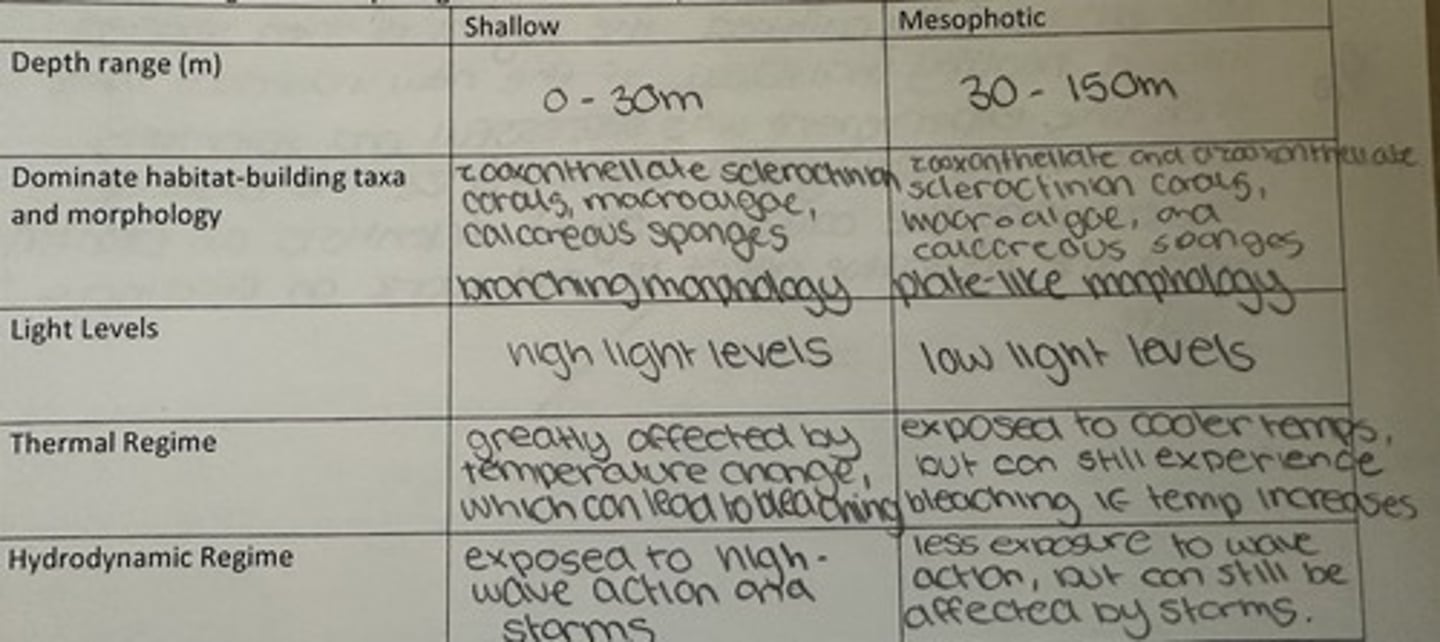
Shallow water reefs end at ____ and deep sea reefs begin at ____.
30m; 150m
What is the dominant abiotic factor affecting the abundance and distribution of corals in the mesophotic zone?
light
Palm Island and World Island of Dubai are examples of what kind of threat to coral reefs?
sedimentation
Why do sponges in the mesophotic zone grow faster than in the shallows?
There are more nutrients available in the deeper waters
Which of the following represents a way that corals might acclimate to changing thermal conditions in the environment?
Change gene expression of heat stress proteins and switch algal symbiont types
What are the criteria for a coral disease to be considered a true disease?
The symptom and pathogen have to be described by Koch's Postulates
Coral reefs cover less that ____ of the ocean area but support more than ___ of the marine biodiversity.
1%; 25%
Which of the following is an invasive species that affects deep-sea corals?
Snowflake coral
Which of the following accurately describes the deep ocean with regard to deep-sea corals
Absence of sunlight, temperatures near 0°C, slow-moving bottom currents
There are approximately 6500 species of coral described globally, how many of them are found in the deep sea?
about 50%
What is the causative agent of White Pox Disease?
Serratia marcescens
What is the coral disease that has only affected acroporid corals?
White Band Disease
What is the causative agent of the Diadema antillarum die-off?
Ciliate/Protozoan
What coral disease is polymicrobial, dominated by cyanobacterium?
Black Band Disease
What is the causative agent of Vibrio-induced bleaching?
Vibrio shiloi
This disease is made up of four species from the genus Vibrio
Yellow Band Disease
What is the disease that acroporid corals appear to be resistant to?
Stony Coral Tissue Loss Disease
What is the causative agent of the disease affecting gorgonian sea fans?
Aspergillus sydowii
What is the causative agent of Indo-Pacific White Syndrome?
Vibrio coralliilyticus
What is most likely the causative agent of White Pox Disease?
Mismanaged sewage
The _____ states that changes in the microbial community under various environmental conditions are directed towards the advantage of the holobiont
Coral Probiotic Hypothesis
_____ are deep water corals that are harvested for jewelry
Black corals
_____ is a dominant deep-sea reef building coral
Lophelia pertusa
_____ is a technique that uses satellite imagery to study shallow coral reefs
Remote sensing
_____ is a shallow water coral genus that showed high thermal resistance to cold stress during a 2010 temperature anomaly in the FL Keys
Porites
Deep sea corals display ____, a feeding strategy using large polyps and longer tentacles compared to their shallow water counterparts
Mixotrophy
Coral-dominated reefs and algal-dominated reefs are examples of _____
stable-states
_______ is a corallivore that causes a great deal of coral loss in the Indo-Pacific
Crown-of-thorns sea star or Drupella snails
There have been ____ global bleaching events that have affected corals worldwide
4
As seen in Caribbean reefs, the genus ____ also dominates shallow Indo-Pacific reefs
Acropora
Draw a depth profile plot of the following abiotic factors in mesophotic coral reef environments: Light, Temperature, Chlorophyll A concentration, Density, and Nitrate concentration. The x-axis can be arbitrary with values increasing from left to right. Be sure to label the y-axis with appropriate units (Just the labeled diagram is sufficient)
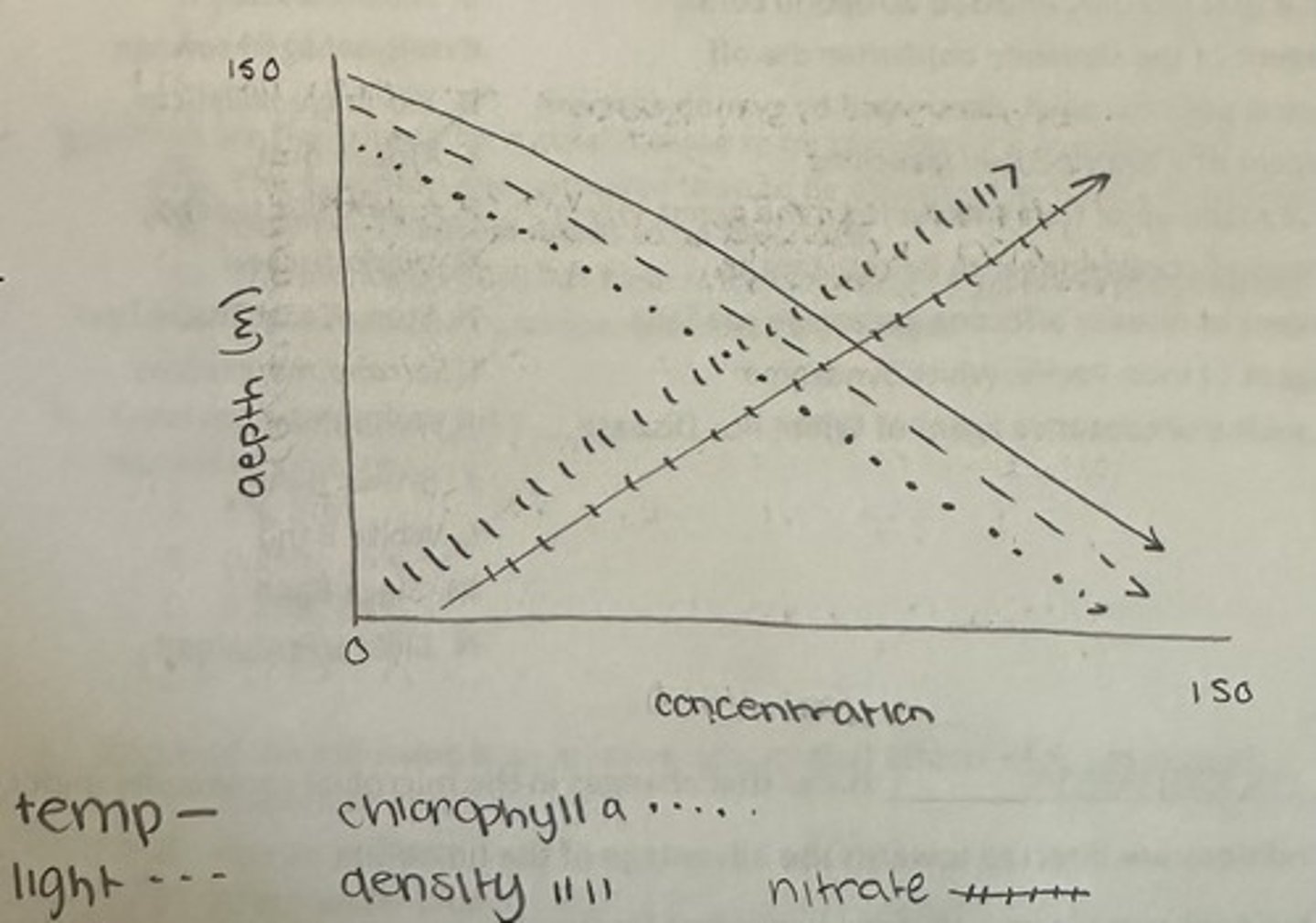
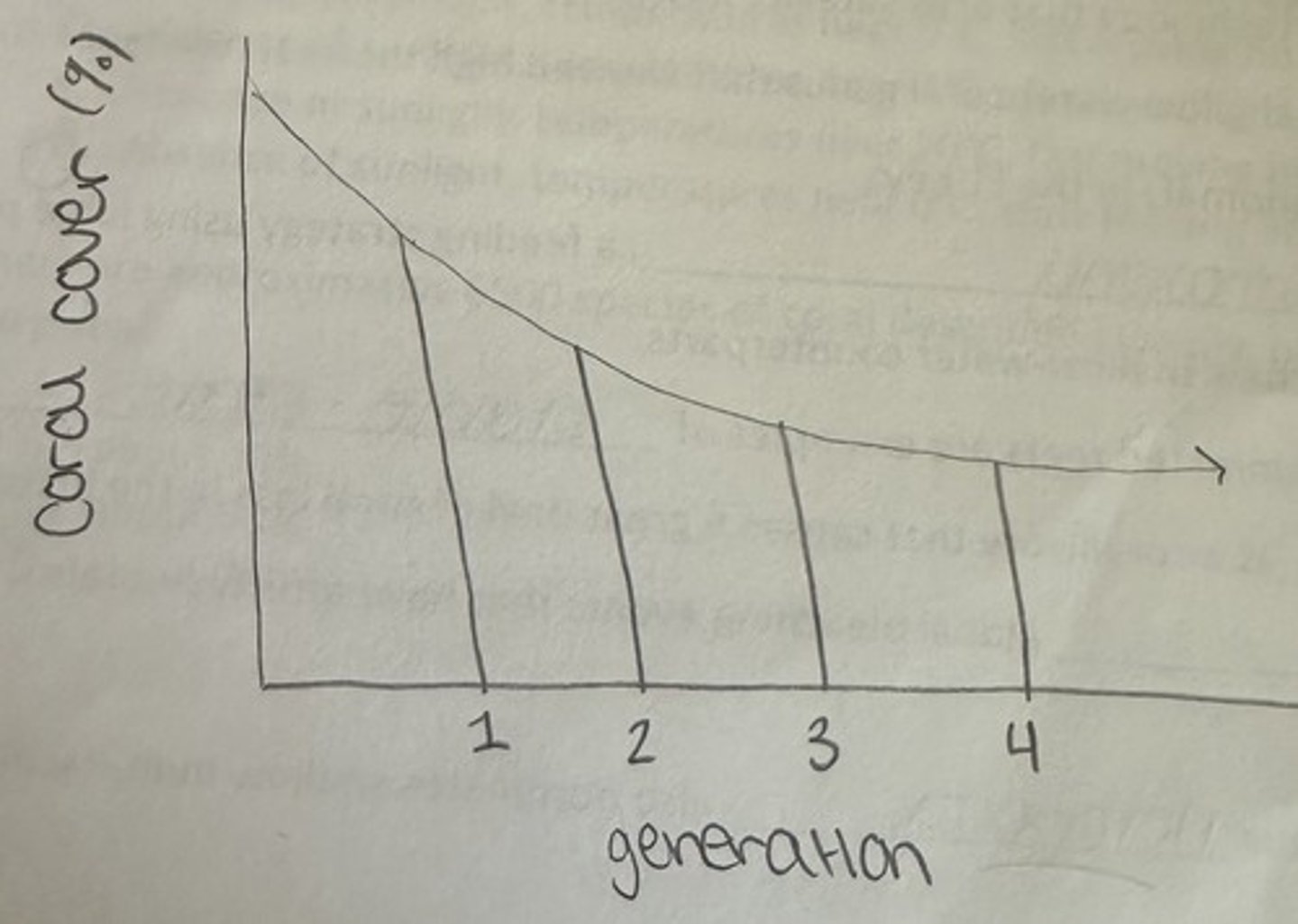
Draw a figure representing the shifting-baseline syndrome. Be sure to label the axes! Define what shifting-baseline syndrome means.
Shifting baseline syndrome is the idea that each generation is exposed to a different "normal" reef ecosystem. For example, Gen 4's "normal" reef is very different from what Gen 1 was exposed to due to the die-off of corals.
Fill in the following table comparing shallow and mesophotic reefs.
List and describe four adaptations of coral/symbionts to low-light environments.
1. Increased chlorophyll and pigment adjustments - Zooxanthellae boost chlorophyll content or shift pigments that absorb available wavelengths more efficiently, allowing them to capture more light for photosynthesis
2. Hosting low-light-adapted symbiont clades - Corals can shuffle or switch to types of Symbiodineacae that have higher photosynthetic efficiency under dim conditions, improving their energy production
3. Positioning symbionts closer to the light - Corals may relocate symbionts within upper tissue layers so more light reaches the zooxanthellae
4. Morphological changes - Corals in low light often form a flattened or plate-like shape to increase their surface area and help them collect more light.
Describe Koch's postulates and how they are used to study and characterize coral diseases
Koch's postulate begins with extracting the agent from the deceased individual and then culturing it in a lab to assist in identifying the causative agent. The agent is then injected into a healthy individual. If the new individual dies, then the experiment was successful, and scientists can begin to study and characterize the disease. By culturing the causative agent, scientists can then identify what the agent is and work on finding a cure.