Organic Chemistry Exam 1
 Call Kai
 Learn
Learn Practice Test
 Spaced Repetition
 Match
Match Flashcards
 Knowt Play
1/155

Earn XP
Description and Tags
Chapters 1-4
Name | Mastery | Learn | Test | Matching | Spaced | Call with Kai | Chat |
|---|
No analytics yet
Send a link to your students to track their progress
156 Terms
Provide electron configuration of carbon atom in the ground state. (Standard notation)
[C]1s^22s^22p^2
Which orbital has the following quantum numbers: n = 2, l = 1, ml = 0
a) 1s b) 2s c) 2pz d) 3dxy
c
What is the common charge of a magnesium ion?
+2
An atom has the electronic configuration 1s22s22p63s23p5. What ion is it most likely to form?
a) -2 b) -1 c) +1 d) +2
b
Use either signs δ+ and δ-, or arrows, to indicate polarity of each bond in the compounds shown below.
H3C—OH
δ+; δ-
Use either signs δ+ and δ-, or arrows, to indicate polarity of each bond in the compounds shown below.
H3C—MgBr
δ-; δ+
Use either signs δ+ and δ-, or arrows, to indicate polarity of each bond in the compounds shown below.
H2C=NH
δ+; δ-
Define an orbital
a region of space in which the probability of finding an electron is 90%
Electron affinity is an energy that is released when a ? ion is formed (when an atom gains an ?) and is an experimentally determined quantity
negative; electron
Electronegativity is a ? concept and it represents an ability to attract a ? electron pair.
theoretical; shared
How many valence electrons does a phosphorus atom have?
5
Classify each of the following compounds as ionic or covalent. If one of the bonds in a molecule is ionic, the compound is classified as ionic. Only if all the bonds are covalent, the compound is considered to be covalent.
CsCl
ionic
Classify each of the following compounds as ionic or covalent. If one of the bonds in a molecule is ionic, the compound is classified as ionic. Only if all the bonds are covalent, the compound is considered to be covalent.
CaCl2
ionic
Classify each of the following compounds as ionic or covalent. If one of the bonds in a molecule is ionic, the compound is classified as ionic. Only if all the bonds are covalent, the compound is considered to be covalent.
NO2
polar covalent
Classify each of the following compounds as ionic or covalent. If one of the bonds in a molecule is ionic, the compound is classified as ionic. Only if all the bonds are covalent, the compound is considered to be covalent.
CH3MgBr
ionic
Classify each of the following compounds as ionic or covalent. If one of the bonds in a molecule is ionic, the compound is classified as ionic. Only if all the bonds are covalent, the compound is considered to be covalent.
HClO
polar covalent
electronegativity difference of 1.7 and above is ?
ionic
electronegativity difference of 0.2-1.7 is ?
polar covalent
electronegativity difference of 0.2 and below is ?
nonpolar covalent
In which of the following compounds does carbon have a partial positive charge?
a) H3C-Li
b) H3C-Br
c) H3C-SiH3
d) H2B-CH3
b

What are the formal charges for these atoms?
1;1;1
A 3p orbital has: ? spherical node and ? planar node
1;1

a
An antibonding orbital forms when two orbital overlap ?, meaning the lobes that overlap have ? phases
out of phase; opposite
opposite phase→
antibonding
same phase→
bonding

c

b

b

Draw the structure but just put “a” to see the correct structure
a


you cannot tell without the free electrons

What is the formal charge on the oxygen atom?
0

you cannot determine without the free electrons

What are the formal charges on these atoms?
+1;+1;-2

carbon


How many free electrons are there on the central atoms shown?
6;2

How many free electrons are there on the central atoms shown?
2;4;0
Draw Lewis formulas of H3PO4, H3PO3 and H3PO2
a
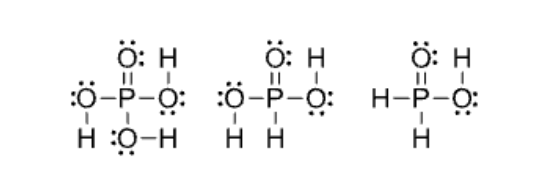

type “a“
a

Draw the shape of a 4p atomic orbital. A 4p atomic orbital has ? lobes: ? planar and ? spherical.
three; one; two

A 3p orbital has:
a) One spherical node and one planar node
b) One spherical node and two planar nodes
c) Two spherical nodes and one planar node
d) Two spherical nodes and two planar nodes
a
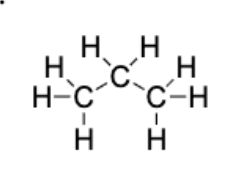
Draw a structure of propane, C3H8. (type “a“)
a
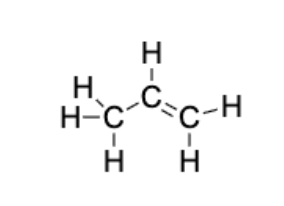
Draw a structure of propene, C3H6 (hint: propene contains a double bond). (type “a“)
a
Draw a structure of propyne, C3H4 (hint: propyne contains a triple bond). (type “a“)
a

Which of the following compounds has the smallest H-Y-H bond angle?
a) CH4
b) H2O
c) NH3
d) CH3CH3
b
1 Å =
1 X 10^-10 m
A carbon-carbon bond has the length of:
1.54Å
The shape tetrahedral has a H-Y-H bond angle of:
109.5
The shape trigonal pyramidal has a H-Y-H bond angle of:
107.3
The shape bent has a H-Y-H bond angle of:
104.5

from right to left (sp, sp2, or sp3)
sp;sp;sp3;sp3;(c)sp2;(o)sp2; sp3;sp3


Draw it out and type “a“
a

a triple carbon bond has the lenght of:
1.20 Å
a hydrogen carbon bond has the lenght of:
1.06 Å
sp³ carbon = ?°
sp² carbon = ?°
sp carbon = ?°
109.5; 120; 180

draw and type “a“
a


H:0,B:-1.N:+1. This molecule has the same amount of valence electrons as a molecule of ethane, so it is isoelectronic with ethane
Only one of the names provided below is a correct IUPAC name. Which one is it?
a) 2-ethylbutane
b) 3-ethyl-2-methylhexane
c) 2-isopropylpentane
d) 3,3-dipropylpentane
b
Cyclobutane has the following type(s) of strain:
a) steric and angle
b) torsional
c) torsional and steric
d) torsional and angle
d
Cyclohexane has what type of strain? In chair? In boat?
strain-free; torsional and steric
Cyclopentane has what type of strain in envelope confirmation and half chair?
torsional and angle
Cyclopropane has what type of strain?
angle and torsional
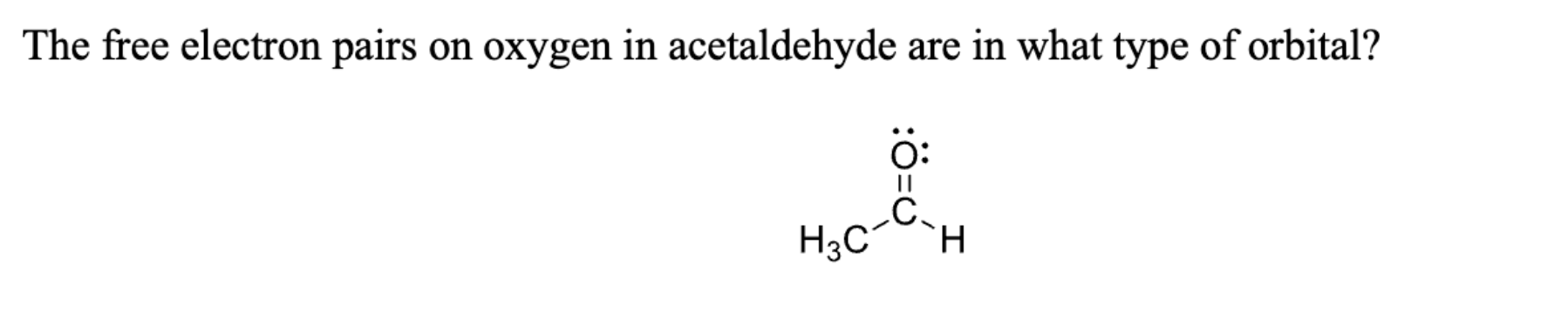
sp2
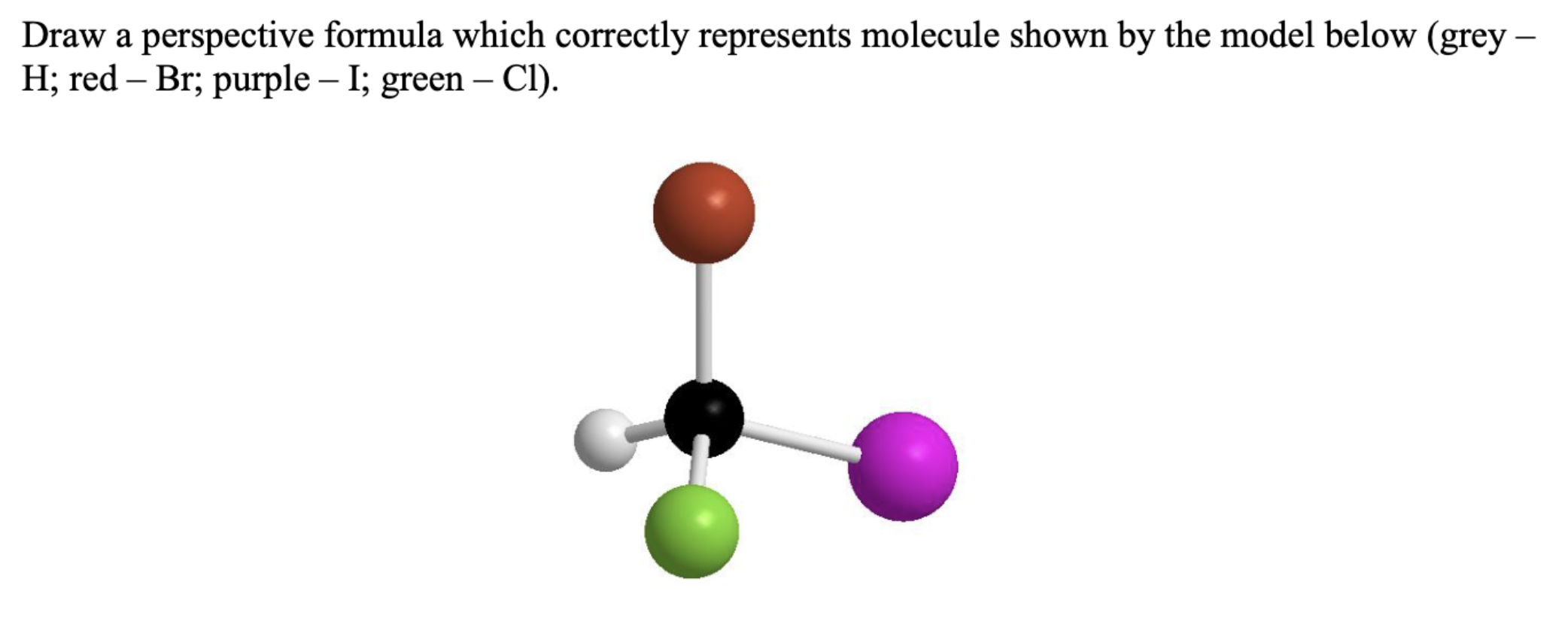
a

Boiling points of various classes of organic compounds increase in the following order:
alkanes < ethers < amines < alcohols
Boiling points of amines increase in the following order:
tertiary amine < secondary amine < primary amine
Name Intermolecular Interactions in order of DECREASING strength, so start with the strongest
ion-ion > ion-dipole > hydrogen bond > dipole-dipole > dipole-induced dipole > London interactions

b,a,d,c

a


the formulas are incomplete


a


a


c

Connectivity; (CH3)3COH
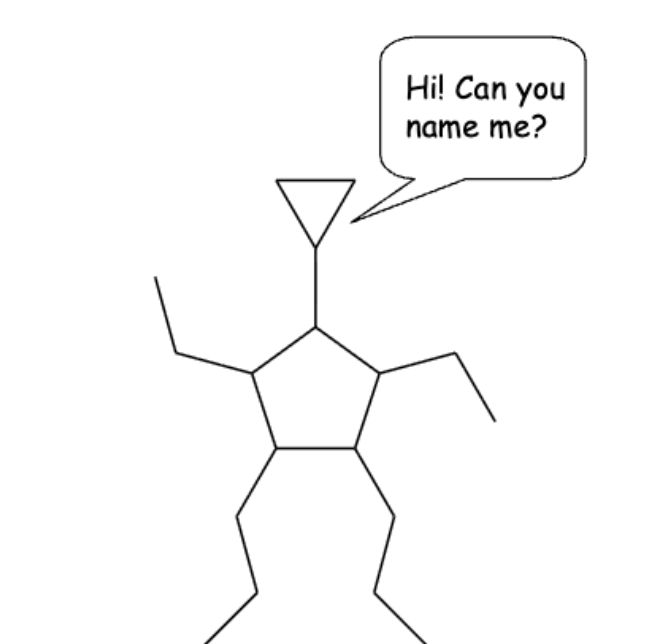
1-cyclopropyl-2,5-diethyl-3.4-dipropylcylopentane

b

d
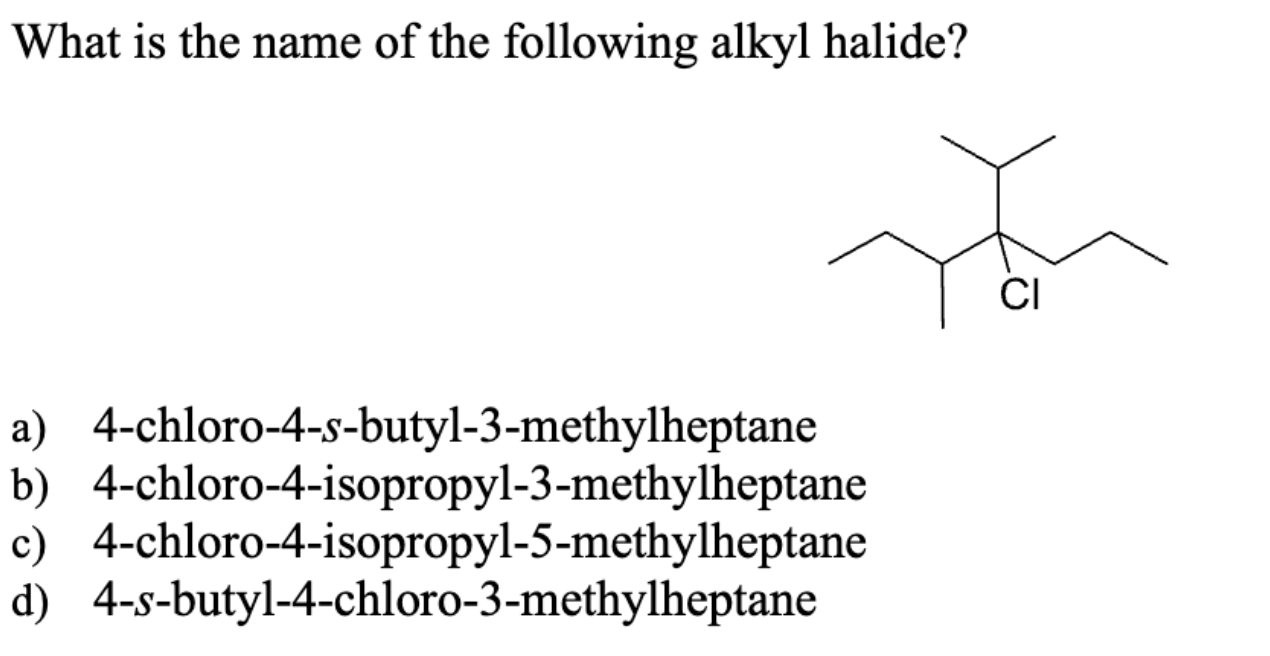
b

c

What is the name of this molecule
phenol

What is the name of this molecule
cyclopentyl alcohol

What is the name of this molecule
aniline

What is the name of this substituent?
propyl

What is the name of this substituent?
butyl
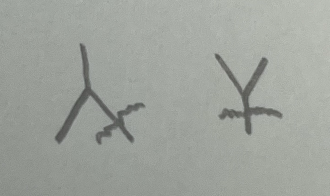
What is the name of this substituent?
isopropyl

What is the name of this substituent?
isobutyl
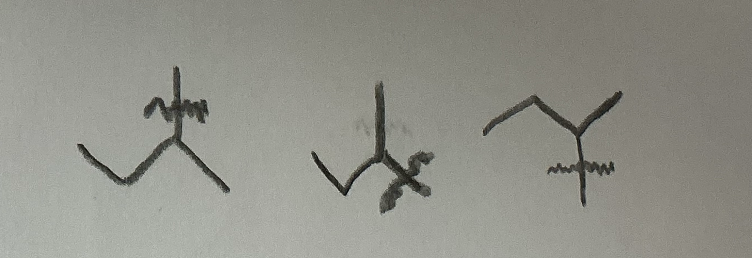
What is the name of this substituent?
s-butyl
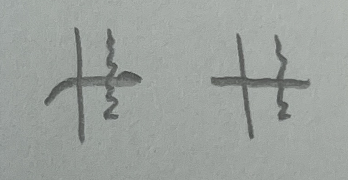
What is the name of this substituent?
t-butyl

What is the name of this substituent?
neopentyl

What is the name of this substituent?
isohexyl
Classify each of the following compounds as ionic or covalent. If one of the bonds in a molecule is ionic, the compound is classified as ionic. Only if all the bonds are covalent, the compound is considered to be covalent.
LiH ; NaF ; SO2 ; CH3Li ; MgCl2
covalent; ionic; covalent; covalent; ionic

the nitrogen on the right

a
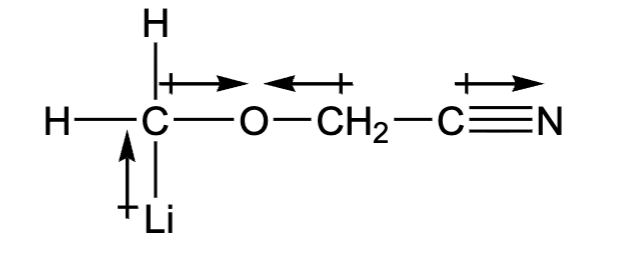
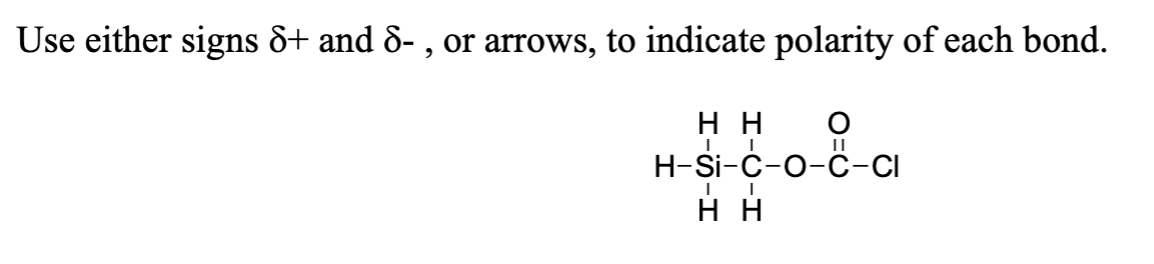
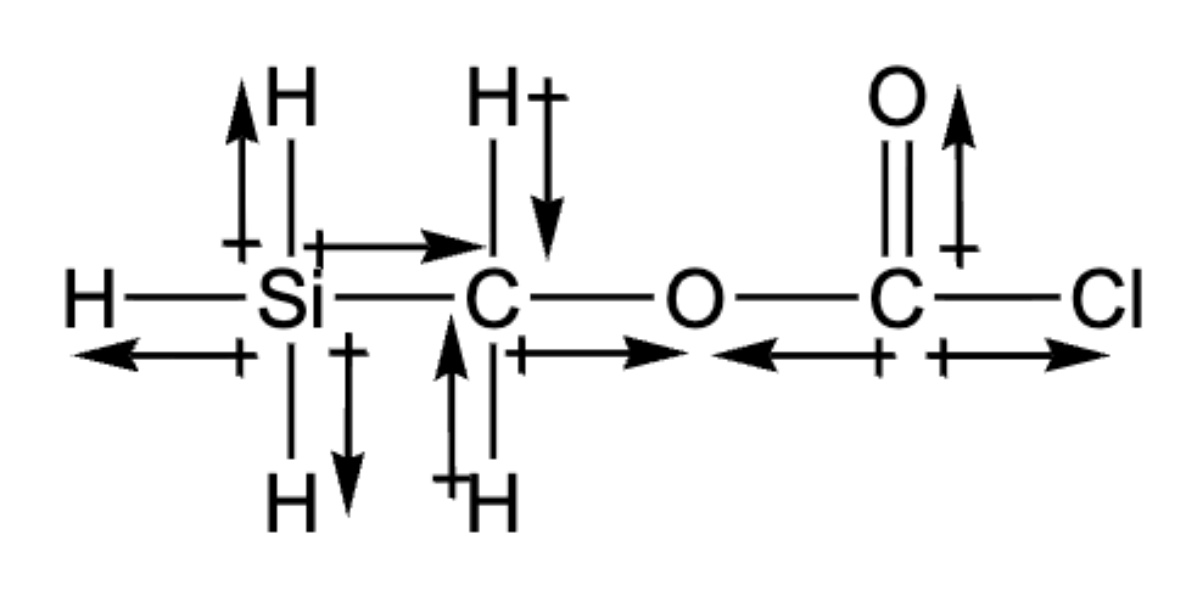
a
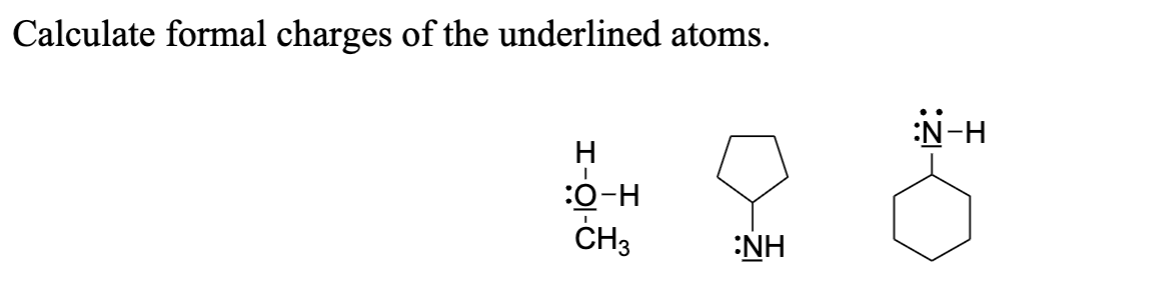
+1;+1;-1

Identify the hybridization of each of the C, N and O atoms in the following structure
a


How many electrons are there on the central atoms shown below?
2;4;2

Identify the hybridization of each of the C, N and O atoms in the following structure
a


Calculate the formal charge on the central atom in the molecule below. The formulas below are complete Lewis formulas
+2;+1;-1
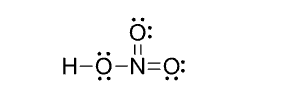
Why is the formula shown below not a correct Lewis structure of nitric acid? Draw an acceptable Lewis structure of nitric acid.
A nitrogen atom cannot make five bonds
