ALEXANDER II'S DOMESTIC REFORMS
 Call Kai
 Learn
Learn Practice Test
 Spaced Repetition
 Match
Match Flashcards
 Knowt Play
1/47

There's no tags or description
Looks like no tags are added yet.
Name | Mastery | Learn | Test | Matching | Spaced | Call with Kai | Chat |
|---|
No analytics yet
Send a link to your students to track their progress
48 Terms
strength of opponents in the crimean war
success of western powers attributed to many factors
armies were not serfs as modern warfare needed with its technological advances needed modern soldiers not mass illiterate serfs
better supplies, equipment and munitions helped british and French victory: rifles bs smoothbore muskets
artillery and bombardment at siege of Sevastopol exposed their advantages over russia from industrial weapons and supplies
industrial growth was the basis of technology, communications and modernity in the west to which defeated Russias agricultural society
the west also had confidence and energy including support from their civilian populations, newspapers, photographs and modern steam powered ships
seemed to contrast the limitations of the Russian campaign, remoteness of regime and reliance on oppression and not consultation
crimean war: end result for Russias position in the world
seemed out of date and old-fashioned, lagging behind other countries who had undergone industrialisation
humiliating defeat; unable to get western forces off own land
russia had been more successful in conflict with pre-industrialised Turkish forces than against industrialising Britain and france, reinforcing idea that russia was being left behind and needed to catch up and complete with foreign nations that were rapidly modernising
leadership from untrained noble officers: military reforms required which themselves needed emancipation so veterans at end of shorter military service wouldn’t return to serfdom
russia successful giants Turkish navy in Sinope
peace treaty quite lenient on russia
russia appeared to be losing its natural advantage and superiority of size and geography over the west
increased criticism of autocracy and serfdom
around 50000 casualties compared to 250000 allied deaths: relying on mass serf armies no longer worked in modern, industrialised war
crimean war: position of tsarist autocracy
unable to defeat less charismatic opponents than Napoleon
tsar Nicholas I had chosen to take russia into a war of expansion, not a threat of destruction as Napoleon had been increasing the undermining of tsarist authority
tsar Nicholas I died of pneumonia and replaced by Alexander II, further destabilising the position of the tsar in the war
crimean war: opposition ideas
tsars regime appeared remote from war, from managing the campaign as well as the interests of the people
westerniser ideas strengthened by the message that seemed to come from the war that russia needed to industrialise to compete with other powers
no free press so criticism was limited
a natural feeling that the thing people had sacrificed liberty and progress had turned out to be an illusion
crimean war: Russias resources and infrastructure
outdated and inferior to britain
russian transport to the front was by slow muddy roads with no railways south of Moscow while Britain built a railway from docks to the front line
problems with supplies as there were no railways in russia south of Moscow so supplies had to be brought by foot while france and britain were supplied by steam powered ships
supplies had became increasingly important in more industrialised and attritional form of conflicts
more mobile population would encourage better transport, emancipation would allow industrialisation that would promote railway building
emancipation would promote growth of factories to produce the faulty and quantity of munitions required and encourage entrepreneurship for future innovation
crimean war: serfdom
not working
not giving sufficiently skilled troops, not allowing industrialisation to equip army
Russian guns captured from Russian soldiers at the battle of alma early in the war were using gates that dated back to 1799
not able to replace the 2000-3000 daily casualties at the Siege of Sevastopol as they had done after Borodino and eventually, the key port of Sevastopol had to surrender to the british and French
changes brought by the crimean war
modernisation was sought most notably in the end of serfdom and in the liberalisation of the legal system, educational change and military and government reforms
however, crimean war was not the only reason for this
liberals in the ruling class and the Tsar Alexander II more prepared to change and adapt than Nicholas II but war was still a major catalyst
principle governmental change was the creation of local councils
zemstvos set up in 1st jan 1864 and the basic unit was the distort council chosen by election and landowners, townsmen’s, peasants voting for representatives
then these district councils members elected to regional councils
main role of these councils was in local matters rather than political bodies
drew attention to the state of the army mostly comprised of peasants, many of whom were serfs
military reformers thought russia needed a smaller, better trained army with a reserve like those in other European countries
raised question of loyalty of how long would serfs remain loyal if nothing was being done to improve their conditions and accommodate their aspirations
issues with Russias military
poor showing of the army provided a strong impetus for military reform
to remain a world power and be able to defend itself, it had to modernise its army
however, extremely expensive to maintain an army of its size, taking ip 1/3 of the governments income which could have been spent elsewhere
it had remained so large as the government had been reluctant to return soldier serfs to their villages where they might use their training to promote discontent so they kept soldiers in service for 25 years
after emancipation, this was not deemed necessary
thus, military reforms were to be introduced and were undertaken by Dmitri Milyutin over a twenty year period
military reforms and changes 1861 - 1881: conditions and training
conditions improved for ordinary soldiers such as they were housed in barracks
reduction in number of offences that carried corporal punishment and flogging was abolished
modern rifles and artillery introduced but slow progress and technological progress in weaponry meant some weapons were superseded before they were fully introduced
officer training radically improved
military colleges established, admitting recruits who were not nobles and promotions were open to other classes to improve leadership pool; specialised officer schools for the artillery and engineers
broader education provided and education was required for commission
staff colleges established with high standards offering accelerated promotion for graduates
military reforms and changes 1861 - 1881: service and size
universal conscription introduced for all social classes making them liable for military service at 21; generally ¼ would be chosen by lot to serve but could be avoided if medical service was provided or deferred for students to complete their studies
administration of army reorganised into fifteen military districts with more autonomy to district commanders making it easier to bring in the reserve in time of war
standard length of military service reduced to fifteen years; six years in active service and nine in the reserve
from 1862 to 1870 the reserve increased from 210000 to over 550000
consequences of military changes
despite the genuine attempt to break down class privilege and create an army based on merit the result was a smaller more professional army which was some extent less class ridden
however still a high proportion of nobility among officers and when Alexander became II became Tsar he restricted entry to officer training mainly to nobility
tendency to appoint untrained members of the royal family to key military served for which they were unsuited despite a key reason for the loss of the crimean war was incompetent and uncharismatic leadership
a fully professional army posed a threat to autocracy as it was the main means by which they stayed in control
significant saving in government expenditure due to the smaller army supported by a trained reserve which could be mobilised
army still reliable on peasant conscripts who were uneducated and illiterate reducing the effectiveness of their training
reforms were opposed by the nobility who did not want their offspring mixing with the lower class and preferred the old system were nobility dominated officer corps
merchants objected as they did not want their sons to do compulsory military service though some were able to find substitutes to replace their sons
emancipation of the serfs in russia timeline
long and lengthy process
serfs belonged to the estates of land they lived on, not free to move away from estate and could be traded by noble estate owners
59million out of the 65million people in russia in 1855 were serfs or state peasants
state peasants lived on tsar estates, marginally more rights
serfs lived on estates of the nobles and belonged to them, less rights and more punishment (corporal, forced marriages to reproduce, families split up, forced conscription, traded or gambled as part of estates)
although restricted mobility suggest that the peasants economic importance to the country wasn’t an important reason for the emancipation
the moral case of abolishing serfdom
members of the royal family dating form Catherine the great considered serfdom to be morally and ethically wrong
Nicholas I called it ‘an evil, palpable and obvious to all’
romanov rulers uneasy about serfdom for generations
enlightened nobles and liberal state officials accepted the view it was wrong to own someone like a possession and it was demeaning
affected by writers such as Turgenev who drew attention to the plight of the serf and the need to improve conditions of peasants
radical intelligentsia growing to oppose serfdom
nevertheless, majority of nobles did not accept this position believing abolition of serfdom would damage the Russian state and their own livelihoods
concerns of risk of revolt by the serfs
many historians have cited concern for social stability as one of the main reasons for emancipation
serious peasant revolts in the past and disturbances have been increasing since the 1840s with a significant spike in 1857 and 1859
Alexander told nobles it was better to abolish serfdom form above than wait for it to abolish itself from below
unsettled by the 1848 revolutions in Europe
worried enough to order weekly reports on the mood of the peasantry from December 1857
particularly worried about the army being maid up of mainly peasants so it might be difficult for the government to contain a major peasant uprising
other historians have maintained the scale of peasant unrest has been exaggerated as main sources of data are unreliable straits police records
some nobles feared major reform might provoke serious revolt by peasants and it could be seen as a sign of weakness or might be disappointed by the reform
economic arguments for the emancipation of the serfs
many enlightened government official and intellectuals convinced it was necessary to abolish serfdom if the economy was to advance
expressed clearly by milyutin, an official in the ministry of internal affairs
some accepted arguments of economists like Adam smith that free labour was more productive than forced labour; forced labour impoverished the population and stopped the growth of domestic demand which was essential for economic growth
believed you needed a free labour market where peasants could move around yo where they could be most productive whether in agriculture or industry
some disagreements among historians whether this was the most decisive factor, some arguing poor transport systems were more significant in preventing economic development
point out immediately after emancipation, there was a move on the part of the government to restrict the movement of peasants by introducing internal passports suggesting free labour to allow capitalist growth was no the governments priority
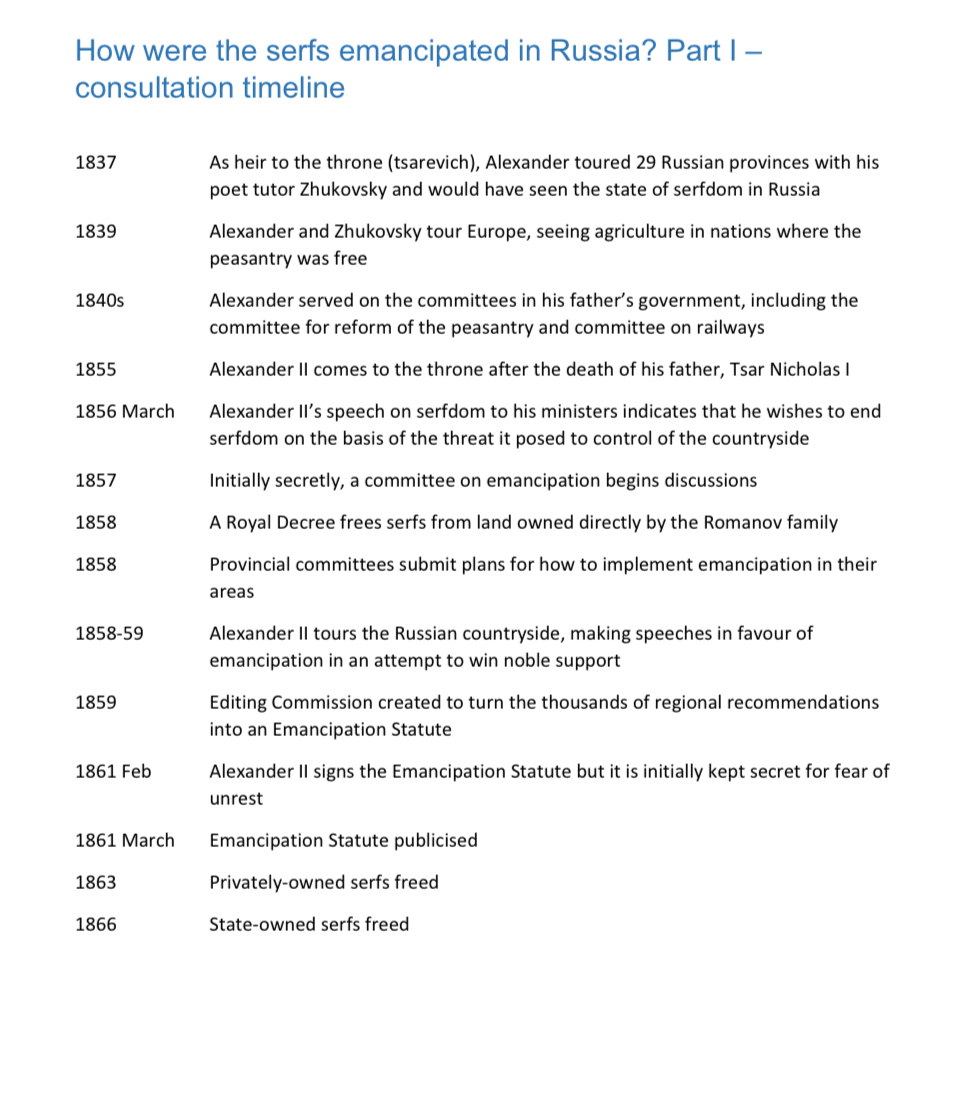
emancipation statues of 19th February 1961
took thousands of officials and numerous committees to draft plans
an editing commission created in 1859 to turn recommendations into legislation resulting in the emancipation statutes
Alexander insisted on three principles in the emancipation process
serfs must be freed with land to prevent them a becoming property less mass
operation must be peaceful
serfs must be guaranteed full personal freedom
key provisions of emancipation: land
domestic serfs not given an land
not enough land allocated to the peasants
peasants lost rights to wood from forest and use of common land for animals; these were declared as the lords property
gentry kept 50% of land; size of plot available to peasants decided by commissioners
peasants had to buy land they previously fared and considered to be theirs; on average, lost 20% of their farming land as cut offs
key provisions of emancipation: personal
2 year delay between the announcement of emancipation and it coming into force for privately owned serfs
state owned serfs had to wait until 1886 for their freedom
peasants no longer owned by landlords
free to marry, work, trade as they pleased
no longer forced to work for the landlords
internal passports restricted mobility however
key provisions of emancipation: compensation
landlords compensated for the loss of their land by the government; often overvalued so the peasants paid high prices for land
peasants compelled to buy the right to farm the land with a 49 year mortgage form the landowners; would only for the legal right to the land on completion of the final payment (redemption payments)
key provisions of emancipation: mir (village commune)
powers strengtenned
mir took over much of the landlord role; tax collection, selecting recruits for army, keeping order in the region
land was actually owned by the mir and families only had the right to farm the land
responsible for collection of redemption payments for the government
peasants had to gain permission from the mir to leave the area
mir and village elders made decisions about crops and farming methods; enterprising peasants found initiative stifled
emancipation of the serfs: political stability and unrest; positive impacts
after a wave of peasant uprisings in the early 1860s the situation became calmer and order was restored to the countryside
governments ability to bring about emancipation showed the power of autocracy; in the usa the amacipavtion of slaves required catastrophic civil war and almost the break up of the nation
emancipation of the serfs: political stability and unrest; negative impacts
in the fist four months, 647 peasant revolts occurred
reforms went too far for most nobles and slavophiles while not going far enough for westernisers
some members of the disillusioned intelligentsia and nobles called for greater role in government of the empire so they would not be let down by autocracy
troops sent to occupy the region of Kazan in response to sever peasant uprising in 1861 and killed 400
Alexander II declared: there will be no emancipation except the one I have given you. obey the laws! work and toil! obey the authorities and the landowners
emancipation of the serfs: social effects; positive impacts
peasants immediately granted basic rights such as no forced marriages, not being forced into the army for 25 years, free to set up their own business, at leats in theory
in russia, over 20m people became free because of the tsars reforms
emancipation of the serfs: social effects; negative impacts
peasants continued to have fewer rights than the richer class and be tried in separate courts
contemporary authors commented little improvement occurred for peasants scubas in A. I. Shingarevs the dying village
peasant mobility restricted by the need to first pay off the full 49 year term of redemption payments and by internal passports
peasants continued with serf restrictions, services and dues between 1861 and 1863
only privately owned serfs were freed in 1861; state peasants had to wait up until 1866 for reforms
emancipation of the serfs: economic effects: positive impacts
on average peasants were working 25% less land after 1861 than before it
peasants became more mobile and cities swelled
by 1890, 2/3 of the population of st Petersburg had been born outside the city
in 1907, 90% of Moscow print workers were sending wages back to their families in the countryside
although total grain yields remained poor by 1909-1914, 60m tons of grains were being produced annually compared to 26m in 1861-1866
aided by the formation of the peasants land back in 1883, more prosperous and enterprising peasants were able to buy land
in 877 peasants held 6m hectares of land and by 1905, this was 21.6m
emancipation of the serfs: economic effects: negative impacts
with less land available and rapidly growing population, peasants over-used soil leading to a drop in productivity which partly caused a famine in 1890-91 which killed 500,000
in seeking to compensate the nobles for loss of their labour, the redemption payments were set too high so the government had to cut the repayment figure by 25%
although on average, peasants could farm less land afterwards and in the black earth region this was particularly severe, in less fertile northern russia peasants farmed substantially more land
lateral reforms: local government (zemstva)
government introduced measures of self government and provincial and district levels
elected councils or assemblies (zemstva) to run aspects of local government such as roads, health, schools in rural areas empowered to levy a small tax to pay for these
electoral system favoured nobles who made up 40% of the district zemstva and over 70% of provincial councils; in part to allow them to keep control over local areas and compensate them over the loss as a result of emancipation
only introduced in provinces where Russians formed the ruling elites and the majority of the population (started at 19, 37/70 by 1914)
appointed professionals such as teachers and doctors
extended to take in town councils
‘third element’: educated professionals (doctors, lawyers, teachers) who wanted to be involved in the government and wanted greater reform
lateral reforms: local government (zemstva): consequences
brought improvements in areas in which they operated such as building better roads, health facilities and schools and developing transport, street lights, water supply
nobles and others running the council gained political experience in managing affairs and many anted this taken to an national level
members of professional third element developed self esteem and began to make demands for social reform and improvements in living conditions
many become hostile to or frustrated with the state
lateral reforms: local government (zemstva): weaknesses and limitations
only introduced in a limited number of provinces and slow to get going and did not achieve much early on
restrictions placed on their powers of taxation and they had troubled raising taxes
denominated by the nobility and many did not take their responsibility seriously and took advantage of the situation to run affairs in their own interest
patchy results: enterprising zemstva pushed ahead with work but also indolent zemstva
peasants did not really participate, put off by the nobility, and resented paying the zemstva tac which was proportionately higher on their land than on private estates
designed to establish some participative self government but whittled down in the interests of the landed nobility but some goof liberal zemtsvo men like Prince Lvov for improving local conditions
uneasy relationship between the zemstva and government over the following Yeats
lateral reforms: judicial: the problem
huge variety of courts between which cases could be transferred, taking a very long time and sometimes years
Russian courts notorious for corruption, delay and inefficiency
most judges illiterate with no legal training butting enormous power in the hands of court secretaries especially as all evidence was written who relied on bribes to maintain their lifestyle
police had great power to levy fines and amenable to bribes
defendant never saw the judge so written evidence, often unreliable, was rarely challenged
judges received a pile of documents which they had to adjudicate according to certain rules such as the evidence of the word of a noble was taken over a peasants and man over women
lateral reforms: judicial
simplified court system with fewer courts and lower court cases could only be transferred to one/two other courts
each province had its own court
good salaried judges who could not be removed from office allowing more independence, could not be dismissed by the government
civil and criminal courts open to press and public
JPs (system of justices of the peace) established for smaller cases
volosts: courts for peasants where they ddi not benefit from the same legal rights and processes
separate village courts for offences solely concerned with peasants compromising of judges elected and drawn from the peasantry and often illiterate
trial by jury for more serious criminal cases and evidence given orally and could be tested and challenged; prosecutors and defenders could summon own witnesses
voting on the verdict by juries kept secret to protect from intimidation
lateral reforms: judicial: level of success
Russians could get a fairer trial and greater access to justice
defendant had much more protection since court proceedings public through preliminary investigations kept secret
less corruption and fewer attempts to pervert the course of justice
JPs court worked quickly, cost nothing to those appearing to them and perceived as dispensing equitable judgements and respected by humble workers and peasants since they protected the small man against local officials
1860s/70s, independent and articulate legal profession came into being to fulfil roles of prosecutors and defenders, trained in skills of argument and persuasion: many became accomplished advocates of reform, parliamentarians in the Duma, revolutionaries
lateral reforms: judicial: challenges
challenged political authority of the autocracy
independent courts and judgments meant that independent sources of authority existed and regime could not act in the arbitral way to which it was accustomed: made its way to public consciousness and the idea of the rule of law
new freedoms for lawyers meant courtroom became a space for challenge stop the government
courtroom the one place in russia where there was genuine free speech
many of the accused in some way a victim of government action or officials, defence lawyers would be critical of the regime in presenting the case and some defendants made speeches reported by newspapers
new juries showed themselves to be independent and would acquit people whom the regime would have liked to see given long sentences such as Vera Zasulich
deemed as more successful by some historians despite drawbacks as they backfired on the regime by introducing the notion of the rule of law and an independent judiciary which challenged the authority of autocracy and careened a group of people, lawyers, who were to become active in reform movement
lateral reforms: judicial: weaknesses
separate court for peasants, vast majority of the population, meant that as a class they were largely outside the mainstream judicial system, emphasising their lower status
some courts remained outside the system such as church courts (handled divorce cases) and military courts
government officials could not be tried within the system
revolutionaries tried by special courts in the 1870s
bureaucracy did sill intervene sp trial by jury could not always be guaranteed
reforms had most impacted large cities (st Petersburg, Moscow) where the most controversial trials took place
lateral reforms: education
zemstva took over responsibility for running many rural schools including employment of professional teachers: quality of teaching rose
first decade of his reign, number of pupils roughly doubled
primary schools between 1856 and 1878 increased from 8000 to 25000 with 1 million pupils in attendance
secondary school opened to all classes and numbers doubled
secondary schools could focus on classical or modern subjects such as maths, science and languages
universities given much greater freedom over intake, courses, professors, curriculum and discipline
radical change in professors: 50% left posts from 1854 to 1862
enlightened, more liberal thinking, professors appointed such as Nicholas pirogov
students drawn form wider social groups: sons of peasants, low ranking townspeople
women could attend courses but not take degrees
after 1866, ministry of eduction took some control of schools away from zemstva and restrictions and crackdown in universities
lateral reforms: education: level of success
huge impact in later years as more literate peasant population took on new aspirations
regime needed students trained to high standards to build a modern state but did not want them to question the regime but higher education tended to foster an independent spirit and critical mind
students began to take a significant part in society
many students relied on state financial help and were poor and undernourished and formed mutual aid groups organising communal kittens and libraries
students reacted against poor teaching, strict regulations, heavy handed action of authorities and police
students formed study circles discussing radical ideas and injustices of the tsarist system leading to protests, disturbances and arrests
as a result, many became radicalised and joined the growing ranks of revolutionaries
reform resulted in people questioning political authority of regime
lateral reforms: censorship
in the 1860s, censorship relaxed: newspapers, books and periodicals did not have to be submitted for prior censorship
newspapers could report government policy and jury trials
ministry of the Interior could still withdraw any publication it seemed dangerous and fine and did close down some periodicals andpunished delinquent editors
lateral reforms: censorship: level of success
relaxed atmosphere led to a huge growth in the number of books and periodicals published
growing literate readership to buy a story
bolder editors prepared to push boundaries of what was deemed dangerous
others more moderate by being critical of the government when reporting cases
some reported social problems which the government might not welcome reporting but would scarcely prohibit: crime, alcoholism, suffering groups, peasants
public opinion being more informed but not necessarily anti-government but autocratic regime does not generally appreciate free flow of information
why did Alexander ii turn from reform to reaction after 1866
in 1866, karakazov attempted to assassinate the tsar and this was evidence that no one was pleased with his reforms and that he needed to halt and reverse them
reforms/relaxations had led to disruption and increasing demands that he was not prepared to meet
prepared to rein back on earlier measures and bring in more reactionary policies
changes led by count Peter shuvalov which led the country in a reactionary turn
head of the third section (secret police department) and brought in an air of fear and mistrust which permeated the court
vetted appointments, made sure conservatives gained posts
tightened censorship, closed down some periodicals
tighter control of students and their organisations
made use of military courts to try more serious political cases as these were not open to reporting and likely to reach the verdicts the government wanted
increased the use of rule by decree
changes made to education by conservator minister, count Tolstoy, to counteract earlier reforms
he believed that revolution originated in schools and universities, particularly in the sciences \his ministry took greater control of primary schools, reducing role of 1864 school boards (which were often dominated by liberal zemstvo representatives)
ministry inspectors responsible for appointing teachers, opening schools and keeping an eye on moral views converted by teachers
classical subjects (Latin, greek) favoured over modern subjects (history, science, modern languages), even withdrawing science from some schools
entry to universities restricted to those with classical education, this favoured nobles who tended not to more technical and modern subjects
crackdown in universities and disciplinary functions transferred to the police and students associated with revolutionary activities or views were expelled
opposition: the nihilists
young people who were determined to challenge conventional attitudes and values
blurring gender differences; men growing out their hair and women cutting their hair
opposing tradition, authority and hypocrisy within society
ridiculed as nihilists and portrayed in the conservative press as immoral, indent, godless, free loving and subversive
many sought a better alternative and turned to revolutionary activity
little to no threat
opposition: narodniks/ populists
inspired by the writings of Peter Lavrov
believed in agrarian socialism based around the peasant commune being the route to the good society without the need to go through capitalism and the evils of industrialisation
decided to go to the people and spread their message
brave move as many gave up their current lives, possibly families
several thousand young people dressed up in peasants and workers clothes
experienced incomprehension and suspicions from peasants and rejected, though not always the case with some young people having something to offer them, such as vera figner (medical advice)
village elders, priests, local police not keen and reported them to authorities
several hundred arrested and imported for their good intentions
two major trials in 1877, trial of 50 and trial of 193
court impressed by honesty and idealism, large number coming from noble or middle class families, and did not see them as dangerously subversive, but the government did and those who were acquitted were exiled to Siberia
low threat
opposition: land and liberty
strong central organisation and commitment to secrecy and discipline
cells formed in villages and towns aiming to support demonstrations and actions against autocracy
some very violent, killing informers or despotic officials, arranging escapes for imprisoned members of their group
caused a severe reaction from authorities and after the vera zasulich case (sympathetic jury acquitted her, ended in a verdict which the government not pleased with), political trials moved to military courts
this provoked a split in the movement in 1879 into two groups
moderate threat
opposition: black partition/ black repartition
led by George plekhanov with vera zasulich
placing faith in the urban working class
wanted to promote revolution through peaceful agitation
no threat
opposition: the peoples will
determined to use terrorist violence to achieve their revolutionary aims
destruction of the state and land redistribution
in particular, focused on killing the tsar as a way to imitate revolution
26th august 1879, condemned him to death for crimes against the people
over the next two Yeats, made several unsuccessful assassination attempts until march 1881 when luck favoured them
high threat
opposition: the chaikovsky circle
student circle who resented autocratic restrictions, especially censorship and interference in university education
aim to educate themselves, spread ideas based by the autocracy, unite students across different Russian cities and spread propaganda leading to an eventual social revolution
read and published banned literature (Karl Marx, Chernyshevsky and western philosophers like John Stuart mill)
spread propaganda to the countryside peasants to rebel
notable individuals: chaikovsky, natanson, alexandrov, seryukov (all studnets in st pertersburg)
low threat; unlikely their high brow ideas will spread to peasants and no violent methods
Russias most wanted
mikhail Bakunin: anrahcist leader plotting revolution from abroad
Alexander herzen: critic of emancipation hoping for socialism in the Mir
vera zasulich: shot governor trepov of st Petersburg, found not guilty
nikolai Chernyshevsky: wrote pro revolution what is to be done?
sergei nechayev: dangerous extreme anarchist inciting assassination
George plekhanov: black partition leader, peacefully inciting peasant revolution
Peter lavrov: writing inspiring intellectuals to give with peasants to stir up socialism