Physics: Weight, Mass, Density, and Hooke’s Law Review
 Call Kai
 Learn
Learn Practice Test
 Spaced Repetition
 Match
Match Flashcards
 Knowt Play
1/12

Earn XP
Description and Tags
Understanding Concepts in Physics: Weight, Mass, Gravitational Effects, and More In physics, distinguishing between mass and weight is crucial for understanding how objects behave in a gravitational field.
Herpetology
A-Level Accounting
Edexcel
Corporate and Management Accounting
Hi
hi
hi
Understanding Concepts in Physics: Weight, Mass, Gravitational Effects, and More In physics, distinguishing between mass and weight is crucial for understanding how objects behave in a gravitational field.Understanding Concepts in Physics: Weight, Mass, Gravitational Effects, and More In physics, distinguishing between mass and weight is crucial for understanding how objects behave in a gravitational field.Understanding Concepts in Physics: Weight, Mass, Gravitational Effects, and More In physics, distinguishing between mass and weight is crucial for understanding how objects behave in a gravitational field.
Name | Mastery | Learn | Test | Matching | Spaced | Call with Kai | Chat |
|---|
No analytics yet
Send a link to your students to track their progress
13 Terms
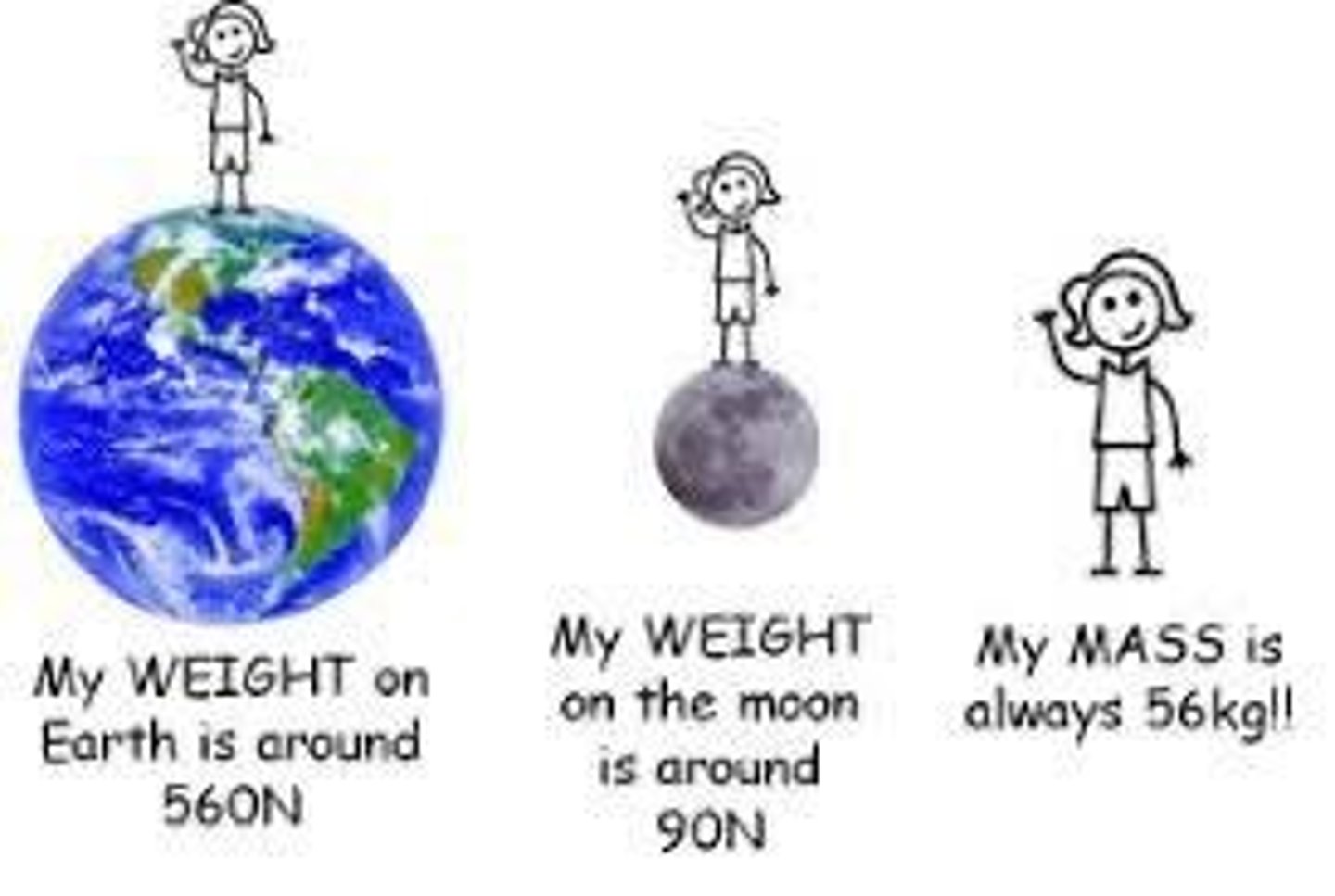
What is the difference between weight and mass?
Weight is the force exerted by gravity on an object, while mass is the amount of matter in the object, which does not change regardless of location.
What is the equation for weight?
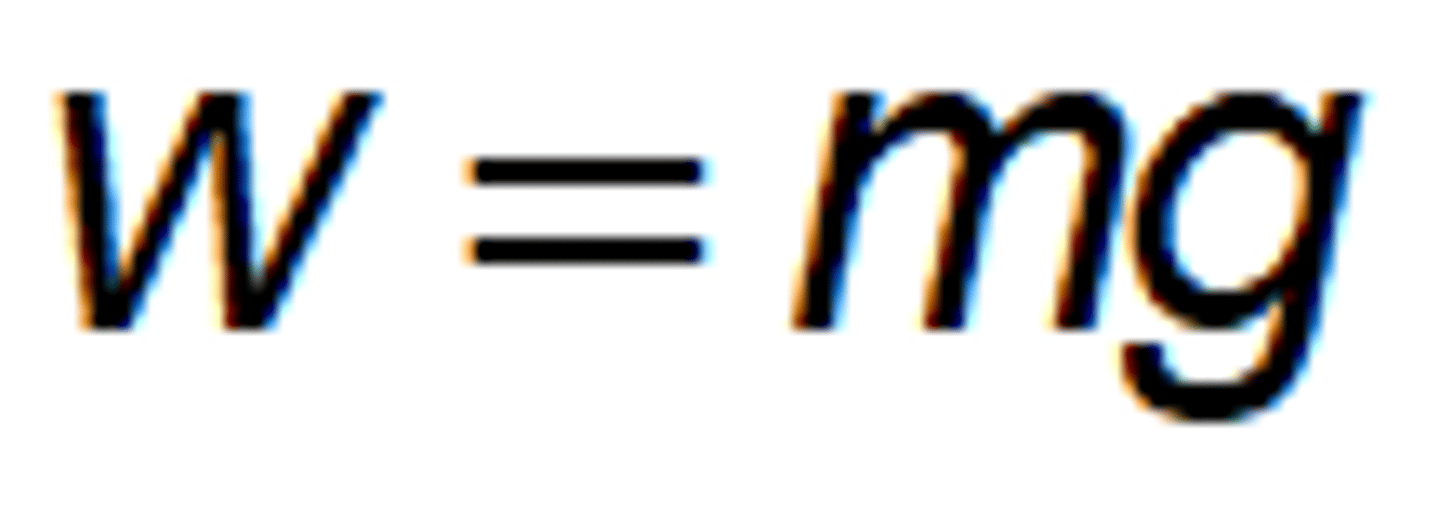
The equation for weight is W = mg, where W is weight, m is mass, and g is the acceleration due to gravity.
What does gravitational field strength represent?
Gravitational field strength represents the force acting on a 1 kg mass due to gravity.

How does the size of a planet affect gravitational field strength?
Bigger planets generally have a higher gravitational field strength due to their greater mass, which increases the gravitational force.

What is Hooke's Law?
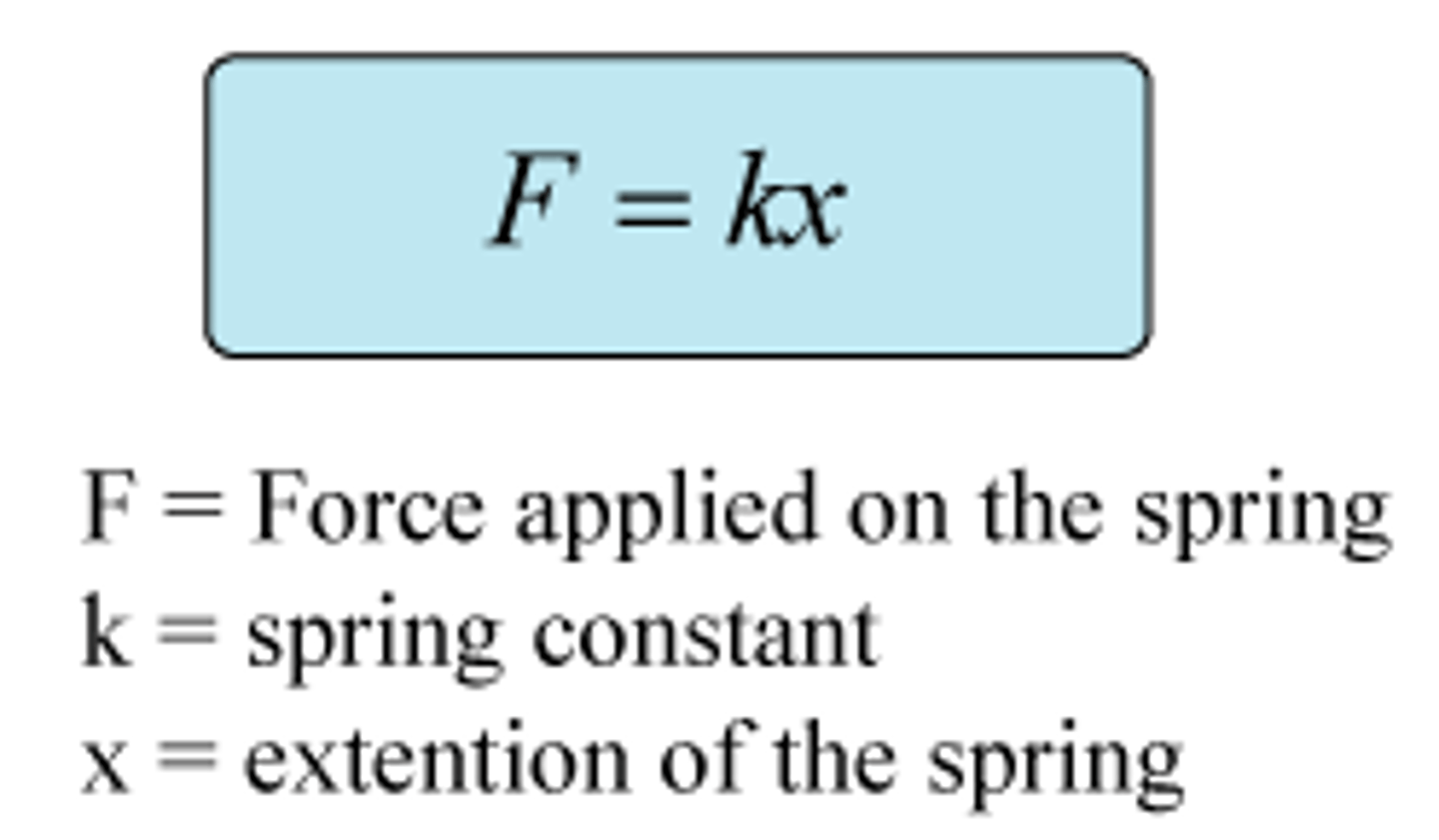
Hooke's Law states that the force (F) applied to a spring is directly proportional to the extension (x) of the spring, up to the elastic limit, expressed as F = kx, where k is the spring constant.
What is density?
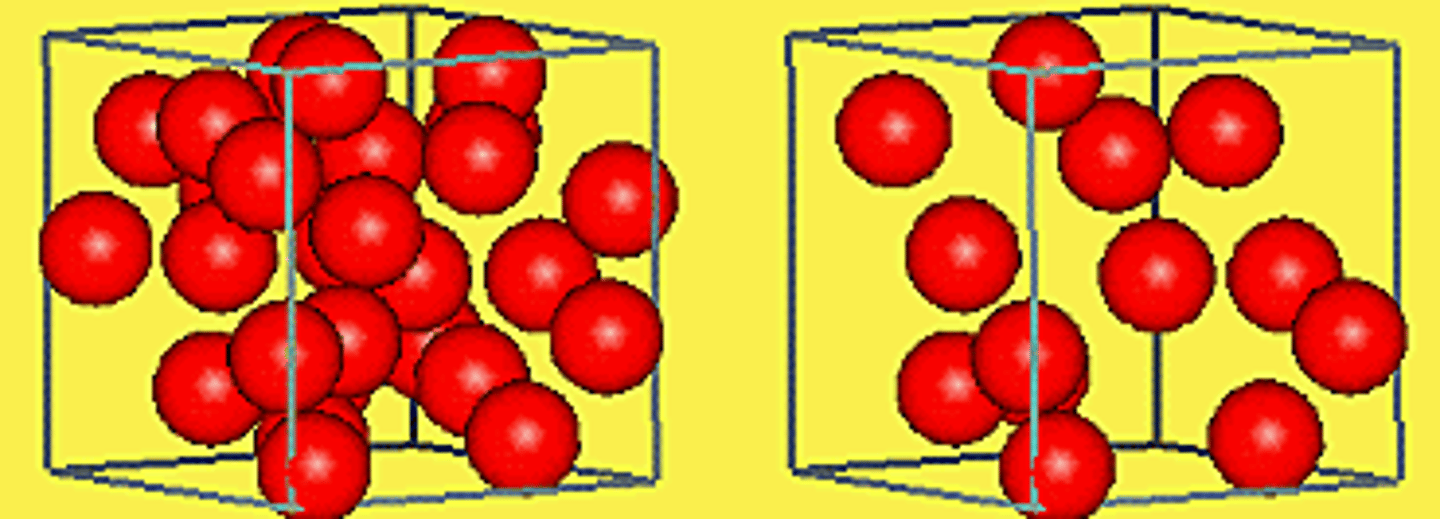
Density is a measure of mass per unit volume, indicating how much mass is contained in a given volume of a substance.
What is the equation for density?
The equation for density is density = mass/volume.
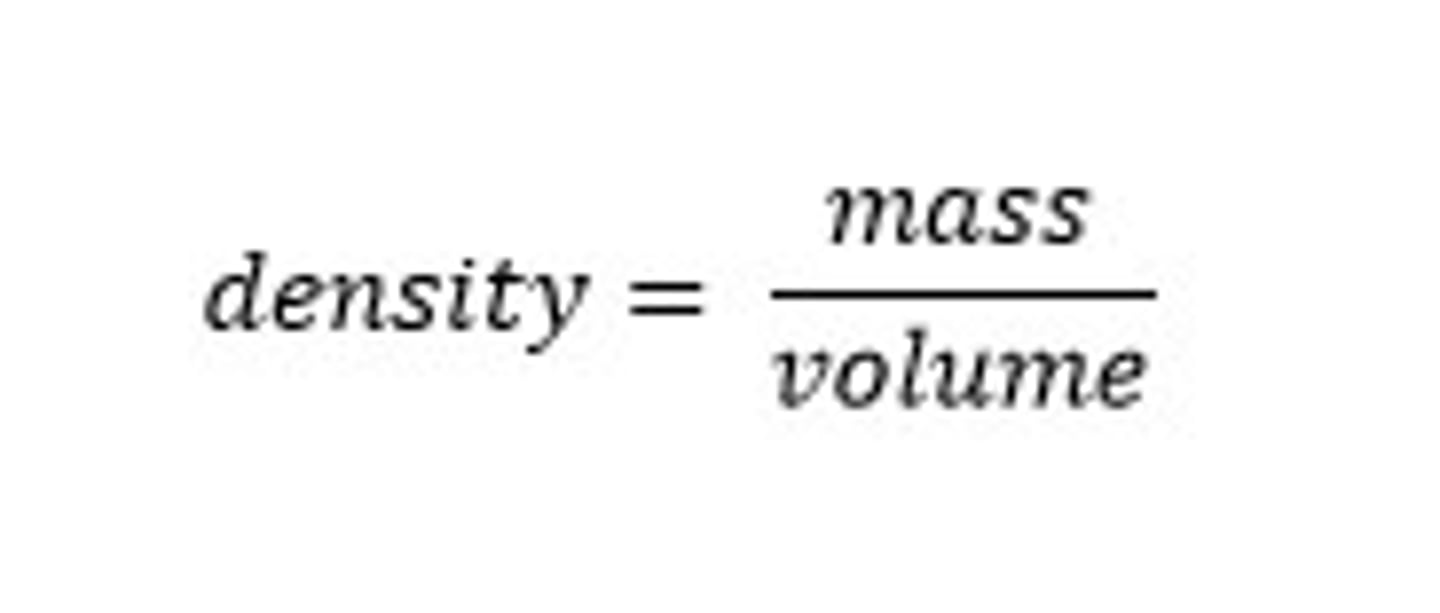
How does density affect whether an object floats or sinks?
An object will float if its density is less than the density of the fluid it is placed in, and it will sink if its density is greater.
What is the ERSAUSS method?
The ERSAUSS method is a systematic approach for solving physics problems that includes identifying the equation, rearranging it, substituting values, calculating, and checking units and significant figures.
How can you rearrange equations containing three terms?
You can rearrange equations containing three terms by isolating the desired variable using algebraic manipulation.
Why is it important to include correct units in calculations?
Including correct units in calculations is crucial for ensuring that the results are meaningful and can be accurately interpreted.
What are significant figures?
Significant figures are the digits in a number that contribute to its precision, which includes all non-zero digits, zeros between significant digits, and trailing zeros in the decimal portion.
What is the displacement method?
The displacement method is a technique used to find the volume of an irregularly shaped object by measuring the volume of water it displaces when submerged.