BIOL 315 Cell Biology Quiz 1
 Call Kai
 Learn
Learn Practice Test
 Spaced Repetition
 Match
Match Flashcards
 Knowt Play
1/53

There's no tags or description
Looks like no tags are added yet.
Name | Mastery | Learn | Test | Matching | Spaced | Call with Kai | Chat |
|---|
No analytics yet
Send a link to your students to track their progress
54 Terms
Plasma membrane
Lipid bilayer that surrounds every cell
nucleus
stores genetic material
extracellular matrix
provides physical support outside of the plasma membrane
ribosomes
Small particles consisting of RNA and associated proteins. They bind messenger RNA and transfer RNA to synthesize polypeptides and proteins
rough ER
Studded with ribosomes. Important for the synthesis of polypeptides that accumulate within the plasma membrane
cytoskeleton
Serves as a framework for positioning and moving organelles and macromolecules within the cell
mitochondria
Generate most of the chemical energy (ATP) needed to power the cell's biochemical reactions
lysosome
Organelle containing digestive enzymes that break down proteins, nucleic acids, carbohydrates, and lipids
golgi apparatus
Transports, modifies, and packages proteins and lipids into vesicles for delivery to targeted destinations
chromatin
A complex of DNA and protein that packages long DNA molecules into more compact structures
nucleolus
Site of ribosomal RNA (rRNA) synthesis and ribosome biogenesis
cytological
strand of cell biology that deals with cellular structure and the visual observation of cell components. It relies heavily on microscopy—including optical, fluorescence, scanning electron (SEM), and transmission electron (TEM) microscopy—to resolve the small dimensions of cells and organelles
biochemical
strand of cell biology that deals with the structure, function, and chemical reactions of biological macromolecules within the cell. Key techniques include centrifugation, chromatography, and gel electrophoresis
genetic
strand of cell biology that deals with heredity, gene expression, and the flow of genetic information within the cell. Key techniques include DNA sequencing, bioinformatics, and nucleic acid hybridization
nucleic acid hybridization
takes advantage of complementary base pairing to allow single-stranded DNA or RNA probes to bind to target nucleic acid sequences, enabling the identification and localization of specific genes or transcripts
bioinformatics
applies computational tools to analyze and interpret large genetic datasets
chromatography
a family of techniques used to separate complex mixtures of molecules in solution based on properties such as size, charge, or chemical affinity
TEM
biological specimens are chemically fixed, embedded in resin, and cut into ultrathin sections of about 70 nm. It provides magnification up to 100,000× and a resolution limit roughly 100 times superior to light microscopes, enabling detailed visualization of internal cellular ultrastructure and individual organelle anatomy
SEM
technique where whole cells or tissues are coated with a thin layer of metal. Rather than passing through thin slices, the electron beam scans across the sample's surface to highlight exterior details, producing images with a distinct sense of three-dimensional depth. Colors are false but aid in visualizing surface structure
raman microscopy
label-free imaging technique that uses laser light and inelastic scattering to detect molecular vibrations, providing chemical fingerprints of cellular components with high spatial resolution
Which of the following is closest to a micrometer in size?
prokaryotic cell
which of the following is smallest?
protein
DNA can only be viewed by electron microscopy
true
immunofluorescence microscopy
a technique that uses antibodies to detect and visualize specific proteins or molecules (antigens) within cells or tissues, often used in antibody staining or immunohistochemistry
transcriptome
The total collection of RNA molecules produced or expressed within a cell. While all cells share the same DNA, their ______ varies depending on gene expression—specifically, which genes are turned "on" or "off." Studied using RNA sequencing
proteome
The total collection of protein molecules present or expressed within a cell; It differs across different cell types and physiological conditions. Primarily studied using mass spectrometry
disulfide bond
covalent bond that forms between the sulfur atoms of two cysteine amino acid residues
hydrophobic interaction
amino acids with hydrophobic side chains tend to cluster within the interior of a folded protein. Overall protein folding represents a balance between hydrophilic R groups interacting with water and hydrophobic R groups avoiding water
peptide bond
a covalent bond between the carboxyl carbon of one amino acid and the amino nitrogen of a second amino acid

tertiary
Disulfide bonds are often found to stabilize which of the following levels of protein structure?
starch, glycogen
alpha-glycosidic bonds are found in _______
cellulose, chitin
beta-glycosidic bonds are found in _______
starch
energy storage polysaccharide in plant cells
glycogen
energy storage polysaccharide in animal cells and bacteria
cellulose
structural polysaccharide in plant cells
chitin
structural polysaccharide in insects and crustaceans
component of other lipids like triglyceride
function of fatty acids
membrane structure
function of phospholipids
energy storage
function of triglyceride
biological activity
function of steroid
pigment
function of terpene
outer membrane structure
function of glycolipid
fatty acid
long unbranched hydrocarbon chain with carboxyl group at one end
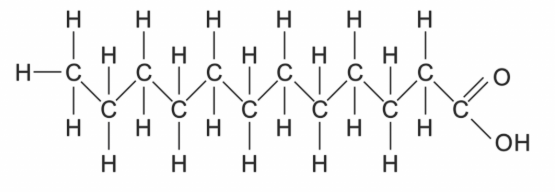
phospholipid
hydrophilic phosphate head and hydrophobic fatty acid tail
triglyceride
three fatty acids linked with glycerol

steroid
four-ringed hydrocarbon skeleton
terpene
synthesized from isoprene
glycolipid
carbohydrate head and hydrophobic fatty acid tail
10-100um
size range of most plant and animal cells
cytosol
semifluid substance in which organelles are suspended
secondary
hydrogen bonds NOT between R groups are involved in which level of protein structure?
tertiary, quaternary
hydrophobic, ionic and disulfide bonds are involved in which level of protein structure?
1000
1 μm = how many nanometers? (nm)
which is smaller, nanometers or μm?
nanometers