4.2.2 Inequality
 Studied by 0 people
 Call Kai
 Learn
Learn Practice Test
 Spaced Repetition
 Match
Match Flashcards
 Knowt Play
1/33

There's no tags or description
Looks like no tags are added yet.
Name | Mastery | Learn | Test | Matching | Spaced |
|---|
No study sessions yet.
34 Terms
income
money that a firm or person receives for producing a good or service
wealth
accumulation of all your assets
income inequality
unequal distribution (flow) of income to households
welath inequality
differences in the amount of assets that households own
examples of income
wages,salaries,dividends,benefits,interest
examples of wealth
property
art
shares
cash
life assurance
bank deposits
what is lorenz curve used for
used to demonstrate distribution of income
lorenz curve
diagonal line represents complete equality
the further the Lorenz curve is away from the diagonal the greater the inequality in the curve
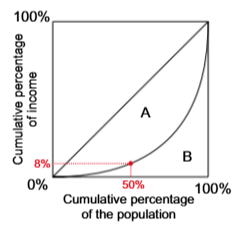
how is gini coefficient calculated from lorenz curve
area A/(area A + area B)
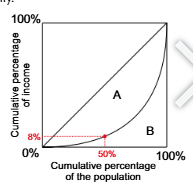
gini coefficient
measure of inequlity
gini coefficient 0
complete equality
gini coefficent 1
complete inequality
change in gini coefficient in UK 1979 to 2019
increased from 0.27 to 0.33
causes of rising inequality
tax system in uk is less progressive than 20 years ago
high company profits and surging executive pay
regressive effects of high inflation
widening urban-rural income divide
market failures in education and housing
rising real income for most skilled workers
causes of income inequality
wealth income
hiusehold composition
skills and qualifications
differences in earning
tax and state benefits
different regions
causes of wealth inequality
inheritance
marriage
income equality
chance
assets increase in value quicker than income
wealth not taxed
cause sof wealth and income inequality
education,trainging and skills
trade unios
benefit systems
wage rates
employment legislation
tax structure
economic and social cost sof inequality
social unrest,tensions,civil disobedience
self perpetuating poverty cycle becomes embedded
inequality and loss of allocative efficiency
impaact of conomic change and development on inequality
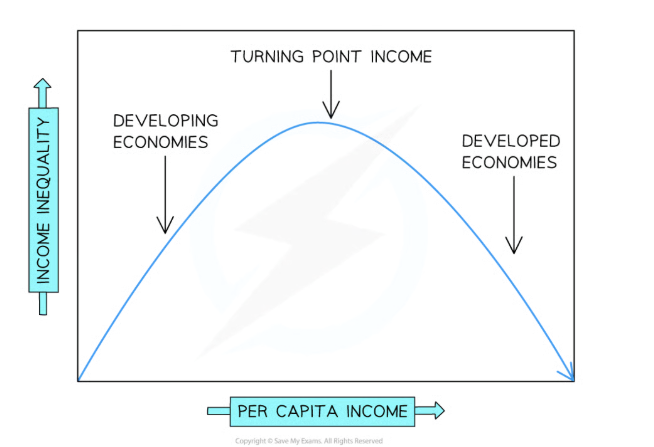
In the 1950's Simon Kuznets developed a hypothesis that described how income inequality changed as an economy went through stages of industrialisation and development
This hypothesis was explained using the Kuznets Curve
Industrialisation results in increased inequality as some workers move from the lower productivity, lower paid agricultural sector into the higher productivity manufacturing sector
There is now greater income inequality with the workers left behind
However, at some point, inequality starts to decrease
This is most likely due to government intervention/support funded by increased state tax revenue brought about as a result of the increased production in the economy
kuznets curve
As a country changes sectors from primary (farming) to secondary (manufacturing), productivity increases and the per capita income increases
However, inequality is also increasing as the gap in wages between the primary and secondary sector is significant
At some point, the economy will reach a turning point of income where inequality begins to fall
This often occurs as the primary sector diminishes while the secondary and tertiary (services) sectors increase
Developed economies tend to generate more income from secondary and tertiary sectors
capitalism on inequality
nder Capitalism, inequality is inevitable
Workers with higher skills receive higher wages
Workers with little to no skills receive little to no wage
Individuals with higher income will acquire more assets leading to higher levels of income
In turn, they can keep on acquiring assets
Individuals with lower income will find it hard to acquire assets
long term cost of capitalism
factors of production become concentrated in ownership with relatively few individuals developing extreme wealth, at the expense of many who lose out
equality
everyones is treated completely equally
equity
more about fariness
horizontal equity
people with the same circumstances are trated fairly
veertical equity
people with different circumstances are treated fairly but differently
negative of unequal distribution of income
high absolute and relative poverty
restricts economic growth
as incomes rise even higher spending on imports tend to increase
social impacts
positives of unequal distribution of income
lower earners may feel if they work harder theyll earn higher income to increase prodctvity
incentive for people to start new business
some economists argue tjat higher incomes for richer people eoncourage more investmene in business creating jobs so soms of the wealth makes its way to poorer people-trickle down effect
ways government can intervene to alleviate poverty
benefits
state provision
progressive taxation
economic growth
national minimum wage
how could benefits alleviate poverty
Benefits are used to redistribute income — tax revenue (mostly from those with higher incomes) is used to pay for the benefits of those who need them.
However, as means-tested state benefits can contribute to the poverty trap (see p.166), governments might:
Remove means-tested benefits completely. This would encourage more people to work. However, people who can’t work could end up with no income, and relative and absolute poverty would increase.
Change means-tested benefits to universal benefits. But the cost of these extra benefits might mean that those on low incomes are taxed more.
Reduce an individual’s means-tested benefits gradually as their income rises, so they’re not worse off.
how could state provision alleviate poverty
State-provided services, such as health care and education, help to reduce inequalities caused by differences in income — e.g. someone on a low income can receive the same health care as someone on a high income.
State-provided services also redistribute income because a lot of the money to pay for them comes from taxing people with higher incomes. But free access is expensive to provide.
how could progressive taxation alleviate poverty
Progressive taxation means a bigger percentage of tax is taken from workers with high incomes than those with low incomes. It helps to reduce the difference between people’s disposable incomes, reducing relative poverty.
But progressive taxation can contribute to the poverty trap. Also, if high income earners are taxed too much, some may move to a country where they’re taxed less. This will mean a loss of labour and money from the economy.
how could economic growth alleviate poverty
Perhaps the most effective way of reducing poverty is through economic growth. This will mean jobs are created and unemployment will be reduced. It also tends to lead to higher wages, meaning the government will gain more tax revenue, which it can use to provide services and state benefits.
However, economic growth can be difficult to achieve. It can also result in larger inequalities in income — for example, economic growth might mainly benefit the rich so that they become even richer. It can also cause problems such as the using up of finite resources, which might mean more poverty and inequality in the future.
how could NMW alleviate poverty
A national minimum wage, if it’s set at a sensible level, will reduce poverty among the lowest paid workers. It will provide an incentive to work, and will help those on low incomes to afford a reasonable standard of living. A NMW can also counteract monopoly power (see p.63) — e.g. if an employer was paying low wages, resulting in workers being paid below relative or absolute poverty.
However, the NMW might mean some employers give fewer people. This would mean a rise in unemployment, and therefore a rise in poverty. A NMW also doesn’t take into account that the cost of living varies depending on where someone lives, so the standard of living for people who are earning the NMW will vary depending on where they live, while anyone who’s unemployed won’t benefit from a NMW at all.