AU 26 Econ 2001.01: Chapter 1 Flashcards
 Call Kai
 Learn
Learn Practice Test
 Spaced Repetition
 Match
Match Flashcards
 Knowt Play
1/17

There's no tags or description
Looks like no tags are added yet.
Name | Mastery | Learn | Test | Matching | Spaced | Call with Kai | Chat |
|---|
No analytics yet
Send a link to your students to track their progress
18 Terms
economics
study of people’s choices among scarce resources and how those chocies affect society
positive economics
describes what people actually do
normative economics
recommends what people, including society, ought to do
microeconomics
study of individuals, firms, and governemnts make choices
macroeconomics
study of the whole economy
How many principles in economics?
3 (optimization, equilibrium, empiricism)
1st principle
people try to optimize, always try to choose the best available option
2nd principle
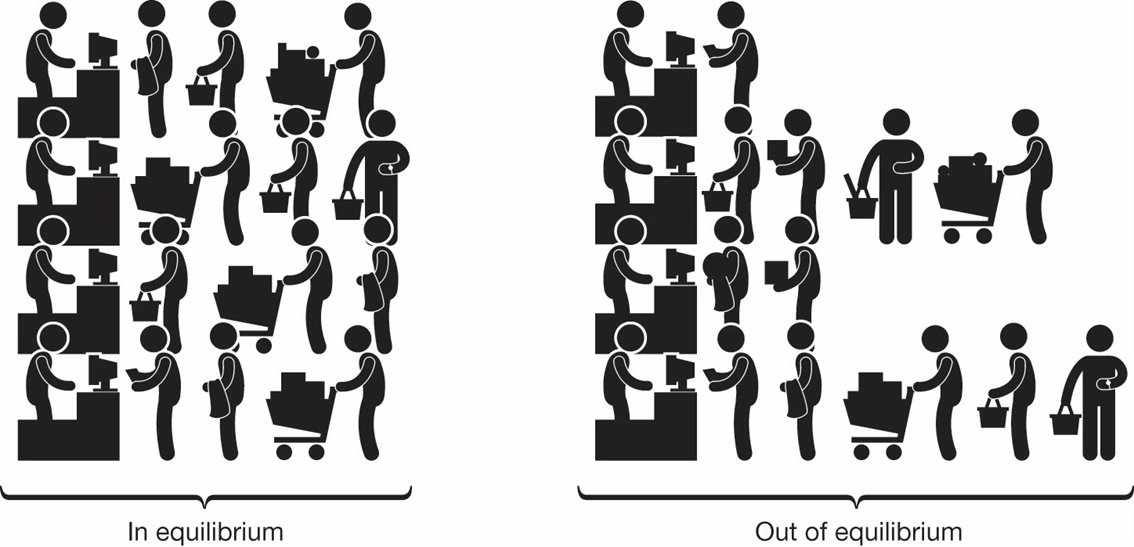
economic systems tend to be in equilibrium
equilibrium
supple meets demand, no one with benefit/be better off by changing his or her own behavior
free rider problem
when an indivual or group is able to enjoy the benefits of a situation without incurring the costs
markets have no mechanism for deciding what is fair
3rd principle
empiricism, economists using data to test theories and to determine what is causing things to happen in the real world
empiricism
using data to figure out answers to interesting questions
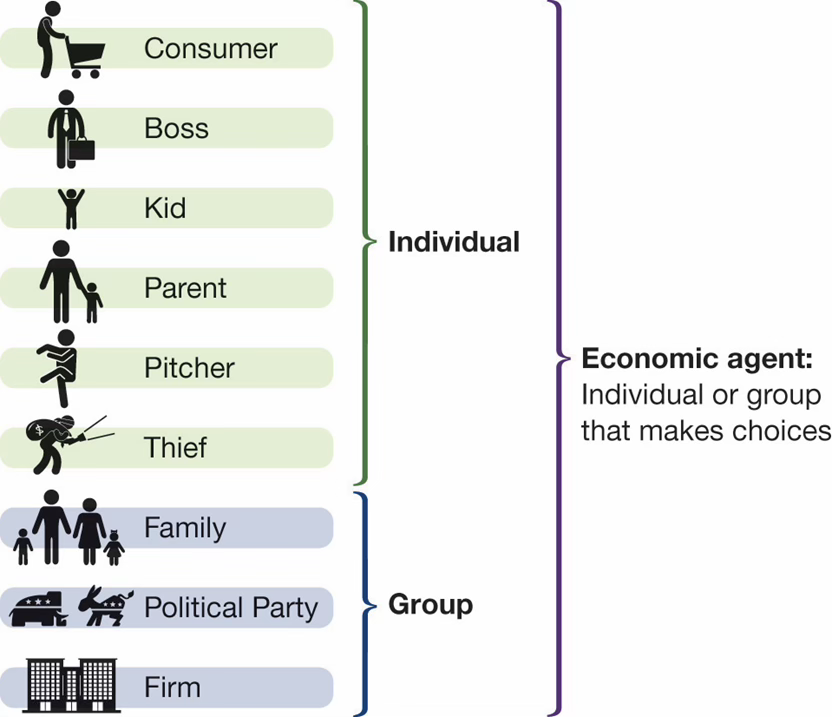
economic agent
any group/individual that makes choices
consumers, firms, parents, politicians, etc
scare resources
things that people want where the quanitiy that people want exceeds the amount that is avaliable
scarity
situation of having unlimited wants while having limited resources
trade-offs
when some benefits must be given up in order to gain others
budget constraint
the set of things that a person can choose to do/buy without breaking the budget
budget constraints describe trade-offs
opportunity costs
best alternative use of a resource