CBIO 2210L Practical 1 - UGA FA22
 Call Kai
 Learn
Learn Practice Test
 Spaced Repetition
 Match
Match Flashcards
 Knowt Play
1/128

There's no tags or description
Looks like no tags are added yet.
Name | Mastery | Learn | Test | Matching | Spaced | Call with Kai | Chat |
|---|
No analytics yet
Send a link to your students to track their progress
129 Terms
Hypothalamus
brain region controlling the pituitary gland

Pituitary Gland
master endocrine gland

Anterior lobe (adenohypophysis)
makes up 75% of the weight of the pituitary gland and secretes 7 hormones

Basophils

Acidophils

Posterior lobe (neurohypophysis)
made of neural tissue and releases two hormones made by the hypothalamus

Infundibulum
A stalk that attaches the pituitary gland to the hypothalamus
Hypophyseal portal system
a blood vessel system that directly connects the hypothalamus with the anterior pituitary
Thyroid Gland
produces hormones that regulate metabolism, body heat, and bone growth

Thyroid Gland Follicle
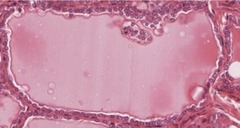
Colloid

Follicular cells

Parathyroid Glands
small pea-like organs that regulate calcium and phosphate balance in blood, bones, and other tissues

Chief cells

Adrenal Glands
a pair of endocrine glands that sit just above the kidneys and secrete hormones (epinephrine and norepinephrine) that help arouse the body in times of stress.

Adrenal Medulla

Adrenal Cortex

Zona glomerulosa

Zona fasciculata

Zona reticularis

Pancreas
Regulates the level of sugar in the blood and produces insulin

Islet of Langerhans

Ovaries
female gonads

Ovaries Cortex
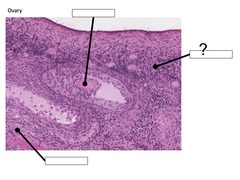
Ovaries Medulla

Oocyte
immature egg

Testes
male gonads

Seminiferous tubule
where sperm is produced

Thyrotropin-releasing hormone (TRH)
released by the hypothalamus and Promotes secretion of thyroid-stimulating hormone (TSH)
Corticotropin-releasing hormone (CRH)
released by the hypothalamus and Promotes secretion of adrenocorticotropic hormone (ACTH)
Gonadotropin-releasing hormone (GnRH)
released by the hypothalamus and Promotes secretion of follicle-stimulating hormone (FSH) and luteinizing hormone (LH)
Growth hormone-releasing hormone (GHRH)
released by the hypothalamus and Promotes secretion of growth hormone (GH)
Somatostatin (GHIH)
released by the hypothalamus and Inhibits secretion of growth hormone (GH)
Prolactin-inhibiting hormone (PIH)
released by the hypothalamus and inhibits secretion of prolactin (PRL)
Oxytocin
produced in the hypothalamus and released by the posterior pituitary, targets uterus and mmaray glands for uterine contraction and milk ejection
Antidiuretic hormone (ADH)
produced in the hypothalamus and released by the posterior pituitary, targets kidneys for water reabsorption
Growth hormone (GH)
released by anterior pituitary targets most body tissues for growth of tissues
Thyroid-stimulating hormone (TSH)
released by anterior pituitary, targets the thyroid gland for thyroid hormone production and release
Adrenocorticotropic hormone (ACTH)
released by anterior pituitary, targets the adrenal cortex for glucocorticoid production and release
Follicle-stimulating hormone (FSH)
released by anterior pituitary, targets the gonads
-Female: Growth of ovarian follicles and estrogen secretion
-Male: Sperm production
Luteinizing hormone (LH)
released by anterior pituitary, targets the gonads
-Female: Ovulation, maintenance of corpus luteum
-Male: Testosterone secretion
Prolactin
released by anterior pituitary, targets the mammary glands for milk production
Glucagon
Released by pancreas alpha cells, targets body cells and causes the release of glucose and which increases blood glucose levels
Parathyroid hormone (PTH)
Released by posterior thyroid gland, targets osteoclasts and control calcium levels in your blood
Cortisol
Released by adrenal glands, targets adipose tissue and breakdown protein and fats and helps the body react to stress
Testosterone
Released by testes, targets anterior pituitary, testes, and sex organs and promotes male sex drive, body hair, and deep voice
Aldosterone
Released by adrenal cortex, targets the kidneys regulates salt and potassium balance
Estrogens
Released by ovaries, targets the uterus, breast, ovary and promotes development of female reproductive system, regulation of menstrual cycle, development of breast tissue
Thyroid hormones (T3 & T4)
Released by thyroid gland, targets many cells in the body and regulates increasing heart rate, increasing protein synthesis, and increasing overall metabolic rate
Insulin
Releases by Pancreas beta cells, targets most tissues throughout the body and responsible for Increasing removal of glucose from blood
Epinephrine
Released by chromaffin cells of the adrenal gland, targets liver and skeletal muscle cells and signals to convert glycogen into glucose
Norepinephrine
Released by the adrenal medulla and increases heart rate and blood pressure
Progesterone
Secreted by the ovaries; prepares the uterus for pregnancy
Inhibin
Secreted by ovaries and Inhibits secretion of FSH and LH
Apex of Heart

Base of heart

Right auricle

Left auricle
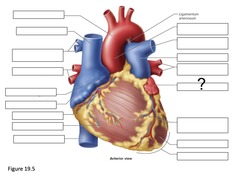
Right atrium
Receives deoxygenated blood from the body

Left atrium
receives oxygenated blood from the lungs
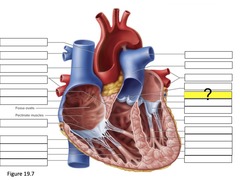
Right ventricle
pumps deoxygenated blood to the lungs

Left ventricle
pumps oxygenated blood to the body

Pulmonary trunk
carries blood from right ventricle to pulmonary arteries

Superior vena cava
receives blood from the head and arms and chest and empties into the right atrium of the heart

Inferior vena cava
carries blood from lower regions of the body to right atrium

Aorta
Largest artery in the body

Right pulmonary veins
bring oxygen-rich blood from the right lung to the left atrium

Left pulmonary veins
bring oxygen-rich blood from the left lung to the left atrium
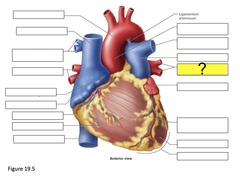
Right pulmonary artery
takes oxygen poor blood from the right ventricle to the right lung

Left pulmonary artery
carries poor oxygenated blood from the right ventricle to the left lung.
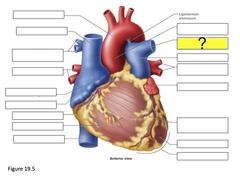
Coronary sulcus
groove that marks border between atria and ventricles

Anterior interventricular sulcus
marks the boundary between the ventricles anteriorly

Posterior interventricular sulcus
marks the boundary between the ventricles posteriorly

Aortic valve
heart valve between the left ventricle and the aorta

Pulmonary valve
valve between the right ventricle and pulmonary artery

Left AV (mitral) valve
valve between left atria and ventricle
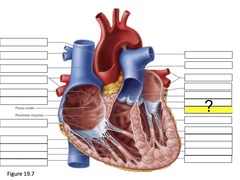
Right AV (tricuspid) valve
Valve between right atrium and right ventricle

Interventricular septum
partition between the right and left ventricles

Interatrial septum
partition between the right and left atria
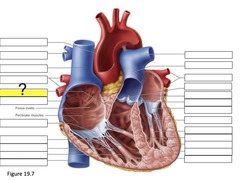
Chordae tendineae
thin bands of fibrous tissue that attach to the valves in the heart and prevent them from inverting

Papillary muscle
Small bunches of cardiac muscle responsible for pulling the atrioventricular valves (tricuspid & mitral) closed by means of the chordae tendinae.

Trabeculae carneae
muscular ridges on the internal surface of the ventricles

Left coronary artery (LCA)
travels through the coronary sulcus under the left auricle and divides into two branches

Circumflex artery
Supplies blood to the left atrium and posterior walls of the left ventricle

Anterior interventricular artery
supplies blood to the interventricular septum and anterior walls of both ventricles

Right coronary artery
supplies right atrium and most of right ventricle

Marginal artery
supplies the right border of the heart

Posterior interventricular artery
runs to the heart apex and supplies the posterior ventricular walls

Great cardiac vein
runs alongside the anterior interventricular artery

Middle cardiac vein
runs alongside the posterior interventricular artery
Small cardiac vein
Vein that travels along side the right marginal artery.

Posterior interventricular vein
drains blood from the posterior surface of the heart

Coronary sinus
enlarged vessel on the posterior aspect of the heart that empties blood into the right atrium

Epicardium
outer layer of the heart

Myocardium
muscular, middle layer of the heart

Endocardium
Inner layer of the heart

Tunica intima
the innermost layer of a blood vessel

Tunica media
middle layer of blood vessel; made up of smooth muscle fibers and thick layer of elastic connective tissue

Tunica externa
outer layer of a blood vessel which connects it to surrounding tissues

Elastic artery
a large diameter, thin-walled artery that functions in conducting blood from the heart to muscular arteries during ventricular relaxation (diastole); also called conducting artery
