HLTH 101 Test #1
 Call Kai
 Learn
Learn Practice Test
 Spaced Repetition
 Match
Match Flashcards
 Knowt Play
1/153

There's no tags or description
Looks like no tags are added yet.
Name | Mastery | Learn | Test | Matching | Spaced | Call with Kai | Chat |
|---|
No analytics yet
Send a link to your students to track their progress
154 Terms
Biomedical Definition of Health
state of normal function that can be disrupted from time to time by disease
Biomedical Perspective of Health
Focuses on body’s ability to function - that ability can be disrupted by a disease process
Based on the germ theory of disease - most of human history people died from famine or infectious diseases
For someone to be healthy they must not have an underlying disease process such as a bacterial or viral infection or non-communicable disease such as cancer or cardiovascular disease
Biomedical perspective is medical model of care - still practiced by many doctors that idea those with disease must be diagnosed, treated, and maybe cured
1948 World Health Organization definition
physical, mental and social well-being and not merely the absence of disease and infirmity - links health to higher levels of well-being
Was more holistic definition but also criticized as it is vague, broad, and difficult to measure
Was set aside as impractical ideal and most discussions of health returned to practical Biomedical Model
WHO played important role fostering development of the health promotion movement in the 1980s - conception of health as more dynamic in terms of resiliency and being a “resource for living”
Referring to health as the ability to maintain homeostasis and recover from various insults
Wellness
optimal health and vitality and includes this idea of living life to the fullest
More holistic idea then previous definitions of health - encompasses different dimensions (spiritual and emotional)
Health can be influenced by non-modificable risk factors beyond control
Non-modifiable risk factors include - your genes, age, healthcare systems, social determinants of health, childhood development
Modifiable risk factors - wellness determined by this - increase or decrease your risks for certain diseases or injuries - health behaviors such as smoking, exercise, diet
Ottawa Charter for Health Promotion (Wellness Model)
describes health promotion as vehicle for being able to achieve wellness - play an active role in decision relating to each dimension of your wellness
Dimensions of Wellness
Physical
not just overall health of body but idea of forming healthy habits
paying attention to physical signs and symptoms when body signals something is wrong
Emotional
ability to understand and deal with your feelings and getting help when needed
Intellectual
being comfortable with constantly challening your mind
benefits most from having a growth mindset
Carol Dweck - beleif about whether you think your intelligence, character, and abilities are fixed or static and hence cannot be changed, or believe you can grow and stretch your existing abilities
Interpersonal
ability to develop and nurture satisfying and supportive relationships
related to physical and emotional wellness
Cultural
when you can generate and maintain healthy relationships with those who are different than you
importance of understanding yourself and your own culture, valuing your identify for who you are
Spiritual
sense of some guiding beliefs or values that give you a sense of meaning and purpose in your life
might be religion or finding meaning in beauty of nature in art or in helping others
Environmental
involves livability and sustainability of your surrondings and whether they increase/decrease your sense of well-being
ranges from health of the planet to safety of your good and water to degree of violence
Financial
have basic understanding of finances, really living within the resources that a person has available to them
the alleviation of stresses related to money or spending in your life
Occupational
Three Perspectives: Disease, Sickness, and Illness
Illness
a person’s subjective experience of their symptoms
everyone has different threshold for pain or discomfort with their body symptoms
Disease
an underlying pathological process in the body - presumable causing the patient’s illness and their feelings of symptoms
may or may not produce the same symptoms in all people
Sickness
societal norm or cultural beliefs and perceptions around an illness
can affect how a patient perceives their symptoms and whether they choose to seek help
Biomedical Model of Disease
Been dominant view science advent to scientific study of causes of disease
idea here is that someone with an illness has an underlying pathological process
goal is to understand, diagnose, and treat the physical and biological aspects of diseases and try to restore the patient’s physiological integrity and function
Diagnosis involves recognizing and applying a label to a pattern of signs and symptoms to be understood in terms of abnormal structure or function of cells, organs, and organ system
this is reductionist - rather than holistic approach - necessary to decide which tests to order and diagnose
Can be tricky to define at what point a process becomes a disease
such as hypertension (high blood pressure) - over time this can cause micro damage to arteries that lead to buildup of fatty deposits called plaques
process called atherosclerosis and disease process can eventually lead to narrowed or blocked artery
The Clinical Course of Disease from a Biomedical Perspective

disease progression can be stopped at any stage
during clinical phase hopefully get diagnosis and receive treatment
outcome hopefully be a cure, or learning to live with disease and control it (diabetes) or person’s health deteriorates
Causes, Risk Factors, and Determinants
Epidemiology - study of the distribution and determinants of health-related states or events in specific populations
Epidemiological Triad

Underlying agent - the micro-organism, such as a virus or bacteria, fungus or parasite that causes the infection
Infectivity - important qualities associated with the agent - basically the ability of that microorganism to infect you by getting past your first lines to immune defense
if microorganism does tend to cause disease in its host - called pathogen
some strands of E.coli that help our digestive health and other strains that are quite dangerous in water supply so these dangerous ones would be pathogens
Virulence - a measure of how bad a disease the pathogen can cause
some strains of influenza cause severe illness other years they’re milder
Host - the organism such as a person that could get infected by the microorganism
Genetic susceptibility to infection
HIV virus require specific receptors in order for it to get into immune cells of body some protected due to genetic differences
whether person has immunity to microorganism such as vaccines
how sensitive one is to developing addictions
One’s resiliency - motivation to change behavior plays importqnt role, as well as self-efficacy
social environment - family and social networks influence whether a person feels that their smoking is accepted by others
health literacy and access to healthcare
Environment - extrinsic or outside factors that allow for interaction ebtween agent and host to occur
living in low income neighborhood or near highway that may pollute air - can irritate lungs
physician needs to tackelt the immediate problem of what is making patient sick
Risk Factors
variables that are associated with an increased statistical probability that a person will fall sick from a disease, by hurt by an injury or be exposed to and contract an infectious disease
direct and probablistic effect - on likelihood of adverse outcome - not wearing seatbelt greatly increases irsk of serve injury in event of accident
Causal pattern or web of causation - effect of diet on coronary heart disease - diet interacts with numerous other factors
risk of child being born with down yndrome increasing maternal age
not maternal age that’s risk factor, but increased risk of error in meiosis that happens with age lead to abnormal number of choromosomes
Determinants
tends to be more distal or upstream and occur at the population level (SES, education, social support, access to healthcare)
Risk factors which tend to be closer or more proximal to the individual, have more upstream factors that correlate with them
Clinical Course of Disease: pre and post disease stages

before onset of disease, we have risk and protective factors that are more proximal or close to individuals (genetics, lifestyle, health behavior)
looking more upstream would be broader social and environmental ddeterminants - person’s living and working conditions
ecological model
Social Determinants and Individual Factors
Individual factors - age, sex, geentic background, physiological integrity of their body, lifestyle behavior
Canadian Health Association 14 Key Social Determinants of Health
Income
Education
Unemployment and job security
early childhood development
food insecurity
housing
gender
socially influence gender roles - can increase or decrease health risks
women less likely smoke/drink
women tend to earn less money for same job
transgender people and non-binary can fall outside of societal expectation and experience poorer health outcomes due to discrimination and social exclusion
social safety network
employment and working conditions
social exclusions
indigenous status
Colonization taking away land, relocating to land with little access to affordbale and fresh fruits and vegetable
Race/racism
race based data show difference in health outcomes associated with race is no biological but racism causing inequities
Health services
disability
Race/Racism
Highest level of racism
insitutionalized racism
differential access to safe housing, good education, and clean environment
Personally-mediated racism
people who experience discrimination and prejudice in their day to day lives
different assumptions about their abilities and intentions based on their race
Internalized level of racism
internalized at the level of the individual who has grown up with negative messages about their intrinsic worth
Intersectionality
these social determinants listed separate from oen another may interact or intersect with each other
Determinants of Health
although determinants of health are associated with certain poor outcome or health outcomes these upstream factors fo not imply determinism or inevitability
they don’t mean if a person grows up poor they are going to develop cardiovascular disease - just increased probabiltiy they will truggle with health later on in life
word determinant comes from laten - de termine - means “from the end or origin” of the causal chain or web
upstream factors that are part of a complex causal chain or web
Social Ecological Model and Social Determinants of Health
model helps illustrate the underlying structural aspects of the society in which people live that can drive patterns of illness or other adverse health outcomes in a population
individual surronded by spheres starting with proximal factors - those closer to individual - genetic traits, age, sex, health behaviors
individual’s health behaviors - whether they smoke, exercise and eat good foods will be influences by surronding social environment
Intermediate determinants - broad category of living and working conditions
SES, education, occupational and employment condition, access to healthcare, environment people live and work
The most distal level have - broad social economic environmental condition - the and national policies - influences from local to provincal to national and global levels
Integrated Life Course and Social Determinatns of Indigenous Health
due to inequities in health for Indigenous Canadians, imperative physicians pay attention to Indigenous perspective on health and wellness
child is at center - shows importance of mental, emotional, and spiritual health and physical health
Indigenous medical thinking tends to emphasize healing by restoring and maintaining balance of all four of these aspects of health and recognizes more route to healing that can be provided by Biomedical Model
Hunter-Gatherers
We start out more than 10,000 years ago when humans levied as hinter gatheres, living and travelling in small groups to forage and hunt for food
humans ahd short lifespans and tended to die of starvation - infectious diseases were not a major factor since they lived in small groups and move a lot
since they didn’t stay in one place, they didn’t accumulate waste or have problems with contamination of food or water could allow rapid spread of infectious disease - when find food ahve abalcned diet less likely have nutritional deficiencies
ancient tribes most successful have developed their own rudimentary public health measures in form of tribal rules for survival - storytelling and oral traditions
don’t drink still unclear water, don’t allow animal waste in shelters
anient explanations for causes and occurrence of diseases based on superstition, mythology, and religion
Agricultural Revolution
10,000 years ago was start of agricultural revolution, human tribes switched from hunting to setteled agriculture
switch when humans could breed animals and sue them as source of food and work
learned about conditions that allowed wild plants to grow - ands settling in one place to work to grow food and animals
food supply here became more secure allowing for expansion of population - animals though carried disease - zoonosis - infectious disease able to jump from one species to another
people now lived in larger groups and same place, more chance for transmission of diseases from human to human - diets now lacking minerals and vitamins as relying on one or two crops
living in settlements led to accumulation of waste which attracts rodents - execerbated spread of infectious diseases - Age of Pestilience and Famine - majpr causes of deaths were infectious diseases or starvation
Hippocrates (460 BC) and Hippocratic Corpus
Until 460 BC explanations for disease based on myth
Hippocratic corpus developed by Hippocrates - beleived there had to be physical and rational explanation for illness and disease - proposed diseases not caused by vengeful gods, but by an imbalance of man with the environment
looked for causal relationships between disease and climate, water, lifestyle and nutrition
Hippocratic corpus opened possibility of itnervention to prevent/treat disease
Greek physicians at the time changes in diet and lifestyle to cure people
Hippocrates also proposed disease results from an imbalance in the so-called humors or fluids in the body composed of melancholy, phlegm, bile, and blood
Melancholy important insight to role of mind and mental health
if humor out of balance, way to bring back health was to remove excess of one of the humors - like bloodletting
The Black Death
also known as the black plague, caused by acute infectious disease had high fatality rate caused by the bacterium Yersinia pestis
The bubonic version of the plague was transmitted from rats to humans from bite of a flea
The pneumonic version could spread from human to human via the respiratory route
symptoms started with high fever, headaches, and vomiting
bacteria then spread to the lymph nodes and multiply causing purple swollen lumps in the groin and armpits
60% of cases of infection people died
emerged mid 1300s in Assi and moved west via Mongol armies and trade routes to Europe killing 1/3 of the population (60 million)
Miasma Theory - there was invisible vapours or miasmas coming from swamps and cesspools that could be carried through the air, and inhaled made people sick
this helped create the getup for the plague doctor with his hood, mask and gloves
Rats served as the reservoir for the bacteria and then fleas transferred the bacteria to humans by biting them
What triggerd the pandemic?
Likely human behaviors created the environment for rats, fleas, and humans in close proximity to one another
Crowding cities, population desnity, lack of proper sanitation - attracted rates and they multiply
The Father of Epidemiology: Dr. John Snow (1813-1858)
Last 200-300 years scientists started using more systematic approaches to understand causes of disease
John Snow came up with systematic approach trying to uncover the cause of outbreak of infectious disease - cholera - a severe infection of the intestines caused by Vibro cholera bacterum which is ingested in water
when contracted it causes diarrhea and vomiting and quickly caused dehydration and death in severe cases
his mother used small inheritance to send him to private school and he earned MD degree
most popular theory for cholera was miasmas, Snow didn’t support it
Snow used a spot map which overlaid dark areas represent home with death from cholera - led him to become suscpicious of Broad Street pump - removed handle from pump and cases dropped and epidemic subsided
the first public health intervention - discovered leaking cesspool nearby into the well
most people/scientist still held onto Miasmas theory and Snwo died at young age
Age of Reason and Enlightenment (1650-1800 A.D.)
Mid 1600s people brought back more scientific reasoning - age of reasona nd enlightenment
William Harvey was an english physician who did animal dissections and studied anatomy of the heart and circulatory system to explain their function
first to hypothesize that mammals reproduce fertilization of an egg by sperm
Smallpox was cuased by a virus unlike the bubonic plague and cholera - this virus infected the blood vessels of skin, causing a rash and raised fluid-filled blister
also caused severe influenza like symptoms
Variol major form of disease was more common had fatality rate of 30% but could be as high as 80% in children
milder but similar viral disease called cow pox - those who had cow pox seemed to not catch the more fatal smallpox
Edward Jenner performed famous cowpoz experiment on 8 year old boy, James Phipps
used material from cowpox pustule and scraped them into boy’s skin, and later on he acquired smallpox James appeared to be protected against smallpox virus
made practice of exposing the immune system to a weakened or less dangerous form of an infectious disease to protect against more dangerous form - paved way for vaccines
Growth in Scientific Knowledge - Germ Theory of Disease
Louis Pasteur and Robert Koch advanced scientific knowledge and data to support Germ Theory of Disease
Germ Theory of Disease proposed that microscopic organisms or microorganisms act as pathogens that can invade the body and cause disease in the host
Louis Pasteur carried out experiment to disprove the Theory of Spontaneous Generation - idea that living organisms could form non-living matter rather than by descending from other organisms
His bacterial experiment led support for Germ Theory of Infection
He discovered from fermentation in wine that microorganisms were responsible for fermentation - 130 degrees could kill the bacteria and prevent souring (pasteurization)
He developed technique of generating weakened version of microbes to create vaccine - from Jenner’s cow experiment word vaccine comes from latin word for cow
Made vaccine against rabies, and ones for anthrax in sheep and cholera in chickens
Robert Koch discover bacterium that causes tuberculosis as one that causes cholera
Robert Koch’s Postulates for proving specific microbe underlying cause for specific disease
Pathogen must be found in all cases of disease individuals - not healthy one
Pathogen must be able to be isolated from diseases individual and grown in culture
Inoculation of a healthy animal with cultured pathogen must then recapitulate the disease
The pathogen must be able to be re-isolated from the new diseased host, and it must match the original pathogen (under microscope)
But these rules don’t always apply
Sometime people can be asymptomatic carriers
Many types of bacteria that are difficult to grow in culture
Discovery of germ theory important for sanitary measure, surgeons washing their hands, improving obstetrician care decreasing post-partum infections, using disinfectants, making vaccines
Industrial Revolution and Urbanization
Starting in the 1700s was explosion of growth in cities due to new jobs in factories, creation of new goods and products - mass migration of workers from farms to cities/towns
Increased ideals on importance of democracy, reason, science, and rational approaches
Philosopher Jeremy Bentham was utilitarianism - supported the ideal of doing the greatest good for the greatest number of people for both the wealthy and poor
Included idea that it is better for the economy to reduce mortality and improve health for stronger workforce
Slums and Poverty in Industrial Revolution
With new jobs in cities come conditions that contributed to greater spread of infectious diseases
Poor workers housed in poorly constructed slums and lack of indoor plumbing
At factories exposed to toxic metals, injury from machines and more
Edwin Chadwick helped with reforms in sanitation, healthcare, and treatment of the poor
Reported how filth contributed to spread of disease in urban areas, and life expectancy in countryside was higher - need to design infrastructure for clean water and drainage in streets
This time is called the Great Sanitary Awakening - birth of modern public health
Great strides in scientific knowledge to understand the origins of diseases and come up with rational treatments
1848 public health act could empower local boards to inspect local conditions and deal with environmental filth
By early 1900s types of measures helped bring humans to an Age of Receding Pandemics - child mortality dropped and life expectancy increased
Sanitary Reforms in Canada
The Great Sanitary Awakening and Sanitary Reforms happened in Europe during 19th century also occurred in Canada with focus on adopting measures to combat spread of infectious diseases which occur in dense urban and poor areas
The focus was on environmental public health, and engineering advances allowed for cleaner water and sanitation services to remove and treat sewage in rapidly growing cities. These types of services were coordinated more at the local level and municipalities with little coordination at higher levels.
Another important measure was to isolate and quarantine immigrants to prevent the spread of infectious diseases like cholera and typhus fever.
La Grosse Île (Grosse lsle) was a main gateway into Canada via Quebec. During the Great Irish Famine of 1847, thousands of Irish immigrants arrived at this tiny island on the Saint Lawrence River, where they had to quarantine for weeks until they were cleared to leave the island.
In the early 20th Century, many municipalities started to chlorinate their water supply to help decrease bacterial contamination along with the pasteurization of milk. Ontario also began to immunize against smallpox and diphtheria, which is a severe respiratory infection caused by a bacterium.
WHO in Canada (1948)
Another important development for public health in Canada (and around the world) was the establishment of the World Health Organization (WHO) as a specialized agency of the United Nations (UN) in 1948 with representation from senior public health officials from the member governments.
Again, the focus was on cooperation for prevention and control of infectious diseases, as well as focus on sanitation and included harmonizing the quarantine requirements of the different countries.
the important role of the World Health Organization in broadening the definition of health from a lack of disease, which was the Biomedical Model, “to linking it to physical, mental, and social well-being and not merely the absence of disease”.
Developments in Health Promotion in Canada
The Biomedical Model continued to dominate the allocation of resources to the care of people who are already sick rather than moving the focus further upstream to prevention in broader social determinants of health.
Former Federal Health Minister Mark Lalonde (Lalonde Report) published a report in 1974 called a “New Perspective on the Health of Canadians”—a working document which emphasized the importance of looking beyond the care of the sick in order to improve the health of the population.
This report was the launching-off point for the Population Health Movement and was the first report on the Canadian health system to emphasize the importance of health promotion and prevention.
In 1986, there was an international conference on health promotion held in Ottawa, Canada. The result of this conference was the Ottawa Charter for Health Promotion, which emphasized that Canada should attempt to reduce inequities, to increase the prevention effort, and enhance people's capacity to cope by empowering individuals.
fostering public participation,
strengthening community health services, and
coordinating public health policy.
The Lalonde Report
The Lalonde Report introduced a four-fold health concept (Health Field Concept) which identified the environment, biology, lifestyle, and healthcare organization as key determinants of health. Lalonde noted that “when the full impact of environment and lifestyle has been assessed, there can be no doubt that the traditional view of equating the level of health in Canada with the availability of physicians and hospitals is inadequate.
improving the environment,
moderating self-imposed risks, and
adding to our knowledge of human biology.” (Lalonde, 1974)
This was an important step to move the focus away from a purely biomedical viewpoint and brought much needed attention to upstream factors, such as the environment and healthcare organizations.
Ottawa Charter for Health Promotion
The Ottawa Charter for Health Promotion followed about 12 years after the Lalonde report with a focus on action to achieve health for all by the year 2000. The Charter emphasized advocacy by strengthening community action, creating supportive environments, and reorienting health services. It included the following strategies:
Building healthy public policy by requiring policy makers to be aware of how their decisions impact health
Ensuring they take a health-in-all policies approach and create supportive environments.
Recognizing the importance of environment for health and proposed a social ecological approach to health—the importance of social networks and supports to help people to adopt healthier behaviors.
Strengthening community action is one of the main aspects of health promotion and involves empowering communities to get involved in:
setting priorities,
planning, and
implementing strategies at the local level.
Developing personal skills is meant to support personal development to enhance life skills and good health behaviours through health promotion and education
Reorienting health services and emphasizing shifting the balance of financial support of health resources to a more equal distribution between health care and preventing disease.
The Ottawa Charter also included these Seven Prerequisites for Adult Health.
peace
shelter
education
food
income
a stable eco-system
sustainable resources
Major Outbreak in Canada (2000s)
up until the year 2000, public health services were still a very small percentage of the overall health-funding budget. Only about 3% was funded and most of the funding continued to go towards the more expensive healthcare services that focused on the Biomedical Model. However, several outbreaks in the early turn of the millennium revealed important cracks in the public health infrastructure.
In the year 2000, there was an E. coli outbreak that caused severe gastroenteritis in more than 2,000 people, and ended up killing six (6) people in Walkerton, Ontario. The outbreak was due to contamination of the water supply. After a heavy rainfall, there was runoff of cattle manure into a well. This, combined with inadequate water treatment, caused the outbreak.
There was another outbreak in 2001 in North Battlefield, Saskatchewan that sickened around 6,000 people with a parasite called cryptosporidium. Again, it was because of problems with the water supply.
In 2002 and 2003, there was the SARS outbreak, which stands for severe acute respiratory syndrome, due to a previously unknown type of coronavirus. The outbreak almost reached a pandemic level with over 8,000 cases worldwide in 16 countries.
In the end, only 44 Canadians died, mostly in Toronto, but it could have been much worse if not for the swift Ontario public health measures that included strict infection control in the hospitals where the SARS patients were being treated, as well as contact tracing to identify anyone who came into contact with those infected.
In 2009, there was a particularly dangerous strain of influenza, H1N1, that put a lot of strain on the healthcare system. There were problems with supply of the vaccine, and public health immunization clinics were overwhelmed with many people waiting in long lines.
COVID-19 Pandemic
At the end of 2019, there was the emergence of a new infectious disease—the novel coronavirus SARS-CoV-2 - which first appeared in Wuhan, China and spread world-wide causing the COVD-19 pandemic.
Although Canada has done a fairly good job with the handling of the COVID-19 pandemic, early on, there were problems in proper screening of travelers coming into Canada, availability of testing, and personal protective equipment (PPE), and having the capacity and resources to do rapid and efficient testing and contact tracing on a large scale.
Also, during the same time period of the early 2000s, we had the 9/11 terrorist attacks in New York and several other terrorist attacks in Europe and Asia. These terrorist attacks, in addition to extreme weather conditions due to climate change (such as wildfire fires in some places due to drought, mudslides, and flooding) and others caused significant deaths and injuries around the world.
These man-made and natural disasters brought our attention to the need for better disaster planning and emergency preparedness as important parts of public health services around the world. All of these issues made the Canadian government realize the need to put substantially more resources and funding towards a more coordinated public health system, with dedicated leadership at the federal level.
2006 Public Health Agency of Canada Act
In response, the Canadian government enacted the 2006 Public Health Agency of Canada Act which established, by law, the Public Health Agency of Canada (PHAC) and also appointed a Chief Public Health Officer for Canada who would:
advocate for effective disease prevention and health promotion programs and activities,
provide science-based health policy analysis and advice to the Federal Minister for Health,
provide leadership in promoting special health initiatives, and
improve the quality of public health practice.
Epidemiological Transitions
Age of Pestilience and Famine
Age of Receding Pandemics
Age of Degenerative and Man-Made Diseases
Age of Delayed Degenerative and Man-Made Diseases
One helpful way to think about these patterns is a type of theory on population change first proposed by Abdel Omran in 1971 called Epidemiological Transitions. This is a way to describe patterns and life expectancy, fertility, mortality, and the leading causes of death in different countries as they develop economically and involves four transitions or stages.
Age of Pestilence and Famine
The First Epidemiological Age that occurred for most of human history is the Age of Pestilence and Famine. Mortality rate was very high and fluctuated so that there could not be sustained population growth. People tended to die of infectious diseases or malnutrition, and infant mortality rate was very high.
Life expectancy, which is the average number of years a newborn child would be expected to live based on their year of birth, was also very variable and fluctuated anywhere between 20 and 40 years. People mostly didn’t live long enough to die of chronic diseases, like cancer, cardiovascular disease, or stroke.
The percentage of deaths due to cardiovascular disease was only about five to ten percent (5% to 10%) whereas cardiovascular disease is now among the top three causes of death in Canada.
Still some countries in sub-Saharan Africa
Age of Receding Pandemics
The next epidemiological transition is to the Age of Receding Pandemics. During the transition to this age, mortality progressively decreased, especially infant mortality, which led to more sustained population growth and an increase in life expectancy to about 50.
Industrialization and urbanization helped lead to increased food availability and technologies, like refrigeration and pasteurization, which made the food supply safer, leading to a decrease in deaths from malnutrition and foodborne illnesses.
Public health measures, such as clean water supplies, sewage systems, and better prenatal and postnatal care, were important as well as the introduction of immunization programs to control infectious diseases, such as polio, smallpox, and diphtheria. The inventions of antibiotics helped to drive down deaths from infectious diseases.
Public health measures, such as clean water supplies, sewage systems, and better prenatal and postnatal care, were important as well as the introduction of immunization programs to control infectious diseases, such as polio, smallpox, and diphtheria. The inventions of antibiotics helped to drive down deaths from infectious diseases.
With fewer people dying at a young age from infectious diseases or malnutrition, people started to live long enough to die of more chronic diseases, and the percentage of deaths due to cardiovascular disease increased to anywhere from 15 to 35 percent (15% - 35%).
Still Latin American and Southeast Asia
Age of Degenerative and Man-Made Diseases
We next move into the Age of Degenerative and Man-Made Diseases, which emerged in the middle of the 20th Century for developed countries such as in Europe, Canada, and the U.S.
People now lived long enough to mainly die from chronic diseases like cancer, coronary heart disease, and stroke, as well as suffer from diabetes and obesity, due, in part to poor lifestyle choices such as increased smoking, increased alcohol intake, increased fat, sugar, salt, and calories in the diet, and decreased levels of physical activity.
Coronary heart disease is caused by the growth of plaques—a process called atherosclerosis—in the arteries that supply oxygenated blood to the heart. Like we see in this figure, once one of these arteries becomes completely blocked, a person can have a heart attack—also called an acute myocardial infarction—which will either result in death or permanent damage to the heart muscle.
During this age of degenerative and man-made diseases, life expectancy surpasses 60 years, and it is during this time that there is a peak in the rate of people dying from cancer or cardiovascular disease with greater than 50 percent (50%) of deaths caused by cardiovascular disease.
Still in central asia, middle east, north africa, and urban parts of India
Age of Delayed Degenerative and Man-Made Diseases
The fourth age, that we are currently in, is the Age of Delayed Degenerative and Man-Made Diseases. It started from about the mid-1960s in developed countries like the U.S. and Canada, and continues today.
People are still dying of chronic diseases, like cancer, coronary heart disease, and stroke, but at a later or delayed age due to public health efforts to reduce and control risk factors and modify behaviours, including smoking-cessation education, tobacco-control policies, and changing social norms around smoking.
Technological advances include blood pressure medications to control high blood pressure, since we know that contributes to damage to arteries, which both initiates and accelerates the process of atherosclerosis. For people who suffer from coronary heart disease and have either had a heart attack or are in danger of an imminent one, coronary bypass surgery can prolong life and prevent death.
Health promotion campaigns and education also have encouraged people to adopt healthier lifestyles, watch their intake of high-calorie and low-nutrient foods like fat, salt, sugar, and also increase their physical activity. Currently, life expectancy in Canada is about 82 years old.
Public Health Achievements of the 20th Century
vaccinations for childhood diseases
control of infectious diseases
In moving from the Age of Pestilence and Famine into the Age of Receding Pandemics, the decrease in deaths from infectious diseases were due to measures to control infectious diseases, such as clean water and sanitation that dramatically decreased outbreaks of cholera and typhus fever, and the discovery and development of antibiotics to combat diseases like tuberculosis and sexually transmitted infections (STIs/STDs).
safer and healthier foods
Finally, safer and healthier foods through identifying the essential micro-nutrients needed in the diet and fortifying foods, such as bread, milk, and cereal, have resulted in the near elimination of major nutritional deficiency diseases. Safer foods through better hygiene practices and food inspection regulation have also decreased foodborne illnesses, although we still see outbreaks such as E. coli and listeria from time to time.
fluoridation of drinking water
safer workplaces
recongition of tobacco use as a health hazard
Recognition of tobacco as a health hazard allowed tobacco-control policies and regulations to be put into place to discourage people from smoking and educate them on the harms of smoking. These measures have resulted in prevention of millions of smoking-related deaths, including deaths from coronary heart disease and stroke. There has been a 50% decrease in the death rate from coronary heart disease via health promotion efforts to modify behaviours and reduce risk factors.
family planning
Family planning, including providing counseling and access to birth control methods, allowed women to have fewer babies spaced further apart, which also contributed to altered social roles and economic opportunities for women. Also, education on using barrier birth control methods, like condoms, have reduced the spread of sexually transmitted infection (STI).
healthier mothers and babies
Strategies targeted to support healthier mothers and babies—such as education on better hygiene and nutrition, availability of antibiotics, greater access to prenatal and postnatal health care, and advances in maternal and neonatal medicine—have dramatically reduced infant and maternal mortality.
decline in deaths from heart disease and stroke
Ten Leading Causes of Death in Canada, 2020
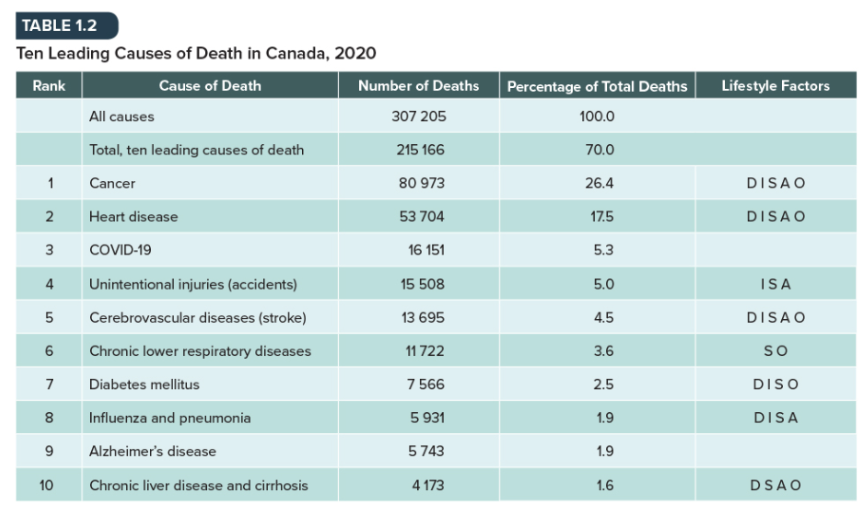
Even though the subsequent transition into the age of delayed degenerative diseases has significantly increased life expectancy, we can see that cancer, heart disease, and stroke are still in the top four leading causes of death, making up a little more than 50 percent of the causes of deaths in Canada. Similar data are seen in the US and Europe—in other words, other wealthy nations.
Treating these diseases is costly, difficult, and can cause a lot of suffering and disability for people even before they die from them. For example, chemotherapy as a treatment for cancer has terrible side effects.
Lifestyle factors such as diet, inactive or sedentary lifestyle, smoking, and excessive alcohol consumption play a role, as these are risk factors with strong associations to several of these diseases and causes of death.
Chronic lower respiratory diseases mainly involve chronic obstructive pulmonary disorder or COPD, which is comprised of two main illnesses:
(1) emphysema—a progressive disease in which the air sacs of the lungs become permanently damaged and
(2) chronic bronchitis—inflammation in the lining of the airways.
For both these illnesses, smoking is a major culprit and air pollution can also play a role.
Influenza and pneumonia was the only leading cause of death in this table for infectious diseases prior to 2020; however, COVID-19 joined the leading causes of death in 2020, as the pandemic spread around the world.
Alzheimer’s disease is a form of dementia caused by the buildup of misfolded proteins inside and outside of neurons in the brain, which leads to massive neuronal cell death and shrinkage of the cerebral cortex.
Although Alzheimer’s disease has been studied by many scientists around the world, it is unclear what triggers the accelerated misfolding of proteins in this form of dementia.
Alzheimer’s is a disease that you see in other high-income countries, in which people do live long enough to suffer from this terrible neurodegenerative disease.
Five Leading Causes of Death Among Ages 15-24

For teens and young adults, accidents are the leading cause of death, highlighting the importance of making good choices, since abusing alcohol and other drugs is a contributing factor. Sadly, both suicide and death by homicide are also leading killers of young people.
Ten Leading Causes Death Worldwide: 2019
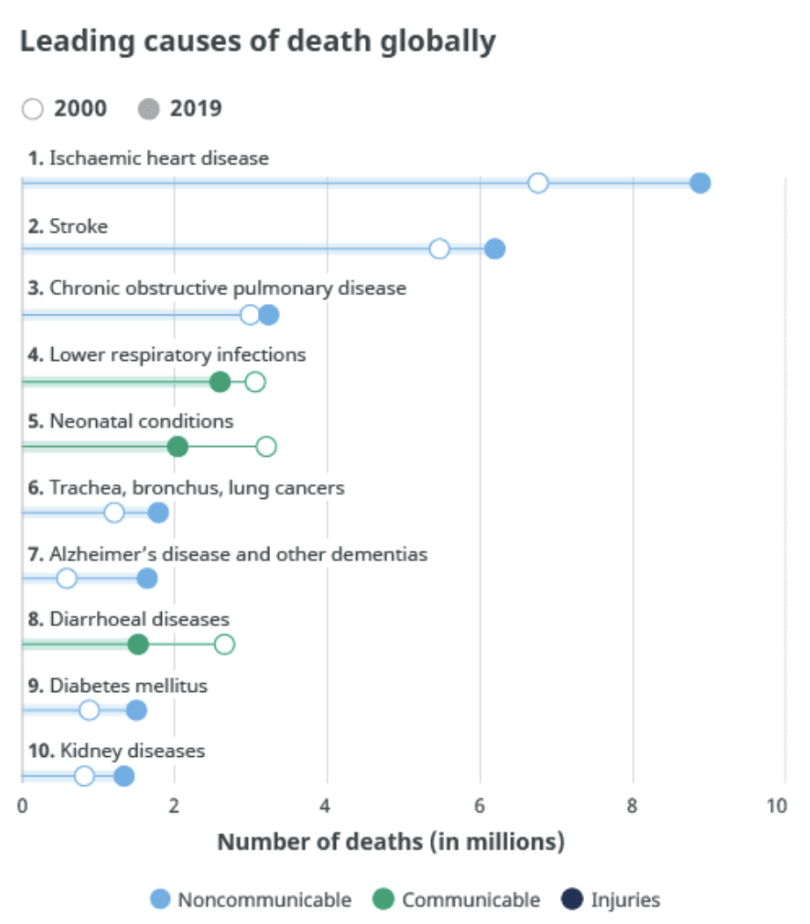
Number of communicable diseases has decreased from 2000-2019, whereas noncommunicable diseases has increased over those years
Life expectancy increasing more people live long enough to die from noncommunicable diseases
Just like in Canada, we can see that ischemic heart disease, which is caused by atherosclerosis in the coronary arteries leading to decreased blood supply to the heart, is the leading cause of death worldwide.
Similar to Canada, diabetes is a leading cause of death worldwide, and along with stroke and ischemic heart disease, we know that lifestyle factors such as unhealthy diet, low levels of physical activity, and smoking are important risk factors.
Unlike Canada, however, other diarrheal diseases and neonatal conditions are also among the top ten causes of death. These diseases are especially intractable to treat in resource-poor countries due to problems with crowding, sanitation, lack of availability of antibiotic medications, and lack of health care infrastructure needed to treat premature babies and birth complications.
Ten Leading Causes of Death - High Income

Ten Leading Causes of Death - Low Income

The infectious diseases of major concern in low-income countries include lower respiratory infections, diarrheal diseases, malaria, tuberculosis, and HIV/AIDS. Complications from childbirth also claim many lives and can be caused by preterm birth, trauma during the birth process, and asphyxia or lack of oxygen during childbirth.
Many of the top 10 causes of death in low-income countries could be controlled and prevented with measures like sanitation, access to clean water, vector control methods to decrease mosquito populations, and access to life-saving medications such as antibiotics, antimalarial drugs, and antiretroviral therapy for HIV.
WHO 13 Major Health Crisis - Climate Crisis
Both rapid population and industrial growth have put our planet in peril due to pollution and contamination of the air, water, the food chain, and soil. Not only does air pollution from the burning of fossil fuels contribute to global warming, poor air quality also increases risks for deaths from heart attack, stroke, lung cancer, and chronic lower respiratory diseases.
As a consequence of global warming and climate change, we will see increased mortality from heat stress, urban air pollution, and tropical diseases that are spread by insect factors which will now move into other more temperate regions.
As a consequence of global warming and climate change, we will see increased mortality from heat stress, urban air pollution, and tropical diseases that are spread by insect factors which will now move into other more temperate regions.
WHo 13 Crises - Delivering health in conflict and crisis
The second challenge is delivering health in conflict and crisis, as many disease outbreaks have occurred in countries with long-standing conflicts. One example is the periodic Ebola virus disease epidemics that have occurred in countries of Western Africa.
WHO 13 Crises - Expanding access to medicines
Expanding access to medicines, refers to the fact that up to one third of people in the world do not have access to medicines, vaccines, diagnostic tools, and other products that we take for granted here in Canada.
One glaring example is access to the best antimalarial medications and diagnostic tests to detect malaria. Many of the medicines sold in pharmacies in parts of Africa where malaria has a high prevalence are either counterfeit medications or they’re ineffective, since the parasite that causes malaria has evolved resistance to the medications that are more readily available and affordable.
WHO 13 Crises - Stopping Infectious diseases
Some of the infectious diseases that cause a large number of deaths in low-incomes countries are tuberculosis, malaria, neglected tropical diseases like dengue fever, HIV/AIDS, and other sexually transmitted infections. In addition, there are vaccine-preventable diseases, such as measles and polio, that sadly still kill children around the world because of a lack of financing and infrastructure in the countries where these diseases are endemic, as well as a lack of commitment from richer countries to help out.
WHO 13 Crises - Preparing for epidemics/pandemics
In terms of preparing for epidemics, the problem is that countries spend far more money and resources on being reactive and responding to health emergencies, such as disease outbreaks and natural disasters, rather than planning and preparing for them and preventing them in the first place.
WHO 13 Crises - Lack of food, unsafe food, unhealthy diets and dangerous products (tobacco, vaping)
It is estimated that up to one-third of the global disease burden is due to either lack of food or food that is unsafe because of contamination with bacteria. Unhealthy diets that are high in sugar, unhealthy fats, and salt are also a major challenge and likely contribute the increases in deaths due to ischaemic heart disease, stroke, and diabetes mellitus worldwide over the last 10 years.
Another concern is the continued use of tobacco products that continues to rise in some countries, as well as building evidence about the harm of e-cigarettes, which can sometimes be a gateway to people then starting to smoke cigarettes.
WHO 13 Crises - Underinvestment in healthcare workers
Resource poor countries also struggle with shortages of health care workers, such as nurses and midwives in addition to doctors.
Even parts of the United States and Canada struggled with shortages of ICU-trained nurses, doctors, and respiratory therapists during the COVID-19 pandemic.
WHO 13 Crises - Keeping adolescents safe from road injury, HIV, suicide, lower respiratory infections, and violence
Another major challenge identified by the World Health Organization is keeping adolescents safe, since more than one million between the ages of 10 to 19 die every year from causes such as road injuries, HIV, suicide, lower respiratory infections, and interpersonal violence.
Promotion of adolescent mental health and having the political will to address structural and social determinants that lead to these tragedies are both needed.
WHO 13 Crises - Earning public trust (misinformation and anti-vaccine movement)
Patients are much more likely to follow health care advice to get their preventative vaccinations, take medications, adopt healthier lifestyles, and use condoms if they have a bond of trust with their primary care providers.
Oftentimes people make decisions based on politics or believing misinformation and pseudoscience provided by dubious “experts” on social media platforms. (e.g. vaccines)
WHO 13 Crises - Ethical and social implications of new technologies like genome editing, synthetic biology, and digital health technologies and artificial intelligence
The World Health Organization has noted that although technologies such as genome editing, synthetic biology, and artificial intelligence have the potential to revolutionize the ability to prevent, diagnose, and treat many diseases, these technologies can also create challenges regarding ethical and social implications.
WHO 13 Crises - Antimicrobial resistance (tuberculosis, STIs)
Antimicrobial resistance refers to a growing concern that some of the antibiotics that have been developed to combat diseases caused by bacteria can be rendered useless when these microbes evolve resistance.
WHO 13 Crises - Lack of basic water, sanitation, and hygiene in health facilities
There are still many resource-poor countries that struggle with lack of basic water, sanitation, and hygiene in health facilities, which greatly enhances transmission of infectious diseases between patients and health care workers. In addition, there are still billions of people around the world who still do not have access to safe water to drink or adequate sanitation services.
WHO 13 Crises - Health inequities
We saw a stark difference in health outcomes when comparing data between rich and poor countries. However, even within a country there can be large gaps in health outcomes in different regions and populations.
Although Canada is a resource-rich country with universal health care, when we start to break down health statistics by province, territory, and among different populations, there can sometimes be differences that you might find surprising. In particular, there are much poorer health outcomes for Indigenous Peoples of Canada, as can be seen with the Indigenous water crisis in which the basic right of clean water is denied to many living on reserves.
In general, Black, Indigenous, and people of colour living in rich countries have poorer health outcomes, and we will highlight these inequities next.
Health Issues for Diverse Populations
Data often show systematic differences when comparing health outcomes for people based on
(1) income,
(2) education,
(3) ethnicity,
(4) gender,
(5) type of occupation
and other comparators related to the social determinants of health.
Although there are some differences between individuals that have a genetic component, such as inheriting a gene that makes someone more likely to struggle with high cholesterol levels, a condition called familial hypercholesterolemia, many conditions are the result of a complex interaction between genes, biology, lifestyle, and environment.
For example, a person who has inherited the gene for familial hypercholesterolemia may not have a problem maintaining healthy cholesterol levels if they have the means to eat a healthy diet and exercise on a regular basis, in other words, a healthy lifestyle.
A simplistic answer for why there are differences in health outcomes is often provided as poor lifestyle choices, such as not eating a nutritious diet, not getting enough physical activity, and abusing alcohol or other substances. However, this simplistic answer ignores those higher-level determinants in the social-ecological model, especially those related to structural disadvantages for certain groups of people, related to different levels of racism that we will discuss later.
Potential Dangers of Talking about Health Issues in Diverse Populations
Many health conditions are the result of complex interactions between biology, culture, and higher-level determinants that can create structural disadvantages for certain groups of people.
That is why it is important for health care providers and researchers to listen to their patients’ or research participants’ stories along with their medical and health history and not to make assumptions, as everyone has unique genetic endowment and life experiences.
Health Inequality
A systematic difference in health that can be measured between groups of people in which the causes, risk factors, and determinants can be tied to both innate biological differences as well as social disadvantages, such as lower socioeconomic status, systemic racism, and differential access to health care
Health Disparity
A subset of health inequalities that include variations that are usually systematic and can arise from social or other forms of disadvantage, which in theory should be correctable
Health Inequity
A specific type of health disparity, which is deemed unfair because it stems from some sort of injustice
Key Questions for Determining Health Inequalities, Disparities, and Inequities
Is there an evidenced-based systematic difference in health outcomes?
If yes, there is a health inequality
Is health equality due to biology or is there a social disadvantage?
If due to biology, it is a health inequality but not a disparity.
If due to social disadvantage, it is a health disparity.
Is the health disparity due to some sort of injustice or systemic barrier?
If not, it is a health disparity and not a health inequity.
If yes, it is a health disparity and health inequity
The implication is that inequities are correctable and that to do so would be an ethical imperative since the differences in health outcomes are due to social injustices.
The health of Indigenous Peoples of Canada are intimately tied up with the history of colonization, taking away land, and relocating communities to areas that are food deserts with little access to affordable and fresh fruits and vegetables, which also increases food insecurity.
The history of residential schools and trying to erase culture as well as systemic bias and discrimination have all contributed to ongoing intergenerational trauma that again results in large inequities in health outcomes for Indigenous Peoples of Canada.
Sex
The different biological and physiological characteristics of females, males, and intersex persons, such as chromosomes, hormones, and reproductive organs
Gender
The characteristics of women, men, girls and boys that are socially constructed. This includes norms, behaviors and roles associated with being a woman, man, girl or boy, as well as relationships with each other. As a social construct, gender varies from society to society and can change over time
Gender Identity
A person’s deeply felt, internal and individual experience of gender, which may or may not correspond to the person’s physiology or designated sex at birth
For example, women began to start smoking in the 1950s and 60s with changes in culturally defined ideas regarding what is appropriate for women’s behaviour. This would be considered a gender issue, but women’s lungs are also more sensitive to the toxins in tobacco smoke, which is a biological sex issue. Both of these factors led to an increase in lung cancer rates in women.
Life Expectancy
The average number of years a newborn child can expect to live
Looking at gender, women on average live about four years longer than men. So, women live to the approximate average life expectancy of 84, whereas men have an average life expectancy of 80.
Even though women tend to live longer, they have higher rates of disabling health problems in older age, such as arthritis, osteoporosis, and Alzheimer’s disease.
Although women experience heart attacks about 10 years later than men on average, they have a poorer one-year survival rate.
This is due to the fact that women are more likely to experience more subtle heart attack symptoms, such as fatigue, sweating, difficulty breathing, and general malaise that some might attribute to indigestion.
This results in delays for women getting emergency medical care to stop a heart attack before it causes too much damage to the heart muscle.
Regarding immune response, women in general have stronger immune systems and are less susceptible to infection by certain bacteria and viruses.
But women are also more likely to develop debilitating autoimmune diseases such as lupus. With alcohol, women are more likely than men to become intoxicated at a given level of alcohol intake, but men are more likely to use or abuse alcohol or to develop alcoholism.
In terms of dealing with stress, women are more likely to react to stress with a tend-and-befriend response that involves social support. It is known that increased social support can increase levels of the hormone oxytocin in women, which can help counteract some of the negative effects of the physiological stress response in the body.
Men are more likely to react to stress with aggression or hostility, this pattern may increase the rate of stress-related disorders.
Moving on to differences between genders for depression, women are more likely than men to suffer from depression and to attempt suicide, whereas men have lower rates of depression than women, are less likely to attempt suicide, but are four times as likely to have a suicide attempt result in death.
Health Disparities Due to Differences in SES

Another example where systematic differences in diseases and health states occur, is when looking at different levels of
(1) income,
(2) education,
(3) social status,
and (4) socioeconomic status or SES.
The different levels of income were split into five categories or quintiles, running from poor, which is level one, to wealthy coded as level five. In looking at the y-axis or the vertical bars, it can be a little confusing since it is not the total age at which people tended to live on average, but instead shows the years of life remaining on average to a 25-year-old person in each sex and income category.
Thus, you need to look at those numbers and add 25 to get the average life expectancy for each category and sex.
We can see from the results that as expected, women have higher life expectancies than men. The results show for example that men in the poorest category can expect to die seven years earlier than men in the richest category.
The contrast between the poorest and richest women is just over four years.
Another striking pattern is this ladder effect, where you see a steady decrease in life expectancy as you go down in income. This is almost like a dose-response effect, a term used in biological effects of drugs. We call this ladder effect the social gradient in health.
Thus, poorer people experience the double deficit of a shorter life and a less healthy one. There are also consistent contrasts in health between certain racial or ethnic groups, as well as a clear contrast between the sexes.
Health Inequities Among Racialized Groups
Health inequalities can result from a complex mix of genetic variation, health behaviours, and social and environmental determinants.
In terms of genetics, there are some genetic diseases that are concentrated in certain gene pools—the result of each group’s relatively distinct history.
So, for example, sickle cell disease is more common among people of African ancestry.
Canadians living in poverty with poor education tend to have higher rates of infant mortality, higher rates of traumatic injuries and violent death, as well as bearing a greater burden of many diseases including heart disease, diabetes, tuberculosis, HIV infection, and some cancers.
Being an ethnic minority with low socioeconomic status is an additional burden, since even at the same income or education levels, there are differences in health outcomes between White and BIPOC individuals.
For example, infant mortality rates tend to go down as the education levels of the mothers go up, but infant mortality rates are higher for Indigenous Peoples of Canada compared to White people, even when looking at data at the same level of education of the mothers.
As Dr. Camara Phyllis Jones has said, it is because of institutionalized racism that there is an association between socioeconomic status and race
There are also inequities in access to appropriate health care for racialized groups that are due to factors like having to arrange for transportation to get access to medical care since ethnic minorities tend to be more likely to live in medically underserved areas.
There can be problems with communication and trust. For someone who is not a native English or French speaker, language barriers can prevent people from seeking out health care and from following and interpreting health advice and messaging from public health education campaigns.
Given the history of unfair treatment of racialized groups, trust in people of authority such as health care providers can also be compromised.
Culture and lifestyle are also important, since many cultural differences occur along ethnic lines, including traditional diets, family and interpersonal relationships, attitudes towards alcohol, tobacco and other drug use, as well as health beliefs and practices.
As an example, the Canadian Aboriginal Nutrition Network is a group of dietitians in Canada that focus on supporting Indigenous nutrition. This group designs educational campaigns that are sensitive to traditional food preferences, cultural values, availability and affordability of certain foods, and people’s spiritual connection to food and the land in order to help support a healthier diet.
Finally, racism and discrimination not only cause psychosocial stress, which contributes to both physical and psychological problems, institutionalized racism contributes to lower socioeconomic status and its associated risks, as well as less access to good health care, along with bias in medical care.
Health Inequities and Different Levels of Racism
In Dr Jones's article, she distinguishes between three levels of racism, which we can visualize using a social-ecological model lens, from the most upstream and outer-level circles that represent institutionalized racism, to personally mediated at the more intermediate level, to internalized racism at the individual level.
Institutionalized racism includes differential access to basic resources needed for a healthy life. It includes both material conditions and access to power. Material conditions include access to safe housing, a good education, and a clean environment.
Personally mediated racism refers to people who experience discrimination and prejudice in their day-to-day lives.
When we talk about prejudice, in the words of Dr. Jones, it refers to “differential assumptions about the abilities, motives, and intentions of others according to their race.”
Whereas discrimination means “differential actions toward others according to their race.”
Personally mediated racism is what most people think of when they hear the word racism. It manifests with things such as a lack of respect for racialized people by providing poor or no service, being suspicious—such as when shopkeepers have extra vigilance when young Black men enter their shops.
Internalized racism is at the level of the individual who has grown up with negative messages about their own intrinsic worth. When this happens, people accept limitations on their own full humanity and cannot thrive or achieve wellness.
Allegories on Race and Racism
Some areas of the world such as in America, and South Africa seems black, whereas in Brazil may seem more white due to the different lights shed on race in these countries
Racism creates dual reality - one side its difficult to realize any inequity that privileging us (men realizing sexism, white people recognizing racism)
Those on other side are aware of two-sided nature of the side
Health Inequities Among Indigenous Peoples of Canada
Within Canada, in comparison to the non-Indigenous populations, Indigenous populations face many additional health challenges. In general, Indigenous populations are younger on average due to higher birth rates.
However, the populations living on reserves tend to exhibit a higher infant mortality rate. In addition, even in adulthood, Indigenous Peoples tend to have a lower life expectancy, 1.5 times the rate of heart disease, three to five times the rate of type 2 diabetes, and eight to ten times the rate of infection from tuberculosis in comparison to non-Indigenous Canadians.
Lifestyle factors such as physical activity, alcohol consumption, and poor nutritional intake further exacerbate health problems. Indigenous Peoples are more likely to have higher food insecurity and are four times more likely to be unemployed.
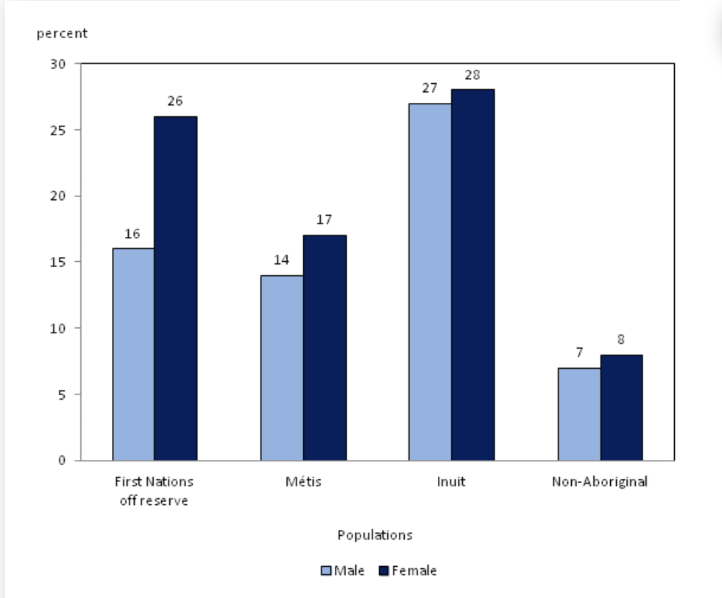
The data in this figure show the percentage of families struggling with food insecurity. Food insecurity refers to inadequate nutritional intake caused by having less access to both quality and quantity of food with high nutritional value such as fresh fruits and vegetables.
Families living with food insecurity have a lot of additional psychosocial stress caused by worrying about getting enough food to eat on a daily basis, as well as not having to rely so much on unhealthy processed foods that are often cheaper and more readily available than fruits, vegetables, whole grains and healthy meats.
We can see from these data that less than 10 percent of non-Indigenous Canadian households struggle with food insecurity, which is still an important issue that should be addressed.
However, the situation is much worse for First Nations, Metis, and Inuit peoples. Indeed, more than 25 percent of Inuit households struggle with food insecurity.
What About Inequalities in COVID Deaths?

These data from the American Public Media Research Lab highlight that Black, Indigenous, and people of colour are much more likely to die of COVID-19, based on age-adjusted mortality rates.
Black people are more likely to contract the virus, for reasons such as:
(1) having greater exposure in the workplace, since they don’t have the luxury of jobs that allow one to work from home or use sick days;
(2) living in poorer housing conditions that make it impossible to maintain physical distancing;
(3) having to rely on public transit rather than owning a car, which is more likely to expose people to the virus.
Black people are also more likely to have worse outcomes after acquiring COVID-19, for reasons such as having
1) less access to testing and
(2) a higher prevalence of underlying health conditions like diabetes, hypertension, obesity, and asthma, as well as receiving delayed or poor medical care.
Public Health Agency of Canada
The Public Health Agency of Canada played an instrumental role in helping to guide our country through dealing with the COVID-19 pandemic, including: mandating social distancing measures and shutdown of businesses and schools early in the pandemic to help flatten the curve and prevent overwhelming the health care system, education on best health practices for infection control, providing guidelines to schools and businesses to allow for safer reopening, and securing vaccines and providing support for vaccine distribution.
Two of the mandates of the Public Health Agency of Canada are to
(1) prevent and control infectious diseases and
(2) prepare for and respond to public health emergencies.
Dealing with the Challenges
We’ll discuss the mandate of the Public Health Agency of Canada, the subtle but important differences between a public health and a population health approach, and four of the main approaches and pillars of public health—which include prevention (four different levels of prevention), health protection, surveillance and health promotion.
Mandate of the Public Health Agency of Canada
Below is a list of the mandate and various activities of the Public Health Agency of Canada (PHAC), as first outlined in a Public Health Agency of Canada report on the state of public health in 2008.
The role of PHAC is to:
promote health;
prevent and control chronic diseases and injuries;
prevent and control infectious diseases;
prepare for and respond to public health emergencies;
serve as a central point for sharing Canada’s expertise with the rest of the world;
apply international research and development to Canada’s public health programs; and
strengthen intergovernmental collaboration on public health and facilitate national approaches to public health policy and planning”
These activities focus on the population and community levels and involve all three levels of government—the federal, provincial/territorial, and municipal levels. These activities are also in collaboration with different stakeholders and communities.
Public and Population Health
The Primer on Population Health discusses similarities and differences between a public and population health approach to tackling health challenges. “Both are concerned with patterns of health and illness in groups of people, rather than in individuals; both monitor health trends, examine their determinants, interventions at the population level to protect and promote health; both propose discuss options to deliver these interventions”
The population health approach takes a broader perspective, often looking at “underlying social determinants, such as poverty [or lack of access to health care], that constrain people’s ability to achieve real gains in health”
The population health approach focuses on reducing health inequities and also takes an economic, environmental, sustainability, and social justice lens as well.
A population health approach would tackle childhood obesity in an even broader context and with an even more upstream approach in the social-ecological model. It might focus on the food system itself by looking at how agricultural subsidies affect the price of food.
When a public health approach is used to tackle a health issue, the interventions tend to be focused on maintaining health or preventing disease.
For example, if we think about a public health approach to dealing with childhood obesity, it might include things like advocating for education of parents and children about healthy diet and exercise, subsidizing healthy school lunch programs, banning soft drinks and school vending machines, having tougher regulations on marketing of junk food to children, as well as promoting physical activity.
Prevention
Prevention - covers actions to prevent the occurrence of disease such as risk factor reduction and also to arrest its progress and reduce its consequences once established
Four level of prevention
Primordial prevention
Covers actions to minimize future hazards to health by focusing on broad social determinants, such as environmental, economic, social, behavioral and cultural factors
Preventative programs at primordial level delivered to healthy people in general population
Always at the population level, where next three at individual or population level
Primary prevention
Seeks to prevent the onset of specific diseases ia reducing risk factors
Primary prevention can include altering health behaviours or exposures that can increase risk of disease, as well as measures to enhance resistance to the effects of exposure to a disease agent, such as an infectious disease.
An important distinction between primary and primordial prevention is that primary is geared toward specific causes and risk factors, for specific diseases such as type 2 diabetes, influenza, lung cancer, and so forth. Whereas primordial prevention addresses broad social determinants that can help prevent several different diseases from developing.
Secondary prevention
Encompasses procedures to detect and treat pathological changes that are happening in the body in order to affect the trajectory of disease progression
The idea is that you want to detect these changes before they progress and are more difficult to treat. For example, earlier detection of breast, prostate, and colon cancers while they are still at stage one can make treatment more effective, cheaper, and importantly less debilitating for the patient.
Tertiary prevention
At the stage in which a disease has already developed and has been treated in the clinical phase. The goal here is to prevent any relapses of the condition or to mitigate the impact caused by the disease on a patient’s ability to function, carry out their daily activities, and still have a decent quality of life
Natural History of Disease

Natural History linked to Prevention stages
Social/environmental determinants - primordial prevention
Healthy people
Government and population health agencies
Taxes on junk food
Marketing against obesity
Risk/protective factors - primary prevention
Groups at risk
Public health
Programs for exercise, vaccine clinics
Preclinical - secondary prevention
Patients with disease
Primary care physicians and nurse practitioners
Ordering lab test
Diagnosis
Getting blood sugar levels under control (medication, education)
Postclinical - tertiary prevention
Recovering individuals
All clinicians
Avoid complications from disease
Screen for and detect potential complications before they advance too far
Referring to specialists
Protection
Protection - reducing threats to the health of the population - can be biological, chemical, or physical threats
This approach includes a range of both primordial and primary prevention activities that are again typically undertaken by public health departments and also government agencies.
These can include things like ensuring safe food and water supplies, protecting people from various environmental threats, and controlling infectious diseases when outbreaks occur.
Another example is dealing with environmental threats by enacting legislation and regulations to protect the population from chemical hazards, such as pollution of water from runoff from factories.
Surveillance
Surveillance - the ongoing, systematic collection and analysis of population-level health information, in order to guide the design of public health and preventative interventions
As noted, surveillance may include long-term passive monitoring of general health trends, so this can include gathering data on the prevalence of certain diseases in a population and looking for potential links to environmental factors.
It also includes active short-term monitoring for emergent diseases or outbreaks, such as what occurred in Canada in early 2020 when there was growing concern about the spread of a new respiratory disease caused by the novel SARS-CoV-2 coronavirus.
Another example of an emergent outbreak of concern would be E. coli contamination of the water supply in a town, where quick action is needed to prevent people in the community from getting very sick.
Some of the types of data that might be gathered using surveillance would include statistics such as births and deaths, environmental data on air and water quality, health services indicators such as hospital admissions, mortality data, even billing data from physicians.
Ottawa for Health Promotion
As mentioned, the Ottawa Charter for Health Promotion emphasizes advocacy by strengthening community action, creating supportive environments, and developing personal skills to support healthy behaviour change. The Charter also focuses on higher level determinants like building healthy public policy and reorienting health services.
An important distinction between health promotion and health protection is that health protection focuses on removing negative threats or influences, whereas health promotion aims to enhance health in terms of focusing on education.
Developing healthy public policy, creating supportive environments, and strengthening community action is more of a positive approach.
Integrated Pan-Canadian Healthy Living Strategy
In 2002, the federal, provincial, and territorial ministers of health came together to create a collaborative and coordinated approach to curb our nation’s noncommunicable diseases, which was termed the integrated pan-Canadian healthy living strategy.
The goal was to address common modifiable, preventable risk factors for chronic diseases such as physical inactivity, unhealthy diet, and tobacco use. The strategy also takes into account underlying conditions in society that contribute to these risk factors, as well as health disparities by looking at social determinants such as income, employment, education, geographical location, isolation, and social exclusion.
The ministers noted that chronic diseases cause enormous human suffering, and that this strategy was also important for the financial interests of Canada, since the estimated total cost to Canada of illness, disability, and deaths related to or caused by chronic diseases amounts to more than 190 billion dollars annually.
In 2010, the strategy was further strengthened through two initiatives focused on making health promotion and the prevention of disease, disability, and injury priorities and to decrease the prevalence of childhood obesity.
Eating Habits and Physical Activity and Smoking Levels Among Canadians
As mentioned, the focus of the integrated pan-Canadian healthy living strategy is on eating habits, physical activity, and curbing smoking.
Some provinces have much higher percentages of people who smoke, such as Prince Edward Island, Newfoundland and Labrador, Yukon, The Northwest Territories, and Nunavut.
In particular, in the Northwest Territories, the percentage is close to 30 percent and in Nunavut, almost 50 percent, in comparison to other provinces like British Columbia, in which only 11 percent of the population smokes.
We can also see that healthy eating habits and physical activity are also low for Nunavut, which again points to the importance of addressing social determinants such as income, education, employment, and geographical location.
Most provinces have also set specific and measurable target goals, in terms of increasing levels of physical activity, healthy eating, and achieving healthy weights. For many of them, they have targets such as increasing by 20 percent the levels of healthy eating and increasing by 20 percent the levels of physical activity, which are defined as at least 30 minutes per day of moderate to vigorous levels of physical activity.
In summary, the integrated pan-Canadian healthy living strategy is an example of a population health approach to attempt to shift the entire population distribution of risk factors for noncommunicable chronic diseases.
Meeting the Challenges: Personal Wellness
Our health habits, family history, environment, and access to health care are all important influences on wellness.
Your genome, consisting of the complete set of genetic material in your cells, contains about 20,000 protein coding genes, half from each of your parents.
The human genome varies slightly from person to person, but many of these differences do not affect health.
For example, mutations or errors in genes cause about 3,500 clearly hereditary conditions—things like sickle cell disease or cystic fibrosis. Altered genes also play a part in risks for heart disease, cancer, stroke, diabetes, and many other common and complex conditions.
However, for complex disorders like heart disease, cancer, stroke, and diabetes, genetic variations only increase an individual’s risk. Whether someone actually gets one of these diseases will depend on the interaction between genes and the environment.
Access to adequate health care helps to improve both quality and quantity of life through preventative care and the treatment of disease. Vaccinations can protect people from dangerous infections and screening tests can identify risk factors, as well as detect a pathological process in the body early before it becomes too difficult to treat.
Although these factors that I have discussed are important, someone’s personal health behaviours can tip the balance toward good health, even if heredity and environment are negative influences.
Lifestyle Management and Behavior Change
People can reach higher levels of wellness via lifestyle management. It requires cultivating healthy behaviours and working to overcome unhealthy ones. The approach to management is called behaviour change.
One of the first steps is to examine your current health habits: How is your lifestyle affecting your health today and how will it affect your health in the future?
You need to choose an isolated behaviour as the subject of your behaviour change program. We call this your target behaviour.
You next want to learn more about your behaviour in order to build motivation to change. How does this unhealthy behaviour affect your level of wellness today? What diseases or conditions does this behaviour place you at risk for and what effect would changing your behaviour have on your health?
It’s also important to realize that some problems may be challenging for self-management and you might require counselling or community support and really shouldn’t go it alone.
Building Motivation to Change Behavior
The next step is to build your motivation to change the target behaviour by examining the pros and cons of change. Health behaviours can have short- and long-term benefits and costs. You have to believe that the benefits of changing the target behaviour will outweigh the costs and difficulties of doing it. Another important step is to try to boost your self-efficacy. This refers to the belief in your ability to take action and perform a specific task.
And self-efficacy depends a lot on your locus of control: who do you believe is controlling your life? (e.g., your parents, your friends, assignments, deadlines at school, etc.) or is your life controlled by fate or are you in control?
People who believe that they are in control of their own lives and decisions are said to have an internal locus of control. Having an internal locus really reinforces motivation and commitment to change a target health behaviour.
Another way to boost your confidence and self-efficacy is to use visualization and self-talk. With visualization, you picture yourself successfully engaging in a new healthy behaviour.
It’s also important to tie this behaviour change to your personal identity and values. Do you see yourself as an active person and a role model for others? Another important aspect is to find role models and other supportive individuals. Social support can really make a big difference in your level of motivation and your chances of success.
It’s also important to identify and overcome key barriers to change and that is one of the things you will do during the week that you’re keeping track of data in your health journal, looking at potential barriers that you might come across in your behaviour change plan.
The Transtheoretical Model
The transtheoretical model (which is also called the stages of change model) is based on the idea of different levels of a patient’s readiness to change.
It was originally formulated to describe a person’s level of readiness to stop smoking and it describes the stages through which a patient typically passes in trying to adopt the new behaviour and identifies factors that might motivate or get in the way of such progression.
The transtheoretical model is composed of these six stages, plus the stage of relapse:
The precontemplation stage is when the person has no intention for and sees no reason to make a change.
The next stage is contemplation. This is where the individual has not begun to change their behaviour but at least they’re thinking about it and they intend to do so within the next six months or so.
In the preparation stage, a person plans to take action sooner, within a month or so, and may already be taking small steps to change their behaviour.
The action stage is when the person has already set about changing the behaviour and this is what requires the most time and energy.
The maintenance stage is when the individual has practiced this new behaviour for six months.
Then the termination is when the new behaviour is fully adopted and there’s no danger of a potential relapse.
A relapse is when a person goes back to the unhealthy target behaviour or habit.
The Health Belief Model
The health belief model is based on a patient’s perceptions of susceptibility to the severity of and threat of disease.
The health belief model outlines three main elements that affect whether or not a person is likely to follow a doctor’s recommendations to change their behaviour, such as beginning to exercise or quitting smoking.
One of the elements is whether the person feels the need to take action. This is influenced by “how susceptible they perceive themselves to be to the disease in question and by how severe they judge the disease to be”
The model also takes into account several modifying factors that include demographic, sociopsychological, and structural variables. Factors can include a person’s age, sex, ethnicity, their personality, their social class, and their peer and reference group, as well as peer pressures.
Finally, the third element is that “there must be some cue that triggers an actual change in their health behaviour”
A cue to action could be internal, such as starting to experience symptoms. It could involve external factors like the illness of a family member or friend.
The Theory of Planned Behavior
The theory of planned behaviour, which assumes rational planning by a patient, is an extension of the health belief model that incorporates subjective norms such as perceived social pressure to change and the idea of self-efficacy.
The theory of planned behaviour takes more of a cognitive perspective, meaning that it assumes that health behaviours can be analyzed in terms of rational planning.
It takes into account several of the ideas from the health belief model, which are really the top part of this figure—so somebody’s behavioural beliefs in terms of the importance of the health issue and whether the behaviour will be effective, which affects somebody’s attitude toward the recommended behaviour.
Behavioural beliefs will certainly influence the intention to act or not to change the behaviour, but the theory also takes into account the social context via looking at ideas like subjective norms such as how others view the behaviours.
Another aspect of the theory that affects the intention to act or not is somebody’s beliefs about their self-efficacy. So again, self-efficacy refers to whether people believe in their ability to take action and perform a specific task.
Developing Skills for Change: Creating a Personalized Plan
Having a well thought out plan where you set goals, anticipate problems and barriers, and include rewards can really be the key to success.
You want to start with (1) monitoring your behaviour and gathering data. You’ll next (2) analyze the data and identify patterns.
The next stage is to (3) set SMART goals that are specific. SMART stands for specific, measurable, attainable, realistic, and time-frame specific.
You want it to be measurable.
You want to make sure your goal is attainable, that’s what the A stands for, since it has to be within your physical limits.
You’ll also need to be realistic. For example, somebody who’s been smoking their whole lives may find it difficult to just quit cold turkey.
You also want to make sure that your smart goals are time-frame specific. You want to give yourself a reasonable amount of time to reach your goals, keeping in mind the due date of part two of the behaviour change assignment.
You next want to (4) devise your plan of action and then (5) make a personal contract, which is also one of the requirements of part one of the assignment.
Qualitative Research
Qualitative research is based on non-numerical observations, and it’s often used to generate hypotheses and answer the “why?” or “what does it mean?” question.
Qualitative research is used when you want to explain more complex situations or ideas, and that’s when you don’t want to reduce the data to these numerical, quantifiable elements because that would cause the loss of too much information.
The idea is to study a range of ideas, and the sampling methods really focus on sampling the content rather than sampling a large number of people in a population. Qualitative research captures rich and detailed information from a small number of participants and is often used to answer the question “why?” or “what does it mean?”
Quantiative Research
Whereas quantitative research methods are based on numerical data that are often used to answer the question “what?” or “how much?” or “how many?”
Quantitative research samples a range of people that’s representative of the population. Examples of measures include numerical estimates of frequency or severity or associations from a large number of participants.
Quantitative studies can also ask questions about quality of life, and you might think, “Well, doesn’t that make it a qualitative study design?” But in this case, you would be asking patients to rate different indicators of quality of life on a scale, thus you would end up with numerical data.
When it comes time to understand general principles underlying the phenomena and to test hypotheses, this is where quantitative research comes in. The idea is to minimize the role of human judgement in both collecting and interpreting the evidence by using rigorous study designs, numerical estimates, and statistical analysis.
Oftentimes in quantitative methods, researchers are looking for statistical associations between variables, such as an association between an exposure (e.g., smoking, diet, or levels of physical activity) and risks for certain diseases (e.g., lung cancer, diabetes, or cardiovascular disease). Sometimes quantitative methods are used to measure differences in patterns of health between one population and another, as illustrated in an earlier module with data on health disparities for Indigenous Peoples living on reserves.
Epidemiology
Epidemiology is the study of the occurrence of disease in populations. The word comes from the Greek language, where epi means “upon” and demos means “people” with the idea being “diseases upon the people.”
Epidemiology is an important aspect of public health research and practice, with an emphasis on prevention of disease through reduction of risk factors for diseases, by addressing the following question: “What are important associations between health outcomes and possible risk factors or exposures?”
Epidemiology is a very comparative discipline; you’re comparing risk of disease in people that might be exposed to an agent versus those who are not exposed.
The ultimate goal is to try to establish whether there might be a causal relationship between an exposure and a health outcome.
Criteria for Inferring Causation
To assess the strength of a potential causal relationship, you can use a set of criteria to assess the causal nature of relationships. The more of these criteria that are satisfied, the more likely that there is a causal relationship between an exposure and an outcome.
The five criteria we will review include
(1) the strength of association between an exposure and an outcome,
(2) graded response to a graded dose,
(3) consistency,
(4) temporal/chronological relationship, and
(5) underlying plausible mechanism.
strength of association between an exposure and an outcome
One is the strength of association between an exposure and an outcome. If we’re thinking, for example, about the risk of developing lung cancer in people who smoke, we could carry out a cohort study in which you have a group of people who are in the exposed group, so a group of people who smoke over the course of a certain amount of time, and you compare them to another group, the unexposed group who do not smoke.
If you find that very few people in the unexposed group end up with lung cancer, whereas many people in the exposed group do end up being diagnosed with lung cancer, then you would measure what’s called a high relative risk. So again, the people who are smokers have a high relative risk for developing lung cancer, and we would say that that there is a very high strength of association, so it’s more likely that the association between smoking and lung cancer is causal.