CNA: QUIZ 1 PREP: C6
 Call Kai
 Learn
Learn Practice Test
 Spaced Repetition
 Match
Match Flashcards
 Knowt Play
1/43

There's no tags or description
Looks like no tags are added yet.
Name | Mastery | Learn | Test | Matching | Spaced | Call with Kai | Chat |
|---|
No analytics yet
Send a link to your students to track their progress
44 Terms
WHAT ARE BODY MECHANICS?
How we keep our body alignment to prevent hurting ourselves
Remember to keep feet apart and bend with your knees.
Elderly are at higher risk of..
falls
Why are elderly at higher risk of falls?
Weakened bones
Dementia (disorientation)
Mental disabilities
Muscle atrophy
Weakness from illness
Diminished sense (sense of hearing and sense of sight can make it harder) (people who have diminished senses are less aware of their surroundings and more likely to fall)
Some medicines
Crutches, walkers, canes, boots: people who use these aides are at higher risk of falling
Paraplegia
lower half of the body paralyzed

Quadriplegia
paralysis of the limbs
(REMEMBER THAT QUAD MEANS 4, AND WE HAVE 4 LIMBS)

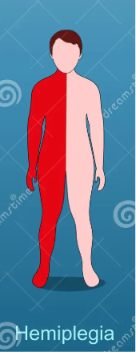
Hemiplegia
Complete or partial side of the body is paralyzed
WHAT IN THE ENVIORNMENT CAN INCREASE THE RISK OF FALLS?
-Clutter
-Throw rugs
-Exposed electrical cords
-Slippery or wet floors
-Uneven floors or stairs
-Poor lighting
-Call lights that are out of reach or not promptly answered
YOU HAVE TO KEEP THIS CLEAR
YOU MUST ALWAYS LOCK THE WHEELCHAIR
HOW TO DECREASE RISK OF FALLS?
clear all walkways of clutter, trash, throw rugs, and cords
if rugs or mats are used, they should have a nonslip backing
have residents wear nonskid, sturdy shoes. Make sure shoelaces are tied
Residents should not wear clothing that is too long or drags on the floor
Keep personal items that are used often close to residents, including call lights
Answer call lights right away
Immediately clean up spills on the floor
Report loose handrails immediately
Mark uneven flooring or stairs with tape or contrasting to indicate a hazard
Improve lighting when needed
Lock wheels and move footrests out of the way before helping residents into or out of the wheelchair
Scalds
are burns caused by hot liquids
GUIDELINES FOR PREVENTING BURNS AND SCALDS
Always check water temperature with water thermometer (if available) or on the side of your wrist before using
Immediately report frayed electrical cords or appliances that look unsafe
Let residents know when you are about to pour or set down a hot liquid
Poour hot drinks away from residents
Make sure residents arre sitting down before serving them hot drinks
IF PLATE WARMERS OR OTHER EQIO[MENT TJAY PRODUCE HEAT ARE USED, MONITOR THEM CAREFULLY
A resident MUST ALWAYS be identified
BEFORE GIVING CARE OR SERVICE OR FOOD
BEFORE CHECKING VITALS SIGNS
Confirm who the person is
WHEN GIVING A MEAL TRAY:
Knock on the door first, ask for their name (and look at their id name), and THEN give them the meal tray
A RESTRAINT
is a physical or chemical way to restrict voluntary movement of bheavior
Holding someone down, preventing their freedom of movement
IF IT IS AN EMERGENCY, SUCH AS IF THE DOCTOR GIVES AN ORDER TO RESTRAIN THEM
YOU MAY ONLY RESTRAIN SOMEONE WITH A DOCTOR’S WRITTEN CONSENT
Restraints are only used as a last resort
An unconscious/confused resident cannot tell you if they have pain
You should walk them around and help them give movement
ONLY IF A DOCTOR ORDERS IT, THEY MAY BE RESTRAINED. YOU CANT DO RESTRAINMENT WITHOUT ORDER
PHYSICAL AND PSYCHOLOGICAL PROBLEMS WITH RESTRAINTS
Suffocation
Reduced blood citculation
Pressure injuries
Stress on the heart
Blood clots
Constipation
Muscle atrophy
Incontinence
Eventually, it can even cause death
NOW WHAT ARE THE ALTERNATIVES TO RESTRAINTS?
MAKE SURE CALL-LIGHTS ARE WITHIN REACH
PROVIDE ACTIVITIES FOR THOSE WHO WANDER AT NIGHT: THEY MAY NEED PHYSICAL ENGAGEMENT: PROMOTE INDEPENDENCE
HELP WITH ELIMINATION NEEDS
HAVE A DISTRACTION: PLAY THEIR FAVORITE MUSIC OR SONG FROM THEIR TIME
oxygen
is highly flammable
The oxygen in use sign:
is used to keep people aware: you cant smoke nor keep a lighter near the oxygen
OXYGEN SCENARIO:
Someone’s 75 year old birthday, theyre on oxygen and want to blow out a candle for their birthday.
Turn off the oxygen. You can turn it off for a few minutes. Take the tubes out of their nostrils and put it on later.
REMEMBER TO REMOVE ALL FIRE HAZARDS WHEN
OXYGEN IS IN USE
The patient cant come to the kitchen when oxygen is in use
The patient cant come to the kitchen when
oxygen in use
BEFORE TRANSFERRING A RESIDENT:
USE WEAVERS
W - Wash your hands to prevent the spread of infection.
E - Equipment: Gather all necessary supplies (e.g., gait belt, slide sheet, walker) and ensure they are in working order.
A - Announce: Knock on the door, identify yourself by name and title, and greet the resident.
V - Verify: Check the resident’s identification bracelet to verify you have the correct patient.
E - Explain the procedure clearly so the resident knows what to expect and how to help.
R - Respect privacy by closing doors and curtains.'
S - Safety: Lock the bed or wheelchair wheels, adjust the bed to a comfortable working height, and ensure the resident has non-skid footwear
COMPLICATIONS OF IMMOBILITY:
PRESSURE ULCERS ARE THE MOST COMMON (AND CAN BE VERY BAD)
WRINKLED BED SHEETS (IT CAN EVEN BE BAD WHEN PRESSED ON THE TOES)
CONTRACTURES: OCCUR WHEN A JOINT IS HELD IN THE SAME POSITION FOR TOO LONG
LOSS OF CALCIUM MAKES A PERSON EVEN MORE FRAGILE, BRITTLE BONES
RESPIRATORY COMPLICATIONS INCLUDE DECREASED OXYGENATION (can be bad for circulation, which can also lead to pneumonia)
IMMOBILITY CAN ALSO LEAD TO BLOOD CLOTS: which can lead to heart attack or stroke
HOW DO WE PREVENT PRESSURE ULCERS?:
REPOSITION THE PERSON EVERY 2 HOURS!!!!
RESPIRATORY COMPLICATIONS
DECREASED OXYGENATION (can be bad for circulation, which can also lead to pneumonia)
IMMOBILITY CAN ALSO LEAD TO BLOOD CLOTS:
which can lead to heart attack or stroke
BODY MECHANICS: ABC
A - alignment: good alignment keeps in good position
B - balance: wide base of support at feet: your center of gravity is at your torso
C- coordinating movement: using the weight of your body to help with movement
Using good body mechanics is important, especially when lifting heavy residents.
You can get injury to your back as a CNA, if you don’t use good body mechanics.
A - alignment:
good alignment keeps in good position
B - balance:
wide base of support at feet: your center of gravity is at your torso
C- coordinating movement:
using the weight of your body to help with movement
ASSIST DEVICES FOR HEALTHCARE WORKERS TO LIFT RESIDENTS
These assist devices can help with the resident’s independence
Leaving one side rail up to let the resident grab
Trapeze bar to allow the resident to grab overhead
TIPS FOR HEAVY LIFTING:
Ask for assistance with heavy lifting
Place your body as close as possible to the person or object you are trying to lift
Always plan the lift
Always use the appropriate assistive device
Remember to bend your knees and face the person you are helping up
MOVING A PERSON UP IN BED
You may want to use a lift sheet
Make sure the body is positioned at a good height
MAKE SURE THE WHEELS OF THE BED ARE LOCKED
(you can give them a trapeze bar or side rail to hold)
OR WITH THE ASSISTANCE WITH A CO-WORKER: stand at the side of the bed, opposite to your co-worker, with your legs slightly apart
WHEN ROLLING THE SHEET: (I took a photo)
Then move the person up towards the head of the bed
Then reposition the pillow
TURNING A PERSON ONTO THE SIDE
Position the bed at a comfortable working height to protect the bed
Stand at the bed with your knees slightly bended
Move the person towards you (first upper side, then down side
Let the person grab the side rail and roll the sheet thing from the back
Make sure the clothing and bed linen underneath the person are smooth
HOW TO PERFORM LOGROLLING:
To keep a person’s body aligned while rolling: usually for people with spinal injuries
Position the bed at a comfortable working height to protect your back
Lower the side rails that you’ll be working
Fold the blanket down to the
Make sure to keep the person’s head and spine aligned
WHEN YOU FINISH POSITIONING A RESIDENT: REMEMBER ALSO, wash, document
A: alignment,
L: Call-light
S: Safety (make sure wheels are locked and side rails up),
O: Open,
—- Wash, Document
WHY ARE ELDELY MORE LIKELY TO FALL:
Confusion
Medication
Weakness
What accident occurs most frequently in longterm facilities:
falls
What must do before serving meal trays?:
Knock on the door
Introduce self
Check that the meal tray matches the name as the person
6. Guidelines for working safely around oxygen?:
no cigarrettes near oxygen
no fire hazards around oxygen
10. What are restraint alternatives?
Distractions (music, letting them do an activity they like), having activities
#. How do you lift objects?
You must bend your knees
WHAT IS BODY MECHANICS?
Body alignment
When you roll the patient on the side, ENSURE THAT THEIR BODY ALIGNMENT IS MAINTAINED
The joints in our spine that help us bend