Joint Structure and Function
 Call Kai
 Learn
Learn Practice Test
 Spaced Repetition
 Match
Match Flashcards
 Knowt Play
1/53

There's no tags or description
Looks like no tags are added yet.
Name | Mastery | Learn | Test | Matching | Spaced | Call with Kai | Chat |
|---|
No analytics yet
Send a link to your students to track their progress
54 Terms
What bones make up the shoulder complex?
Clavicle, scapula, and humerus
What osteokinematic motions occur at the shoulder?
Flexion, extension, abduction, adduction, internal rotation, external rotation, horizontal flexion, and horizontal extension
What structures stabilize the Sternoclavicular Joint?
Sternoclavicular disc, interclavicular ligament, costoclavicular ligament, anterior SC ligament, and posterior SC ligament
During clavicular elevation at the Sternoclavicular Joint, what arthrokinematics occur?
Inferior roll and superior glide
During clavicular depression at the SC joint, what athrokinematics occur?
Inferior roll and superior glide
During Sternoclavicular protraction, what occurs?
Anterior roll and anterior glide
During sternoclavicular joint retraction, what occurs?
Posterior roll and posterior glide
What clavicular rotation occurs as the upper extremity elevates?
Posterior rotation
What clavicular rotation occurs as the arm returns to the resting position?
Anterior rotation
What type of joint is the Acromioclavicular Joint?
An incongruent plane synovial joint
Which Acromioclavicular ligament is fairly weak?
Superior Acromioclavicular Ligament
Which ligament is strong and helps drive clavicular motion during scapular upward rotation?
Coracoclavicular ligament
Relative to what are Acromioclavicular joint axes oriented?
The plane of the scapula rather than the cardinal planes
Internal rotation of the scapula is associated with what motion?
Protraction
External rotation of the scapula is associated with what motion?
Retraction
Anterior tilt of the scapula is associated with what motion?
Scapular elevation
Posterior tilt of the scapula is associated with what motion?
Scapular depression
Glenohumeral flexion and extension occur around what axis?
Coronal axis
Glenohumeral abduction and adduction occur around what axis?
Anterior-posterior axis
Glenohumeral medial and lateral rotation occur around what axis?
Long axis
What is the normal angle of inclination of the humerus?
Approximately 135-150 degrees
What is the normal angle of torsion of the humerus?
Approximately 30 degrees
By approximately how much does the labrum deepen the glenoid fossa?
Almost 50%
What are the functions of the labrum?
Deepends the glenoid fossa, resists humeral translation, and serves as an attachment site for the GH capsule, capsular ligaments and the long head of the biceps
How is the Glenohumeral capsule described?
Large and thin
With the arm at the side, which part of the Glenohumeral capsule is taut?
Superior capsule
With the arm at the side, which portion of the Glenohumeral capsule are slack?
Anterior and inferior capsule
When is the superior Glenohumeral ligament taut?
At 0 degrees abduction
When is the middle Glenohumeral ligament taut?
0-60 degrees abduction
When is the IGHLC taut?
Abduction >45 degrees and combined abduction with rotation
What is the normal scapular resting position?
35-45 degree anterior to the coronal plane, 30-45 anterior to the frontal plane, and 5-10 degrees anterior tilt
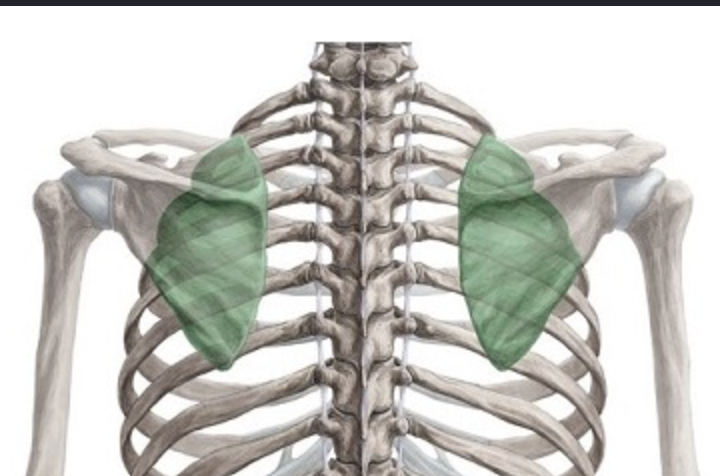
What motions occur at the scapulothoracic joint?
Elevation, depression, upward rotation, downward rotation, protraction, retraction, anterior tilt, posterior tilt, internal rotation, and external rotation
What would occur if the humeral head rolled upward without downward sliding?
Impingement would occur
What are the static stabilizer of the dependent arm?
Rotator cuff interval capsule, negative intra-articular pressure, and slight upward tilt of the glenoid fossa
What muscles compress the humeral head into the glenoid?
Infraspinatus, teres minor, and subscapularis
What is a force couple?
Two or more muscles generating force in different direction but causing rotation of a bone in a specific direction
What muscles compose the GH force couple?
Deltoid and the combined pull of infraspinatus, teres minor subscapularis (ITS)
What is the result of the GH force couple?
Nearly perfect rotation of the humeral head with minimal translation
What are the two major function of the supraspinatus?
Compresses the humeral head into the glenoid and independently abducts the humerus
Why is rotator cuff stabilization important for deltoid?
Acting alone, the deltoid produces more superior translation than rotation of the humerus
What is scapulohumeral rhthym?
Coordinated movement of the scapula, humerus, and clavicle to elevate the arm and position the hand in space
Approximately how much motion does the GH joint contribute to arm elevation?
Approximately 120 degrees
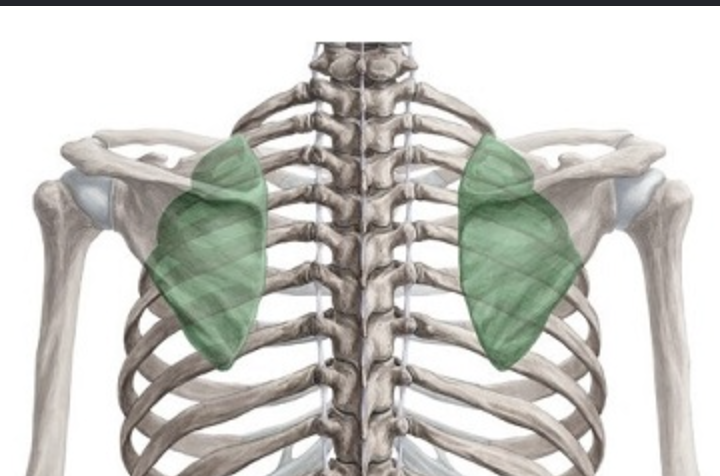
Approximately how much upward rotation does the ST joint contribute?
Approximately 60 degrees
What additional ST motions accompany elevation?
Posterior tilt and external rotation
From approximately what point onward does the GH:ST relationship become 1:1?
About 60 degrees onward
What is the primary ST force couple for upward rotation?
Upper trapezius, lower trapezius, and serratus anterior
Which muscle stabilize the scapula during upward rotation?
Rhomboid major and rhomboid minor
According to the new proposal, how does the upper trapezius primarily act?
Through its attachment the clavicle, producing clavicular elevation and retraction
What happens if trapezius and serratus anterior fail to upwardly rotate the scapula?
The deltoid downwardly rotates the scapula and abduction is limited to less than 60 degrees
Which muscles are downward rotators of the scapula?
Levator scapulae, rhomboid major, rhomboid minor, and possibly pectoralis minor
Which muscles function as scapular depressors?
Latissimus dorsi, pectoralis major, and possibly pectoralis minor
Which muscles function of scapular depressors?
Latissimus dorsi, pectoralis major, and possibly pectoralis minor
What is the role of the rhomboids?
Stabilize the scapula
What is the role of teres major when the scapula is stable?
Extends the humerus