Full NU1 Set
 View linked note
 Call Kai
 Learn
Learn Practice Test
 Spaced Repetition
 Match
Match Flashcards
 Knowt Play
1/73

There's no tags or description
Looks like no tags are added yet.
Name | Mastery | Learn | Test | Matching | Spaced | Call with Kai |
|---|
No analytics yet
Send a link to your students to track their progress
74 Terms
What falls under the Forages/roughages category
Dry forages and roughages
Vegetative pasture, range, and forages
Silages
A protein feed is defined as having greater than
20% Crude Protein (CP).
Energy Feed Definition
has greater than 60% Total Digestible Nutrients (TDN).
What are example of a supplements
mineral
vitamin
Non-nutritive additives
Characteristics of dry forages and roughages
>20% crude fiber, low TDN
High in cellulose, hemi-cellulose and lignin
Protein variable
Harvest date critical
Dry Forage Examples
alfalfa hay, native grass hay, corn stalks, Soybean hulls and Cottonseed
Vegetative pasture, range plants, and forages examples
Native range, cool/ warm season grasses, wheat, rye, legumes
Legumes
Alfalfa, Clovers
What does bloat (ruminal tympany) do
cause excessive production of foams in the rumen
– Foam inhibits the ability to eructate (Belch)
– Gases form causing bloat
– Animals cant breath
Characteristics of silage
Storage results in fermentation
– Anaerobic bacteria
– Bacteria produce lactic acid
■ Lowers pH to 4.0 or lower
■ Produces heat 80-100oF
– Optimum moisture content
■ 25-35% Dry Matter 75 – 65% Moisture
■ Too dry will burn up
Examples of silage
corn, sorghum, grass, alfalfa, clover, oats, rye
Give 4 examples of protein feeds.
Soybean meal, cottonseed meal, fish meal, urea
Characteristics of energy feeds
<20 crude fiber (or <35% cell wall) <20% CP
High in starch – grains
Energy Feed Examples
corn grain, beet pulp, barley grain, and wheat middlings
Supplement Examples
molasses, limestone, salt, and vitamin premix
Importance of Harvest Date
Harvest date is important to feed quality because more mature plants are less digestible, thus balancing yield and quality is essential.
Forage refers to
stems/leaves (fiber)
Concentrate refers to
seeds (high energy).
Common Feeds for Pigs
Common feeds for pigs include corn and soybean meal.
Common Feeds for Sheep
Common feeds for sheep include corn grain.
Common Feeds for Poultry
Common feeds for poultry include corn.
Common Feeds for Horses
Common feeds for horses include hay
Calcium to Phosphorus Ratio Ca:P
2:1
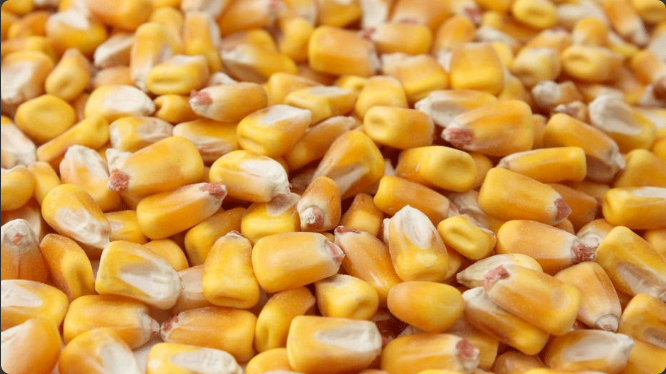
most cost efficient energy source on
the market
■ Basis for most diets
whole shelled hard pericarp
Corn
Categories of Nutrients
The six categories of nutrients are water, carbohydrates, protein, lipids, vitamins, and minerals.
Indispensable Nutrient
An indispensable nutrient must be fed to an animal as the body cannot synthesize it.
Dispensable Nutrient
A dispensable nutrient can be synthesized by the body, for example, Vitamin B12.
Types of Carbohydrates
Types of carbohydrates include starch (amylopectin, amylose), glycogen, and cellulose.
Volatile Fatty Acids (VFAs)
Volatile fatty acids are end products of microbial fermentation in the rumen.
Crude vs. True vs. Non-Protein Nitrogen
Crude protein is total nitrogen multiplied by 6.25; true protein consists of actual amino acids; and non-protein nitrogen refers to compounds like urea.
Amine Group
An amine group is represented by –NH₂ and is found in amino acids.
Protein Needs in Cows
Protein needs in cows increase during growth, lactation, and reproduction.
Symptoms of Protein Deficiency
Symptoms of protein deficiency include poor growth, rough coat, and low milk yield.
Calories per Gram: Fat vs. Carbohydrate
Fat provides 9 kcal/g, while carbohydrates provide 4 kcal/g.
Functions of Lipids
Lipids serve as energy sources, insulation, and they play a role in hormone production.
Triglyceride Definition
A triglyceride consists of glycerol and three fatty acids.
Long-Chain Fatty Acid
A long-chain fatty acid has 12 or more carbon atoms.
Saturated vs. Unsaturated Fatty Acids
Saturated fatty acids have no double bonds while unsaturated fatty acids contain one or more double bonds.
Requirement of Fat in Diet
Fat is required in the diet for essential fatty acids and fat-soluble vitamins.
Sources of Fat
Fat is found in animals' adipose tissue and in plants' seeds/oils.
Mineral Definition
A mineral is an inorganic element that is essential for various body functions.
Macro Minerals
Macro minerals include calcium (Ca), phosphorus (P), magnesium (Mg), potassium (K), sodium (Na), chlorine (Cl), and sulfur (S).
Trace Minerals
Trace minerals include iron (Fe), zinc (Zn), copper (Cu), manganese (Mn), iodine (I), selenium (Se), and cobalt (Co).
Functions of Minerals
Minerals are necessary for bone structure, enzyme activation, and fluid balance.
Examples of Minerals and Functions
Calcium is for bone health; iron is important for oxygen transport; zinc supports immunity.
Vitamin Characteristics
Vitamins are organic compounds needed in small amounts for specific functions.
Recognition of Vitamins
Vitamins were first recognized in the early 1900s.
Classes of Vitamins
Vitamins are classified into fat-soluble (A, D, E, K) and water-soluble (B-complex, C).
Functions of Vitamins
Vitamins play roles in metabolism, immunity, and vision.
Units of Measure for Vitamins
Vitamins can be measured in International Units (IU), milligrams (mg), or micrograms (µg).
Crude Protein Measurement Method
The Kjeldahl method is used to measure crude protein based on nitrogen content.
Functions of Water
Water serves functions including transport, temperature regulation, and digestion.
Rate-Limiting Nutrient
A rate-limiting nutrient is the nutrient in shortest supply that limits performance.
Function of GIT
The gastrointestinal tract (GIT) is responsible for the breakdown and absorption of nutrients.
Digestion Definition
Digestion is the breakdown of food into absorbable units.
Absorption Definition
Absorption is the uptake of nutrients into the bloodstream.
Diet Types: Herbivore, Carnivore, Omnivore
Herbivores have a long GIT, carnivores have a short GIT, and omnivores have an intermediate GIT.
Function of Mouth in Digestion
The mouth is responsible for mechanical breakdown and saliva production.
Parts of the Mouth
The mouth includes teeth, tongue, and salivary glands.
Function of Stomach
The stomach is involved in acid digestion and protein breakdown.
Function of Small Intestine
The small intestine's primary function is nutrient absorption.
Function of Large Intestine
The large intestine is responsible for water absorption and fermentation.
GIT Pathway in Pigs
The GIT pathway in pigs follows the route: Mouth → Esophagus → Stomach → Small Intestine → Large Intestine → Rectum.
Function of Crop in Chickens
The crop functions as feed storage.
Function of Proventriculus in Chickens
The proventriculus is responsible for acid digestion.
Function of Gizzard in Chickens
The gizzard functions as a mechanical grinding organ.
Function of Reticulum in Ruminants
The reticulum traps foreign objects.
Function of Rumen in Ruminants
The rumen is responsible for fermentation and VFA production.
Function of Omasum in Ruminants
The omasum absorbs water.
Function of Abomasum in Ruminants
The abomasum acts as the true stomach, performing acid digestion.
Role of Microbes in Rumen
Microbes in the rumen digest fiber, produce VFAs, and synthesize protein.
Role of Ammonia in Rumen
Ammonia is used by microbes to build microbial protein.
Functions of Saliva in Ruminants
Saliva buffers pH, aids in rumination, and lubricates feed.