World History Unit 1: Geography, Early Humans, and Civilizations
 Call Kai
 Learn
Learn Practice Test
 Spaced Repetition
 Match
Match Flashcards
1/28

There's no tags or description
Looks like no tags are added yet.
Name | Mastery | Learn | Test | Matching | Spaced | Call with Kai | Chat |
|---|
No analytics yet
Send a link to your students to track their progress
29 Terms
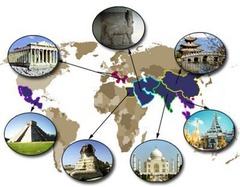
Civilization
A group of people living together with rules
Nomad
A person who moves from place to place.

Africa
The second largest continent, known for its diverse cultures and languages.

Ur
An ancient city of Sumer, located in modern-day Iraq, known for its advanced civilization.
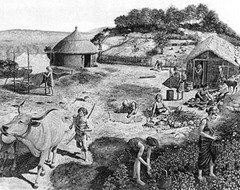
Slash and burn Farming
Cutting and burning trees to grow food.

Domestication
Making animals or plants useful for people.

Neolithic Revolution
Time when people started farming.
Hominid
Early human or human-like creature.

Artifacts
Old object made by people.

Paleolithic Age
Old Stone Age, people hunted and gathered food.

BCE
Before Common Era, a non-religious term for years before year 1 CE.

CE
Common Era, a non-religious term for years after year 1 BCE.
Prehistory
The period of human history before recorded events.
Archaeologist
People who studies old things.

Hunter Gatherers
People who obtain food by foraging for wild plants and hunting animals.

Artisans
People who make things by hand.

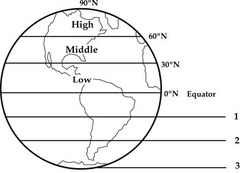
Longitude
The geographic coordinate that specifies the east-west position of a point on the Earth's surface.

Latitude
The geographic coordinate that specifies the north-south position of a point on the Earth's surface.
Australopithecines
Early hominids , walked on two legs, lived in Africa.

Homo Habilis
An early species of hominids known as 'handy man' due to their use of tools.
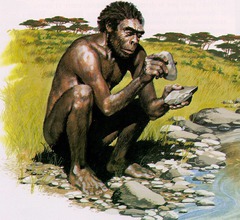
Homo Erectus
An extinct species of hominids known for their upright posture and use of fire.

Homo Sapiens
The species to which all modern human beings belong.

Neanderthals
An extinct species of hominids that lived in Europe and Asia.

Cro-Magnons
Early modern humans of the European Upper Paleolithic, known for their advanced tools and art.

Location
The position of anything on Earth's surface.

Place
uniqueness of a location

Human-Environment Interaction
how people change the land

Movement
how people, goods, and ideas get from one place to another
Region
areas that are alike in some way