Needles and Suture information
 Call Kai
 Learn
Learn Practice Test
 Spaced Repetition
 Match
Match Flashcards
 Knowt Play
1/31

There's no tags or description
Looks like no tags are added yet.
Name | Mastery | Learn | Test | Matching | Spaced | Call with Kai | Chat |
|---|
No analytics yet
Send a link to your students to track their progress
32 Terms
The ideal needle
sharp enough to penetrate tissue with minimal resistance
Carry suture through tissue with minimal trauma
Rigid enough to not break
sterile
stable enough to grasp with needle holder
Parts of a needle
needle point
needle body
needle eye (where suture connects to needle)
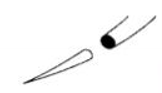
Taper point needles
sharp point to piece skin and spreads tissue without leaving small cuts
used for soft tissues
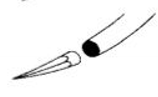
Taper cut needles
round, tapered body with cutting points on side
used on tough fibrous tissue and cardiovascular procedures
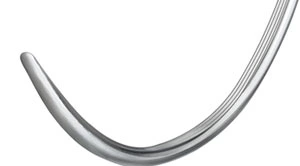
Blunt point needles
Taper body with a rounded blunt point
used to dissect friable tissue without cutting
recommended for liver and kidney suturing
Spatula needle
flat on top and bottom to reduce tissue injury
used in eye procedures
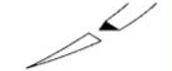
cutting edge needle
three cutting edges on the point and body
third edge on inside curvature (medial aspect)
can be traumatic as the curve cuts toward the wound
used for tough tissue like skin
creates weakness allowing suture to tear out
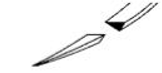
Reverse cutting edge needle
three cutting edges but third edge is on outside curvature (lateral aspect)
stronger than cutting needle and designed to resist tissue cutout
Needle body types
straight
½ curved (half a circle)
circular needle
most common needle sizes
sizes 3/8 and 1/2
needle eye types
closed
French
swaged
Closed eye needle
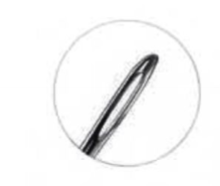
French eye needle
contain a slit to ease threading
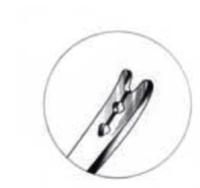
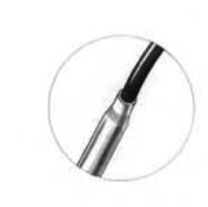
swaged needle
minimal tissue damage
preloaded with suture
Suture material types
absorbable or non-absorbable
braided and monofilament
Types of absorbable braided suture
Vicryl
vicryle rapide
Types of absorbable monofilament suture
chromic gut (natural)
monocryl (synthetic)
cat-gut (natural)
Types of non-absorbable braided suture
Ethibond (synthetic)
silk (natural)
Types of non-absorbable monofilament suture
ehtilon
nylon
prolene
stainless steel
non-absorbable suture characteristics
is not broken down by body and can remain in body for at least 2 years
absorbable suture characteristics
broken down by the body, this starts as early as 7 days
Tensile strength
amount of force in PSI the suture can withstand before it breaks
suture memory
ability or tendency of the suture to return to its original package form
lower memory is easier to handle
suture flexibility
ease with which suture is manipulated by surgeon or tissue
suture capillarity
ability of suture to allow microbes to wick in the interior of the suture strand
Multifilament treated with wax
Suture structure
monofilament: single sloid strand of suture material, causes less tissue drag and friction
multifilament: braided suture
knot security
ability of suture to hold knot
braided has less knot slippage
suture color
used as a means of identification. DO NOT use black suture on a black lab
suture packaging
single use package (long shelf life
Reel or cassette (exposed but unused, do not resterilize, catgut or chromicgut)
The type we used in shelter
Staples
external
Stainless steel
internal
specific soft tissue may benefit (thoracic cases)
Suture/staple removal
generally removed in 10-14 days
Suture/staple removal supplies
suture scissors
staple remover
adson brown thumb tissue forceps
gauze and aseptic cleaner (peroxide)